In Michigan, support for Israel was a kind of political hologram. But the media often made it seem real
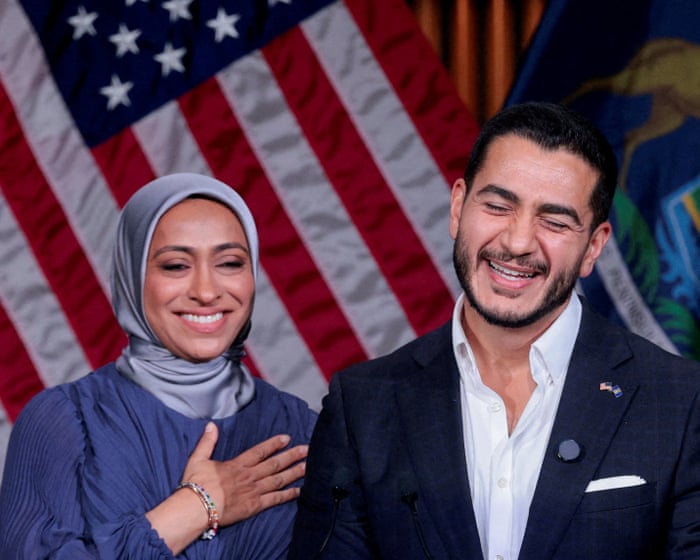
Among the things that Abdul El-Sayed’s victory in the Michigan Senate race revealed is this: the debate over US policy toward Israel does not primarily pit the left versus the right. It pits the top versus the bottom.
There was no grassroots enthusiasm in the state for maintaining US military aid and weapons sales to Israel. That view no longer commands support even among ordinary Republicans. There was instead a massive infusion of pro-Israel money, mostly from extremely wealthy people.
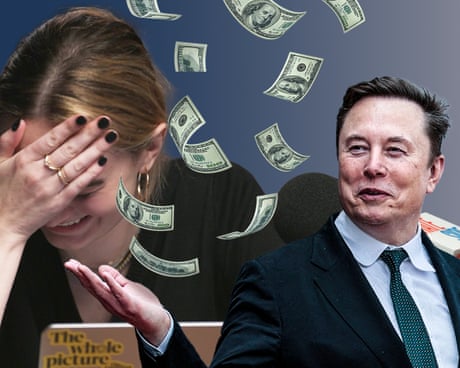
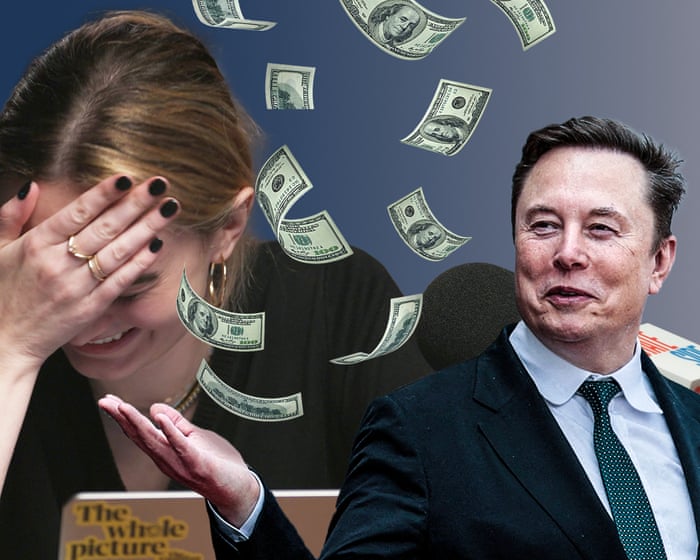
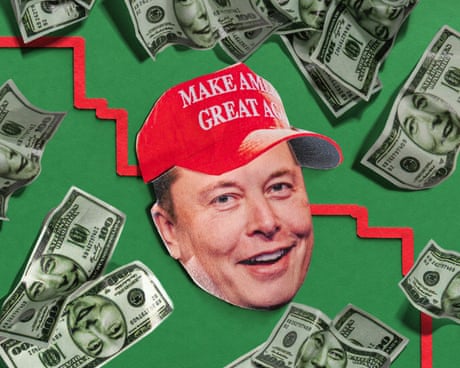
The tech industry spent big on the midterms, but it turned out to be a poor investment. Elon Musk poured a staggering $446m dollars into Republican-aligned political action committees (Pacs) and groups since last year, but his efforts didn’t pay off. Democrats won every one of the five Senate races where Musk’s America Pac spent the most money backing Republican candidates. Carter Sherman and Kai Wright are joined by the Guardian’s US tech editor, Blake Montgomery, to ask what the ‘blue tsunami’ will mean for Musk and the wider tech industry. Will this spell the end of AI datacenters? And if so, what could this mean for the US economy?
The tech industry spent big on the midterms, but it turned out to be a poor investment. Elon Musk poured a staggering $446m dollars into Republican-aligned political action committees (Pacs) and groups since last year, but his efforts didn’t pay off. Democrats won every one of the five Senate races where Musk’s America Pac spent the most money backing Republican candidates. Carter Sherman and Kai Wright are joined by the Guardian’s US tech editor, Blake Montgomery, to ask what the ‘blue tsunami’ will mean for Musk and the wider tech industry. Will this spell the end of AI datacenters? And if so, what could this mean for the US economy?
Overturning Citizens United is not enough. Campaigns must be funded with public money rather than private donations
Having devoted most of my adult life to reporting on, campaigning against, and exposing the corrosive influence of money in politics, I’m gratified that this cause was – finally – front of mind in a national election.
That’s right: in the midterms, corruption topped the list of Americans’ concerns, and candidates won by waging campaigns promising to reject corporate Pac money and linking Washington’s pay-to-play culture to the affordability crisis.
An easy way to unveil the corporate interests and tech billionaires behind the ads
Welcome back to How We Win, a Guardian opinion series with leading thinkers, offering bold ideas for America’s political future. Last week, Katie Phang argued that the Epstein files are a midterms sledgehammer. Today’s edition was written by Judd Legum, the founder and author of Popular Information. Sign up for future editions here.
An unprecedented influx of cash from tech billionaires and corporate interests has been injected into the midterms to sway the election.
We don’t have to accept the world as it is. There are several ways we can combat dark money, as the balance of power shifts in Washington.
Major changes in US law and industry have shifted the sources of large contributions to political campaigns – and how much they spend
The upcoming midterm elections will be the most expensive elections ever conducted in the US. And more of the money is “dark” than ever before, meaning it’s impossible to get a full picture of who is spending gargantuan sums to influence races that could provide a critical check on Donald Trump’s second term.
The elections have also shown how money in politics is being reshaped, with the increasingly powerful role played by big donors from the tech industry as well as the growing concentration of spending among a few powerful individuals and corporations.
One man’s campaign finance operation in Wisconsin exemplifies the opacity of the US political funding system
In the summer of 2024, a non-profit called the Green Dragon Coalition wired the last $20,000 of a $445,000 grant to a Super Pac. Its tax return for that year would describe the purpose of the transfer as “educational”.
The same day, according to Federal Election Commission (FEC) records, the Super Pac spent $8,000 attacking Celeste Maloy, the Republican congresswoman for Utah’s second district, four days before the primary that would decide whether she kept her seat. It had already spent more than $400,000 promoting her challenger, Colby Jenkins, who was running to her right with the endorsement of the rightwing Utah senator Mike Lee.
Voters under 50 probably won’t remember the “welfare queen”. But she once embodied Republicans’ claim of the underlying reason for US societal decay: the poor are a bunch of fraudsters.
Ronald Reagan introduced Linda Taylor to US voters at a rally during the Republican presidential primary season in 1976. A resident of Chicago’s South Side, Taylor had been arrested for welfare fraud. “She used 80 names, 30 addresses, five phone numbers to collect food stamps, social security, veteran’s benefits for four non-existing deceased veteran husbands,” Reagan said. “Her tax-free cash income alone has been running $150,000 a year.”
The Qatari government gifted him a luxury jet, potentially violating the emoluments clause of the constitution.
The UAE gained access to some tightly guarded, high-end American AI chips soon after an investment firm linked to its ruling family secretly bought a $500m stake in World Liberty Financial, the crypto company funded by the families of Trump and his chum Steve Witkoff.
Rich people facing criminal charges have taken to donating to Trump’s political operations and then seeking pardons or clemency. Most recently, Wanda Vázquez Garced, the former governor of Puerto Rico, and the banker who paid her bribes, Julio Herrera Velutini, were pardoned after Velutini’s family gave a $50m deal to Alina Habba, Trump’s former personal lawyer, and donated $3.5m to Trump’s Maga Inc Super Pac.
The first family is also making a killing from the government. The Pentagon lent more than $600m to Vulcan Elements, a rare earths startup, just three months after Donald Jr’s venture capital firm 1789 Capital bought a stake in the outfit.
Powerus, a drone maker backed by Eric and Donald Jr is selling drone interceptors to Persian Gulf allies of the US that are under attack by Iran, enriching the kids from a misbegotten war launched by the dad without consulting Congress.
The tech mogul’s midterm donations backing Republicans have made him the largest single-cycle political donor in modern US history
Elon Musk has poured so much money into US politics this midterms election cycle that his donations could fund half a dozen SpaceX rocket launches or buy thousands of Tesla Cybertrucks. At the Tesla Diner in Los Angeles, Musk could order more than 31.9m cheeseburgers with the money he has spent on the midterms.
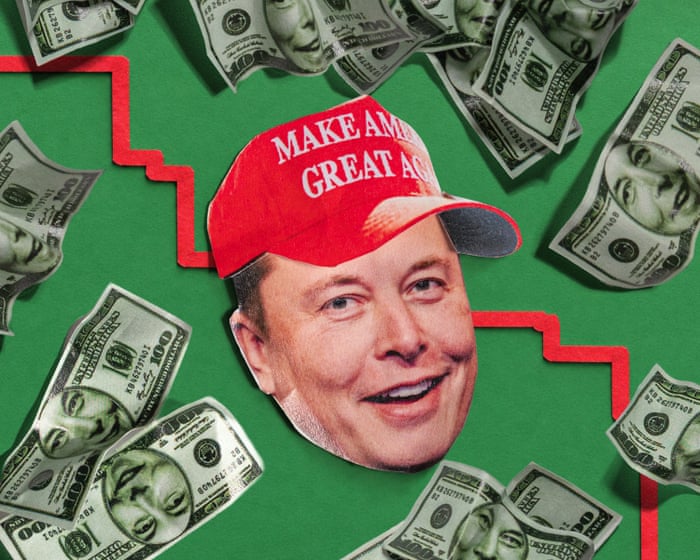
Musk, the world’s richest person, has funnelled at least $445.77m into Republican-aligned political action committees (Pacs) and groups since last year, according to US Federal Election Commission data as of 29 October. The contributions have made him the Republicans’ most prominent financial backer and the largest single-cycle political donor in modern US history.

 Connexion