
 Connexion
Drones hit Russia’s Volgograd and Samara overnight—fires near a Lukoil refinery, a chemical plant, and likely Europe’s largest oil tank farm in Samara

Drones attacked Russia's Volgograd and Samara oblasts overnight on 2 October, sparking fires near an oil refinery, a chemical plant, and likely a major oil-transport hub, Ukrainian and Russian monitoring channels reported. Regional officials acknowledged the attack but not the fires, and the extent of any damage remains unconfirmed.
Explosions and a glow over Volgograd's refinery district
Explosions sounded for a long time in Volgograd itself and around the refinery's industrial zone, Ukrainian Telegram channel Exilenova+ wrote.
Residents reported drones flying over and blasts "in all districts of the city," and complained that no air raid alert sounded, Russian news Telegram channel Astra reported. Its OSINT analysis of eyewitness footage placed the glow near the Lukoil refinery and the neighboring Kaustik chemical plant, though the available videos do not show which facility caught fire.
Volgograd Oblast Governor Andrei Bocharov claimed a "massive drone attack" on the region's industrial infrastructure. He mentioned a fire in an apartment building and one person hospitalized, but no fires at plants.
Lukoil-Volgogradneftepererabotka is one of Russia's largest refineries. It processes 14.8–15.7 million tons of crude a year, about 5% of Russia's refining, and makes gasoline, diesel, jet fuel, fuel oil, and bitumen, according to Astra.
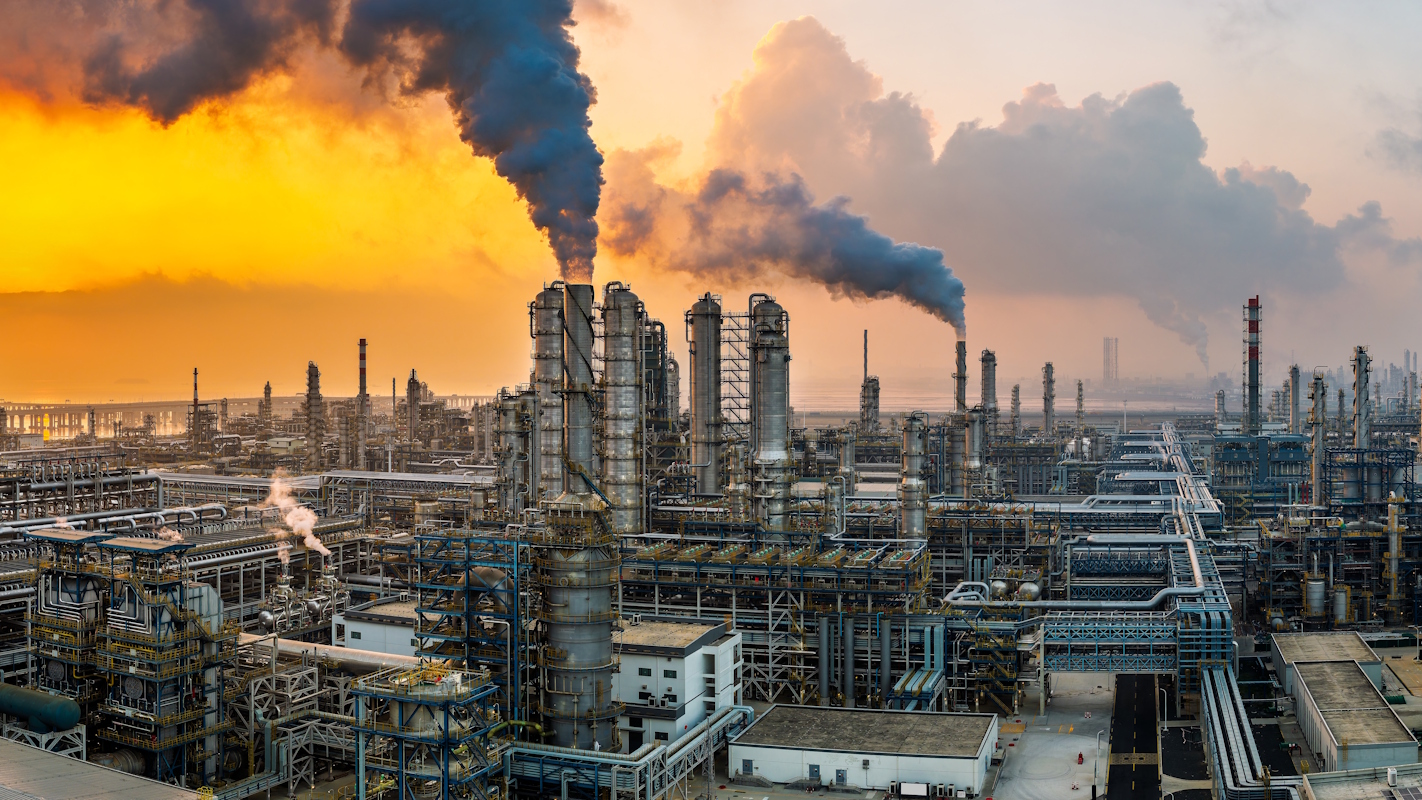
Fifth drone-related NORSI shutdown in under five months leaves all major Lukoil refineries offline
Drones have hit the plant repeatedly. In May 2025, strikes damaged its ELOU-AVT-1 and ELOU-AVT-6 primary processing units. A 29 May 2026 strike halted production at the plant, about 500 km east of the war zone, Ukraine's General Staff said. On 31 July, drones set the refinery ablaze again, and Astra reported the AVT-1 and AVT-6 units stopped.
Kaustik sits in Volgograd's southern Krasnoarmeysky district. It is one of the region's leading plants and makes basic chemicals with dual civilian and military use, Astra wrote. The outlet called that output critical to Russia's military industry. The plant runs chlor-alkali production built on salt electrolysis. It makes hydrochloric acid, plastics, synthetic resins, and industrial gases, according to OSINT-Varta. Such products can serve military industry too, including polymer parts and protective coatings for hardware, Militarnyi noted.

Europe's largest tank farm likely on fire near Samara
Explosions also rocked Samara, with an especially strong one around 06:30, Astra reported. Its OSINT expert linked reader photos to a fire at the Samara linear production dispatch station in the settlement of Prosvet.
Ukrainian monitoring channel Supernova+ shared video of thick black smoke on the horizon and reported a fire at the station. Exilenova+ reported explosions in Samara followed by a fire.
The station belongs to Transneft, Russia's state pipeline operator. It covers more than 216 hectares and holds 71 tanks with a combined capacity of over 1.6 million m³ of crude. Astra called it Europe's largest tank farm.
Four trunk pipelines converge there, carrying oil from Western Siberia, Tatarstan, Orenburg Oblast, and Kazakhstan. The station blends high- and low-sulfur crude into Urals, Russia's flagship export grade, according to Militarnyi.
Samara authorities did not comment on the fire. Mayor Ivan Noskov stated only that ground public transport was suspended. Samara Oblast Governor Vyacheslav Fedorishchev did not report an attack at all.
The station has been hit before. Operators of the 14th Regiment of Ukraine's Unmanned Systems Forces struck it again overnight on 23 September 2025. On 21 April 2026, drones of the Security Service of Ukraine's Alfa special operations center hit it, reportedly damaging five crude tanks of about 20,000 m³ each.
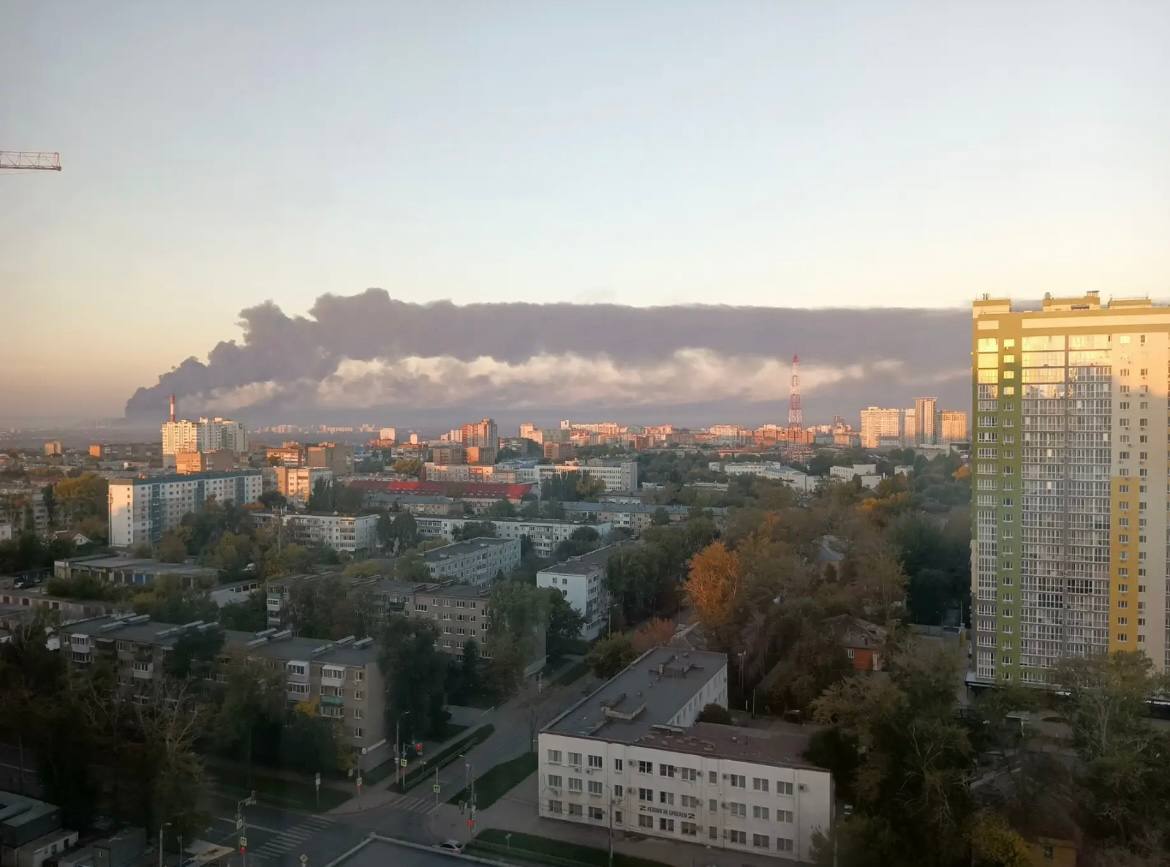
Ukraine shut down this Samara refinery in June—now its drones are back, and both distillation units are burning again
Ukraine's long-range drones have already pushed Russia's fuel shortages into Central Asia, and Washington has pressed Kyiv to stop, so every hit on processing or export logistics tests how long oil can fund Moscow's war.
Read also
-
Kazakh refinery deal could ease Russia’s front-line fuel pressure—but it covers just 0.3% of demand
-
Ukraine keeps hitting the fuel that Russia’s war runs on. Its latest target is the Slavyansk-EKO refinery, with an annual processing capacity of at least 3 million tonnes
-
Lukoil’s Perm refinery struck 1,530 km from Ukraine’s northern border, Kyiv confirms

