❌

Vue lecture

Russia is using inaccurate missiles that can miss by hundreds of meters to attack Ukrainian cities – and plans to scale them up
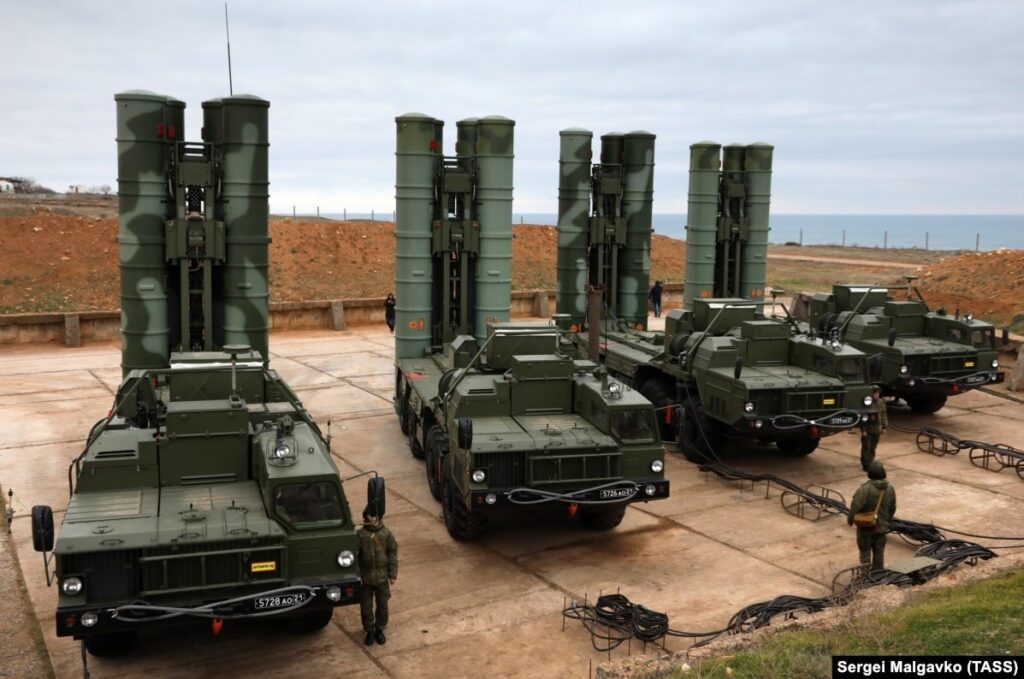
russia's arctic bases sit near-naked air defenses vanish guard moscow refineries burning inland · post s-400 defense missile launcher vehicles 2018 file sergei malgavko/tass rferl ukraine news ukrainian reports

Russia has begun using large numbers of a missile originally designed as a training target for air-defense crews, despite the weapon being significantly less accurate than the ballistic missiles Russia normally uses for precision strikes. The RM48U is now being launched against targets in Ukraine from S-400 air-defense systems.

The development comes as Russia has sharply increased its use of ballistic missiles against Ukrainian cities in recent months, while Ukraine faces a critical shortage of the interceptors needed to defend against them. Russian forces had more than tripled their monthly ballistic missile launches between April and July, according to Ukrainian military intelligence, as Ukraine's stocks of Patriot interceptors have dwindled.

More than half of the 228 ballistic and hypersonic missiles Russia launched in July and the first eight days of August were RM48Us, according to Ukrainian data reviewed by Reuters in an investigation published on 18 September.

A training missile turned into an inaccurate weapon

The RM48U was originally developed as a training target to help Russian air-defense crews practice intercepting incoming threats. It was not designed as a precision ground-attack missile.

Ukrainian investigators told Reuters that the missile is less powerful and less accurate than the Iskander, Russia's main short-range ballistic missile. They estimate that RM48Us deviate from their intended targets by around 300 meters on average.

The missiles nevertheless follow a high-speed ballistic trajectory when used in combat, making them difficult for Ukrainian air defenses to intercept.

Russia launches the RM48U from S-400 systems, repurposing part of its air-defense arsenal for offensive strikes.
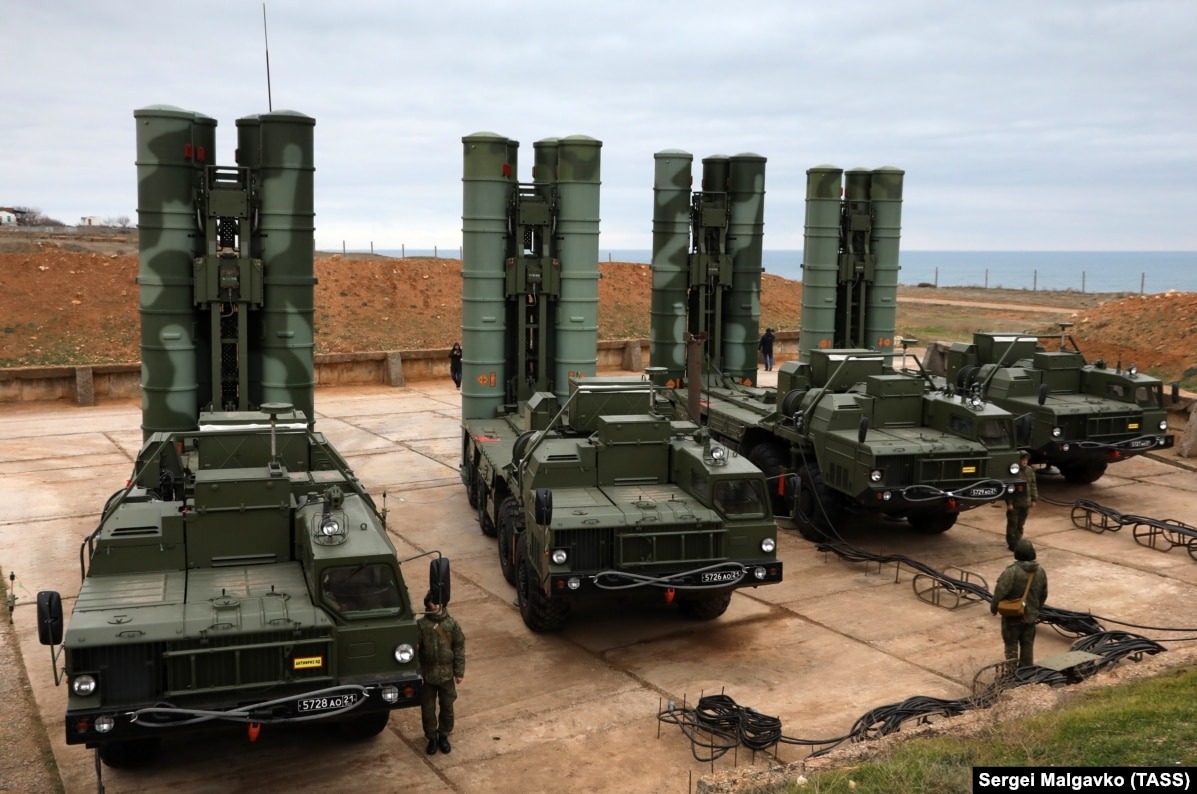
russia's arctic bases sit near-naked air defenses vanish guard moscow refineries burning inland · post s-400 defense missile launcher vehicles 2018 file sergei malgavko/tass rferl ukraine news ukrainian reports
Explore further

Ukraine strikes two Russian S-400 launchers in Bryansk. The same systems were used to attack Kyiv overnight.

Russia is using inaccurate missiles at scale

The number of RM48U launches increased sharply during the summer.

Russia launched 158 ballistic and hypersonic missiles against Ukraine in July, according to Ukrainian data reviewed by Reuters. Of those, 87 were RM48Us.

Russia then launched another 36 RM48Us among 70 ballistic and hypersonic missiles fired during the first eight days of August.

July was the highest month for Russian ballistic and hypersonic missile launches since the start of the full-scale invasion, according to the Ukrainian data.

The surge in RM48U use also coincided with a major decline in Russia's use of Iskanders. Russia launched more than 100 Iskanders in June but only 38 in July.

The shift indicates that Russia is using the less capable RM48U to sustain its ballistic missile campaign to continue causing indiscriminate destruction in Ukrainian cities while conserving more capable weapons.

RUSI analyst Sidharth Kaushal told Reuters that this allows Russia to preserve missiles such as Iskanders, as well as other more advanced weapons, for future attacks.

Less accurate does not mean less dangerous

The RM48U's poor accuracy has already had deadly consequences.

Ukrainian investigators concluded that an RM48U struck a railway platform in the Brovary district of Kyiv Oblast on 5 August, killing eight people. 

According to Ukrainian prosecutors cited by Reuters, the missile's warhead also scatters metal fragments over a wide area.

The attack illustrates the danger of Russia using a weapon that was never designed for precision strikes in populated areas. Even when the missile misses its intended target, its large deviation can leave civilians and civilian infrastructure within the affected area.

Russia denies deliberately targeting civilians and says it strikes military and other strategic targets.

Russia plans to produce more

Ukraine's military intelligence told Reuters that Russia plans to produce 480 RM48U missiles in 2026, more than twice the 200 produced last year.

That would give Russia a growing supply of a relatively simple ballistic weapon that can be used alongside its more sophisticated missiles.

The large-scale deployment of the RM48U represents a new development in Russia's ballistic campaign: a missile built to serve as a training target for air-defense crews is now being used as an offensive weapon against Ukraine.

At a time when Ukraine is struggling to replenish the scarce interceptors needed to stop Russia’s ballistic missiles, Moscow is expanding the range of weapons it can use to strike Ukrainian cities, killing more civilians and destroying more civilian infrastructure with each escalation.

  •  

Ukrainian partisans claim sabotage at Russian plant supplying missiles Moscow uses to bomb Ukrainian cities

Fire apparently breaking out at an electrical substation supplying the VZPP-S plant in Voronezh. Photo: ATESH

Pro-Ukrainian partisan movement ATESH says it sabotaged the power supply to a Russian semiconductor plant in Voronezh that produces electronic components used in Russia’s missiles and air defense systems.

Targeting such suppliers can hit Russia’s ability to sustain its missile campaign: disrupting production of critical electronic components can slow the replenishment of weapons used to strike Ukrainian cities.

In a statement published on 16 September, ATESH said one of its agents infiltrated an electrical substation near the Voronezh Semiconductor Devices Plant-Sbor­ka (VZPP-S) and destroyed the main distribution cabinet supplying the facility. The movement said the agent escaped the city after the operation.

VZPP-S is a Russian producer of semiconductor devices, integrated circuits and power modules. Ukraine’s military intelligence lists the company as part of Russia’s defense-industrial supply chain and says it has produced electronic components for Kh-101 cruise missiles, Iskander-K missiles and Pantsir-S1 air defense systems.

ATESH claimed the sabotage caused a major voltage surge and shut down production workshops. The movement said full power was not restored for several weeks, causing delays in deliveries of components for Russian weapons and, consequently, delays in missile and air defense production.

The movement’s claims have not been independently verified.

Ukrainian partisans claim they knocked out power to a Russian plant supplying electronics for Kh-101 and Iskander-K missiles.

The target is part of the industrial chain that keeps Russia’s missile strikes on Ukrainian cities supplied – and ATESH says production was disrupted for… pic.twitter.com/afbJonCxQT

— Euromaidan Press (@EuromaidanPress) September 16, 2026

ATESH is a pro-Ukrainian partisan movement operating in Russian-occupied territories and inside Russia. It says it recruits local residents and Russian military personnel to conduct sabotage, gather intelligence and pass information to Ukraine. The movement regularly publishes claims of attacks and acts of sabotage against Russian military and defense-industrial targets, though individual operations are often difficult to independently verify.

The plant has already been targeted

The reported sabotage comes after the VZPP-S facility was struck in a Ukrainian attack in June.

Ukraine’s military intelligence says VZPP-S produces components for the Kh-101, including transistor assemblies and matrices used in the missile’s electronic systems. It also says the company supplies semiconductor components for the onboard computer of the 9M727 cruise missile used by the Iskander-K system, as well as components for the Pantsir-S1’s television channel.

Ukraine's General Staff has confirmed the attack on the chip plant in Voronezh.

Videos from the site show at least two distinct fires at the facility.https://t.co/5gQVb99HwK

📹via @bayraktar_1love https://t.co/4lluMzWHRA pic.twitter.com/yBoyuuhbGq

— Euromaidan Press (@EuromaidanPress) June 22, 2026

The company itself describes VZPP-S as a major Russian producer of electronic components, with more than 900 products in serial production.

ATESH said it delayed publication of its claim to protect its agent.

  •  

Russia deploys missile brigade to Belarus as fears grow over new threat to Kyiv

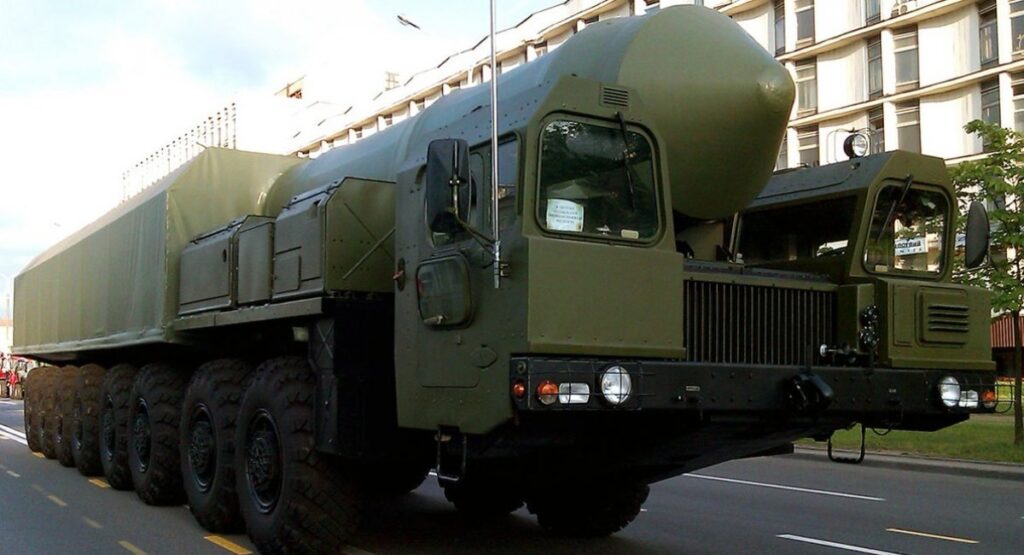
isw kremlin continues its nuclear threats while dangling economic carrots sway washington russia's rs-26 intercontinental ballistic missile rubezh oreshnik militarnyi appears focused reshaping ties through mix promises all refusing engage

Russia has deployed units of its 101st Missile Brigade to Belarus, a formation equipped with the Oreshnik intermediate-range missile system, according to Ukraine’s military intelligence chief Oleh Ivashchenko, Ukrinform reports.

Russia has been ramping up missile and drone attacks on Ukraine in recent weeks, including increasingly frequent strikes on Kyiv from the north, launched from Russian territory close to Belarus. Russia used Belarusian territory to launch its 2022 invasion of northern Ukraine, while Belarus is now allowing Russia to use its territory to support drone attacks. The latest deployment could give Moscow another launchpad for strikes deeper into Ukraine or potentially against targets in Europe.

Belarus not preparing to enter war, but threat remains

Ivashchenko said in an interview with Ukrinform that Ukraine currently assesses the military threat from Belarus as low and sees no signs that Belarus is preparing to directly enter the war.

But he said Kyiv is concerned by the growing Russian military presence in Belarus and the role Belarusian territory is playing in Russian attacks on Ukraine.

“Units of the 101st Missile Brigade of the Russian Armed Forces, which are equipped with the Oreshnik missile system, are also deployed on the territory of Belarus,” Ivashchenko told Ukrinform.

The Oreshnik is a Russian intermediate-range ballistic missile system that Moscow has presented as a new weapon capable of striking targets deep inside Europe. Russia first used an Oreshnik missile against Ukraine in November 2024, striking the city of Dnipro.

Oreshnik has been stationed in Belarus

Russia has maintained Oreshnik missile systems in Belarus since at least December 2025, when Belarusian leader Aliaksandr Lukashenka said an Oreshnik system had been placed on combat duty there as part of expanded military cooperation with Moscow.

The system is capable of carrying nuclear warheads, although Russia has used Oreshnik against Ukraine in a non-nuclear strike. Ukrainian intelligence has previously said the deployment is aimed in part at increasing pressure on Europe and NATO by shortening the missile's flight time to European targets.

The Oreshnik systems in Belarus remain under Russian control rather than Belarusian command, according to Ukrainian intelligence.

Explore further

Nuclear-capable but carrying concrete: Expert explains Russia’s Oreshnik is psychological weapon, not military one

Belarus allows Russia to use its territory to guide drone strikes

Ivashchenko also said Belarus has allowed Russia to deploy radio-signal repeaters that help guide Russian Shahed-type attack drones toward Ukrainian civilian and critical infrastructure targets.

“If Belarus did not give such permission, this indicates that Minsk no longer controls Russia’s activities on its own territory,” he said, according to Ukrinform.

The use of Belarusian territory to support Russian attacks has stopped short of Belarusian forces directly entering the war, but it demonstrates Minsk's growing role in enabling Russia's military operations. 

That cooperation makes the prospect of Russia using Belarusian territory for additional military capabilities less remote, particularly as Moscow expands its forces and intensifies attacks on Kyiv from the northern direction.

Renewed concern over a northern Russian offensive

The comments come as Russian strikes on Kyiv have intensified in recent weeks, while Ukrainian officials have increasingly warned about the possibility of another Russian offensive from the north toward Kyiv and Chernihiv.

There is no reported Russian ground offensive from Belarus underway. But the northern direction remains a major concern for Ukraine because of the precedent set in 2022, when Russian forces crossed from Belarus and advanced toward Kyiv before withdrawing in early April.

For now, Ivashchenko assesses the military threat from Belarus as low. The deployment of Russian missile forces nevertheless adds another significant Russian weapons capability to Belarus, while leaving open questions about how Moscow could use the territory in a future escalation.

  •  
❌