Vue lecture

Ukraine’s drones hit two Russian fighters and a spy drone—and blinded radars from occupied Crimea to Rostov
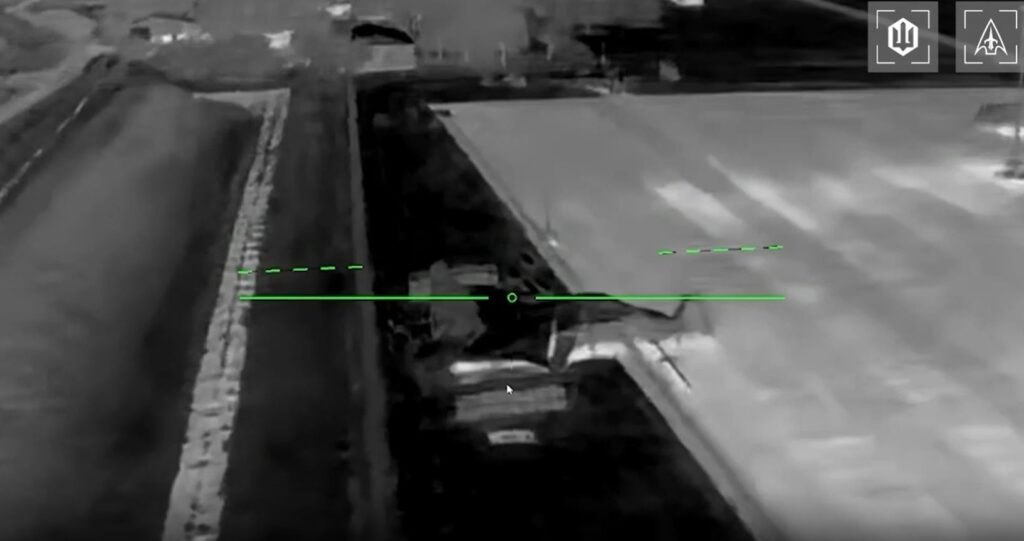
two russian fighters one spy drone hit kranodar radars anti-air systems elsewhere—ukraine forces · post combat aircraft ukrainian drone's sights vityazevo airfield krasnodar krai russia 23 2026 su-33 video sbs

Ukraine's drones hit three Russian aircraft and eleven air-defense targets in one day, its Unmanned Systems Forces reported on 23 August. The strikes reached from occupied Crimea to airbases hundreds of kilometers inside Russia. They pushed the force's August count of struck Russian air-defense assets to 20, the latest run in a Ukrainian campaign against Russia's radars and launchers that has not paused for months.

Russia leans on a layered net of radars and mobile launchers to keep Ukrainian drones and missiles away from its airfields, fuel plants, and occupied land, so every set burned off that net widens the corridors its long-range weapons fly through. With its S-400 battery caught in the open again and jets chased off Crimea still within reach, Russia has shrinking safe ground for the aircraft and air defenses covering its south — a squeeze already visible when Ukraine caught a fighter and its protecting launcher on the same airfield weeks earlier.

A one-day sweep of 14 targets

The Unmanned Systems Forces (SBS) commander, Robert Brovdi, callsign Madyar, put the 23 August haul at 14 targets. They included two fighter jets, a strike-reconnaissance drone, eight radar systems, a Tor and a Pantsir short-range launcher, and a position of an S-400 — a Russian long-range air-defense system.

Eleven of the 14 fell in Rostov Oblast and Krasnodar Krai in southern Russia. The other three were in occupied Crimea. 
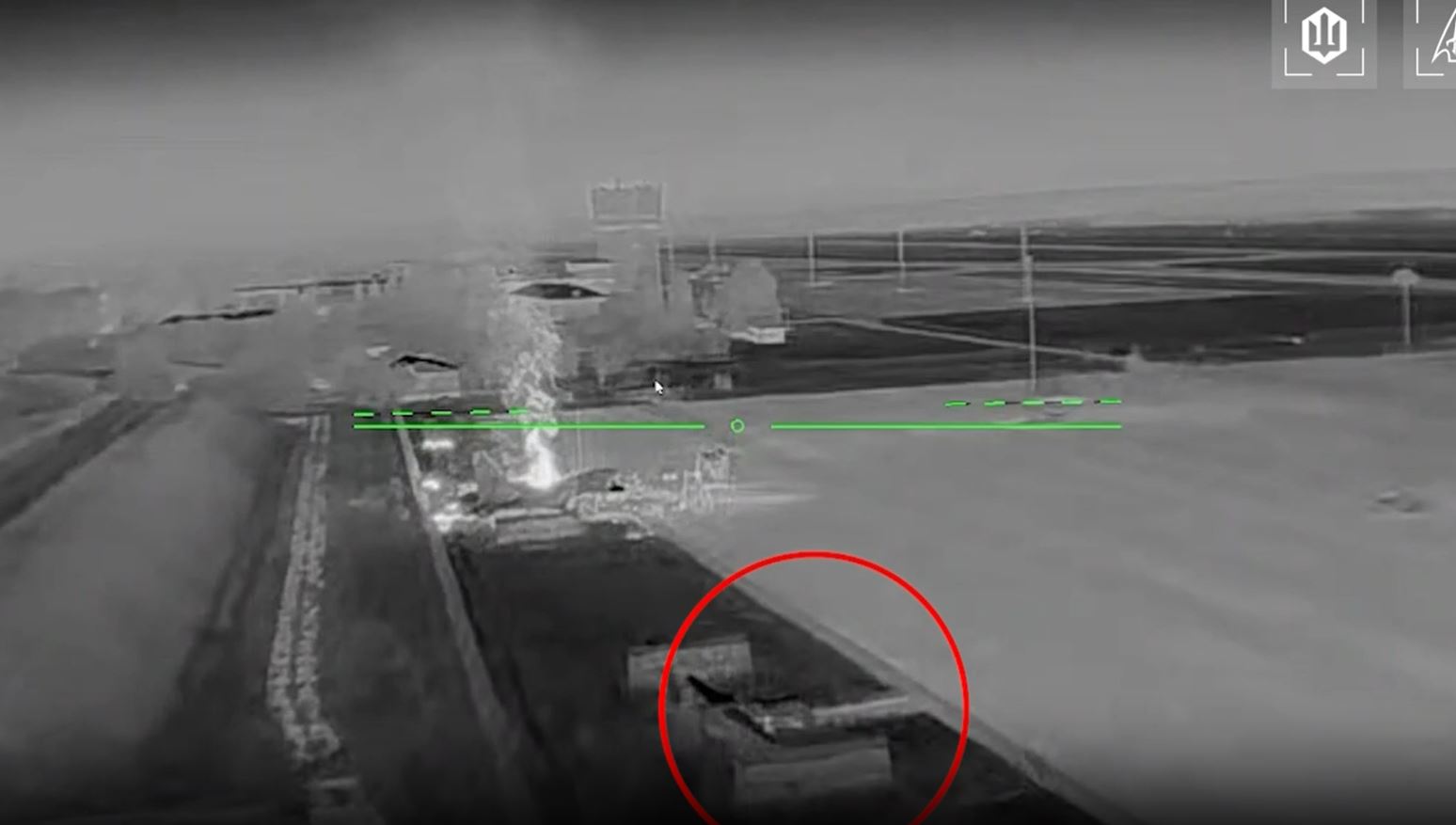
two russian fighters one spy drone hit kranodar radars anti-air systems elsewhere—ukraine forces · post aftermath strike combat aircraft seen another ukrainian vityazevo airfield krasnodar krai russia 23 2026 дорозвідка
Aftermath of the strike on a Russian combat aircraft as seen from another Ukrainian drone at Vityazevo airfield in Krasnodar Krai, Russia, 23 August 2026. Screenshot: SBS

Jets that fled Crimea, caught on the mainland

The three aircraft were struck at Vityazevo, a Krasnodar Krai airfield about 300 km from the front line, the 1st Separate Center of the Unmanned Systems Forces said. Militarnyi assessed that the jet SBS called a Su-33 was likely a two-seat Su-30SM, judging by its cockpit hump.
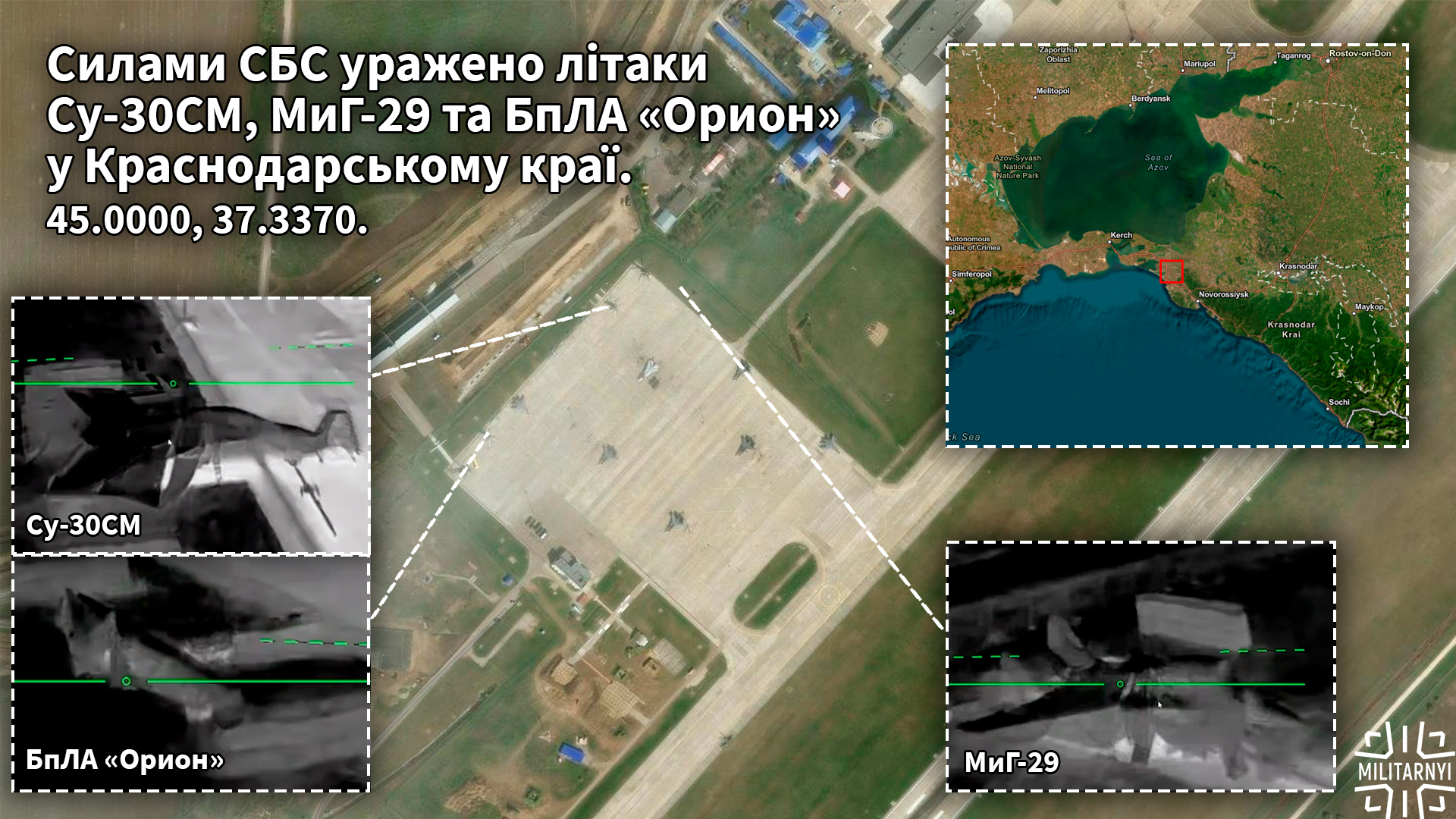
two russian fighters one spy drone hit kranodar radars anti-air systems elsewhere—ukraine forces · post ukrainian strikes su-30sm fighter mig-29 orion strike-reconnaissance vityazevo airfield krasnodar krai russia 23 2026 airfield's
Ukrainian drone strikes on a Su-30SM fighter, a MiG-29 fighter, and an Orion strike-reconnaissance drone at the Vityazevo airfield in Krasnodar Krai, Russia, 23 August 2026, with the airfield's location marked on the map. Collage: Militarnyi

Russia flies the Su-30 from its southern bases to attack Odesa and Mykolaiv oblasts, to hunt Ukrainian sea drones, and to patrol occupied territory. The struck jet likely belonged to a naval aviation regiment pushed off Crimea by repeated Ukrainian strikes on the peninsula.

two russian fighters one spy drone hit kranodar radars anti-air systems elsewhere—ukraine forces · post strike podlyot radar holovativka rostov oblast russia 23 2026 sbs ukraine news ukrainian reports
A strike on a Russian Podlyot radar at Holovativka in Rostov Oblast, Russia, 23 August 2026. Screenshot: SBS

Based on the SBS footage, Militarnyi says one drone could not hit the fighter cleanly. It exploded beside the aircraft and set off a fire that Russian crews tried to put out — a near miss, but enough to sideline the jet for a long stretch. A second drone then found the MiG-29 fighter jet and scored a direct hit, starting a large fire. A third caught the Orion, a strike-reconnaissance drone Russia uses to launch small cruise missiles and to track Ukrainian naval drones in the Black Sea.

Radars, launchers, and an S-400 on the coast

The air-defense targets ran across three regions. In occupied Crimea, crews hit a Nebo-U long-range radar at Sevastopol, the ST-68 at Yevpatoria some 30 km from the front, and a 36D6M at Uiutne. In Rostov Oblast and Krasnodar Krai they knocked out more radars, including two Kasta-2E2 sets and two Podlyot radars, plus the Tor at Pudovy and the Pantsir at Yeysk.

The 413th Reid regiment of the SBS reported hitting the S-400 position near Gelendzhik on the Krasnodar coast — the same stretch where drone crews have caught the system out in the open before.

two russian fighters one spy drone hit kranodar radars anti-air systems elsewhere—ukraine forces · post enhanced colorized frame thermal footage view ukrainian closing st-68 radar moments before impact yevpatoria occupied
Enhanced and colorized frame from the drone thermal footage showing the view from a Ukrainian drone closing on a Russian ST-68 radar moments before impact at Yevpatoria in occupied Crimea, 23 August 2026. Screenshot: Ukraine's Unmanned Systems Forces (SBS)

An August of hunting Russia's air shield

A battlefield video counter run by the force reached 20 Russian air-defense assets struck through August. The month's work extended a campaign that has steadily burned through the sensors and launchers guarding Russian airfields and occupied territory. 

  •  

North Korea already using Russian Pantsir missiles to defend Pyongyang, Ukraine's intelligence chief says

North Korea already using Russian Pantsir missiles to defend Pyongyang, Ukraine's intelligence chief says

North Korea is already using Russia Pantsir S-1 air defense systems in Pyongyang, Kyrylo Budanov, head of Ukraine's military intelligence (HUR), said in an interview with Hromadske Radio on July 1.

The arrival of Pantsir missiles is another sign that North Korea is improving its weapons technology and military might through cooperation with Russia. The two nations signed a defense treaty in June 2024, and North Korea has supplied arms and troops to Moscow in exchange for training and advanced military technology.

"I can tell you that, for example, the first Pantsir S-1 installations have already appeared in Pyongyang," Budanov told Hromadske Radio.

"They are already on combat duty there, guarding their capital. And the Russians are retraining Korean personnel, and soon the Koreans will be working autonomously on this technology."

The Pansir S-1 is the same air defense system Russia uses to guard its military-industrial facilities. It carries an estimated price tag of around $15 million.

North Korea is "currently significantly increasing its military power" through direct cooperation with Russia, Budanov said. It benefits from Russia's ongoing technology transfers and the "real combat experience" personnel gained by fighting alongside Russian troops against Ukraine.  

Budanov also said Ukraine expects "a significant increase" in the number of North Korean citizens in Russia. Some of these citizens will sign up for the Russian military, making it seem less like an official transfer of North Korean personnel and more like voluntary registration from invidivual citizens.

The day before Budanov's comments, North Korean leader Kim Jong Un publicly honored his country's soldiers who were killed fighting in Russia's war against Ukraine. The ceremony coincided with a visit by Russian Culture Minister Olga Lyubimova, illustrating the deepening military alliance between Moscow and Pyongyang continues.

Russia has also reportedly provided North Korea with advanced electronic warfare systems, helped the country build modern warships, and improved its KN-23 ballistic missiles.

In June, Budanov said that Moscow has agreed to assist Pyongyang in mass-producing Shahed-type attack drones.

Russia-Iran alliance wavers as Tehran suffers major blows
Tehran, Russia’s main ally in the Middle East, has been dealt a heavy blow as Israel dismantled its network of proxies and then struck targets in Iran. The recent Iranian-Israeli war, which ended with a ceasefire on June 24, showed that the regional balance of power has shifted in Israel’s favor. This could have a major impact on Russian-Iranian relations as Moscow will have to recalibrate its approach to the region. Russian-Iranian cooperation is likely to continue but Iran’s ability to help
North Korea already using Russian Pantsir missiles to defend Pyongyang, Ukraine's intelligence chief saysThe Kyiv IndependentOleg Sukhov
North Korea already using Russian Pantsir missiles to defend Pyongyang, Ukraine's intelligence chief says

  •  
❌