Bo French, a candidate for the Texas Railroad Commission, drew bipartisan criticism for his social media posts. Above, at a conservative conference in March.
The Iran-backed militia in Yemen made its claim hours after a Saudi-led military coalition accused it of firing a drone near the Muslim holy city. The Houthis denied doing so.
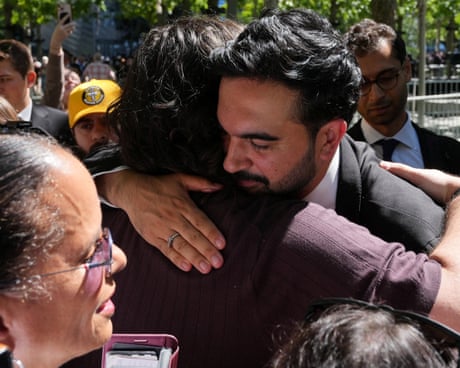
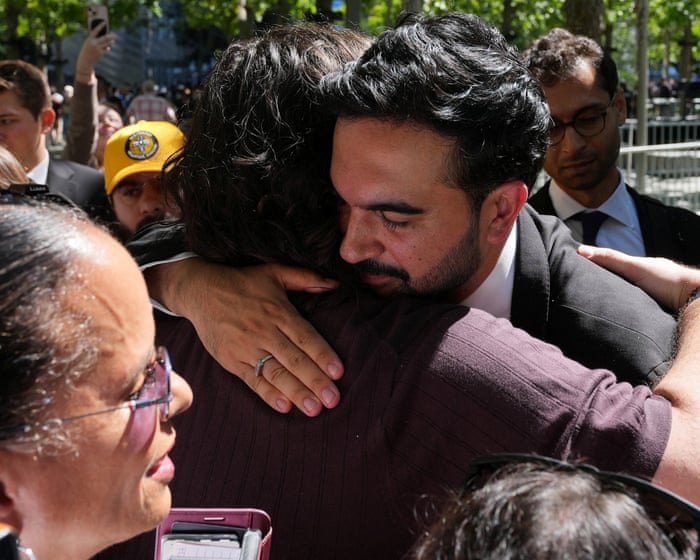
Progressive politicians such as Zohran Mamdani offer answers to the bitter post-9/11 legacy of failures at home and abroad
Twenty-five years after 9/11, two pieces of journalism, describing two different phenomena in contemporary New York, tell us a great deal about a city, and indeed a world, caught between two eras. In one, New York Magazine dives into “Habibi City”, a New York where a “cultural shift is underway, led by a generation of New Yorkers coming into its own”. This new generation is labelled as originating in “SWANA” – south-west Asia and north Africa, a region that “includes countries from Palestine to Iran to Sudan”. In the other, Vanity Fair describes calls for Zohran Mamdani to not attend the 9/11 memorial ceremony as partly founded in “inchoate, emotional” impulses, that see “the city’s first Muslim mayor as a stand-in for the 19 Muslims who hijacked four planes and turned them into deadly weapons, part of the ‘them’ who attacked ‘us’.”
Together they capture what has changed over a generation, and what remains stubbornly the same. Members of a diaspora of Muslim background are indeed breaking through and accumulating, as New York Magazine says, “clout”. They are no longer simply a fixture of bodegas and halal carts, but of Saturday Night Live, upmarket dining, entertainment and politics too. Mamdani is both the expression of that cohort and the catalyst of its recognition as an emerging force. They care deeply for their local communities but also for those in Gaza and beyond.
As Muslims win historic victories, experts describe rise in anti-Islamic sentiment that rivals post-9/11 climate
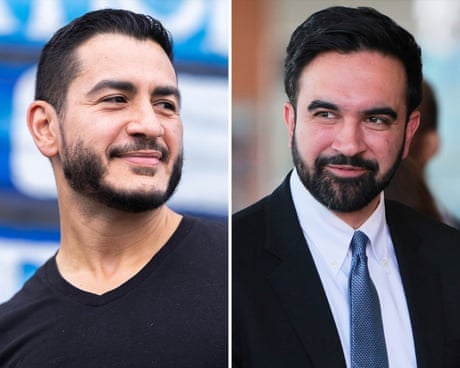
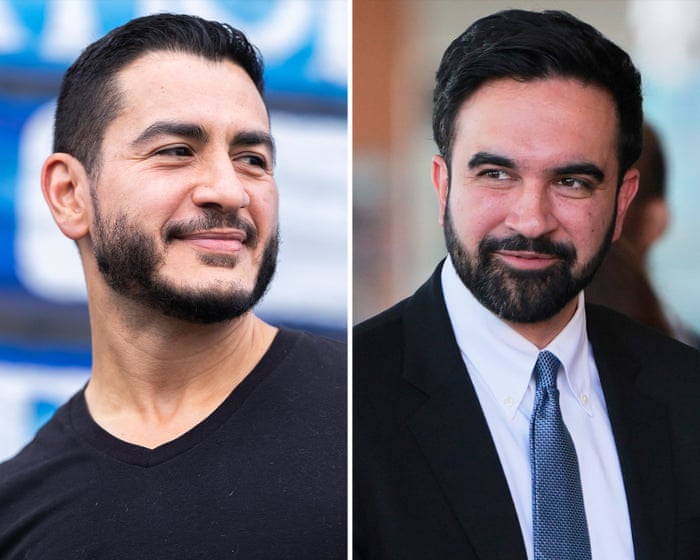
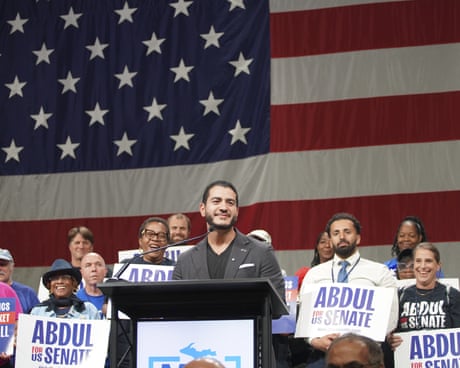
Within hours of Abdul El-Sayed’s victory in Michigan’s Democratic US Senate primary, Republican senator Tommy Tuberville of Alabama declared that the party had “just voted to send a TERRORIST” to Washington.
El-Sayed – or “Abdulrahman Mohamed El-Sayed”, as Tuberville called him on X – was a “RADICAL ISLAMIST” who would “do everything he can to destroy America”, he claimed.
Anti-Muslim sentiment is used as a political weapon. Meanwhile, Muslim American leaders are making a difference for all
It’s been 25 years since the terrorist attacks of September 11, and during this time Muslim Americans have learned how to live in that dangerous space between other Americans’ fears and their ignorance.
The fear was clear from the beginning. Immediately following 9/11, Muslim Americans faced what Human Rights Watch called “a severe wave of backlash violence”. A tide of hate rose up against ordinary Muslims and those who appeared to be Muslim, including at least three murders in the immediate backlash after the attacks. The federal government, for its part, began targeting Muslim immigrants in a massive surge of repression that legal experts soon compared to the Palmer Raids of the 1920s.
Malone Lam, a Singaporean citizen, admitted to stealing cryptocurrency valued at more than $245 million in one of the largest such heists in U.S. history.
Smoke rises above the town of Al-Mansouri in southern Lebanon on Wednesday. The release of Lebanese prisoners would come amid talks to disarm Hezbollah and end Israeli occupation of southern Lebanon.
Vice President JD Vance’s remarks at a campaign rally on Monday appeared aimed at stoking tensions in Michigan’s Jewish community over Dr. El-Sayed’s nomination.
A general during the Balkan wars of the 1990s, he was convicted in the killing of some 8,000 Muslims at Srebrenica, Europe’s deadliest massacre since World War II.

 Connexion