❌

Vue lecture

Explosives found meters from the drone that crashed near a Bundeswehr air base—investigators say it matches the GRU’s Leipzig attack devices
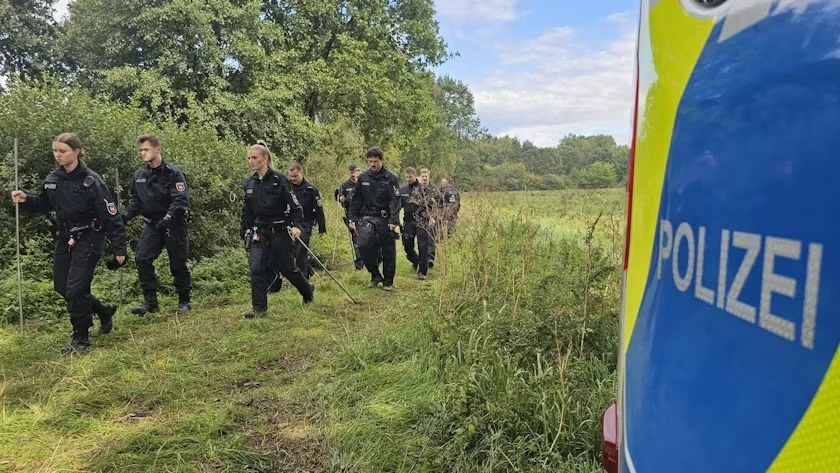
explosives found meters drone crashed near bundeswehr air base—investigators say matches gru's leipzig attack devices · post police officers search debris wunstorf base lower saxony germany 15 2026 german dpa

Investigators found what they believe is explosives meters from a crashed drone near the Bundeswehr's Wunstorf air base in Lower Saxony, Germany, and the device matches the construction of drones used in the GRU-attributed Leipzig airport attack, Süddeutsche Zeitung, NDR, and WDR reported on 22 September. Germany's federal prosecutor and the Federal Criminal Police Office (BKA) have taken over the investigation, and the same reporting traced one of the Leipzig suspects to a sanctioned GRU colonel who directs sabotage against countries arming Ukraine.

Russia's sabotage campaign against countries supporting Ukraine has escalated from arson packages and recruited proxies to explosives-laden drones targeting military infrastructure inside NATO. Germany's military counterintelligence has attributed repeated sabotage on German soil to Russia, while Finnish President Stubb called the broader alarm about Russian threats an "overreaction"—a position the accumulating evidence from Germany and Poland does not support.

Explosives found days after the drone crash

A farmer discovered the drone, broken into several pieces, on the evening of 14 September, about one kilometer from the Wunstorf air base, Militarnyi reported. Days later, police found a suspicious substance just meters from the crash site. Security sources told SZ, NDR, and WDR they believe it is an explosive, though forensic analysis has not yet been completed.

The drone's design is similar to the devices used in the Leipzig airport attack on 4 August, when attackers tried to destroy Ukrainian cargo planes with explosives-laden drones. At least one component was manufactured using a 3D printer, the reporting found. Investigators believe the drone may have been near the military airfield for a long time—possibly up to two years.

Wunstorf air base houses the Bundeswehr's entire A400M transport fleet. The facility is Germany's central hub for moving troops and materiel worldwide. An explosives-laden drone near this base would represent a direct threat to the Bundeswehr's central global logistics hub.

The Wunstorf find was discussed at the weekly intelligence briefing in the Chancellery on 22 September, the outlets reported.

Leipzig suspect linked to sanctioned GRU colonel

The federal prosecutor's investigation connects the Wunstorf case to the Leipzig attack. In that case, Germany's government has officially blamed Russia. Two suspects were identified: Oleg L., a Latvian with a Russian passport, and Andrei K., a dual Belarusian-Russian citizen whose DNA was found at the Leipzig scene.

SZ, NDR, and WDR reported that Oleg L. maintained years-long contacts with GRU Colonel Denis Smolyaninov. The EU sanctioned Smolyaninov for directing sabotage operations against countries supporting Ukraine. Andrei K. had previously been noticed for minor offenses in the Baltic states and Finland and entered Germany on an Italian tourist visa. Moscow denied involvement in the Leipzig attack.

A drone violated the no-fly zone around NATO's missile shield base in Poland

The Wunstorf case came to light in the same week that a drone violated the no-fly zone around the US-operated Aegis Ashore missile defense base in Redzikowo, northern Poland, on 15 September.

Polish troops guarding the facility called civilian emergency services instead of neutralizing the drone, TVP World reported. Poland's defense ministry said the drone was a civilian device that "posed no threat" and remained under military surveillance, but Defense Minister Władysław Kosiniak-Kamysz ordered a full report into the incident.

  •  

A drone came down beside a Bundeswehr air base, weeks after Berlin blamed Moscow for the Leipzig airport attack

Illustrative image of a Russian drone. Photo: RIA Novosti/Konstantin Mikhalchevsky

A large-scale police operation is underway after a drone of unknown origin crashed 1 kilometer from a Bundeswehr base, German media outlet Bild reported on 15 September.

Drones have repeatedly flown over German military bases, and German prosecutors are already treating one August find near Ukraine-bound cargo as attempted sabotage. Germany's military counterintelligence has tied repeated sabotage on German soil to Russia, with high probability. Neither the owner nor the origin of this drone is known. Russia has denied involvement in earlier incidents, some of which Germany has officially attributed to it.

Discovery near airbase triggers large-scale search

Parts of the drone were found east of Lake Steinhude, the media outlet said. The crash site is one kilometer from the Bundeswehr's Wunstorf air base in Lower Saxony, the German military confirmed to the outlet. The drone crashed in an open, uninhabited area, the state criminal police office said. After the debris was discovered, authorities launched a large-scale search operation in the area to find additional parts of the UAV, according to Bild.

Investigators do not yet know who owns the drone

The search continues, and the state criminal police office says there are so far no indications of a danger to the public. Investigators learned about the discovery on Monday and want to analyze any other drone parts they find to determine its origin, the media outlet reported. Only then could more be said about the circumstances of the crash, it added.

Explore further

Germany will close Russia’s Bonn consulate after attributing Leipzig Airport drone attack to Moscow

Drones have been spotted over Bundeswehr bases many times

Since the beginning of the full-scale invasion, the number of reports of drone sightings has "increased significantly" and become "more consistent," a spokesperson for the Bundeswehr Operations Command told RedaktionsNetzwerk Deutschland (RND) in August.

"Overall, several hundred suspected drone overflights have been reported in the area of the German Armed Forces in recent years," the command spokesperson told RND.

What came before this crash

Germany is the busiest front in Russia's covert campaign in Europe. A Semtex-laden drone turned up beside a Ukrainian cargo plane at Leipzig/Halle airport in August, and investigators this month named a Russian intelligence operative and a Belarusian petty criminal. Berlin blamed Moscow and ordered Russia's Bonn consulate closed.

Two Bulgarians were arrested over a September arson at a Munich building site between two defense-tech headquarters, a day after two attempts to sabotage the power grid that Germany has not attributed. Germany suspects a planned assassination of a Bavarian drone maker's boss, watched by agents hired for single jobs.

russia hired desperate hunt german drone-maker boss arms ukraine · post stefan thumann head drone maker donaustahl штефан туманн news ukrainian reports
Explore further

The throwaway agents Moscow sent after a Bavarian drone boss arming Ukraine—and how Germany stopped them


Not every strand leads to Moscow. German military counterintelligence this week attributed part of the drone activity over Bundeswehr sites to Chinese intelligence.

Elsewhere the tempo holds: Polish prosecutors have opened more than a hundred espionage cases in 20 months, and in the Netherlands a former commander of US Army forces in Europe said Russian saboteurs attacked the rail network and tried to kill him, which Dutch Railways said they knew nothing about.

  •  

Chinese drones over German bases, paid saboteurs lighting fires for Russia—Germany’s military spells out the new normal

German Federal police officer protecting the city

Russia has made Germany a priority espionage target, and the threat from cheap, deniable sabotage carried out by civilians paid for one-off jobs is rising, Germany's Military Counterintelligence Service (MAD) said in its 2025 annual report—the first published under a new law obliging annual disclosure. MAD blamed Germany's geostrategic position in Europe and NATO, the expansion of the Bundeswehr, and the introduction of new weapons systems. Repeated sabotage cases on German soil last year were "with high probability" Russian-run, MAD said.

For two years Berlin has publicly warned about a Kremlin campaign of arson, surveillance, and drone incursions run through cheap local proxies—mostly at press briefings and closed sessions. A January 2026 transparency law now forces that warning onto the statutory public record, sharpening the burden of an operational answer. Germany hosts NATO's logistics spine for arming Ukraine—the very hub Moscow's proxies keep aiming at.

Sabotage on the cheap

"Hybrid attacks have increased in Germany," MAD said.

The threat from "low-level agents"—residents paid small sums to plant fires or photograph military sites—has significantly increased. Recent incidents match the model: a bomb-laden drone found in August beside a Ukrainian cargo aircraft at Leipzig/Halle airport was traced this month to a Russian intelligence operative and a Belarusian petty criminal, and two Bulgarian nationals were arrested over a September suspected arson near defense-electronics firm Rohde & Schwarz in Munich. Russia's Legalresidenturen — intelligence outposts inside embassies, semi-state bodies, and press agencies—remain a central instrument of Moscow's information-gathering.

View of the WB Group factory building in Skarżysko-Kamienna, Poland. August 2026.
Explore further

A masked figure got into a Polish drone-parts plant—Poland now suspects a foreign spy service set the fire

Chinese drones over bases, blackmail risk for soldiers

Some drone overflights and unauthorized entries at Bundeswehr sites are attributable to Chinese intelligence, MAD said, which is also drawing on parts of the Chinese diaspora in Germany.

The service flagged travel by German soldiers to Russia and Belarus: personnel with family ties there kept visiting despite the security climate, drawing the attention of Russian and Belarusian intelligence services and creating particular exposure to blackmail and threats.

  •  
❌