❌

Vue lecture

This Israeli Vows to Oust Netanyahu. Here’s How.

Gadi Eisenkot is poised to get a chance to form a new government, replacing Benjamin Netanyahu as prime minister. But the obstacles are formidable.

© Amit Elkayam for The New York Times

Gadi Eisenkot, a former military chief and the leading opposition candidate, at a campaign event in September in Haifa, Israel.
  •  

King Charles Was Umbrella-Less but in His Element on Caribbean Tour

In his twilight years, the British monarch is embracing his role as a global statesman, even when that involves heavy rain and difficult questions about his nation’s history.

© Pool photo by Chris Jackson

King Charles III walking in the rain with Brig. Gen. Telbert Benjamin of the Antigua and Barbuda Defense Force this past week in St. John’s, the capital of Antigua and Barbuda.
  •  

In French City Hit by Terrorist Attack, Residents Blame Far-Right Rhetoric

In Trappes, a suburb of Paris with a large immigrant population, residents believe that a shooting was fueled by years of anti-immigrant sentiment.

© Pedro Nunes/Reuters

Ali Rabeh, the mayor of Trappes, France, speaking at a gathering in the city last week. He has criticized how right-wing critics have portrayed the city.
  •  

Israel’s Election Ended With No Clear Winner. These Parties Are Trying to Form a Coalition.

President Isaac Herzog wrapped up two days of talks with party leaders by saying he will ask one of them on Sunday to try to assemble a governing coalition.

© Pool photo by Olivier Fitoussi

President Isaac Herzog of Israel with members of the Central Elections Committee in Jerusalem on Wednesday.
  •  

Here’s Who Is Meeting Israel’s President to Recommend a Prime Minister

Israeli party leaders are in discussions with President Isaac Herzog over who should get the first chance to form a governing coalition.

© Pool photo by Olivier Fitoussi

President Isaac Herzog of Israel with members of the Central Elections Committee in Jerusalem on Wednesday.
  •  

More Iranians Call for Nuclear Weapons After War With U.S.

Some Iranian clerics and officials argue the country must rebuild deterrence by dropping its longstanding pledge not to build a nuclear bomb.

© Atta Kenare/Agence France-Presse — Getty Images

Portraits of former Iranian supreme leaders and the current supreme leader, Ayatollah Mojtaba Khamenei, in Tehran this month.
  •  

Netanyahu’s Bid to Stay in Power Will Test His Political Savvy

After losing ground in Israel’s election, Prime Minister Benjamin Netanyahu must draw on decades of political capital and reckon with old foes if he is to build a governing coalition.

© Chris McGrath/Getty Images

Prime Minister Benjamin Netanyahu of Israel addressing supporters last week in Jerusalem after polls closed in a closely fought election.
  •  

2 Right-Wingers Who Broke With Netanyahu Could Bid to Unseat Him

The political evolutions of Naftali Bennett, a former prime minister, and Avigdor Liberman, a former defense minister, are indicative of how Benjamin Netanyahu has polarized Israel.

© Jack Guez/Agence France-Presse — Getty Images

  •  

5 Key Moments From Israel’s Pivotal Election Campaign

New political alliances, a contentious A.I. video and accusations about security failures all featured in the run-up to Tuesday’s election, widely seen as one of the most consequential in Israeli history.

© Gideon Markowitz/Reuters

Naftali Bennett, left, and Yair Lapid announced in April that they would join forces in the hope of ousting Prime Minister Benjamin Netanyahu. But polls have suggested that their new party is likely to finish third.
  •  

Albania’s Leader, Edi Rama, Denounces Violent Protests

Students upset by living and educational costs have revived protests. Prime Minister Edi Rama said they were being used by “outside forces.”

© Florion Goga/Reuters

A protester kicking away a tear-gas canister in Tirana, Albania, on Sunday.
  •  

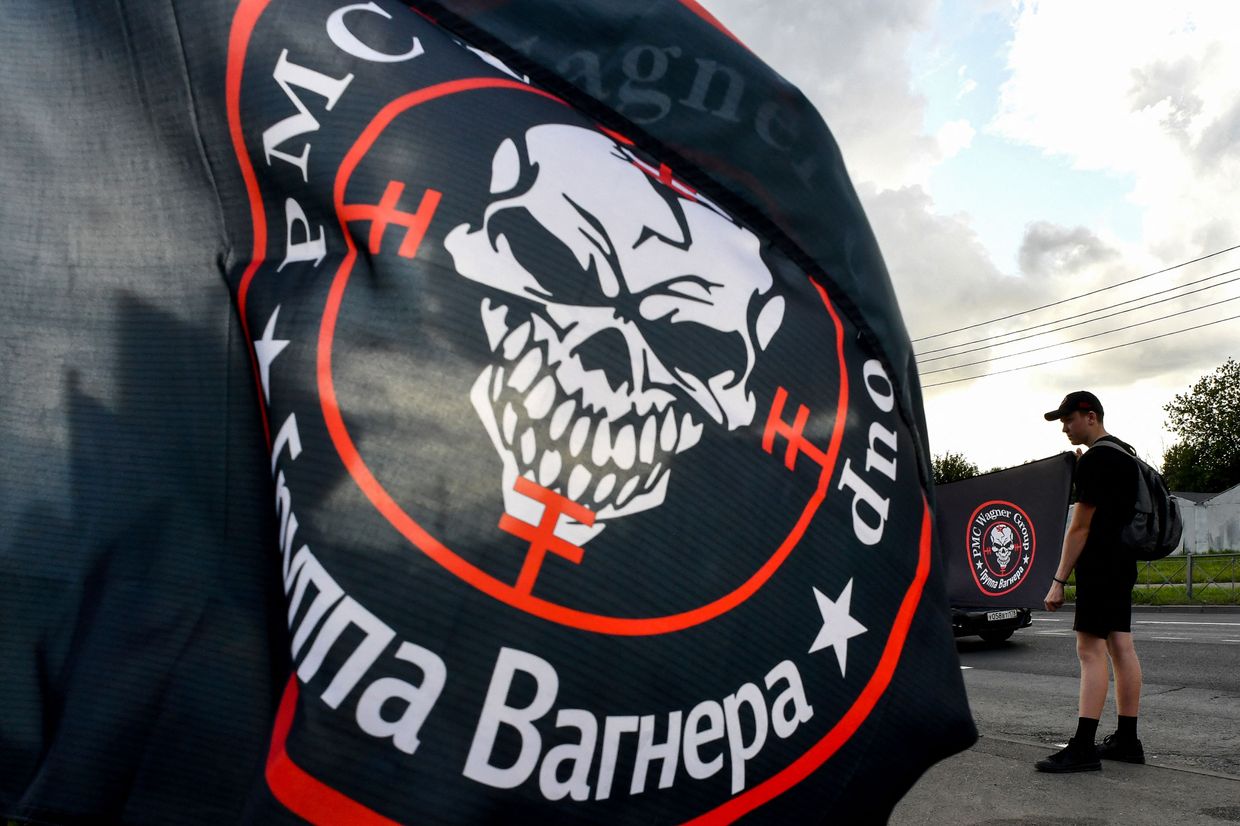
Russia's Wagner Group abused civilians in secret prisons in Mali, investigation finds

Russia's Wagner Group abused civilians in secret prisons in Mali, investigation finds

Since 2021, Russian Wagner mercenaries have detained, tortured, and forcibly disappeared hundreds of civilians in secret prisons across Mali, according to a joint investigation published on June 12 by Forbidden Stories, France 24, Le Monde, and IStories.

The investigation found that mercenaries with Russia's Wagner Group, working alongside Malian government forces, had systematically abducted and detained civilians, holding them in prisons at former United Nations bases and military bases across Mali.

Drawing on eyewitness accounts and satellite imagery, the investigation identified six detention centers where Wagner held civilians between 2022 and 2024. The total number of Wagner detention centers in Mali is likely to be much higher.

Prisoners were subjected to systematic torture – including beatings, waterboarding, electric shocks, starvation, and confinement in sweltering metal containers.

The investigation was carried out as part of the Viktoriia project, in memory of Ukrainian journalist Viktoriia Roshchyna, who was captured by Russian forces in 2023 while investigating the illegal detention of civilians in Russian-occupied territories of Ukraine. She was killed in Russian captivity in 2024.

The Russian mercenary group, known for its deployment in Ukraine and short-lived rebellion against the Kremlin in 2023, has a strong presence across the African continent, backing Russian business interests and Moscow-friendly regimes.

The mercenaries have been particularly active in Mali since late 2021 and have been accused of perpetrating war crimes. In December 2024, Human Rights Watch accused Wagner mercenaries and Malian government forces of deliberately killing 32 civilians.

The Wagner Group recently announced its withdrawal from Mali, where it fought alongside Malian government forces to fend off Islamist insurgents. Wagner has been active across the African continent for years and has been previously accused of committing human rights abuses.

Ukraine war latest: Ukraine strikes targets in Russia, including gunpowder plant
Key developments on June 11: * Ukrainian drones strike targets in Russia, including gunpowder plant, General Staff says * Zelensky urges ‘stronger’ EU sanctions on Russia, lower oil price cap * Ukraine repatriates bodies of 1,212 fallen soldiers * Ukraine’s SBU releases fresh video of Operation Spiderweb, teases ‘new surprises’ * NATO summit statement
Russia's Wagner Group abused civilians in secret prisons in Mali, investigation findsThe Kyiv IndependentThe Kyiv Independent news desk
Russia's Wagner Group abused civilians in secret prisons in Mali, investigation finds
  •  
❌