Vue lecture

In Kherson, the children still train under the drones
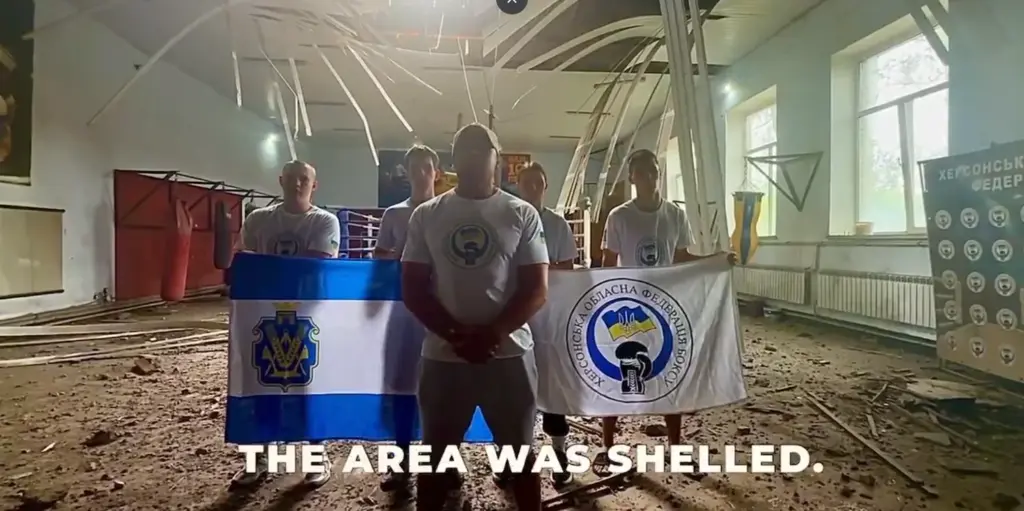
Ukrainian athletes appealed to World Boxing to keep Russia out in the last boxing gym in Kherson, destroyed by Russian shelling on 25 July 2026. World Boxing readmitted Russia on 31 July. Screenshot from video by Zarina Zabrisky/X

World Boxing has lifted the last restrictions on Russian athletes, clearing them to compete under their own flag and anthem as they chase qualification for the 2028 Los Angeles Olympics. Days earlier, in a frontline Kherson gym that Russian artillery had wrecked, the teenage boxers who trained there had recorded their own message to the Olympic movement: keep Russia out.

World Boxing approved the change on 30 July, the latest sports federation to roll back its wartime restrictions as the Olympic movement eases Russia back toward the Games, even as its attacks keep destroying Ukraine's sports infrastructure and the lives of athletes in frontline oblasts such as Kherson.
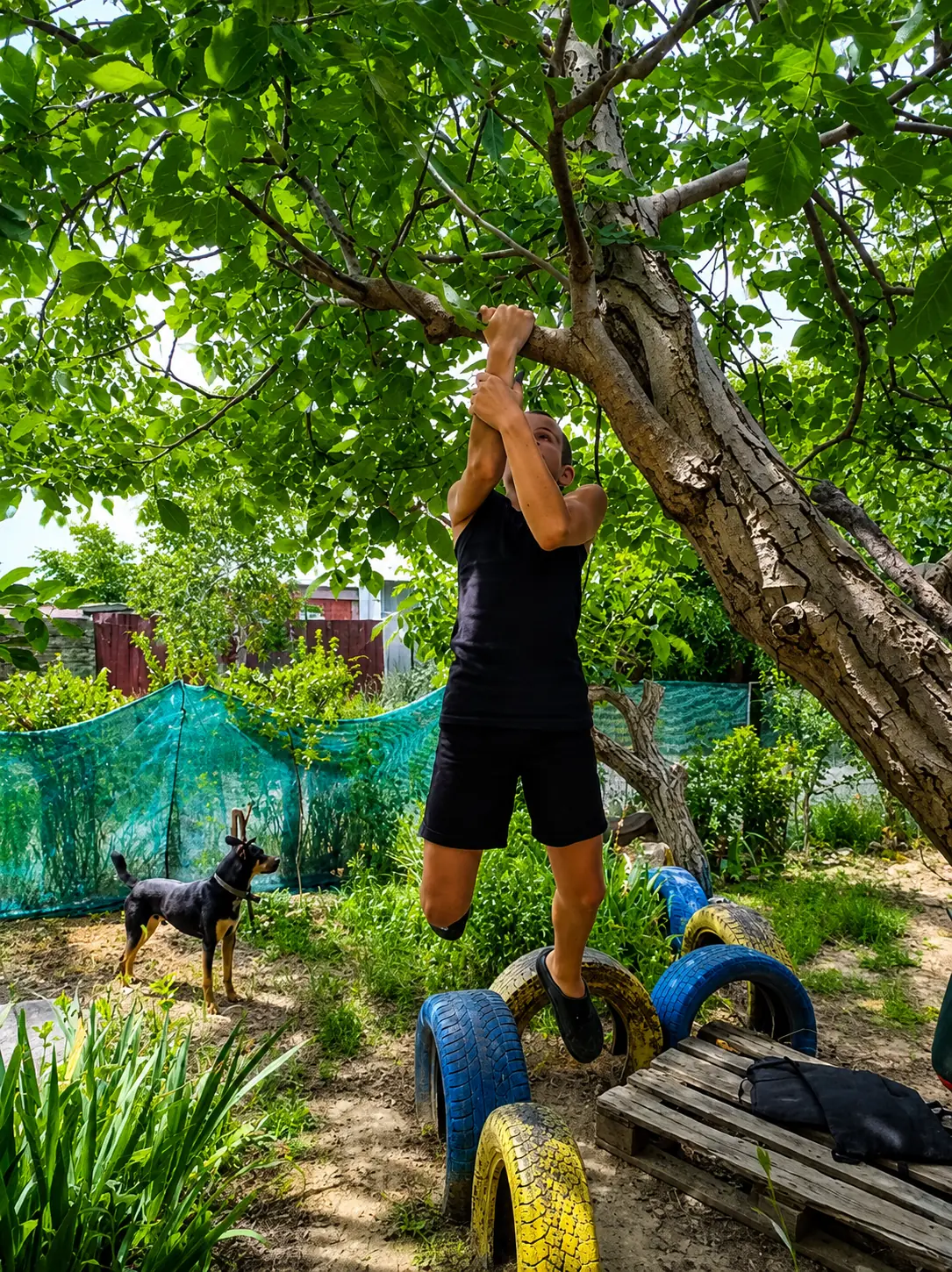
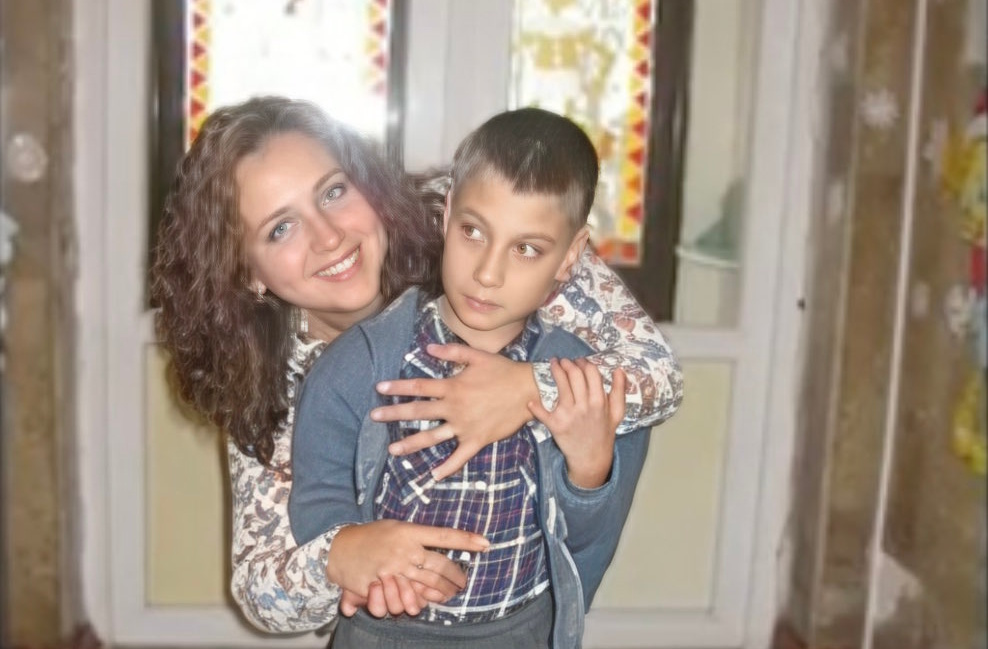
Eleven-year-old boxer Timur trains in the yard of his home in Kherson
Tymur training in his yard. Photo from the family archive.

The 11-year-old martial-arts champion who trains between drone strikes

Tymur, 11, steps out into his yard and listens to the sky. No buzzing. This means no “human safari” drones nearby. Timur has just given himself his morning insulin shot, had his breakfast, and he now heads for his punching bag, hanging from the old walnut tree. He warms up with pull-ups, the branch being his pull-up bar, as his dog runs around, and then works the punching bag, pierced by Russian shrapnel.

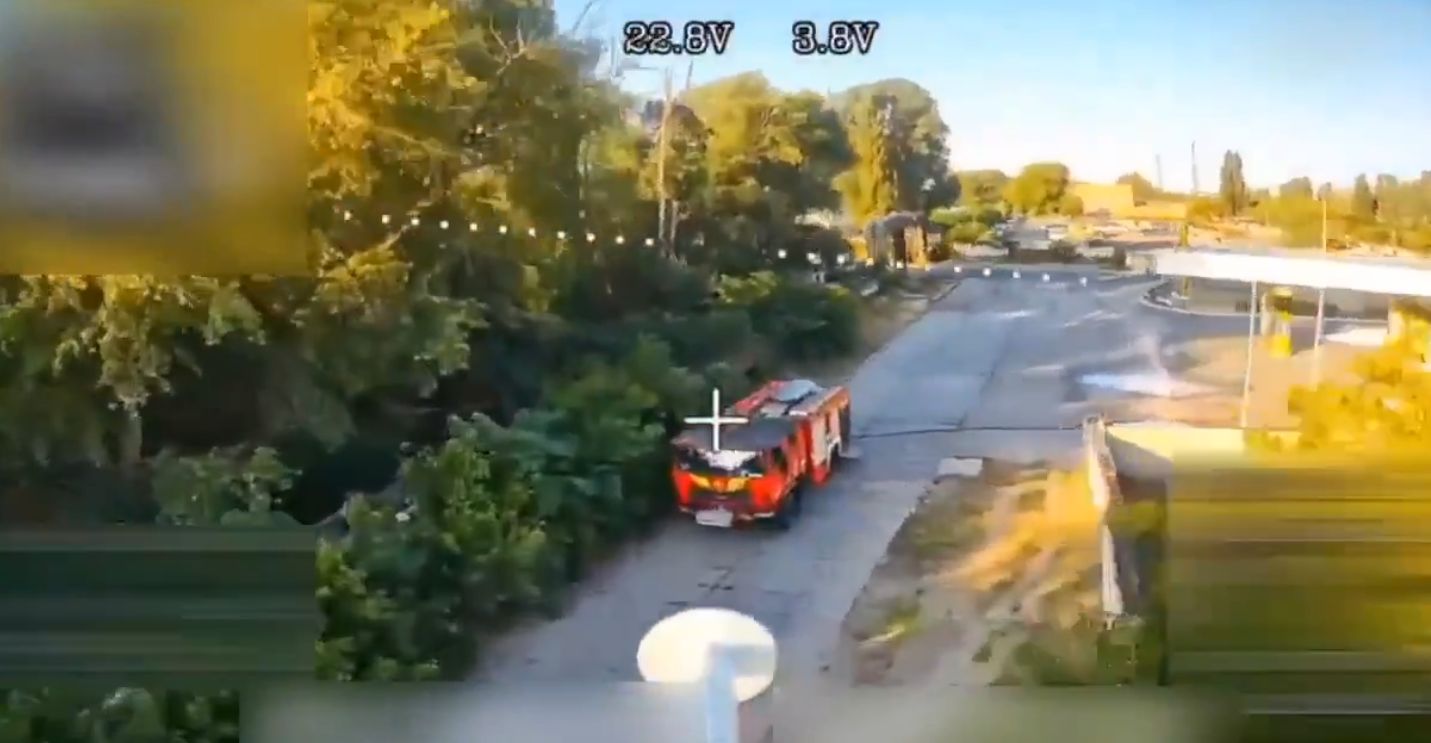
Training in the yard is not enough, so Tymur rides his bicycle under Russian FPV drone attacks to his practice session. Along the way, he stops to hide under a tree. In summer, Kherson poplars and sycamore trees offer many good hiding places, and the anti-drone nets cover many streets, but the Russian drones are flying low now.

When they spot a car, a pedestrian, or a child on a bicycle, they dive even lower. The pilots on the other side of the river see their targets but carry on with their hunt. Lately, some drones fly without making any noise.

Hearing loud buzzing, Timur jumps off the bike and throws himself in the grass. Lawns are often littered with mines, but there is no choice. After a few stops, he arrives at the practice, held in a basement. For a while, Timur can focus on the training—until he starts on his way back home.

Tymur, the Kherson city champion in hand-to-hand combat and the Mykolaiv Oblast champion in MMA, takes his training seriously, even after he was diagnosed with insulin-dependent Type 1 diabetes right after the occupation. He dreams of becoming the champion of Ukraine, Europe, and the world.

His role model is Muhammad "D.K." Ali, a British professional boxer who, like Tymur, lives with insulin-dependent Type 1 diabetes. He is also inspired by Yulian Pozdniakov, a Ukrainian professional kickboxer, a European professional kickboxing champion, a Ukrainian IFMA Muay Thai and WAKO K-1 champion, and Timur has recently started training in kickboxing and Muay Thai.
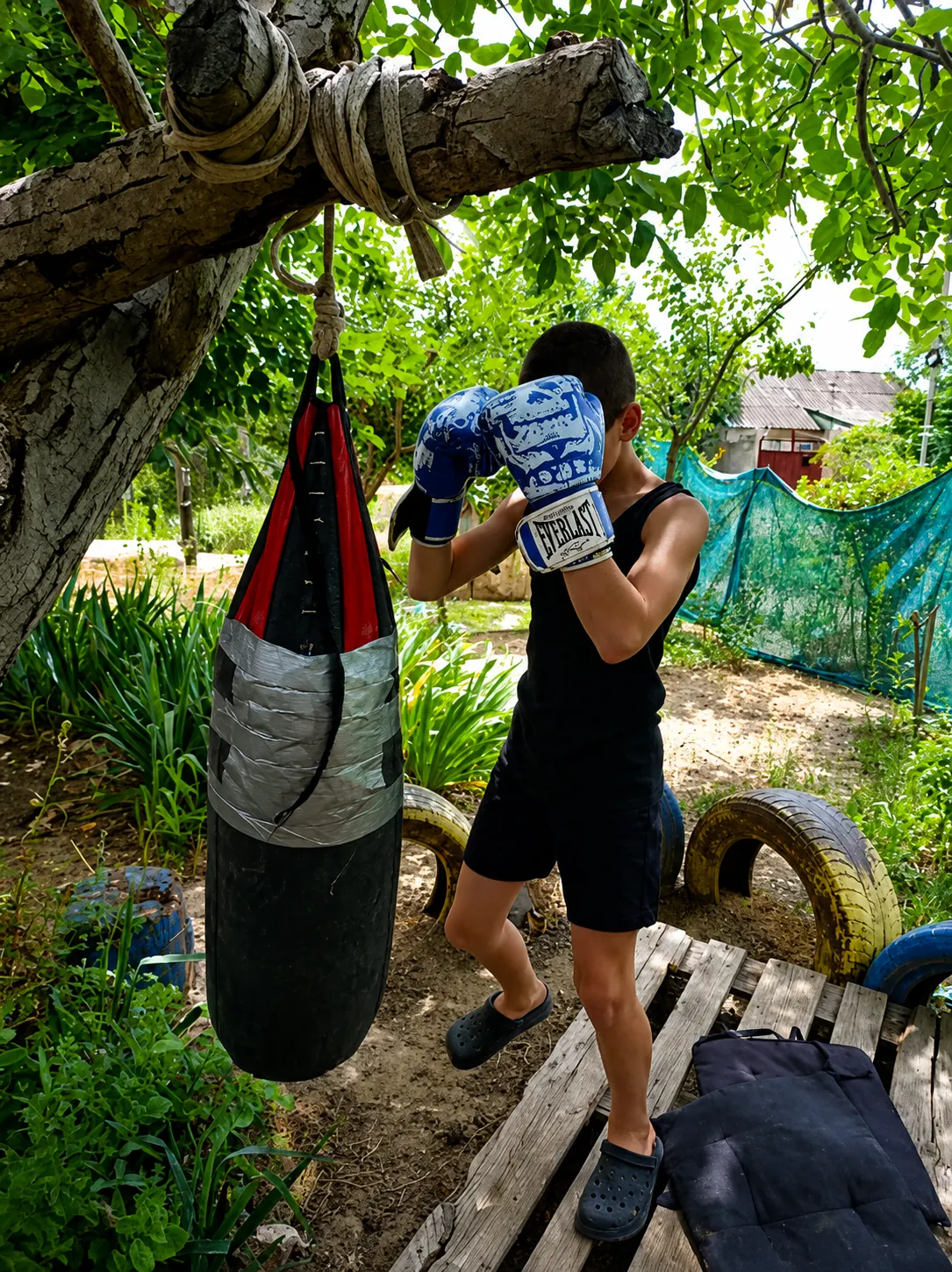
Young boxer Timur with the punching bag he trains on at home in Kherson
Tymur and his punching bag. Photo from the family archive.

Chess retreats to a basement after Russia jails the grandfather who taught it

Like Tymur, Sasha started boxing before the occupation. Eight at the time, he also practiced chess with his grandfather, an avid player, who was kidnapped by the Russian military during the occupation and sentenced to 20 years of strict regime on fabricated charges. Sasha stopped boxing, but he still plays chess.

His grandmother Tania, who also plays chess, said in an interview that Kherson is “a sports city.” Tania trains at home, doing yoga and general fitness routines.

“Everything here—our rivers and fields—is made for an active lifestyle,” said Tania. “And so our people are fit, morally and physically. The enemy is trying to destroy our places of strength, but our children stand firm and train. They do not give up in spirit.”

Her daughter, Sasha’s aunt, also practices with him over the phone as she had to move to Mykolaiv due to intense attacks on her district of Kherson. She used to go to the Children’s and Youth Sports School, also known as Chess Club. Sasha practices online with a coach during the week, but on the weekend he follows the family tradition and joins about 20 other young Kherson chess players for in-person training at the same school. Tania often walks her grandson to the basement practices, and fondly remembers the chess club and its beautiful home.

Since the 1980s, the Children's and Youth Sports School, funded by the city, held training and national and international tournaments at a historic building, a snow-white villa with arched windows and ornate wrought-iron balconies downtown Kherson. Vitaliy Bohdanov, the president of the Kherson Oblast Chess Federation for over 20 years, told Euromaidan Press that generations of young Khersonians studied chess and checkers in a former residence of the Italian embassy.

In 2023, the school had to move classes and tournaments to a safe underground facility due to constant shelling, and the building stood vacant. On 24 July 2026, the Russian military destroyed the architectural monument. The building burned out, taking a 5,000-book library of books on chess with it, and its roof collapsed after artillery and drone attacks, during which drones dropped incendiary napalm-like mixture.
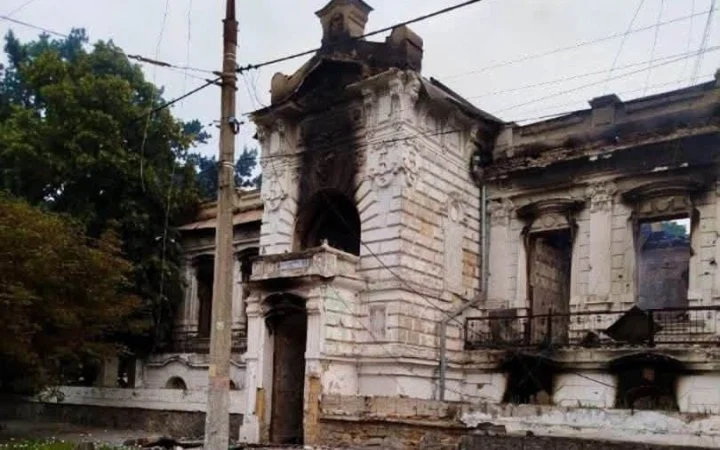
The former chess and checkers school in central Kherson, housed in a historic building that once served as the Italian consulate, was destroyed by a Russian attack in July 2026. Photo: Embassy of Italy in Ukraine/Facebook

Russia levels the last boxing gym as its teenagers film a plea to the IOC

🔴 Kherson: a Russian shell destroyed the last boxing gym in Kherson, where children and teens trained.

Standing in the ruins, the coach urged the @iocmedia @Olympics IOC to ban Russian athletes. Young boxers spoke of shock, grief, and traveling to practice under drones. pic.twitter.com/iKnsnRGCVP

— Zarina Zabrisky 🇺🇸🇺🇦 (@ZarinaZabrisky) July 25, 2026

The morning after the chess club was destroyed, Russian artillery hit Kherson's only surviving boxing gym. After the city's liberation, the gym hosted regular training sessions and competitions.
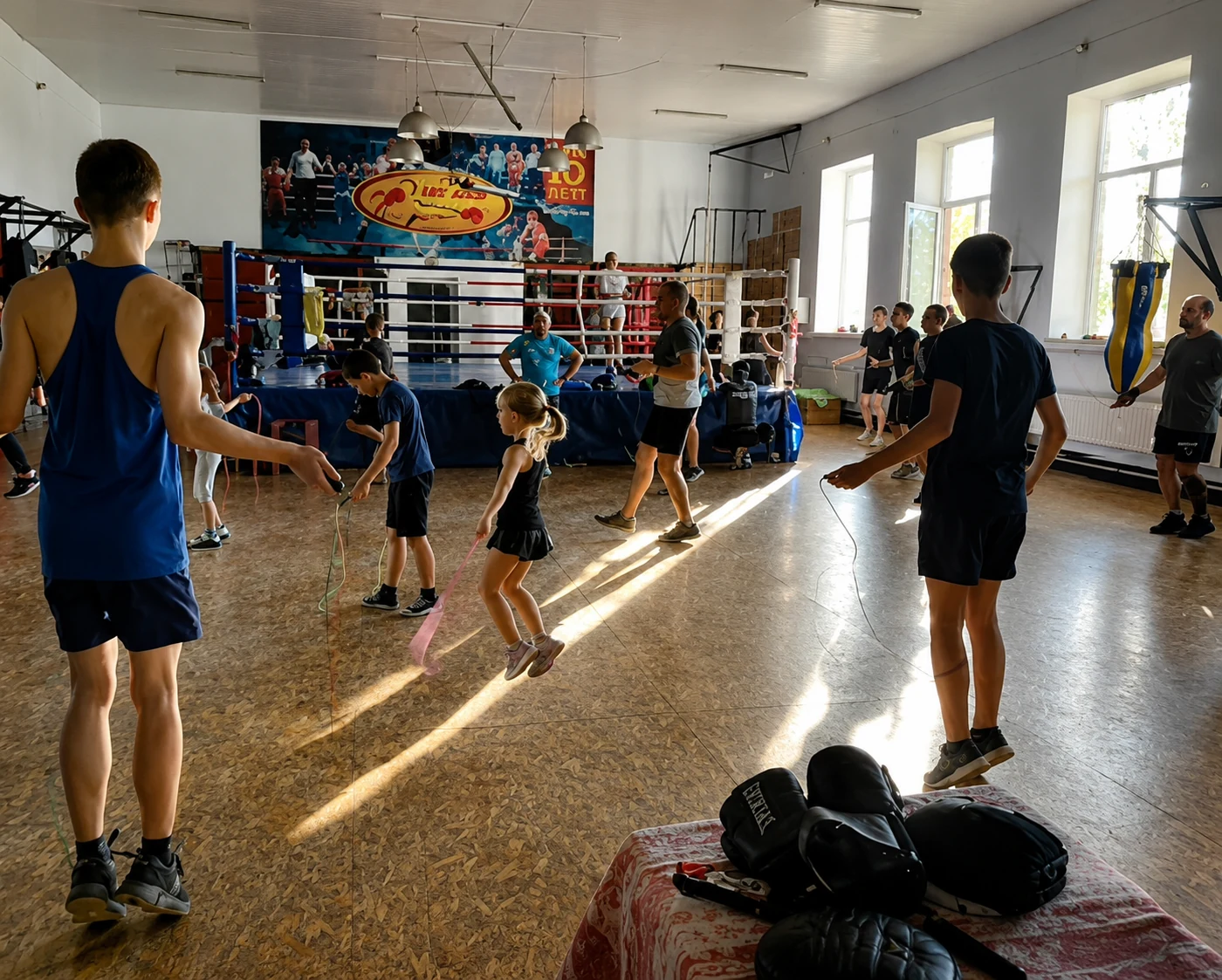
Kherson's boxing gym intact in August 2024, before Russian shelling
Kherson boxing gym in August 2024. Photo by Zarina Zabrisky.

The youth team just returned from a tournament and, instead of practicing, helped to clean the premises. Four young athletes recorded an address to the International Olympic Committee, pleading to ban Russian athletes from international competitions. Tymofiy, 15, said that he trained in this boxing ring for seven years and could not find the words.

Standing amid bricks and fallen ceiling beams, Dmytro Obolentsev, Director of the Kherson Regional Children and Youth Sports School for Boxing and Other Sports and coach of the youth team, said that training will continue.
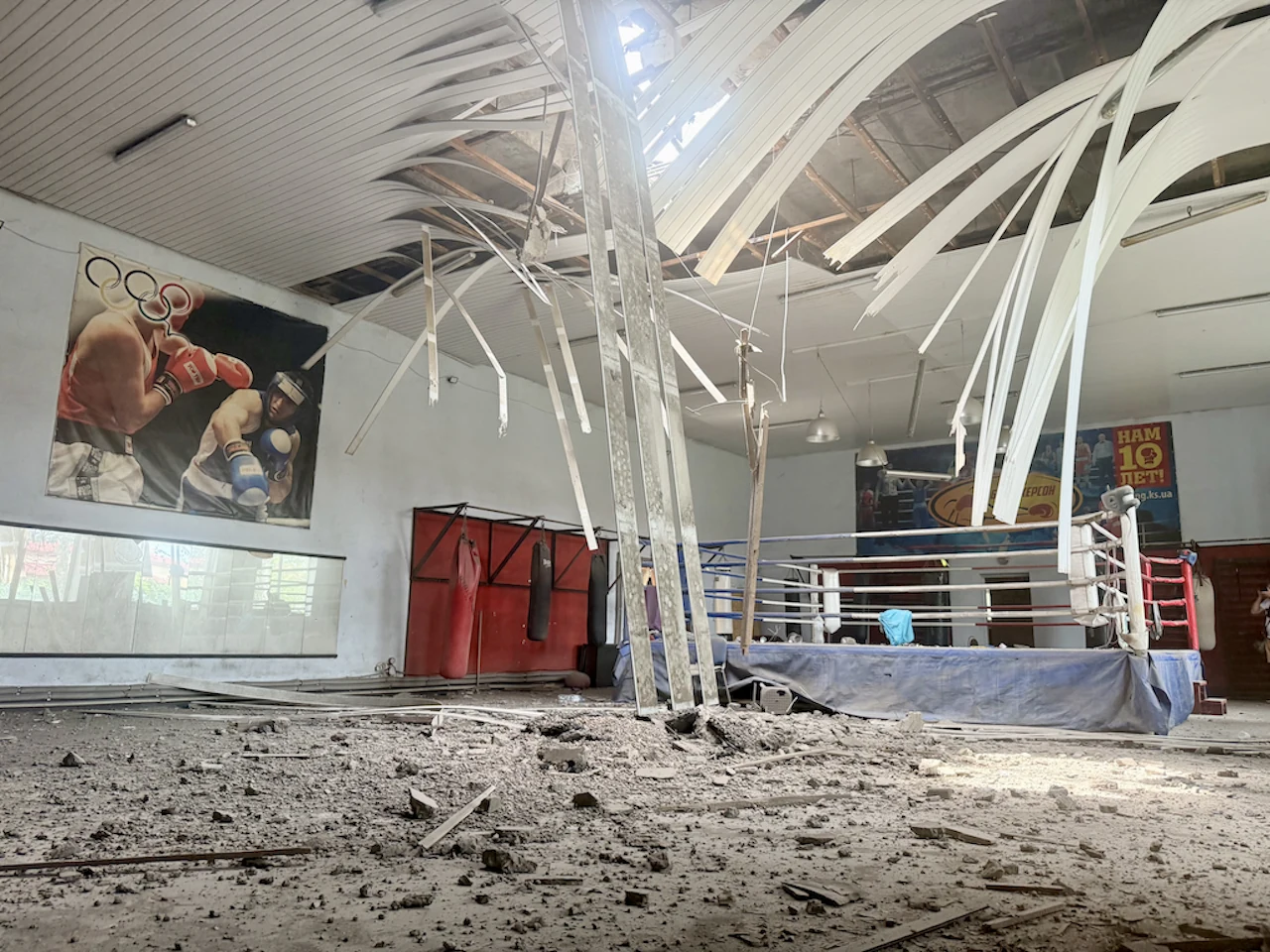
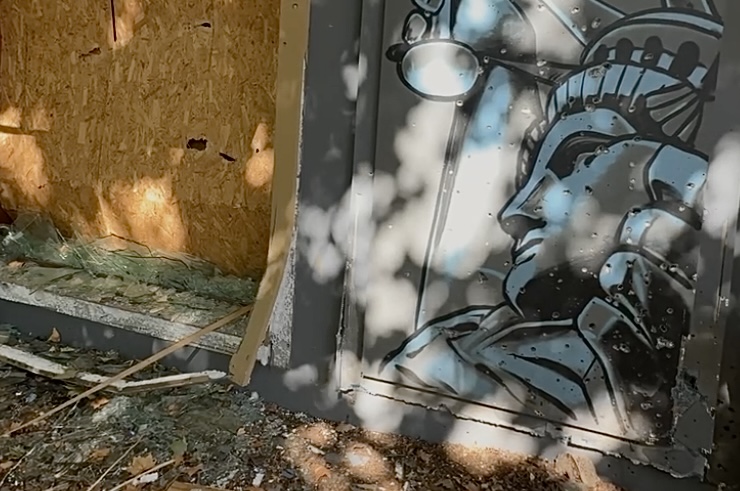
The wrecked interior of Kherson's boxing gym after Russian artillery shelling on 25 July 2026
Kherson boxing gym after Russian artillery shelling, 25 July 2026. Photo by Zarina Zabrisky.

“These walls witnessed it all: the nerve-breaking moments before stepping onto the floor, the smiles after victory, the tears of defeat, the embraces of coaches, the applause of families, and the unforgettable moment when a young athlete stepped onto the podium to receive a well-earned medal and trophy,” wrote Zakhar Zhizhko, a Kherson resident. “Years will pass, but the memory of those competitions will remain. We want to believe that this gym will once again be filled with children's laughter, genuine emotion, and the joy of victory.”

The Olympic medalist who can no longer reach his river, and trains anyway

🚣🏅 Serhii Kirsanov, Ukrainian sprint canoeist (Olympic silver medal in the K-4 1000 m event at the 1988 Summer Olympics, multiple World Championships winner) and his wife Luiza survived a Russian Shahid drone attack in Kherson.

A residential block next to them was destroyed. pic.twitter.com/D2XhazIkOu

— Zarina Zabrisky 🇺🇸🇺🇦 (@ZarinaZabrisky) July 31, 2026

Serhiy Kyrsanov, a fit man in his sixties, cleaned the destruction site on 29 July, after several Shahid drones devastated his neighborhood in the residential area of Kherson. Serhiy and his wife Luiza mopped broken glass and considered themselves lucky: their neighbors’ homes were destroyed and burned. Their spacious house featured Olympic posters and impressive memorabilia: Serhiy, a prominent Ukrainian rower, is an Olympic silver medalist and three-time world champion.

As Luiza wiped dust off the medal display in the living room, she said that both she and her husband are still involved in youth training in the city.

“I can’t row as we can’t reach the river,” said Serhiy. “But we do all sorts of other training, and we are not going to stop.”

The chess world condemns as the boxers' video circles the globe

The Italian Embassy in Ukraine condemned the attack on the chess school building, which was built for the Italian Ambassador in 1905 and hosted the Italian Embassy from 1906 to 1918. Lithuanian grandmaster and politician Viktorija Čmilytė-Nielsen expressed her indignation. Peter Heine Nielsen, a Danish chess grandmaster and five-time Danish champion, also condemned the attack. Garry Kasparov, former World Chess Champion and one of the greatest chess players in history, wrote that he was looking forward to helping to rebuild the chess club.

The boxing team’s video address to the International Olympic Committee went viral and was shared globally. Vladyslav Heraskevych, the first Ukrainian ever to compete in skeleton at the Winter Olympics, and an advocate for excluding Russian and Belarusian athletes from international sport, shared the address, adding that “Russian sports is an accomplice to Russia’s crimes.” The Boxing Federation of Ukraine issued a statement about the attack and looked into fundraising options.

"A sports city": 221 venues destroyed, its athletes still on the podium
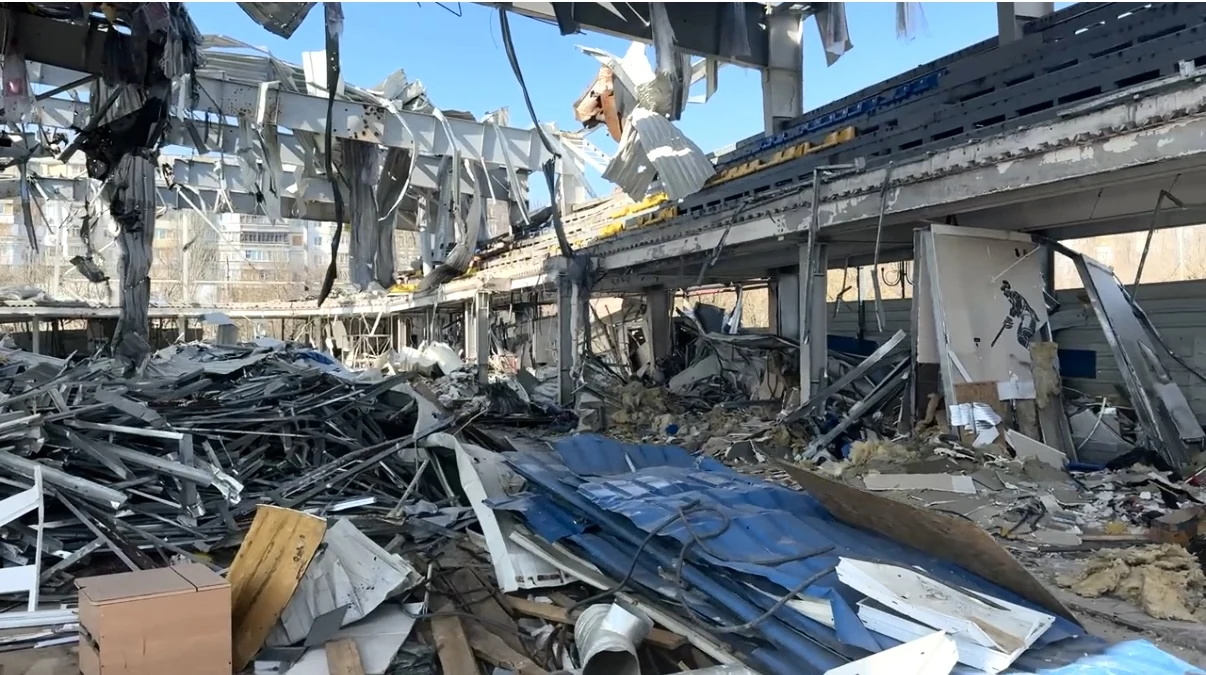
Kherson's only indoor ice rink, destroyed by Russian shelling
Kherson ice rink destroyed by the Russian military. Photo by Zarina Zabrisky.

Tymur, Sasha and the young boxers are not an exception. The girls’ soccer team used to train outdoors until a Russian shell destroyed the soccer field. Russian shelling heavily damaged Kherson's only indoor ice rink, once home to youth hockey and figure skating. The war has devastated Kherson Oblast's sporting infrastructure as 221 sports facilities have been damaged or destroyed, forcing many clubs and sports schools to relocate, operate in basements, or train in mixed and remote formats.

Yet, sports go a long way in the city nicknamed “invincible.” Mothers and grandmothers frequent various training sessions, from fly yoga to belly dance and karate. Fathers and grandfathers run under drones and used to play basketball and soccer in the red zone until the point when being outside became impossible due to the massive FPV drone attacks. Swimming pools and gyms operate in half-ruined buildings and, in winter, in freezing temperatures.

Despite daily Russian attacks, Kherson's sports community continues to compete. According to the official regional statistics, provided by the Department of Physical Culture, Youth and Sports of the Kherson Regional State Administration, in 2025 more than 50 athletes from Kherson Oblast were winners or medalists at international and Ukrainian competitions across more than 20 sports, including rowing, wrestling, boxing, kickboxing, athletics, archery, volleyball, swimming, karate, sambo, draughts, sumo and canoeing.

The list included Olympic, Paralympic and Deaflympic athletes, as well as world, European and national champions and medalists. Kherson athletes competed at the Paris 2024 Olympic and Paralympic Games, the Deaflympics, and World and European Championships, while more than a dozen regional coaches were recognized for training international-level competitors.

During the first six months of 2026, 396 athletes from Kherson Oblast took part in Ukrainian and international competitions, winning 74 medals in Olympic sports, 93 in non-Olympic disciplines, and 10 in Paralympic and Deaflympic events.

Nearly 200 displaced children from Kherson Oblast participated in regional sports competitions, while another 198 children from frontline communities attended a two-week sports and rehabilitation camp in the Carpathians.

The boxers whose gym Russia destroyed had asked the Olympic movement to keep Russia out. On 30 July, World Boxing gave its answer: Russian athletes will compete under their own flag, like everyone else. Their ring is still rubble. Training, their coach said, continues—in the basement, under the nets.
  •  

International monitors confirm Russia’s blockade of occupied Oleshky, where the living starve and the dead go unburied

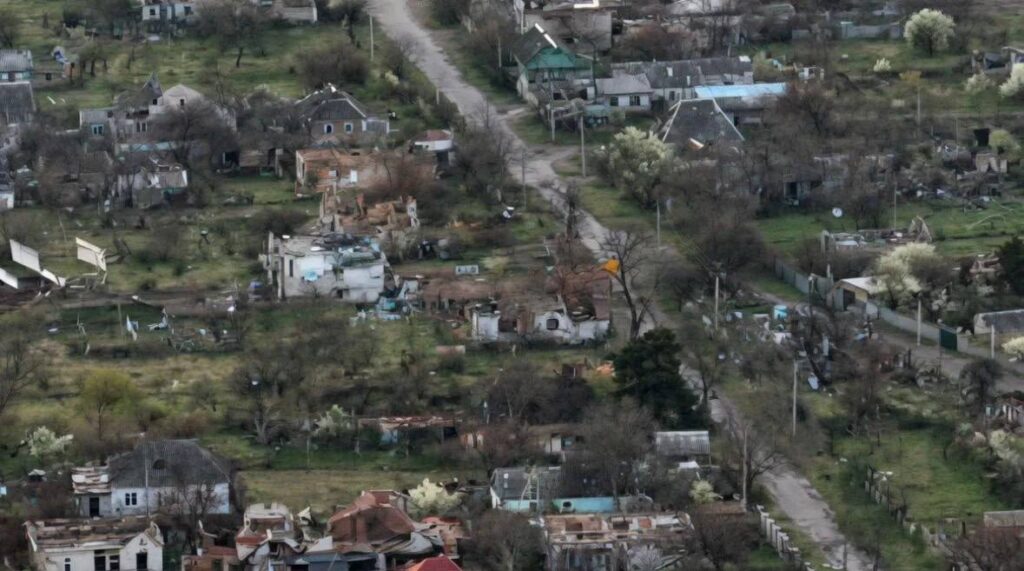
Occupied Oleshky.

Four months after Euromaidan Press first documented the drone siege of occupied Oleshky and neighboring communities, the United Nations, Human Rights Watch, and the Institute for the Study of War have independently confirmed the humanitarian crisis, major international outlets covered it, and the Pope has been informed. Yet interviews with residents, volunteers, and local officials indicate that conditions continue to deteriorate, with thousands of civilians trapped without food, medical care, or a safe way to leave.

International reports confirm the humanitarian catastrophe

Reports published by the United Nations, Human Rights Watch, and the Institute for the Study of War in late June and July 2026 point to a worsening humanitarian crisis in Russian-occupied Oleshky, where civilians face starvation as they remain trapped by drone attacks, landmines, and restrictions on movement.

On 25 June, the UN Human Rights Monitoring Mission in Ukraine (HRMMU) called the situation in Oleshky and neighboring territories "desperate." Continuous first-person-view (FPV) drone attacks and extensive mine contamination have severely restricted the delivery of food, medical assistance and evacuations. Ukrainian authorities estimate that up to 6,000 civilians, including more than 180 children, remain in the occupied communities.

The mission documented at least 29 civilians killed and 54 injured in Oleshky and Hola Prystan in 2026 alone, most of them in attacks involving short-range drones.

"Frequent attacks by short-range drones and the presence of landmines are having devastating consequences for thousands of people in these communities," said Danielle Bell, Head of HRMMU. "People can't get out, food can't get in, and sick and injured are not getting the medical assistance they need."

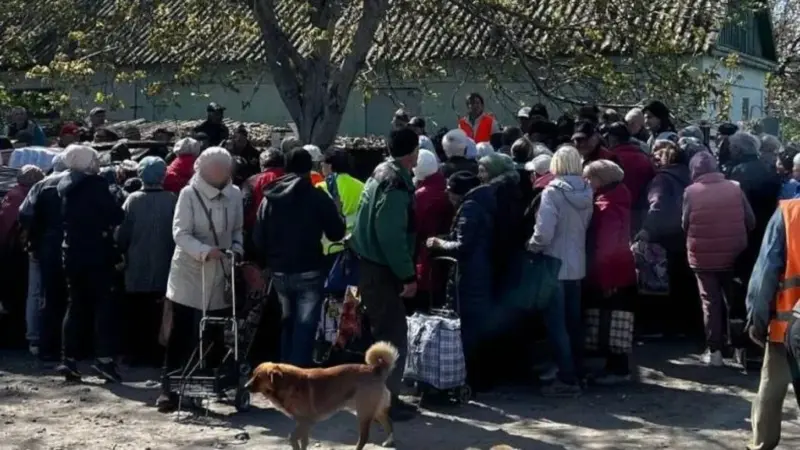
People in Oleshky wait for food supplies. Photo: BBC

HRMMU called for a local ceasefire to allow evacuations and the delivery of humanitarian aid.

Human Rights Watch reached similar conclusions. The organization documented severe shortages of food and medical care, the collapse of basic services, and constant danger from drones and landmines. Former residents said there was no organized evacuation route and that those leaving the occupied town had to pass through Russian military checkpoints before traveling through Russia and Belarus to reach Ukrainian-controlled territory.

Men who want to escape face a further trap: leaving in practice requires Russian travel documents, and applying for them, HRW found, funnels men straight to a military enlistment office. Compelling civilians in occupied territory to serve in the occupying power's forces is a war crime, the organization noted.

Human Rights Watch could not determine responsibility for individual drone strikes or the emplacement of specific mines in the area. The organization noted that Oleshky sits on the front line and has been subjected to sustained attacks by Ukrainian forces as well, and that it found credible indications Ukrainian forces may have used drones and mines on roads around the town. It said civilians wishing to leave are entitled to safe passage under international humanitarian law.

According to HRW, Russia, as the occupying power, is responsible for ensuring access to food, medical care, and humanitarian assistance.

The Institute for the Study of War (ISW) concluded that Russia is effectively blockading occupied Oleshky while failing to meet its obligations under international humanitarian law as an occupying power. The report mentioned that "the Russian military command deployed a detachment of penal recruits to Oleshky in early July, resulting in widespread abuses against the civilian population, including sexual assaults committed against women and minors."

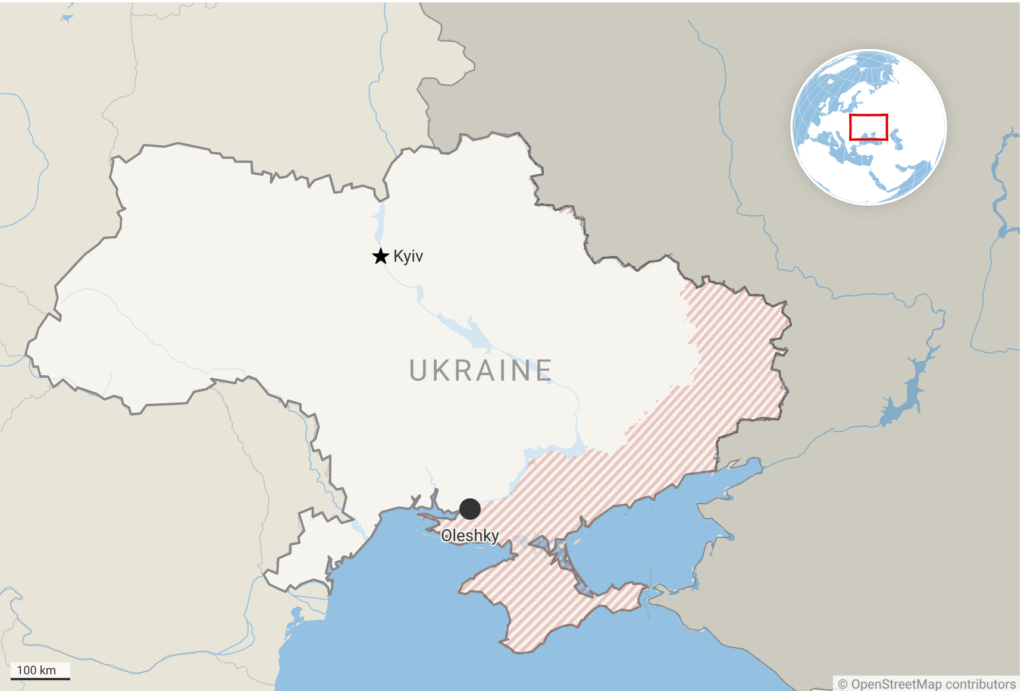
Location of Oleshky, Kherson region
Location of Oleshky, Kherson Oblast

On 15 July, the Organization for Security and Co-operation in Europe (OSCE) and its Office for Democratic Institutions and Human Rights (ODIHR) reported that conditions "remain especially dire in the Russian-occupied frontline areas of Kherson region."

As of May 2026, around 6,000 residents, including approximately 200 children, remained in and around Oleshky and Hola Prystan, where witnesses described towns transformed into a combat zone. ODIHR also received accounts that Russian forces prevented residents from leaving Oleshky and used civilians to shield military positions.

The crisis in Oleshky and the surrounding areas has received growing attention in international media. The Washington Post described Oleshky as a town being slowly strangled under occupation, citing accounts from recently evacuated residents, and called the situation "unbelievably awful." Le Monde published a detailed report on the suffering of the civilians. The Times' dispatch is called Four years of horror in Ukraine's 'forgotten Bucha.'

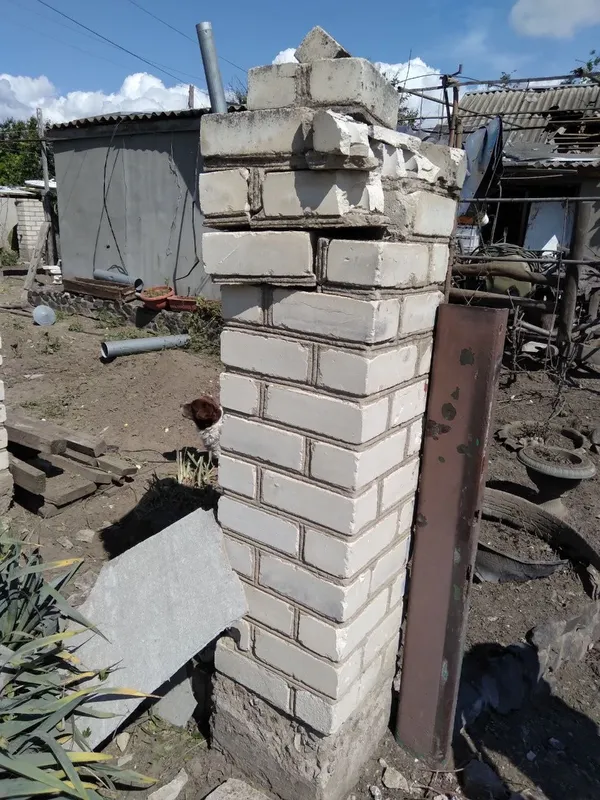
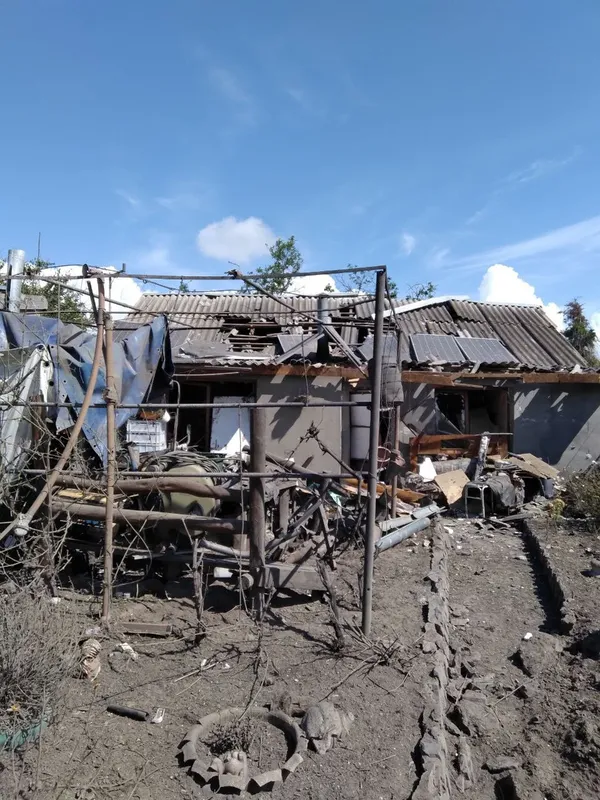
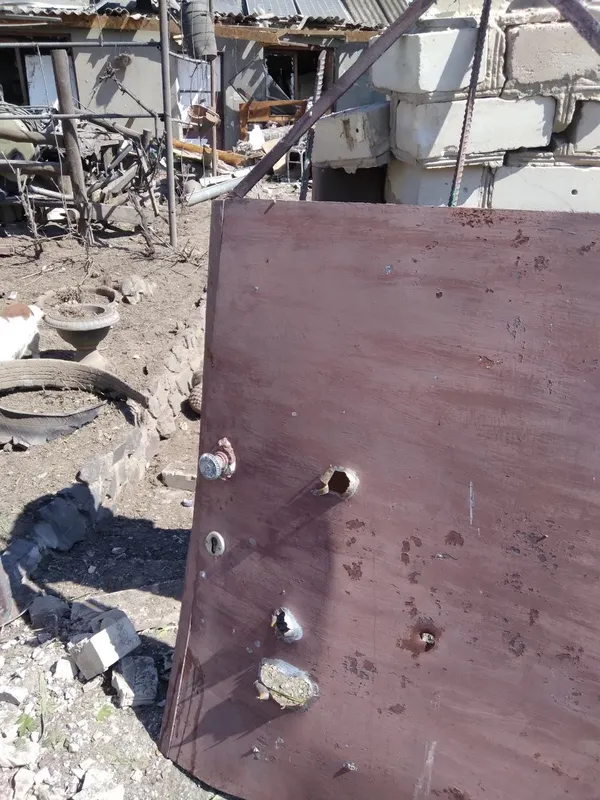
Houses damaged by drones and artillery, Oleshky. July 2026. Photos provided by Ksenia Arkhipova.

On 16 July, Ukrainian Foreign Minister Andrii Sybiha raised the humanitarian situation in Oleshky and Hola Prystan during a meeting in Kyiv with the Vatican representative, Cardinal Matteo Zuppi, stressing the urgent need for a humanitarian corridor to evacuate thousands of civilians. The same day, at a Vatican meeting of Nobel laureates, Nobel Peace Prize laureate Oleksandra Matviichuk spoke about Russia's drone attacks on civilians in the Kherson region.

While the information blockade is broken, the siege continues.

Explore further

Mined in, starved out, hunted from above—life in the towns Russia demands at the peace table

Reports from the ground

"Only one ambulance was able to leave Oleshky and come back since May 26," said Ksenia Arkhipova, the volunteer from Oleshky who helps to organize evacuation and speaks to the locals despite the problems with communication. "That's it. There is no food."

Newly arrived Russian military personnel are former convicts who loot and rob residents of the last food.

Residents tell Euromaidan Press

Arkhipova spoke to Euromaidan Press over the phone from her home in Ukrainian-controlled territory. According to her contacts in the occupied territories, the situation in the nearby villages has deteriorated dramatically. Civilians are reportedly killed while attempting to leave to buy food or bottled gas. Residents describe drones overhead that make leaving basements next to impossible.

These reports are confirmed by Oleshky Military Administration head Tetyana Hasanenko, also living in exile. She said that roads leading from villages farther from the Dnipro River, including Radensk, Chelburda, and Kostohryzove, have also become increasingly dangerous.

In Oleshky, the terror campaign is ongoing.

Three former residents speaking to their relatives have confirmed to Euromaidan Press that the newly arrived Russian military personnel are former convicts who loot and rob residents of the last food.

V., who recently escaped Oleshky and spoke to Euromaidan Press on the conditions of anonymity, said one man who lived alone was tortured to death in his basement; his neighbors found the body and managed to bury it. Others were beaten, and there are accounts of sexual violence, according to V.

The accounts were confirmed by Kherson's popular Telegram channel Kherson: Non Fake.

Posts appearing in the Oleshky community groups mentioned the robbery by former convicts. One post sought help for a dog "dying of hunger." The dog owner, who shared all the food with the pet, pleaded for evacuation.

"Now there is nothing left for people to eat," the post read.

According to Hasanenko, residents are on the brink of starvation. She described conditions in Oleshky as "hell on earth." She said the town's morgue had long been destroyed, around 100 bodies remained in the basement of the hospital for months because they could not be buried, and occupying authorities were preventing families from recovering the dead.

The reports point to the same conclusion: an urgent need for a humanitarian corridor to allow civilians to evacuate safely and humanitarian aid to reach those who remain.

The image shows Anna and her son Anton stolen from the Oleshky boarding facility. Source: Emil Foundation
Explore further

“Just give me some proof that my son is alive”: Mother from Kherson spends five years searching for her son, taken away by Russians from Oleshky boarding school

  •  

Trump’s spiritual adviser says he never knew about Kherson’s “human safari”

spiritual advisor to Trump pastor burns

A pastor who prays with President Donald Trump says he had never heard of Russia's drone campaign against civilians in Kherson—until Euromaidan Press told him.

"I have not heard about this," said Pastor Mark Burns, one of Trump's closest spiritual advisers, when briefed this week on Russia's "human safari" against civilians in Kherson and the drone siege trapping thousands of people in the occupied region across the river. By the end of the conversation, he had pledged to raise it with the president, senators, and members of Congress from both parties.

The campaign Burns had not heard of has a UN crime-against-humanity finding, named suspects facing war-crimes charges, a draft US bill, and a bipartisan screening at the US Capitol behind it. A man who prays with the president learned of it this week, from a journalist.

What he didn't know

Russia hunts kills protest targets civilians with drones stop human safari save kherson children drones
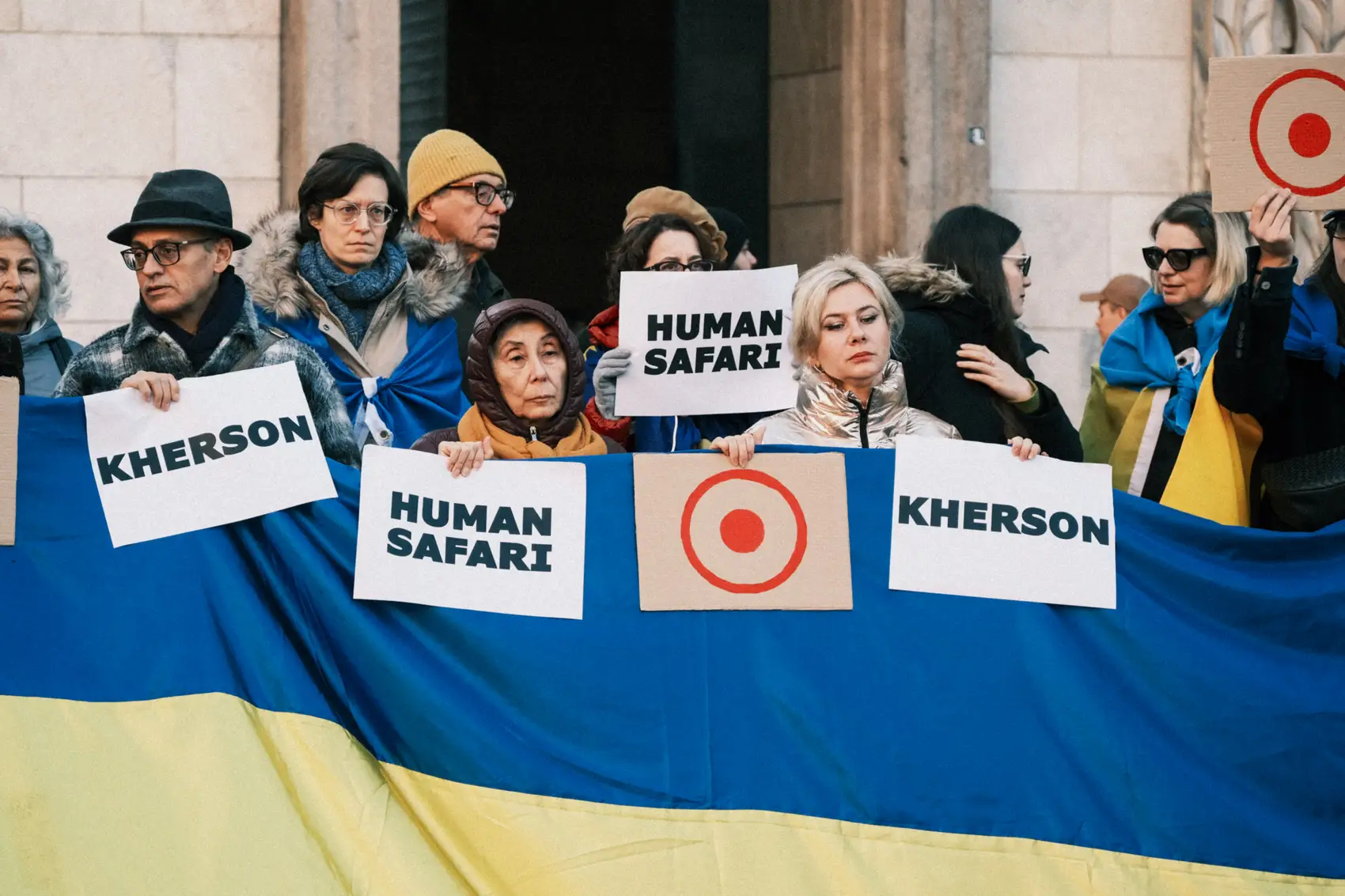
Participant of a global #StopHumanSafari #SaveKherson rally against Russia's targeting of civilians in Kherson in Edinburgh. 12-13 December 2025. Photo via Zarina Zabrisky

For more than a year, Russian forces have used first-person-view drones to hunt civilians in Kherson's streets—women walking to the store, cyclists, bus passengers, emergency responders, journalists, even animals. Human Rights Watch and the UN's Independent International Commission of Inquiry on Ukraine have concluded the attacks amount to war crimes and crimes against humanity.

Across the river, 5,000 to 6,000 civilians remain trapped in occupied Oleshky, Hola Prystan, and nearby settlements, under what Ukraine has called a drone-controlled siege—mined roads, blocked aid, and no reliable food, medicine, or power. EP reported on the UN's findings in November. In September, the UN concluded the campaign amounts to a crime against humanity; the Security Service of Ukraine has since charged 10 operators from Russia's 404th Motorized Rifle Regiment with war crimes in absentia.

"Terrifying," he said in an interview with Euromaidan Press. "I did not know about this dire situation and that innocent people were being targeted in this human safari. It's becoming the new killing fields. That's what the Nazis used to do to the Jews. Russians are doing this now to the innocent people of Kherson."

“Genocide.”

A firsthand account of the catastrophic conditions in Oleshky: no power, water, food, gas or internet.

A woman who managed to escape talks about corpses left unburied in the streets, the deaths of family and neighbors, drone surveillance, forced Russian passports. pic.twitter.com/cRTC4wpMVC

— Zarina Zabrisky 🇺🇸🇺🇦 (@ZarinaZabrisky) June 17, 2026

He drew a line between combat and what he called deliberate attacks on civilians: "The fact that Russians are using drones to target innocent people—that is not war. These are war crimes. Targeting innocent people, children, and hospitals is against the Geneva Convention. They're attacking churches. They're attacking journalists. This is at the hands of Putin, a man who claims to be a Christian and claims to have moral authority. But yet the Russian Orthodox Church blesses missiles. They bless these drones that go out to kill innocent children, kill innocent people. And they're not trying to win a war. They are simply trying to terrorize the people. It's their mission. And that's what the world is starting to see."

He said he would raise it with US leadership—"the President, the Senators, the Congress, Democrats, and Republicans"—calling it something that "needs to be heard."

Russia drone safari Kherson double tap
Explore further

UN traces Kherson’s “human safari” up the chain of command — to Putin himself

A gap he says is closing—but wasn't closed for him

Burns argued that American public awareness of Russian disinformation is improving. "The veil of the Russian propaganda is breaking," he said. "It is falling. More and more people in America are seeing right through the Russian propaganda and lies."

He said this a few minutes after saying he had not heard of the Kherson campaign, which the UN documented months ago. Both statements are his.

Burns traced his own shift to a 2025 visit to Bucha and Irpin, where he said seeing the evidence firsthand changed his understanding of the war.

Where he says US support stands

This image has an empty alt attribute; its file name is IMG_8906.jpg
Kherson. 2025. Photo by Zarina Zabrisky.

Burns said the US does not trust Russia—"We're not friends with Russia"—and pointed to the Ukraine Support Act, which the House passed in June with more than $8 billion in military financing loans for Ukraine. "We just passed an $8 billion bill to support the war effort in Ukraine," he said. The bill has cleared the House; it still needs Senate approval and the president's signature before it becomes law.

He said Ukraine's fight serves European security broadly—"Ukraine is on the front lines for Europe"—and that US intelligence assessments he's aware of see Putin's ambitions extending past Ukraine: "He will continue to Georgia, Poland, Moldova, and the Balkan states in his attempt to reestablish the former USSR. He's using Ukraine as a test."

He described relations between Kyiv and Washington as improved since President Volodymyr Zelenskyy's meeting with Trump at the G7, saying Trump "recently said that Ukraine is doing an amazing job" and "is winning the war."

What comes next

Burns said he would make the Kherson tragedy one of his rallying cries. "This is about spiritual diplomacy," he said. "And in the name of faith, that is my spiritual obligation as a man of God to do whatever it takes to promote peace and to promote the well-being of the innocent."

"I often say that Ukraine has the most powerful nation and the most powerful military in Europe," he added. "It is pushing back the full might of the Russian empire, the Russian Federation. 20,000–30,000 Russian soldiers are dying every month at the hands of the Ukrainians, and not because Ukrainians want war, but because they are defending their home."

Burns did not specify whether he meant killed or killed and wounded. Independent counts of Russian deaths run lower. Mediazona and the BBC's Russian service have confirmed more than 229,000 Russian soldiers killed by name as of late June 2026—a floor rather than a full toll, since the count includes only deaths verifiable through open sources. British intelligence has put the figure far higher: the head of GCHQ said in May that nearly 500,000 Russian troops had been killed since 2022. Ukraine's General Staff, which reports killed and wounded together, logs Russian losses at roughly 1,000 or more a day.

Burns said he plans to visit Ukraine as soon as August and is considering a trip to Kherson itself, "to let people know that the President has not forgotten."

Whether that follows through—and whether it changes anything in Washington—is untested. What's on record now is narrower and more specific: a pledge, made after being shown what he says he didn't know.

Russia hunts kills protest targets civilians with drones stop human safari save kherson children drones
Explore further

Global protests demand end to Russia’s “human safari” as lawmakers propose new sanctions bill

Editor's note: Euromaidan Press correspondent Zarina Zabrisky, who conducted this interview and reports from Kherson, has co-developed draft US legislation on the campaign—the Liability for Operators and Responsible Authorities (LORA) Act, named after Larysa "Baba Lora" Vakuliuk, an 84-year-old killed by a Russian drone near Kherson in October 2025. The bill, drafted with former Senate intelligence staffer Paul Joyal, would impose targeted sanctions on identified drone operators, restrict exports of drone components, and require public attribution of perpetrators. Members of Congress have received the proposal.

  •  
❌