
 Connexion

Russia promised Trump diesel. Five of its tankers turned for Brazil, Africa, and the Mediterranean instead

Two sanctioned tankers carrying Russian diesel toward the US under President Donald Trump’s deal with Vladimir Putin have changed course away from American ports, the Associated Press reported. At least three more have since followed, and no Russian diesel has reached the United States since the deal was struck in October. A tanker expected in New York this weekend has yet to confirm where it will unload, while Moscow insists the shipments are still on their way.
Russia pays for its war against Ukraine largely with oil money, and Western sanctions have spent years squeezing that income. Ukraine adds pressure from the other end, with drones hitting Russian refineries, five of them over the past week alone. Washington, meanwhile, has loosened its own grip: Trump already waived the tariffs Congress set for buyers of Russian oil. A US market for Russian fuel would give the Kremlin both revenue and a political win.
The first three tankers turn away, a fourth may still be bound for New York
The Russian tanker Talisman, under US, UK, and EU sanctions, and the Sierra Leone-flagged Leruo, sanctioned by the UK, EU, and Canada, loaded diesel at the Baltic port of Primorsk in October and first declared the US Atlantic coast as their destination.
The Leruo changed its signal to “Brazil” on 2 November, the day before the US vote, while the Talisman steered into the Mediterranean, the Financial Times reported. A third sanctioned tanker, the Beast, loaded at Primorsk on 27 October and set off signalling “Atlantic,” a sign it was bound for the US coast.
The Greek-owned Agioi Fanendes appeared to be continuing toward the US but signalled only “for orders,” meaning no confirmed unloading port. “The third one, Agioi Fanendes, is set to arrive in New York this weekend,” Kpler analyst Matt Smith told the FT, adding that it would not be surprising if it diverted too.
Free ship-tracking data show three of them now moving away from the US. The Talisman was south of Sicily on 6 November, heading east at about 12 knots and signalling “for order,” according to VesselFinder. The Leruo last appeared near the Azores on 3 November, heading south-southwest with “Brazil for order” as its destination, MyShipTracking data show.
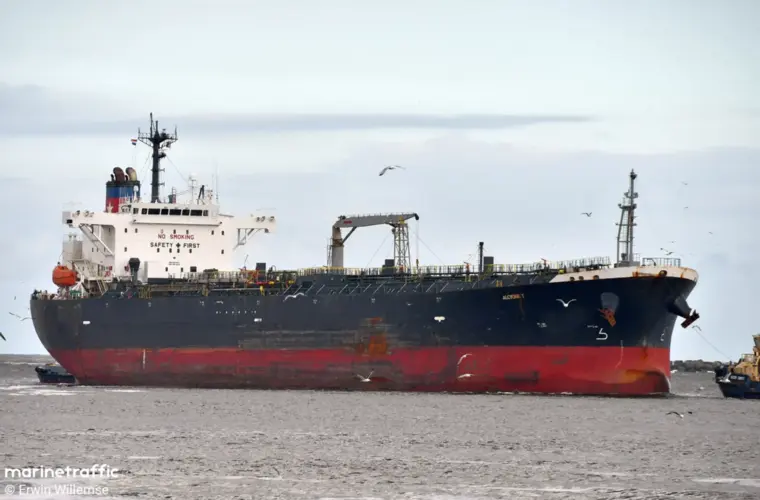
The Beast turned later. On 4 November, the day after the vote, it was still signalling “Atlantic for order” off the Shetland Islands, MyShipTracking shows. By 5 November, it was northwest of Scotland, heading southwest, with “Brzil” (sic!) as its new destination and arrival expected on 25 November, according to VesselFinder.
The Agioi Fanendes loaded about 40,000 tons of diesel at Primorsk on 22 October. Its last position on free tracking sites dates from 28 October, off the north coast of Scotland, heading west, AIS Vessel Tracker shows. Such sites often lose ships far out at sea, so the gap alone says nothing about its course.
A Ukrainian monitor names more tankers that could be US-bound
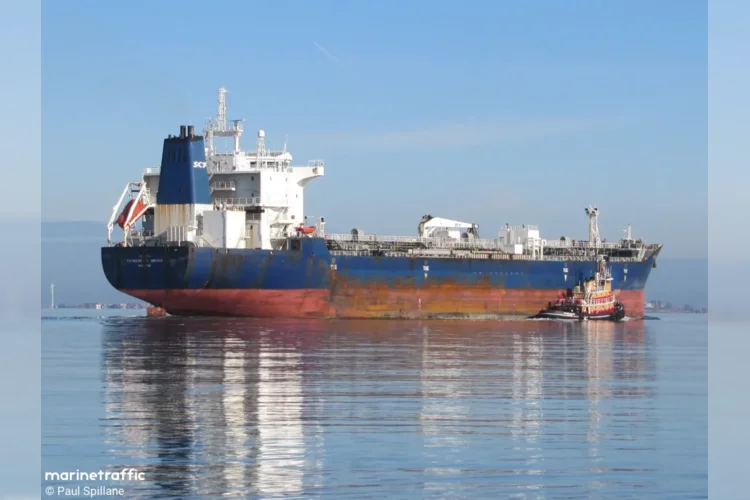
Ukrainian monitors see a wider picture. Of 49 oil-product tankers that left Russia’s Baltic and Arctic ports from 29 September and were still at sea on 3 November, eight could be considered bound for the US, Andrii Klymenko of the monitoring group at Ukraine’s Institute of Black Sea Strategic Studies wrote. He stressed this was only an assumption: the ships change their destinations in response to world media attention, and no reliable information about their cargo is public. His list included the Agioi Fanendes and the Beast, plus six more tankers.
Two of those six have since turned away. The Hanna, which had listed a yacht marina near Boston, was off the Iberian coast on 6 November, heading south for Tema in Ghana, according to VesselFinder. The Manta, under EU and UK sanctions and also once listed for the Boston-area marina, now signals “Tanger Med for order,” Morocco’s port on the Strait of Gibraltar, VesselFinder shows.

US weighs relief for sanctioned shadow fleet tankers, days after freeing Russian diesel
Two still point at the US or nowhere. The Iblea still lists Corpus Christi, Texas, according to VesselFinder, and was last tracked near the Azores on 4 November, heading west, MyShipTracking shows. The Marina M, which had listed Fairless Hills, Pennsylvania, now signals only “for orders,” according to VesselFinder. Its last free-tracker position dates from 2 November, north of Scotland, MyShipTracking shows.
The last two are harder to place. The PVT Azura still lists Norfolk, Virginia, but MyShipTracking last logged it in the North Sea on 20 October, while VesselFinder shows it back in the Baltic Sea. The TG Aries lists Trois-Rivières in Canada rather than a US port. MyShipTracking placed it north of Scotland on 2 November, but VesselFinder shows it nearly stationary in the Baltic Sea.
Don’t believe your eyes and vessel trackers: Moscow calls the reports fake
Kremlin envoy Kirill Dmitriev dismissed the diversions in a post on X, saying the US-bound cargoes continue on course, Reuters reported on 5 November. Ship-tracking data from Kpler and LSEG showed at least six Russian diesel cargoes announcing Atlantic crossings by then. Two of them had turned away, and none had arrived in the US. Kremlin spokesman Dmitry Peskov said “all the diesel will find its buyers” and denied any link between the course changes and the US midterm elections.

Dmitriev was in Washington that day. He spoke at a White House event hosted by First Lady Melania Trump on the Oleshky evacuation ceasefire, and Trump met him afterward.
A US ban stands in the way, and Congress changes hands in January
Asked late on 5 November about the 2022 US law banning Russian energy imports, Trump said: “Then it probably makes it a pretty bad law. I will take a look at it.”
Critics say the Treasury waiver Trump’s administration issued, valid until April 2027, cannot override that ban. New Jersey Governor Mikie Sherrill has warned port operators that handling Russian diesel could bring civil and criminal penalties, and senators from both parties have called the imports illegal.

Bipartisan US senators say Trump’s Russian diesel deal conflicts with 2022 ban, as he presses Kyiv to spare Russian refineries
Analysts see several possible reasons for the turnaround. Buyers may have balked at UK and EU sanctions that kick in once a European insurer or bank is involved, Maximilian Hess of the consultancy Enmetena Advisory told France 24. Kevin Rowlands of the UK’s Royal United Services Institute said the midterm results raised the risk of cargoes being seized in US ports.
Democrats won both chambers in the 3 November vote but take control only when the new Congress meets in January. Until then, Republicans keep their majorities, and after that, Trump keeps his veto.
Since publication, this piece has been updated with a Ukrainian monitor’s list of six more tankers that could be US-bound and their latest tracked positions.
Read also
-
Russia resumes diesel exports to Türkiye, Brazil, after Trump lifts sanctions on fuel supplies, boosting Moscow’s war revenue – Reuters
-
Ukrainian Congress Committee of America urge Governor Hochul to help block 140,000-ton Russian diesel shipment bound for Port of New York on 6-7 November
-
A month before the diesel waiver, Trump’s envoys had already pitched Kyiv on Russian gas, NYT says
