❌

Vue normale

Two plants make 70% of Ukraine’s steel. Russia hit both. Then ports closed, rail costs rose 30%, and the EU’s carbon tax kicked in

23 septembre 2026 à 09:26

two plants make 70% ukraine's steel russia hit both ports closed rail costs rose 30% eu's carbon tax kicked · post arcelormittal kryvyi rih steelworks прес-центр кривий ріг ukraine news

Russian missile strikes shut down or damaged four of Ukraine's largest steel plants in August and September, halving steel output and prompting the operator of the country's largest plant to call on the government to pass a dedicated rescue plan, RBC-Ukraine reported.

Russia's full-scale war has already cost Ukraine the Azovstal plant in Mariupol, one of its largest steel mills, and more than two years of disrupted production across the sector. The latest strikes hit plants that produce the bulk of remaining capacity, concentrated in a single month, in what the industry describes as a deep crisis for a sector that supplies 6% of the country's GDP.

Steel output halved as missiles hit plants producing 70% of Ukraine's steel

The 11 August strike on Zaporizhstal killed seven workers and injured 21 as they headed for a shelter, Metinvest said; a second ballistic strike on the plant followed on 27 August. Two died and 13 were injured at ArcelorMittal Kryvyi Rih, and five were killed at Kametstal. Russia also hit the Dnipro Metallurgical Plant. On 12 September, Russia struck both Zaporizhstal and ArcelorMittal Kryvyi Rih again with ballistic missiles.

Zaporizhstal and Kametstal, both part of the Metinvest group, stopped entirely. ArcelorMittal Kryvyi Rih—Ukraine's largest steel plant—partially shut down. Zaporizhstal and ArcelorMittal alone produce more than 70% of Ukraine's steel.

August steel production fell to 277,000 tons, down 57.3% year on year and 39.4% from July, according to Ukrmetalurhprom data cited by GMK Center. Rolled-metal output dropped to 270,000 tons.

Strikes, a port blockade, and rising costs hit at once

The strikes came on top of a Black Sea port blockade that has shut down maritime exports of iron ore and steel since late July. A 30% increase in rail tariffs took effect on 1 August. Alternative routes—rail through western border crossings, Danube ports, and roads—can carry at most 50% of what the Black Sea ports handled, GMK Center analyst Andrii Hlushchenko said. Steelmakers also have to compete with farmers for that limited rail capacity.

Rail exports of iron ore and metals dropped 2.5 times in the first 15 days of September compared with the same period last year, Ukrzaliznytsia said. Shipping iron-ore pellets through European ports costs $50–60 per ton, making many deliveries unprofitable.
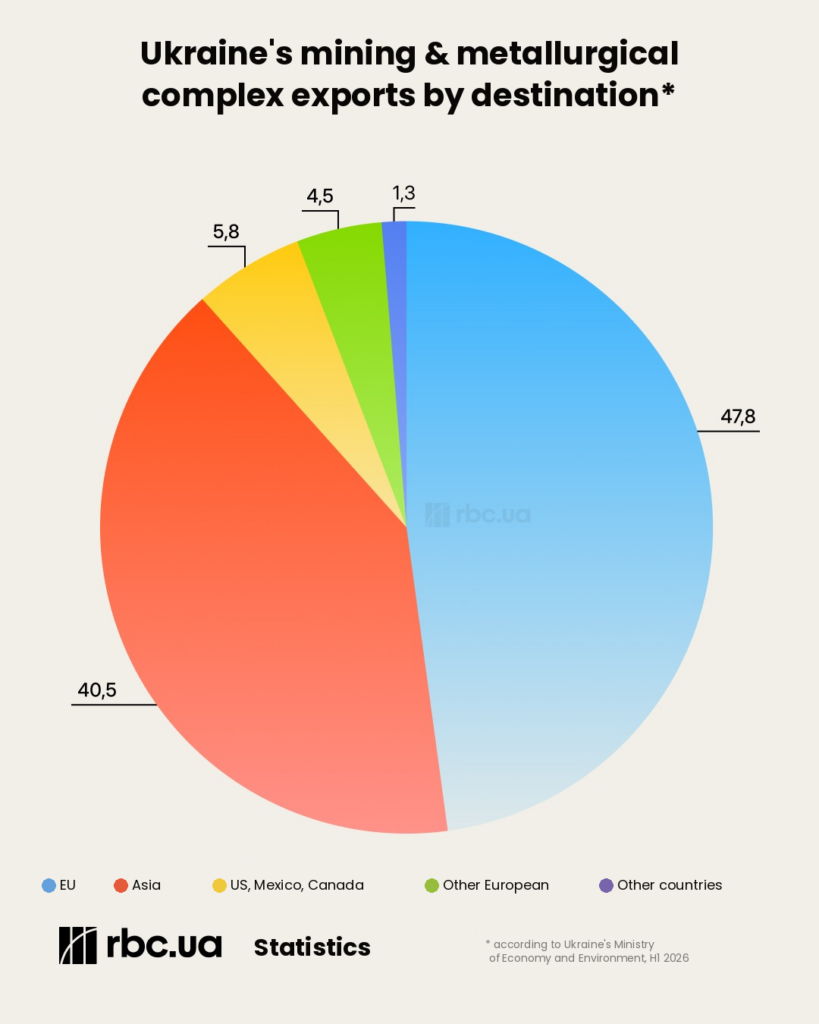
Ukraine's mining and metallurgical complex exports by destination. Infographic: RBC Ukraine

The steel sector generated 6% of Ukraine's GDP last year, brought in 13% of all foreign-currency earnings, and paid UAH 27 billion (about $606 million) into budgets between January and July. Deputy chair of the parliamentary economic committee Dmytro Kysylevskyi called the situation "a perfect storm."

Meanwhile, Türkiye re-rolls Russian slabs and sells the resulting steel on Ukraine's domestic market. China uses cheap Russian energy to undercut Ukrainian prices.

"We are effectively importing Russian metal in the form of finished products," Ukrmetalurhprom President Oleksandr Kalenkov said.

ArcelorMittal calls for a Cabinet rescue resolution

ArcelorMittal Kryvyi Rih CEO Mauro Longobardo said the government should pass a dedicated Cabinet resolution assigning specific tasks and deadlines to multiple agencies at once.

"No single agency can solve the full set of problems. Without a single document with assigned responsibilities and deadlines, each issue is dealt with in isolation and stalls," ArcelorMittal Kryvyi Rih representatives said.

The resolution should cover EU negotiations on deferring the carbon border tax (CBAM) until at least the end of martial law plus one year, restoring steel quotas to last year's level, stabilizing rail tariffs, securing long-term electricity contracts for industry, and launching anti-dumping investigations against Turkish and Chinese imports, Longobardo said.

Ukraine's Economy and Environment Ministry said it is in talks with the European Commission on easing CBAM and expanding quotas. A Cabinet source told the outlet that Black Sea trade negotiations with Russia are possible in October, after the Duma elections that ended on 20 September.
Explosives found meters from the drone that crashed near a Bundeswehr air base—investigators say it matches the GRU’s Leipzig attack devices

23 septembre 2026 à 07:54

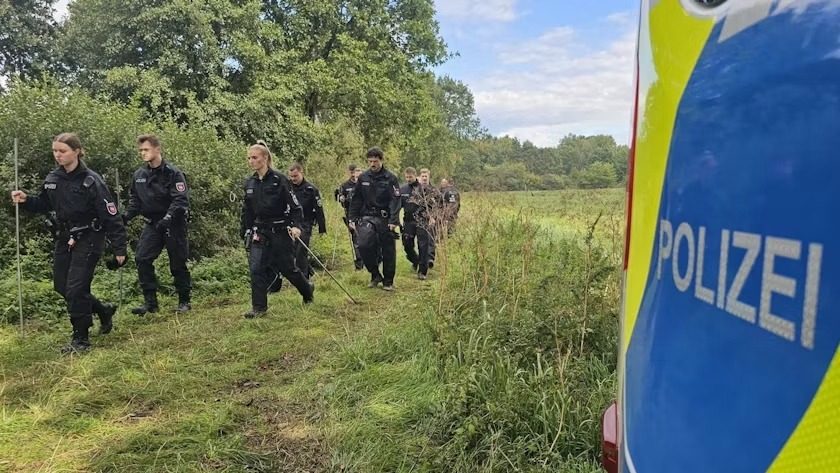
explosives found meters drone crashed near bundeswehr air base—investigators say matches gru's leipzig attack devices · post police officers search debris wunstorf base lower saxony germany 15 2026 german dpa

Investigators found what they believe is explosives meters from a crashed drone near the Bundeswehr's Wunstorf air base in Lower Saxony, Germany, and the device matches the construction of drones used in the GRU-attributed Leipzig airport attack, Süddeutsche Zeitung, NDR, and WDR reported on 22 September. Germany's federal prosecutor and the Federal Criminal Police Office (BKA) have taken over the investigation, and the same reporting traced one of the Leipzig suspects to a sanctioned GRU colonel who directs sabotage against countries arming Ukraine.

Russia's sabotage campaign against countries supporting Ukraine has escalated from arson packages and recruited proxies to explosives-laden drones targeting military infrastructure inside NATO. Germany's military counterintelligence has attributed repeated sabotage on German soil to Russia, while Finnish President Stubb called the broader alarm about Russian threats an "overreaction"—a position the accumulating evidence from Germany and Poland does not support.

Explosives found days after the drone crash

A farmer discovered the drone, broken into several pieces, on the evening of 14 September, about one kilometer from the Wunstorf air base, Militarnyi reported. Days later, police found a suspicious substance just meters from the crash site. Security sources told SZ, NDR, and WDR they believe it is an explosive, though forensic analysis has not yet been completed.

The drone's design is similar to the devices used in the Leipzig airport attack on 4 August, when attackers tried to destroy Ukrainian cargo planes with explosives-laden drones. At least one component was manufactured using a 3D printer, the reporting found. Investigators believe the drone may have been near the military airfield for a long time—possibly up to two years.

Wunstorf air base houses the Bundeswehr's entire A400M transport fleet. The facility is Germany's central hub for moving troops and materiel worldwide. An explosives-laden drone near this base would represent a direct threat to the Bundeswehr's central global logistics hub.

The Wunstorf find was discussed at the weekly intelligence briefing in the Chancellery on 22 September, the outlets reported.

Leipzig suspect linked to sanctioned GRU colonel

The federal prosecutor's investigation connects the Wunstorf case to the Leipzig attack. In that case, Germany's government has officially blamed Russia. Two suspects were identified: Oleg L., a Latvian with a Russian passport, and Andrei K., a dual Belarusian-Russian citizen whose DNA was found at the Leipzig scene.

SZ, NDR, and WDR reported that Oleg L. maintained years-long contacts with GRU Colonel Denis Smolyaninov. The EU sanctioned Smolyaninov for directing sabotage operations against countries supporting Ukraine. Andrei K. had previously been noticed for minor offenses in the Baltic states and Finland and entered Germany on an Italian tourist visa. Moscow denied involvement in the Leipzig attack.

A drone violated the no-fly zone around NATO's missile shield base in Poland

The Wunstorf case came to light in the same week that a drone violated the no-fly zone around the US-operated Aegis Ashore missile defense base in Redzikowo, northern Poland, on 15 September.

Polish troops guarding the facility called civilian emergency services instead of neutralizing the drone, TVP World reported. Poland's defense ministry said the drone was a civilian device that "posed no threat" and remained under military surveillance, but Defense Minister Władysław Kosiniak-Kamysz ordered a full report into the incident.

Vivaldi’s secret weapon was the targeting, not the robots: Third Corps reconnaissance mapped Russian command nodes, then hit them to cause panic

23 septembre 2026 à 05:24

vivaldi's secret weapon targeting robots third corps reconnaissance mapped russian command nodes hit cause panic · post graphic ukraine's army / telegram під час операції вівальді нрк десантували щоб порушити

Ukraine's Third Army Corps dropped kamikaze ground robots on Russian command nodes identified by reconnaissance during Operation Vivaldi, a corps intelligence officer told Radio NV. The strikes aimed to break command coordination and force Russia to divert combat troops to guard its own headquarters, while a parallel campaign destroyed a diesel pipeline that fed about half the daily fuel needs of Russia's entire West grouping.

Russia's full-scale war against Ukraine is now in its fifth year, with Moscow pushing simultaneously along the front and striking cities behind it with drones, cruise and ballistic missiles, and glide bombs. The Vivaldi operation is the first time Ukraine has publicly shown how a reconnaissance-to-robot strike chain works against command nodes without risking infantry, a method that could be replicated across other sectors where Russia's coordination depends on forward headquarters within drone range.

Reconnaissance identified command nodes, robots hit them

One of the tasks set by corps commander Brigadier General Andrii Biletskyi was to disrupt command and communications in the Russian chain of command, the officer said. Brigade and corps reconnaissance identified areas where a strike could break Russian control.

"Reconnaissance of the brigades and the corps identified such areas that could affect the disruption of enemy command. It was into these areas that robots were dropped to create panic, disrupt command, and prevent the enemy from being effective," the officer told Radio NV.

To protect their command posts from the robots, Russian forces had to pull in additional personnel—troops that could not then be used to resist the Third Corps' ground assault.

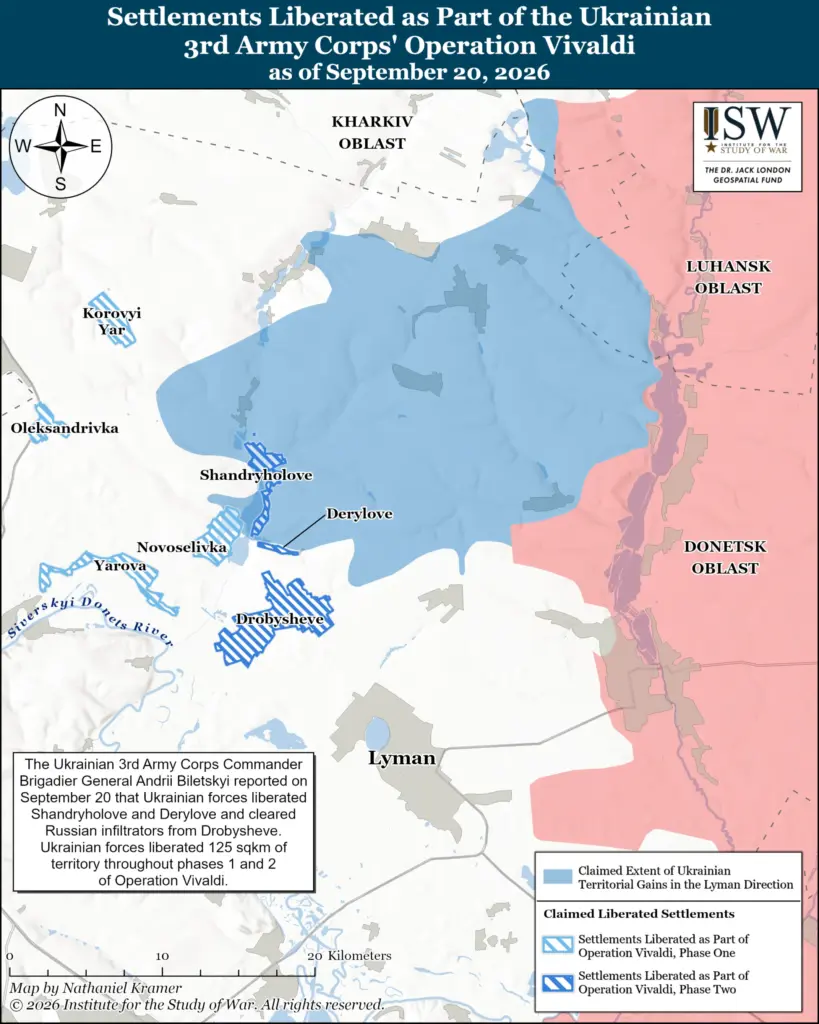
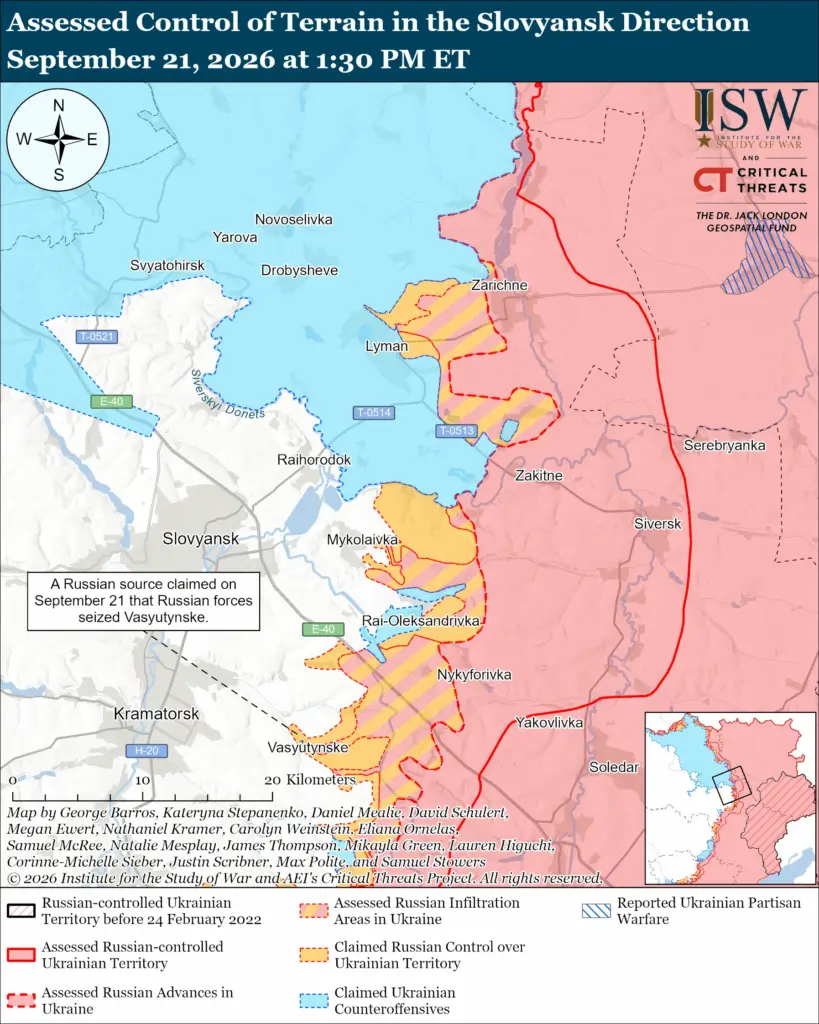
Map: ISW

The Third Corps announced on 20 September that heavy bomber drones delivered kamikaze ground robots more than 10 km behind Russian lines, calling it a world first.

The same intel operation identified a frontline diesel pipeline

The same intelligence operation uncovered a pipeline running from Voronezh Oblast to temporarily occupied Luhansk Oblast. The pipeline carried finished diesel, not crude oil, and supplied about 50% of the daily fuel needs of Russia's forces on the direction, the officer said.

The corps struck both the intake point where fuel entered the pipeline and the output point where it was loaded onto tankers. The strikes forced Russia to dismantle the pipeline entirely. Russian forces now truck fuel from Voronezh Oblast, a 400 km supply run.

The pipeline's destruction affected not just the Lyman direction but the entire West grouping, including the Kupiansk and Borova directions, the officer said. The logistical disruption left frontline Russian drone units unable to refuel generators to charge batteries, and electronic warfare systems had to operate in a reduced mode.

Repair bases struck, 250 km logistics detour

Third Corps intelligence also located the repair base of Russia's 20th Army and its 144th Division. Ukrainian strikes during the preparatory phase forced Russia to relocate the base to Voronezh Oblast, increasing the repair route to 250 km.

Russia's 20th Army and its 144th Division, reinforced by assault detachments from the First Tank Army, remain the main strike force on the Oskil-Sviatohirsk direction, the officer said. The First Tank Army has been sending additional assault units to stabilize the Russian defensive line after Vivaldi, but these reinforcements are taking critical losses on logistics routes before reaching the combat zone.

vivaldi's secret weapon targeting robots third corps reconnaissance mapped russian command nodes hit cause panic · post isw slovyansk-direction-september-21-2026 ukraine news ukrainian reports

Rubikon pulled out, Russian drone units at 70–90% strength

The officer said the corps headquarters specifically targeted Russia's most effective drone formations. During the preparatory phase, the elite Russian drone unit Rubikon was identified as a critical threat that could isolate the area of operations and obstruct Ukrainian maneuver.

Ukrainian reconnaissance located and passed targeting data to strike assets. Rubikon suffered heavy losses in equipment and personnel, and a senior Russian commander—misjudging the Third Corps' offensive potential—pulled the unit to rear areas for recovery at what turned out to be the worst possible moment, just as Ukraine's assault began.

Russian drone units on the direction are now staffed at 70–90%, the officer said. The corps is working to degrade their capability through targeted strikes on launch sites, pilot positions, and logistics in the second and third echelons.

Four seasons, two public

The officer said Russia's current task is to stabilize its defensive line, restore its observation network, and bring in additional reserves for counterattacks. Russia does not have enough personnel and will have to pull troops from training grounds before they finish their courses, shortening training cycles.

Operation Vivaldi has at least four "seasons," of which only the first two have been made public. The operation's name refers to Italian baroque composer Antonio Vivaldi, and The Four Seasons is his best-known set of four violin concerti.

Biletskyi confirmed the liberation of Shandryholove, Derylove, and full control over Drobysheve on 20 September, bringing the total to 40 km² of freed territory in the second season alone. Russian losses have reached an estimated 3,000 personnel overall, over 12,000 drones in the first season, and hundreds of vehicles, according to the Third Corps. ISW assessed that the operation disrupted Russia's plan to encircle the fortress belt of Donetsk cities—Sloviansk, Kramatorsk, Druzhkivka, and Kostiantynivka.

❌