Connexion
NATO vows to defend every inch. Svalbard is where Russia plans to prove it won’t.
US Central Intelligence Agency Director John Ratcliffe's visit to Moscow has triggered much speculation. The main thesis is that Russia may be preparing to conduct an act of aggression against a NATO member in the relatively near term to invalidate NATO's Article 5.
According to sources cited by the Wall Street Journal, Ratcliffe delivered a warning to Russia not to attack NATO countries. Estonia, Latvia, and Lithuania were singled out in a Politico report on 26 August, citing two "sources familiar with the matter."
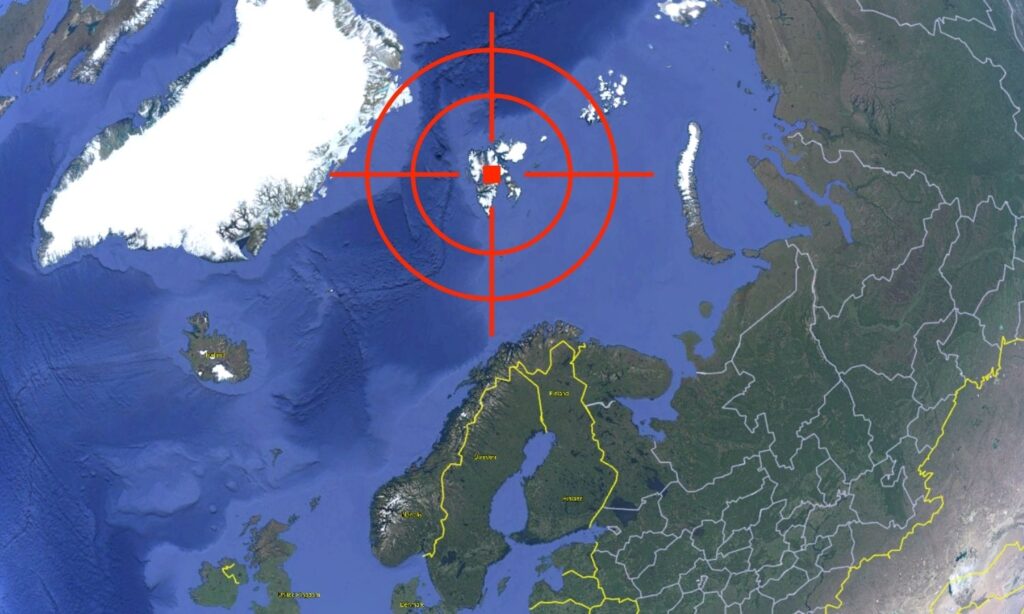
Every warning names the Baltics. Estonia, Latvia, and Lithuania are where the CIA pointed, where the intelligence assessments focus, where NATO has massed its tripwire forces. But the Baltics are defended. The one piece of NATO territory Russia could seize before anyone could stop it—and that hands hesitant Western capitals a ready-made excuse not to respond—lies far to the north. It is Svalbard.

The timeline
On 6 August, citing new US intelligence reports, the Wall Street Journal reported that "US intelligence is warning that Russia may attempt to test NATO's resolve by carrying out a limited strike against one of the Alliance's member states within the next few years." US intelligence assessments indicate that any action by Russia could occur between this autumn and 2029. This is only the latest in a series of warnings of the risk of war with Russia. Leaders of NATO's eastern flank countries recently issued public warnings, citing intelligence that Russia is preparing provocations on their territory.
On 29 August, the Polish Prime Minister said there were signs that Russia was seriously preparing for an escalation and that the next seven to eight months could be critical for the security of Ukraine, Poland, and the entire region.
The Institute for the Study of War (ISW) argues that a CIA director's personal visit to deliver a message is unusual and generally reserved for sensitive matters of the highest importance. Ratcliffe's arrival in Moscow on a C-17 military transport aircraft and his use of an American motorcade suggest that the US regarded its intelligence as urgent and sensitive—not a warning of a distant threat. The visit indicates concern about a much shorter timeline than the US intelligence reports of early August suggested.
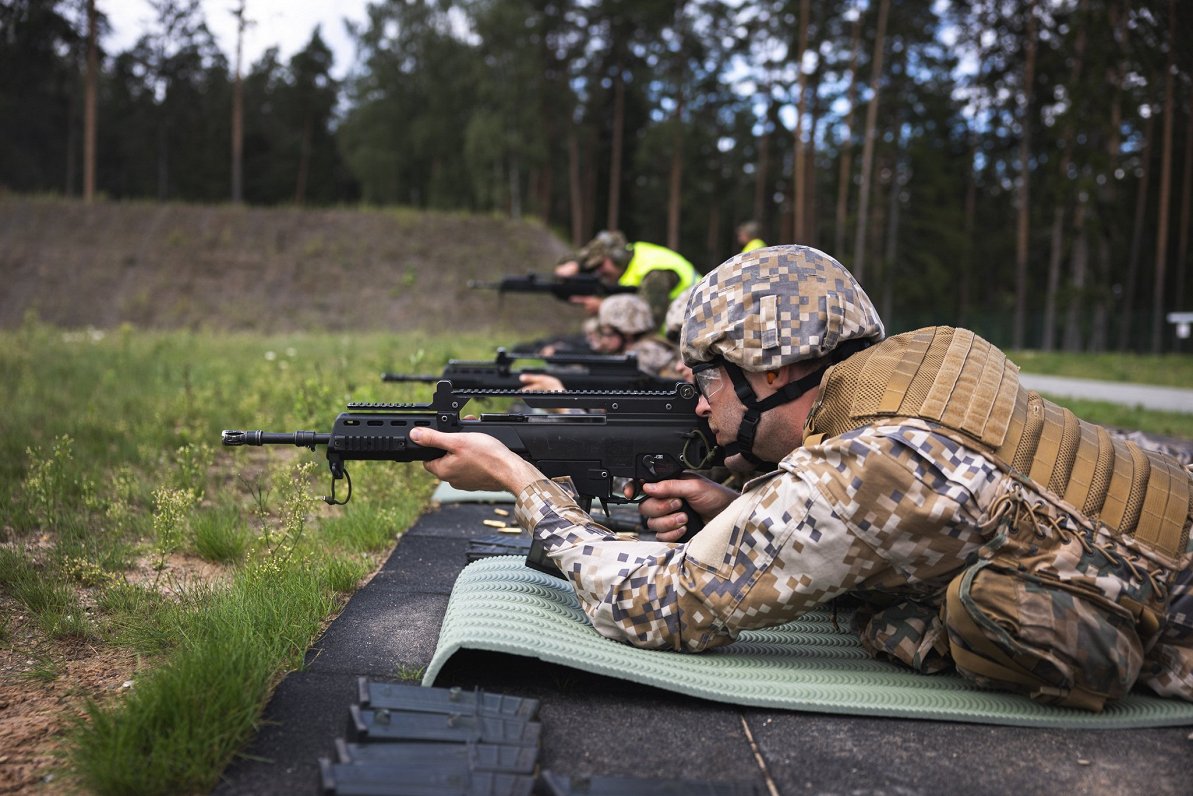
Latvia just moved from “Russia might attack” to “here’s where you report if it does”
That timeline is shaped by Europe's urgent effort to close its critical military vulnerabilities by 2030. Russia is unlikely to wait until Europe has regained its strength.
The last CIA director's trip to Moscow was in November 2021, when William Burns made a final effort to deter Russia's full-scale invasion of Ukraine. To state the obvious: Burns' effort failed—and he served a president friendly to NATO and to international law. Ratcliffe serves a president who treats Europe as a strategic adversary; his warning is unlikely to shift Moscow at all.
The threat: sub-threshold is over
The EU White Paper describes Russia as the "fundamental threat" to European security for the foreseeable future, citing its war economy, industrial mobilization, nuclear posture, and cooperation with Belarus, Iran, and North Korea.
According to assessments by several EU intelligence services, Russia's rapidly expanding military-production capacity could give it the ability to test the unity of Western countries and the effectiveness of Article 5 within the next three to five years. The US recently warned Poland that Russia is planning an armed provocation on Polish soil designed to test NATO's commitment to collective self-defense.
Let us be clear: Russia has been testing the unity of Western countries and the effectiveness of Article 5 for years already.
It is waging an ever-escalating hybrid war that could—and arguably should—have triggered Article 5 long ago. It is attacking critical infrastructure, conducting sabotage and cyberattacks, running influence and information operations, violating NATO airspace with missiles and drones, and flying UAV intelligence, surveillance, and reconnaissance missions over allied territory. On 23 August, The Telegraph reported, citing Western intelligence sources, that Russia has launched a new wave of attacks on weapons factories in Europe, recruiting members of local criminal gangs and testing NATO's response.
None of it has forced a response. That is the point. To test NATO's commitment to collective defense—rather than merely its patience—Russia must escalate beyond the sub-threshold. It must stage the one thing it has so far avoided: a military operation that forces NATO to confront Article 5.
To test NATO's commitment, Russia must ecalate—stage a military operation that forces NATO to confront Article 5
The window for doing so is closing. On 11 December 2025, NATO Secretary General Mark Rutte warned that Russia could attack a NATO country within five years, adding that the Alliance must "be prepared for the scale of war our grandparents or great-grandparents endured"—the first time since World War II that a secretary general has raised the prospect of a full-scale war on NATO soil. NATO's generals warn of war by 2029; Europe will not be ready until 2035. Russia has every incentive to act inside that gap, before it narrows.
The gap is real. These assessments have emerged against a backdrop of critical munitions shortages: Patriot interceptors, long-range precision-guided missiles, tactical ground-launched missile systems, 155mm artillery shells, and Stinger short-range surface-to-air missiles. US stocks have been badly depleted by weak defense-industrial production and by the Israel–US confrontation with Iran. NATO has since named Integrated Air and Missile Defense a top priority for the Alliance's survival and deterrence, calling for a 400 percent increase in air- and missile-defense capabilities. That is the measure of the shortfall. Worse, recent exercises have shown the Alliance is nowhere near ready to fight a drone war with Russia.
Most analysis fixes on the Baltics. In my opinion, there is a more likely scenario: the seizure of Norwegian sovereign territory in the High North.
Why Svalbard: the tripwire it lacks
Admittedly, no intelligence service has ranked Svalbard above the Baltics. That is puzzling, given that while the Baltic states are a challenge for Russia, Svalbard is a challenge for NATO.
Estonia, Latvia, and Lithuania are defended by a standing tripwire. NATO permanent battlegroups operate in each—the UK leads in Estonia, Canada in Latvia, Germany in Lithuania—backed by a forward-defense posture built to stop any incursion at the border rather than liberate territory afterward. In response to Russian airspace incursions, drone provocations, and GPS jamming, NATO stood up the Eastern Sentry initiative; after repeated undersea cable cuts, it added Baltic Sentry to patrol the sea and guard the infrastructure. The Suwałki Gap—the 60-kilometer land corridor linking Poland to Lithuania between Belarus and Kaliningrad—is heavily fortified and rehearsed in large multinational exercises.
An attack on the Baltic countries hits allied forces on day one, forcing the Alliance to act, and it requires a force buildup that telegraphs intent and escalates toward exactly the general war Russia wants to avoid.
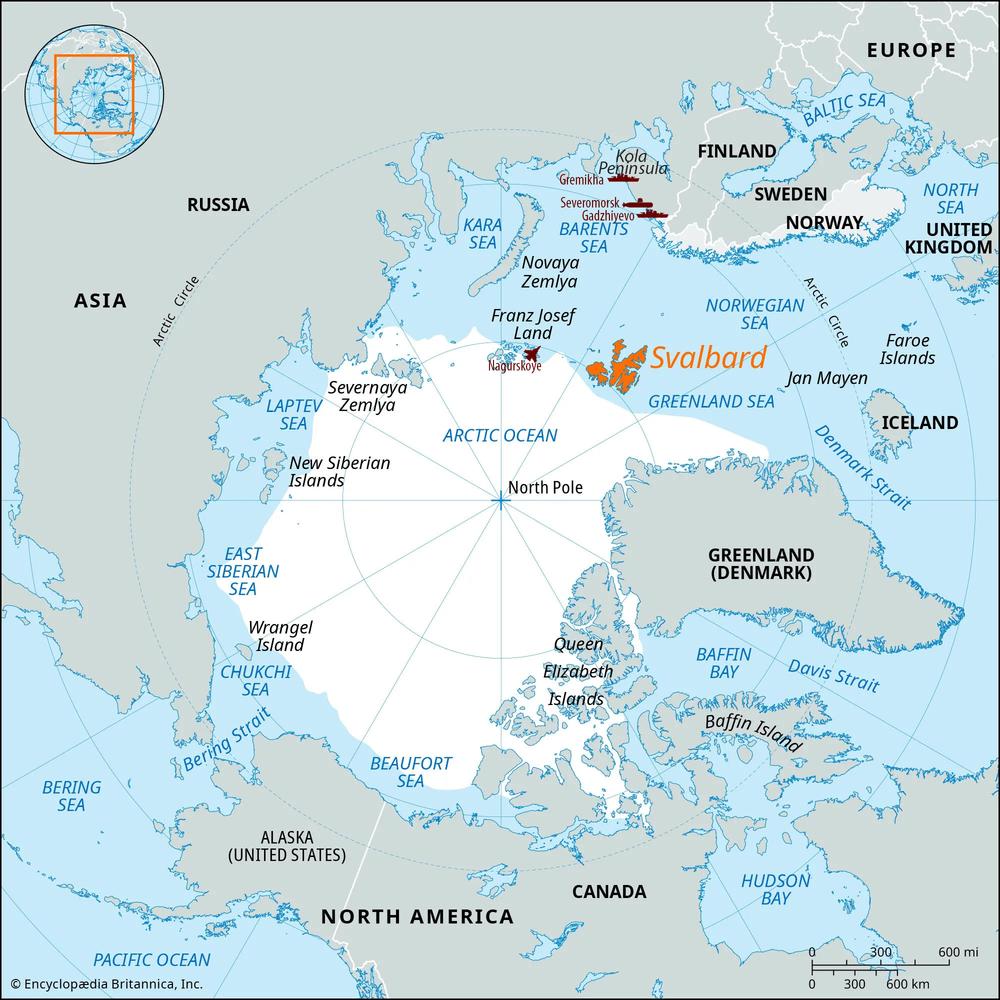
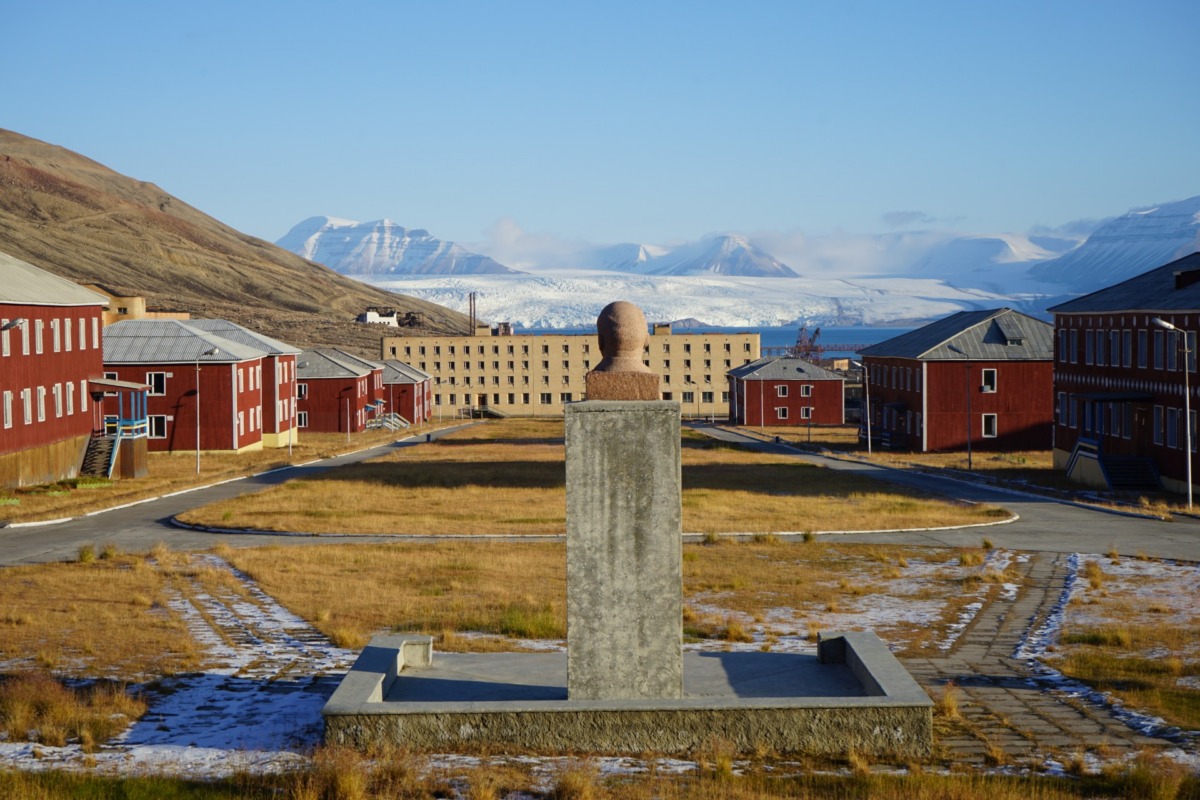
Svalbard offers the opposite. There is no permanent garrison and no fortification, because Article 9 of the 1920 Svalbard Treaty bars naval bases, fortifications, and any "warlike" use of the archipelago. Norway retains the sovereign right to defend it—Coast Guard and naval vessels call at Longyearbyen, and defensive measures under Article 5 are permitted—but there is no standing tripwire, and the treaty ensures there never will be.
That is the vulnerability: Russia can seize the archipelago by surprise and present a fait accompli before any force can reach it.
And it hands hesitant Western capitals a ready-made excuse. Svalbard is Norwegian sovereign territory, and Norway holds—correctly—that Article 5 applies to it. The land-territory question is not genuinely ambiguous; Russia manufactures the ambiguity, contesting Norway's interpretation and pointing to the treaty's demilitarized character to argue that any response is itself a violation. But in a strategic environment where Western leaders seek any reason not to engage Russia, that manufactured doubt—remote outpost, unpopulated rock, a "demilitarized" treaty—is enough.
The excuse is political, not legal. And the excuse is the objective: a visibly divided Alliance, unable to agree whether or how to respond, is the entire purpose of a Russian move against a NATO member.
If Russia achieves surprise, it will meet no opposing force. The Northern Fleet operates in the area routinely; Russia's Arctic forces—roughly 15,000 to 20,000 troops across motor-rifle and naval-infantry brigades, with cold-weather armor and layered anti-access/area-denial systems—are already in place. Svalbard sits within range of Russian tactical aviation flying from the Kola Peninsula, which could establish air control fast enough to keep NATO from landing at all.
What Russia would gain
The occupation would also pay for itself many times over, shifting the balance across the entire Arctic and North Atlantic.
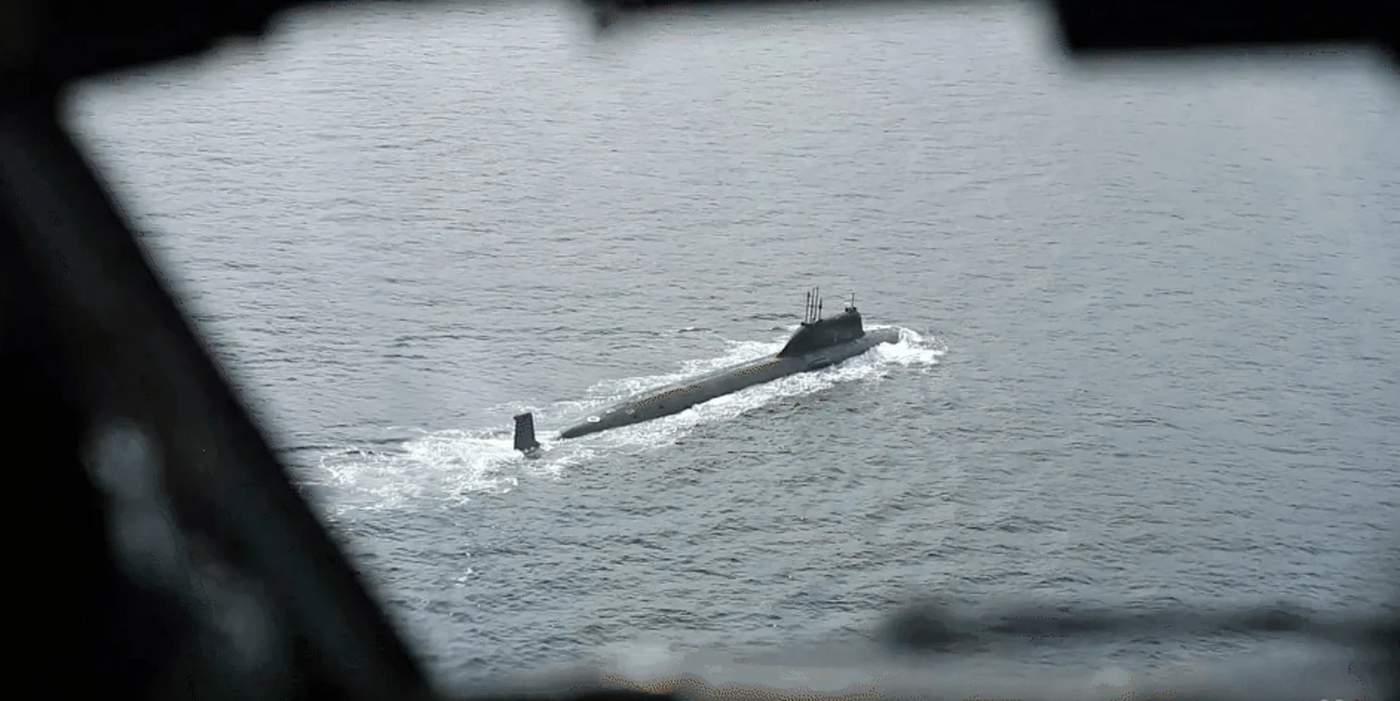
The primary military incentive is nuclear. The Kola Peninsula houses Russia's strategic ballistic-missile submarines, and holding Svalbard would close the shallow Barents Sea into a protected bastion where those submarines—the core of Russia's second-strike deterrent—could operate insulated from NATO. Control of the archipelago also locks the "Bear Gap," the stretch between Svalbard and Norway's North Cape. Anti-ship and anti-air batteries on the islands would let Russia choke off NATO surface and anti-submarine forces from the Barents Sea while guaranteeing its Northern Fleet unhindered breakout routes into the North Atlantic.

The archipelago is also a forward platform. Using existing infrastructure such as Longyearbyen's airport, Russia could base tactical aircraft and long-range maritime patrol aircraft hundreds of kilometers further west than its current fields on Franz Josef Land. Seizing SvalSat—one of the world's largest commercial satellite ground stations—would let Moscow blind or repurpose a hub critical to Western environmental, civilian, and dual-use satellite operations. And by holding the "gateway to the Arctic," Russia would gain physical leverage over the western entrance to the Northern Sea Route, an increasingly viable shipping lane as the ice retreats.
These are gains Russia would want under any circumstances. They are not why Svalbard is the likely next target—that case rests on the tripwire it lacks and the window that is closing. But they explain why, of all the ways to test Article 5, this one carries no offsetting cost.
Conclusion
The map confirms the logic. Baltic officials and government-affiliated analysts stress that NATO should take the Russian threat seriously but that their immediate assessment has not changed—there is no large-scale buildup along the Russian border with the Baltic states. The only NATO territory open to invasion without such a buildup is Svalbard.
According to the Norwegian Intelligence Service, Russia "will remain intent on preventing NATO from making military use of the archipelago" and aims "to increase Russian scope for action in Svalbard, to influence attitudes to Norwegian defence policy, to instil fear, polarisation and political apathy in the population and to undermine trust in Norwegian authorities—in addition to weakening support to Ukraine." Norway's proximity to the Arctic, its energy supply to Europe, and its role as a logistics and reception hub for allied forces all make it a target.
A limited attack on NATO's northern flank would aim to invalidate Article 5 by producing a situation the North Atlantic Council—which must vote unanimously to honor the mutual-defense clause—cannot resolve. Moscow would choose the operation most likely to leave NATO unable to unify on a decisive response, and thus unable to come to the aid of the member attacked.
A failure to invoke Article 5, or to act on it, would gut the credibility of the guarantee—one of Vladimir Putin's longest-standing strategic objectives beyond Ukraine.
Retaking Svalbard would mean moving NATO amphibious forces more than 1,000 kilometers across open ocean patrolled by Russian submarines and dominated by Russian aviation—an extremely risky and costly endeavor, with no guarantee of success. A Russian occupation would also feed an unhinged American president's fixation on Greenland, eroding Alliance cohesion further still.
Attacking the Baltics—defensively prepared, reinforced by allied forces, and offering none of Svalbard's advantages—makes no comparable sense.
The information war has already started. Russian Foreign Minister Sergei Lavrov published an article on 31 August accusing NATO of militarizing the Far North in a "direct threat" to Russian security and an attempt to turn the Arctic into a "new front" against Russia—laying the groundwork to frame any Russian move as a pre-emptive defense. The same day, Russia's Ambassador to Norway, Nikolay Korchunov, claimed that Norway's "creeping abandonment of its own guiding principles regarding foreign military activity on its territory undermines the country's sovereignty" and warned of "a slide into direct military conflict."
Forcing Article 5 requires a military act, and the one place where it can be staged is Svalbard.
NATO has committed, repeatedly and at every level from the Strategic Concept to the Secretary General, to defend "every inch of Allied territory." Svalbard is where Russia intends to prove that commitment empty.
Russia has exhausted the sub-threshold; forcing the Article 5 question now requires a discrete military act, and the window for it closes as Europe rearms. The one place that act can be staged—without a telegraphing buildup, against territory with no tripwire, offering a built-in political excuse for NATO to hesitate—is Svalbard.
That is why, if Russia moves, the logic points north.
Hans Petter Midttun