The transportation secretary’s six-part YouTube series is fueling ethical concerns over family adventures funded in large part by corporate sponsors regulated by his department.
The transportation secretary’s six-part YouTube series is fueling ethical concerns over family adventures funded in large part by corporate sponsors regulated by his department.
Croatian police arrested a Ukrainian diver in Pula on 19 August 2026 over his alleged role in the 2022 Nord Stream pipeline explosions, Croatian broadcaster HRT reported. German prosecutors confirmed to AP that the suspect was Volodymyr Zhuravlov (Zhuravliov in Ukrainian official transliteration). Legal Tribune Online reported that he was detained on the set of Zmiinyi (Snake) Island.
The arrest gives German prosecutors a third chance to secure Zhuravliov after two atte
Croatian police arrested a Ukrainian diver in Pula on 19 August 2026 over his alleged role in the 2022 Nord Stream pipeline explosions, Croatian broadcaster HRT reported. German prosecutors confirmed to AP that the suspect was Volodymyr Zhuravlov (Zhuravliov in Ukrainian official transliteration). Legal Tribune Online reported that he was detained on the set of Zmiinyi (Snake) Island.
The arrest gives German prosecutors a third chance to secure Zhuravliov after two attempts in Poland failed. If Croatia extradites him, he would become the second suspected member of the alleged team to face proceedings in Germany. Berlin has pursued other suspects in the Nord Stream case across Europe, but the identity of the person who ordered the sabotage remains unknown.
Previous arrests and arrest attempts
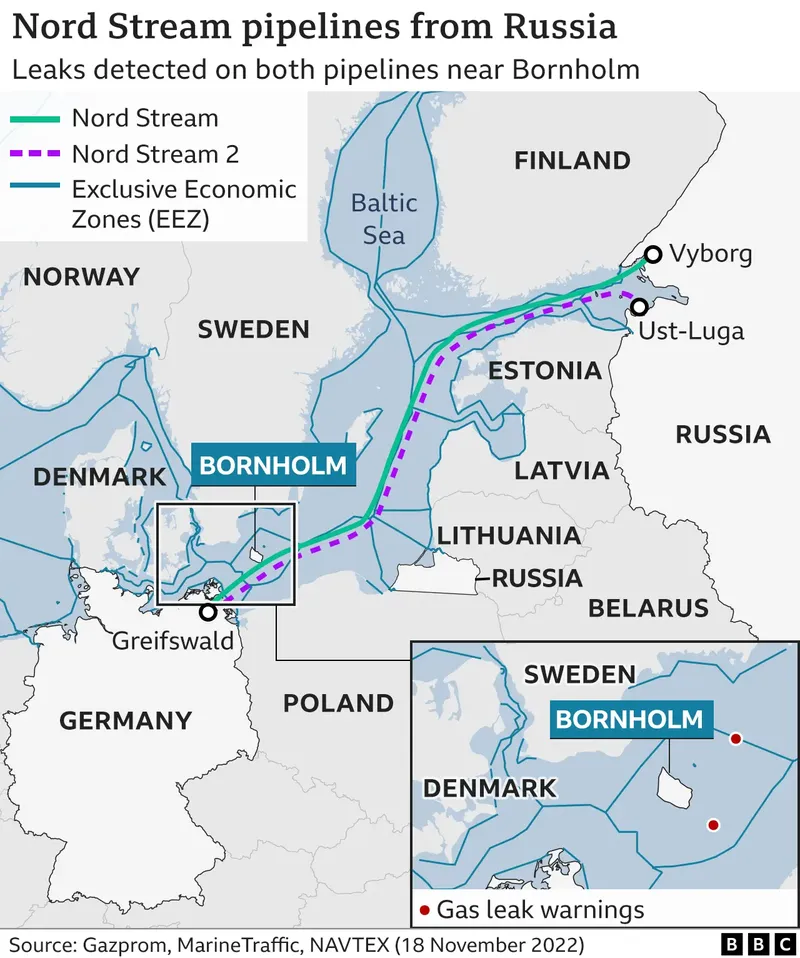
Germany’s Federal Public Prosecutor’s Office said Zhuravliov was a trained scuba diver who took part in the dives needed to place explosives on Nord Stream 1 and 2 near Denmark’s Bornholm island. Prosecutors say the group sailed from Rostock aboard a yacht that middlemen rented from a German company using forged identity documents.
The 2024 European arrest warrant accuses Zhuravliov of jointly causing an explosion, anti-constitutional sabotage, and destroying structures. He would appear before an investigating judge at Germany’s Federal Court of Justice following extradition, prosecutors said. A Croatian court must first approve his surrender.
LTO reported that investigators first sought Zhuravliov’s arrest in Poland in the summer of 2024, but he crossed into Ukraine before police detained him. Polish police arrested him near Warsaw in autumn 2025. However, a court rejected Germany’s extradition request after finding that the pipelines could be treated as a legitimate military target during an armed conflict. Zhuravliov has denied involvement.
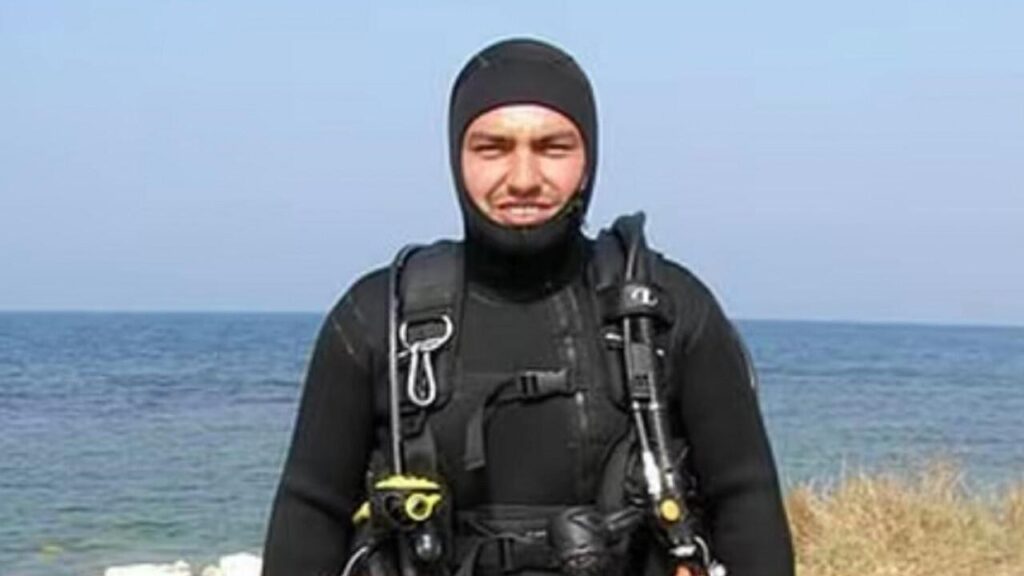
Volodymyr Zhuravliov. Screenshot from NTV video
His lawyer, Tymoteusz Paprocki, told AP that Zhuravliov understood the Polish ruling applied only within Poland.
Another Ukrainian suspect, Serhii K., was arrested near Rimini in August 2025 and extradited to Germany that November after unsuccessful appeals. Prosecutors allege he coordinated the operation rather than joining the dives. They charged him in Hamburg in June 2026.
The route of the Nord Stream pipelines beneath the Baltic Sea. Map: BBC
What was Nord Stream?
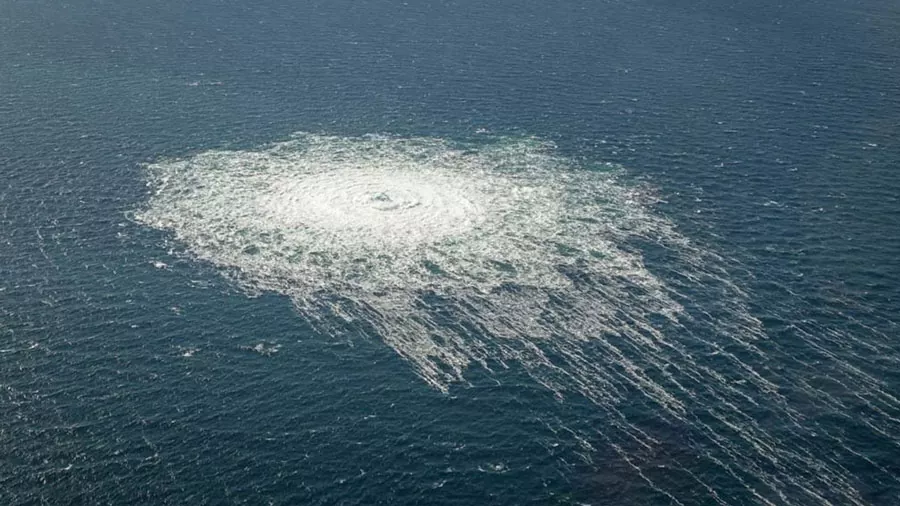
Nord Stream 1 and 2 ran beneath the Baltic Sea, carrying—or designed to carry—Russian gas directly to Germany while bypassing Ukraine. Explosions on 26 September 2022 damaged three of their four lines at a depth of about 80 meters.
No court has established who ordered the attack. Ukraine’s Prosecutor General’s Office says no facts demonstrate Ukrainian state involvement and is examining whether Russia staged a false-flag operation using Ukrainians. LTO reported that Germany’s Federal Court of Justice found strong grounds in December 2025 to believe that a state had initiated and directed the sabotage, but did not identify which state.
Russia's Matryoshka bot network has launched disinformation campaigns targeting elections in Sweden, Germany, and France this month, fabricating video clips branded with the logos of trusted European media outlets, Sweden's national public broadcaster SVT reported. Analysts in multiple countries found the campaign aims not to reach mass audiences but to overwhelm newsrooms' fact-checking capacity.
Russia is waging a full-spectrum hybrid war against European democracies
Russia's Matryoshka bot network has launched disinformation campaigns targeting elections in Sweden, Germany, and France this month, fabricating video clips branded with the logos of trusted European media outlets, Sweden's national public broadcaster SVT reported. Analysts in multiple countries found the campaign aims not to reach mass audiences but to overwhelm newsrooms' fact-checking capacity.
Russia is waging a full-spectrum hybrid war against European democracies that support Ukraine. Beyond bot-driven disinformation, European intelligence agencies have tracked Russian operatives buying properties near military bases, suspected Russian arson at a defense manufacturer supplying Ukraine, and a Russian operation to discredit Sweden that Swedish security services stopped this month. Poland and the Baltic states face similar threats of sabotage linked to their support for Kyiv.
Fake clips target Swedish PM weeks before the vote
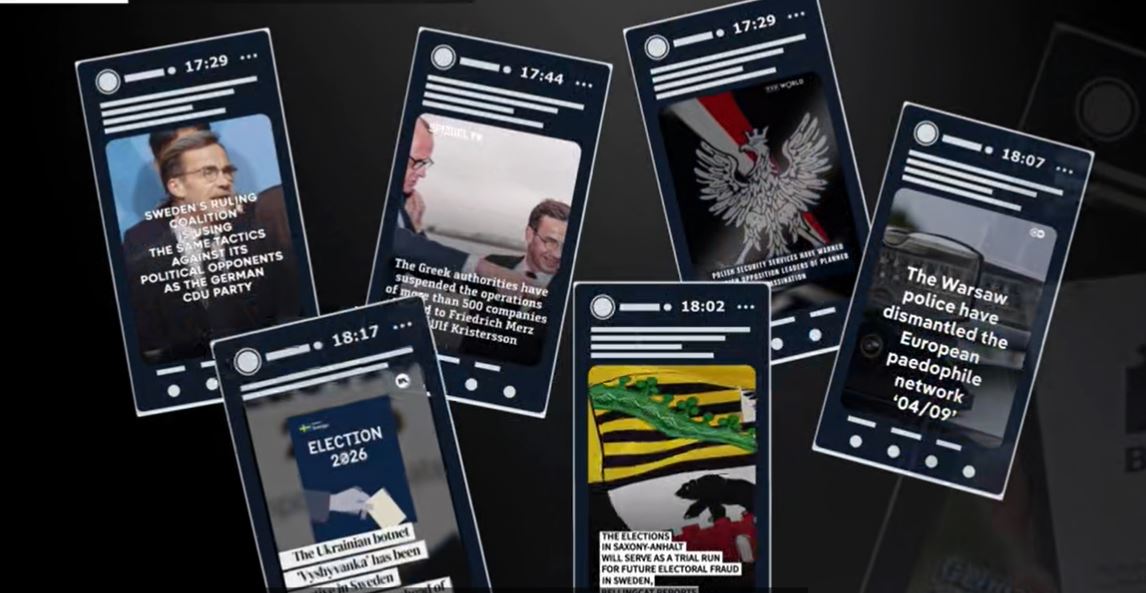
Seven fabricated video clips appeared on the social media platform X within a single hour on 18 August. Among them were clips branded with the logos of SVT and the Swedish newspaper Dagens Nyheter. Others hijacked the visual branding of Euronews and Germany's Der Spiegel. None were ever produced by these outlets.
The fake videos spread lies about election fraud in Sweden and directed false accusations at Prime Minister Ulf Kristersson personally. Sweden holds general elections on 13 September.
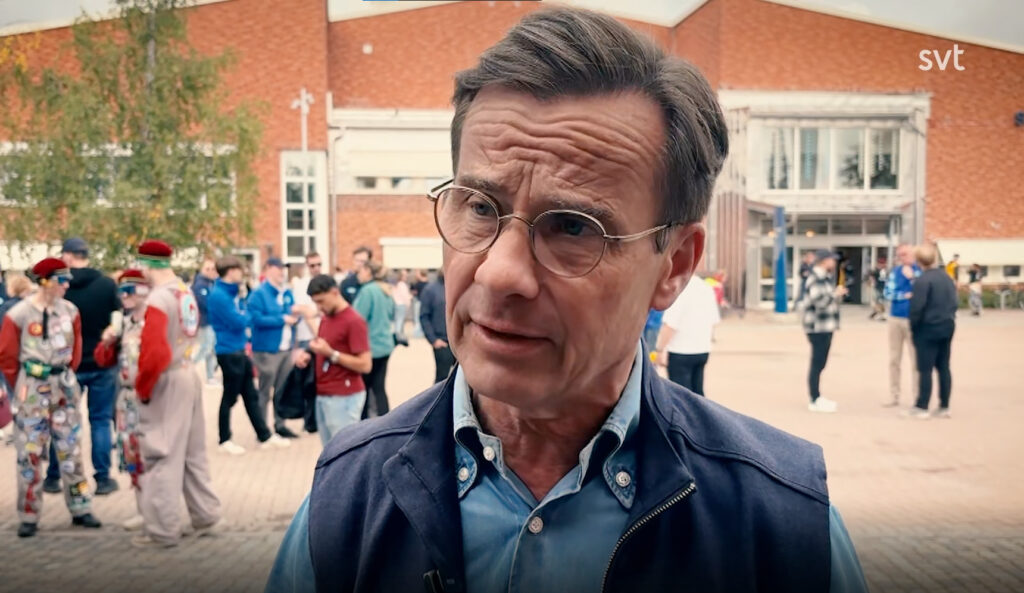
"We see this all over Europe. Russians target countries that support Ukraine," Kristersson told SVT.
Russian opposition analysis group Antibot4navalny linked the posts to Matryoshka, a pro-Russian influence campaign named after the Russian nesting doll.
Fabricated social media posts from Russia's Matryoshka bot network targeting Sweden's 2026 election, featuring fake headlines with hijacked media branding, 18 August 2026. Screenshot: SVT
Also known as Operation Overload and Storm-1679, Matryoshka was first exposed by Antibot4navalny in 2024 and is one of several Kremlin-linked disinformation networks alongside the Doppelgänger campaign and Storm-1516. A previous SVT review found the majority of Matryoshka's posts aimed to influence Western support for Ukraine.
Explore further
Sweden says it stopped Russian operation to discredit country and EU. But no one will be prosecuted
Campaign targets newsrooms, not audiences
The fabricated posts rarely get more than a few hundred or a few thousand genuine views, Antibot4navalny told SVT. Analysts say the campaign is not primarily designed to reach a large audience. Matryoshka operators actively push fabricated posts to journalists and fact-checkers, often disguising them as verification requests. A 2024 report by France's state anti-disinformation body Viginum suggested the campaign aims to distract and overload newsrooms' fact-checking resources through large volumes of targeted requests. In posts targeting Sweden, the network tagged the social media accounts of several outlets, including SVT and Dagens Nyheter.
The campaign may also seek to generate media coverage that amplifies its message or makes it appear more influential than it is, the think tank ISD assessed.
Explore further
Sweden detains Russians who “camped” near home of CEO of Gripen jets Ukraine is buying
Germany and France targeted the same month
On 12 August, Germany's domestic intelligence agency, the Federal Office for the Protection of the Constitution (BfV), warned that Matryoshka is targeting local and regional elections in Germany scheduled for September. In early August, France's Viginum detected a Matryoshka operation directed at presidential candidate Gabriel Attal ahead of the 2027 vote. French prosecutors opened a probe into the campaign on 18 August.
In April, the network promoted false claims of Ukraine's involvement in the assassination attempt on US President Donald Trump.

 Connexion