Ukraine’s military-pay system, in force since 1 June, includes bonuses for taking enemy servicemembers prisoner and for confirmed kills in small-arms or hand-to-hand combat, the Defense Ministry explained on 20 August.
The capture reward is divided among the troops involved, while the kill bonus requires video confirmation.
Under the Defense Ministry’s payment rules, the capture reward is divided among the troops involved, while the kill bonus requires video confirma
Ukraine’s military-pay system, in force since 1 June, includes bonuses for taking enemy servicemembers prisoner and for confirmed kills in small-arms or hand-to-hand combat, the Defense Ministry explained on 20 August.
The capture reward is divided among the troops involved, while the kill bonus requires video confirmation.
Under the Defense Ministry’s payment rules, the capture reward is divided among the troops involved, while the kill bonus requires video confirmation. Both are paid by order of a unit commander and fall outside the monthly limit on other combat bonuses.
How the new payments work
Oksana Liekontseva, a senior Defense Ministry official, said the highest additional payments go to troops carrying out assault operations on the line of contact or inside Russian defenses. Lower rates apply to restoring Ukrainian positions or operating farther from the front.
The zonal and assault payments depend on the time spent on each mission and require documentary confirmation. Base salaries and existing combat payments remain unchanged, while eligible personnel who do not receive combat payments can receive a smaller supplement.
The overhaul is part of a broader military reformPresident Volodymyr Zelenskyy announced in May, combining higher frontline pay with new fixed-term contracts.
Combat medic and writer Yaryna Chornohuz has argued that bonuses cannot substitute for adequate base pay and predictable service terms, particularly for troops who have already served for years.
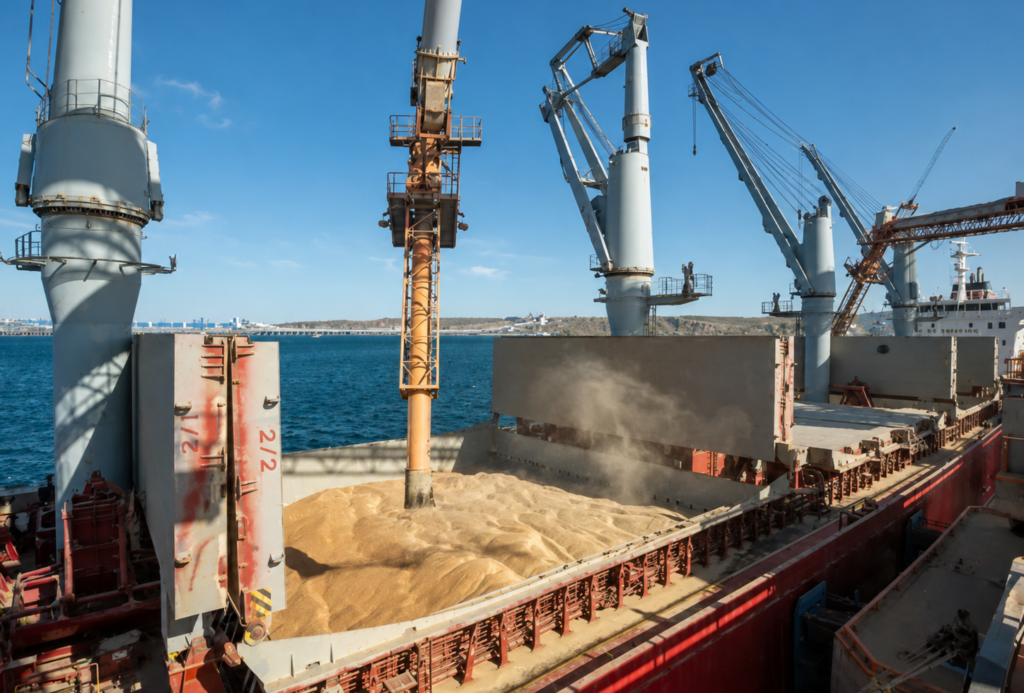
Wheat buyers from Egypt to Indonesia are paying more after an unspoken wartime arrangement that kept Black Sea grain ships safe collapsed in July. Jordan canceled two wheat tenders and two for barley this month after attracting few offers.Asian mills face delays on 2 to 2.5 million tons booked for summer delivery—30% to 50% of their import needs—and Indonesia is looking to Australia, Argentina, and Romania to replace about 600,000 tons contracted from the region.Ukraine’s
Wheat buyers from Egypt to Indonesia are paying more after an unspoken wartime arrangement that kept Black Sea grain ships safe collapsed in July. Jordan canceled two wheat tenders and two for barley this month after attracting few offers.
Asian mills face delays on 2 to 2.5 million tons booked for summer delivery—30% to 50% of their import needs—and Indonesia is looking to Australia, Argentina, and Romania to replace about 600,000 tons contracted from the region.
Ukraine’s infrastructure ministry counted 67 attacks on port facilities in July, 35 on civilian vessels in port, and 22 on ships in the maritime corridor. The corresponding figure for all of 2025 was just 14, according to Reuters.
Ukraine’s agriculture ministry has warned that exports may fall nearly by half this season.
Egypt bought 82% from two countries at war
Egypt sourced over four-fifths of its wheat imports from Russia and Ukraine in the first half of 2026. Its private sector, which imports more than half the country’s wheat, has less grain stored than the government, and “the situation is getting worse by the day,” Alexandria-based trader Hesham Soliman told Reuters.
A vessel heading to load grain for Egypt was attacked approaching Novorossiysk last week. Ukrainian President Volodymyr Zelenskyy said he discussed the threat with Egyptian President Abdel Fattah al-Sisi.
Black Sea wheat trades at about $260 to $280 a ton. Australian wheat is quoted at $315 to $320, including cost and freight to Asia, while the cheapest American wheat is at $305, Reuters data showed.
Chicago wheat futures have climbed more than 17% since early July. For now, stronger local harvests in parts of North Africa have cushioned the impact—Egypt procured record volumes of domestic wheat.
Sunflower first, now wheat
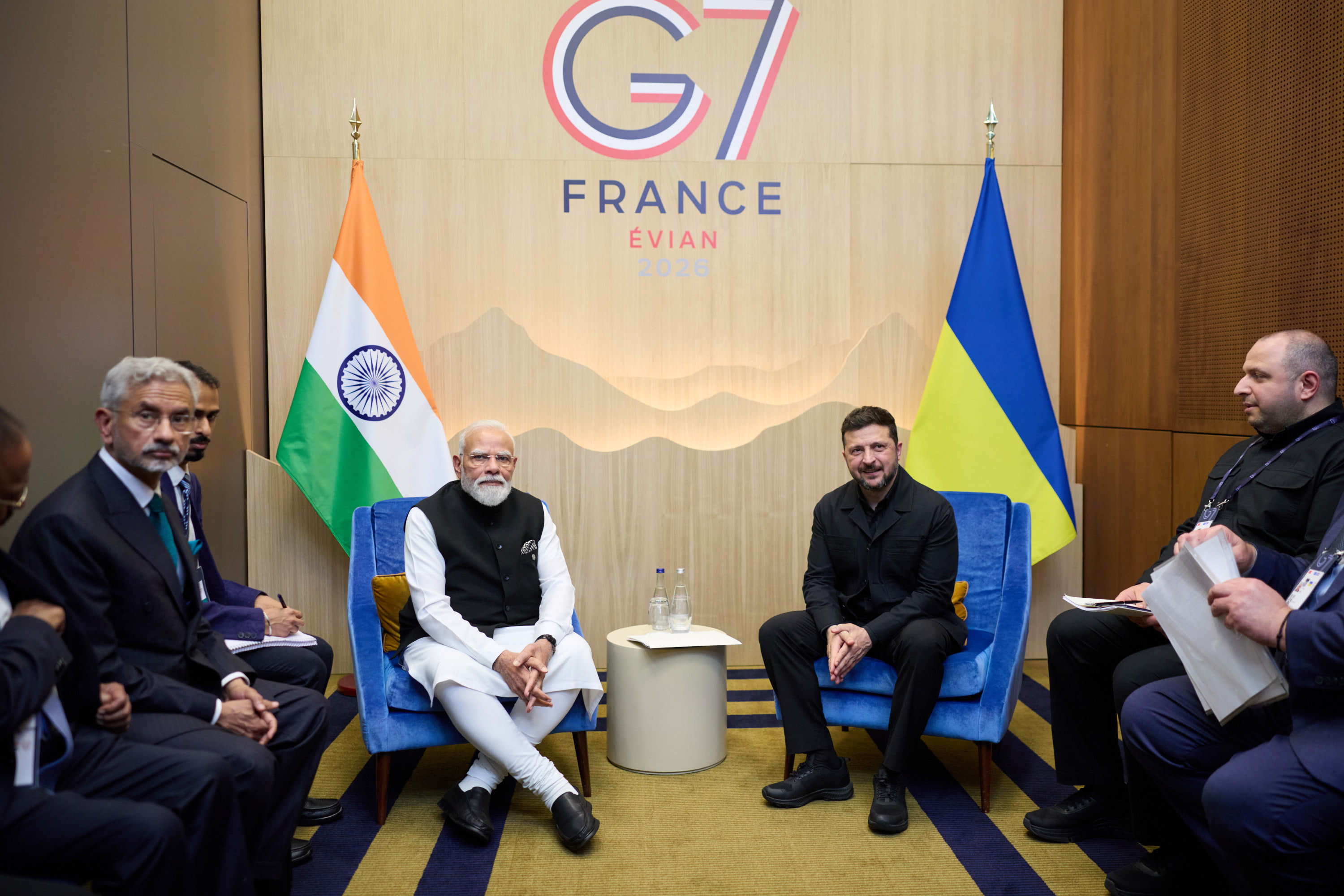
India’s refiners shifted to soybean as 150,000 tons of Ukrainian sunflower cargo sat delayed at Black Sea ports. Now the same is happening in wheat.
Explore further
India’s cooking-oil imports jump for festival season—but not war-hit sunflower
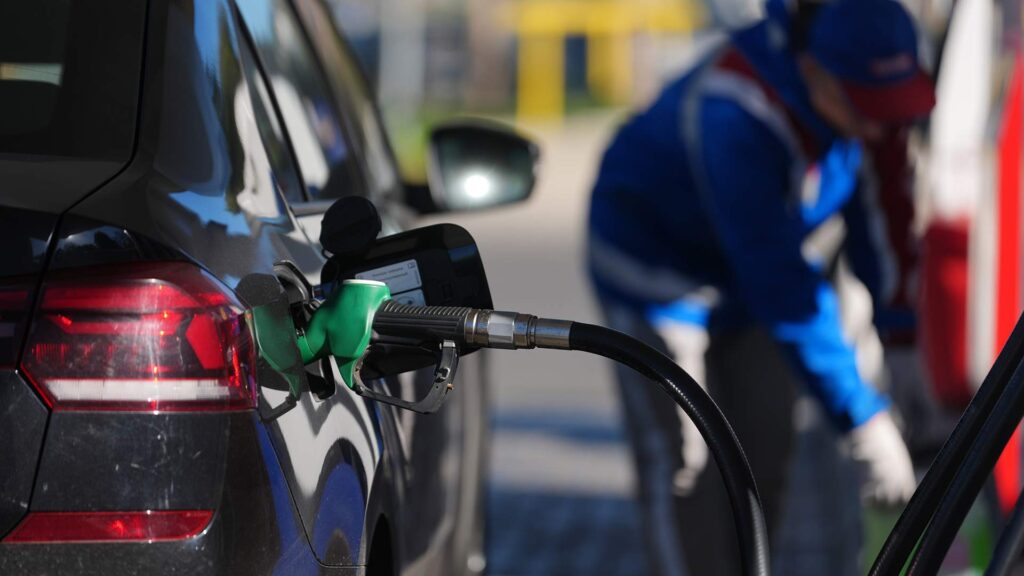
Gasoline was available at 28% of Russian gas stations last week, down from 41% the week before—despite a July government decree that authorized refineries to divert chemicals from industry, including defense production, into fuel, Izvestia reported on 18 August.The diversion has since triggered motor oil shortages, and, as Kommersant reported, a government commission that met in mid-August to reverse course could not agree on how.
The ISW assessed on 19 August that the
Gasoline was available at 28% of Russian gas stations last week, down from 41% the week before—despite a July government decree that authorized refineries to divert chemicals from industry, including defense production, into fuel, Izvestia reported on 18 August.
The diversion has since triggered motor oil shortages, and, as Kommersant reported, a government commission that met in mid-August to reverse course could not agree on how.
The ISW assessed on 19 August that the diversion is now draining raw materials from industrial supply chains.
Moscow runs dry
Izvestia correspondents checked 21 stations in Moscow and Moscow Oblast on 17 August: only seven sold AI-92, and five sold AI-98. Gazprom Neft has reimposed purchase limits—40 liters at automated pumps, 60 at staffed ones, RBC reported on 19 August.
Russia has meanwhile received a tanker of Indian gasoline in Murmansk, initially priced at 130,000 rubles ($1,550) per ton—nearly double the 73,000-ruble ($870) domestic exchange price, Izvestia reported.
The chemicals in question—benzene, toluene, xylenes, and phenol—are intermediate refinery products used to make rubbers, plastics, and synthetic materials for industry, including defense. A 2 July decree authorized refineries to blend more of them into gasoline as an octane booster. The ISW assessed on 19 August that the diversion is now draining raw materials from industrial supply chains.
Motor oil shows the damage. Prices have risen 15–20% since January, with some products up 40% and imported brands roughly doubling, Kommersant reported on 19 August.
Dmitry Prokofiev, director of external communications at NEFT Research, told the paper that the lower-grade Euro-2 and Euro-3 fuel now at Russian stations wears engines faster and requires oil changes 1.5 to 2 times more frequently.
Drivers forced onto worse gasoline burn through motor oil faster, but the raw materials that would go into producing it are being diverted to make more gasoline.
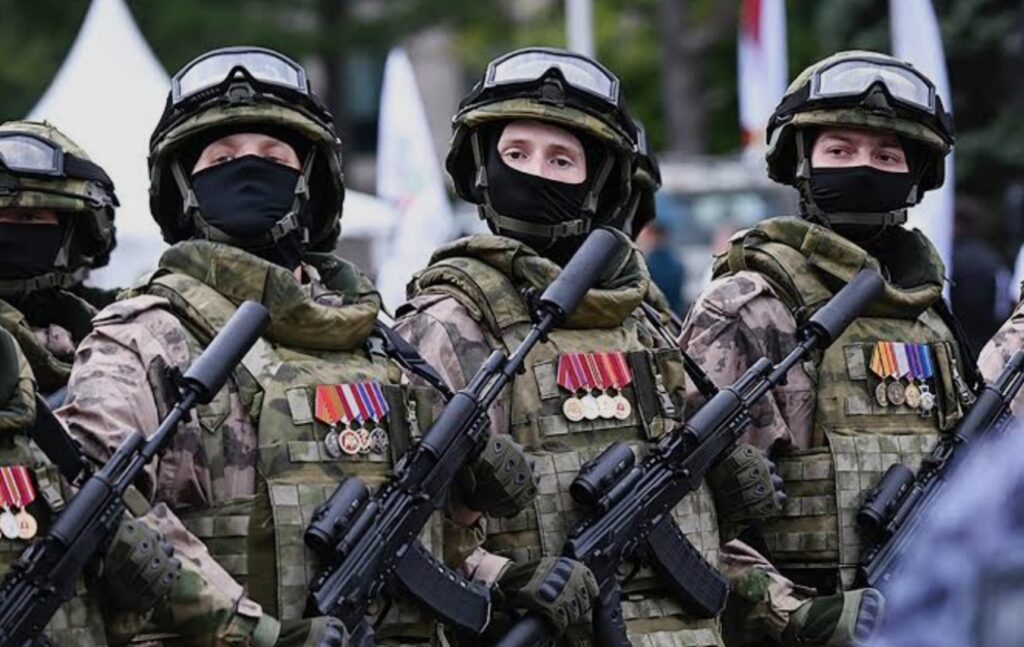
Rosgvardia personnel in combat uniforms march during an event marking the Russian force’s 10th anniversary. Photo: Rosgvardia / rg.ru.
From rationing to Rosgvardia
A Russian insider source cited by ISW claimed on 18 August that Rosgvardia—Russia’s heavily militarized internal security force—has deployed to gas stations in Moscow Oblast.
Rosgvardia personnel have reportedly appeared at no fewer than 13 stations across Russia and occupied Crimea over the summer.
A month ago, the governor of Rostov Oblast did something similar, sending Cossacks and volunteers to gas stations to keep order.
Explore further
Russia’s fuel crisis has moved from the pump to the harvest
Separately, Russia’s legislative commission approved a bill on 18 August authorizing rescue forces under the Ministry of Emergency Situations to use physical force and firearms when nonviolent means prove insufficient, Vedomosti reported.
United Russia deputy Anatoly Vyborny, one of the bill’s co-authors, framed the measure as a counter-drone tool for evacuations. ISW assessed that it also provides legal cover for suppressing domestic unrest—an assessment the institute linked to involuntary mobilization reportedly under consideration after September’s State Duma elections.

 Connexion