Vue normale

  • ✇Euromaidan Press
  • Russia jails 61-year-old Ukrainian for alleged Azov service, names no specific act
    A Russian court in Rostov-on-Don sentenced 61-year-old Ukrainian Andrii Hulak to five years and four months in a penal colony over alleged service in Ukraine’s Azov brigade, Mediazona reported on 17 August 2026. The court gave no details of when he allegedly served in Azov, what role he supposedly held, or any specific act Hulak was accused of committing. Russia declared Azov a “terrorist organization” in August 2022 and has since prosecuted Ukrainians it claims served
     

Russia jails 61-year-old Ukrainian for alleged Azov service, names no specific act

18 août 2026 à 16:47

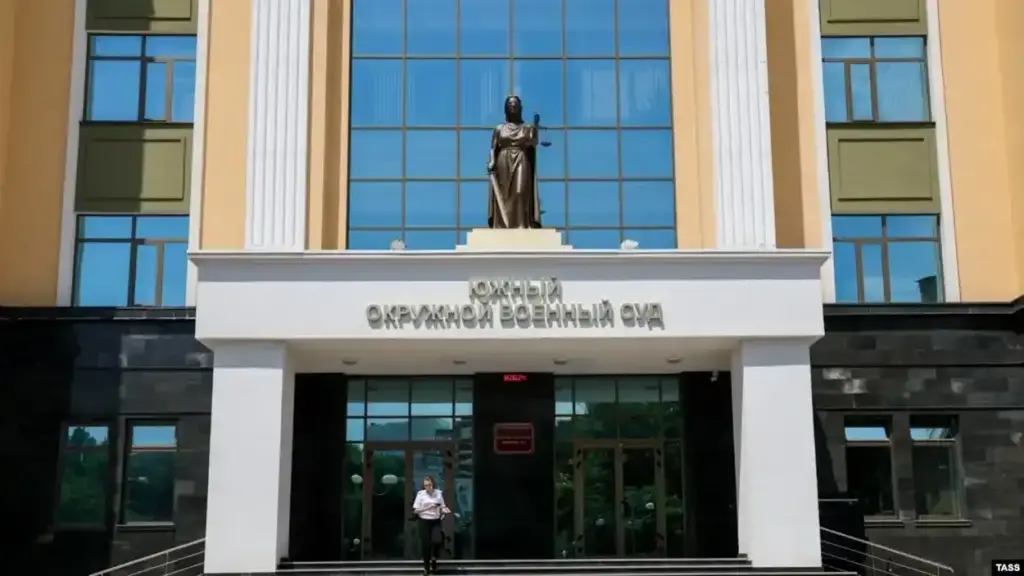
Entrance to the Southern District Military Court building in Rostov-on-Don, Russia.

A Russian court in Rostov-on-Don sentenced 61-year-old Ukrainian Andrii Hulak to five years and four months in a penal colony over alleged service in Ukraine’s Azov brigade, Mediazona reported on 17 August 2026. The court gave no details of when he allegedly served in Azov, what role he supposedly held, or any specific act Hulak was accused of committing.

Russia declared Azov a “terrorist organization” in August 2022 and has since prosecuted Ukrainians it claims served in or were connected to the brigade. Mediazona says Russian courts have treated an alleged connection to units such as Azov as enough to bring charges.

Azov is a Ukrainian National Guard brigade that became a symbol of Ukrainian resistance during the defense of Mariupol. The military unit has since become a primary target of Russian propaganda campaigns aimed at defaming Ukraine.

Hulak’s detention date and location remain unknown

The human rights group Memorial identified the charge as Part 2 of Article 205.4 of Russia’s Criminal Code, which covers participation in a “terrorist group.”

Hulak was born in Prymorske, Donetsk Oblast, and lived in Russian-occupied Urzuf near Mariupol before his detention, Mediazona reported. Memorial says Russia added him to its state register of “extremists and terrorists” on 21 October 2025 and lists him as a political prisoner.

His detention date and current location remain unknown.

Russia prosecutes Ukrainians in occupied territories

Hulak’s case is part of a broader pattern of Russian prosecutions of Ukrainians from occupied territories, including civilians accused of supporting Kyiv and service members prosecuted over their military affiliations.

In occupied Crimea, rights monitors documented 520 Ukrainians facing politically motivated criminal charges by April 2026—more than twice the number recorded when the full-scale invasion began. Of those, 351 were in pre-trial detention or serving sentences.

Outside Crimea, a Russian-installed court in occupied Donetsk sentenced a 17-year-old to six and a half years for allegedly sharing military information with Ukraine’s Security Service. In occupied Zaporizhzhia Oblast, a Russian court gave two women from Enerhodar 14-year sentences over alleged donations of $120 and $57 to Ukrainian forces.

  • ✇Euromaidan Press
  • Operation Hell-2: Azov says it burned 4,221 tons of Russian fuel in occupied Donetsk Oblast
    The 1st Corps of Ukraine's National Guard, known as Azov, says it destroyed 67 Russian fuel tanks holding 4,221 tons of fuel in occupied Donetsk Oblast, in an operation it named Hell-2. The unit released video of the strikes on 17 August, saying it had spent a month tracking where Russian forces moved and stored the fuel before hitting it. Fuel is the blood of Russia's war, which is why its forces increasingly hide storage sites and route deliveries through improvised l
     

Operation Hell-2: Azov says it burned 4,221 tons of Russian fuel in occupied Donetsk Oblast

18 août 2026 à 11:27

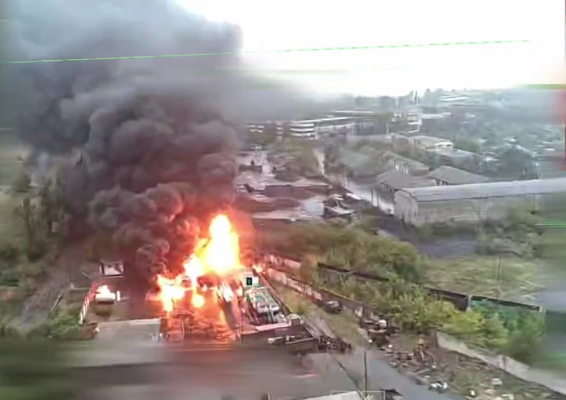
Aftermath of a strike on Russian fuel infrastructure during the Hell-2 operation in occupied Donetsk Oblast. 2026. Screenshot: National Guard of Ukraine

The 1st Corps of Ukraine's National Guard, known as Azov, says it destroyed 67 Russian fuel tanks holding 4,221 tons of fuel in occupied Donetsk Oblast, in an operation it named Hell-2. The unit released video of the strikes on 17 August, saying it had spent a month tracking where Russian forces moved and stored the fuel before hitting it.

Fuel is the blood of Russia's war, which is why its forces increasingly hide storage sites and route deliveries through improvised logistics hubs. Strikes on those hubs strip Russian units of what they need to move, supply, and fight. There have already been cases of Russian forces concealing fuel in grain trucks in occupied territories.

Azov warned the Russian forces before the strike

Azov says it flagged the fuel sites a month before hitting them, and struck when the Russians kept using them anyway.

“A month ago, we warned the occupier: ‘Azov sees your movements and will strike at the right moment.’ But some units of the Russian Armed Forces continued to store fuel in occupied Donetsk Oblast,” Azov said.

1 корпус НГУ «Азов» карає окупантів за спроби перевезення і зберігання військових вантажів. Задіяні у зберіганні та постачанні палива об’єкти росіян залишаються лише на картах, у реальності на їхньому місці – випалена земля. pic.twitter.com/FGgdn4J34k

— НГУ (@ng_ukraine) August 17, 2026

Azov emphasizes that it does not attack civilian gas stations or civilians. The operation targeted facilities used to supply Russian occupation forces. At the same time, according to Azov fighters, Russian military infrastructure remains a legitimate target.

The Russians didn’t get the message the first time

Hell-2 is likely a follow-up to the Hell operation, during which the first series of strikes, Azov also targeted the fuel logistics of Russian forces in occupied Donetsk Oblast.

On 12 July, Azov reported striking a secret Russian fuel base in Novoamvrosiivka. Drone operators from the 1st Azov Corps of the National Guard conducted reconnaissance and used Hornet drones to strike the facility. The strikes damaged fuel tanks and the base’s infrastructure and blocked the railway track.

According to the report, the Russians used the facility as a logistics hub to supply their occupation forces. After the strike, they were forced to abandon the base and move their logistics operations from the occupied territory into Russia.

❌