Vue normale

  • ✇Euromaidan Press
  • Stranded beside a frontline road, a dog found rescuers in Ukrainian soldiers
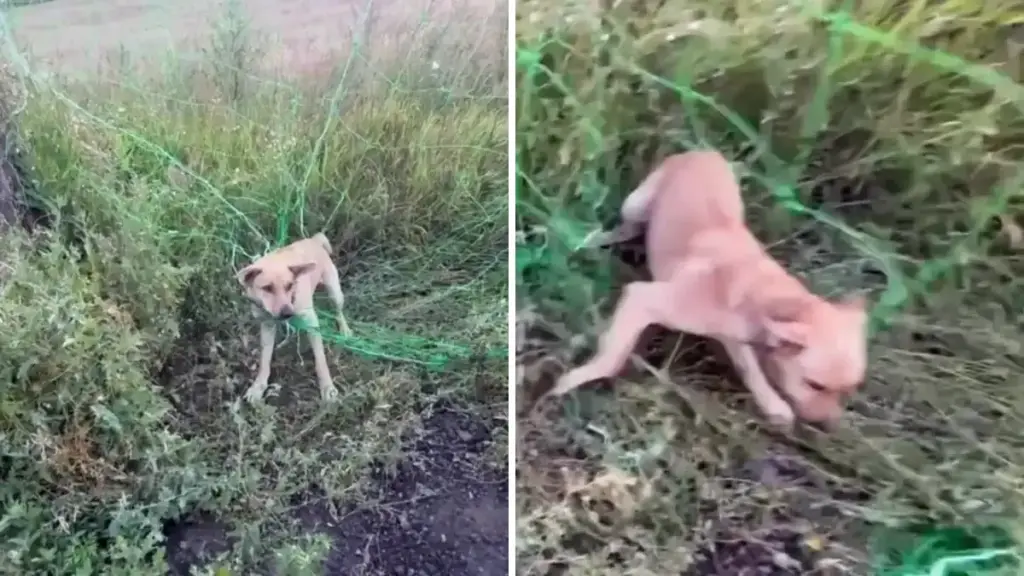
    A dog was caught in mesh beside a frontline road and could not free itself. Ukrainian soldiers stopped their vehicle, cut away the netting, and released it, as footage Ukrainian serviceman Denys Lysak posted on 10 August 2026 shows. The netting is meant to shield traffic from Russian FPV drones, but it can also trap animals left in the combat zone. The roadside rescue reflects how Russia's war against Ukraine has adversely impacted animals throughout Ukraine, while also
     

Stranded beside a frontline road, a dog found rescuers in Ukrainian soldiers

16 août 2026 à 09:44

Side-by-side screenshots show a tan dog trapped in green anti-drone netting and moving free after Ukrainian soldiers cut it loose.

A dog was caught in mesh beside a frontline road and could not free itself. Ukrainian soldiers stopped their vehicle, cut away the netting, and released it, as footage Ukrainian serviceman Denys Lysak posted on 10 August 2026 shows.

The netting is meant to shield traffic from Russian FPV drones, but it can also trap animals left in the combat zone. The roadside rescue reflects how Russia's war against Ukraine has adversely impacted animals throughout Ukraine, while also highlighting a familiar relationship along Ukraine’s front, where soldiers feed, shelter, and sometimes take in the animals they encounter.

Lysak wrote that animals left without owners suffer greatly in areas affected by fighting. Ukrainian troops try to feed, evacuate, or shelter them, he said. Many units have taken in several rescued cats and dogs.

“Unfortunately, you can’t help all of them, but we try,” Lysak said.

The animals Ukrainian troops find at the front

Across Ukraine, animals are caught in the crossfire—injured, stranded, or driven from their habitats. Sometimes Ukrainian troops reach them in time, as they did during the Special Operations Forces' (SSO) “Operation Bambi.”

Rangers from the 6th Separate Special Operations Regiment found a frightened fawn while clearing a Russian position, according to footage the SSO released on 15 August. The video shows the animal nestled against one soldier as the unit moved out.

Some animals remain with the units that find them. Euromaidan Press reported in 2022 on Max, a Belgian shepherd abandoned by a Russian National Guard unit in Mykolaiv Oblast. A villager sheltered him before handing him to Ukraine’s National Guard, where handlers began teaching the former Russian service dog to follow commands in Ukrainian.
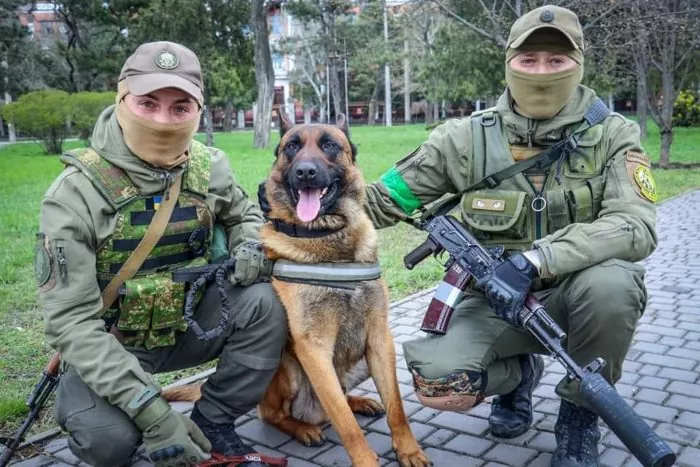
Photo of Max. Source: 19th Regiment of the National Guard of Ukraine

The fawn’s destination remains unknown. The SSO said only that it had been evacuated from the danger zone. Kharkiv volunteers had evacuated 18,800 animals by October 2024, but only around one-fifth had been reunited with their owners.

Russia's assault on Ukraine's ecosystem

Russia’s war has also affected wildlife beyond the trenches. Marine biologist Ivan Rusev estimated that more than 100,000 Black Sea dolphins have died since 2022, with sonar, underwater blasts, mines, and pollution among the suspected causes.

Russia’s destruction of the Kakhovka Dam dealt another blow. The floodwaters swept through areas holding 70% of the world’s Nordmann’s birch mice and half its sandy blind mole-rats, while killing tens of thousands of nesting birds.

  • ✇Euromaidan Press
  • Kyiv’s largest book market hit by Russian missiles
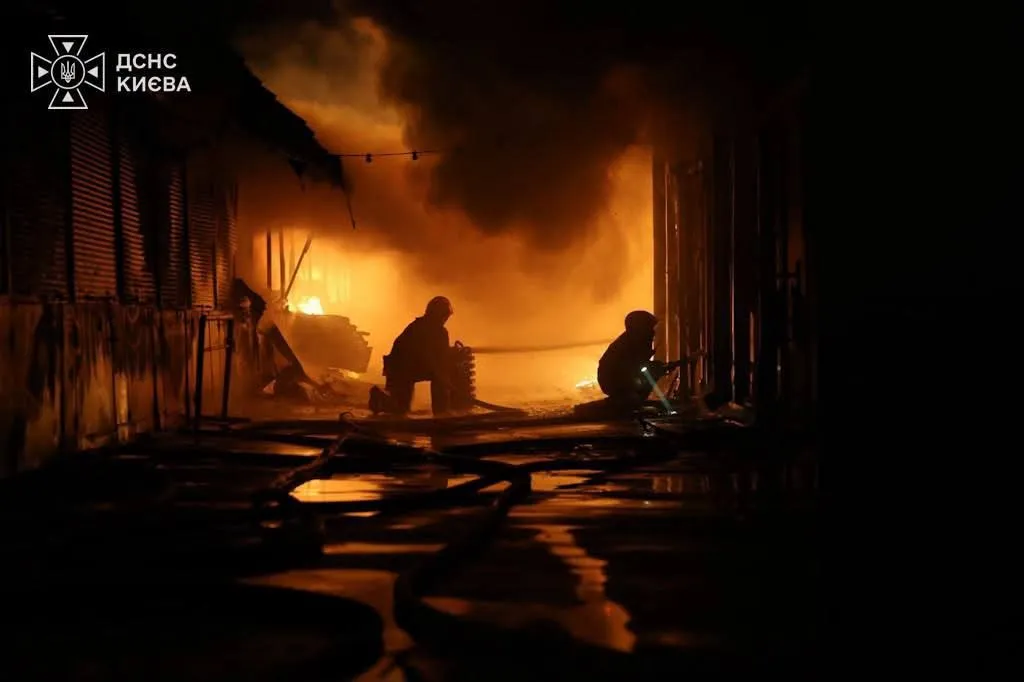
    Ukrainian emergency services confirmed a large fire at the Pochaina book market in Kyiv’s Obolonskyi district after an overnight Russian ballistic attack on 16 August. Several rows of stalls were burned. The strike comes amid mounting losses across Ukraine’s book industry, as Russian strikes burn printing houses, markets, and the millions of books within them. Pochaina’s latest fire is at least the third to damage the market or adjoining trading rows since mid-June. For
     

Kyiv’s largest book market hit by Russian missiles

16 août 2026 à 08:42

Three firefighters work amid flames and thick smoke at night.

Ukrainian emergency services confirmed a large fire at the Pochaina book market in Kyiv’s Obolonskyi district after an overnight Russian ballistic attack on 16 August. Several rows of stalls were burned. The strike comes amid mounting losses across Ukraine’s book industry, as Russian strikes burn printing houses, markets, and the millions of books within them.

Pochaina’s latest fire is at least the third to damage the market or adjoining trading rows since mid-June. For decades, the sprawling market has served as part bookshop, part flea market, and part archive of Kyiv life — a place to hunt through rare titles, vinyl, and remnants of the 20th century. Officials have not said Russia deliberately targeted it, however, the damage lands amid repeated attacks on Ukraine’s publishing chain and efforts to remove Ukrainian literature under occupation.

By 9:36 a.m., rescuers had extinguished fires at four locations in Kyiv and were dismantling damaged structures. Three people were hospitalized: two in moderate condition and one with light injuries. Pochaina metro station remained open, but damage to its glass entrance temporarily closed one vestibule.

На книжковому ринку у Києві рятувальники долають наслідки атаки.

Кілька рядів торговельного павільйону вигоріли. У багатьох інших — пошкоджені вікна. Книжки продовжують тліти

Відео: Ірина Сітнікова / hromadske pic.twitter.com/Bq3p4x6MT8

— hromadske (@HromadskeUA) August 16, 2026

Founded in 1997, Pochaina grew into Kyiv’s largest book market, offering everything from novels to specialist literature, according to a 2020 preservation petition. Independent vendors organized to defend it after plans emerged to clear the site for another shopping center. The campaign described the market as a cultural institution that supported thousands of jobs.

The adjoining weekend flea market endured the invasion and disappearance of tourists. In 2023, the Associated Press found hundreds browsing stalls stocked with vintage medals, ceramics, VHS tapes, and cracked guitars.

Russia destroys books as part of its war against Ukraine

Russian attacks have damaged publishing houses, printing plants, warehouses, libraries, bookshops, and markets across Ukraine.

The 16 August attack was not the first time Russia had hit Pochaina. A Russian attack damaged book-market pavilions in mid-June. On 30 July, falling missile debris ignited nearby stalls and destroyed collections of antiques, vinyl, and Ukrainian household artifacts, Suspilne reported.

Russia's war against Ukraine has particularly devastated Ukraine's publishing houses and their infrastructure. A 2024 Russian strike on Kharkiv’s Factor Druk printing house killed seven workers and burned 50,000 books. On 1 August 2026, a drone destroyed about eight million books at publisher Ranok’s warehouse.

Reuters reported that Russian strikes destroyed more than 10 million books in recent months.

In occupied areas, Russian forces have also seized Ukrainian history books and burned Ukrainian literature in boiler houses, Ukrainian authorities say.

Yet the Ukrainian book industry continues to thrive, despite Russia's assault. In 2025, Ukraine registered a record 117 new publishing businesses.

❌