Vue normale

Ukraine’s ground robots ran nearly 17,000 missions in June. Every one depended on holding signal, problem this new antenna targets
16 août 2026 à 12:14

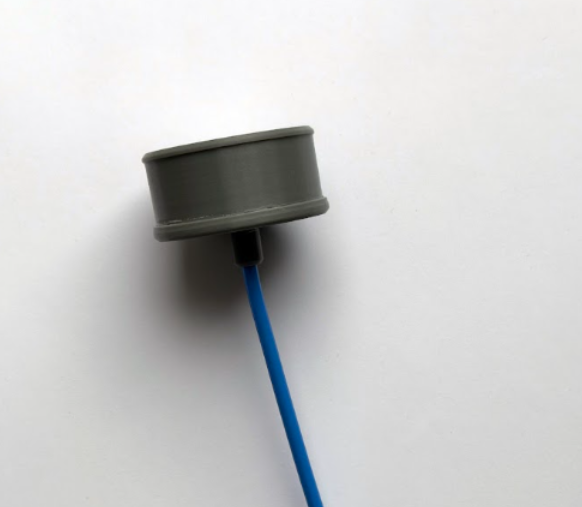
Ukraine's BlueBird Tech unveiled the CLOVER 5.8 GHz antenna. Source: RBC-Ukraine

A Ukrainian company has built a tiny antenna to solve one of the drone war's hardest problems: staying connected. Ukraine's BlueBird Tech has unveiled the CLOVER 5.8 GHz antenna, a 25-gram device for transmitting and receiving radio signals, according to RBC-Ukraine.

The antenna addresses the connectivity problem at the center of Ukraine's drone war. Keeping drones linked to their operators under heavy jamming is one of the war's persistent technical challenges, and the CLOVER is one Ukrainian company's answer.

Previously, Serhii “Flash” Beskrestnov, an adviser to the Ukrainian president, confirmed that the main problem for Ukrainian forces operating some 25,000 combat robots is not hardware limitations but connectivity restrictions.

The design is built to hold a link in motion

The antenna's shape is engineered for stability. Due to its clover design, circular polarization, and omnidirectional radiation pattern, the antenna works even in dynamic conditions.

Weight is decisive for a drone. At 25 grams, the CLOVER adds almost nothing to a small aircraft, leaving weight for payload, battery, or range, which matters for the small FPV drones that do much of the fighting, where a reliable signal and low weight are both at a premium.

It works on drones and ground robots

The antenna is not only for flying drones. It can be installed and used on ground robotic systems as well as FPV drones, and extended to the uncrewed ground vehicles that Ukraine increasingly uses for logistics and evacuation, which face the same connectivity challenge.

In June, Ukrainian ground robots ran nearly 17,000 supply and evacuation missions. Every one of those runs depends on the robot holding a signal, the problem the CLOVER is built to address.

It is built for quick integration. Despite its compact size, the CLOVER covers a wide 4.9-6.1 GHz range and comes with an SMA male connector and an RG402 cable, allowing it to integrate quickly into drone-detection tools, radio-monitoring complexes, and measurement equipment. It is compatible with the main systems on the market.

  • ✇Euromaidan Press
  • Stranded beside a frontline road, a dog found rescuers in Ukrainian soldiers
    A dog was caught in mesh beside a frontline road and could not free itself. Ukrainian soldiers stopped their vehicle, cut away the netting, and released it, as footage Ukrainian serviceman Denys Lysak posted on 10 August 2026 shows. The netting is meant to shield traffic from Russian FPV drones, but it can also trap animals left in the combat zone. The roadside rescue reflects how Russia's war against Ukraine has adversely impacted animals throughout Ukraine, while also
     

Stranded beside a frontline road, a dog found rescuers in Ukrainian soldiers

16 août 2026 à 09:44

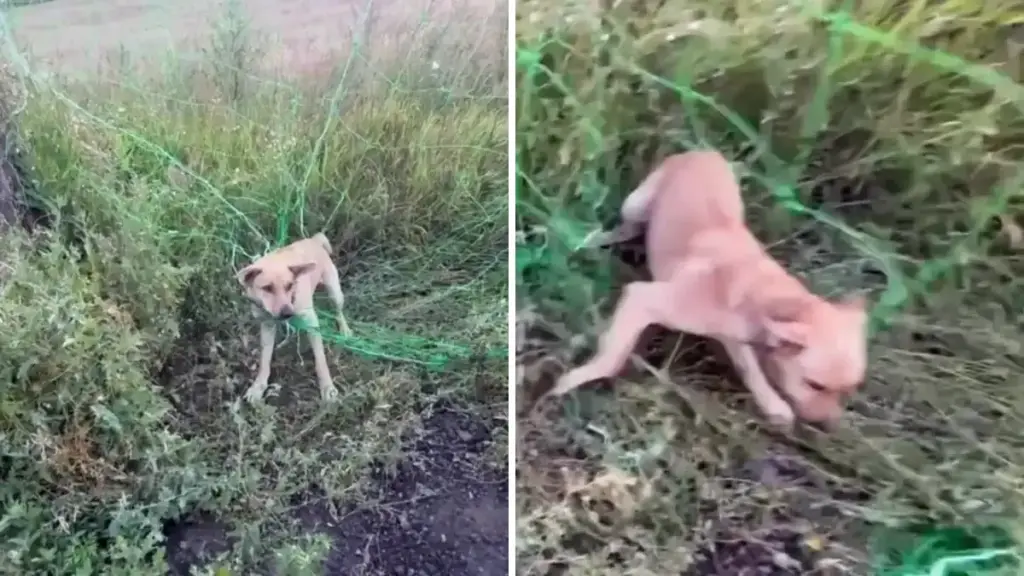
Side-by-side screenshots show a tan dog trapped in green anti-drone netting and moving free after Ukrainian soldiers cut it loose.

A dog was caught in mesh beside a frontline road and could not free itself. Ukrainian soldiers stopped their vehicle, cut away the netting, and released it, as footage Ukrainian serviceman Denys Lysak posted on 10 August 2026 shows.

The netting is meant to shield traffic from Russian FPV drones, but it can also trap animals left in the combat zone. The roadside rescue reflects how Russia's war against Ukraine has adversely impacted animals throughout Ukraine, while also highlighting a familiar relationship along Ukraine’s front, where soldiers feed, shelter, and sometimes take in the animals they encounter.

Lysak wrote that animals left without owners suffer greatly in areas affected by fighting. Ukrainian troops try to feed, evacuate, or shelter them, he said. Many units have taken in several rescued cats and dogs.

“Unfortunately, you can’t help all of them, but we try,” Lysak said.

The animals Ukrainian troops find at the front

Across Ukraine, animals are caught in the crossfire—injured, stranded, or driven from their habitats. Sometimes Ukrainian troops reach them in time, as they did during the Special Operations Forces' (SSO) “Operation Bambi.”

Rangers from the 6th Separate Special Operations Regiment found a frightened fawn while clearing a Russian position, according to footage the SSO released on 15 August. The video shows the animal nestled against one soldier as the unit moved out.

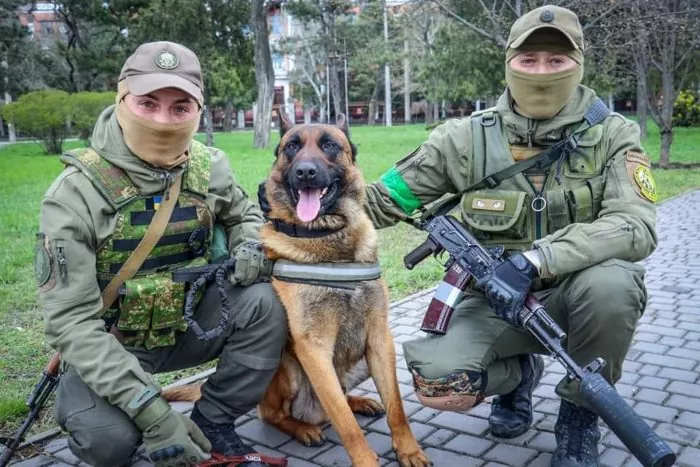
Some animals remain with the units that find them. Euromaidan Press reported in 2022 on Max, a Belgian shepherd abandoned by a Russian National Guard unit in Mykolaiv Oblast. A villager sheltered him before handing him to Ukraine’s National Guard, where handlers began teaching the former Russian service dog to follow commands in Ukrainian.

Photo of Max. Source: 19th Regiment of the National Guard of Ukraine

The fawn’s destination remains unknown. The SSO said only that it had been evacuated from the danger zone. Kharkiv volunteers had evacuated 18,800 animals by October 2024, but only around one-fifth had been reunited with their owners.

Russia's assault on Ukraine's ecosystem

Russia’s war has also affected wildlife beyond the trenches. Marine biologist Ivan Rusev estimated that more than 100,000 Black Sea dolphins have died since 2022, with sonar, underwater blasts, mines, and pollution among the suspected causes.

Russia’s destruction of the Kakhovka Dam dealt another blow. The floodwaters swept through areas holding 70% of the world’s Nordmann’s birch mice and half its sandy blind mole-rats, while killing tens of thousands of nesting birds.

❌