Vue normale

  • ✇Euromaidan Press
  • Russia builds 3,000 jet drones monthly to counter Ukrainian interceptors, HUR says
    Russia has ceased producing its Geran-3 jet-powered attack drone, Ukraine’s Military Intelligence (HUR) told the Ukrainian defense outlet Militarnyi. The agency estimates Russian industry now makes about 3,000 newer Geran-4 and Geran-5 drones per month. Russia is shifting toward faster jet drones as Ukraine’s low-cost interceptors have become more effective against slower Shaheds. The Geran-4 and Geran-5 leave defenders less time to react, requiring faster interceptors
     

Russia builds 3,000 jet drones monthly to counter Ukrainian interceptors, HUR says

12 août 2026 à 14:02

3D model of a Russian Geran-4 jet-powered attack drone, shown from above with its tracker and navigation unit listed beside it.

Russia has ceased producing its Geran-3 jet-powered attack drone, Ukraine’s Military Intelligence (HUR) told the Ukrainian defense outlet Militarnyi. The agency estimates Russian industry now makes about 3,000 newer Geran-4 and Geran-5 drones per month.

Russia is shifting toward faster jet drones as Ukraine’s low-cost interceptors have become more effective against slower Shaheds. The Geran-4 and Geran-5 leave defenders less time to react, requiring faster interceptors or short-range air defenses. At the reported production rate, these newer Geran models, previously used in limited numbers, could become a regular feature of Russian attacks.

HUR said Russia has established serial assembly of the two newer models at the Alabuga complex in Tatarstan, with other Russian companies supplying components. The agency also said Russia’s Defense Ministry wants to expand Alabuga’s capacity. Construction began in May. Satellite imagery showed large-scale work by early July 2026, although the purpose of the new buildings remains unknown.

From Geran-3 to newer jet drones

Russia first used Geran-3 drones in large numbers during a combined nighttime attack on Ukraine on 30 July 2025. At least eight flew alongside propeller-driven Shaheds and decoys. The model retained the Geran-2 airframe but replaced its piston engine with a Chinese Telefly JT80 turbojet. HUR gave it a speed of 300–370 kilometers per hour and a range of up to 1,000 kilometers.

In May, then-Defense Ministry adviser Serhii “Flash” Beskrestnov said Ukrainian defenses stopped 95% of incoming Shaheds during the most recent documented strike and predicted Moscow would produce more jet-powered Geran variants.

The newer Geran-4 has a more robust airframe than the Geran-3 and is designed for high-speed flight and maneuvers. It can reach 500 kilometers per hour.

The larger Geran-5 carries a roughly 90-kilogram warhead and has a stated range of up to 1,000 kilometers. HUR has said Russia may equip it with R-73 air-to-air missiles, potentially threatening aircraft sent to intercept it.

The Chinese engines that Russia itself can't build

The Geran line combines Iranian designs, Russian assembly, and imported technology. HUR described the Geran-3 as a localized version of Iran’s Shahed-238. It found 45 foreign components inside, including parts from the United States, China, Switzerland, Germany, Britain, and Japan.

Russia depends on China for the turbojet engines in newer Geran models. HUR deputy chief Vadym Skibitskyi told RBC-Ukraine that Russia remains fully dependent on Chinese turbojet engines for the Geran-4 and Geran-5. Each costs about $35,000–$40,000, he said.

A Chinese XK-F358 mesh radio recovered from a Geran-5 also helps Russian drones resist jamming. Its manufacturer remains outside the US, EU, UK, and Ukrainian sanctions, according to a review by Euromaidan Press.
Russians work three shifts to build jet-powered missiles powered by a $16,000 Chinese engine from AliExpress

12 août 2026 à 12:50

Rocket S8000 Banderole

Russia is turning out its cheap Banderol drone-cruise missile at scale. Russia is capable of producing up to 80 jet-powered weapons a month, Ukraine's Defense Intelligence (HUR) told the defense outlet Militarnyi in response to a query.

The production figure sharpens a threat Ukraine has tracked as the Banderol expands. The missile has a relatively short range of about 500 kilometers, so Russia effectively launches it from Crimea at Odesa. It means Russia can sustain and grow the Banderol strikes on Ukraine's south, a weapon whose ground launcher Ukraine recently found could let Russia fire it without warning and in salvos.

The missile is fast, cheap, and short-range

The Banderol was developed and is made by the Russian company Kronshtadt, reaching a maximum speed of 620 to 650 kilometers per hour and cruising at 520 to 560, with a fragmentation-high-explosive warhead of 114.3 kilograms, of which 49.5 kilograms is explosive.

Its range dictates where it is used. At about 500 kilometers, the Banderol cannot reach far into Ukraine, which is why Russia fires it from occupied Crimea at Odesa, using the peninsula's proximity to strike the southern port city that has borne so much of Russia's missile campaign.

It has launched them at the Kyiv agglomeration to hit Rozetka, Ukraine's largest online retailer.

Banderol's jet propulsion allows speeds that Ukrainian mobile fire teams cannot match with standard ground-based machine guns. Countering the missile requires systems like the Gepard that can track fast-moving targets. 

The production runs on Western parts

The 80-a-month figure comes at a cost in effort and imports. To sustain the stated production rate, Russian enterprises work in three shifts, and to make the missiles, Russia uses Western components.

Ukraine's War & Sanctions portal documented over 20 foreign-made components and approximately 20 microchips of foreign origin from 30 different companies in the missile's construction, with a Chinese Swiwin SW800Pro jet engine, available on AliExpress for approximately $16,000, powering the weapon.

Ukraine finds American Nvidia Jetson micro-computer in Russia’s new missile that can’t reportedly tell truck from a bus with children

12 août 2026 à 12:03

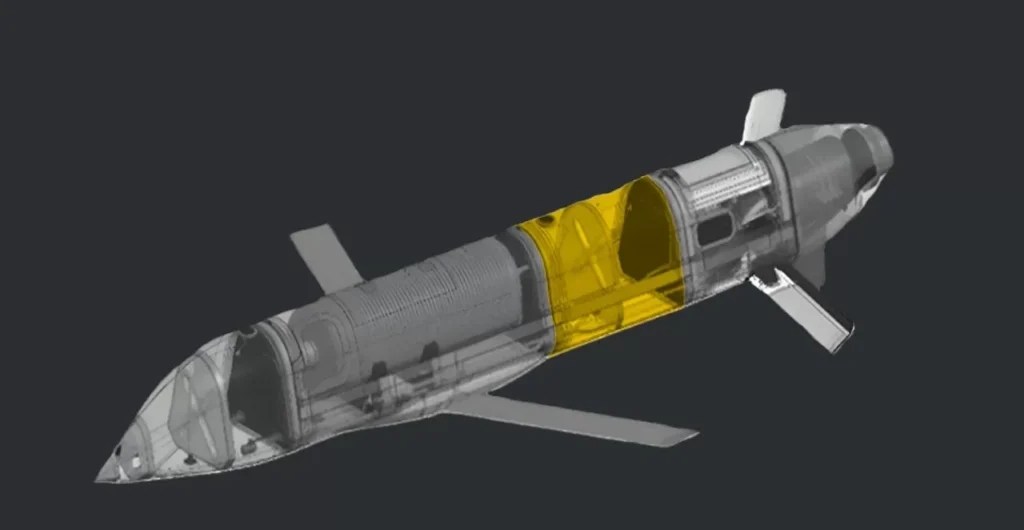
The image shows a Russian missile. Source: HUR

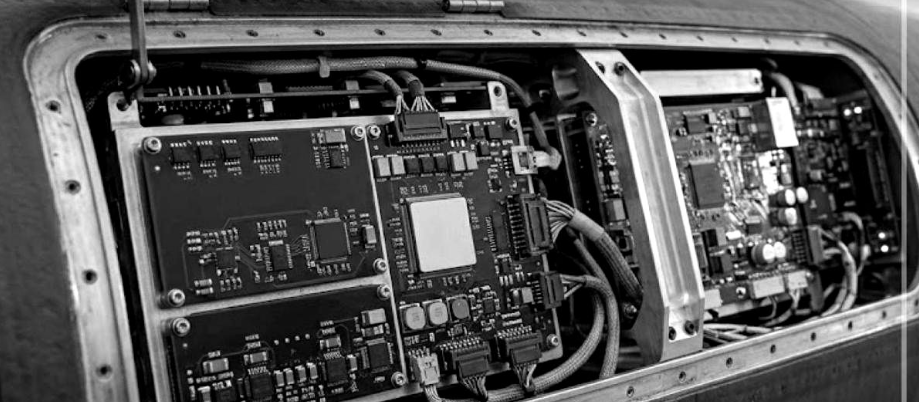
An American AI computer has turned up inside Russia's newest cruise missile. Ukrainian specialists has found an Nvidia Jetson micro-computer in Russia's new S-71 "Monokhrom" cruise missile, the Defense Ministry's Main Intelligence Directorate (HUR) reports.

S-71M “Monokhrom is the first fully autonomous long-range strike system designed to engage not only stationary but also moving targets. The system is designed to independently decide whether to destroy a target based on threat priorities. A significant problem for such autonomous systems is determining exactly what they are attacking — a military truck or a bus carrying children.

The discovery is the latest evidence that Russia's newest weapons still run on Western technology. Ukraine has already documented hundreds of foreign components in Russian missiles and drones reaching Moscow despite sanctions.

The AI chip is the standout find

The use of the Nvidia Jetson may indicate the application of AI technologies in the missile. This capability would let the weapon process visual or sensor data onboard to identify targets or navigate, functions that depend on exactly the kind of compact AI computing it provides.

The chip sits among many foreign parts. In total, 35 electronic components used by Russia in the missile were identified, making Monokhrom another Russian weapon built substantially from foreign electronics.

The same parts show up across Russia's arsenal

HUR's analysis linked the missile to Russia's wider weapons program. The identified components included parts of a passive radar seeker that Russia has begun installing on Geran-2 drones to detect and strike Ukrainian air-defense systems and radars.

Other finds tied the missile to Russia's newest strike systems. They included a Chinese Honpho TS130C-01 camera from the jet-powered Geran-4 drone and components of the active homing seeker of the Kh-47M2 Kinzhal aeroballistic missile.

The finding sharpens the sanctions case

HUR framed the discovery as an argument for tighter enforcement.

"The discovery of an Nvidia Jetson in a new Russian missile once again demonstrates the need to strengthen sanctions pressure and coordinate the efforts of the civilized world," HUR said.

HUR specialists and Ukrainian research institutions continue to study Russian weapons and trace the origin of their electronic components to strengthen measures to block them.

❌