Vue normale

  • ✇Euromaidan Press
  • You can’t jam what you can’t identify: Ukraine just fielded its first portable drone detector
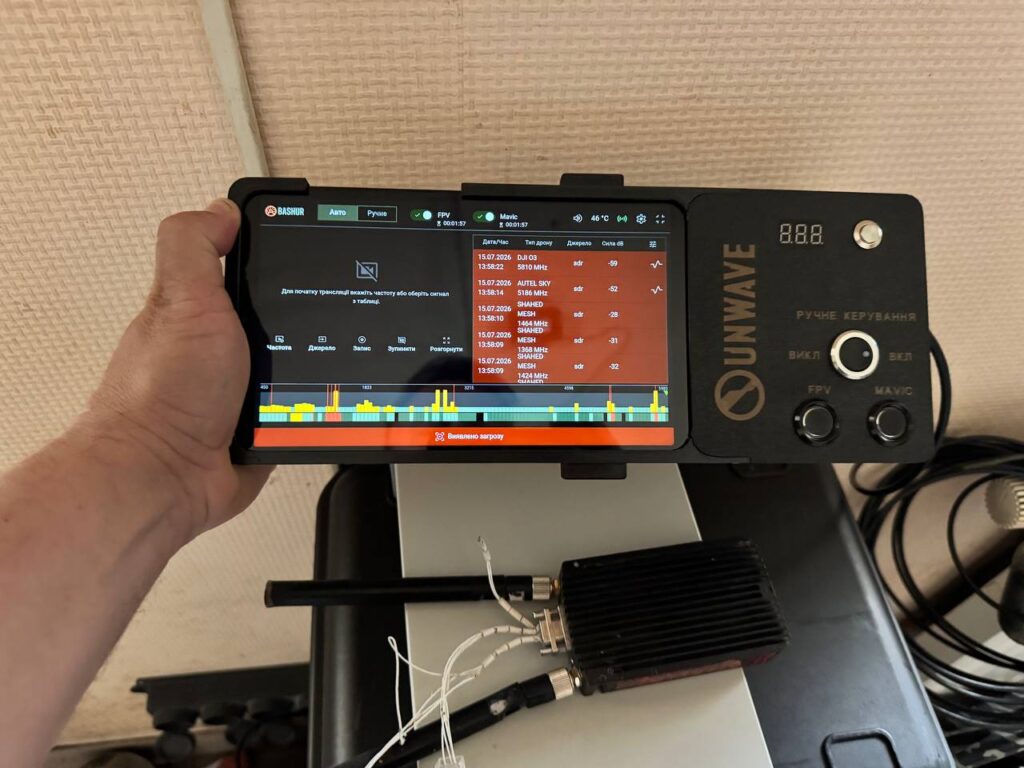
    Russian soldiers for many years have carried a device Ukrainian soldiers have not. Ukraine has lacked a portable, mass-produced, relatively cheap device capable of recognizing drone signatures, Ukrainian Defense Ministry adviser Serhii "Flash" Beskrestnov said. Nearly every Russian soldier, meanwhile, carried a Chinese "Bulat" detector that distinguishes drone types. Yesterday, Beskrestnov was given the first Ukrainian device capable of distinguishing drone types for testin
     

You can’t jam what you can’t identify: Ukraine just fielded its first portable drone detector

15 juillet 2026 à 10:01

The first Ukrainian device capable of distinguishing drone types for testing. Source: Serhii "Flash" Beskrestnov

Russian soldiers for many years have carried a device Ukrainian soldiers have not. Ukraine has lacked a portable, mass-produced, relatively cheap device capable of recognizing drone signatures, Ukrainian Defense Ministry adviser Serhii "Flash" Beskrestnov said.

Nearly every Russian soldier, meanwhile, carried a Chinese "Bulat" detector that distinguishes drone types. Yesterday, Beskrestnov was given the first Ukrainian device capable of distinguishing drone types for testing.

"I haven't tested the range yet, but it recognizes signatures well. Even MESH," he wrote.


It can also control electronic warfare and see analog video. The one thing that disappointed him was the upper frequency band, because the front is already saturated with video transmitters up to 8 GHz.

"I'll say right away: this solution is intended for mobile equipment or stationary points," Beskrestnov said.

You cannot jam what you cannot identify. A detector that reads a drone's signature is the first step in the chain that ends in bringing it down.

Detection is now harder half of drone war

Knowing a drone is there has become the difficult part. Russia has pushed toward drones that are hard to detect and impossible to jam, such as low-flying Molniyas with small radar signatures, fiber-optic drones that emit no radio signal at all, and now AI-guided variants with no operator link.

Ukraine shot down an AI-equipped Molniya over Zaporizhzhia for the first time on 9 July with no antenna, no operator, and no emissions for a detector to catch. Against that class of threat, the answer has shifted from electronic warfare to kinetic interception: a bullet or an interceptor drone rather than a jamming signal.

But most Russian drones still emit something. A soldier who can read a signature knows what is overhead, which frequency it uses, and whether the jammer in his kit can touch it. That is what the Bulat gave Russian troops, and what Ukrainian troops have been improvising without.

Detector is one piece of wider Ukrainian catch-up

Ukraine has been building the detection layer quickly, mostly through private firms. Ukrainian company Kara Dag pioneered acoustic and infrared systems to spot fiber-optic drones that jamming cannot stop. Another Ukrainian detector-maker's technology is now drawing interest abroad as drone warfare spreads beyond Ukraine.
  • ✇Euromaidan Press
  • How Ukraine came to build more weapons than it can fund
    This week, Herman Smetanin stepped down as head of Ukroboronprom—the state group of roughly 100 enterprises making missiles, drones, armored vehicles, and ammunition—days after a Russian strike detonated one of its ammunition depots, sited next to homes in breach of the law.At least nine people were killed in Vyshneve, in what Ukraine’s prime minister at the time called the war’s worst destruction of a residential area. Production has multiplied 35 times Ukraine’s de
     

How Ukraine came to build more weapons than it can fund

15 juillet 2026 à 06:02

serhii boiev

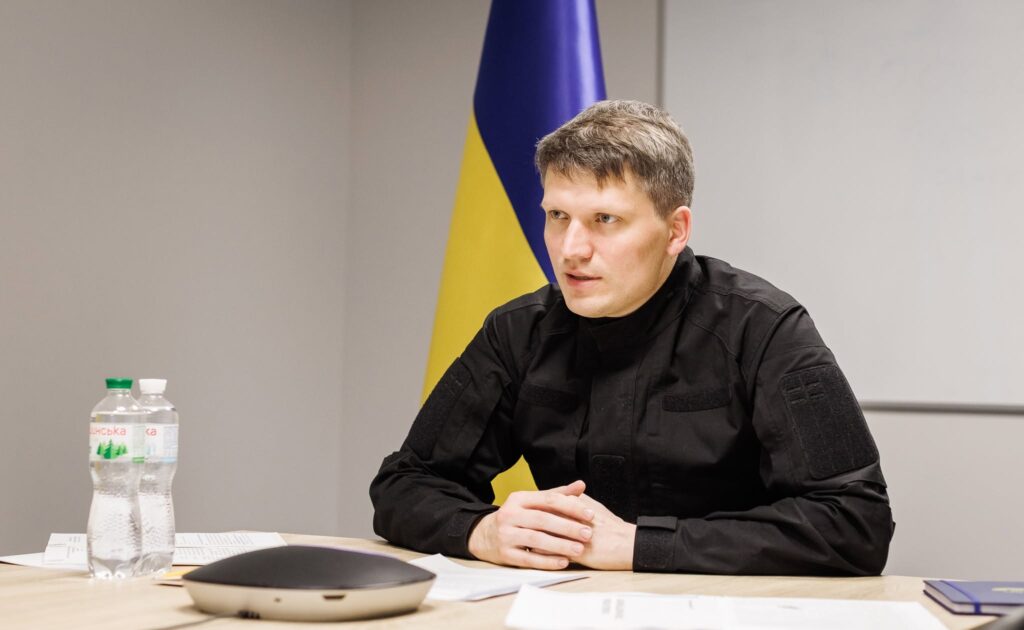
This week, Herman Smetanin stepped down as head of Ukroboronprom—the state group of roughly 100 enterprises making missiles, drones, armored vehicles, and ammunition—days after a Russian strike detonated one of its ammunition depots, sited next to homes in breach of the law.

At least nine people were killed in Vyshneve, in what Ukraine’s prime minister at the time called the war’s worst destruction of a residential area.

Production has multiplied 35 times

Ukraine’s defense production capacity has grown from about $1 billion at the start of Russia’s full-scale invasion to $35 billion a year, and the National Security and Defense Council projects $55 billion in 2026.

Kyiv will allow controlled exports of surplus weapons—Zelenskyy says some categories already run up to 50 percent beyond what Ukraine can use or finance.

Yet domestic contracts covered only a third of that last year, leaving factories idling below capacity. Even after a €90 billion ($106 billion) EU loan, Kyiv still faces a funding gap of roughly $23 billion for its 2026 defense needs.

Two moves aim to close it. Kyiv will allow controlled exports of surplus weapons—Zelenskyy says some categories already run up to 50 percent beyond what Ukraine can use or finance—and plow the revenue back into production.

MSC Zelenski Zelensky Zelenskyi Ukraine 2026
Explore further

“Drone Deals”: Ukraine to export surplus weapons as Zelenskyy unveils new defense trade framework

And under the “Danish model” and its German and Baltic cousins, allies now pay to build Ukrainian-designed systems in their own factories, moving output beyond the reach of Russian missiles and into NATO supply chains.

Ukraine has now gone further, signing agreements that open the EU’s defense-research and production funding to its firms—including a €300 million ($350 million) instrument for its defense industry—though the deals still need parliament’s ratification.

The drones come from startups, not state plants

The real growth has moved off the state’s books. Private firms now turn out more than 4 million drones a year—the weapons the war runs on—while Ukroboronprom’s supervisory board has named an acting chief, Deputy Defense Minister Serhii Boiev, and opened a competition for Smetanin’s job.

Fire Point, the munitions maker racing to build a homemade replacement for scarce Patriot interceptors, is under anti-corruption investigation.

That private surge carries its own risk: Fire Point, the munitions maker racing to build a homemade replacement for scarce Patriot interceptors, is under anti-corruption investigation over inflated prices and reported ties to a major graft case.

Which returns to Vyshneve. A depot beside homes is what happens when a defense base grows faster than the state can keep track of. Smetanin’s departure answers for that at the top—but it does nothing about the money, and the gap between what Ukraine can build and what it can fund only widens from here.

❌