Connexion
German radar already guarding Ukraine is picked to spot ballistic missiles. Its maker just signed a new deal with Kyiv
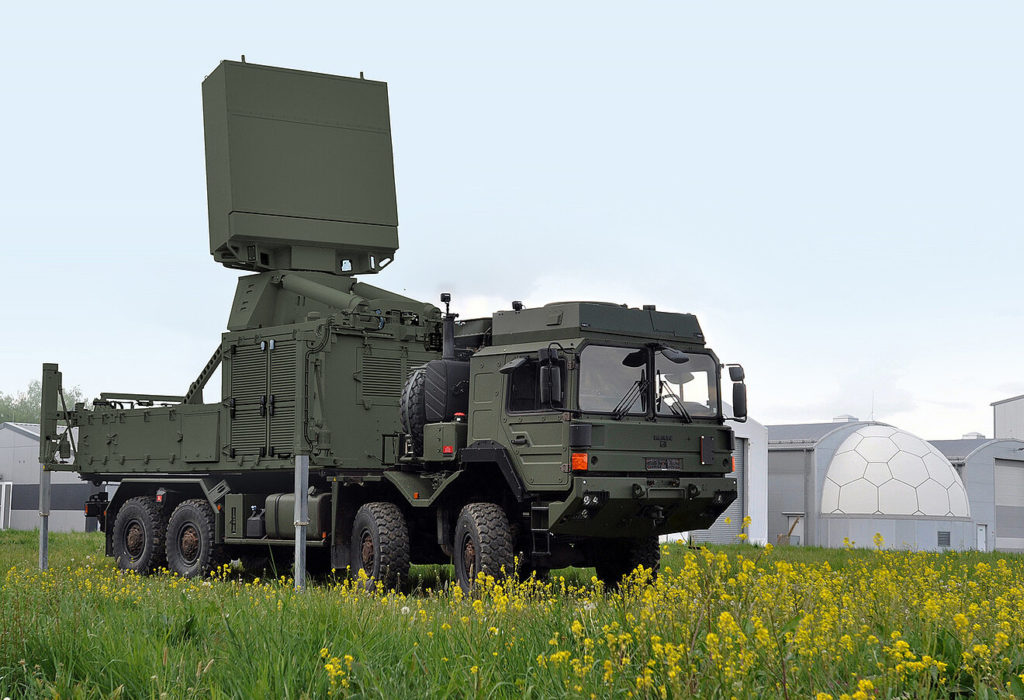
German radar maker Hensoldt has signed a memorandum with Ukraine's Defense Ministry for more large-scale radar deliveries, the company said on 5 October. Ukrainian defense outlet Defense Express reads it as a step toward fitting Hensoldt's TRML-4D, already in Ukrainian service, into FREYJA, a planned shield against ballistic missiles.
Ballistic missiles remain the hardest threat in Russia's air war. After Russia's overnight barrage on 7 October, Ukrainian President Volodymyr Zelenskyy said Ukraine is still searching daily for Patriot missiles. The only other system Ukraine can use against them is the Franco-Italian SAMP/T, which fires Aster 30 interceptors made in small numbers. That gap is why Fire Point is reworking its FP-7 missile into a Patriot-like interceptor. Such an interceptor still needs radars to find its target first.
A memorandum signed during Merz's visit
Hensoldt CEO Oliver Dörre signed the document on the sidelines of German Chancellor Friedrich Merz's visit to Ukraine. Beyond deliveries, it covers further development of radar capabilities. The partners will also study options to deploy and jointly operate TRL-4D LR long-range radars. Hensoldt said this expands cooperation already agreed on in ballistic missile defense.
Russia’s air defenses can’t protect all its strategic sites once Ukraine’s ballistic missiles are ready, expert says
The TRL-4D LR is the land-based version of a long-range radar Hensoldt also builds for the German Navy, German outlet Sicherheit & Verteidigung reported. The outlet cited Germany's defense procurement office as giving the naval version a range of more than 400 km (250 miles) against air targets. That, it concluded, puts the range well beyond the TRML-4D's.
"The Ukrainian air defence forces urgently need our high-performance radars to help protect infrastructure such as bridges," Dörre said.
Defense Express, describing the same memorandum, tied both the mass deliveries and the joint-operation plan to the TRML-4D. Hensoldt's release names no model for the deliveries and links joint operation to the TRL-4D LR.
Eyes for FREYJA
Hensoldt and Fire Point signed a memorandum on FREYJA at the Eurosatory arms show in Paris in June, with the TRML-4D to play a key role, Hensoldt announced. Fire Point is set to act as prime contractor and hold design authority. Hensoldt is to produce, test, and deliver the radars.

Germany’s Hensoldt to supply Ukraine with six more TRML-4D radars to boost air defense capabilities
Defense Express expects any study of deployment options to focus on how well the radar detects ballistic missiles and relays that data. Hensoldt has its own unit in Ukraine to work closely with operators, the outlet noted. Earlier, the company began setting up a local hub so Ukraine can service and repair the TRML-4D itself.
Already on duty
Ukraine's military uses the TRML-4D both standalone and as the built-in radar of the IRIS-T SLM medium-range air defense system, Defense Express noted. Hensoldt lists an instrumented range of 250 km (155 miles) at altitudes up to 30 km (19 miles). Defense Express, citing the manufacturer, gives track ranges of more than 120 km (75 miles) for fighter jets and more than 60 km (37 miles) for supersonic missiles.
More radars give earlier warning of ballistic strikes, but they cannot stop them. Until the FP-7.X makes its first ballistic intercept, planned for mid-2027, that job stays with Patriot and SAMP/T missiles. Partners delivered three times fewer air defense missiles in the first half of 2026 than a year earlier, Zelenskyy said on 5 August.
Read also
-
Turkey’s Korkut guns now shoot down Russian drones over Ukraine. Almost half of the jet-powered Shaheds still get through
-
Ukraine’s answer to Russia’s jet-powered Shaheds: a small new missile named Nika, heading into testing
-
Ukraine just caught a Geran-5 at 425 km/h—the jet drone that has often outrun Ukrainian interceptor drones since January