❌

Vue normale

  • ✇Euromaidan Press
  • Ukraine adopts two-tier air raid alert system as Russia’s mass drone attacks become the new normal
    The Cabinet of Ministers of Ukraine adopted a decision to introduce two levels of air alerts, with yellow for drone attacks and red for a heightened threat of missile or combined strikes, Prime Minister Serhii Koretskyi said on 3 September. Under the yellow level, designated businesses can operate if they meet safety requirements, while a red alert will require work to stop and people to move to shelters. Russia continues to attack Ukrainian cities with drones and other
     

Ukraine adopts two-tier air raid alert system as Russia’s mass drone attacks become the new normal
4 septembre 2026 à 13:53

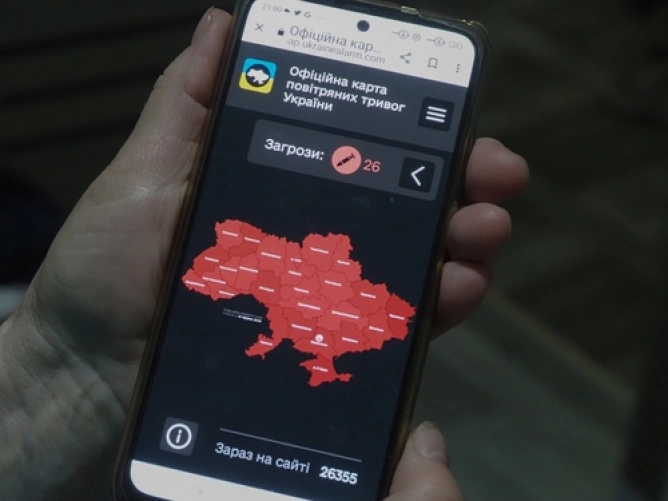
the Official Map of Air Alerts in Ukraine

The Cabinet of Ministers of Ukraine adopted a decision to introduce two levels of air alerts, with yellow for drone attacks and red for a heightened threat of missile or combined strikes, Prime Minister Serhii Koretskyi said on 3 September. Under the yellow level, designated businesses can operate if they meet safety requirements, while a red alert will require work to stop and people to move to shelters.

Russia continues to attack Ukrainian cities with drones and other long-range weapons, repeatedly disrupting civilian and economic activity. Ukrainian President Volodymyr Zelenskyy said Russia is using mass drone attacks to wear down civilian life and economic activity, while the existing system of signaling all aerial threats in the same way no longer fits Russia's tactics.

How it will work

Businesses cleared to operate under a yellow alert must ensure staff and visitors can reach shelters. Where that access is missing, the Cabinet is giving businesses three months to provide it.

The General Staff, the Air Force, the government, the Defense Ministry, the Interior Ministry, and the State Emergency Service will set the specific indicators for declaring each level weekly, Zelenskyy said.

What still has to be worked out

Zelenskyy also directed officials to develop geographic targeting for alerts, so warnings can be limited to areas facing an actual threat. The measure is still being worked out and is not yet part of the new system.

The new approach is intended to allow economic activity to continue during drone threats while preserving stricter measures for more serious attacks. The government has not yet finalized which businesses will qualify to remain open under a yellow alert or all of the criteria for applying the two levels.

  • ✇Euromaidan Press
  • Russia says Armenia’s EU accession law means leaving Moscow-led trade bloc. Yerevan disagrees
    Russian President Vladimir Putin said Armenia's 2025 law launching the EU accession process "amounts to a declaration of withdrawal" from the Russia-led Eurasian Economic Union. Armenian Prime Minister Nikol Pashinyan replied that Armenia had filed no notice to leave and had violated none of the bloc's rules. The leaders met on 1 September in Bishkek, Kyrgyzstan, during a Shanghai Cooperation Organization summit. The exchange turns Armenia's westward shift into an open
     

Russia says Armenia’s EU accession law means leaving Moscow-led trade bloc. Yerevan disagrees

2 septembre 2026 à 10:35

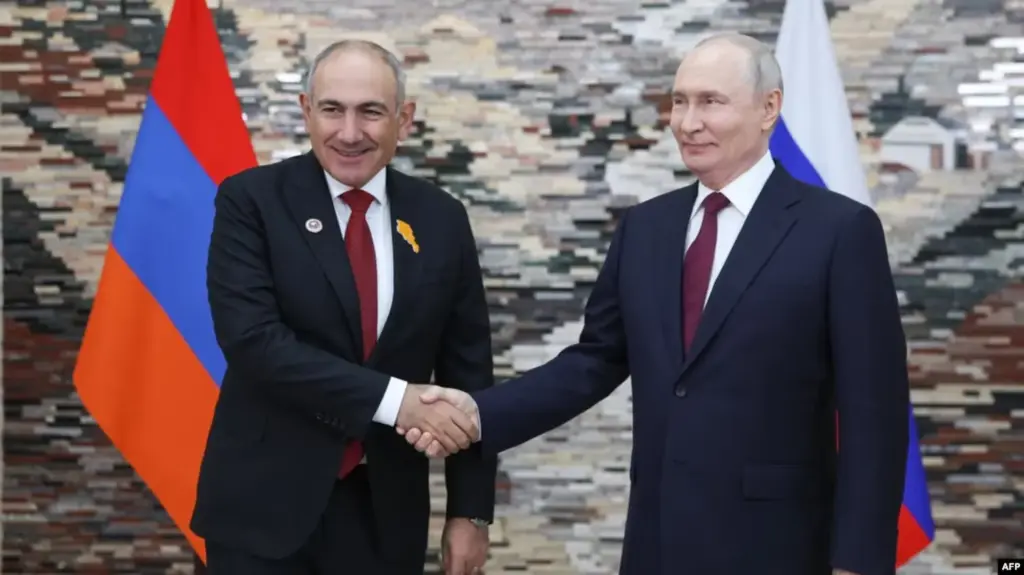
Nikol Pashinyan and Vladimir Putin meet in Bishkek

Russian President Vladimir Putin said Armenia's 2025 law launching the EU accession process "amounts to a declaration of withdrawal" from the Russia-led Eurasian Economic Union. Armenian Prime Minister Nikol Pashinyan replied that Armenia had filed no notice to leave and had violated none of the bloc's rules. The leaders met on 1 September in Bishkek, Kyrgyzstan, during a Shanghai Cooperation Organization summit.

The exchange turns Armenia's westward shift into an open dispute over how far it has already moved from Moscow. Yerevan is preparing an EU application and has frozen participation in Russia's military alliance, but it still belongs to the trade bloc. Russia remains Armenia's largest trade partner, accounting for about 35% of its foreign trade.

The disagreement

In the opening minutes, Putin acknowledged that Armenia's aspiration to join the EU was the country's "legitimate right," but said it "creates difficulties" given Armenia's membership in the bloc that links Russia, Belarus, Kazakhstan, Kyrgyzstan, and Armenia. He told Pashinyan that adopting a law launching the process of joining another organization "amounts to a declaration of withdrawal from ours."

Putin urged Armenia to decide quickly and repeated his call for a referendum on whether Armenia should remain in the trade bloc or pursue EU membership, telling Pashinyan to give the people a choice so the matter could be closed.

Pashinyan pushed back. He noted that the bloc's rules have no mechanism to expel a member state—only a voluntary withdrawal process requiring six months' notice—and that Armenia has filed no such notice. He told Putin the issue had not matured enough for a referendum, arguing that Armenia first needs to submit a formal EU application, receive a response, and agree on an accession roadmap.

How far Armenia has moved

Armenia's parliament passed a law launching the EU accession process in March 2025, though the government has said the law does not amount to a formal membership bid. On 24 August, Pashinyan told lawmakers that the government would begin preparing a formal application "in the near future." Armenia has also dropped the "strategic partner" label for Russia from its new government program and effectively frozen its participation in the Russian-led Collective Security Treaty Organization since early 2024.

Russia's response

Since May 2026, Moscow has imposed a series of bans on Armenian agricultural imports—including fruit, vegetables, and mineral water—citing phytosanitary concerns. The EU called the measures "economic coercion" and announced a support package of more than €50 million for Armenia in June.

Pashinyan says dialogue will continue

After the meeting, Pashinyan posted a video describing the talks as "very good" and saying the two leaders had agreed to continue a "sincere and constructive dialogue" during a future visit to Moscow. He said bilateral relations needed to be "rethought" under new circumstances.

❌