
 Connexion
Ukraine strikes Gazprom’s Salavat refinery again as Russia’s fuel shortages return in 16 regions
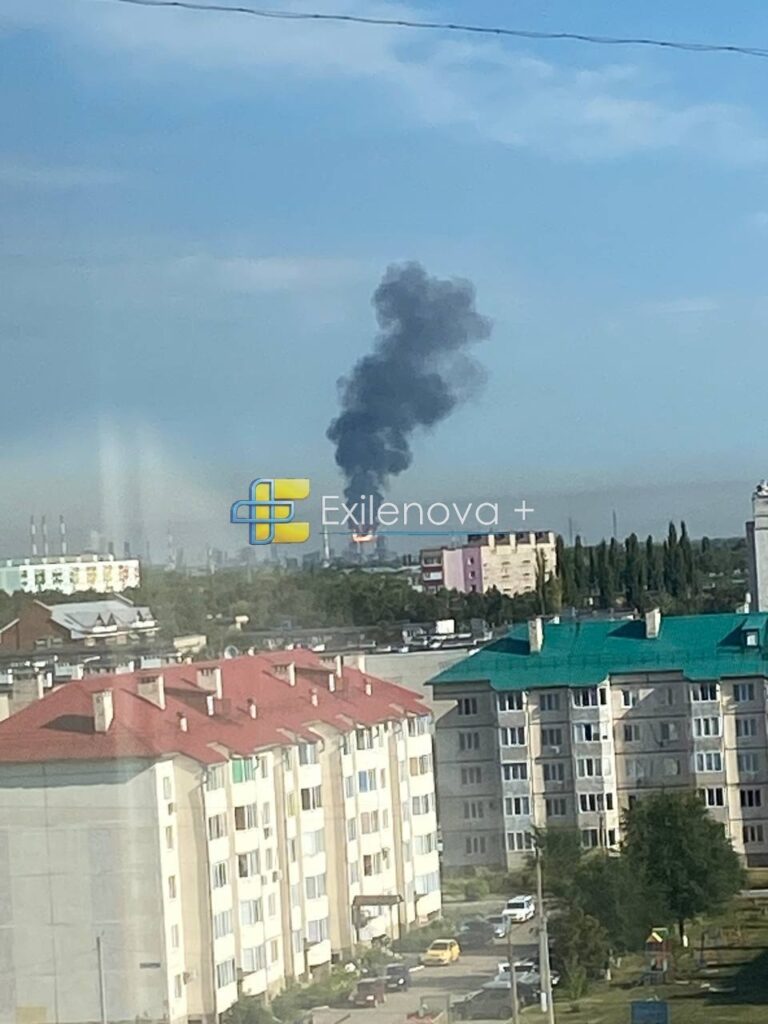
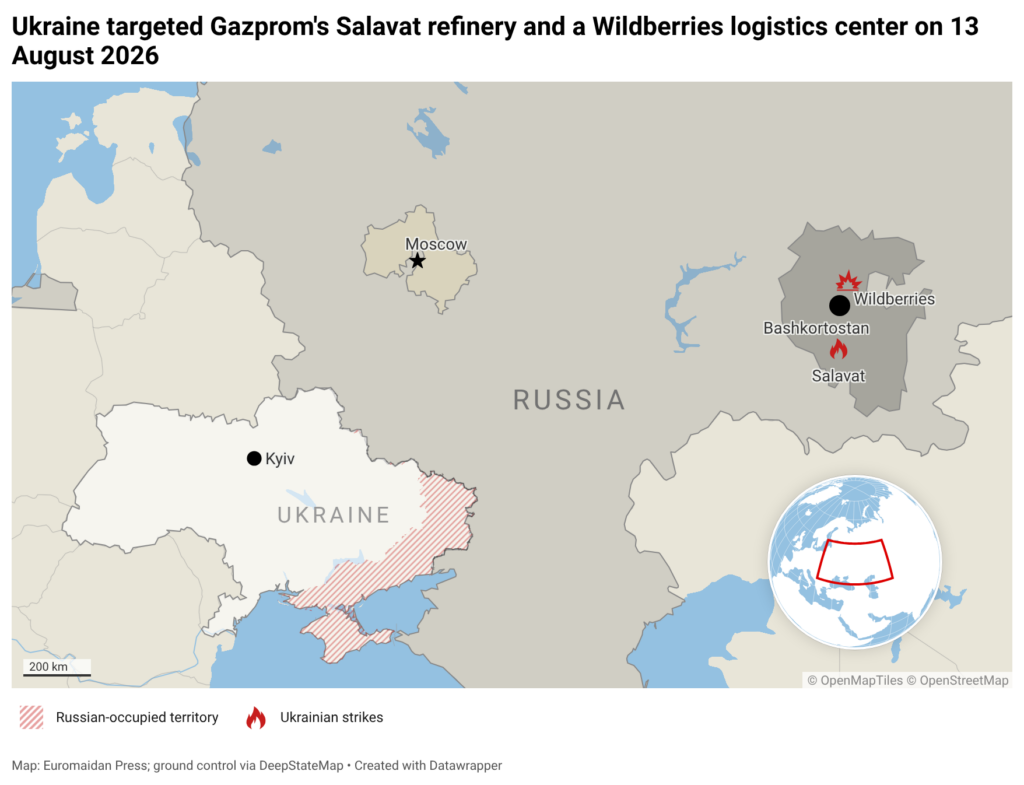
Ukrainian drones struck the Gazprom Neftekhim Salavat oil-refining and petrochemical complex in Russia's Bashkortostan on the morning of 13 August, setting off a fire — the second strike on one of Russia's largest refineries in a month.
The repeat hit lands as Ukraine's deep-strike campaign forces Russian refining to its lowest level since 2002 and pushes fuel shortages back into at least 16 regions, where drivers again face queues and sales limits at filling stations. Striking the same plants faster than Moscow can repair them is the point — each return resets the clock on units that take weeks or months to rebuild.
What happened
Bashkortostan's head, Radiy Khabirov, confirmed that debris from a downed drone fell in Salavat's industrial zone and sparked a blaze, which he called a "terrorist attack." Ukrainian monitoring channels Exilenova+ and Supernova identified the target as the Gazprom Neftekhim Salavat plant, and residents reported a column of black smoke over the site. Ukraine's military had not commented on the strike.
The complex is one of Russia's largest refining and petrochemical sites. It processed about 7.2 million tons of crude in 2024 — roughly 2.7% of Russia's total refining — and turns out gasoline, diesel, jet fuel, ammonia, and more, according to Reuters, citing industry sources.
Ukrainian drones struck the same plant on 14 July, damaging two primary distillation units and halting operations; industry sources told Reuters the repairs could take weeks to months. Open-source data cited by Radio Svoboda places Russia's only heptyl rocket-fuel producer, the Salavat Chemical Plant, inside the same industrial perimeter, though there is no confirmation it was hit.
A campaign that keeps resetting repairs
Since early August, at least four refineries have stopped processing after Ukrainian strikes, including plants in Orenburg, Tyumen, Saratov, and Volgograd oblasts. Across 2026, attacks have interrupted work at no fewer than 26 refineries, seven of them still offline at the end of July, according to S&P Global.
Russian refining has fallen to about 3.6 million barrels a day, the lowest since 2002, per EA Analytics — the trigger for the fuel crisis now resurfacing. Shortages had eased by late July, but by mid-August residents of at least 16 regions were again reporting queues and sales restrictions, with Ai-92 and Ai-95 grades pulled from some Gazprom and Lukoil stations.
Attack on warehouse Wildberries
Drones also struck a Wildberries logistics center under construction in Bashkortostan's Chishminsky district, according to the monitoring channel Astra.
Wildberries is Russia's largest online retailer. The hub—about 187,000 square meters—has been under construction since 2024 on the grounds of the "Center of Agrotechnologies" agropark.
