Representative Byron Donalds had a wide lead in polls of the race for the Republican nomination for governor. Polling was sparse in every other statewide contest.
Representative Byron Donalds had a wide lead in polls of the race for the Republican nomination for governor. Polling was sparse in every other statewide contest.
Au Québec, on ne peut pas disposer des cendres d’un défunt n’importe où ni n’importe comment. Pourtant, entre les règles à respecter et les dernières volontés d’une personne, certains prennent parfois… quelques libertés.
Opinion de Harold Michaud, journaliste indépendant- Collaboration spéciale
Un jour, un pêcheur de la région taquinait tranquillement le saumon lorsqu’un étrange reflet attira son attention dans une partie peu profonde de la rivière. Un saumon? Un morceau de métal? Un objet
Au Québec, on ne peut pas disposer des cendres d’un défunt n’importe où ni n’importe comment. Pourtant, entre les règles à respecter et les dernières volontés d’une personne, certains prennent parfois… quelques libertés.
Opinion de Harold Michaud, journaliste indépendant- Collaboration spéciale
Un jour, un pêcheur de la région taquinait tranquillement le saumon lorsqu’un étrange reflet attira son attention dans une partie peu profonde de la rivière. Un saumon? Un morceau de métal? Un objet perdu par un autre pêcheur?
Pas du tout!
En s’approchant, notre homme constate qu’il s’agit… d’une urne funéraire.
Respectueux — et probablement assez étonné de voir sa journée de pêche prendre une tournure aussi inattendue —, il récupère l’urne et la remet aux autorités compétentes.
Heureusement, le contenant renferme normalement une pièce d’identification. Grâce à celle-ci, on réussit à retracer un membre de la famille de la personne décédée et, du même coup, à comprendre comment cette urne s’était retrouvée au fond de la rivière.
On précise alors délicatement à la famille qu’on ne peut pas simplement se débarrasser d’une urne dans une rivière, même si le geste visait à respecter les dernières volontés du défunt. Et surtout, si l’on souhaite disperser des cendres là où la loi le permet, mieux vaut éviter de lancer le contenant avec!
Bref, si votre dernière volonté est de reposer dans une belle rivière à saumon, renseignez-vous d’abord sur les règles applicables.
Et, de grâce, prévenez vos proches : demandez-leur de disperser vos cendres, pas de vous mettre à l’eau avec l’emballage!
Parce qu’à la pêche au saumon, on s’attend parfois à remettre ses prises à l’eau… mais rarement à y retrouver les restes d’un défunt encore dans leur contenant.
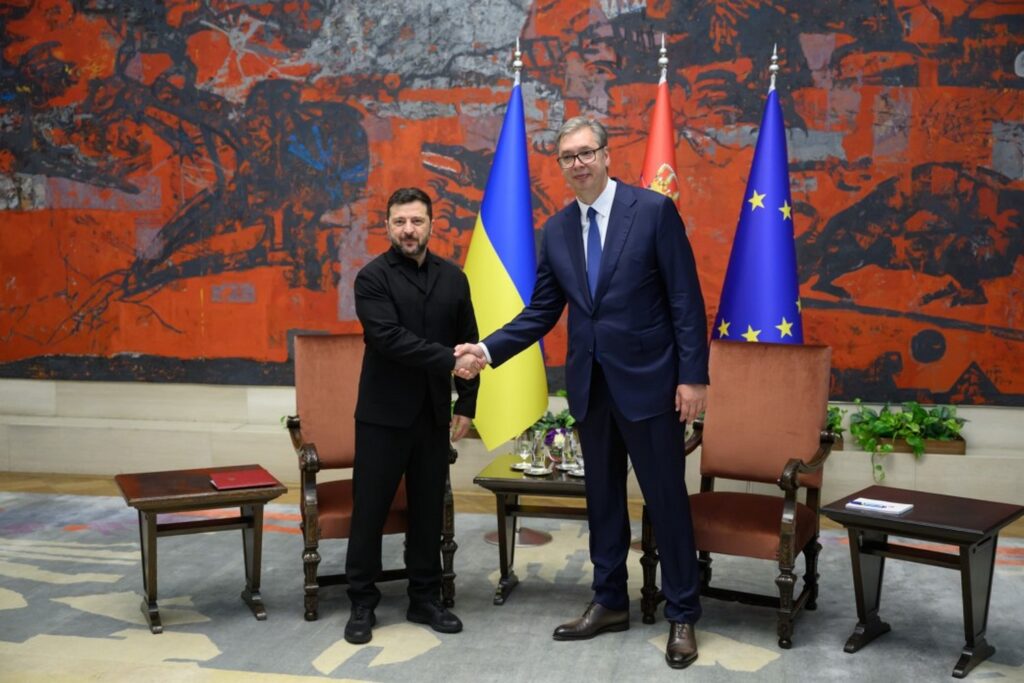
During President Volodymyr Zelenskyy’s recent visit to Serbia, he was asked whether Belgrade could continue to count on Ukraine’s position on Kosova. Zelenskyy reaffirmed that position, saying that Ukraine respects Serbia’s territorial integrity and international law and that its stance on Kosova’s “unilateral declaration of independence” remains unchanged.
Explore further
During President Volodymyr Zelenskyy’s recent visit to Serbia, he was asked whether Belgrade could continue to count on Ukraine’s position on Kosova. Zelenskyy reaffirmed that position, saying that Ukraine respects Serbia’s territorial integrity and international law and that its stance on Kosova’s “unilateral declaration of independence” remains unchanged.
Explore further
Zelenskyy’s Kosovo comments in Belgrade prompt flag removal in Prishtina
For many Kosovars, who have stood firmly with Ukraine since Russia’s full-scale invasion, this is difficult to understand. There is particular pain in hearing President Zelenskyy appear to dismiss what Kosovars endured—when it is precisely that memory of war, displacement, and atrocities that made Kosova one of Ukraine’s most instinctive supporters.
Kosova emerged from an international process designed to resolve a conflict; Russia manufactured “independence” as an instrument of conquest.
The danger of “unilateral”
There is a big problem with the way Kosova is being discussed by President Zelenskyy. Describing its independence simply as a “unilateral declaration” removes everything that matters about how Kosova actually became independent.
It also plays directly into an argument Vladimir Putin has been making for years: if the West accepted Kosova, why should it reject what Russia has done in Crimea, Donetsk, or Luhansk?
Ukraine should be dismantling that argument, not inadvertently reinforcing it. Kosova’s declaration was unilateral in one narrow sense: Serbia did not consent. But Ukrainians should understand the problem with treating the aggressor’s consent as the decisive test.
Imagine telling a community in Ukraine devastated by Russian forces that Moscow must retain a permanent veto over the political settlement that determines its future.
Kosova’s path to independence
Kosova did not simply decide one day in 2008 to break away from Serbia. The declaration came at the end of a process that had lasted years. Kosova’s path to statehood came through the violent dissolution of Yugoslavia, a federation that ultimately fragmented into seven independent states, and after years of systematic repression of Kosova’s overwhelmingly Albanian population. The culmination was the 1998–99 Kosova war.
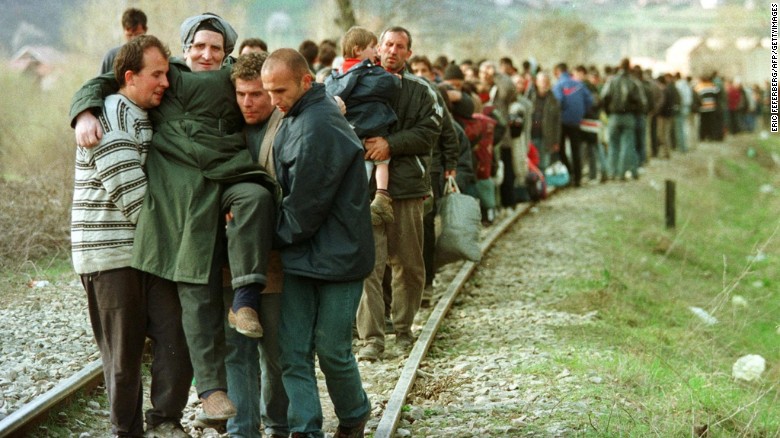
Serbian and Yugoslav forces conducted a campaign of violence and forced displacement against Kosovar Albanians. Nearly 800,000 people were expelled from Kosova in a matter of months because of a violent ethnic cleansing campaign of the Serbian army against Kosovars.
Hundreds of thousands more were internally displaced. Thousands of civilians were killed, cities and villages burned, homes destroyed, and women subjected to sexual violence.
Kosovar refugees fleeing their homeland. 01 March 1999, Blace area, the former Yugoslav Republic of Macedonia. Photograph: UN Photo
When the war ended in 1999, Kosova did not declare independence. Nor did Albania invade Kosova and annex it. Instead, Kosova was placed under UN Security Council Resolution 1244. For almost nine years, its institutions developed under international administration while its final status remained unresolved.
And then there were negotiations. UN Secretary-General Kofi Annan appointed former Finnish President Martti Ahtisaari to lead talks between Belgrade and Pristina over Kosova’s final status. After those negotiations failed to produce an agreement, Ahtisaari concluded that returning Kosova to Serbian rule was no longer a viable option and recommended internationally supervised independence.
This matters because Kosova’s declaration in February 2008 did not reject that international process. It embraced it. The declaration committed Kosova to implementing the Ahtisaari settlement and invited continued international involvement, including an EU rule-of-law mission and NATO’s security presence.
Call the final declaration unilateral if you wish. The process that produced it was anything but.
What the ICJ found
Even after independence, the issue was subjected to further international scrutiny. At Serbia’s initiative, the UN General Assembly asked the International Court of Justice to examine the declaration. In 2010, the court concluded that Kosova’s declaration “did not violate international law.” It also found that it did not violate UN Security Council Resolution 1244.
None of this means Kosova’s path to independence was simple or uncontested. Clearly, it was not. But reducing this history to the word “unilateral” creates precisely the opening Russia needs to manufacture a parallel with Ukraine.
Crimea breaks the comparison
Putin has used Kosova for years to claim that the West created a precedent Russia merely followed: Kosova separated from Serbia without Belgrade’s consent, so why should Crimea be different? Because that is clearly where the similarity ends.
Crimea, Donetsk, and Luhansk were annexed following a Russian invasion. Moscow occupied Ukrainian territory, installed or backed proxy authorities, staged referendums under military occupation, and ultimately claimed Ukrainian land as its own.
Kosova emerged from an international process designed to resolve a conflict; Russia manufactured “independence” as an instrument of conquest. Ukraine should insist on that distinction every time Moscow invokes Kosova.
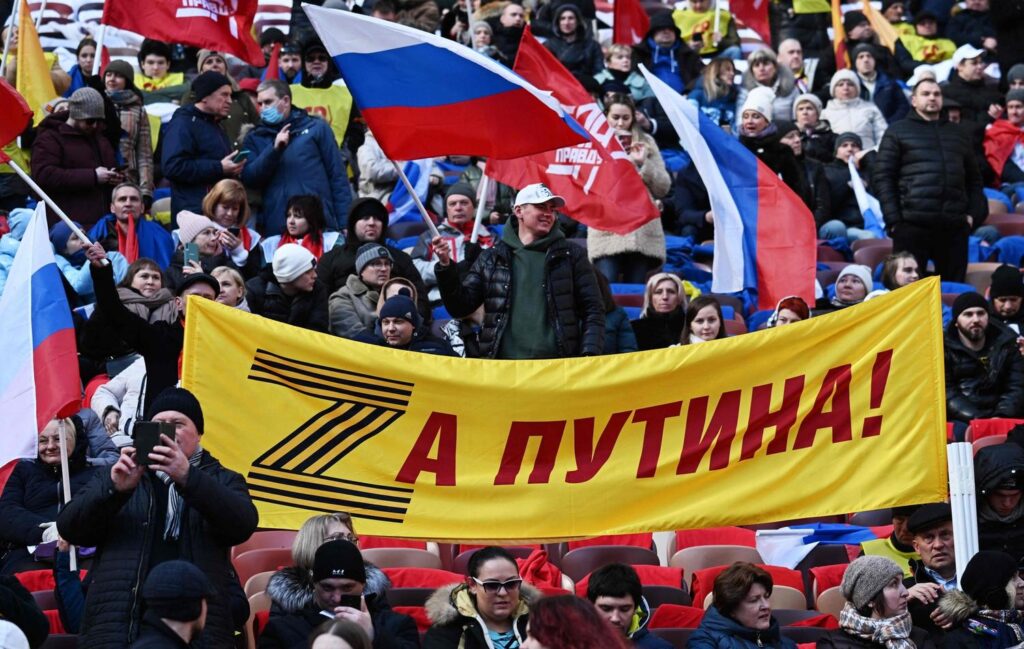
People gather for a concert marking the eight anniversary of Russia's annexation of Crimea at the Luzhniki stadium in Moscow on 18 March 2022. - The banner bearing the letter "Z" in the colours of the ribbon of Saint George, which has become a symbol of support for Russian military action in Ukraine, reads "For Putin!" (Photo by Pavel BEDNYAKOV / various sources / AFP)
Ukraine understandably approaches Kosova cautiously. A country fighting for its territorial integrity is wary of anything that might appear to weaken that principle. But acknowledging the exceptional circumstances of Kosova does not weaken Ukraine’s argument. Treating Kosova and Crimea as comparable cases does.
Russia wants Kosova to be its precedent. Ukraine does not have to accept the premise. Ukraine, in fact, has a particular interest in explaining the difference, because Ukrainians know better than almost anyone what Russian-manufactured "self-determination” actually looks like. That is not Kosova’s story.
Kosova chose Ukraine first
There is also an irony here that is difficult for Kosovars to ignore. Kosova has stood with Ukraine since the beginning of Russia’s full-scale invasion. It imposed sanctions against Russia and Belarus, provided assistance to Ukraine, and offered refuge to Ukrainian journalists.
It did all of this without being recognized by Kyiv—Kosovars did not need recognition to know which side they were on.
Ukraine’s experience resonates deeply in Kosova. We know what it means to live through war and displacement. We also know what it means when a larger neighbor invokes history to argue that it has the right to determine your future.
That does not make the two cases identical—but it should make Ukrainians skeptical when Russia tries to turn Kosova into a justification for its own imperial project.
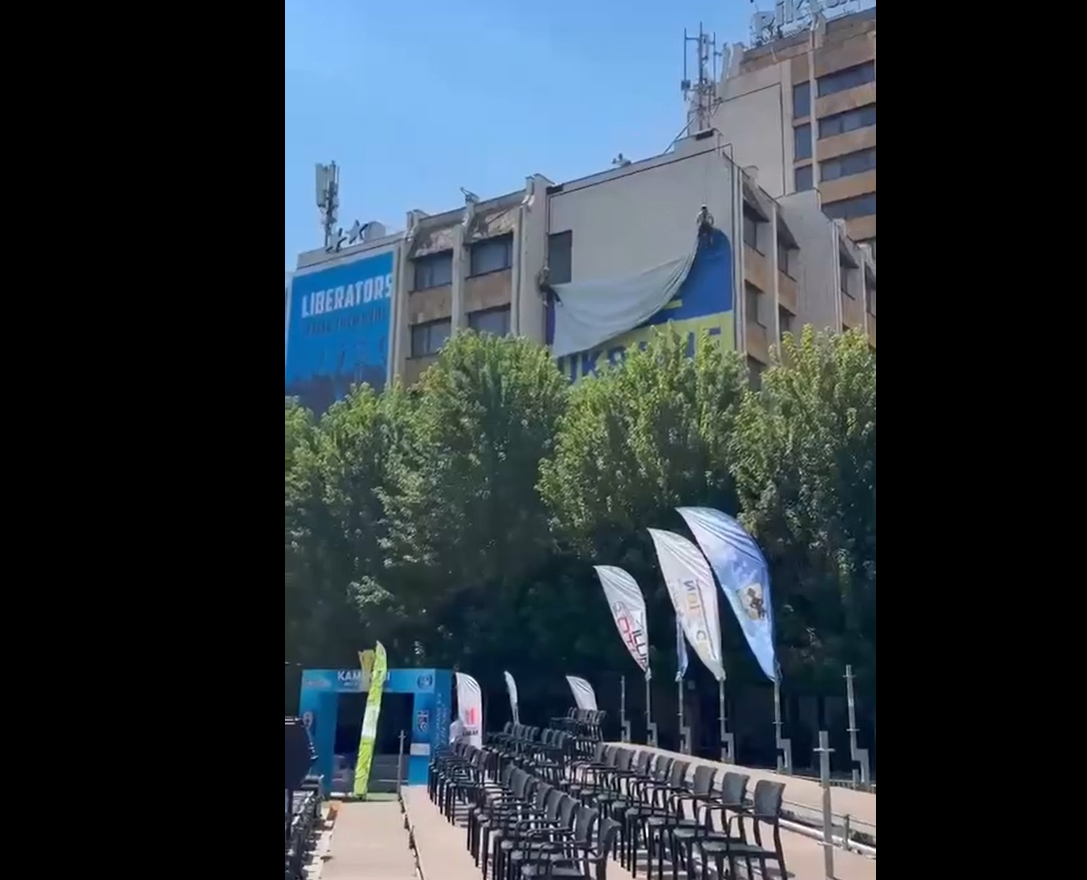
The Ukrainian flag is removed from a public display in Pristina after President Volodymyr Zelenskyy reaffirmed Ukraine’s support for Serbia’s territorial integrity. Video still: Përparim Rama/Facebook.
Kosovars did not expect President Zelenskyy to arrive in Belgrade and announce that Ukraine had suddenly changed its position on Kosova. But it is reasonable to expect Kyiv to revisit its approach to Kosova and to recognize the process by which Kosova came to be, a process that Ukraine’s closest allies today understood, supported, and ultimately recognized.
That requires abandoning a framing that reduces Kosova’s history to a “unilateral declaration” and inadvertently gives credibility to the parallel Russia has spent years trying to construct. For Kosovars, the hope is that a more honest understanding of that history will eventually lead Ukraine to reconsider recognition, too.
Not as a reward for Kosova’s support for Ukraine, but as the natural outcome of seeing Kosova on its own terms rather than through the precedent Moscow wants it to be.
Putin has spent years trying to make Kosova his precedent. Ukraine should take that argument away from him. Doing so would bring Kyiv closer to the position of the allies standing beside it today—and perhaps, in time, recognition would follow.
Nezir Sinani is executive director of the B4Ukraine Coalition, an alliance of more than 100 civil society organizations pressing companies and financial institutions to stop enabling Russia’s war against Ukraine. A longtime Kosovar activist, his work is rooted in Kosova’s own experience of war and displacement.
Editor's note. The opinions expressed in our Opinion section belong to their authors. Euromaidan Press' editorial team may or may not share them.
Nigel Farage, the leader of Reform U.K., won the Clacton by-election with 63 percent. Count Binface, a novelty candidate, came second with 27 percent, a personal best.
Nigel Farage, the leader of Reform U.K., won the Clacton by-election with 63 percent. Count Binface, a novelty candidate, came second with 27 percent, a personal best.
Chaque fois que je passe devant la station de TVA à Pointe-au-Père (enfin, ce qu’il en reste…), il y a comme un petit fond de rage qui remonte à la surface.
Opinion de Harold Michaud, journaliste indépendant et chroniqueur- Collaboration spéciale
Depuis que Pierre Karl Péladeau a mis en échec les stations régionales de TVA pour tenter de garder TVA Sports sous son contrôle, j’ai l’impression que nous avons tous perdu quelque chose.
Nous, les gens des régions du Québec, avons perdu un o
Chaque fois que je passe devant la station de TVA à Pointe-au-Père (enfin, ce qu’il en reste…), il y a comme un petit fond de rage qui remonte à la surface.
Opinion de Harold Michaud, journaliste indépendant et chroniqueur- Collaboration spéciale
Depuis que Pierre Karl Péladeau a mis en échec les stations régionales de TVA pour tenter de garder TVA Sports sous son contrôle, j’ai l’impression que nous avons tous perdu quelque chose.
Nous, les gens des régions du Québec, avons perdu un outil important pour raconter qui nous sommes et parler de nos enjeux.
Je sais, certains me diront :
— Harold, tu es un ancien journaliste de Radio-Canada. C’est quoi ton problème? Tu devrais t’en foutre comme d’une défaite en prolongation du Kraken de Seattle contre les Ducks d’Anaheim.
Mais non.
Voyez-vous, je suis un incorrigible régionaliste.
Et je mesure encore davantage ce que nous avons perdu chaque fois que j’écoute un bulletin de nouvelles produit à des kilomètres de chez nous et censé raconter notre réalité.
Ce n’est pas la faute des journalistes d’ici, qui font ce qu’ils peuvent avec une salle de presse réduite au minimum. C’est simplement qu’une région racontée à distance finit inévitablement par perdre un peu de sa voix, de ses nuances et de son identité.
Au lieu de bien raconter ce qui se passe dans notre région, TVA s’acharne à nous présenter, de manière très récurrente, les mêmes messages publicitaires et surtout, la promotion de ses propres émissions.
Et pendant ce temps-là, TVA Sports demeure.
Il faut dire que la couverture du Canadien de Montréal ne me console pas beaucoup. Certains de ses animateurs passent parfois tellement de temps à rire de leurs propres farces — qu’ils semblent d’ailleurs être les seuls à comprendre — qu’on finit presque par oublier qu’il y a un match de hockey en cours.
Et voilà maintenant que CBC ne diffusera plus les matchs du samedi soir dès cet automne. Moi qui pouvais au moins éviter TVA Sports de temps à autre et regarder le hockey dans la langue de Shakespeare…
Bref, à force de vouloir sauver le hockey à TVA, on a carrément sorti les régions de l’alignement. Une véritable mise en échec par derrière : sale, dangereuse et qui mérite bien plus qu’une simple inconduite de partie.
Marque finale : PKP 1 — téléspectateurs des régions 0.
Nigel Farage forced a new election in his parliamentary seat after coming under pressure over his finances. His main challenger is Count Binface, a novelty candidate.
Nigel Farage forced a new election in his parliamentary seat after coming under pressure over his finances. His main challenger is Count Binface, a novelty candidate.
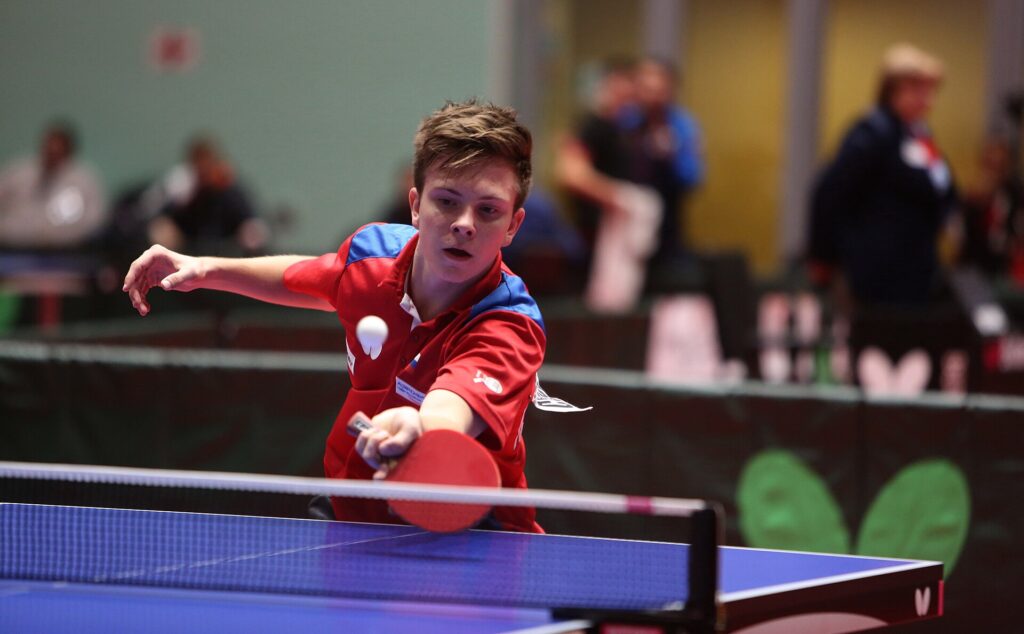
When Sweden’s Anton Källberg walks into the arena on Tuesday to face Vladimir Sidorenko at Europe Smash, the match carries a weight that reaches beyond the table.Sidorenko is Russian, and unlike the Russian players who spent recent years competing as neutrals, he now takes the table representing Russia, under its flag and anthem.
Flags and anthems are written into international sport precisely because they carry national and political meaning.
The change follows a Ju
When Sweden’s Anton Källberg walks into the arena on Tuesday to face Vladimir Sidorenko at Europe Smash, the match carries a weight that reaches beyond the table.
Sidorenko is Russian, and unlike the Russian players who spent recent years competing as neutrals, he now takes the table representing Russia, under its flag and anthem.
Flags and anthems are written into international sport precisely because they carry national and political meaning.
The change follows a July decision by the International Table Tennis Federation (ITTF) to lift the restrictions on athletes holding Russian passports. It took effect on 28 July, and Russian players can now enter under the same ordinary rules as everyone else.
For critics, the question is hard to avoid: what has changed in Ukraine to justify the change in sport?
What changed in Ukraine? Nothing
Russia’s full-scale invasion has not ended. Yet the penalty imposed in its wake—that Russian athletes compete without representing the Russian state—has now been lifted in international table tennis.
The Swedish Table Tennis Association has openly opposed the move. Its chairman, Tomas Eriksson, said in July that he saw no change in Ukraine that would justify shifting Swedish sport’s position toward Russian participation. The association has said it will not boycott the tournaments.
That tension now lands on Swedish soil.
Källberg and Sidorenko were drawn against each other at Europe Smash, held in Malmö from 8 to 16 August.
For Swedish supporters of Ukraine, the evening presents a real dilemma. Nobody needs to aim hostility at Sidorenko himself, and no one is claiming individual Russian athletes bear responsibility for their government’s actions. The question is what an athlete is asked to represent.
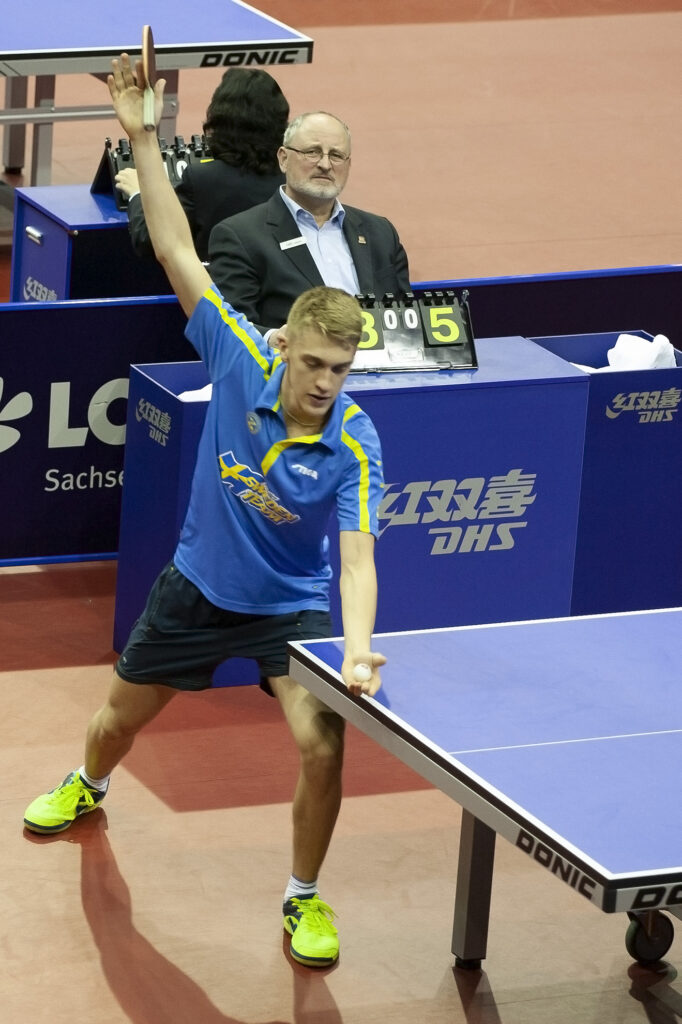
Sweden’s Anton Källberg, who faces Russia’s Vladimir Sidorenko at Europe Smash in Malmö. Photo: Peter Porai-Koshits / Wikimedia Commons, CC BY-SA 4.0
A flag is never neutral
A neutral athlete competes as an individual. Someone introduced beneath a national flag stands in, however indirectly, for a state. Flags and anthems are written into international sport precisely because they carry national and political meaning.
So restoring the Russian flag is more than an administrative tweak. It is a statement—and a pointed one while Russia’s war on Ukraine continues.
The dispute has an unmistakable Swedish dimension. ITTF is headed by Petra Sörling, the Swedish official who was re-elected president of world table tennis in 2025 for another four-year term. She is a former president of the Swedish Table Tennis Association.
Explore further
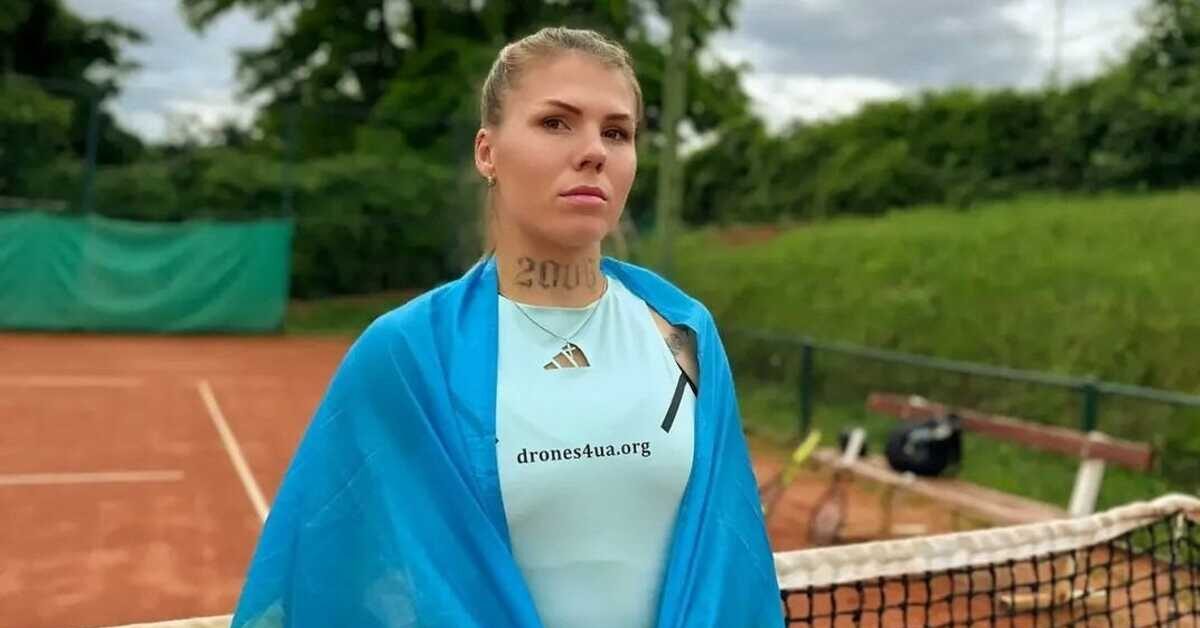
Sport is letting Russia back in. This Ukrainian tennis player says no.
That does not make the reinstatement hers alone to decide; the ITTF Executive Board considered the issue on 10 July. But leadership carries responsibility. ITTF has justified the change by citing equal treatment and proportionality—yet proportionate to what change in circumstances? With Russia’s war on Ukraine still ongoing, the federation has yet to explain what has materially shifted to make the earlier restrictions disproportionate now.
On the evening of 11 August 2026, all of it narrows to something plainer: two players and a table, in front of a Swedish crowd.
Källberg deserves what any Swedish athlete would want at a major home tournament: loud, passionate backing from the crowd. And those who object to the return of the Russian flag have every right to voice it, peacefully, from the same seats.
Symbols cut both ways
Sport does not stand outside the world around it. International federations prove as much every time they raise a flag or set a country’s name beside an athlete.
If those symbols matter when a nation celebrates victory, they matter when a governing body decides who may use them.
And until the reasons for restricting Russia’s national representation have gone, the question facing table tennis stays simple: Why should the restriction disappear first?

 Connexion