Vue normale

  • ✇Journal Le Soir
  • L’information régionale sur la glace
    Chaque fois que je passe devant la station de TVA à Pointe-au-Père (enfin, ce qu’il en reste…), il y a comme un petit fond de rage qui remonte à la surface. Opinion de Harold Michaud, journaliste indépendant et chroniqueur- Collaboration spéciale Depuis que Pierre Karl Péladeau a mis en échec les stations régionales de TVA pour tenter de garder TVA Sports sous son contrôle, j’ai l’impression que nous avons tous perdu quelque chose. Nous, les gens des régions du Québec, avons perdu un o
     

L’information régionale sur la glace

12 août 2026 à 14:00

Chaque fois que je passe devant la station de TVA à Pointe-au-Père (enfin, ce qu’il en reste…), il y a comme un petit fond de rage qui remonte à la surface.

Opinion de Harold Michaud, journaliste indépendant et chroniqueur- Collaboration spéciale

Depuis que Pierre Karl Péladeau a mis en échec les stations régionales de TVA pour tenter de garder TVA Sports sous son contrôle, j’ai l’impression que nous avons tous perdu quelque chose.

Nous, les gens des régions du Québec, avons perdu un outil important pour raconter qui nous sommes et parler de nos enjeux.

Je sais, certains me diront :

— Harold, tu es un ancien journaliste de Radio-Canada. C’est quoi ton problème? Tu devrais t’en foutre comme d’une défaite en prolongation du Kraken de Seattle contre les Ducks d’Anaheim.

Mais non.

Voyez-vous, je suis un incorrigible régionaliste.

Et je mesure encore davantage ce que nous avons perdu chaque fois que j’écoute un bulletin de nouvelles produit à des kilomètres de chez nous et censé raconter notre réalité.

Ce n’est pas la faute des journalistes d’ici, qui font ce qu’ils peuvent avec une salle de presse réduite au minimum. C’est simplement qu’une région racontée à distance finit inévitablement par perdre un peu de sa voix, de ses nuances et de son identité.

Au lieu de bien raconter ce qui se passe dans notre région, TVA s’acharne à nous présenter, de manière très récurrente, les mêmes messages publicitaires et surtout, la promotion de ses propres émissions.

Et pendant ce temps-là, TVA Sports demeure.

Il faut dire que la couverture du Canadien de Montréal ne me console pas beaucoup. Certains de ses animateurs passent parfois tellement de temps à rire de leurs propres farces — qu’ils semblent d’ailleurs être les seuls à comprendre — qu’on finit presque par oublier qu’il y a un match de hockey en cours.

Et voilà maintenant que CBC ne diffusera plus les matchs du samedi soir dès cet automne. Moi qui pouvais au moins éviter TVA Sports de temps à autre et regarder le hockey dans la langue de Shakespeare…

Bref, à force de vouloir sauver le hockey à TVA, on a carrément sorti les régions de l’alignement. Une véritable mise en échec par derrière : sale, dangereuse et qui mérite bien plus qu’une simple inconduite de partie.

Marque finale : PKP 1 — téléspectateurs des régions 0.

How Nigel Farage Ended Up Running Against Count Binface in Clacton

12 août 2026 à 03:59
Nigel Farage forced a new election in his parliamentary seat after coming under pressure over his finances. His main challenger is Count Binface, a novelty candidate.

© Kirsty Wigglesworth/Associated Press

Count Binface, played by the comedian Jon Harvey, being interviewed at a studio in London last month.
  • ✇Euromaidan Press
  • Table tennis restored Russia’s flag while Russia’s invasion of Ukraine continues
    When Sweden’s Anton Källberg walks into the arena on Tuesday to face Vladimir Sidorenko at Europe Smash, the match carries a weight that reaches beyond the table.Sidorenko is Russian, and unlike the Russian players who spent recent years competing as neutrals, he now takes the table representing Russia, under its flag and anthem. Flags and anthems are written into international sport precisely because they carry national and political meaning. The change follows a Ju
     

Table tennis restored Russia’s flag while Russia’s invasion of Ukraine continues

11 août 2026 à 02:43

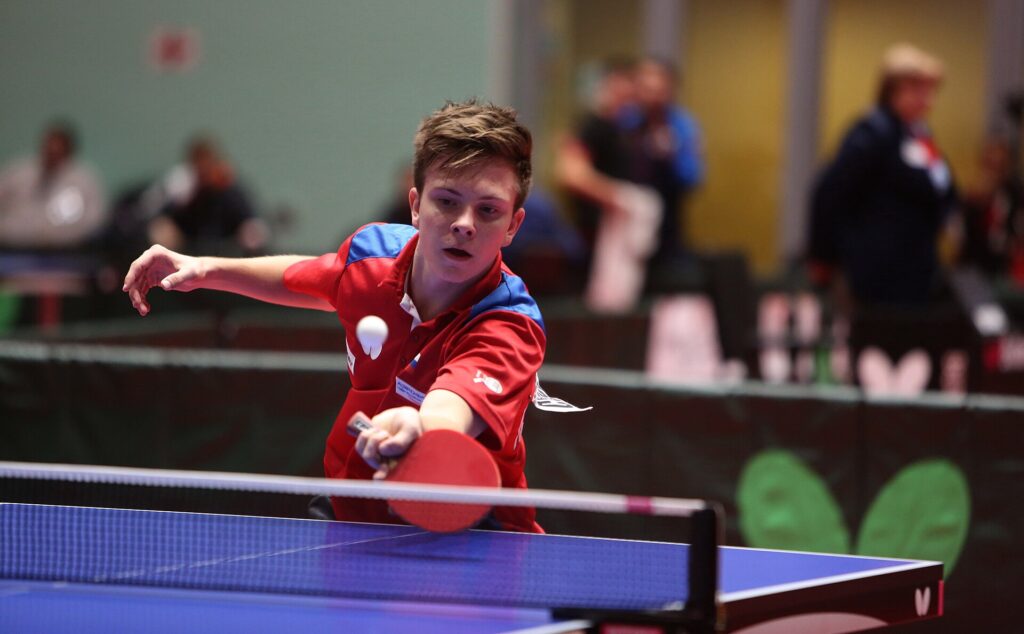
russian table tennisist vladimir sidorenko

When Sweden’s Anton Källberg walks into the arena on Tuesday to face Vladimir Sidorenko at Europe Smash, the match carries a weight that reaches beyond the table.

Sidorenko is Russian, and unlike the Russian players who spent recent years competing as neutrals, he now takes the table representing Russia, under its flag and anthem.

Flags and anthems are written into international sport precisely because they carry national and political meaning.

The change follows a July decision by the International Table Tennis Federation (ITTF) to lift the restrictions on athletes holding Russian passports. It took effect on 28 July, and Russian players can now enter under the same ordinary rules as everyone else.

For critics, the question is hard to avoid: what has changed in Ukraine to justify the change in sport?

What changed in Ukraine? Nothing

Russia’s full-scale invasion has not ended. Yet the penalty imposed in its wake—that Russian athletes compete without representing the Russian state—has now been lifted in international table tennis.

The Swedish Table Tennis Association has openly opposed the move. Its chairman, Tomas Eriksson, said in July that he saw no change in Ukraine that would justify shifting Swedish sport’s position toward Russian participation. The association has said it will not boycott the tournaments.

That tension now lands on Swedish soil.

Källberg and Sidorenko were drawn against each other at Europe Smash, held in Malmö from 8 to 16 August.

For Swedish supporters of Ukraine, the evening presents a real dilemma. Nobody needs to aim hostility at Sidorenko himself, and no one is claiming individual Russian athletes bear responsibility for their government’s actions. The question is what an athlete is asked to represent.

swedish table tennisist  anton källberg
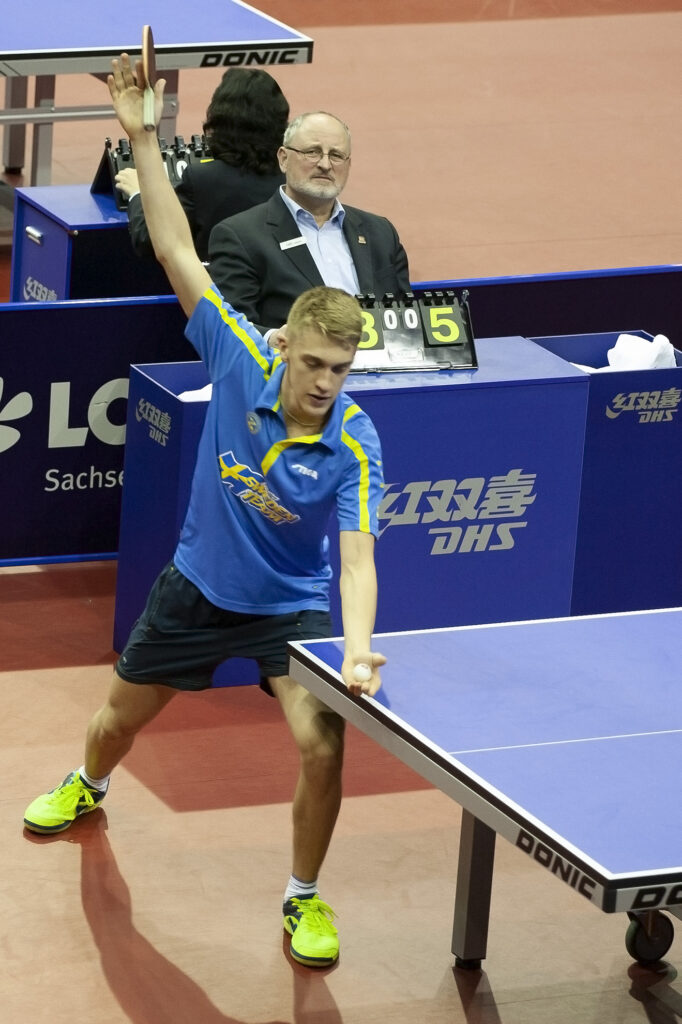
Sweden’s Anton Källberg, who faces Russia’s Vladimir Sidorenko at Europe Smash in Malmö. Photo: Peter Porai-Koshits / Wikimedia Commons, CC BY-SA 4.0

A flag is never neutral

A neutral athlete competes as an individual. Someone introduced beneath a national flag stands in, however indirectly, for a state. Flags and anthems are written into international sport precisely because they carry national and political meaning.

So restoring the Russian flag is more than an administrative tweak. It is a statement—and a pointed one while Russia’s war on Ukraine continues.

The dispute has an unmistakable Swedish dimension. ITTF is headed by Petra Sörling, the Swedish official who was re-elected president of world table tennis in 2025 for another four-year term. She is a former president of the Swedish Table Tennis Association.

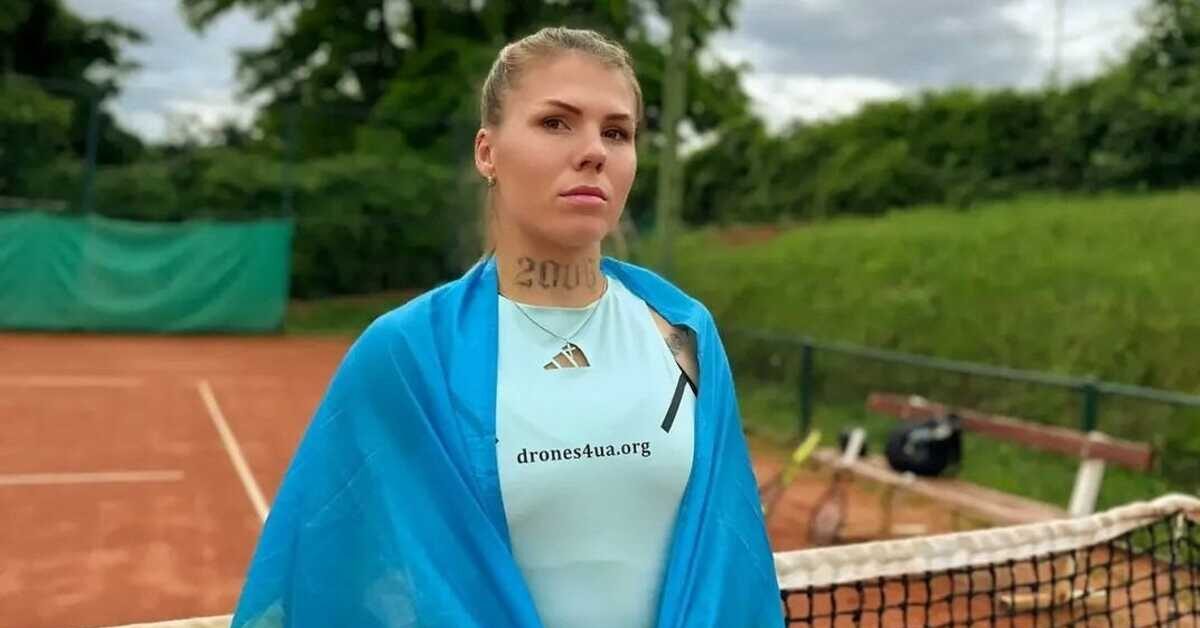
Ukrainian tennis player Oleksandra Oliynykova protests Russia's return
Explore further

Sport is letting Russia back in. This Ukrainian tennis player says no.

That does not make the reinstatement hers alone to decide; the ITTF Executive Board considered the issue on 10 July. But leadership carries responsibility. ITTF has justified the change by citing equal treatment and proportionality—yet proportionate to what change in circumstances? With Russia’s war on Ukraine still ongoing, the federation has yet to explain what has materially shifted to make the earlier restrictions disproportionate now.

On the evening of 11 August 2026, all of it narrows to something plainer: two players and a table, in front of a Swedish crowd.

Källberg deserves what any Swedish athlete would want at a major home tournament: loud, passionate backing from the crowd. And those who object to the return of the Russian flag have every right to voice it, peacefully, from the same seats.

Symbols cut both ways

Sport does not stand outside the world around it. International federations prove as much every time they raise a flag or set a country’s name beside an athlete.

If those symbols matter when a nation celebrates victory, they matter when a governing body decides who may use them.

And until the reasons for restricting Russia’s national representation have gone, the question facing table tennis stays simple: Why should the restriction disappear first?

Jakob Gottlieb
Jakob Gottlieb is a Swedish tech entrepreneur and volunteer.

Editor's note. The opinions expressed in our Opinion section belong to their authors. Euromaidan Press' editorial team may or may not share them.

Submit an opinion to Euromaidan Press

❌