Vue normale

Colombian veterans, a British bomb-disposal expert, a Finnish teenager: who are the 16,000 foreigners fighting for Ukraine?

6 août 2026 à 15:21

Ukrainian service members and Colombian volunteer fighters in camouflage and tactical gear gather beneath trees near the front line.

About 16,000 foreign volunteers from at least 72 countries serve in Ukraine's Defense Forces, Military Ombudsman Olha Reshetylova said. Reshetylova said nearly 40% are citizens of Latin American countries.

The figures show the scale of foreign volunteers' participation in Ukraine's military as Russia's invasion strains Ukraine's manpower. Reshetylova's office monitors their rights and uses complaints to identify recurring problems.

Reshetylova announced the figures during a 4 August meeting of the heads of Ukraine's foreign diplomatic missions.

"Ukraine values [foreign service members'] contribution and understands their responsibility to uphold their rights," she said.

Since 27 January 2026, her office has received more than 300 requests from foreign service members, their relatives, and authorized representatives—requests concerning pay, benefits, supplies, combatant status, medical care, and early contract termination. The office has proposed legal changes in response.

Reshetylova did not explain how the figure of 16,000 was calculated. In February 2026, a Ukrainian Ground Forces official said that more than 10,000 foreigners had served or were serving in Ground Forces units.

That cumulative figure covered a narrower part of Ukraine's Defense Forces and is not directly comparable with Reshetylova's estimate.

Foreign recruits bring combat experience and specialist skills

The International Legion, the main destination of most foreign volunteers, draws members from more than 50 countries. Its members include veterans of the war against ISIS, career soldiers, medics, and newcomers motivated by duty, adventure, experience, or personal loss. 

On the front line, Colombian veterans have played a significant role in aiding Ukrainian forces in Zaporizhzhia Oblast, bringing military and police experience gained fighting drug cartels and rebels in Colombia.

Some foreign service members also contribute specialist skills beyond infantry combat. British bomb-disposal expert Christopher "Swampy" Garrett cleared mines and trained more than 2,000 Ukrainian troops, police officers, and international volunteers.

Garrett was killed on 6 May 2025 while dismantling a Russian explosive device in Izium. 

Contracts, captivity, and the human cost

Beyond the battlefield, foreign service members can face contract disputes in Ukraine, prosecution at home, or imprisonment by Russia.

Finnish volunteer Leo Åland struggled to end his six-month contract. He was killed in combat after serving in Ukraine's military for just over four months.
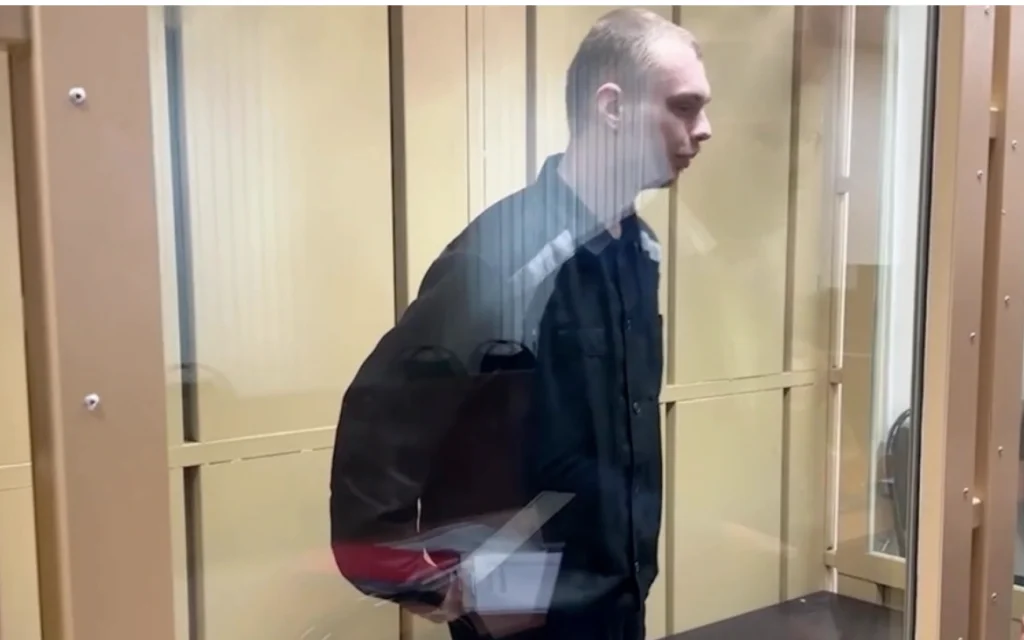
British ex-soldier gets 19-year sentence in Russia on “terrorism” charges while he was fighting for Ukraine in Russia’s Kursk Oblast. Source: RBC-Russia

In December 2025, a Swiss court convicted Avi M. of serving in Ukraine's military. Swiss law prohibits citizens from joining foreign armed forces.

Russia has prosecuted captured foreign members of Ukraine's military as mercenaries rather than treating them as prisoners of war. A Russian court sentenced British fighter James Scott Rees Anderson to 19 years following his capture in Kursk Oblast.

  • ✇Euromaidan Press
  • Fighters from 51 countries now held in Ukraine after fighting for Russia, ombudsman says
    Ukraine now holds prisoners of war (POWs) from 51 countries who fought for Russia, Dmytro Lubinets, the Ukrainian parliament’s human rights commissioner, said on 4 August.  The figure illustrates the global reach of Moscow’s efforts to replenish its forces with foreign recruits. Russia has targeted people abroad with promises of well-paid jobs, university places, and military salaries. Some enlist knowingly. Others report being deceived or pressured into service. Spe
     

Fighters from 51 countries now held in Ukraine after fighting for Russia, ombudsman says

6 août 2026 à 07:52

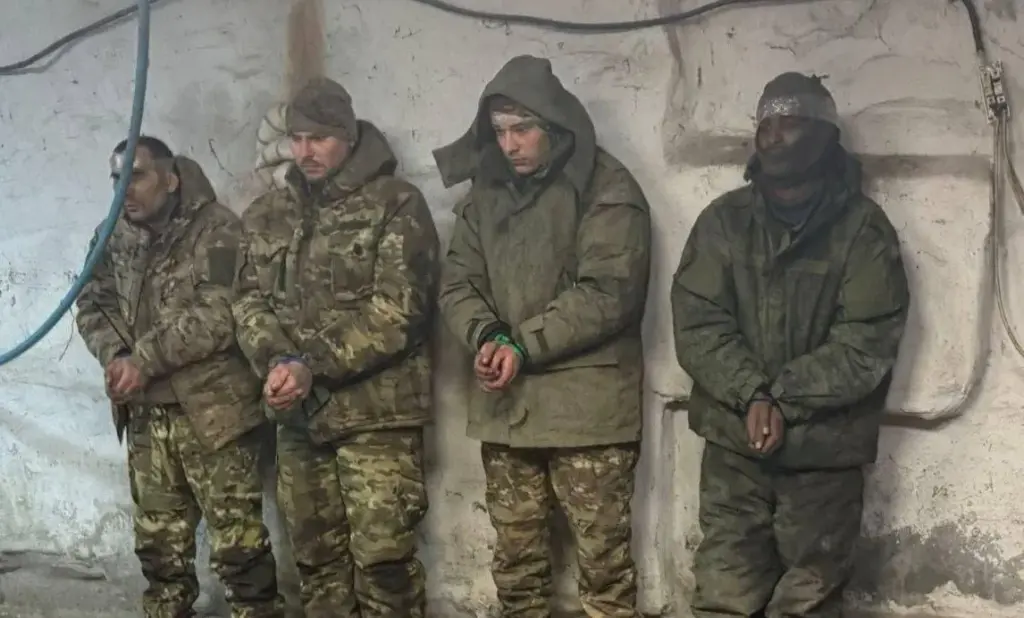
Four captured fighters who fought for Russia stand against a wall with their hands bound.

Ukraine now holds prisoners of war (POWs) from 51 countries who fought for Russia, Dmytro Lubinets, the Ukrainian parliament’s human rights commissioner, said on 4 August. 

The figure illustrates the global reach of Moscow’s efforts to replenish its forces with foreign recruits. Russia has targeted people abroad with promises of well-paid jobs, university places, and military salaries. Some enlist knowingly. Others report being deceived or pressured into service.

Speaking at a meeting of heads of Ukraine’s foreign diplomatic missions, Lubinets said joining Russia’s war carries “real legal consequences.” He did not disclose the prisoners’ nationalities or their total number.

The human cost extends beyond those captured. A July 2026 BBC Russian Service/Mediazona investigation documented at least 3,589 foreign nationals who had died fighting for Russia. The total comprised 1,285 people from more than 40 countries and 2,304 North Korean troops. 

Russia throws its recruitment net across the globe

Moscow has increasingly looked abroad for soldiers as its invasion consumes manpower. Recruiters focus heavily on Africa, Asia, and Latin America, offering civilian work, education, high salaries, or military service. 

A human rights investigation covered by Euromaidan Press found that Russia had recruited at least 27,000 people from more than 130 countries since February 2022. Researchers said recruits often received Russian-language contracts they could not understand, while some faced threats or rapid deployment to combat. 

china asks ukraine treat chinese pows well doesn't say wants back · post 2025 untitled asked 6 follow international law two captured fighters mfa spokesman lin jian said did whether
Explore further

China asks Ukraine to treat Chinese POWs well, but doesn’t say if it wants them back

In Africa, recruitment operates within a broader Russian soft power influence network. Russian Houses offer language courses and routes into Russian universities. Ukraine’s military intelligence describes Russian Houses as a pipeline through which some young Africans reach Russia as students or workers and later enter Moscow’s army. 

Beyond Africa, Russia preys upon the disadvantaged with promises of work. An Associated Press investigation found that Bangladeshi men promised cleaning jobs in Russia were instead sent into combat.

Foreign recruits abandoned after capture

For those captured, neither Russia nor their home governments offer a clear route home. Ukraine’s POW Coordination Headquarters said Moscow had excluded foreign recruits from prisoner exchanges, although some embassies had visited their citizens. 

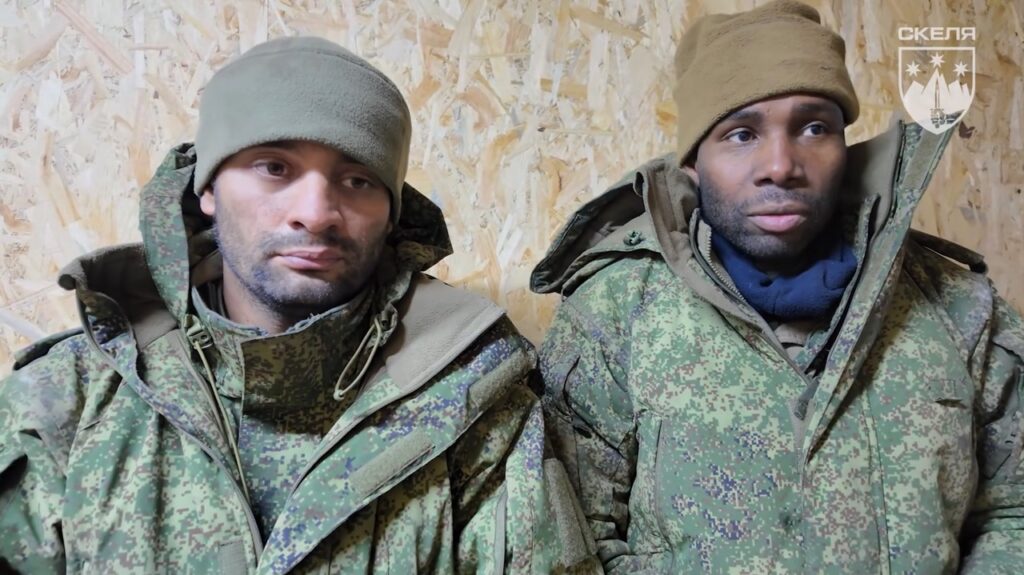
Two Colombian men in Russian military uniforms after being captured by Ukrainian forces near Pokrovsk
Two Colombian citizens captured by Ukrainian forces near Pokrovsk recount their ordeal. Screenshot: @skala_ukraine/YouTube

A Kenyan Foreign Ministry official stated the government was following reports of several trafficked Kenyans held as POWs in Ukraine. Yet Ukrainian POW official Petro Yatsenko said most African governments showed little interest in bringing their citizens home. 

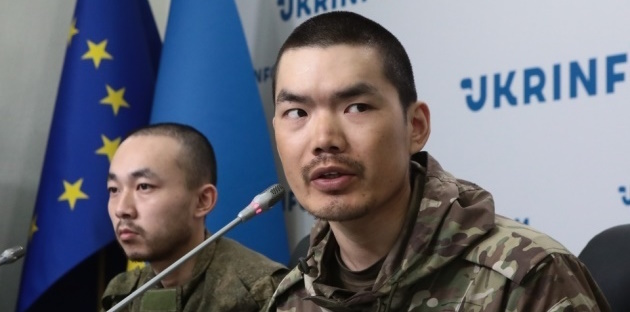
China likewise asked Ukraine to treat two captured Chinese fighters humanely, but did not say whether it sought their return. Ukrainian officials said Russia had inquired only about captured North Korean soldiers, showing little interest in other foreign fighters in captivity. 

  • ✇Euromaidan Press
  • Russia loots occupied Crimea’s ancient sites through six illegal archaeological digs
    Russia is conducting six illegal archaeological expeditions across occupied Crimea, Suspilne reported. The illegal digs target crypts, a necropolis, and ancient settlements. Suspilne, citing RIA Novosti Krym, reported that Vadym Maiko, head of Russia’s Institute of Archaeology of Crimea, said the expeditions include the Opushky burial ground, where teams are examining at least three crypts. They also include the late-antique Kyz-Aul necropolis near Yakovenkove, as well
     

Russia loots occupied Crimea’s ancient sites through six illegal archaeological digs

5 août 2026 à 11:23

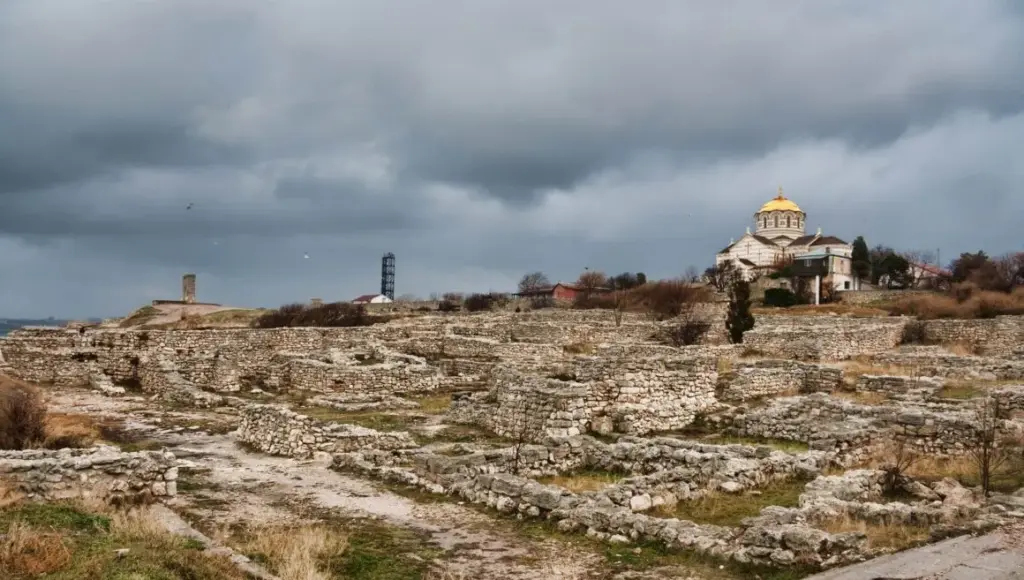
Ruins of ancient Chersonesus Taurica in occupied Crimea, with St. Vladimir’s Cathedral in the background.

Russia is conducting six illegal archaeological expeditions across occupied Crimea, Suspilne reported. The illegal digs target crypts, a necropolis, and ancient settlements.

Suspilne, citing RIA Novosti Krym, reported that Vadym Maiko, head of Russia’s Institute of Archaeology of Crimea, said the expeditions include the Opushky burial ground, where teams are examining at least three crypts. They also include the late-antique Kyz-Aul necropolis near Yakovenkove, as well as work near the Artezian hillfort and the Belinske settlement. Suspilne did not identify the other two expeditions. 

The expeditions add to what Ukrainian officials describe as a wider campaign of cultural theft. Since 2014, Russia has removed artifacts, dug without Kyiv’s permission, and reshaped Ukrainian sites to support its claim to the peninsula. 

Russia’s habit of stealing Ukrainian history 

Russia has expanded in recent years its archaeological excavations in the occupied Ukrainian territories. 

On 1 April 2026, Ukraine’s military intelligence released a report identifying seven Russian archaeologists and historians linked to excavations and occupation institutions. Its update also listed 20 objects taken from occupied sites, including Kyz-Aul and the Hospitalnyi burial mound. 

Ukraine’s National Resistance Center also says Russian security personnel let artifact looters remove finds from Chersonesus in return for kickbacks. Meanwhile, Russian construction and excavation there exposed 500,000 artifacts. 

In July 2026, UNESCO placed the site on its danger list, citing damage from construction and large-scale digs. 

Accountability has begun, but rarely reaches court

The EU’s 17th sanctions package targeted Russia's cultural heritage looting in Crimea. It listed Chersonesus occupation director Elena Morozova and the museum she leads.

Ukraine has also pursued individual archaeologists. Yet identifying the people behind illegal digs is not the same as bringing them before a court.

A Polish court approved the extradition of Hermitage archaeologist Alexander Butyagin to Ukraine after Kyiv accused him of causing $4.8 million in damage at Myrmekion. Warsaw later handed him to Belarus in an April prisoner exchange, and he returned to Russia.  The case never reached Ukrainian courts. 

The 1954 Hague Convention protects archaeological sites and requires parties to prevent theft, pillage, or misappropriation. But Butyagin’s release exposed the central enforcement problem: Ukraine can document a suspect, secure an arrest, and still lose custody before trial. 

Russia destroys the warehouses of Ukraine’s biggest retailers and parcel carrier in overnight Kyiv barrage

5 août 2026 à 08:36

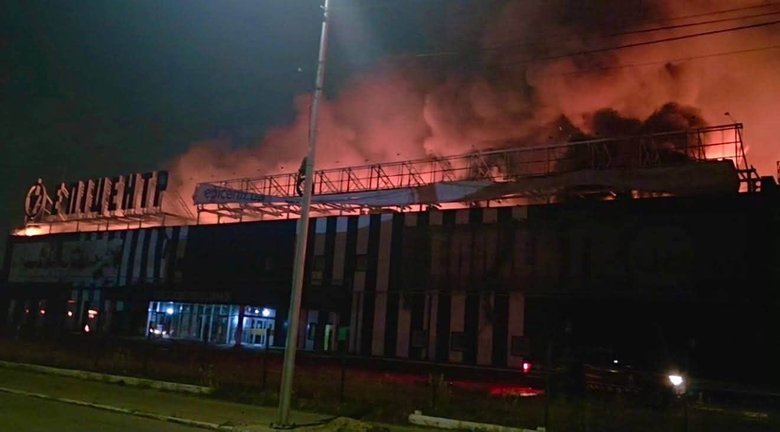
Flames and thick smoke rise from the roof of an Epicentr facility following a Russian missile attack on 5 August 2026.

Russia's overnight missile-and-drone barrage on Kyiv and its surrounding region on 5 August destroyed the warehouses and production sites of several of Ukraine's largest retail and logistics companies, killed 17 people and wounded 44 more, and laid bare the country's dwindling ability to intercept ballistic missiles, according to Ukrainian officials.

Russia's main target on 5 August: Ukraine's warehouses

Russia has spent this year pushing its air war toward the ballistic missiles that Ukrainian defenses struggle most to stop, launching more of them than Ukraine can shoot down while its Patriot interceptor stocks run dry, and pairing them with drone waves that keep reaching homes, transit and the warehouses that feed the country.

Three Russian ballistic missiles destroyed the largest distribution center operated by Rozetka, Ukraine’s biggest online retailer, near Kyiv overnight on 5 August. Rozetka co-founder Iryna Chechotkina said the warehouse had processed more than 100,000 online orders each day and was beyond repair.

By dawn, the attack had torn through the civilian logistics network moving parcels, groceries, household goods and construction materials across the capital and its suburbs. At least 17 people were killed and 44 injured in the broader barrage, according to President Volodymyr Zelenskyy.

Russia launched a massed missile and drone attack on Kyiv and Kyiv Oblast overnight, killing 14 people and injuring 27.

Fires burned across three raions. A residential building collapsed in Kyiv's Holosiivskyi district, where rescuers are searching for people under the rubble…

— Euromaidan Press (@EuromaidanPress) August 5, 2026

In its 5 August 2026 strikes, Russia destroyed a sorting center owned by Nova Poshta, Ukraine’s largest private parcel carrier, as well as major facilities operated by Epicentr, the country’s largest home-improvement retailer. Sites belonging to Novus and Fozzy Group, two major Ukrainian grocery retailers, were also damaged.

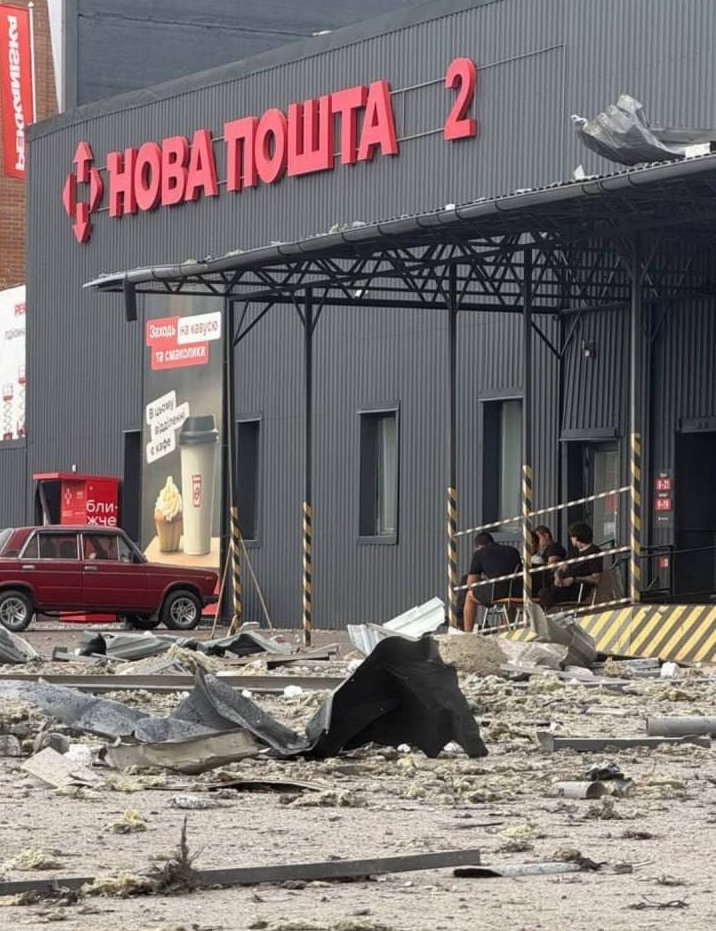
Nova Poshta said cluster munitions—bombs that scatter smaller explosives across a wide area—destroyed its Kyiv sorting center. Three people were killed and eight injured. Two of those killed were drivers for a partner carrier, while the third worked for a contractor.

Debris covers the grounds of a Nova Poshta sorting center in Kyiv after a Russian strike on 5 August 2026. Source: Kyiv24 via Censor.NET.

Epicentr lost two major warehouse complexes and much of its ceramic-tile production. One employee was killed, and three were hospitalized at the company’s complex in Kalynivka. Its logistics center on Kyiv’s Viskozna Street burned completely, while another Russian missile destroyed the factory's kilns.

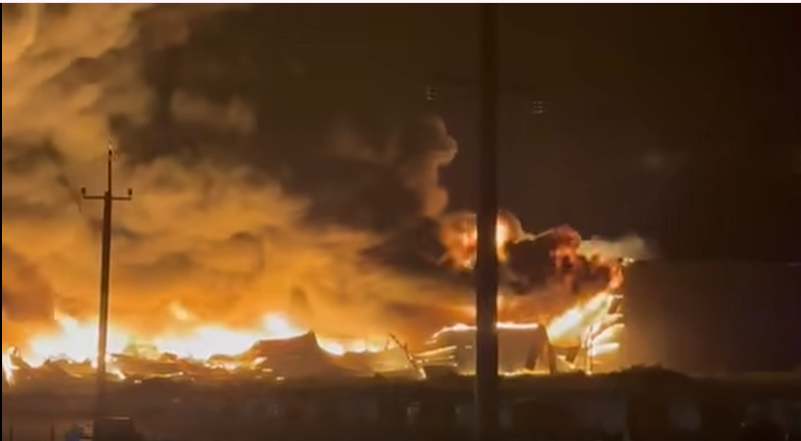
During a separate overnight attack on 3-4 August, a Russian drone destroyed a Biosphere warehouse storing household and personal-care products in Dnipro, although all employees reached shelter and no one was injured.

Fire engulfs a warehouse complex in Dnipro after a Russian drone strike overnight on 3–4 August 2026. The complex included a 20,000-square-meter warehouse operated by Biosphere. Source: screenshot from a video posted by Andriy Zdesenko, Biosphere’s founder and CEO, on Facebook

The Kyiv attack extended beyond commercial facilities. Russia's attack killed eight people waiting for a delayed train at Kvitneva station, a commuter stop near Brovary, east of Kyiv. Missiles also hit homes and offices, damaged an ambulance and caused an ammonia leak at a non-residential site.

8 Passengers waiting for a delayed train were killed at "Kvitneva" station in Kyiv Oblast

Radio Svoboda published footage from the "Kvitneva" station in the Kyiv Oblast, where 8 people were killed as a result of a Russian missile strike.

According to Volodymyr Bihun, head of… pic.twitter.com/5ShA7Pdbot

— UkraineWorld (@ukraine_world) August 5, 2026

An earlier Euromaidan Press report detailed the destruction across Kyiv and the surrounding region.

Why Ukraine intercepted none of the missiles

Russia launched 24 ballistic missiles and four Zircon and Oniks anti-ship missiles, high-speed weapons designed primarily to strike naval targets but also used against Ukrainian cities.

Ukraine intercepted none of the 28, the Ukrainian Air Force said. Air defenses shot down or electronically disabled 98 of the 115 accompanying drones.

Missiles and 17 drones struck 26 locations, while debris fell at another six.

Zelenskyy said ballistic-missile interceptors could have saved those killed. Ukraine’s stocks of Patriot missiles, its only reliable defense against Russian ballistic weapons, are critically depleted

A global interceptor shortage means manufacturers cannot produce advanced air-defense missiles fast enough to meet demand.

Russia exploited the same gap on 1 August 2026, when it fired 27 ballistic missiles at Kyiv and Ukraine intercepted only one.

Moscow may point to recent Ukrainian strikes on Wildberries logistics centers to frame its attacks as retaliation. Ukrainian officials say the Russian retailer transports military goods, including drone components and navigation equipment. The Kremlin denies that Wildberries carries military cargo.

Ukraine’s acting Foreign Minister Andrii Sybiha rejected any comparison between the attacks. "Russian attacks cannot be justified by anything, including any actions by Ukraine," he said.

  • ✇Euromaidan Press
  • Every LNG cargo Belgium took in July came from Russia, as imports collapsed after Iran war
    Russian LNG accounted for all of Belgium’s liquefied natural gas imports in July, Bloomberg reported. The Iran war disrupted Middle Eastern supplies and kept European gas prices high. The shift exposes a contradiction in EU energy policy. Countries should be reducing Russian purchases before a full ban on Russian gas, part of the EU's plan to end its energy dependence on Moscow amid the war against Ukraine, takes effect in January 2027. Yet disruption around the Strait
     

Every LNG cargo Belgium took in July came from Russia, as imports collapsed after Iran war

4 août 2026 à 13:28

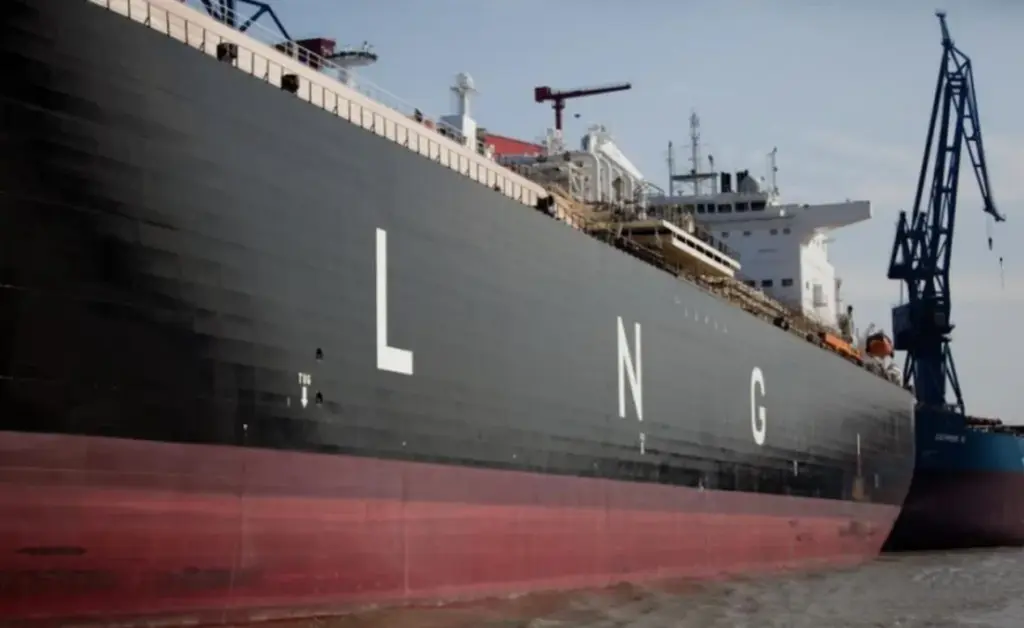
Large LNG tanker docked beside port cranes, illustrating Russian LNG imports to Belgium.

Russian LNG accounted for all of Belgium’s liquefied natural gas imports in July, Bloomberg reported. The Iran war disrupted Middle Eastern supplies and kept European gas prices high.

The shift exposes a contradiction in EU energy policy. Countries should be reducing Russian purchases before a full ban on Russian gas, part of the EU's plan to end its energy dependence on Moscow amid the war against Ukraine, takes effect in January 2027. Yet disruption around the Strait of Hormuz has reopened demand for Moscow’s fuel.

Belgium bought about 0.4 million tons of Russian LNG in July, Bloomberg data show. Its total LNG intake fell by more than 40% from a year earlier, while high prices discouraged winter stockpiling. Russia became the sole supplier in a shrinking market.

Belgium still received pipeline gas from Norway and the UK, meaning Russia supplied all its LNG, not all its gas. It was the first month since early 2021 that all of Belgium’s LNG came from Russia, Bloomberg reported.

Europe’s Russian LNG reliance grows

France, Belgium, Spain, and the Netherlands spent €34.3 billion ($39.6 billion) on Russian LNG between 2022 and 2025, a Greenpeace analysis found. Their combined bilateral aid to Ukraine during that period totaled €21.2 billion ($24.4 billion). 

Europe’s Russian LNG dependence predates Belgium’s July reversal. The EU paid Russia €7.2 billion for LNG in 2025. By early 2026, Europe was receiving 97% of exports from Russia’s Yamal LNG plant.

Europe received 16% more Russian LNG in the first half of 2026 than a year earlier, paying €5.96 billion, Bloomberg reported. France, Belgium, and Spain were the biggest buyers, according to figures Bloomberg cited from the German nonprofit Urgewald.

The 2027 ban gives long-term buyers legal protection to end their contracts early. Yet the gas keeps flowing through European ports and on European-operated ships. In July, Greece held up new sanctions to protect Dynagas, whose vessels transport Russian gas sourced from the Arctic. 

Iran war boosts Russia and raises Ukraine’s costs

The same energy shock strengthens Russia while squeezing Ukraine. The Iran war increased Moscow’s energy income while raising the cost of Ukraine’s imported fuel. It also diverted political attention from Russia’s invasion. 

The scale became visible within the first two weeks of the Iran war. Russia earned €7.7 billion from fossil-fuel exports during the first half of March. Daily earnings reached €513 million as Brent crude climbed above $119 per barrel. 

Higher prices later threatened to raise the EU price cap on Russian oil from $44.1 to at least $65 per barrel. Brussels considered freezing it to prevent the Iran-driven price spike from weakening sanctions on Moscow.

  • ✇Euromaidan Press
  • Crimea mass shooting: Russian soldier reportedly kills three civilians and one fellow soldier
    A mass shooting in occupied Crimea left one Russian serviceman and three civilians dead on 4 August 2026, according to Moscow-installed authorities. Another soldier and three other people were reportedly wounded. Russia keeps many troops stationed in Ukraine’s occupied Crimea, using it as a rear logistics hub for its war against Ukraine. That dependence has made the peninsula a prime Ukrainian target as Kyiv seeks to sever supply lines supporting Russian forces across t
     

Crimea mass shooting: Russian soldier reportedly kills three civilians and one fellow soldier

4 août 2026 à 11:20

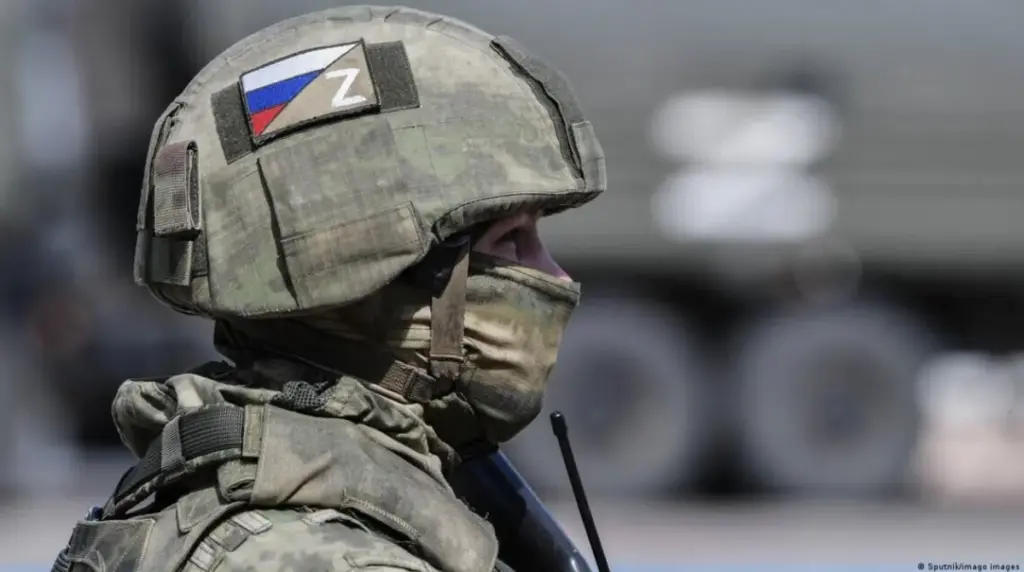
Russian soldier in camouflage wearing a helmet marked with the Russian flag and “Z” symbol.

A mass shooting in occupied Crimea left one Russian serviceman and three civilians dead on 4 August 2026, according to Moscow-installed authorities. Another soldier and three other people were reportedly wounded.

Russia keeps many troops stationed in Ukraine’s occupied Crimea, using it as a rear logistics hub for its war against Ukraine. That dependence has made the peninsula a prime Ukrainian target as Kyiv seeks to sever supply lines supporting Russian forces across the south.

The Russian soldier first opened fire on fellow servicemen, killing one and wounding another, Moscow-installed Sevastopol governor Mikhail Razvozhayev said on Telegram. 

The gunman then allegedly attacked residents of Khmelnytske, a village southeast of Sevastopol. Razvozhayev said the civilians killed were two men, aged 71 and 59, as well as a 64-year-old woman.

Russian occupation authorities said they detained the attacker. They have not publicly identified him, named his military unit, or disclosed a possible motive.

Independent Russian outlet Agentstvo reported that the suspect may be 21-year-old Maxim Alistratov from Saratov Oblast, citing a screenshot from a local chat group. The Moscow Times, which relayed the report, said it could not independently verify the identification. Occupation authorities have not confirmed it.

Euromaidan Press could not independently verify Razvozhayev's account or the reported identity of the attacker.

Violence involving Russian troops in Crimea

Russian military court records have also documented sexual offenses by servicemen in occupied Crimea and Sevastopol, including against civilian residents.

In 2023, Siberia.Realities, an RFE/RL project, reviewed records from 100 Russian military courts. A follow-up report by Crimea.Realities, another RFE/RL initiative, found that the peninsula accounted for 18 such cases in 2022. That was 16% of all sexual-offense cases involving servicemen before Russian military courts that year, and more than in any region of Russia itself.

The outlet noted that court records from other occupied Ukrainian territories were not publicly available.

❌