Vue normale

Russia banned the scholars documenting Stalin’s starvation of Ukraine. They put their course out anyway—as Moscow repeats the famine.
3 juillet 2026 à 04:00

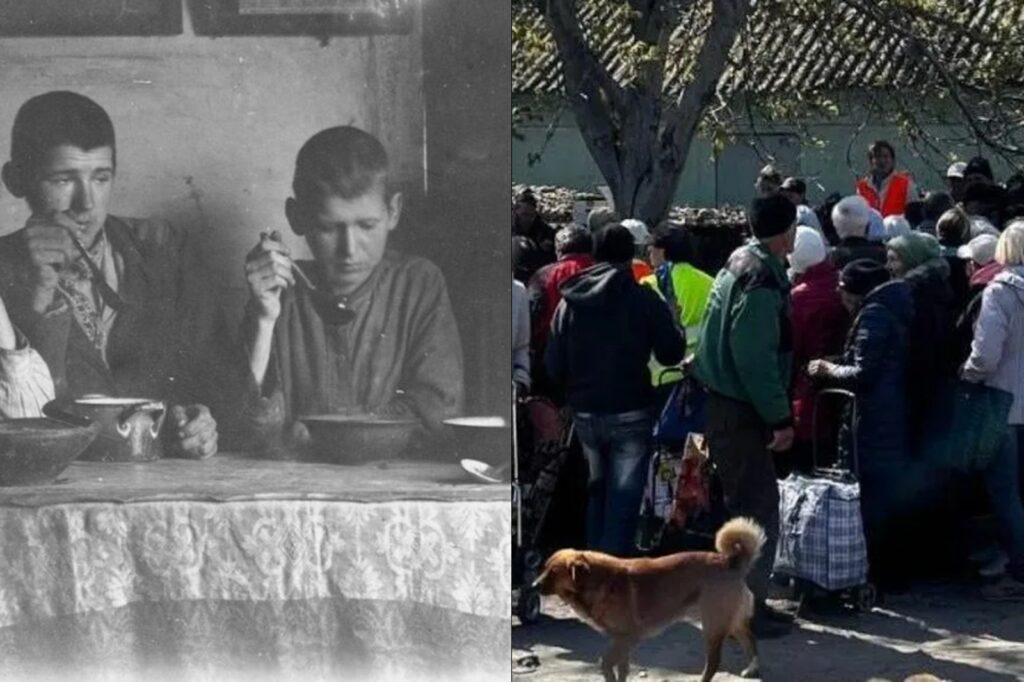
On the left, the Bokan sitting around the dinner table during the Holodomor, as they starve; on the right, Ukrainian civilians in Oleshky waiting in line for food distribution.

    For months, Russian forces have cordoned off the occupied town of Oleshky. They have blocked roads and emptied pharmacies, all while mining the area. In June, a food truck ran over a landmine at the edge of town, killing a man bringing in aid. Up to 6,000 Ukrainians are still trapped in Oleshky and neighboring villages, more than 180 of them children. The last grocery store shut in January, and for stretches this spring no food reached the town at all. 

    Ukraine has seen this before. In its siege of Oleshky, Russia is reviving methods Stalin’s regime used against Ukrainian villages in 1932 and 1933: branding villages "hostile," cutting them off from supplies, barring the starving from leaving, and letting hunger kill the population. That famine—the Holodomor—killed millions. 
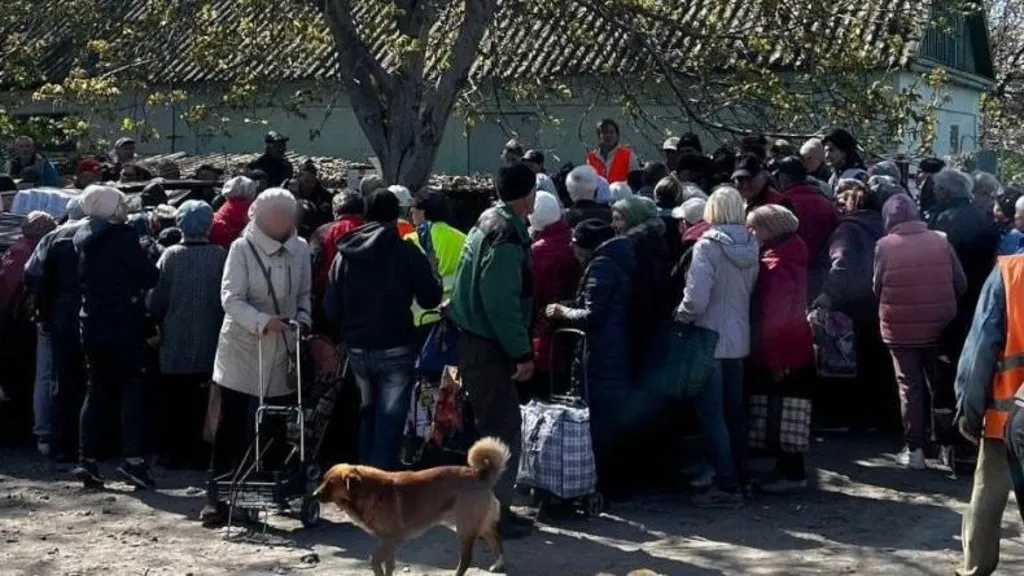
    People in Oleshky wait for food supplies. Photo: BBC

    Yet as it besieges Oleshky, Russia says the Holodomor never happened. Moscow has dismissed the Holodomor as Western propaganda, rewritten its schoolbooks to blame the famine on the weather, and in occupied Ukraine has torn down the memorials to its dead.

    Russia rewrites history in another way too: banning scholars. On 5 January 2026, it barred 28 Canadians from the country. Among them were 16 scholars of the Holodomor Research and Education Consortium (HREC) of the Canadian Institute of Ukrainian Studies at the University of Alberta. At the time, they were working on a course about the famine Russia denies.

    They released it anyway. Seventy-seven days after the ban, Famine as Genocide: The Holodomor in Ukraine went live on Coursera—13 free modules, built by HREC at the University of Alberta.


    What was the Holodomor?

    The Holodomor—"murder by starvation"—was a man-made famine that struck Soviet Ukraine between 1932 and 1933. Scholars generally put the death toll at around 3.5 million; some figures go up to 7 million. Most died in the winter of 1932 and the spring and summer of 1933, as Soviet collectivization emptied whole villages.

    The 1932 harvest was poor, but Soviet policy turned shortage into catastrophe. Stalin's government set grain quotas the farmers could not meet. Brigades entered the villages and seized what was left, killing those who resisted. Authorities blacklisted villages that fell short, sealing them off from the outside world. When peasants tried to flee to less famine-stricken parts of the USSR, a draconian passport system trapped them inside Ukraine.

    One Ukrainian photographer left the famine its starkest visual record. In the spring of 1933, Mykola Bokan shot a near-daily record of the Holodomor from inside his own home in the Chernihiv Oblast. One photograph shows his family at the dining-room table, beneath his caption: "300 days without a single piece of bread to have with our meager lunch!"
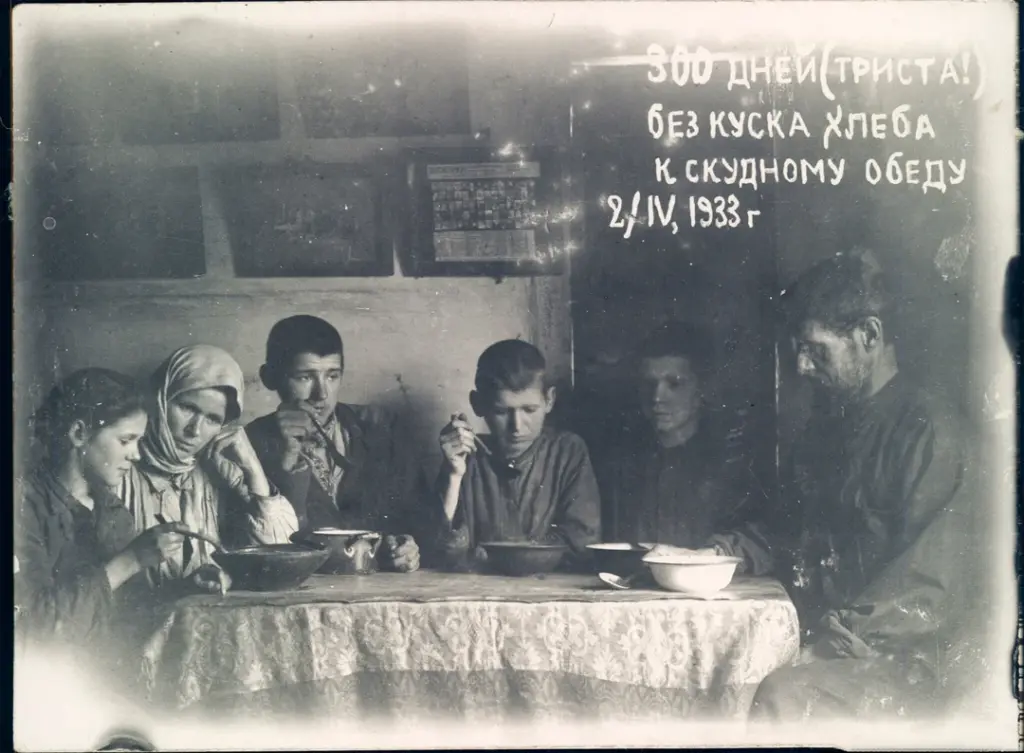
    The Bokan family at their dinner table, Soviet Ukraine, 1933, beneath an inscription reading "300 days without bread."
    Mykola Bokan's family at lunch in Baturyn, Chernihiv Oblast, 2 April 1933. Bokan inscribed the print himself: "300 days (three hundred!) without a piece of bread to add to the meager lunch." From left: daughter Anna, wife Vassa, and sons Oleksandr, Kostiantyn, and Lev, with Mykola Bokan on the right. Source: Mykola Bokan / TsDKFFA Ukraine, via the National Museum of the Holodomor-Genocide.

    Three months later, his son Kostiantyn, one of the gaunt figures in the image, was dead. On 10 July 1933, Bokan gathered his surviving children around a smaller table, a framed portrait of Kostiantyn between them. The caption reads: "Remembrance for Kostia, who died of starvation."

    Bokan was arrested for "counter-revolutionary activities." The photographs were among the evidence. He died in the Soviet camp system. His pictures sat in a secret police archive until researchers found them in 2007. They are now part of Famine as Genocide’s evidence. 
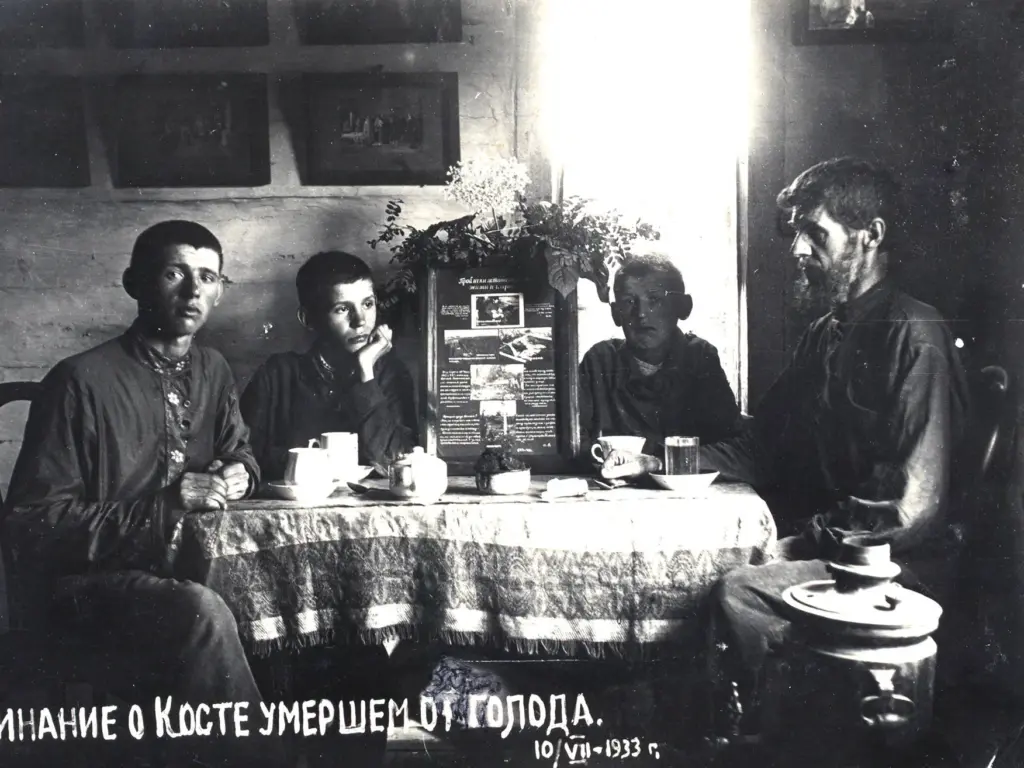
    Mykola Bokan with three of his surviving sons at a family remembrance for his son Kostiantyn, who had died of starvation that spring. The framed portrait at the center of the table is of Kostiantyn. Bokan inscribed the photograph "Remembrance for Kostia, who died of starvation. 10 July 1933." Baturyn, Chernihiv oblast. Photo: Mykola Bokan / TsDKFFA Ukraine, via the National Museum of the Holodomor-Genocide.

    Ukraine commemorates the Holodomor each year on the fourth Saturday of November, with a national minute of silence at four o’clock in the afternoon. 


    The permanent damage the deniers have to explain away

    Russia’s denial now has to contend with a growing body of evidence—including the famine's mark on the bodies of people born long after it ended. 

    For decades, the Holodomor was usually told as a story of starvation. The Soviet archives remained locked until the early 1990s, preventing people from obtaining an accurate picture of the Soviet famine. Before that, scholars studying the Holodomor worked from the memories of émigré survivors and the cables foreign diplomats sent to their home countries in 1932-33.

    That picture has changed. “Thanks to the amount of research done over the past twelve years, there is now a field called Holodomor studies,” Marta Baziuk, The Holodomor Research and Education Consortium’s (HREC) executive director and one of the course’s builders, told Euromaidan Press. 

    HREC’s course broadens that view by tracing the famine’s epigenetic legacy — its lingering physical and psychological effects — among survivors and their descendants.
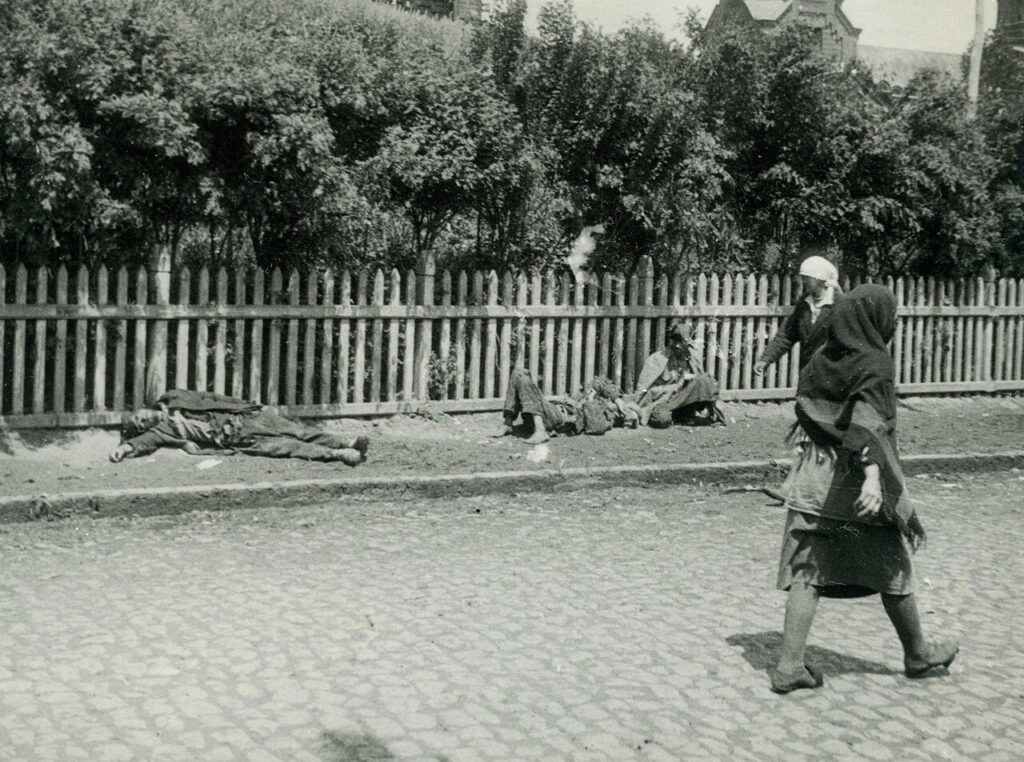
    Bodies of starved peasants on a street in Kharkiv, 1933; the Austrian engineer Alexander Wienerberger took this photo. Source: Wikimedia

    Research into other man-made famines, especially the Dutch Hunger Winter during World War II, informs this part. In the winter of 1944, German forces blockaded the western Netherlands and cut food supplies to civilians. A 2026 study groups Holodomor descendants with Dutch Hunger Winter and Holocaust survivors, pointing to shared histories of famine, mass deprivation, and inherited trauma. 

    Children conceived during the famine showed lasting epigenetic changes. Over sixty years later, the generation affected by famines showed accelerated biological aging and elevated risk of diabetes and heart disease compared to other generations.

    Researchers studying three generations of Holodomor survivor families have found stress, mistrust, and food hoarding in grandchildren who never went hungry themselves. They describe it as “living in survival mode.” 

    "Russia’s war has made Ukrainian history important to a lot of people. This course might’ve been good before the war, but it would have sat quietly, with less interest." — Baziuk

    The targeting of Ukrainians shows up in Soviet death records, Baziuk told Euromaidan Press. Even outside the Ukrainian Soviet republic, and even in mixed villages, ethnic Ukrainians died at noticeably higher rates than their neighbors.


    The Executed Renaissance

    HREC’s course does not treat the Holodomor in isolation. It situates the famine within a broader Soviet pattern of repression against non-Russian groups, in which physical destruction and material deprivation went hand in hand with the stifling of all culture hostile to Stalinism. 

    Raphael Lemkin, who coined the term "genocide," called the Holodomor the classic example of “Soviet genocide” in 1953. To him, the famine was one prong of a wider assault on Ukraine’s cultural figures, clergy, the peasantry, and Ukrainian national identity through resettlement with non-Ukrainians.

    Over the course of the 1930s, Soviet security services arrested, deported, or executed roughly 30,000 Ukrainian writers, scholars, and clergy.

    Ukrainian cultural figures flourished in the 1920s, as the Ukrainian language was more widely promoted, only for Soviet authorities to murder them in the 1930s. Today, Ukrainians remember that generation as the “Executed Renaissance.” 

    Many of those killed were themselves committed Communists. In the 1920s, the Bolsheviks had little organic support in Ukraine. They had recruited young, idealistic Ukrainians by promising room for a Ukrainian version of socialism.

    Korenizatsia, the Soviet promotion of non-Russian nationalities, had once promised room for Ukrainian culture. Stalin’s Great Turn — the Soviet regime’s late-1920s drive toward forced collectivization and rapid industrialization — crushed that opening. Ukrainian national communists became, at best, relics of a discarded future, and at worst marked for death.
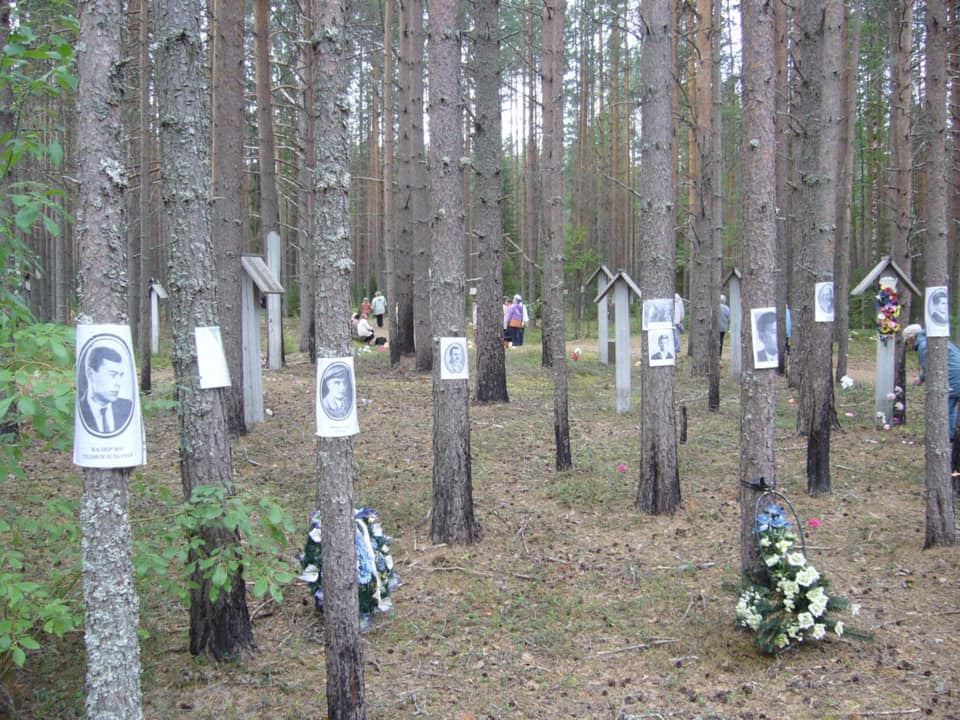
    Sandarmokh, a forest site in Karelia where the NKVD, the USSR’s secret police, executed thousands of victims, including many Ukrainian intellectuals of the “Executed Renaissance.” Source: Razom for Ukraine.

    Russia’s present war follows a similar logic. Ukrainian writers are again being killed, as they were in the 1930s. In 2022, Russian forces seized the children’s author Volodymyr Vakulenko near Izium. He is among the more than 100 cultural figures killed by Russia, according to PEN Ukraine. 

    In Russian-occupied territory, churches not part of the Moscow Patriarchate have been closed, seized, or destroyed. Tens of thousands of Ukrainian children have also been forcibly transferred to Russia, where they are to be brought up as Russians. Moscow’s abduction of children has formed the basis for the ICC arrest warrants for Vladimir Putin and his children’s rights commissioner, Maria Lvova-Belova. 


    Forget what you’ve seen: Soviet-era denial of the Holodomor

    Soviet denial began while Ukrainians were still dying. When the International Red Cross offered famine aid, Moscow refused, denying that mass starvation was taking place. Even as Ukraine’s villages became open-air morgues, Soviet ships carried Ukrainian grain out of Odesa for sale on foreign markets.

    In March 1933, a young Welsh journalist named Gareth Jones went from village to village in Soviet Ukraine, recounting what he saw:

    "There is hunger almost everywhere. Millions die from it. I travelled for several days in Ukraine, and there was no bread. The children had stomachaches, all the horses and cows were dying, and the people were also dying of hunger. The terror was on an unheard-of scale." — Gareth Jones in a letter to his parents, March 1933

    For his trouble, Jones was mocked by name in The New York Times. NYT’s Moscow correspondent, Walter Duranty, responded to Jones in print, denying that any famine existed.
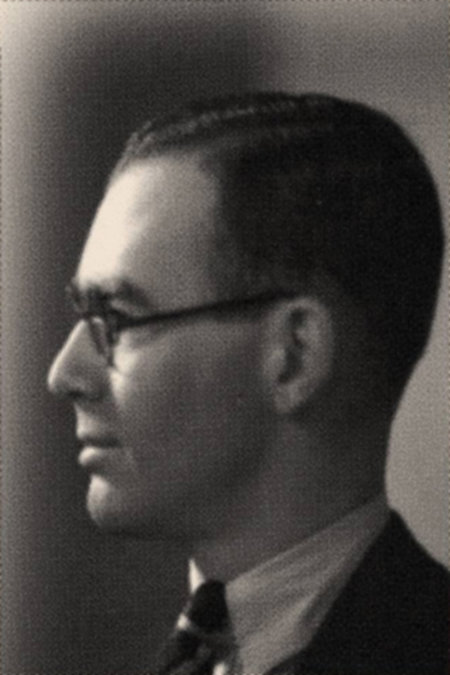
    A picture of Gareth Jones, the first reporter to break news of the Holodomor to the wider world. Source: Wikimedia

    Duranty received more acclaim than Gareth Jones in his lifetime, receiving a Pulitzer Prize in 1932. The Times has since disavowed his coverage, calling his Soviet dispatches "some of the worst reporting to appear in this newspaper." Nevertheless, NYT has yet to return the award.

    Jones was banned from the USSR and shot dead two years later in Inner Mongolia, in northern China. He did not live to see his findings vindicated.

    Russia’s denial today

    Following in Soviet footsteps, Russia continues to whitewash or deny the Holodomor. In 2014, Kremlin-backed outlets called it a “hoax invented by the West’s propaganda machine.” Since 2023, Russian school textbooks have blamed the famine on poor harvests and local mismanagement rather than the Stalinist policies. 

    Asked about intent, Baziuk did not treat it as a difficult question. The archives, she says, show Soviet officials knew people were starving and kept selling Ukrainian grain abroad as they died. 

    Beyond intimidating scholars, Russia's denial extends to physical destruction. On 19 October 2022, occupation forces in Mariupol dismantled the monument to victims of the Holodomor and political repression near the destroyed Drama Theatre, where up to 600 Ukrainian civilians were killed by a Russian airstrike. The granite, officials said, would be turned into construction materials.
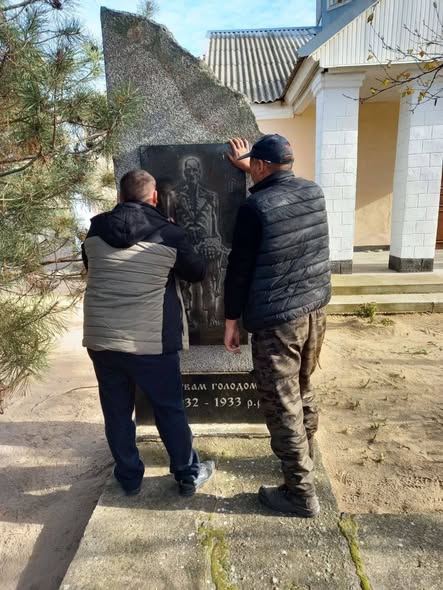
    Occupation authorities dismantle a Holodomor memorial in Nova Kakhovka. Source: Holodomor Museum

    In November 2023, Russian-installed administrators in occupied Kherson Oblast began demolishing Holodomor memorials in Nova Kakhovka and the Oleshky community. They called the memorials "a tool for manipulating history," artificially created to incite hatred toward the Russian Federation.

    Echoes of the Past: Russia’s Starvation of Oleshky in 2026
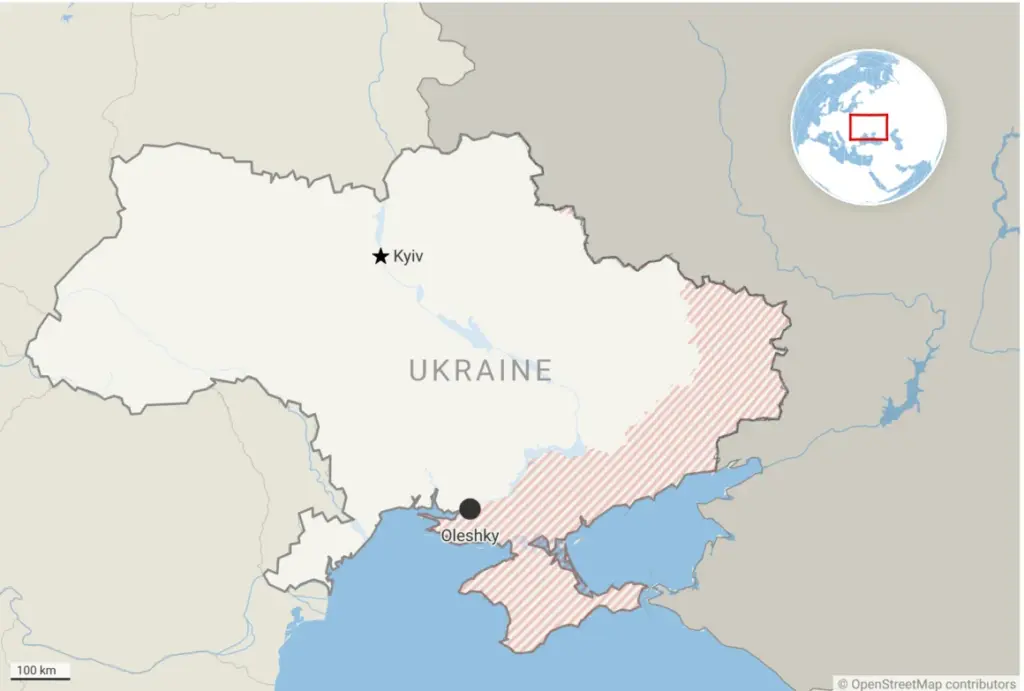
    Location of Oleshky, Kherson region

    Russia’s destruction has not stopped at memorials. 

    In a 25 June report, UN monitors who interviewed residents recorded at least 29 civilians killed this year in Oleshky and neighboring villages, most by FPV drones. No food had reached Oleshky since 26 May. A few of Oleshky’s trapped residents escaped through ad-hoc volunteer runs, including 32 people during a three-day lull in the shelling. Others could not be moved at all. 

    One woman’s husband stayed behind with his 84-year-old father, who could not walk the ten kilometers to the meeting point. 

    Russian forces imposing these conditions, the monitors noted, are legally bound to feed the town they occupy. 

    The Soviet state followed the same logic, cutting off villages that missed grain quotas and barring peasants from leaving Soviet Ukraine in search of food. 
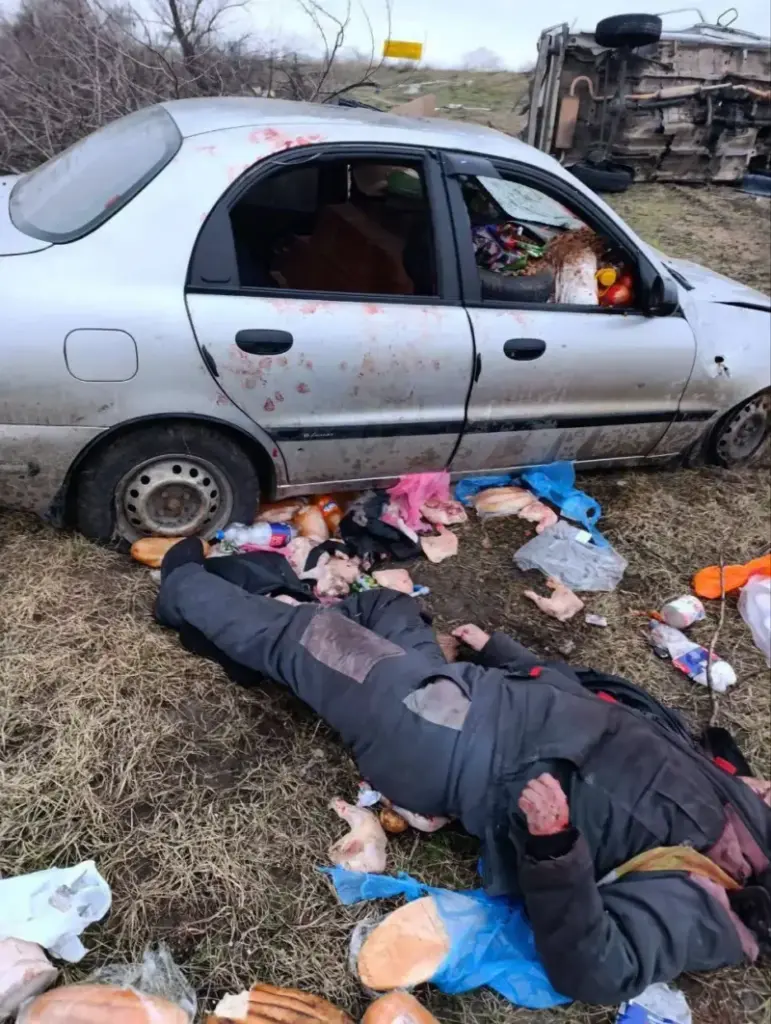
    A car bombed by a Russian FPV drone while attempting to deliver food to occupied Oleshky. Photo: Kherson Nonfake

    Ninety years on, Russia is doing it again in Oleshky. Parliament Commissioner Dmytro Lubinets calls Russia's siege deliberate terrorism

    Oleshky’s exiled administration describes what that means in practice: the dead buried in plastic bags, sometimes marked only with a name and two dates. One man who died in December lay unburied for nearly two months. 

    Concerning Oleshky, Oleksandr Prokudin, head of Kherson Regional Military Administration, told Censor.NET that Russian forces have “created a situation there akin to the Holodomor." The historical parallels are not lost on Ukrainians.


    This material was produced as part of a project by the Institute of Mass Information with the support of the Ministry of Foreign Affairs of the Netherlands. The content of this publication does not reflect the official position of the IMI or the Kingdom of the Netherlands.
    • ✇Coda Story
    • The new samizdat
      Sections: Introduction Chapter 1 Chapter 2 ⇡ While much of the media industry focused on the churn of headlines, we became increasingly interested in the undercurrents beneath them: the hidden systems, infrastructures and ideologies shaping events across borders and over time. Again and again, our reporting led us back to the same realization: for a long time, the struggle over information was understood primarily as a question of censorship or access. Who controls inform
       

    The new samizdat

    18 mai 2026 à 11:02

    While much of the media industry focused on the churn of headlines, we became increasingly interested in the undercurrents beneath them: the hidden systems, infrastructures and ideologies shaping events across borders and over time.

    Again and again, our reporting led us back to the same realization: for a long time, the struggle over information was understood primarily as a question of censorship or access. Who controls information? Who gets to publish? Who gets silenced?

    Those questions still matter. But they no longer fully describe the world we live in.

    Today, the struggle over information is about who builds the systems through which reality is organized, distributed and trusted. From state propaganda to algorithmic feeds, from platform monopolies to AI-generated noise, the battle is not over facts. It is over the infrastructures that determine which narratives spread, which voices are amplified and which communities remain connected.

    Over the past year, these questions led to a collaboration between Coda and The Continent, the pan-African newspaper founded in Johannesburg by Simon Allison and Sipho Kings. Although our reporting emerges from very different histories and geographies, we found ourselves arriving at remarkably similar conclusions about power, fragmentation and the future of journalism in an age of informational instability.

    This two-chapter essay is the beginning of that collaboration, and marks the start of a new project called The Atlas. Pilot edition is available here — please feel free to share with friends, family and colleagues, preferably in its entirety.

    In Chapter One, I return to the world of my Soviet childhood: propaganda, samizdat and the search for trustworthy signals through noise.

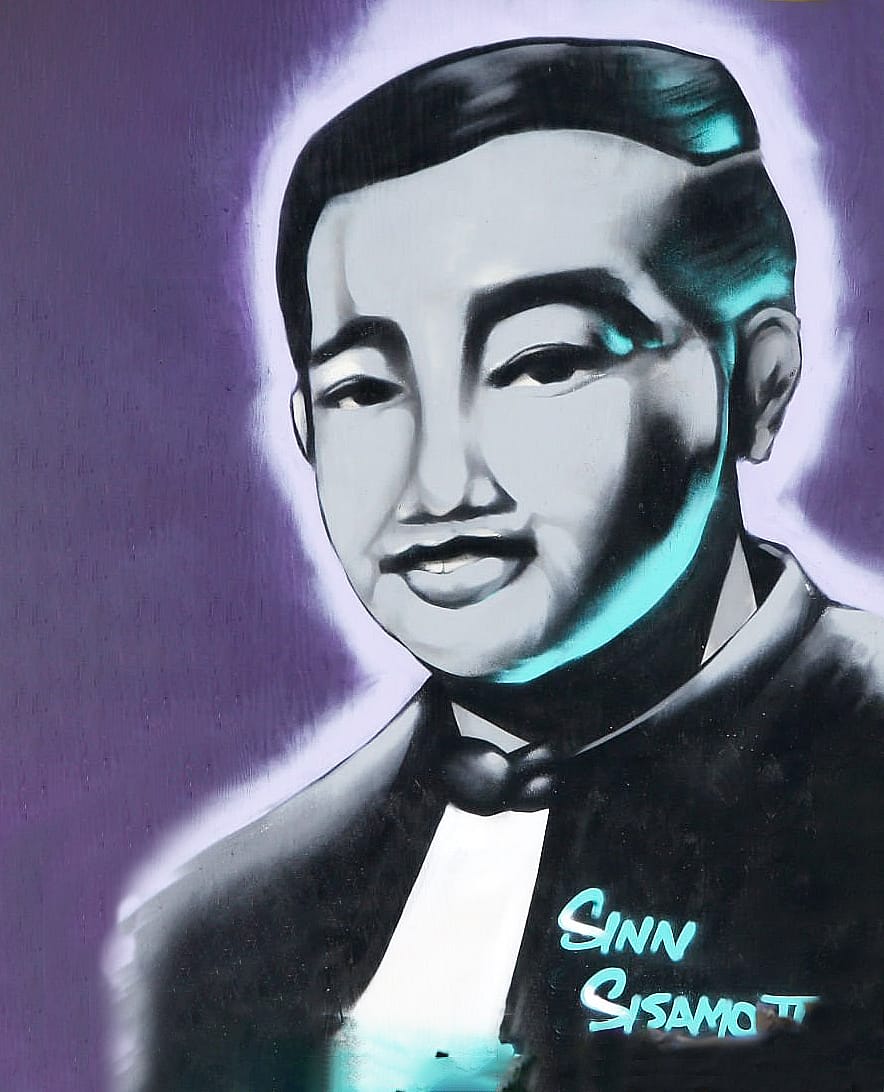
    In Chapter Two, The Continent co-founder Simon Allison presents the Parable of Sinn Sisamouth: the story of how some of the greatest songs ever written were nearly lost, and then found, and then lost again. 

    Taken together, these essays ask what journalism becomes in a world where information is no longer organized primarily to inform, but to capture attention, manufacture reaction and shape perception at planetary scale.

    The Atlas grows out of that question.

    Chapter One: Through the Static

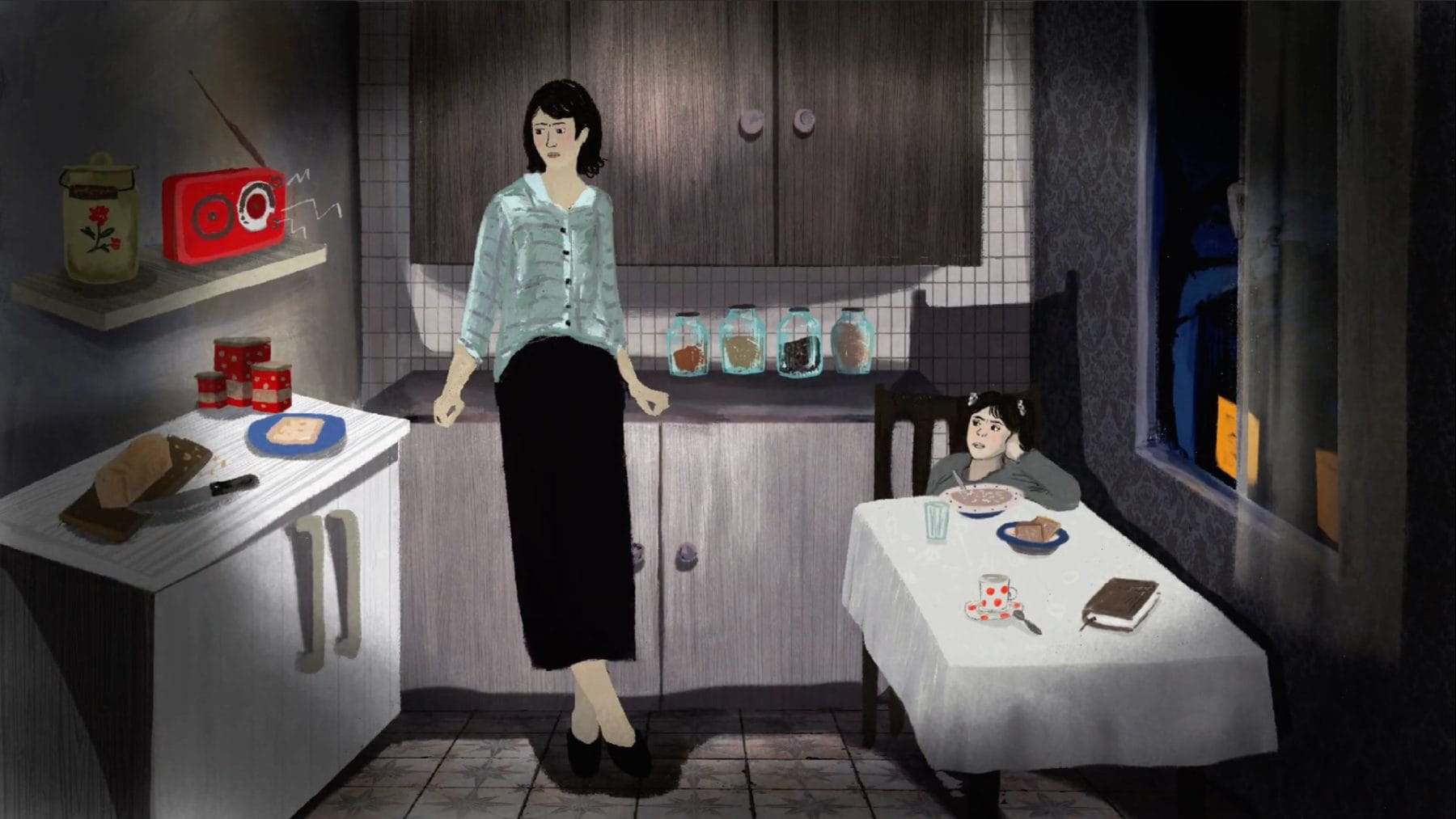
    Whenever I am asked why I decided to become a journalist, an image from my childhood pops into my head. It’s dusk. I am 10, sitting in the kitchen with my mom. She is glued to a shortwave radio. Outside, the Soviet Union is on the cusp of collapse. Georgia, where we are, is on the brink of civil war. We didn’t use the term back then, but fake news was all we got through official channels. Real news — coming from the West — felt like a lifeline. I was in awe of the crackling radio that held my mother’s full attention. I wanted to become that voice.

    Illustration: Anna Jibladze.

    Years later, I got my dream job at the BBC and spent much of my adult life moving between wars, uprisings and authoritarian states. Again and again, I found myself in places where truth was contested terrain: Baghdad, Damascus, Donetsk, Sana’a. But over time I realized something fundamental had changed. Modern authoritarianism no longer relied primarily on suppressing information. It had discovered something more effective.

    Information could simply be drowned out by static.

    That realization became stark for me in eastern Ukraine in the summer of 2014. I arrived in a field of bright yellow sunflowers where the bodies from Flight MH17 still lay scattered across the ground. A Russian missile had blown the passenger plane out of the sky, killing all 298 people on board. Yet almost immediately, the Kremlin flooded the information space with competing explanations. It was a Ukrainian fighter jet. A failed assassination attempt on Putin. The plane had been filled with corpses before takeoff. Each theory contradicted the next, but that hardly mattered. The point was not to persuade, it was to exhaust. It was to create so much noise that truth itself began to feel unstable.

    Over the following years, I watched versions of the same logic spread far beyond Russia. Social platforms transformed public conversation into a permanent stream of outrage, performance and distraction, collapsing vastly different kinds of information into the same endless feed. War footage, propaganda, conspiracy theories, journalism and gossip all began competing inside systems designed not to inform people but to capture and hold attention.

    Noise became the new censorship.

    And increasingly, I found myself thinking about the world of my childhood again. Not because history was repeating itself neatly, but because the emotional landscape felt strangely familiar: confusion, exhaustion, distrust, the constant sense that reality itself was becoming slippery. Back then, people searched desperately for clear signals through the static of Soviet propaganda. Today, we are drowning in a different kind of static, but the instinct, the search for clarity feels remarkably similar.

    In the Soviet Union, people developed ways of navigating that confusion. Among my strongest memories from that time is the sound of my parents’ typewriter late at night. Friends would pass around copies of banned Soviet literature and my parents would sit at the kitchen table all night, retyping them page by page so they could be shared again. It was my first encounter with samizdat, although I didn’t know the word then.

    Looking back now, what strikes me is that samizdat was never simply about forbidden texts. It was about building trusted alternative systems of circulation when official systems had lost credibility.

    At Coda, we have spent years building journalism against the logic of noise. We slowed stories down. We followed themes instead of headlines. We built a reporting system designed to connect events across borders and over time, helping readers see patterns instead of fragments. But as our globally distributed newsroom adapted to an increasingly fractured information landscape, it became clear that journalism alone was not enough. Distribution shapes understanding as much as reporting does.

    Around the same time, in Johannesburg, Simon Allison, Sipho Kings and their team were building something that challenged many of the assumptions dominating digital media. The Continent, their pan-African newspaper, spreads largely through direct sharing networks: passed from reader to reader rather than pushed by algorithms.

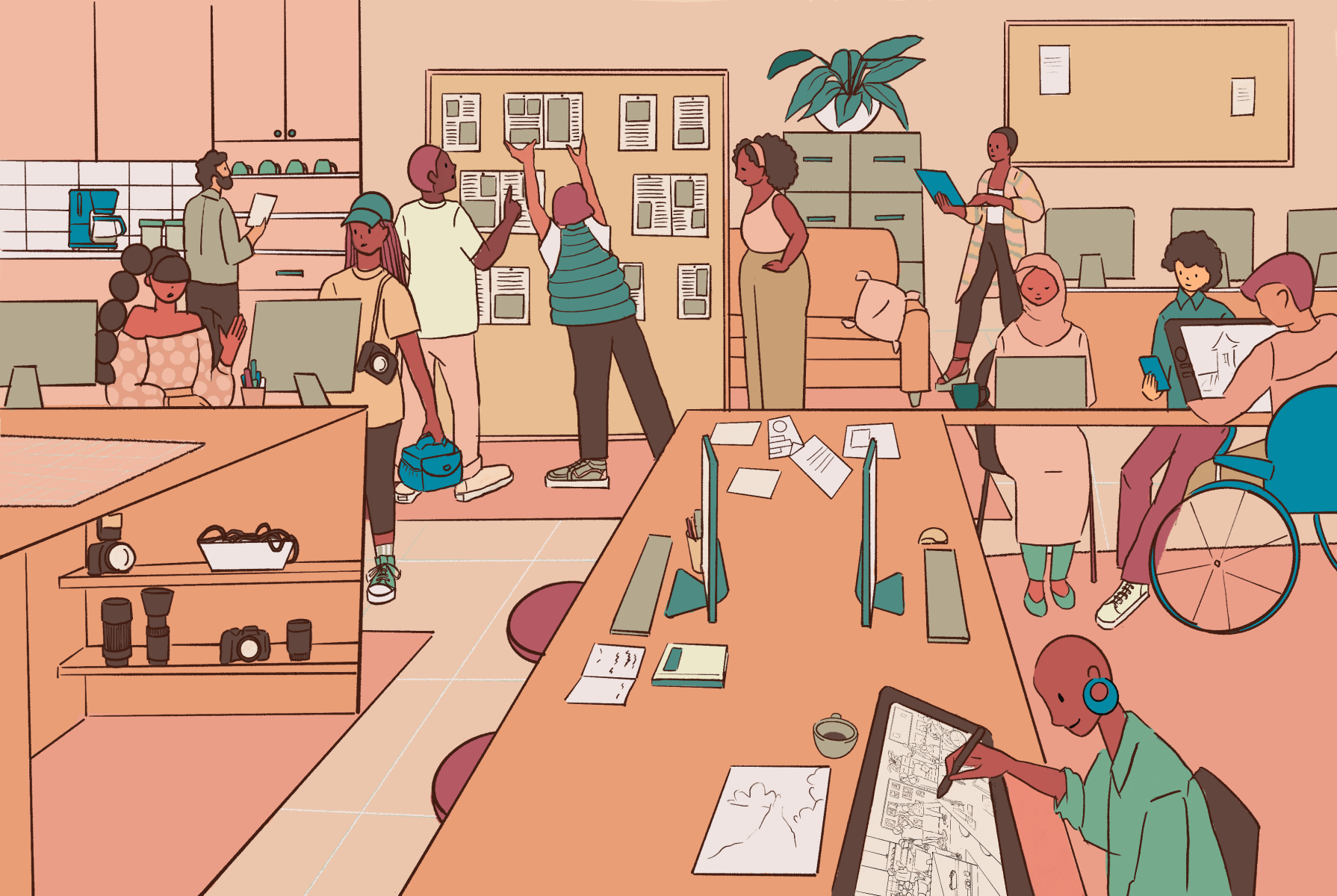
    Illustration: Wynona Mutisi.

    Different histories had brought us to remarkably similar questions. What does journalism look like when trust is collapsing, attention is fragmented and the systems that carry information have themselves become instruments of power?

    Out of that convergence came The Atlas: a new publication that brings together Coda’s methodology of following systems across borders and over time with The Continent’s radically distributed model for reaching readers beyond algorithmic feeds.

    The Atlas is built on a shared conviction: as fragmentation, distrust and informational overload spread across the world, some of the clearest ways through will come from places that have already spent decades navigating propaganda, instability and contested reality. Places once treated as peripheral are becoming essential to understanding the defining question of this age: how can meaning survive systems designed to overwhelm it.

    Michael Macor/San Francisco Chronicle via Getty Images.

    Chapter Two: The second silencing of Sinn Sisamouth

    Imagine if your favourite song disappeared, forever

    Almost every album I have ever loved was recommended to me by my friend An-Rui. A few months ago, he sent me a track by the undisputed King of Khmer Music, the Golden Voice, the Cambodian Elvis himself – Sinn Sisamouth.

    I had never heard of him.

    I didn’t respond at first, so he nudged me. That night, after the kids were asleep, I put on my headphones, sat in the garden and immediately lost myself in Cambodia’s psychedelic rock scene of the 1960s and ‘70s. I don’t know enough about music to explain exactly what I fell in love with, but within weeks I was, according to Spotify, among the top one percent of Sinn Sisamouth listeners worldwide.

    An-Rui had added a note to his recommendation. “the songs are happy but since i know what his fate was and i don’t understand the words, it sounds incredibly sad to me”.

    The story goes something like this: A small-town boy with an extraordinary voice moves to the big city, and conquers all before him. He writes hundreds of songs, bridging Khmer musical traditions with new western influences: jazz, rock & roll, bossa nova, blues, the Beatles, and, of course, Elvis Presley. He toured the country. He toured the world. He made music with an actual King, Norodom Sihanouk, and became Cambodia’s most beloved rockstar.

    Then, in 1975, the Khmer Rouge seized power. In the course of committing a genocide, the communist regime disappeared Sinn Sisamouth, and banned his music. He has never been seen, or heard from, again.

    But his music never died. It lived on brittle records, hidden for generations under floorboards. It lived on scratchy cassettes, passed hand to hand among the diaspora.

    It was only decades later that his music was digitised and remastered, and made available on streaming platforms to the likes of me.

    When I listen to Sinn Sisamouth, I can’t help but think about how easily we could have lost his masterpieces entirely. And I wonder what else might have been lost that we have not been able to recover.

    And then it happened again.

    There’s a particular track that I like to play in my car, where I can turn the bass up as high as it goes. I was driving one afternoon and looked for it on Spotify. It was gone, even though the rest of the album was there. 

    I looked again on my laptop at home. Nothing. Gone from Spotify. Gone from Apple Music. Gone from YouTube. Like it had never been there in the first place. I started to wonder if I had gone crazy, and maybe imagined the song entirely. And then I started to panic: What if I never heard it again?

    Eventually, I found a bootleg YouTube version, using a different transliteration of the Khmer title – Kanlang Pnheu Pran, instead of Konlong Phner Bran. Before I tracked that down, I had to wade through dozens of AI-generated Sinn Sisamouth ‘cover versions’, all uploaded to YouTube within the last few months. If I had never heard it before, I would never have been able to tell which was the original.

    It’s not unusual for songs to disappear from the Internet, especially when the music is from non-English-speaking countries. I’ve had similar experiences with the music of Sharhabil Ahmed, the Sudanese jazz legend, and Ethiopia’s Tilahun “The Voice” Gessesse.

    In fact, it’s not unusual for other kinds of information to disappear from the internet; to be edited after the fact; or to be simply lost among all the digital noise. Digital information is incredibly precarious, and becoming more so by the day. AI slop is taking over social media platforms. Algorithms determine what information we can and can’t see, shaping our cultural and political preferences. And powerful interests are becoming increasingly bold when it comes to brazenly manipulating information in their favour – or, of even greater concern, restricting the flow of information across borders.

    Amazon changes the contents of books on people’s Kindles without telling anyone. News websites quietly alter critical stories, post-publication, to remove evidence of wrongdoing (my favourite example: the Financial Express published a story critical of India’s richest family; only to replace it with a glorified press release a few days later. They neglected to amend the URL, however, which contains the original headline). Governments shut down internet access on a whim, or legislate which apps and websites are available to specific populations.

    For journalism, this is an existential threat. Our job is not just to hold power to account – it is also to write the first draft of history. But if we can’t preserve that first draft, or distribute it effectively, then what, exactly, is the point?

    The Continent and Coda Story are working together to try something different. We want to publish news about the world, produced and verified by humans, that cannot be edited after the fact; and to distribute it in a way that dramatically decreases our reliance on unaccountable algorithms or search engine optimisation. The Atlas — pilot edition available here — is our answer to the precarity of information online. It’s a work in progress.

    Stay tuned: if we’re going to succeed, we’ll need your help. And if we do succeed, the secret of our success will be those very same transnational networks that kept the music of Sinn Sisamouth alive. Communities of like-minded people, of friends and families will always find a way to stay connected, no matter how vast the distances between them, or how great the obstacles. So what does a global newspaper look like if we design it with exactly these communities in mind?

    As soon as I found that bootleg on YouTube, I ripped an MP3 copy and sent it to An-Rui on Signal. “KEEP THIS SAFE,” I told him. I don’t know what happened to the song on Spotify, or if it is ever coming back. But I can’t take the risk of never hearing that bassline again. And here it is, in case you want to hear it too.

    The post The new samizdat appeared first on Coda Story.

    ❌