
 Connexion
Russia strikes second civilian ship in Black Sea in six days, killing both captains to choke route that carries 90 percent of Ukraine’s farm exports
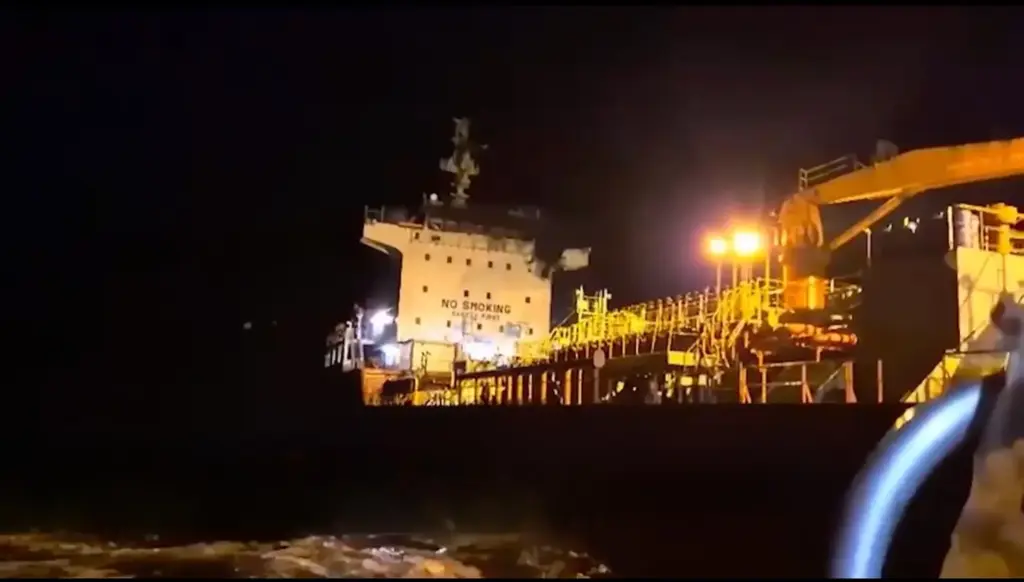
Russia hit an Antigua and Barbuda-flagged cargo ship in the Black Sea on the night of 22–23 September, killing its Ukrainian captain, according to Ukraine's Sea Ports Authority.
Ukraine says Russia is targeting civilian vessels in the Black Sea to block the country's maritime exports—about 90% of its agricultural exports transit these routes. Ukraine could lose $1.5 to $3 billion in export revenue if the attacks continue, according to Foreign Policy. The latest strike came six days after a Russian drone struck a Tanzania-flagged vessel heading to a Ukrainian port, killing its captain and wounding three crew members, and days after London's marine insurance market expanded its high-risk reporting area to cover the entire Black Sea.
Rescuers evacuated crew despite fire and heavy smoke
The State Border Guard Service said its Maritime Guard dispatched patrol boats to the burning vessel and evacuated the 15 surviving crew members despite heavy smoke and the threat of renewed Russian attacks. The service identified the weapon as a Russian attack drone. The survivors were brought to the nearest safe port and examined by medical personnel.
The vessel had departed from a Ukrainian port, the Border Guard Service said. Oleg Kiper, head of Ukraine's Odesa Oblast, also reported the attack and said it occurred off the oblast's coast. Neither the ship's name, its cargo, nor its destination have been disclosed.
The Border Guard Service said its Maritime Guard evacuated the crew, while Ukraine's Sea Ports Authority said the Ukrainian Navy carried out the evacuation and extinguished the fire aboard the vessel.
"This is another terrorist act by the Russian Federation against civilian shipping," the authority said.
Attacks on civilian shipping have killed dozens of crew members in 2026
Russia has repeatedly struck civilian vessels in the Black Sea this year. A strike on a Turkish-owned bulk carrier off Odesa killed ten crew members in July. Russian drones killed a sailor and wounded five on two ships in June. On the same day as the latest attack, the EU called for a moratorium on strikes against Black Sea shipping.
Read also
-
Russia hits a Kharkiv high-rise overnight, injuring 43 people, then kills four in daylight strikes on central Kyiv and Dnipro
-
“Reminiscent of 11 September at World Trade Center”: Russia strikes Ukraine’s century-old National Academy of Sciences in central Kyiv, people are climbing onto windows not to be buried alive
-
Ukraine hits railways of Bryansk, Russia’s launchpad for strikes on Kyiv: downed bridge and 28 derailed cars, region’s governor says
