Vue normale

  • ✇Euromaidan Press
  • A fifth of Russian refining sits idle, and the sector’s earnings still grew
    Russian oil refineries earned more in the first half of this year than in the same period a year earlier, even as Ukrainian drone strikes kept a fifth of the country's refining capacity out of action, The Moscow Times reported. Record wholesale prices and fast-growing payments from the federal budget have more than covered what the attacks and the repairs cost. Russian consumers are covering the rest at the pump. Refineries turn Russian crude into the two things the war needs: fuel for
     

A fifth of Russian refining sits idle, and the sector’s earnings still grew

17 septembre 2026 à 07:46

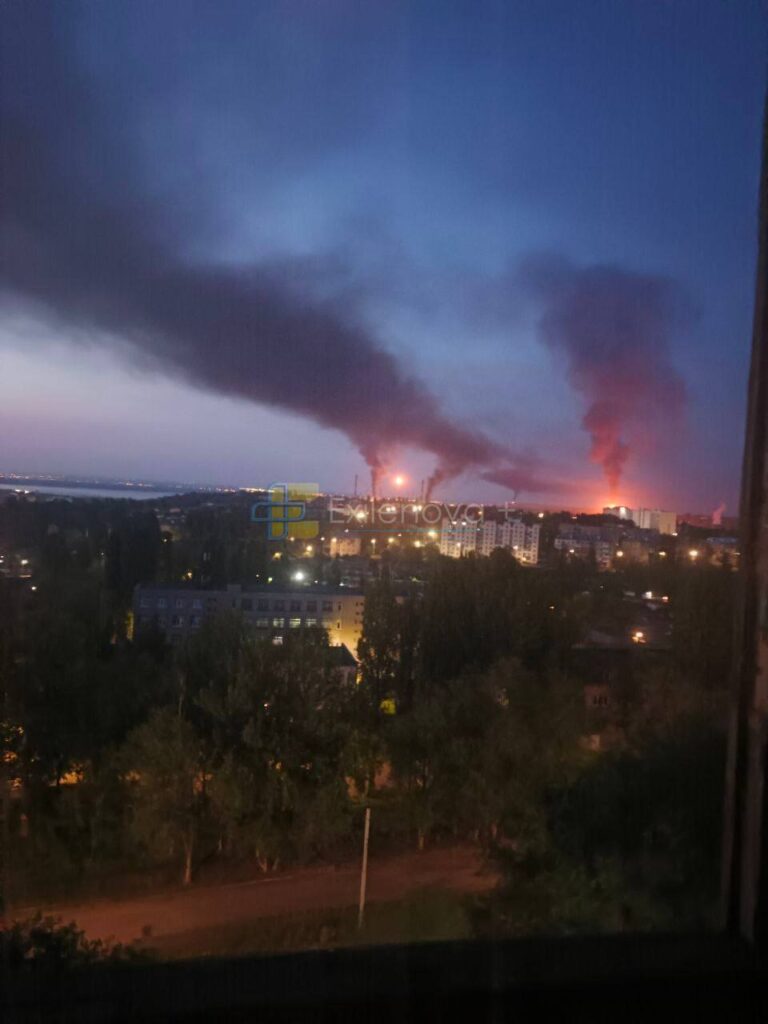
refinery saratov two tatarstan pumping station bashkortostan — one night's russian oil target list · post smoke fire rise over russia after ukrainian drone strike 8 2026 saratov5075776523918314508 ukraine news

Russian oil refineries earned more in the first half of this year than in the same period a year earlier, even as Ukrainian drone strikes kept a fifth of the country's refining capacity out of action, The Moscow Times reportedRecord wholesale prices and fast-growing payments from the federal budget have more than covered what the attacks and the repairs cost. Russian consumers are covering the rest at the pump.

Refineries turn Russian crude into the two things the war needs: fuel for the army, and billions in export earnings and taxes that help pay for it. That is why That is why Ukraine keeps hitting them with long-range drones, and why what those strikes do to Russian oil earnings matters more than how many plants are burning.

Where the profits come from

Russian refineries earned 938 billion rubles ($11.1 billion) in the first half of 2026, 16.2% more than a year earlier, according to the state statistics service Rosstat. Ukrainian drone strikes have put a fifth of the country's refining capacity out of action.

Two things produced that result, according to Promsvyazbank analyst Yekaterina Krylova: high wholesale prices on the SPIMEX commodity exchange, and a sharp increase in state fuel subsidies.

Wholesale prices took off in March, after the war in the Middle East began: light petroleum products have risen 37% since late February and diesel by a third, with July bringing record exchange prices of 82,600 rubles ($982) per tonne of AI-95 gasoline. Crude got cheaper for the refiners over the same stretch, as the ruble price of Urals oil peaked in spring and fell through the summer while the products made from it kept getting dearer.
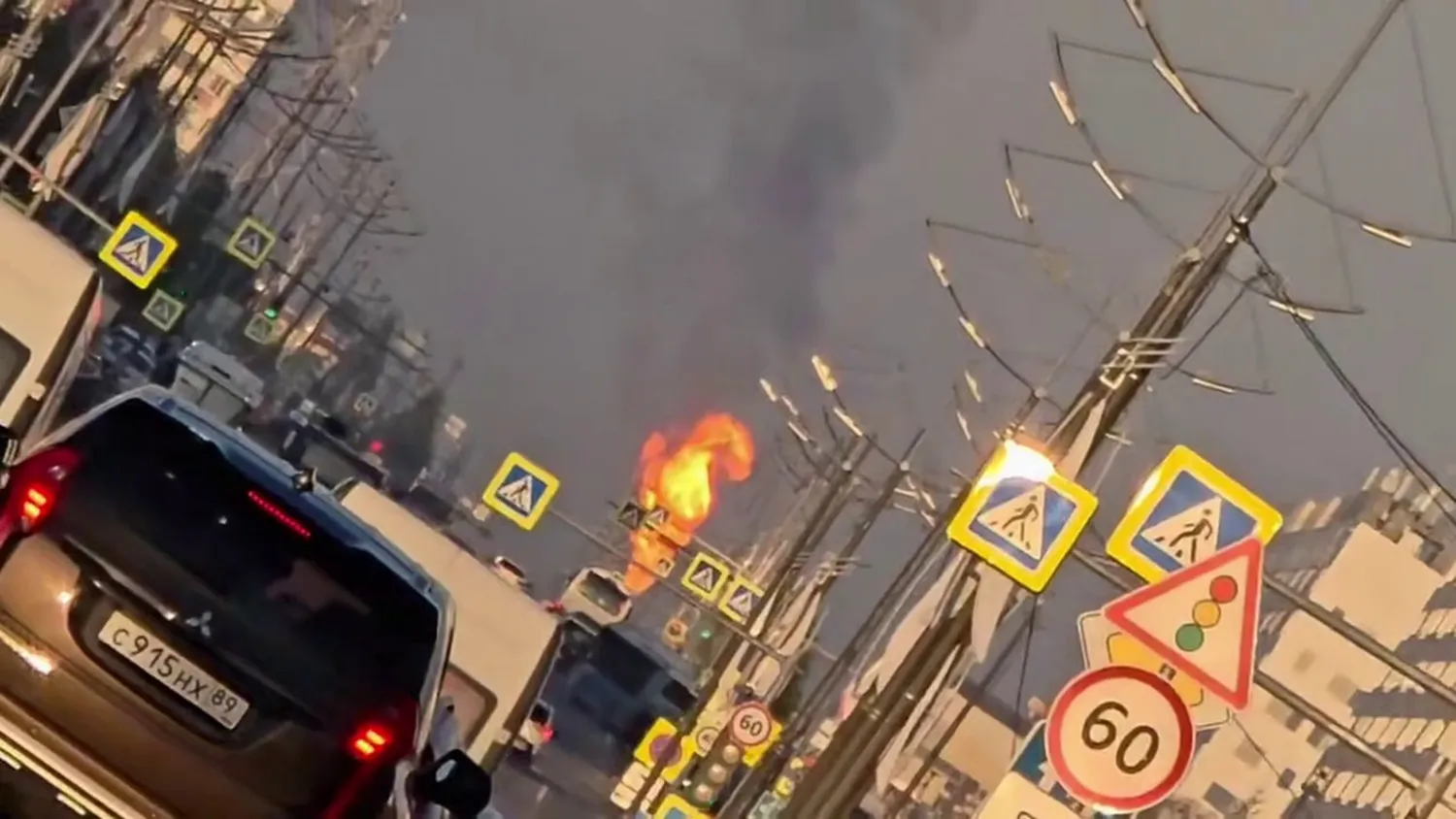
A tall flame rises above an industrial facility in Novy Urengoy at night.
Explore further

Ukraine says drones hit Russia’s gas heartland over 3,000 km from its border—a wartime record

The budget pays the difference, the country pays the bill

Russia's damper mechanism compensates oil companies for selling fuel cheaply at home rather than exporting it, and the payments grow as the gap between domestic and world prices widens.

The Finance Ministry paid out close to 350 billion rubles ($4.2 billion) a month in the second quarter, and 500 billion rubles ($5.9 billion) for July and August together. Krylova expects the subsidies and the prices together to widen net margins by 45% in the third quarter, to 35,000 rubles ($416) per tonne of gasoline.

Russia's retail prices tell the other half of the story. Gasoline has risen 21.2% since January and diesel 18.4%, well above Russian inflation. Budget money lets the majors, which own both the refineries and the filling-station chains, hold their own forecourt prices near inflation. Independent chains have no such cushion: they buy at the higher wholesale prices and sell dearer, which is how Russia has been squeezing them out of the market. For drivers, the crisis has been physical as well as financial, with rationing and dry pumps spreading across dozens of regions.

Kazakh President Kassym-Jomart Tokayev and Russian President Vladimir Putin walk past an honor guard in Astana, Kazakhstan, on 27 November 2024.
Explore further

Kazakh refinery deal could ease Russia’s front-line fuel pressure—but it covers just 0.3% of demand

What the strikes have cost

Ukrainian drones have been hitting Russian refineries since 2024, and the campaign escalated sharply from August 2025, when strikes deep inside Russia became systematic. Russian refineries disclose none of their losses from it.

Ukraine's General Staff estimated the total damage to the Russian oil industry since August 2025 at $13.5 billion, in a count published in early July. The insurance broker Mains put direct losses to the oil and gas sector from drone strikes last year at more than 100 billion rubles ($1.2 billion), and above a trillion rubles once lost profit and indirect damage are counted.

  • ✇Euromaidan Press
  • Russia keeps hitting Kyiv’s gas stations. Now they get military air-threat tracking
    Gas stations across Kyiv Oblast will receive access to a military air-awareness system to help them respond more quickly to Russian drone attacks, Kyiv Oblast military administration head Tymur Tkachenko said on 15 September. The move comes as Russian forces increasingly target fuel infrastructure during their attacks on Ukrainian cities. Two gas stations were hit in Kyiv on 15 September, killing one person and injuring 11, while at least three other Ukrnafta stations in the capital hav
     

Russia keeps hitting Kyiv’s gas stations. Now they get military air-threat tracking

15 septembre 2026 à 12:33

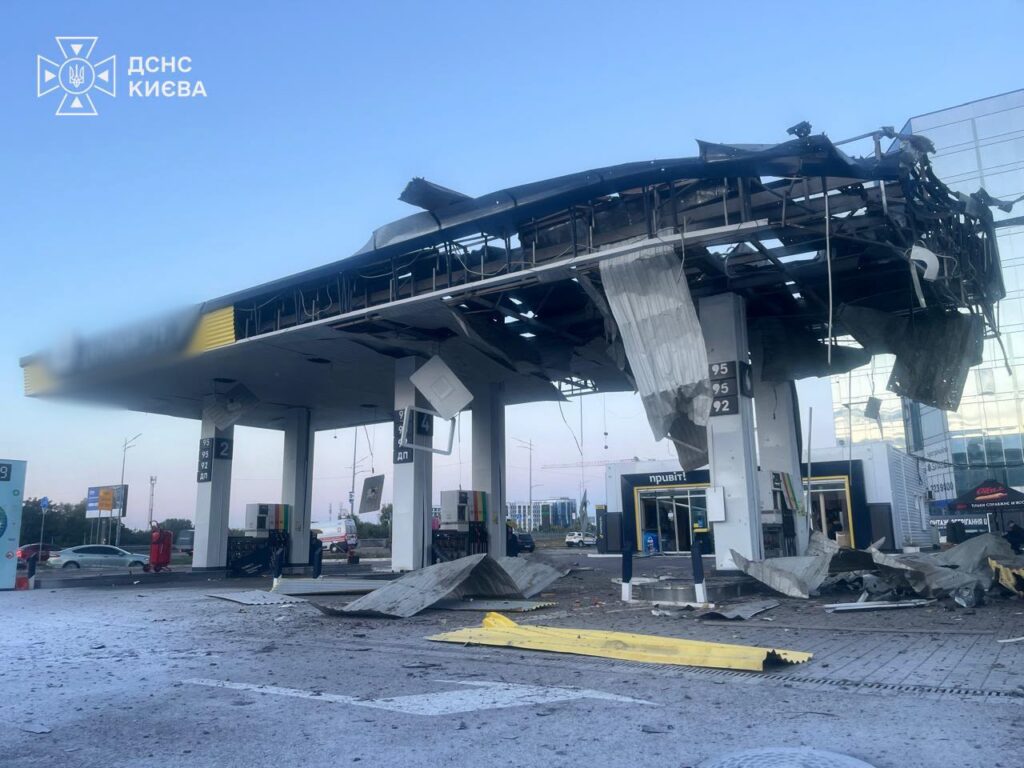
A gas station in Kyiv after being struck by a Russian drone on 15 September 2026. Photo: Ukraine's State Emergency Service

Gas stations across Kyiv Oblast will receive access to a military air-awareness system to help them respond more quickly to Russian drone attacks, Kyiv Oblast military administration head Tymur Tkachenko said on 15 September.

The move comes as Russian forces increasingly target fuel infrastructure during their attacks on Ukrainian cities. Two gas stations were hit in Kyiv on 15 September, killing one person and injuring 11, while at least three other Ukrnafta stations in the capital have been struck since 10 September.

The new system will allow designated gas-station employees to see real-time information about the movement of Russian aerial targets rather than relying only on the general air-raid alert. This should give stations more time to suspend operations, protect employees, and move customers away from danger.

Gas stations are becoming a recurring target

The attacks on Kyiv’s gas stations are part of a broader pattern. More than 300 gas stations across Ukraine have been attacked since the current wave began, according to Ukraine’s Energy Ministry, with strikes increasingly reaching deeper into the country.

In Kyiv, Russian forces have repeatedly used drones against fuel stations over the past week. The 15 September attack hit two more stations during a wider wave of around 200 drones launched against Ukraine.

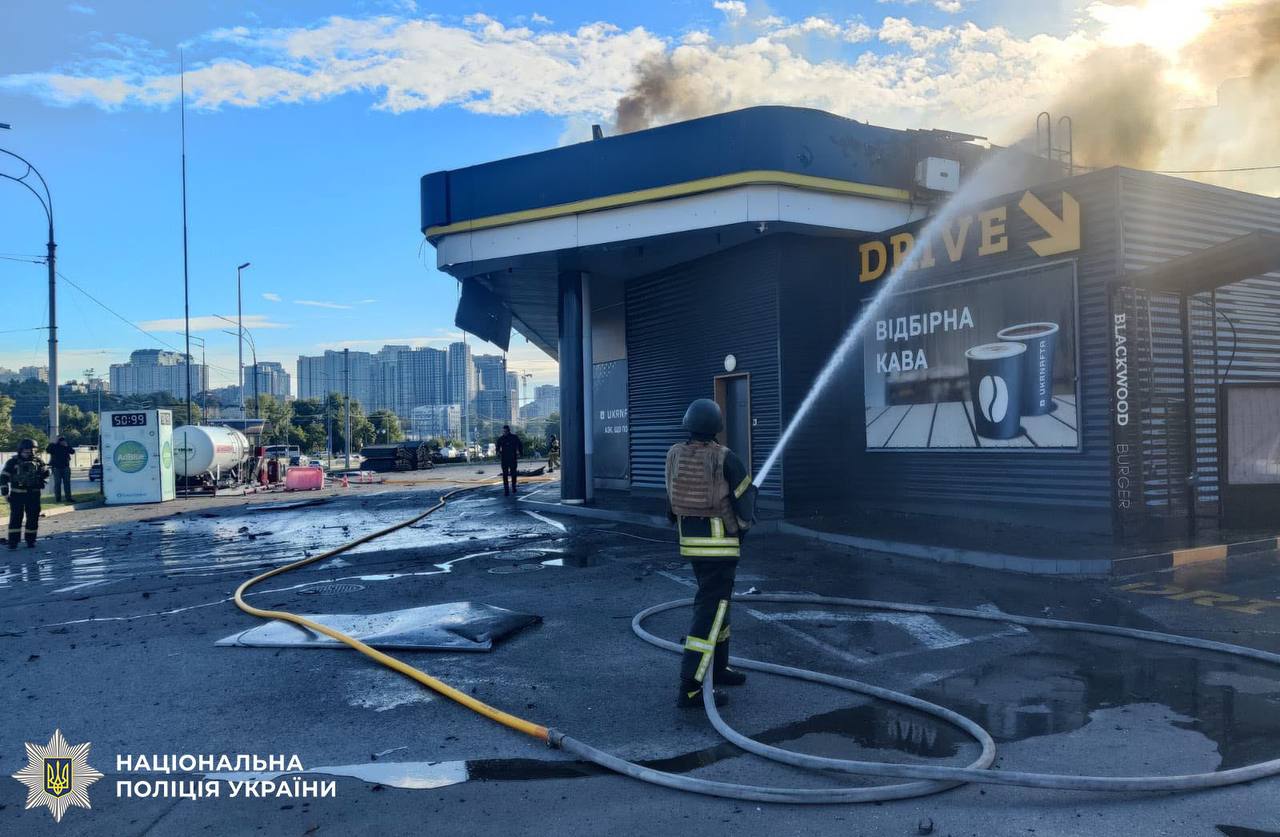
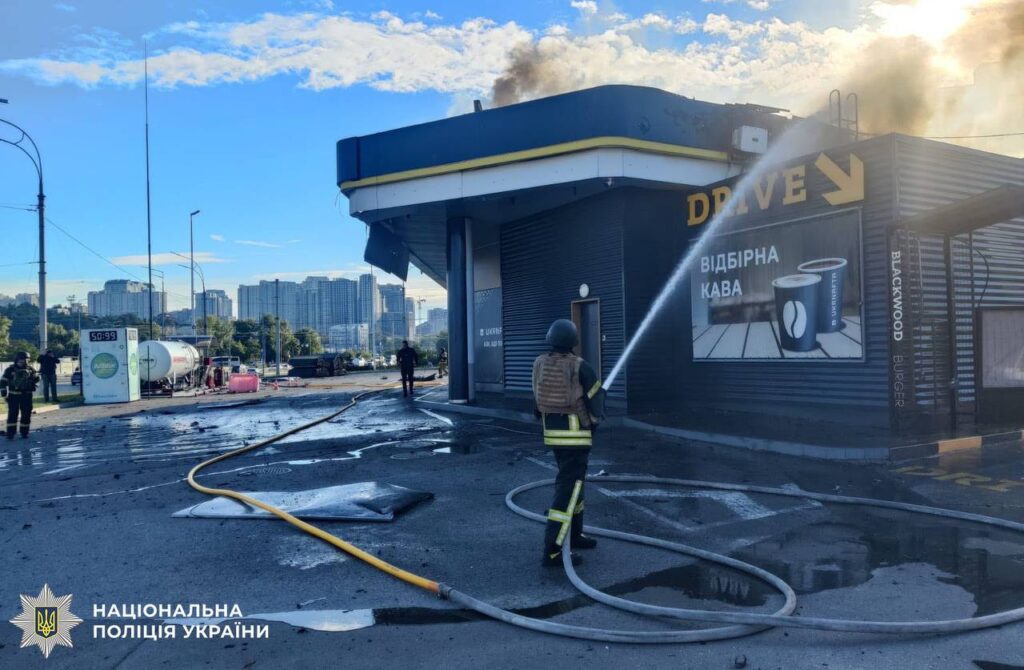
russian drones killed man injured eight kyiv hitting two gas stations · post firefighter extinguishes burning shop ukrnafta station struck drone ukraine 15 2026 police5280922930982363336 news ukrainian reports
Explore further

Russian drones killed a man and injured eight in Kyiv, hitting two gas stations

The targeting of fuel infrastructure adds another dimension to Russia’s campaign against Ukraine’s civilian supply system. Gas stations are not only businesses but critical points in the country’s transportation and fuel network, making repeated attacks capable of affecting both public safety and civilian mobility.

Tkachenko said the new air-awareness access is intended to give businesses “maximum available tools” to detect threats earlier and react in time.

He also urged drivers to follow gas-station employees’ instructions during air raids, as the facilities adapt their operations to the growing threat.

  • ✇Euromaidan Press
  • Russian drones killed a man and injured eight in Kyiv, hitting two gas stations
    Russian drones killed one man and injured eight people in Kyiv on the morning of 15 September, hitting two gas stations along with warehouses, a restaurant, and an office building, the National Police reported. The strikes came in a night-long wave of 200 drones that also hit Odesa Oblast in southern Ukraine.  Moscow's full-scale war against Ukraine grinds on, and Russia has been targeting Ukraine's civilian supply system for months, taking out retailer warehouses, medicine depots, and
     

Russian drones killed a man and injured eight in Kyiv, hitting two gas stations

15 septembre 2026 à 05:46

russian drones killed man injured eight kyiv hitting two gas stations · post firefighter extinguishes burning shop ukrnafta station struck drone ukraine 15 2026 police5280922930982363336 news ukrainian reports

Russian drones killed one man and injured eight people in Kyiv on the morning of 15 September, hitting two gas stations along with warehouses, a restaurant, and an office building, the National Police reported. The strikes came in a night-long wave of 200 drones that also hit Odesa Oblast in southern Ukraine. 

Moscow's full-scale war against Ukraine grinds on, and Russia has been targeting Ukraine's civilian supply system for months, taking out retailer warehouses, medicine depots, and the railways that move them. The two Kyiv filling stations were the fourth and fifth stations reported as belonging to state-owned Ukrnafta to be struck in the capital since 10 September.

What Russia hit in Kyiv

The first drone came down at a gas station in the Darnytskyi district shortly after 06:00, and more drones hit warehouses in the Obolonskyi district around the same time, the Kyiv Military Administration saidThe strike critically wounded a man who was standing near the Darnytskyi station.

The attack resumed after 08:00. A drone struck a non-residential building in the Solomianskyi district, then a second gas station in the Holosiivskyi district, where heavy smoke rose over the site. Mayor Vitalii Klitschko reported the number of injured climbing through the morning, from two to four to eight, with two of them in serious condition. Emergency services put six of the eight in the Solomianskyi district, which took a second hit around 10:00.

The man hurt at the Darnytskyi station died in hospital at about 10:35. Beyond the two stations, police recorded damage to warehouses, a fast-food restaurant, and a business center.

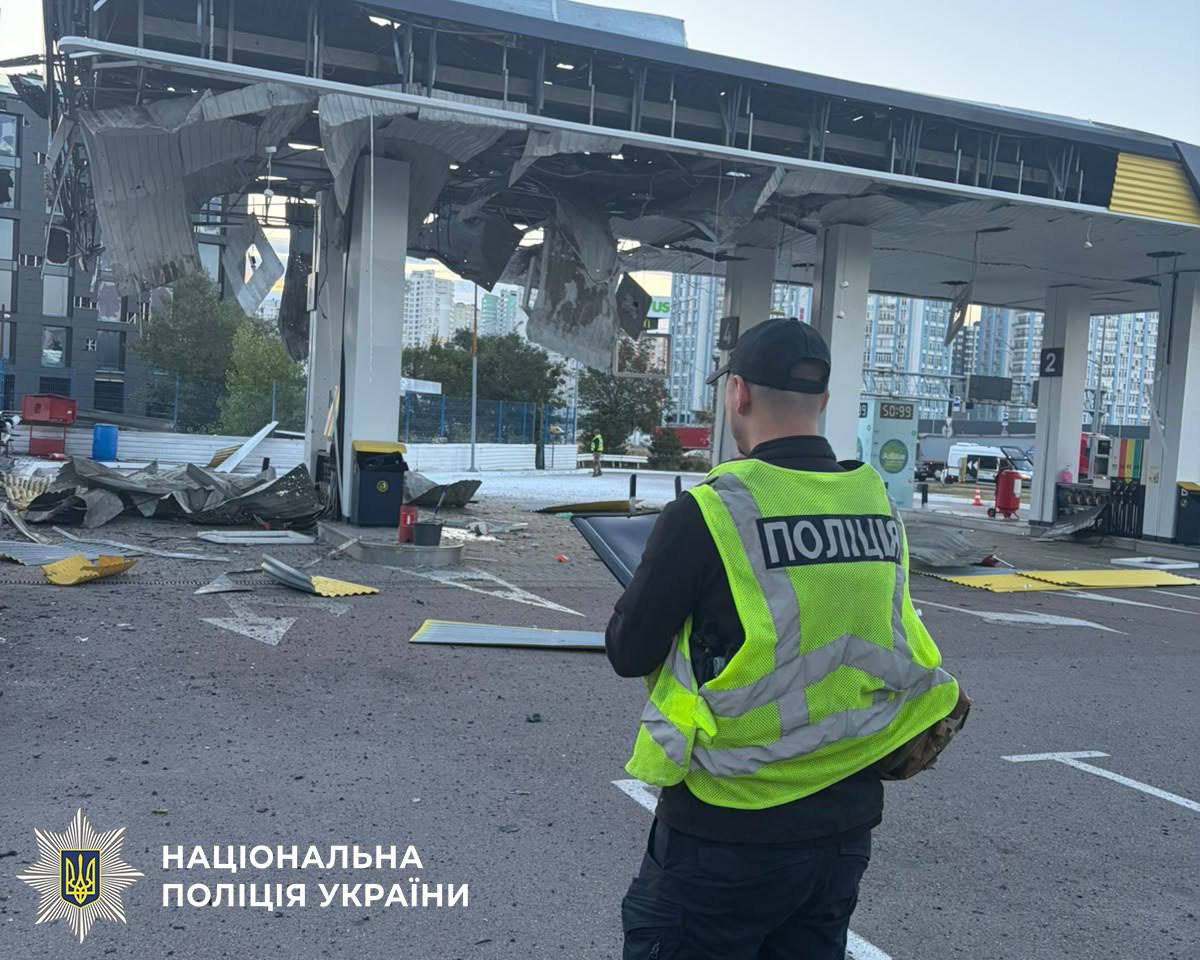
russian drones killed man injured eight kyiv hitting two gas stations · post police officer ukrnafta station destroyed drone strike ukraine 15 2026 police5280922930982363330 news ukrainian reports
A police officer at an Ukrnafta gas station destroyed by a Russian drone strike in Kyiv, Ukraine, 15 September 2026. Photo: National Police of Ukraine

The wave that carried them

Russia launched 200 strike drones from 18:00 on 14 September, the Air Force said: Shahed types including jet-powered ones, Gerberas, and Parodiya decoys, flown from Russia and occupied areas. Air defense downed or suppressed 187 of them by 08:00, with hits recorded at seven locations and debris falling at three more. The attack was still running when that count was published.

russian drones killed man injured eight kyiv hitting two gas stations · post firefighter extinguishes burning shop ukrnafta station struck drone ukraine 15 2026 police5280922930982363336 news ukrainian reports

Russian drones killed a man and injured eight in Kyiv, hitting two gas stations

Russian forces hit Odesa Oblast at the same time. Russian forces struck residential buildings, logistics sites, and port and transport infrastructure, oblast head Oleh Kiper said, damaging roofs, facades, and windows of private houses along with dozens of garages and cars.

The same night, NATO fighters shot down a drone over Lithuania that had crossed from Belarus, and Ukrainian forces struck the Syzran refinery in Samara Oblast and a warehouse in Taganrog.

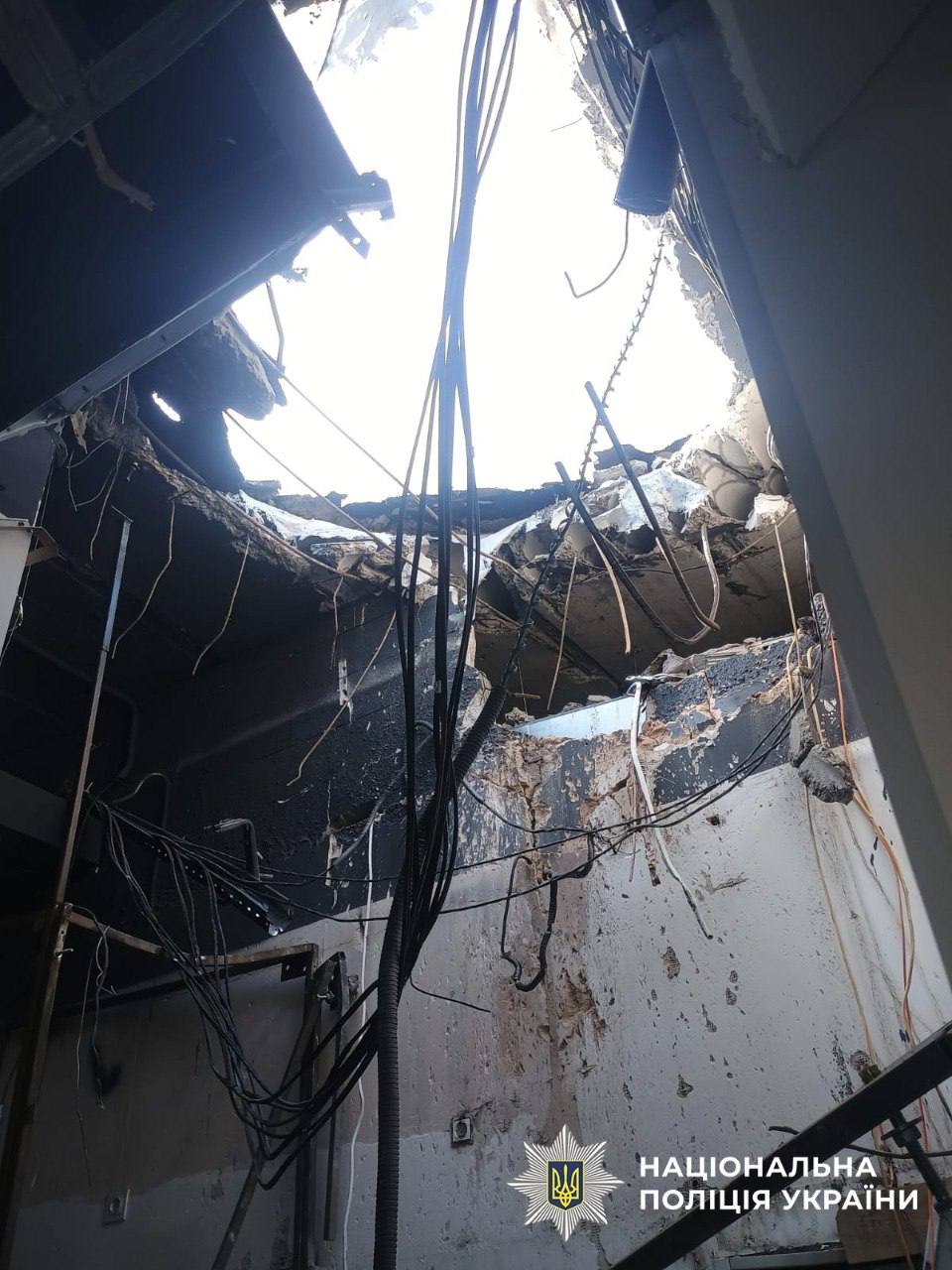
russian drones killed man injured eight kyiv hitting two gas stations · post hole torn through ceiling building hit during drone attack ukraine 15 2026 police5280922930982363332 news ukrainian reports
A hole torn through the ceiling of a building hit during the Russian drone attack on Kyiv, Ukraine, 15 September 2026. Photo: National Police of Ukraine

Why gas stations

Kyiv's filling stations have been under systematic attack since 10 September, when a drone came down at a station near a shopping mall. On 11 September, jet drones hit two Ukrnafta complexes on opposite banks of the city and returned to strike one of them a second time.

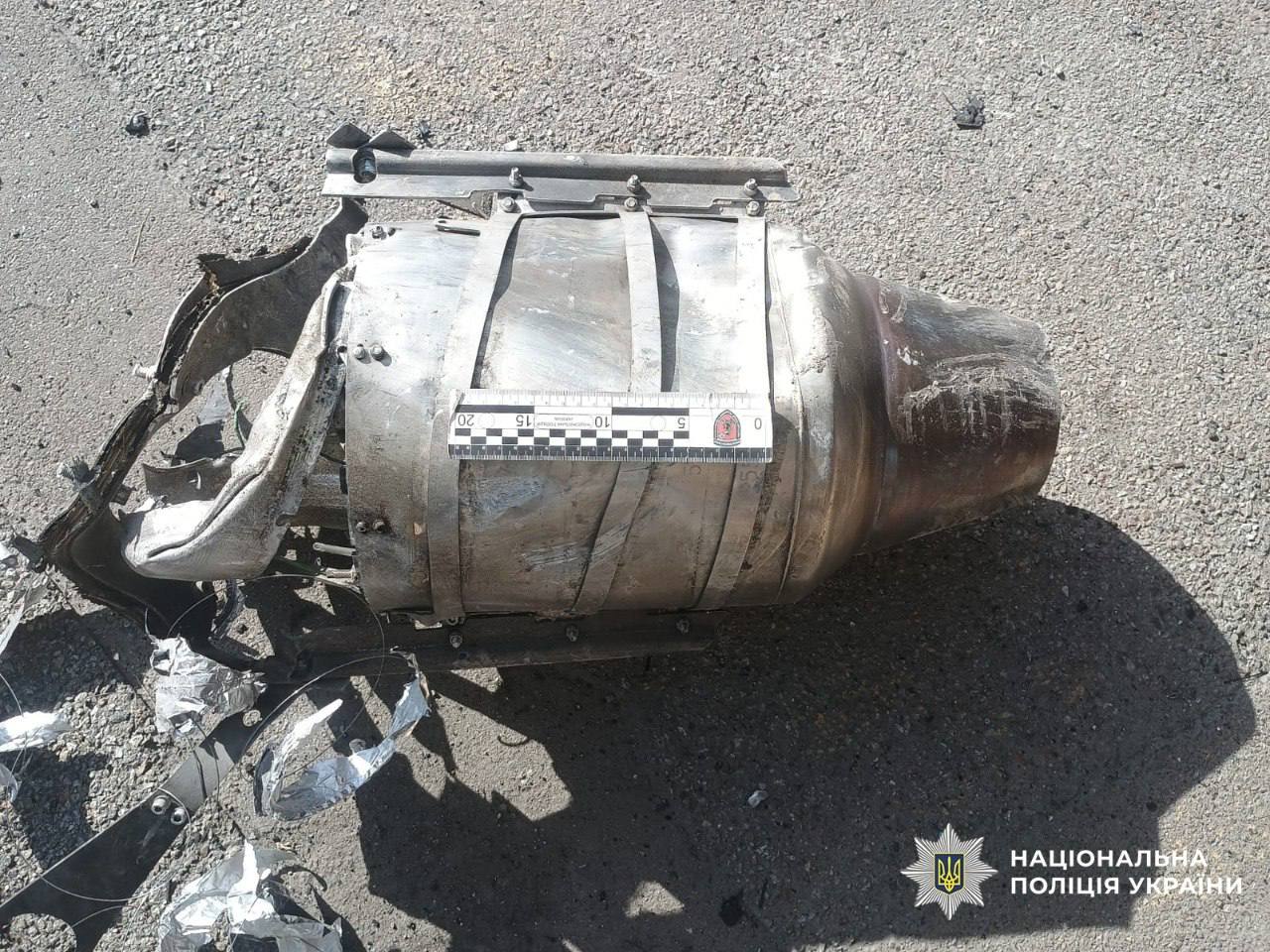
russian drones killed man injured eight kyiv hitting two gas stations · post fragment drone recovered after attack ukraine 15 2026 police5280922930982363333 news ukrainian reports
A fragment of a Russian drone recovered after the attack on Kyiv, Ukraine, 15 September 2026. Photo: National Police of Ukraine

Unlike filling stations in the border oblasts, which Russia hits with cheap short-range drones, the Kyiv stations are being struck with its most expensive ones. Ukrainian stations are mostly struck with the Geran-4 Seeker, the variant fitted with machine-vision targeting, according military observer Oleksandr Kovalenko of Information Resistance.

Geran-5 (Above) and Geran-4 (Below)
Geran-5 (above) and Geran-4 (below). Image: TurDef

More than 300 gas stations have been attacked across Ukraine since the current wave began, according to energy ministry data. The strikes have moved gradually from front-line oblasts deeper into the country, and about 80% of damaged stations return to work. 

  • ✇Euromaidan Press
  • A Russian drone chose its own target and killed three. The code that told it what to look for was readable
    Ukrainian investigators recovered an unencrypted American AI module from a Russian Molniya drone that killed three civilians near a Zaporizhzhia gas station on 6 July, and read the code that guided its targeting, the New York Times reported. No human operator made the final call. Commercially sold AI boards have been turning up inside Russian strike weapons for more than a year, and autonomy is the direction both armies are moving in. What changed is the evidence rather
     

A Russian drone chose its own target and killed three. The code that told it what to look for was readable

25 août 2026 à 08:21

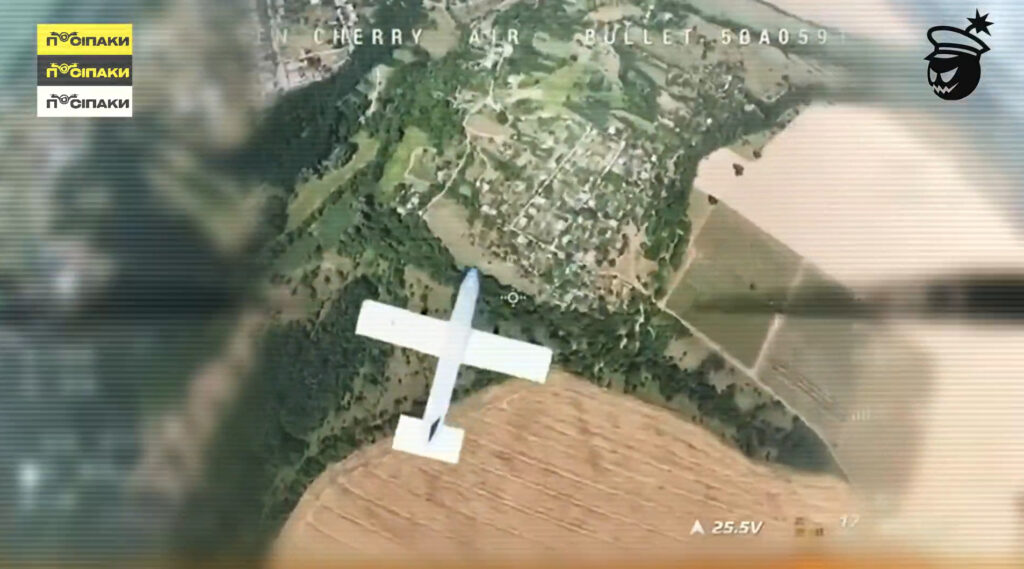
russian drone chose its own target killed three code told what look readable · post molniya general cherry video equipped artificial intelligence shot down over zaporizhzhia ukraine news ukrainian reports

Ukrainian investigators recovered an unencrypted American AI module from a Russian Molniya drone that killed three civilians near a Zaporizhzhia gas station on 6 July, and read the code that guided its targeting, the New York Times reported. No human operator made the final call.

Commercially sold AI boards have been turning up inside Russian strike weapons for more than a year, and autonomy is the direction both armies are moving in. What changed is the evidence rather than the technology. Until now, autonomy had to be inferred from what a wreck lacked—an antenna, a radio trace.

Tetiana Bubynets, a 19-year-old accounting student at Zaporizhzhia National University, was declared dead at a hospital, one of her professors said. Oleksii Svirin, 41, and Roman Karpii, 48, later died of their injuries. The drone had attempted to navigate around an apartment building toward the gas station's propane tanks but struck a wall and detonated near people sheltering there.

What investigators found in the wreckage

The wreckage contained an Nvidia Jetson Orin minicomputer, an off-the-shelf AI module that costs a few hundred dollars. The chip was not encrypted. Ukrainian officials said they could read the terrain imagery loaded for visual navigation and the object-detection code that defined what the drone was trained to target, NYT reported. The drone carried no radio antennas and was flying in a wave of approximately six, none of them transmitting. A missing antenna alone would not prove self-targeting—a drone flying a preprogrammed route needs no antenna either, but it would have no use for an Nvidia chip.

Human operators had programmed the drone to fly toward the gas station and set the general target area before launch. Once near the site, the onboard system identified and selected the specific object—most likely propane tanks it had been trained to recognize—on its own, drone experts and military officials said. Vadym Kushnikov, a drone expert at the Kharkiv Aviation Institute, described the drone as "a preprogrammed tool trained in virtual reality to track specific objects," NYT reported.

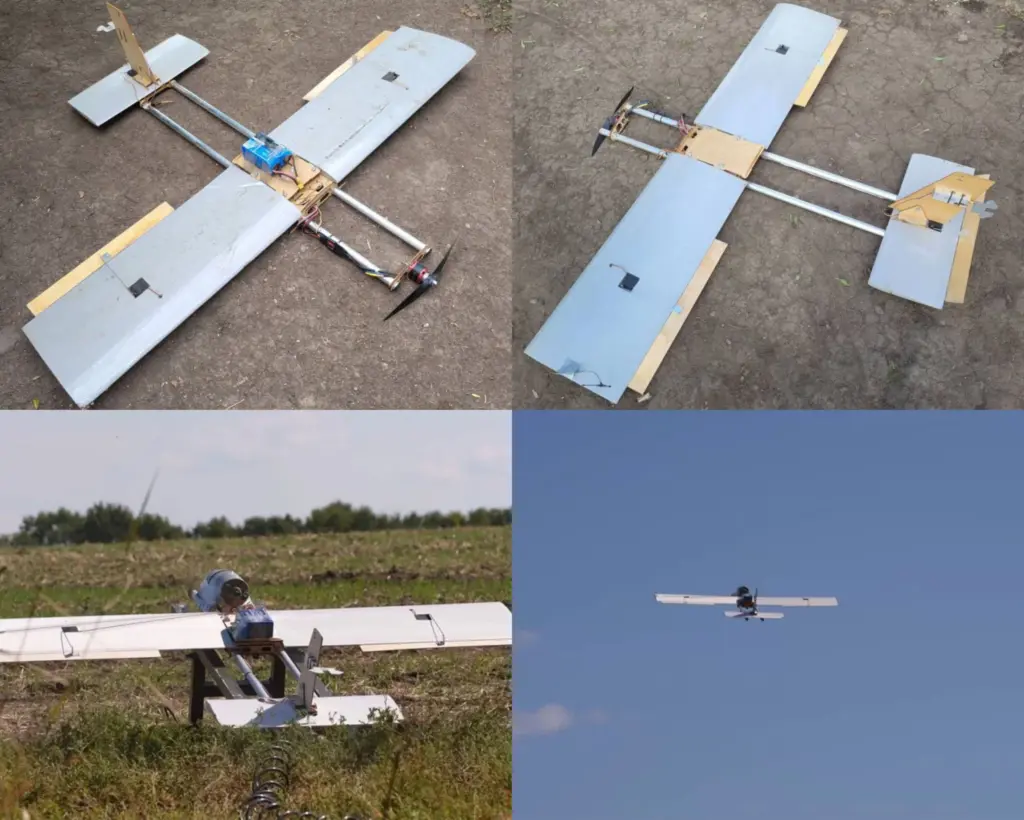
russian drone chose its own target killed three code told what look readable · post molniya kamikaze photos sources militarnyi ukraine news ukrainian reports
Russian Molniya kamikaze drones. Photos from Russian sources via Militarnyi

Where else the Nvidia module has turned up

Kateryna Bondar, a senior fellow at the Wadhwani AI Center at the Center for Strategic and International Studies in Washington, told NYT that no earlier Russian strike by a self-targeting drone has been documented killing civilians, which would make 6 July the first such case on record. She called the Nvidia module "the best proof" that Russia was experimenting with autonomous AI.

The Jetson Orin is not new to the battlefield. The module is made by the American chipmaker Nvidia. Ukraine's sanctions on Russia's AI drone supply networks, imposed in August 2025, hit Russian, Chinese, and Belarusian drone developers and component suppliers—not Nvidia.

Ukrainian intelligence first identified the module in the V2U autonomous strike drone in June 2025, mounted in a Chinese Leetop A203 minicomputer. It has since reported Jetson-based AI modules in Russia's Lancet and Klin drones—the Klin an older Jetson TX2—and, most recently, in the S-71 Monokhrom cruise missile.

In those cases, the finding was the hardware, and what Ukrainian intelligence inferred from it. This time, the code itself was legible.

Nvidia confirmed to NYT that the photographed board was a Jetson Orin. The company said the minicomputer is a consumer-grade product "sold to students, developers and start-ups for a wide range of beneficial applications," that it does not sell the computer in Russia, and that it is widely available through resellers.

Zaporizhzhia as testing ground

Russia began test flights of AI-guided Molniya drones in May, and had begun testing self-targeting systems in the V2U several months earlier, some of those for last-mile guidance only, Ukrainian air defense experts told NYT. Local air defense officials said Russia has been aiming at civilian objects—pumps and propane tanks at gas stations—along with military recruitment centers while trying out autonomous drones in Zaporizhzhia. Why those targets were chosen for the tests is not clear.

Gas stations have been under sustained attack independently of the AI trials. Russia has destroyed approximately 200 across Ukraine since spring, around 50 in June alone, by UNITED24 Media's count.

In Zaporizhzhia, gas stations now prop plastic sheeting at odd angles around propane tanks to confuse the drones' image recognition, and Ukraine has turned to shooting down drones that electronic warfare cannot jam.

❌