Connexion
“Two targets and ammo with one drone”: How a Ukrainian drone crew hunts Russian transport behind the front line

The crew flies with the Black Sky unmanned-systems battalion of the National Guard's 3rd Operational Purpose Brigade Spartan. The commander, callsign Arti, said the crew's middle-strike drones can strike Russian military vehicles as close as 50 and as far as 150 kilometers behind the front line, mostly trucks and passenger cars, Army Inform reported.
The war now reaches deep into the Russian rear, where strike drones hit vehicles once safe from the front. Every Russian vehicle this crew burns is a blow to the invasion's logistics, leaving fewer supplies and fewer troops able to reach Russian positions. (edited)
Arti said the drones' main advantages are their range, speed, and stealth, while navigator Schultz, another crew callsign, said they are particularly effective 50–60 kilometers from the line of contact.
How the crew works
The four-person crew includes a pilot, navigator, technician and sapper. Arti joined the military intending to fly drones and first served as a second pilot on another crew before moving to middle-strike aircraft.
Schultz was mobilized in September 2024 and spent nearly a year and a half flying Mavic drones for reconnaissance, dropping munitions and delivering supplies to Ukrainian troops. That experience helped him transition to middle-strike drones.
“I navigate the terrain and give the pilot the course to fly,” Schultz said. “I already know the areas where enemy vehicles may move and where they may stage near the treelines.”
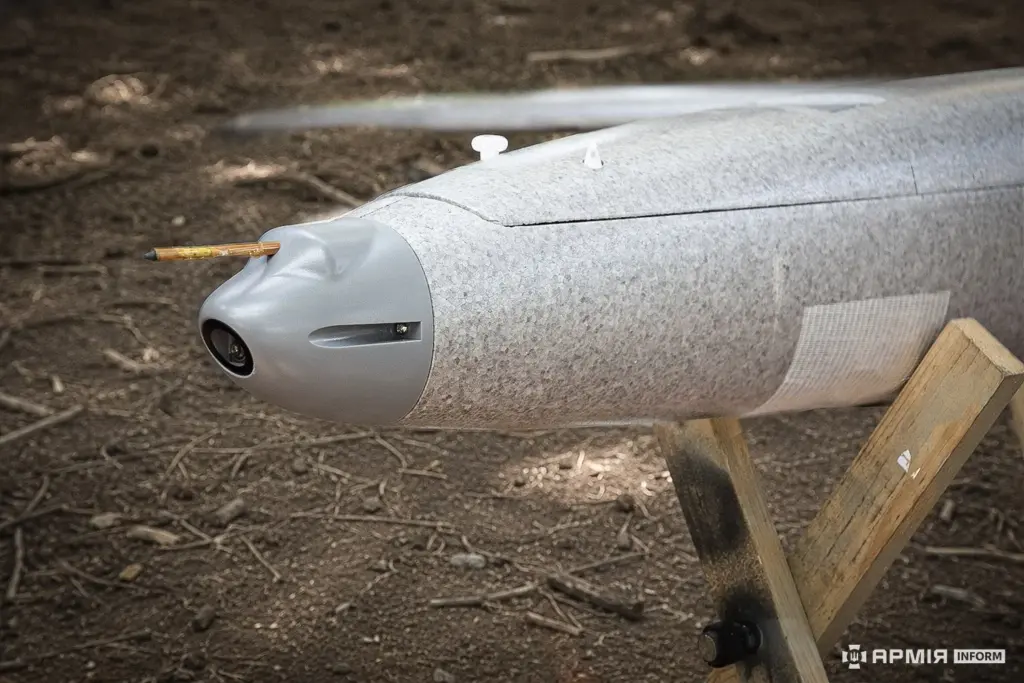
Schultz said Russian forces have become increasingly reluctant to move vehicles close to the front line after repeated Ukrainian strikes.
"At 50 to 60 kilometers from the [frontline] they're quite effective. Right on the line we won't find anyone now — nobody drives there anymore, because our guys worked them over for so long. The occupiers are already afraid to drive closer. It knocks out all the enemy's logistics," he said.
Schultz said this can mean fewer supplies and personnel reaching Russian positions.
He recalled the first time he watched one of the crew’s strikes in real time. Reconnaissance operators tracked a vehicle carrying Russian personnel while the drone crew moved in to attack.
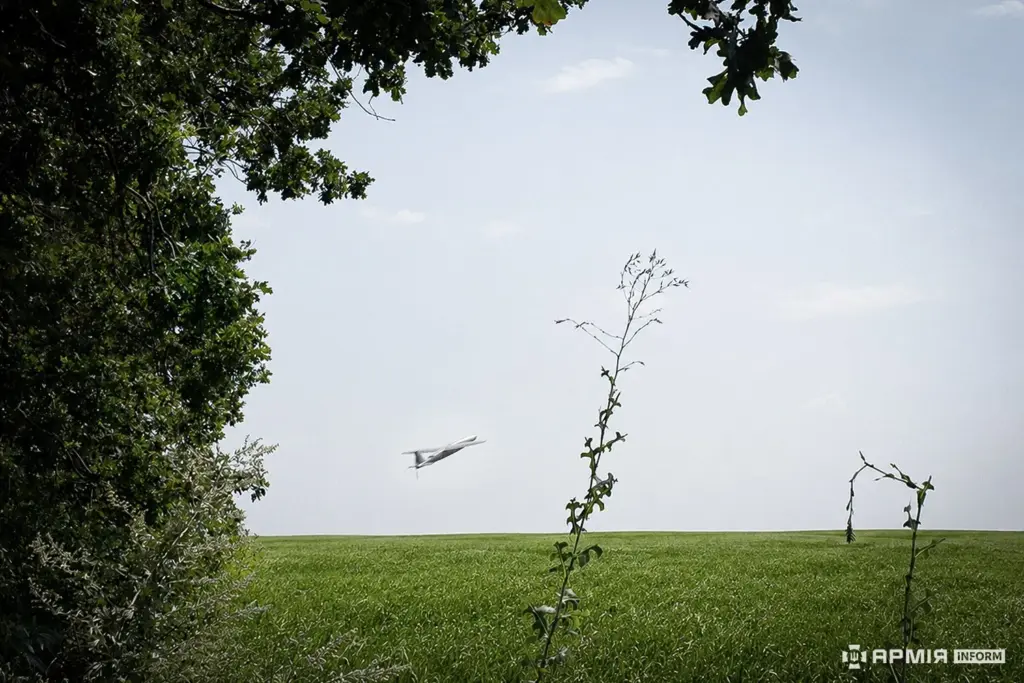
“We saw it ourselves—we saw how we hit it, how everything exploded and burned,” he said.
The crew began flying middle-strike drones only a few months ago.
“We’re a young crew. There’s still a lot ahead,” Schultz said.
Read also
-
Belgium lines up a “drone deal” to tap Ukraine’s war-tested know-how
-
Russia hit Kyiv with ballistic and hypersonic missiles overnight, damaging a children’s hospital, with people trapped in a shelter (UPDATE)
-
Ukrainian top volunteer from outgoing minister’s own team, whose drones downed 12,954 Russian targets, is offering to help his successor