
 Connexion
Ukraine’s ground robots ran nearly 17,000 missions in June. Every one depended on holding signal, problem this new antenna targets
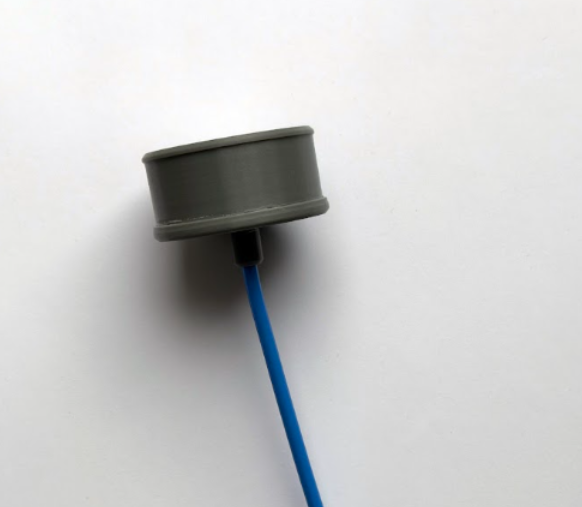
A Ukrainian company has built a tiny antenna to solve one of the drone war's hardest problems: staying connected. Ukraine's BlueBird Tech has unveiled the CLOVER 5.8 GHz antenna, a 25-gram device for transmitting and receiving radio signals, according to RBC-Ukraine.
The antenna addresses the connectivity problem at the center of Ukraine's drone war. Keeping drones linked to their operators under heavy jamming is one of the war's persistent technical challenges, and the CLOVER is one Ukrainian company's answer.
Previously, Serhii “Flash” Beskrestnov, an adviser to the Ukrainian president, confirmed that the main problem for Ukrainian forces operating some 25,000 combat robots is not hardware limitations but connectivity restrictions.
The design is built to hold a link in motion
The antenna's shape is engineered for stability. Due to its clover design, circular polarization, and omnidirectional radiation pattern, the antenna works even in dynamic conditions.
Weight is decisive for a drone. At 25 grams, the CLOVER adds almost nothing to a small aircraft, leaving weight for payload, battery, or range, which matters for the small FPV drones that do much of the fighting, where a reliable signal and low weight are both at a premium.
It works on drones and ground robots
The antenna is not only for flying drones. It can be installed and used on ground robotic systems as well as FPV drones, and extended to the uncrewed ground vehicles that Ukraine increasingly uses for logistics and evacuation, which face the same connectivity challenge.
In June, Ukrainian ground robots ran nearly 17,000 supply and evacuation missions. Every one of those runs depends on the robot holding a signal, the problem the CLOVER is built to address.
It is built for quick integration. Despite its compact size, the CLOVER covers a wide 4.9-6.1 GHz range and comes with an SMA male connector and an RG402 cable, allowing it to integrate quickly into drone-detection tools, radio-monitoring complexes, and measurement equipment. It is compatible with the main systems on the market.
