Legal fight continues as states begin sending out ballots for voters to vote by mail in November’s midterm electionsThe Trump administration renewed its appeal to the US supreme court on Sunday to allow restrictions on mail-in voting, after a federal judge had blocked new limits on such ballots, just ahead of November’s midterm elections.The latest filing follows a decision by US district court judge Indira Talwani on Friday to extend a court order preventing the US Postal Service (USPS) from en
Legal fight continues as states begin sending out ballots for voters to vote by mail in November’s midterm elections
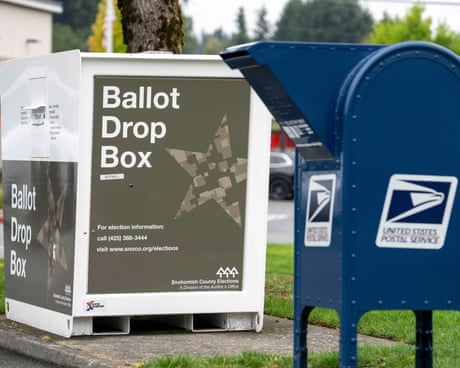
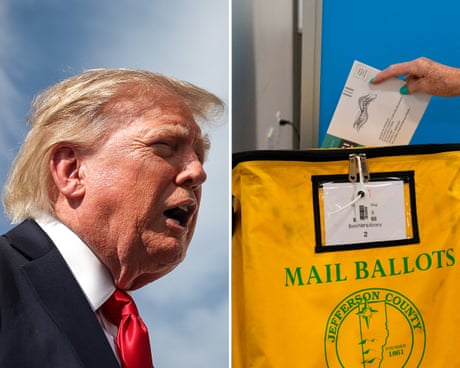
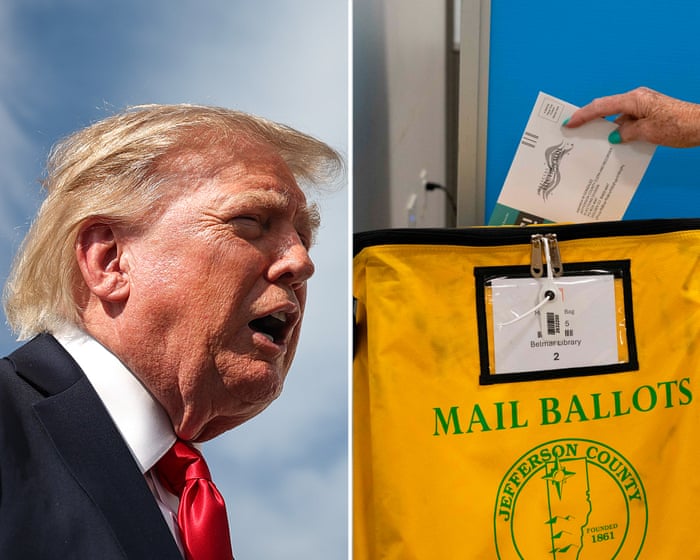
The Trump administration renewed its appeal to the US supreme court on Sunday to allow restrictions on mail-in voting, after a federal judge had blocked new limits on such ballots, just ahead of November’s midterm elections.
The latest filing follows a decision by US district court judge Indira Talwani on Friday to extend a court order preventing the US Postal Service (USPS) from enforcing Donald Trump’s executive order.
State decides to proceed hours after Trump administration asks supreme court to let it carry out proposed crackdownNorth Carolina became the first state to start sending out mail-in ballots for November’s US midterm elections on Friday, as Donald Trump’s administration fights to impose sweeping restrictions on the practice before millions of Americans cast their votes.The state’s decision to proceed – hours after Trump’s officials asked the supreme court to let the administration press ahead wit
State decides to proceed hours after Trump administration asks supreme court to let it carry out proposed crackdown
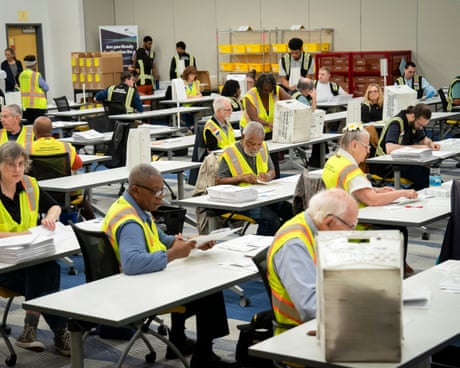
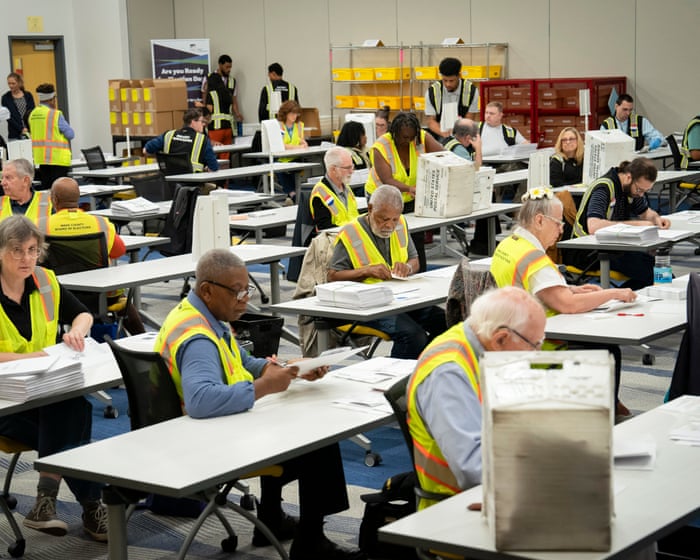
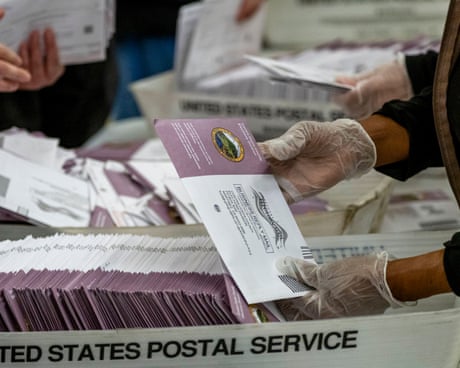
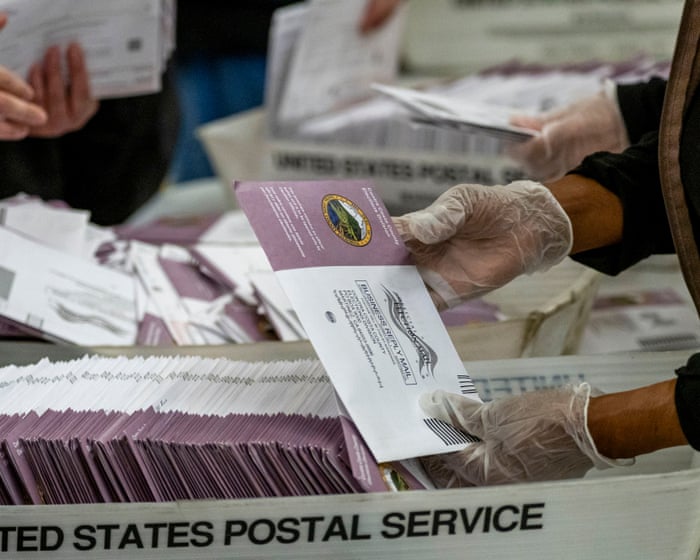
North Carolina became the first state to start sending out mail-in ballots for November’s US midterm elections on Friday, as Donald Trump’s administration fights to impose sweeping restrictions on the practice before millions of Americans cast their votes.
The state’s decision to proceed – hours after Trump’s officials asked the supreme court to let the administration press ahead with its proposed crackdown – comes amid deep uncertainty over whether new federal rules governing mail ballots will be allowed to take effect, and whether the US Postal Service can implement the changes in time.
Supreme court ruled in June against president’s earlier order to change citizenship rules for babies born in USA federal judge has temporarily blocked Donald Trump’s latest attempt to restrict birthright citizenship – the longstanding principle that all babies born in the US are guaranteed American citizenship.The decision came nearly a month after the president tried for a second time to limit via executive order which people born in the US can become American citizens. The supreme court ruled
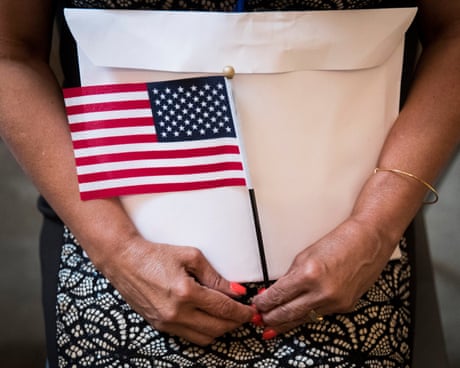
The decision came nearly a month after the president tried for a second time to limit via executive order which people born in the US can become American citizens. The supreme court ruled in late June that Trump’s previous sweeping order denying birthright citizenship to the children of undocumented immigrants or temporary visitors was unconstitutional.
Judge says US Postal Service has told her nothing about how it plans to regulate mail ballots for midterm electionsA federal judge in Boston said on Thursday the US Postal Service had told her nothing about how it would implement a plan to regulate mail ballots for the midterms as she considers whether to let the plan proceed in the weeks before election day.US district court judge Indira Talwani is deciding whether to extend her prohibition on the proposed regulation of mail ballots, an effort
Judge says US Postal Service has told her nothing about how it plans to regulate mail ballots for midterm elections
A federal judge in Boston said on Thursday the US Postal Service had told her nothing about how it would implement a plan to regulate mail ballots for the midterms as she considers whether to let the plan proceed in the weeks before election day.
US district court judge Indira Talwani is deciding whether to extend her prohibition on the proposed regulation of mail ballots, an effort undertaken as part of an executive order by Donald Trump. The hearing in the closely watched case came a day before the first state begins sending mail ballots to voters.
Justices’ 5-4 ruling permits Trump administration appeal to block lower court order halting above-ground workA divided US supreme court has permitted Donald Trump to continue building his controversial $400m White House ballroom despite legal challenges, raising the likelihood it will be completed.In a 5-4 ruling, the justices permitted the Trump administration’s request to block a lower court order that had halted above-ground construction of the project while a lawsuit by a historic preservat
Justices’ 5-4 ruling permits Trump administration appeal to block lower court order halting above-ground work
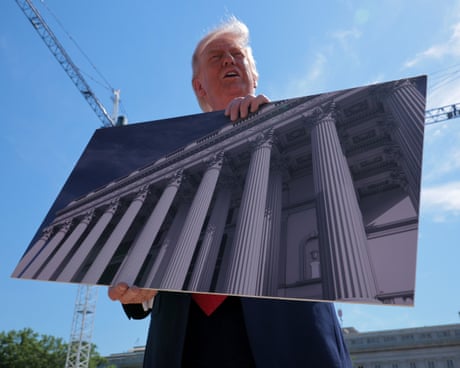
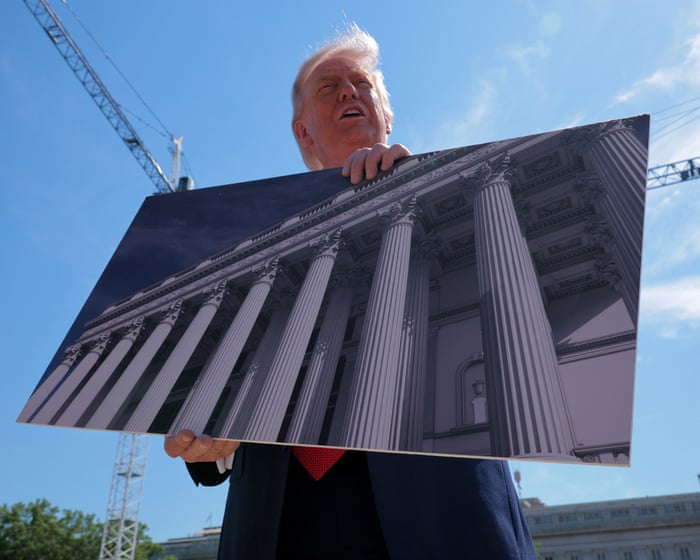
A divided US supreme court has permitted Donald Trump to continue building his controversial $400m White House ballroom despite legal challenges, raising the likelihood it will be completed.
In a 5-4 ruling, the justices permitted the Trump administration’s request to block a lower court order that had halted above-ground construction of the project while a lawsuit by a historic preservation group seeks to block it.
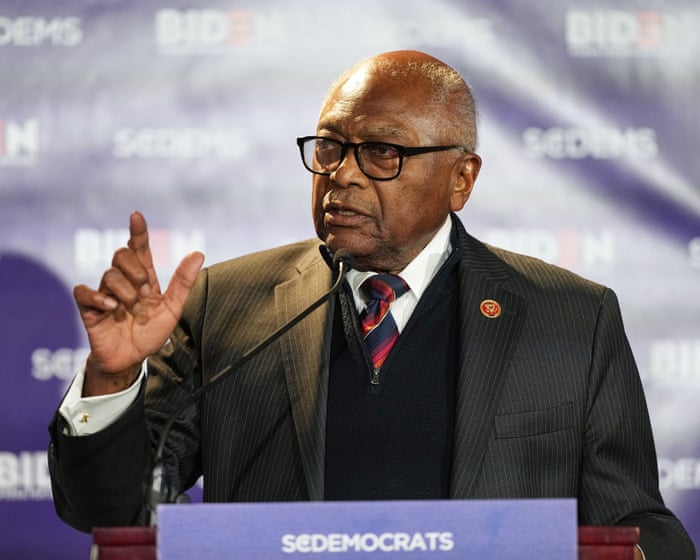
Congressman says Thomas abandoned his principles to become an extremist, hard-right member of benchThe senior Democratic congressman James Clyburn said his decision to support Clarence Thomas for a US supreme court seat “was a mistake” and called for the expansion of the nation’s highest legal panel to 13 justices.Clyburn, of South Carolina, spoke up for Thomas at his fiery 1991 confirmation hearings, calling him “a personal and professional friend” who would use their shared experiences lifting
Congressman says Thomas abandoned his principles to become an extremist, hard-right member of bench
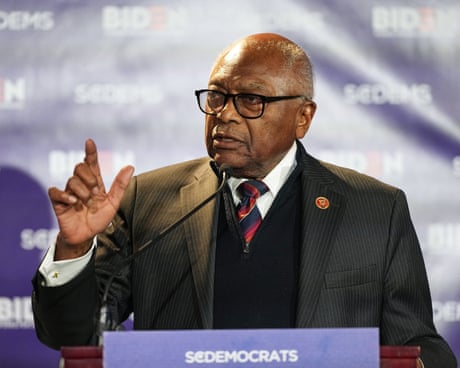
The senior Democratic congressman James Clyburn said his decision to support Clarence Thomas for a US supreme court seat “was a mistake” and called for the expansion of the nation’s highest legal panel to 13 justices.
Clyburn, of South Carolina, spoke up for Thomas at his fiery 1991 confirmation hearings, calling him “a personal and professional friend” who would use their shared experiences lifting minorities and advancing civil rights to become a respected and accomplished jurist.
US president has been obsessed with restricting the ability to vote by mail, despite using it himself. Plus, why we are still fascinated with Meg from the White StripesDon’t already get First Thing in your inbox? Sign up hereGood morning. The US supreme court has sided with Donald Trump in his effort to crack down on mail-in voting, though it is unclear whether or not his administration will be able to take action before the midterm elections in November. The court’s justices voted 6-3 along ide
US president has been obsessed with restricting the ability to vote by mail, despite using it himself. Plus, why we are still fascinated with Meg from the White Stripes
Good morning. The US supreme court has sided with Donald Trump in his effort to crack down on mail-in voting, though it is unclear whether or not his administration will be able to take action before the midterm elections in November. The court’s justices voted 6-3 along ideological lines to lift an injunction that a judge in Massachusetts had placed in June on an executive order issued by the president. But a second injunction remains in place, and the ruling leaves room for legal challenges.
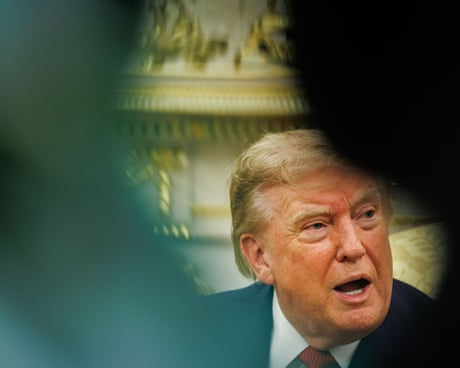
Trump has repeatedly likened voting by mail to cheating, despite his own use of it and overwhelming evidence that the system is secure. In March he ordered the government to create a “state citizenship list” of eligible voters, requiring that mail-in ballots only be delivered to people on that list. He also directed the justice department to prioritise investigations and prosecutions of state and local election officials who issue ballots to people deemed ineligible to vote in federal elections.
What did the dissenting judges say? In a blistering dissent, Justice Ketanji Brown Jackson wrote that the decision “needlessly injects chaos and uncertainty into the upcoming midterm elections”.
How have rights organisations reacted? The president of the National Association for the Advancement of Colored People, Derrick Johnson, said: “Let this ruling be a reminder that democracy is never, ever guaranteed. We have to fight for it, we have to fight to keep it and we have to protect the rights we do have within it … they are trying to do everything they possibly can to make it difficult for you to vote.”
How has Canada reacted? The country’s prime minister, Mark Carney, told reporters that Trump’s announcement was largely expected. “It’s not a surprise for us that the US would take some form of reprisal to our response to their unjustified tariff,” he said. Carney has vowed to match the American tariffs “dollar for dollar”, and said Canada could not accept any proposed trade deal that would weaken French language protections.
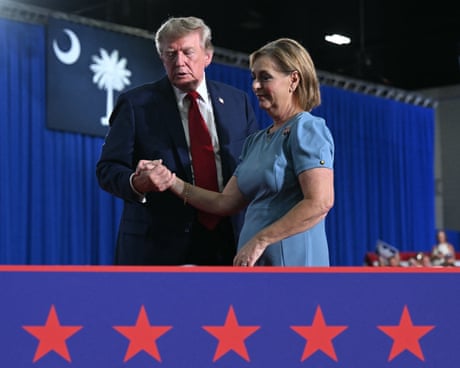
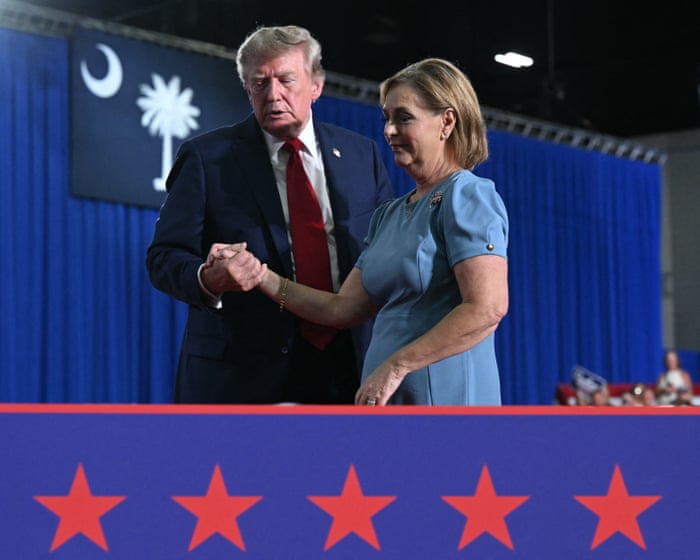
This live blog is now closed.South Carolina chooses Darline Graham as Republican nominee for US SenateSign up for the US Breaking News emailOn Truth Social, however, the president shot down assertions that the US talks with Canada collapsed in part due a proposed trade deal that would have weakened French language protections.“I would never interfere with Canadians speaking French!” he wrote. “In fact, I have never even thought of doing such a stupid thing. This lie was made up by a weak and ine
On Truth Social, however, the president shot down assertions that the US talks with Canada collapsed in part due a proposed trade deal that would have weakened French language protections.
“I would never interfere with Canadians speaking French!” he wrote. “In fact, I have never even thought of doing such a stupid thing. This lie was made up by a weak and ineffective Prime Minister in an attempt to gain political support, which he has totally lost, from the people of Quebec.”
A recent memo claiming executive privilege over communications with private advisers invites corruptionA recent office of legal counsel memo on executive privilege maintains that private advisers to a president can avoid responding to a subpoena by asserting the president’s executive privilege. The ability of presidents to shield communications from public view through claims of executive privilege, whether their own or those of a senior adviser, was already a powerful tool for presidents to avo
A recent memo claiming executive privilege over communications with private advisers invites corruption
A recent office of legal counsel memo on executive privilege maintains that private advisers to a president can avoid responding to a subpoena by asserting the president’s executive privilege. The ability of presidents to shield communications from public view through claims of executive privilege, whether their own or those of a senior adviser, was already a powerful tool for presidents to avoid accountability. But if courts accept the OLC’s new interpretation of presidential privilege, it will be substantially harder to call witnesses to testify before Congress or in court proceedings regarding possible wrongdoing by the presidents.
Equipping presidents with extensive power to block witnesses in legal proceedings is a dangerous practice that invites corruption by presidents and their advisers. Consider the former White House counsel Don McGahn’s 2019 refusal to testify in response to a subpoena by the House judiciary committee in connection with the special counsel Robert Mueller’s investigation into Donald Trump. McGahn didn’t come up with that idea on his own. It was the Trump White House that sought to bar McGahn from testifying through an assertion of a type of executive privilege known as “testimonial immunity.” Ironically, Mueller was investigating whether Trump obstructed justice, among other things, by demanding that McGahn fire Mueller himself. Trump’s insistence that McGahn not testify, backed up by a 2019 OLC opinion, effectively made the first Trump administration complicit in the very obstruction under investigation.
Justices’ ruling comes after lower courts had blocked president’s election order ahead of November midtermsThe US supreme court sided with Donald Trump on Monday in his effort to crack down on mail-in voting, though it remains unclear if his administration can take action ahead of the midterm elections in November.Justices on the court voted 6-3 along ideological lines to lift an injunction from June that a judge in Massachusetts placed on an executive order issued by the president. But a second
Justices’ ruling comes after lower courts had blocked president’s election order ahead of November midterms
The US supreme court sided with Donald Trump on Mondayin his effort to crack down on mail-in voting, though it remains unclear if his administration can take action ahead of the midterm elections in November.
Justices on the court voted 6-3 along ideological lines to lift an injunction from June that a judge in Massachusetts placed on an executive order issued by the president. But a second injunction remains in placeand the ruling leaves room for legal challenges.

 Connexion