
 Connexion


A Russian refinery rated at more than 6 million tons a year burns again in Krasnodar Krai
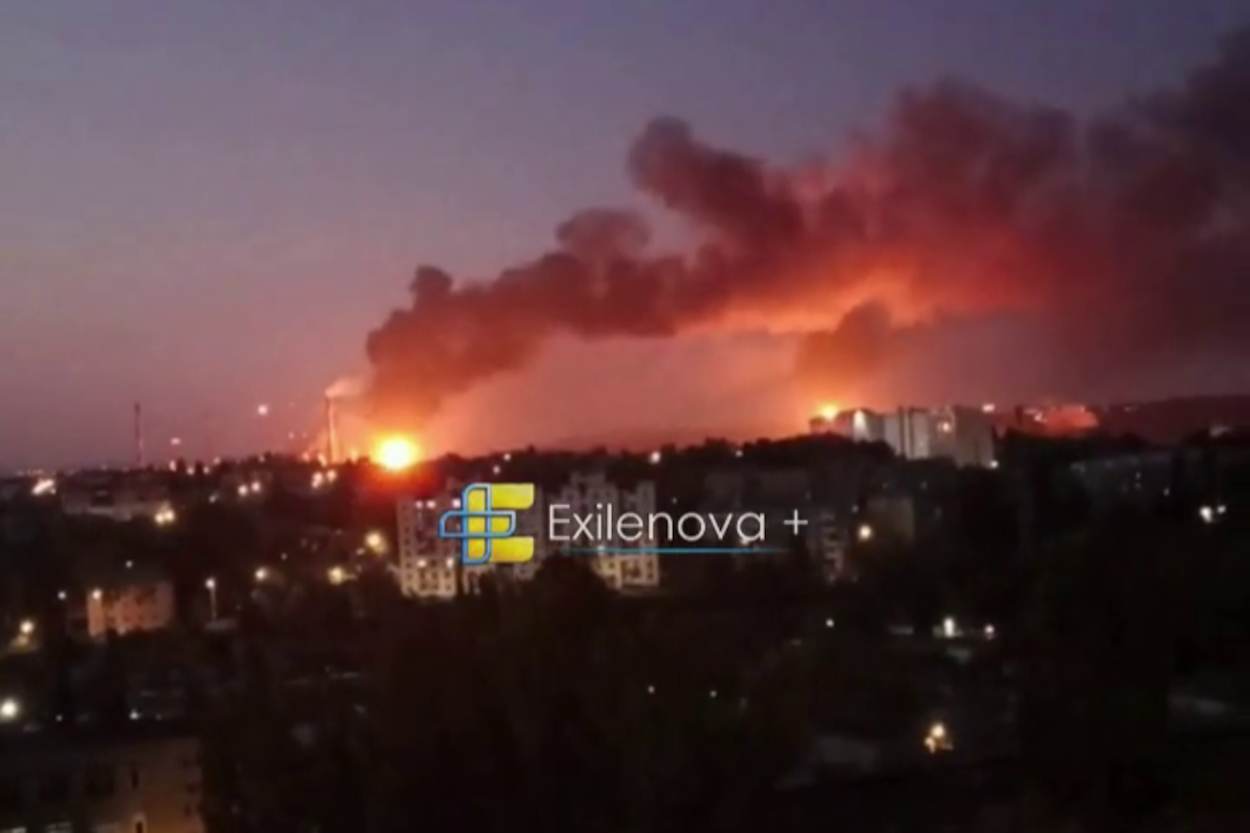
Ukrainian drones set the Afipsky oil refinery in Russia's Krasnodar Krai on fire again overnight on 6 November, Ukrainian Telegram channel Exilenova+ reported. Smoke from the plant drifted toward Krasnodar, while local authorities blamed falling drone debris for a fire at an unnamed enterprise. Explosions and power outages were also reported in neighboring Adygea and in occupied Crimea.
Ukraine has resumed its long-range drone campaign against Russia's fuel industry after a pause in late October, despite reports that Kyiv was told to spare refineries or lose US intelligence and arms. Each new fire tests how long Moscow can keep the plants that fuel its army running.
Fire at the plant, smoke over Krasnodar
Exilenova+ first flagged a likely attack on the refinery at 04:54 Kyiv time. Later, the channel posted footage of a fire on Krasnodar's outskirts, with the refinery burning in the background. It also said new waves of drones were coming in. Radio Svoboda geolocated witness footage of the fire to the refinery. It puts the plant's declared capacity at more than 9 million tons of fuel and other products a year.
Photos Exilenova+ shared on X show fire glowing in the dark and smoke at dawn.
Afipsky oil refinery got attack. pic.twitter.com/6NNTThNZim
— Exilenova+ (@Exilenova_plus) November 6, 2026
Russian news Telegram channel Astra wrote that there was no official confirmation of a hit on the refinery. Residents described explosions, air defense fire, and smoke reaching the city's outskirts. Russia's aviation agency also restricted flights at Krasnodar airport.

Russia blames debris again
Krasnodar Krai's operational headquarters claimed that falling drone debris started a fire on the grounds of "one of the enterprises" in the township of Afipsky, Seversky district. Its statement did not name the plant. It said no one was hurt and that drone fragments broke windows in an apartment in a low-rise block.
Russia's Defense Ministry claimed its air defense downed 142 Ukrainian drones overnight. It listed Kursk, Belgorod, Tula, Oryol, Rostov, and Astrakhan oblasts, Moscow Oblast, Krasnodar Krai, occupied Crimea, and the Black and Azov seas. Footage Exilenova+ posted after sunrise shows the smoke rising above the plant.
Afipsky pic.twitter.com/5e88RxmW6W
— Exilenova+ (@Exilenova_plus) November 6, 2026
Explosions in Adygea, blackouts in occupied Crimea
Explosions were reported elsewhere overnight too. Exilenova+ reported fires after explosions in Adygea, a Russian republic surrounded by Krasnodar Krai. Ukrainian Telegram channel Supernova+ claimed there were reports that a site of Ozon, a Russian online retailer, was hit there. Drones set an Ozon logistics center in Adygea's Adygeysk on fire two nights earlier.
Occupied Crimea lost power again. Telegram channel Krymsky Veter cited subscribers who heard two powerful blasts in Dzhankoi district and two in Feodosiia, where power partly went out. Another subscriber heard eight distant explosions from the direction of Simferopol's Tavriiska thermal power plant, followed by a full blackout in the city's Mariine neighborhood. By morning, Sevastopol lacked electricity, trolleybuses stopped in Simferopol, and trams halted in Yevpatoriia. The occupation's power company, Krymenergo, blamed an accident on trunk lines without saying where, the channel noted.
Ukraine says its strikes have knocked out more than 51% of Russia’s oil refining capacity
A plant the drones keep coming back to
The refinery sits about 20 km southwest of Krasnodar and about 360 km from the front line. It can process about 6.25 million tons of crude a year. Drones returned to the plant, one of southern Russia's largest, in June, and in July it was one of two refineries struck in a single night. By late August, it had burned for the fifth time this year, with Russia again citing debris.
The damage goes well beyond one plant. By late September, Ukrainian strikes had knocked out 15 of Russia's 38 major refineries and forced 12 more to cut output, Ukraine's military intelligence (HUR) said. Refining at those plants fell 55.4% compared with the start of the year, by HUR's count.
With refineries and fuel depots in the same krai hit again and again, Russia's southern fuel network has to repair the same plants over and over.
Read also
-
Ukraine keeps hitting the fuel that Russia’s war runs on. Its latest target is the Slavyansk-EKO refinery, with an annual processing capacity of at least 3 million tonnes
-
Drones hit fuel depots in Sochi and an explosives plant 1,300 km away on the same night
-
Moscow trains its military pilots at Khanskaya. Locals report a fire there after drones attacked overnight
