An overturned draft-office car is no longer news in Ukraine. This one was different for the place, and for the response. It happened in Lviv, the heartland of the war effort, and within a day, two of Ukraine’s own oversight officials had blamed not the crowd but the government for a mobilization system it deferred fixing for years and has only begun, haltingly, to reform.
The standoff ran about five hours, into the early hours of 9 July.
On the evening of 8 July 20
An overturned draft-office car is no longer news in Ukraine. This one was different for the place, and for the response. It happened in Lviv, the heartland of the war effort, and within a day, two of Ukraine’s own oversight officials had blamed not the crowd but the government for a mobilization system it deferred fixing for years and has only begun, haltingly, to reform.
The standoff ran about five hours, into the early hours of 9 July.
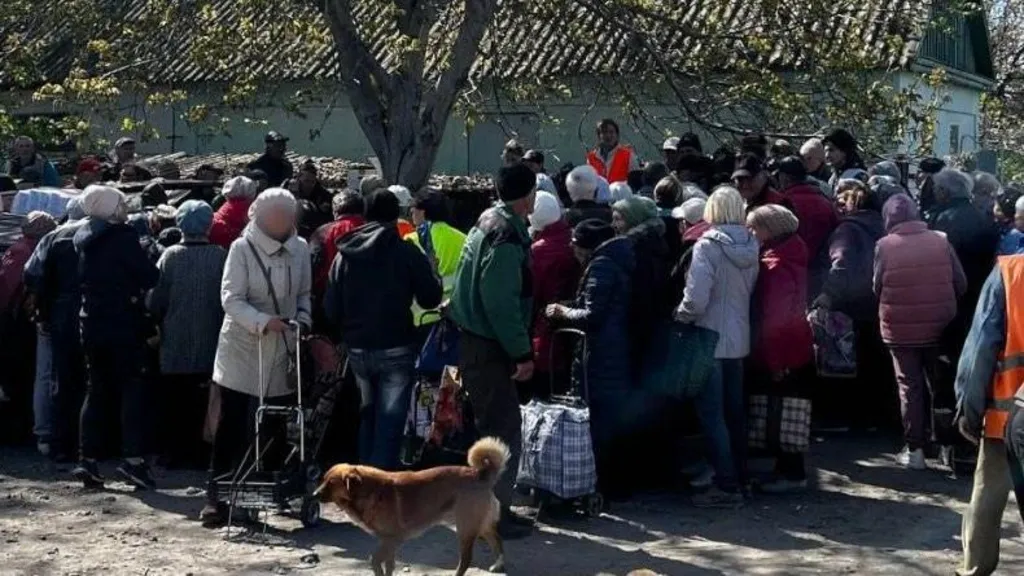
On the evening of 8 July 2026, a crowd of about 200 people in Lviv’s Sykhiv district blocked, smashed, and overturned a car belonging to the city’s territorial recruitment center, after draft officers stopped a man wanted since 12 June for dodging military registration, Lviv Portal reported. The standoff ran about five hours, into the early hours of 9 July; at least two servicemen were hospitalized with light injuries.
The friction is structural. Ukraine drafts about 30,000 men a month—only about half what the army needs, the secretary of parliament’s national-security committee, Roman Kostenko, told Radio NV—so the ranks are topped up by draft officers stopping men on the street, a system Euromaidan Press has argued was left broken because the hardest fixes were deferred.
Explore further
As Ukraine’s draft crisis erupts in Lviv, its own soldiers keep walking out
What happened—and what remains disputed
The recruitment center’s account, from deputy chief Petro Storozhuk at a briefing: draft officers checked the 30-year-old’s papers, found he was on a wanted list, offered to drive him in for a records check and a medical exam, and he got in—only then, they say, did an unknown group block the car and refuse to let it leave.
The district chief said that the footage was incomplete and out of context.
Accounts of how it started diverge. Eyewitnesses told NV the recruiters had beaten the man and dragged him into a minibus; one widely shared clip—which Euromaidan Press has confirmed was filmed at the scene, though not what led up to it—appears to show a recruitment officer getting out of a car and punching a man, The Ukrainians reported.
The district chief said that the footage was incomplete and out of context, that the conflict had begun earlier off-camera, and that, as he saw it, the officer was defending himself; police will make the legal call.
Police said the gunman was a bystander who turned out to be an off-duty serviceman, firing to disperse the crowd, and that the shots hit no one.
Someone fired shots into the air during the fighting; police said the gunman was a bystander who turned out to be an off-duty serviceman, firing to disperse the crowd, and that the shots hit no one, spokeswoman Alina Podreiko told Tvoemisto.
Separately, how many were hurt across the night is disputed—the recruitment center said two servicemen; police reported four members of the security forces.
The 23-year-old charged over the assault on police, told the hearing that he is himself a soldier of the 53rd Separate Mechanized Brigade, absent without leave since February 2026.
Two inquiries followed: a criminal case against the crowd and a review of the officers’ own conduct. By midnight, the man the crowd had gathered to free was sent for a medical exam—in effect, mobilized.
The 23-year-old charged over the assault on police, named in court as Oleh Havrylov, told the hearing that he is himself a soldier of the 53rd Separate Mechanized Brigade, absent without leave since February 2026, formerly a drone operator near Kramatorsk—an account Euromaidan Press cannot independently verify. He faces up to five years.
Police mostly watched as the car was destroyed and sent no one to the next day’s briefing, even as a regional official praised their restraint, Focus.ua reported.
A flashpoint reaches the heartland
Anti-recruitment unrest is not new—a 2024 Kovel crowd that stormed a recruitment office, protests in Vinnytsia, and a wave of attacks on draft centers in early 2025. What is new is the address.
Lviv buries its war dead often and directs much of its budget into the army; its 58,000 residents in uniform make it one of the country’s most mobilized cities, said mayor Andrii Sadovyi, who called the scene “not yet a diagnosis but already a symptom” and noted Moscow most wants Ukrainians fighting each other.
Her team logged nearly 10 million mentions of mobilization in six months, most on Facebook and Telegram, plus AI-generated “soldiers” pushing Russian lines.
Russia has turned its information war from attacking politicians to wrecking the state’s ability to raise an army, wrote Olesia Horiainova, deputy head of the Ukrainian Security and Cooperation Centre. Her team logged nearly 10 million mentions of mobilization in six months, most on Facebook and Telegram, plus AI-generated “soldiers” pushing Russian lines in Ukrainian.
The negativity fills whatever vacuum the state’s silence leaves, she argues—so one clash reads as “total collapse” while the tens of thousands of quiet call-ups each month go unseen. The sharpest criticism, though, came from Ukrainian officials, not bots.
When the state steps back, others step in
As the state hesitated, others moved. A volunteer, Anton Petrivskyi, said he and “active residents” had tracked down participants and filmed their apologies—one pledging on camera to enlist—while withholding parts of the “conversation” so Facebook would not block it. The apologies were extracted not by the police, who were charging the same people, but by self-appointed enforcers.
People gather in Lviv’s Sykhiv district during a mobilization-related standoff on the night of 8 July 2026. Photo: Office of the Prosecutor General
Two watchdogs, one root
The state’s own answer came a day later, and in words. Condemnation ran from the top down: the head of the Office of the President, Kyrylo Budanov, warned that anyone who strips and beats a soldier of their own army should ask who will defend them tomorrow; the defense ministry called mobilization necessary but its methods in need of work, as LIGA reported.
The human rights commissioner, Dmytro Lubinets, urged the ministry to establish a working group to rewrite the rules.
The two officials whose job is oversight aimed higher. The human rights commissioner, Dmytro Lubinets, urged the ministry to establish a working group to rewrite the rules, warning that when reports of draft abuses go years without a legal response, trust erodes.
The military ombudsman, Olha Reshetylova, blamed the government and local authorities for never settling who stays in the workforce and who goes to the front. Reform has to start with the draft-exemption rules, she said—and she rounded on the politicians and media who exploit mobilization for clicks and stoke hatred of the soldiers who enforce it.
Ukraine did finally move: in 2026, it launched a personnel overhaul—new contracts, higher frontline pay, a phased path out for the longest-serving.
They point from opposite ends at the same gap. Ukraine did finally move: in 2026, it launched a personnel overhaul—new contracts, higher frontline pay, a phased path out for the longest-serving. Yet soldiers panned it as an illusory reprieve, months more service before a short deferment rather than a way home, Ukrainska Pravda reported.
What it has not touched is the recruiters’ side of the system—the street stops and unfixed exemption rules that put a crowd around a car in Lviv in the first place.
Mariam Lambert has received threats not only against herself, but against her husband and children as well. All because she helps bring home Ukrainians who were stolen by Russia.
Co-Founder and CEO of the Emile Foundation, Mariam Lambert. Source: X/Mariam__Lambert
Together with her foundation "Emil," she has already brought home 50 Ukrainian children. Yet the fate of adults with disabilities taken from psychoneurological boarding institutions in occupied territory remai
Mariam Lambert has received threats not only against herself, but against her husband and children as well. All because she helps bring home Ukrainians who were stolen by Russia.
Co-Founder and CEO of the Emile Foundation, Mariam Lambert. Source: X/Mariam__Lambert
Together with her foundation "Emil," she has already brought home 50 Ukrainian children. Yet the fate of adults with disabilities taken from psychoneurological boarding institutions in occupied territory remains unknown, even to those who work on this every day.
Lambert names at least four reasons why Russia is in no hurry to release them, and none of them have anything to do with the well-being of the children.
Among them: sexual crimes, using them (as slave work, basically) to assemble drones, fraud schemes involving disability payments, and a desire to cause pain to Ukraine. The foundation has documented cases where people with disabilities disappeared while under occupation, and one of them was found dead shortly after receiving an apartment from the state. People with disabilities, like children, are often vulnerable to various forms of manipulation.
The foundation also explains that by not releasing them from occupation, the invaders exert psychological pressure on Ukrainians in order to break their will to resist.
One mother's wait
Anna is one of the people the foundation supports. For five years, she has been searching for her son Anton, taken from the Oleshky boarding institution, without a single confirmed answer as to whether he is alive.
"Just give me some kind of documentary proof that my son is alive," says Anna, mother of Anton, who was taken from the Oleshky boarding institution back in February 2022.
She is one of those whom the "Emil" foundation has been helping for several years now. Anna looks like a strong woman fighting for justice, but the moment the conversation turns to her son, tears appear in her eyes, and her gaze reveals an exhaustion she can't hide.
The image shows Anna, whose son has been stolen by the Russians. Source: Emil Foundation
We talked with her about her son, whose life depends on a device implanted in his head, and about an image that shows something has gone wrong.
Who were you before you became this child's mother?
Anton was a very long-awaited child, because I'd had a miscarriage before. During the pregnancy, I wanted to be a good wife and daughter-in-law to my mother-in-law. I was 19. Instead of just resting when I was hospitalized to preserve the pregnancy, I would get up and go home, because I had to be good.
It happened to be Easter, and my husband and I argued. I was crying, and then I felt my water break. That was at 34 weeks. I didn't carry to term by a month.
Tell us about Anton. What was he like, and how did he end up in Oleshky boarding institution?
Anton was already an adult, 18 or older, when he was taken. Under Ukrainian law, he isn't a child, but essentially, he has the same level of mental capacity as one.
The image shows Anton, who was stolen by the Russian forces in 2022. Source: Anna's personal archive.
Until he was 14, he was raised in the family. He had a birth injury that led to a neuroinfection, causing fluid to build up inside his skull, a condition known as hydrocephalus. To drain that fluid and relieve the pressure, doctors installed two shunts, thin tubes, into the ventricles of his brain. Then he started school, but he suffered several leg fractures, so he spent most of his time in a wheelchair. He's heavy, and I injured my back twice lifting him. He was constantly undergoing anticonvulsant therapy. Plus, I have a daughter. When I was working with coal briquettes, he used to come with me.
I realized I simply couldn't manage on my own. Anton needed specialists nearby, educational services, and socialization. So the Oleshky institution was ideal and only 15 minutes away by car.
How did war begin for you and for Anton?
During the war, Oleshky, located on the left bank of Kherson, was occupied literally in the first days of the war. By March, fighting was already happening at the Antonivka Bridge, and it was bombed. Fighting continued constantly.
Honestly, I'll tell you, when the war started, for the first three days I thought it was some kind of joke. This could not be happening.
What was Anton like at home, day to day? How did he communicate with family?
He recognized me. His emotional development was appropriate for his age, but his self-care skills were at the level of a 2 to 3-year-old. He knew everyone: mom, dad, grandmothers, sisters, and brothers. He could name everyone from a photograph. But Anton couldn't read or write. He called me mom. He communicated very clearly and formulated his thoughts correctly. He understood jokes.
What about his health? What examinations and treatment did he need?
We were hospitalized every three months, and a neurosurgeon checked how the shunts in his head were functioning. We always did an MRI or CT scan of the brain. A neurologist was mandatory, along with massage therapy and physical therapy, and a gastroenterologist was mandatory too, because sitting so much gave him intestinal problems. So I have a lot of questions about his current condition.
His favorite food was meat, salted pork fat, and onion. We used to joke that he could eat a whole onion like it was an apple.
How did he adjust to life at institution? Was it hard to leave him there?
When I brought him back from the home, he never had tantrums. He would greet everyone and laugh. In the first month, I was told not to take him out so he could adjust.
During those months, I made surprise inspection visits: I would show up, watch quietly, and listen. I needed to be sure he was doing well there.
We would take him out on weekends, holidays, and during the summer, to the sea or the river. If I couldn't manage it, his grandparents would pick him up in their own car.
How did Anton get along with people at the Oleshky institution?
He made friends very easily. He could drive the caregivers crazy, but then immediately say, "You're my good one, I love you." But when his head hurt, he'd get on everyone's nerves. On my hard days, he would cuddle up to me, hug me, and comfort me.
What was institution itself like overall?
The Oleshky institution was actually good because it took an individual approach to each resident. The caregivers didn't just sit them in a corner or sedate them with medication. They kept each person occupied according to their abilities. There was friendship among the residents, too, and love.
When did you last see Anton?
The last time I saw Anton was before New Year's in 2021, during COVID. At that time, residents couldn't be taken out due to quarantine.
If I saw him now, the first thing I'd do is hug him and look into his eyes to understand what he's feeling.
You said you learned to recognize the smallest changes in him. What do you mean?
I learned to notice microexpressions, tiny changes. He had a very high pain tolerance. But I could tell when something hurt him, even when people around him didn't notice. When he started saying or screaming that something hurt, that meant an ordinary person would already be dying from pain shock. That's how much he could endure.
Is there something you'd want him to know right now?
I would really want him to be constantly told that he has a mother who loves him and is waiting for him.
What has Anton taught you?
It was he who opened up the world to me. Thanks to him, I got an education. Thanks to him, I left Kherson Oblast for the first time. That is, he needed treatment, so I traveled.
Thanks to him, I became the head of a public organization that supports families raising children with disabilities. We ran major projects on a city-wide scale in Kherson.
Thanks to Anton, I got a second degree, in psychology, because I wanted to understand, to figure out what was going on and how. Anton taught me to see the person, not the disability. He taught my daughter to be empathetic.
They grew up almost like twins. There's a year and seven months between them. When she started walking, he started walking too. When she started talking, he followed, talking too. She also picked up that trait of not seeing disability in people. We see so many traumatized veterans now, and she knows how to find an approach that works with almost anyone.
She knows how to care for someone without overstepping boundaries. She knows when to help and when to step back, so as not to do someone a disservice.
We went everywhere together. We traveled together everywhere.
I mean, I'd drive, my husband would be off on work trips, and I was constantly with the kids, both of them, going everywhere. We went to cafés together, to the sea together, on trips together, absolutely everywhere together.
Thanks to him, I now travel to India. I know that's not okay to say, but if we're talking about what Anton has done for me, it's thanks to him. I've been to India. I spoke at a rally in the Netherlands and was featured in international media. We've worked with Reuters and the Guardian; there were conferences there, too.
What do you think needs to happen for child like Anton to come back?
Someone needs to do it, a man or a woman, I don't know. But that person will hear and find the right lever to pull. By speaking publicly, I'm doing it for the sake of one person who could influence Anton's return. Because I have no documentary confirmation at all of where he is, what's happening to him, or how he is. There are only guesses.
Why do you think Russians aren't returning all children?
I think it's about some fraud involving disability payments. You can't put them in the army to fight. Maybe they're given housing or some certificates.
I think at the startб there was an element of propaganda, that they "saved" these children and adults from shelling. They took them, so to speak, out of "dangerous" Oleshky and moved them to "safe" Skadovsk. At first, that's really how it was, and that's even how they presented it.
What are you doing right now to try to bring your child back?
I'm working with the Emil foundations. We're constantly in contact with them. They conduct their own independent investigations.
I've written to our Ombudsman twice already. My first appeal was to Darya Herasymchuk. But she said at the time that it wasn't within her competence, since he was already an adult.
What's most absurd thing you've had to do while searching for your child?
The most dangerous thing I did was write to all my contacts from Oleshky. I understood at the time that I could be putting them in danger, because they were in occupied territory and could get in trouble for having ties to Ukraine. I gave out my own contact information and sent out messages like that. Those actions could have hurt me, too, but at the time, it seemed like the best thing to do, to find out anything at all.
What's something people say to you, thinking it's support, but it actually isn't?
People have told me it's my own fault, that I'm the one who put Anton in the institution. Also, the phrase "hang in there, everything will be fine" really irritates me. I always say, either help or just be quiet, don't get involved. If you know of any ways or contacts that could be useful, please point me to them. If I had tried to get Anton out of occupied territory myself, both of us could already have ended up shot in the head.
I really want to see a video or photo of Anton. Just give me some documentary proof that my son is alive and that it's really him.
Wherever he is, he needs to be under medical supervision. He has a condition that requires constant monitoring.
If his pressure rises, fluid builds up on the left side. Ideally, he'd need to have the shunt in his brain replaced and a different pump installed. That operation could lead to unknown consequences. We used to manage him with diuretics. In the last photos I saw from the occupation, his left eye was already rolled back, one of the markers of elevated pressure.
What surprises you about yourself? What has changed in you since he disappeared?
Feelings of pity, resentment, and injustice have transformed into anger. The inaction of both the Ukrainian and Russian authorities angers me.
There were soldiers stationed on the grounds of the institution. They set up command posts there. That's exactly the kind of thing they do, hiding behind children because they knew that as long as the children were there, Ukraine wouldn't strike.
The facility was fully adapted for living, with laundries and elevators, because it was genuinely designed to be accessible to people with disabilities. It was very convenient for them. As long as the children were there, that whole area wasn't shelled by Ukrainian forces at all.
The Russians took the caregivers with them. Some were taken by force, and some went along with the occupation voluntarily. You don't really argue with someone holding a gun. Some of them, as far as I know, were taken to Penza.
I understand Anton was taken away in February. How was he transported, and in what condition?
Once he stumbled and fell. He started having seizures. I immediately said, "Girls, he's broken his leg." They said, "No, we checked, we don't see anything." We went to the Oleshky hospital. They didn't see anything there either. But I could just tell that something wasn't right. We went to another hospital, and it turned out a small bone had actually cracked. He also needed to take calcium along with a medication that helps it be absorbed, as well as anticonvulsants. He also couldn't take medications containing caffeine.
I have two thoughts that fight with each other: I understand I really want him to be alive. But on the other hand, I understand that if he's suffering, maybe it would be better if he weren't alive.
What would you want Ukrainian authorities to do?
I want them to send inquiries directly to these institutions. In my second appeal, I wrote explicitly where, according to my information, Anton might be. I asked them to make an official request there, because they have resources hundreds of times greater than mine.
So I speak with anyone who offers me an interview. I think that maybe I won't get through by quality, but perhaps by sheer quantity, that I'll become such a familiar face to them that they'll give me some information just to get me to stop.
The Ukrainian side hasn't given me any updates at all.
Does Ukrainian government give you any feedback at all?
None at all. It's occupied territory. There's no way I can get in there myself. The state has far greater resources to use different channels. The last time I contacted the Ombudsman's office was two months ago.
The first visit to the Ombudsman's office was chaotic and produced no results.
I was invited to come in person after a phone call from a "hotline," and was promised that a power of attorney would be arranged for a third party to negotiate my son's return. But once there, it turned out the staff member handling my case had already quit, and the other employees were "out in the field." I received no concrete help at all, just bureaucratic confusion.
Then I filed an appeal with specific information from the Emil Foundation, obtained through Sashko Danylchuk, a former prisoner of war who had seen her son Anton. In that appeal, I asked them to officially verify this information and confirm whether my son is alive or not.
The result of that second appeal was complete silence. I never received any response, confirmation, or denial of the information from official authorities.
As a result, as a private individual, I'm essentially left completely alone in the search for my son, without any institutional support, and without confirmation or denial of the information I only receive through public foundations.
It's now the fifth year, and I still cannot get confirmation on whether Anton is alive.
Why do you think they're staying silent? Is it just disorganized work?
My view is that from the very beginning, the work has simply been organized incorrectly for cases like the one at the Oleshky institution. Right now, each case is handled separately, but there should be a single collective complaint covering the entire institution. What's happening now is that my child was taken from me, and I'm left to search for him myself.