
 Connexion
Ukraine says drones hit Russia’s gas heartland over 3,000 km from its border—a wartime record
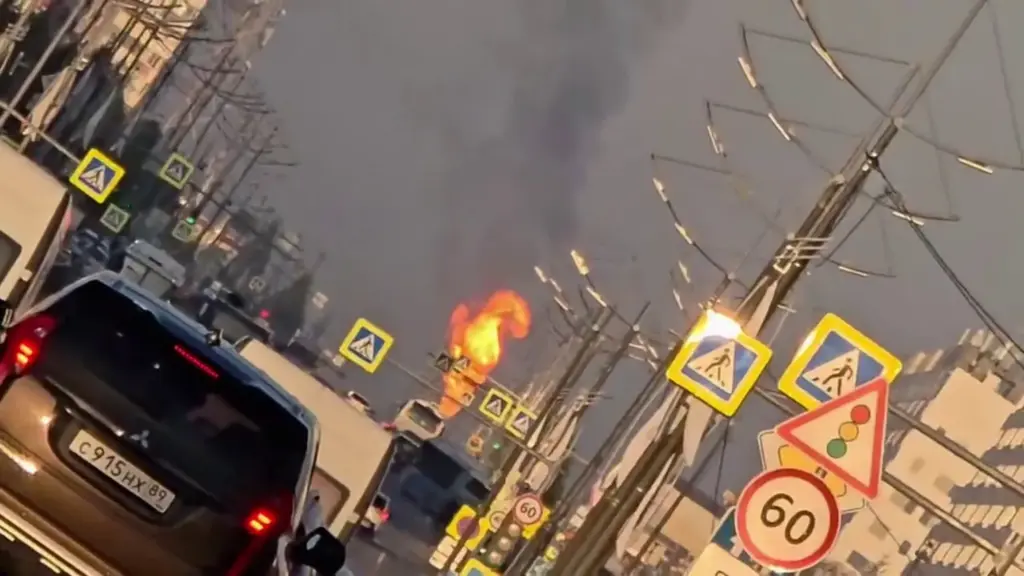
Ukraine's Special Operations Forces (SSO) said the 9 September operation struck the Purovsky and Novy Urengoy gas processing plants in the Yamalo-Nenets Autonomous Okrug.
Kyiv's earlier energy campaign concentrated on oil refineries and export hubs in western Russia. The new operation shifts the target set toward Siberian gas processing and challenges the protection once provided by distance, although its effect on production remains unknown. The SSO said drones operated by its Deep Strike units traveled more than 3,000 kilometers, making the operation Ukraine's deepest strike of the war.
Both the Purovsky and Novy Urengoy plants feed Russia's fuel and petrochemical industries. Ukraine's broader deep-strike campaign aims to cut the revenue and supplies sustaining Moscow's war.
Fire Point, the Ukrainian manufacturer of the FP-1, identified the drones as FP-1s and put the distance to the Novy Urengoy plant at more than 3,200 kilometers. The company reported a hit on the plant grounds but did not describe the damage.
Russian authorities have not confirmed the full Ukrainian account. Yamalo-Nenets Governor Dmitry Artyukhov said Russian forces had repelled the attack, according to The Times. Falling drone debris nevertheless caused a fire at an industrial facility in Novy Urengoy, he said.
Artyukhov reported no injuries but did not identify the facility. Russian officials have not acknowledged any strike on Purovsky.

Fire Point put the Novy Urengoy plant's annual design capacity at up to 19.5 million metric tons of raw material.
CyberBoroshno, a Ukrainian group that analyzes public imagery and data, said the strike hit a gas-processing unit at Gazprom Processing's Urengoy plant. Dnipro OSINT shared the analysis.
Gas condensate is a liquid produced alongside natural gas. The reported target separates ethane-rich gases from it. Those gases can be used to make polyethylene, a common plastic. CyberBoroshno said damage to the unit could disrupt supplies to a nearby chemical plant. Neither its identification of the unit nor the extent of the damage has been independently verified.
At Purovsky, the SSO reported damage but did not identify the equipment hit. Owned by Russian gas producer Novatek, the plant processes condensate into fuels and raw materials for the petrochemical industry. It processed 13.4 million metric tons in 2025, according to the SSO.
The effect on production at either plant remains unknown, as does whether any damage will be lasting.
The wider campaign
Ukraine's deep-strike units repeatedly struck Novatek's Ust-Luga gas-condensate complex on the Baltic Sea. Ukraine says drones hit two Siberian gas plants over 3,000 km from its border earlier in 2026. The facility processes stabilized gas condensate and has a design capacity of over 6 million metric tons a year, according to the General Staff.
A 31 March attack briefly halted port operations, while the 14 August strike was the sixth attack on the port that year. Ukraine has not disclosed how much production those attacks disrupted.
