Vue normale

  • ✇Euromaidan Press
  • Two officers, 101 soldiers—Ukraine’s newest homecoming from Russian cells
    Ukraine has brought another 103 servicemembers home from Russian captivity in the first stage of a new prisoner exchange, the Coordination Headquarters for the Treatment of Prisoners of War reported on 19 August 2026. Most of the returning defenders are wounded or seriously ill after captivity that, for some, reached back to 2022, the year of Russia's full-scale invasion. The United States and the United Arab Emirates helped organize the swap, the headquarters said. Ami
     

Two officers, 101 soldiers—Ukraine’s newest homecoming from Russian cells

19 août 2026 à 10:40

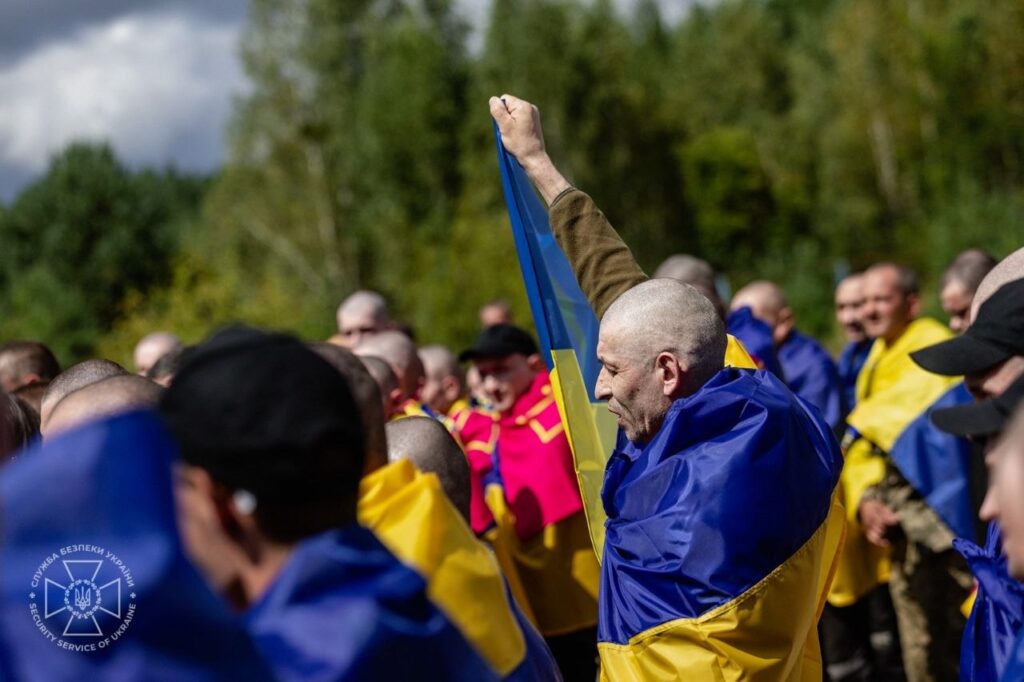
two officers 101 soldiers—ukraine's newest homecoming russian cells · post freed ukrainian defender raises fist among fellow released captives wrapped national flags 19 2026 4 pow exchange sbu5199714552638020898 ukraine news

Ukraine has brought another 103 servicemembers home from Russian captivity in the first stage of a new prisoner exchange, the Coordination Headquarters for the Treatment of Prisoners of War reported on 19 August 2026. Most of the returning defenders are wounded or seriously ill after captivity that, for some, reached back to 2022, the year of Russia's full-scale invasion. The United States and the United Arab Emirates helped organize the swap, the headquarters said.

Amid Moscow's full-scale invasion, prisoner swaps have become one of the few channels that still functions between Kyiv and Moscow, and each one hinges on how many enemy captives one side can put on the table for the next round. Thousands of Ukrainian soldiers and, separately, civilians remain in Russian hands, and each release still returns only a fraction of the people whose families are waiting for them.

Who came home

The freed group covers nearly every branch of Ukraine's forces. It includes members of the Armed Forces, the Navy, Territorial Defense, the National Guard and the State Border Guard Service. Alongside soldiers and sergeants, several officers were released.

The SBU said the return of the 103 Ukrainian defenders was coordinated by the Joint Center for the Search and Release of Prisoners of War, the Coordination Headquarters for the Treatment of POWs, and other authorized agencies.

📹SBU pic.twitter.com/nr5VabHYtQ

— Euromaidan Press (@EuromaidanPress) August 19, 2026

The Coordination HQ detailed the composition. The Defense Ministry accounted for 92 of those freed, and the Interior Ministry for 11. Two of the returnees are officers, the rest enlisted personnel and NCOs. Interior Minister Ivan Vyhivskyi said his ministry's 11 broke down into five National Guardsmen and six border guards.

The defenders had been captured across the Donetsk, Luhansk, Kharkiv, Zaporizhzhia, Dnipropetrovsk, Kherson and Sumy directions, as well as at Mariupol. The single largest share, 72, fell on the Donetsk front. The youngest freed defender was born in 2000, and the oldest is 59.

two officers 101 soldiers—ukraine's newest homecoming russian cells · post freed ukrainian prisoners war officials pose military flags after returning captivity 19 2026 1 pow exchange sbu5199714552638020893 ukraine news reports
Freed Ukrainian prisoners of war and officials pose with military flags after returning from Russian captivity, 19 August 2026. Photo: Security Service of Ukraine

Years behind Russian bars

The captures span the entire full-scale war. One of those freed had been held since 2022, 16 since 2023, and 48 since 2024. Another 31 were seized in 2025 and seven this year. By the same tally, the International Committee of the Red Cross had confirmed the captivity of 102 of the group before the handover, with a single case verified through other sources.

A previous swap in late June returned 160 defenders, all of them held since 2022.
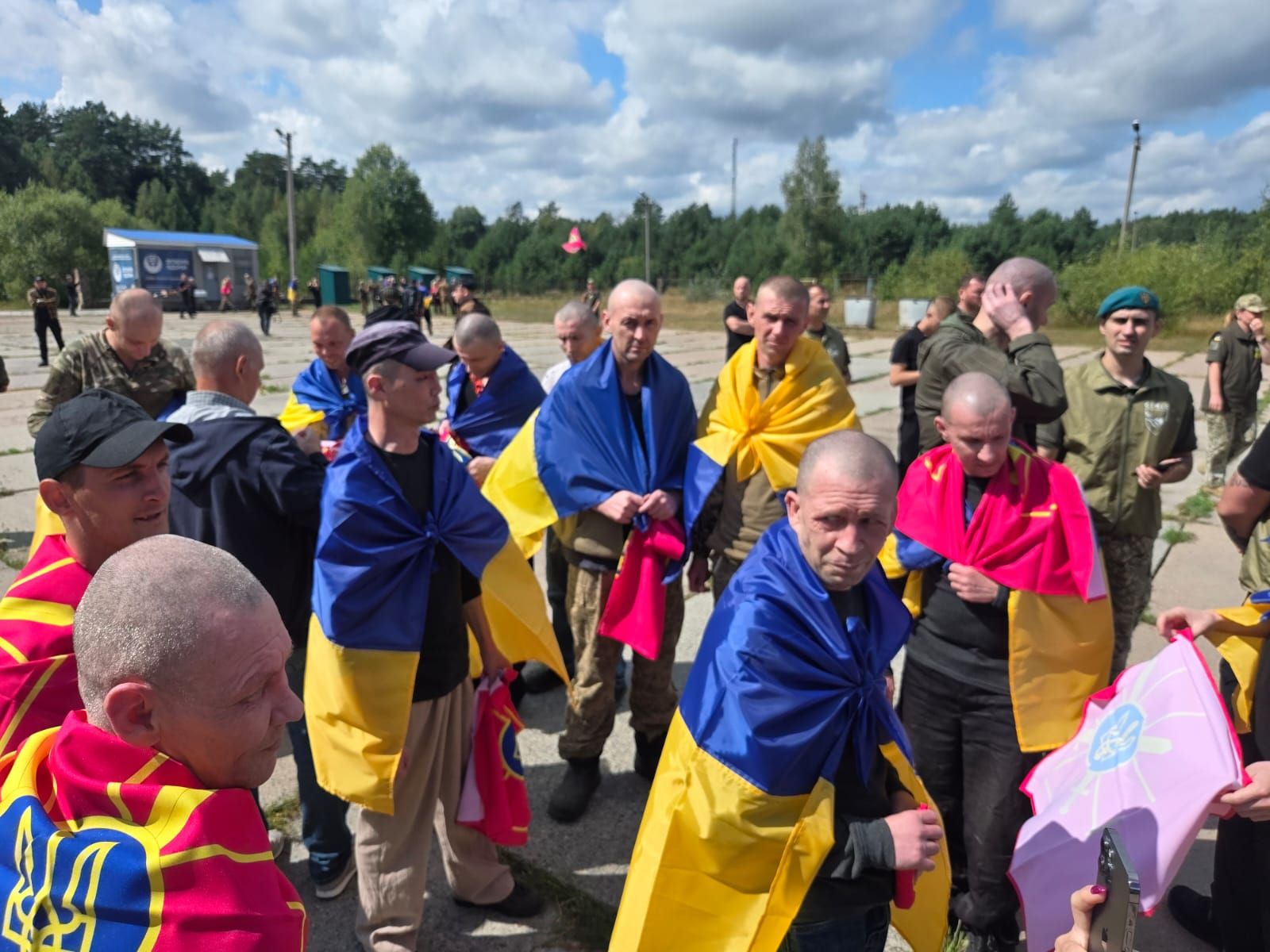
two officers 101 soldiers—ukraine's newest homecoming russian cells · post freed ukrainian servicemen wrapped national flags gather after returning captivity 19 2026 5 pow exchange координаційний штаб ukraine news reports
Freed Ukrainian servicemen wrapped in national flags gather after returning from Russian captivity, 19 August 2026. Photo: Coordination Headquarters for the Treatment of Prisoners of War

Wounded and ill

The released defenders will undergo full medical examinations, receive physical and psychological rehabilitation, and obtain the state payments provided by law. The head of the President's Office, Kyrylo Budanov, said doctors were already doing everything necessary for the returnees, most of whom came back with wounds and serious illness.

Their condition fits a wider pattern Ukrainian officials have described, in which Russia starves most captives and executes many surrendered soldiers on the battlefield.
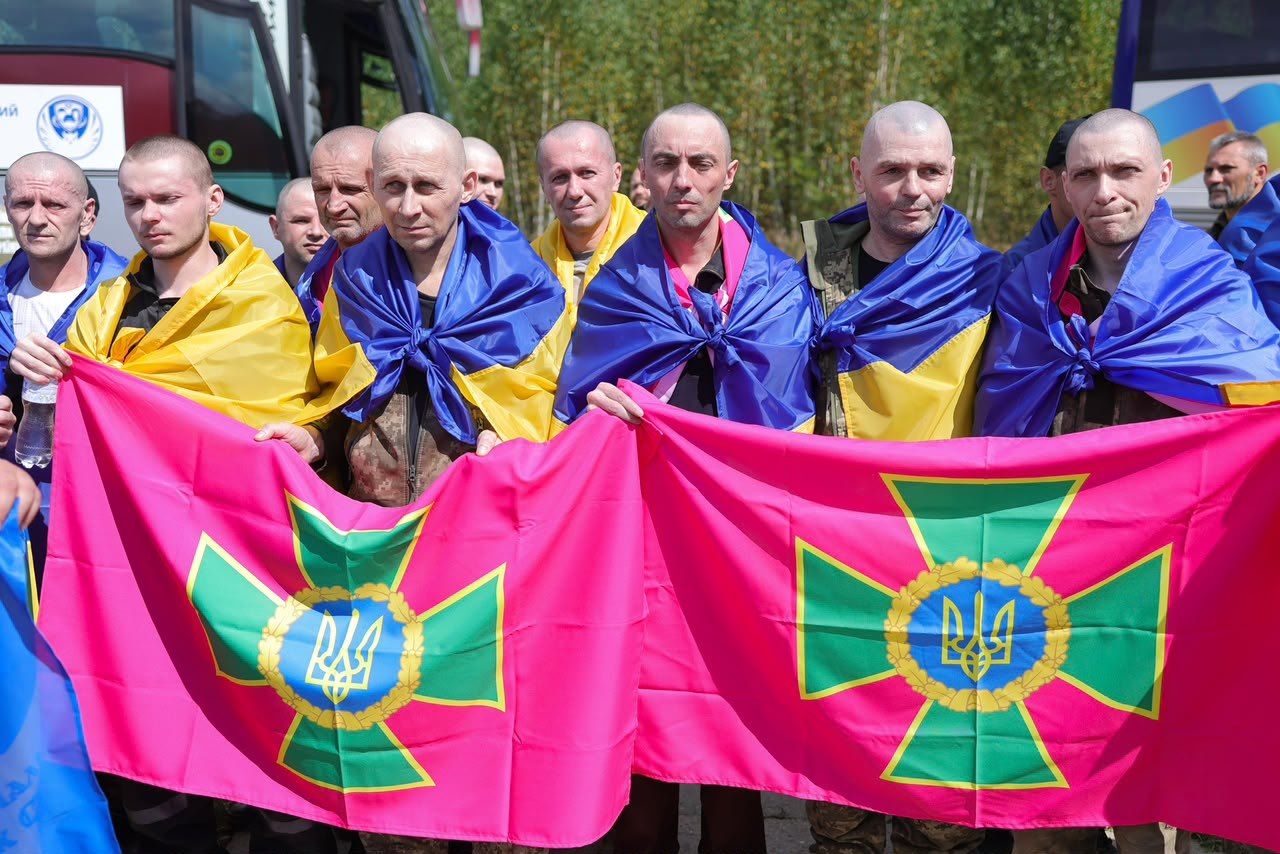
two officers 101 soldiers—ukraine's newest homecoming russian cells · post released ukrainian defenders hold state border guard service flags after return captivity 19 2026 2 pow exchange іван вигівський мвс5199720694441253107
Released Ukrainian defenders hold State Border Guard Service flags after their return from Russian captivity, 19 August 2026. Photo: Ivan Vyhivskyi / Interior Ministry

"We remember everyone still in captivity"

President Volodymyr Zelenskyy said the freed included men who had defended Mariupol. 

"We remember every man and every woman still held captive. We are doing everything possible to bring all our people home," he said.

two officers 101 soldiers—ukraine's newest homecoming russian cells · post freed ukrainian servicemen wrapped national flags gather after returning captivity 19 2026 5 pow exchange координаційний штаб ukraine news reports
Freed Ukrainian servicemen wrapped in national flags gather after returning from Russian captivity, 19 August 2026. Photo: Coordination Headquarters for the Treatment of Prisoners of War

The Security Service of Ukraine noted the swap ran through the joint center it operates to coordinate the search and release of prisoners. Oleh Ivashchenko, chief of the Main Directorate of Intelligence (HUR) and head of the Coordination Headquarters, met the returning defenders in person. 

  • ✇Euromaidan Press
  • Operation Hell-2: Azov says it burned 4,221 tons of Russian fuel in occupied Donetsk Oblast
    The 1st Corps of Ukraine's National Guard, known as Azov, says it destroyed 67 Russian fuel tanks holding 4,221 tons of fuel in occupied Donetsk Oblast, in an operation it named Hell-2. The unit released video of the strikes on 17 August, saying it had spent a month tracking where Russian forces moved and stored the fuel before hitting it. Fuel is the blood of Russia's war, which is why its forces increasingly hide storage sites and route deliveries through improvised l
     

Operation Hell-2: Azov says it burned 4,221 tons of Russian fuel in occupied Donetsk Oblast

18 août 2026 à 11:27

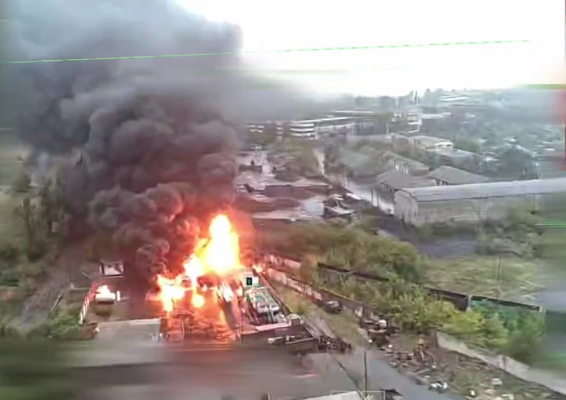
Aftermath of a strike on Russian fuel infrastructure during the Hell-2 operation in occupied Donetsk Oblast. 2026. Screenshot: National Guard of Ukraine

The 1st Corps of Ukraine's National Guard, known as Azov, says it destroyed 67 Russian fuel tanks holding 4,221 tons of fuel in occupied Donetsk Oblast, in an operation it named Hell-2. The unit released video of the strikes on 17 August, saying it had spent a month tracking where Russian forces moved and stored the fuel before hitting it.

Fuel is the blood of Russia's war, which is why its forces increasingly hide storage sites and route deliveries through improvised logistics hubs. Strikes on those hubs strip Russian units of what they need to move, supply, and fight. There have already been cases of Russian forces concealing fuel in grain trucks in occupied territories.

Azov warned the Russian forces before the strike

Azov says it flagged the fuel sites a month before hitting them, and struck when the Russians kept using them anyway.

“A month ago, we warned the occupier: ‘Azov sees your movements and will strike at the right moment.’ But some units of the Russian Armed Forces continued to store fuel in occupied Donetsk Oblast,” Azov said.

1 корпус НГУ «Азов» карає окупантів за спроби перевезення і зберігання військових вантажів. Задіяні у зберіганні та постачанні палива об’єкти росіян залишаються лише на картах, у реальності на їхньому місці – випалена земля. pic.twitter.com/FGgdn4J34k

— НГУ (@ng_ukraine) August 17, 2026

Azov emphasizes that it does not attack civilian gas stations or civilians. The operation targeted facilities used to supply Russian occupation forces. At the same time, according to Azov fighters, Russian military infrastructure remains a legitimate target.

The Russians didn’t get the message the first time

Hell-2 is likely a follow-up to the Hell operation, during which the first series of strikes, Azov also targeted the fuel logistics of Russian forces in occupied Donetsk Oblast.

On 12 July, Azov reported striking a secret Russian fuel base in Novoamvrosiivka. Drone operators from the 1st Azov Corps of the National Guard conducted reconnaissance and used Hornet drones to strike the facility. The strikes damaged fuel tanks and the base’s infrastructure and blocked the railway track.

According to the report, the Russians used the facility as a logistics hub to supply their occupation forces. After the strike, they were forced to abandon the base and move their logistics operations from the occupied territory into Russia.

❌