Vue normale

Reçu — 6 juillet 2026 Euromaidan Press
  • ✇Euromaidan Press
  • Putin says Russia is 10 kilometers from Sumy. Real distance shows how Kremlin manufactures collapsing front
    Russian ruler Vladimir Putin claimed in late June that his forces are "just over 10 kilometers" from the city of Sumy in Ukraine. The figure corresponds to nothing on the map, ArmyInform reports. Ukraine's Defense Forces have held Russian troops more than 20 kilometers from the regional center for over a year, and according to DeepState, Russian advances over that year measured in hundreds of meters, not kilometers. Near one village of Kindrativka, Ukrainian forces even pus
     

Putin says Russia is 10 kilometers from Sumy. Real distance shows how Kremlin manufactures collapsing front

6 juillet 2026 à 13:59

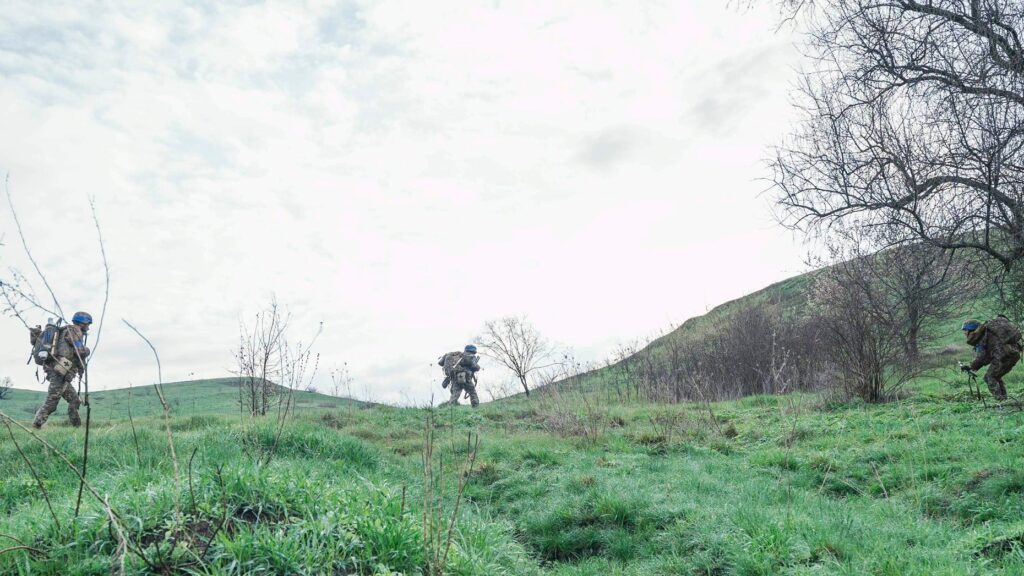
The 79th Air Assault Brigade is defending Sumy.

Russian ruler Vladimir Putin claimed in late June that his forces are "just over 10 kilometers" from the city of Sumy in Ukraine. The figure corresponds to nothing on the map, ArmyInform reports.

Ukraine's Defense Forces have held Russian troops more than 20 kilometers from the regional center for over a year, and according to DeepState, Russian advances over that year measured in hundreds of meters, not kilometers. Near one village of Kindrativka, Ukrainian forces even pushed the occupiers back toward the border.

The claim is significant because it illustrates how the Kremlin uses exaggerated battlefield narratives to shape perceptions of the war. 

Sumy city sits about 24 kilometers from the Russian border. The deepest Russian penetration into the oblast — near villages of Hrabovske and Myropilske — reaches roughly three to four kilometers inside it, according to a Ukrainian military personnel representative.

How line got there, and stayed there

Russia's push into Sumy Oblast began in the spring of 2025, after the collapse of Ukraine's Kursk salient freed Russian units to attack across the border. By late June 2025, Ukrainian forces had halted the advance and dug in along the four village line along the border. 

The front runs near those same settlements today. Russia has not attempted a broad offensive push since.

What it has done instead is claim ground it does not hold. On 24 June, after Russian channels announced the capture of the village of Ivolzhanske, Ukraine's Group of Forces "Kursk" refuted the report, calling it the work of Russian staff officers who pick Ukrainian unit names at random and draw offensive arrows across maps. The only territory Russia reliably controls, the statement noted, is "their own news feed."

Putin's Sumy claim fits a pattern the Institute for the Study of War has documented all year: inflated battlefield announcements timed to convince Western audiences the front is collapsing when it is not.

He attempted to use it as useful leverage as talks over how the war ends grind on, and Moscow refuses to freeze the current line.

What Russia is actually doing

Through 2026, Russia has traded broad assault for attrition and infiltration. Small groups of infantry probe routes rather than storm them. Artillery is used less, while FPV and reconnaissance drones are used more. The tactic is expensive. Ukrainian drone crews engage the groups within minutes of their emergence.

"They come out and die in about 10 to 15 minutes," the drone commander said in April.

DeepState and ISW both assess that the activity, while real, amounts to no operational breakthrough.

The wider arithmetic matches. ISW assessed on 1 July that Russian forces seized just 30 square kilometers across all of Ukraine in June 2026, which is sixteen times less than in June 2025, at nineteen times the casualties per kilometer. The spring–summer offensive has produced no operationally significant gains anywhere on the front.

Sumy city remains under regular Russian air attack, with guided bombs and drones striking the regional center and communities across the oblast. But the ground threat Putin described does not exist at the distance he named. In a year, the map moved by meters, and in one place, it moved the other way.

  • ✇Euromaidan Press
  • Poland’s military expansion reveals the gap between ambition and battlefield readiness
    If Russia attacked Poland today, only two of the country's six army divisions could enter combat within seven days, Rzeczpospolita reported, citing Polish military sources. The other four range from partially staffed to still forming. And Poland would go to war, the paper noted, without most of the modern equipment it has ordered but not yet received. Poland's rearmament is the most serious in Eastern Europe, and it is real — Abrams and K2 tanks, Patriot batteries, HIMARS,
     

Poland’s military expansion reveals the gap between ambition and battlefield readiness

6 juillet 2026 à 06:45

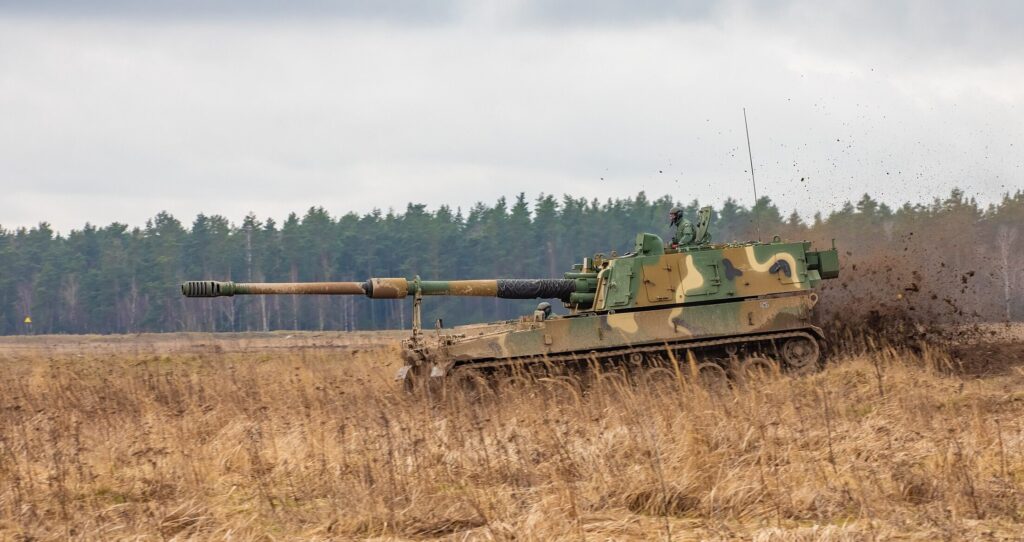
south-korean made polish self-propelled howitzer k9

If Russia attacked Poland today, only two of the country's six army divisions could enter combat within seven days, Rzeczpospolita reported, citing Polish military sources. The other four range from partially staffed to still forming. And Poland would go to war, the paper noted, without most of the modern equipment it has ordered but not yet received.

Poland's rearmament is the most serious in Eastern Europe, and it is real — Abrams and K2 tanks, Patriot batteries, HIMARS, six divisions on paper. But procurement and readiness are not the same thing. Under the classification set by the chief of the General Staff, General Wiesław Kukuła, who warned in November 2025 that the enemy has begun preparing for war, the 16th and 18th Mechanized on the eastern border are Tier 1, able to deploy within seven days.

Two new eastern divisions, the 1st and 8th, are still forming. The two western divisions, the 11th and 12th, based near the German border, far from the Russian threat axis, sit in between: cadre-staffed, needing up to 30 days to fill their ranks and fight, and last in line for modern kit.

One caveat the reporting is careful about: only the 18th's Tier 1 status, and the 1st and 8th as Tier 3 appear in open documents; the 16th's first-echelon ranking rests on Kukuła's public remarks, and placing the 11th and 12th in Tier 2 is Rzeczpospolita's own analysis, not a public defense-ministry classification.

Division Tier Readiness Primary armor
16th Mechanized (east) 1 Within 7 days K2 (incoming)
18th Mechanized (east) 1 Within 7 days Abrams
11th Armored (west) 2 (assessed) Up to 30 days Leopard 2
12th Mechanized (west) 2 (assessed) Up to 30 days PT-91 / T-72
1st Infantry (new, east) 3 Still forming PT-91 (interim)
8th Infantry (new, east) 3 Still forming TBD

The 12th Division: Poland's most neglected formation

The 12th Mechanized Division in Szczecin is, by Rzeczpospolita's analysis, the most neglected formation in Poland's land forces. Its single tank battalion, in Czarne, fields a mix of PT-91 Twardy and T-72s dating back to Soviet-era designs — an authorized strength of 58 tanks, the lowest count of any Polish formed division. Its five mechanized battalions still ride BWP-1 infantry fighting vehicles; its rocket artillery runs WR-40 Langusta and BM-21 launchers while even the neighboring 11th Division's artillery regiment already takes delivery of Korean Homar-K.

Neither the K2 tanks going to the 16th Division nor the Abrams going to the 18th include the 12th, and the PT-91 is slated to end its Polish service mainly as opposition-force equipment — simulating enemy armor in exercises — which says little good about the future of the 12th's one tank battalion.

One sign of modernization did arrive. In December 2025 the division's 5th Artillery Regiment in Sulechów received its first Gladius reconnaissance-strike drones. Drone integration at the artillery level is the one area where the west is catching the east. The gap in armor and rocket artillery is not.

The 11th Division: recovering, not transformed

The 11th Armored Cavalry Division in Lubuskie is in better shape but still not Tier 1. Its 34th Armored Cavalry Brigade is only now recovering Leopard 2A5 and 2PL tanks that were handed to Warsaw's armored brigade in 2016, under then-Defense Minister Antoni Macierewicz, and are being returned as Warsaw re-equips with Abrams. Poland holds about 233 Leopard 2s across three versions — 46 Leopard 2A4 awaiting modernization, 82 upgraded to 2PL, and 105 2A5 — so the 11th's rearmament is in progress, not complete.

What this means for NATO

Poland's readiness gap is not a secret, and it is not only Poland's. Euromaidan Press' April 2026 analysis of NATO preparedness found that European rearmament will not close critical capability gaps until 2035 — five to seven years after the threat window the alliance's own generals have named. Poland is NATO's largest military spender relative to its economy, and its readiness picture still shows two combat-ready divisions out of six.

The Suwalki Corridor — the narrow land bridge between Poland and the Baltic states that analysts have modeled as a target for a rapid Russian thrust — sits in the operational zone of the 16th and 18th. Those are Tier 1. But a prolonged war requiring depth, reserves, and a resilient western flank would draw on the 11th and 12th, and on current trajectories, those divisions will not be ready inside the threat window.

Poland's eastern divisions are genuinely ready. The doctrine gap identified in Exercise Hedgehog 2025 — NATO formations still not trained or equipped for the war Russia is actually waging — is just as genuine. Poland's readiness numbers are the production side of that same problem: the tanks are bought, the divisions are drawn on the map, and two of six could fight next week.

❌