Vue normale

Reçu — 2 juillet 2026 Euromaidan Press
  • ✇Euromaidan Press
  • Russia’s top bankers break taboo, admit war is hurting the economy
    Two of Russia's most senior economic figures publicly linked the country's mounting economic pressures to the war in Ukraine last week — an unusual departure from the official silence that has surrounded Kremlin war costs since 2022. German Gref, chief executive of Sberbank, and central bank governor Elvira Nabiullina both spoke in separate settings as Ukraine's drone strike campaign against Russian oil infrastructure compounds the fiscal strain from record military spendin
     

Russia’s top bankers break taboo, admit war is hurting the economy

2 juillet 2026 à 10:24

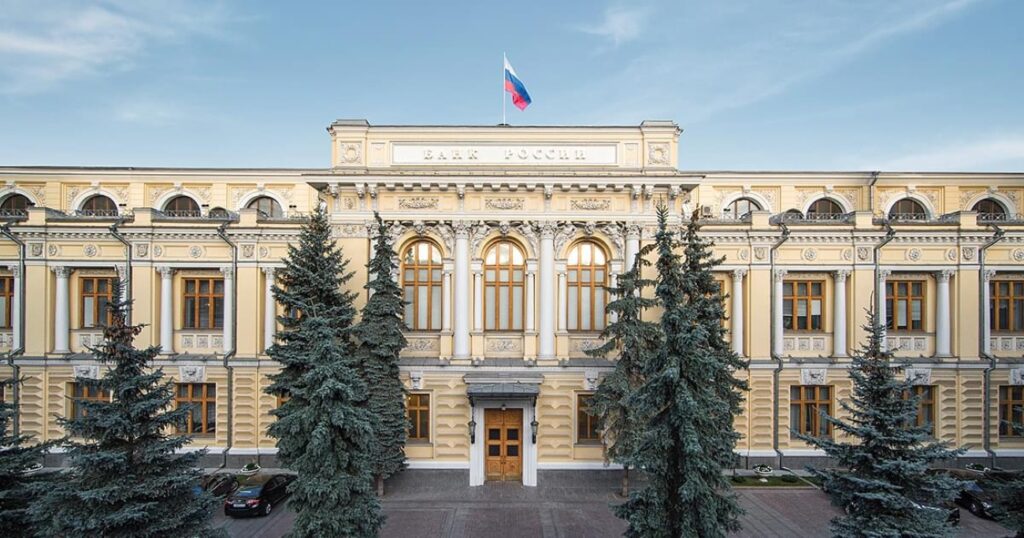
central bank of russia in moscow

Two of Russia's most senior economic figures publicly linked the country's mounting economic pressures to the war in Ukraine last week — an unusual departure from the official silence that has surrounded Kremlin war costs since 2022. German Gref, chief executive of Sberbank, and central bank governor Elvira Nabiullina both spoke in separate settings as Ukraine's drone strike campaign against Russian oil infrastructure compounds the fiscal strain from record military spending.

Russia's military and classified spending reached 46% of all budget expenditure in the first quarter of 2026 — a surge of roughly 30% over the same period in 2025 — while the National Wealth Fund buffer has fallen from about 7% of GDP before the war to 1.7% as of April 2026, Russia's Finance Ministry confirmed.

What each of them said

Gref told Sberbank's annual shareholders meeting that investments had already fallen over 14% and could drop a further 3% this year. He then addressed the war directly.

"I don't believe there is anyone in this country whose primary concern is anything other than an end to military hostilities as soon as possible," Gref said.

For the chief executive of Russia's largest state-controlled bank to frame the war as the country's overriding problem — not "the special military operation," not a security challenge to be managed — marks a notable break from the language Kremlin officials have enforced since February 2022.

Nabiullina's public position is more constrained, but the Bank of Russia's own press release on her June rate decision said fiscal policy had become more accommodative than previously expected and that pro-inflationary risks had worsened — the same dynamic that Kluge's analysis traces directly to the gap between military outlays and tax revenues.

The fiscal picture behind the exchange

The 46% military spending figure comes from analyst Janis Kluge of the German Institute for International and Security Affairs, drawn from Finance Ministry data and cited by ISW. Russia is now covering an increasing share of the deficit through borrowing, with liquid National Wealth Fund assets depleted to a fraction of their pre-war level and no longer functioning as a meaningful cushion.

Ukraine's strike campaign is compressing the revenue side simultaneously. Bloomberg counted 38 Ukrainian strikes on Russian refineries from January through May 2026, with 16 in May alone — the highest monthly figure of the war. Two strikes on 16 and 18 June disabled both primary processing units at the Kapotnya refinery in Moscow — the capital's main fuel source — leaving it unable to process crude until at least early 2027.

Russia has responded by banning gasoline and jet fuel exports, drawing down strategic reserves, allowing lower-grade fuel blends, and importing gasoline from India and Belarus, while negotiations with Kazakhstan are complicated by the fact that a Ukrainian strike disrupted the feedstock supply to one potential Kazakh supplier.

Russian President Valdimir Putin publicly admitted queues at filling stations while summoning top officials to manage the crisis. Parliament passed legislation subsidizing gasoline imports from abroad.
  • ✇Euromaidan Press
  • Airbus joins Ukraine’s frontline defence innovation program
    Airbus Defence and Space and Ukraine's Brave1 defence technology cluster signed a memorandum of understanding on 1 July, marking Brave1's first industrial strategic partnership with a Western company since the cluster launched in April 2023, and putting a major European aerospace corporation directly inside Ukraine's live-fire R&D loop. The partnership, announced by Airbus, spans the full development arc — from initial research through to modernising equipment already i
     

Airbus joins Ukraine’s frontline defence innovation program

2 juillet 2026 à 08:26

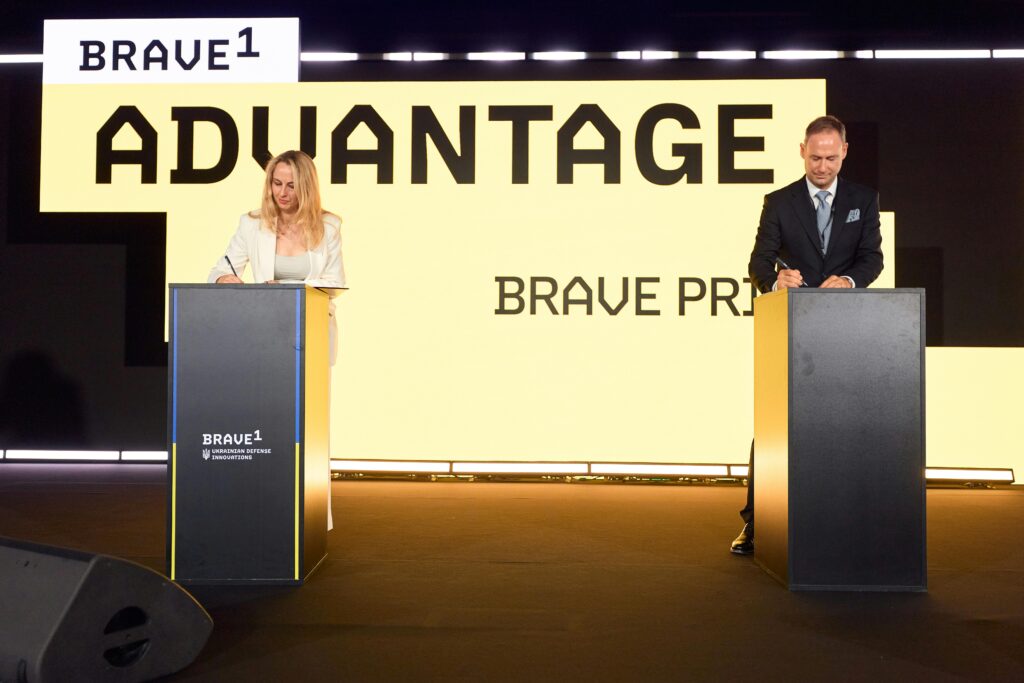
MoU Signature ADS & Brave1

Airbus Defence and Space and Ukraine's Brave1 defence technology cluster signed a memorandum of understanding on 1 July, marking Brave1's first industrial strategic partnership with a Western company since the cluster launched in April 2023, and putting a major European aerospace corporation directly inside Ukraine's live-fire R&D loop.

The partnership, announced by Airbus, spans the full development arc — from initial research through to modernising equipment already in active use. Airbus's technologies will integrate into Brave1's "Test in Ukraine" framework, which gives foreign manufacturers structured access to frontline performance data and feeds it directly back into design cycles. The cluster has processed over $235 million in procurement orders and, as of June 2026, counted more than 3,600 registered developments, 300 NATO-codified items, $50 million in defence innovation grants disbursed, and more than $65 million in additional investment attracted to Ukraine's defence sector.

"In Ukraine, research and development cycles are measured not in months or years, but in days," said Iryna Zabolotna, Brave1's chief operating officer.

She added that partnering with a global leader like Airbus allows us to combine their decades of deep aerospace expertise with our agile, combat-tested R&D approach.

Jo Mueller, a member of the executive committee of Airbus Defence and Space, framed the deal: "Collaborating with Ukraine on defence means effectively working on Europe's collective security."

What "Test in Ukraine" means in practice

The framework Airbus is joining gives foreign manufacturers a structured pathway: send equipment to Ukraine, conduct remote training, and receive performance feedback from armed forces units with direct frontline experience. Companies can test on-site with real-time adjustments, or commission Brave1 specialists to run the tests and deliver a results report. Real-time dashboards give manufacturers verified data on impacts, strike distances, and failure modes, giving companies performance intelligence they cannot generate in peacetime testing.

Brave1's priority areas span air defence, drone interceptors, AI-guided targeting, countermeasures against Russian glide bombs, naval unmanned systems, ground-based electronic warfare, and AI-assisted fire control for howitzers. The Airbus agreement establishes joint task forces spanning the full development arc from research to active-equipment modernisation.

Airbus will also serve as a key partner at the Defence Tech Valley summit in Lviv. Euromaidan Press previously described the 2025 edition as the world's biggest defence tech summit, drawing over 5,000 participants from more than 50 countries.

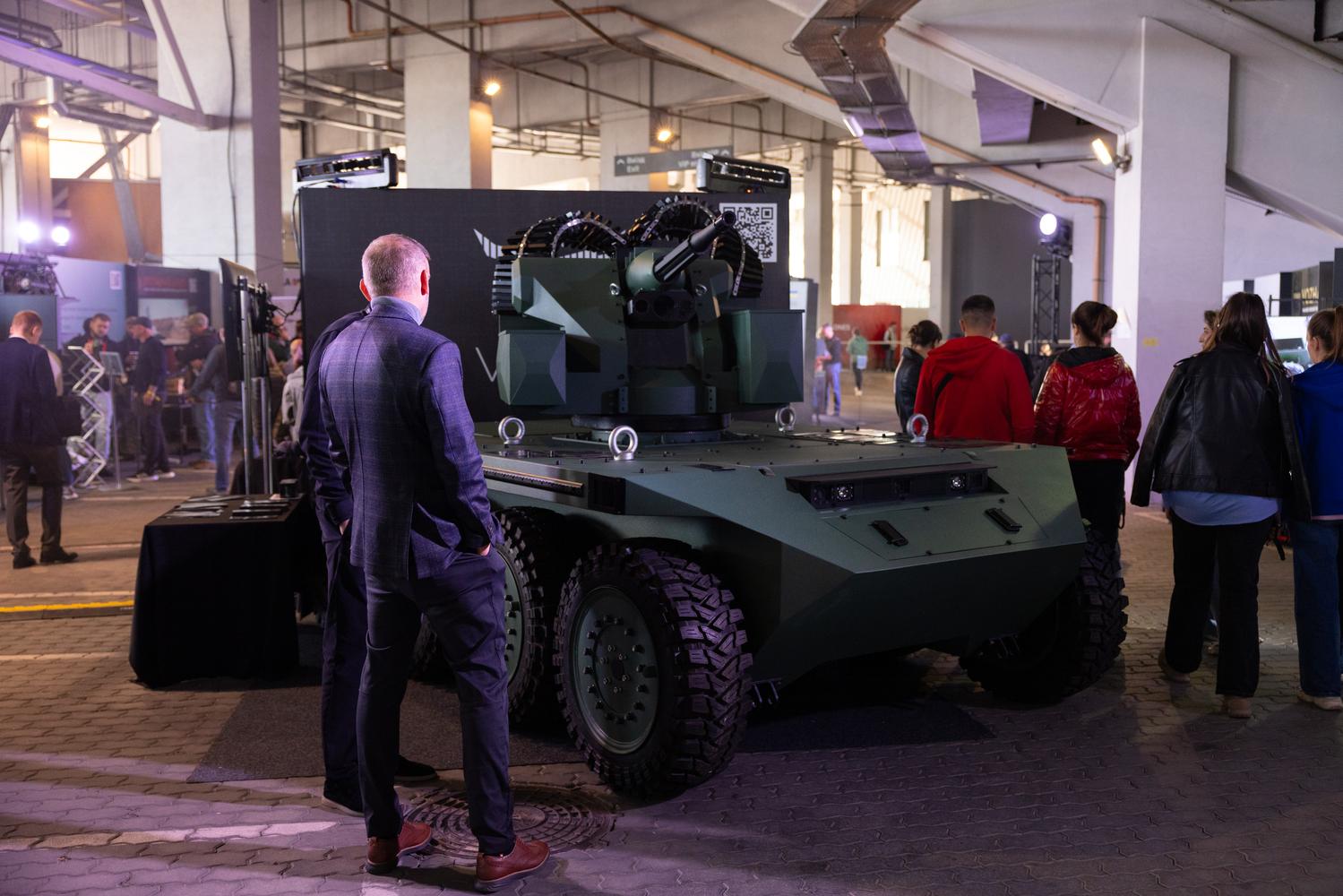
Ukrainian remote armed unmanned ground vehicle weapons
A Ukrainian unmanned ground vehicle (UGV) with a turret is on display at the Lviv Defense Tech Valley on 16-17 September 2025. Photo: Brave1

Brave1's expansion toward global industrial alliances

Brave1's chief operating officer Iryna Zabolotna said the Airbus deal falls under a new "Brave Prime" initiative — Brave1's expansion from launching defence startups toward forging global industrial alliances. The combat data loop at the cluster's core — where operational performance feeds directly back into development cycles — is what Brave1 says compresses R&D from months into days, giving partners access to battlefield insight unavailable in peacetime testing regimes.

On 27 June, the Ukrainian government introduced a unified framework called Brave International for working with international partners on defence innovation, establishing joint grant funds on a matched-contribution basis with parity oversight boards and expert panels. The Airbus MoU arrived four days later.

  • ✇Euromaidan Press
  • Canada launches new measures as Russian hybrid threats deepen
    Canada is building institutional capacity to counter Russian hybrid warfare and disinformation, but its own intelligence agencies say the threat is outpacing the response, outgoing Canadian Ambassador to Ukraine Natalka Cmoc said in an interview with Ukrinform on 1 July 2026, on the eve of Canada Day — her last before ending her three-year posting in Kyiv. Russia's covert disinformation apparatus has been expanding globally, with networks operating independently of state me
     

Canada launches new measures as Russian hybrid threats deepen

2 juillet 2026 à 06:53

Natalia Tsmots, Ambassador of Canada to Ukraine

Canada is building institutional capacity to counter Russian hybrid warfare and disinformation, but its own intelligence agencies say the threat is outpacing the response, outgoing Canadian Ambassador to Ukraine Natalka Cmoc said in an interview with Ukrinform on 1 July 2026, on the eve of Canada Day — her last before ending her three-year posting in Kyiv.

Russia's covert disinformation apparatus has been expanding globally, with networks operating independently of state media to spread false narratives across Western societies, targeting support for Ukraine and undermining democratic institutions.

What the ambassador said

Cmoc cited two programs Canada initiated together with partners:

  • The first is an academy that supports analysts and enables information-sharing with partner countries to build stronger counter-tools.
  • The second is a fund for those who fall victim to hybrid attacks — organizations, individuals, or NGOs that may lack the capacity to resist them on their own.

Canada's Senate committee on national defence and security released a report on 30 April 2026 calling Russian disinformation an urgent threat to Canada's national security, democratic institutions, and social cohesion. Russia's disinformation has been growing and evolving at a rapid pace, the committee found, adding that Canada's capacity to respond does not match the scale of the threat.

The Canadian Security Intelligence Service (CSIS) backed up the report's findings in a concurrent annual release, confirming that Russian state actors have carried out information and influence operations in Canada, exploiting contentious social topics to discredit the government's position on Ukraine by polarizing segments of both the political and public spectrums.

CSIS noted it "continues to identify, investigate, and reduce Russia's adaptive and sophisticated disinformation methods."

The ground-level effects are visible

Canada's National Security Advisor Nathalie Drouin warned Parliament in February 2026 that more Canadians were beginning to accept the Kremlin's narrative that Kyiv — not Moscow — provoked the 2022 full-scale invasion. Russian narratives targeting Canada cluster around three patterns:

  1. fiscal resentment toward aid for Ukraine,
  2. false-pacifism framing designed to undercut Canada's image as a peaceful nation,
  3. personal attacks on Ukrainian-Canadian public figures 

Most visibly the coordinated campaign against former Deputy Prime Minister Chrystia Freeland's Ukrainian grandparents and their wartime history.

Canada's moves reflect a broader pattern among G7 nations of building shared infrastructure to track and counter Russian information operations, a shift from reactive debunking toward proactive institutional capacity meant to outlast any single election or news cycle. Russia allocates over $1 billion annually to disinformation and propaganda, suggesting the gap between attacker and defender remains wide.

  • ✇Euromaidan Press
  • Ukraine deploys its first domestically made guided bombs to battlefield, narrowing Russia’s advantages
    Ukraine's domestically produced guided aerial bombs (KABs) have entered combat use, Defense Minister Mykhailo Fedorov announced at the Brave1 Advantage event, Militarnyi reported. Products from two of eight Ukrainian developers involved in the program have reached frontline units; the others remain at various stages of development and testing. Russia has deployed glide bombs at a rate of thousands per month throughout the war, giving its air force a standoff strike capabili
     

Ukraine deploys its first domestically made guided bombs to battlefield, narrowing Russia’s advantages

2 juillet 2026 à 05:08

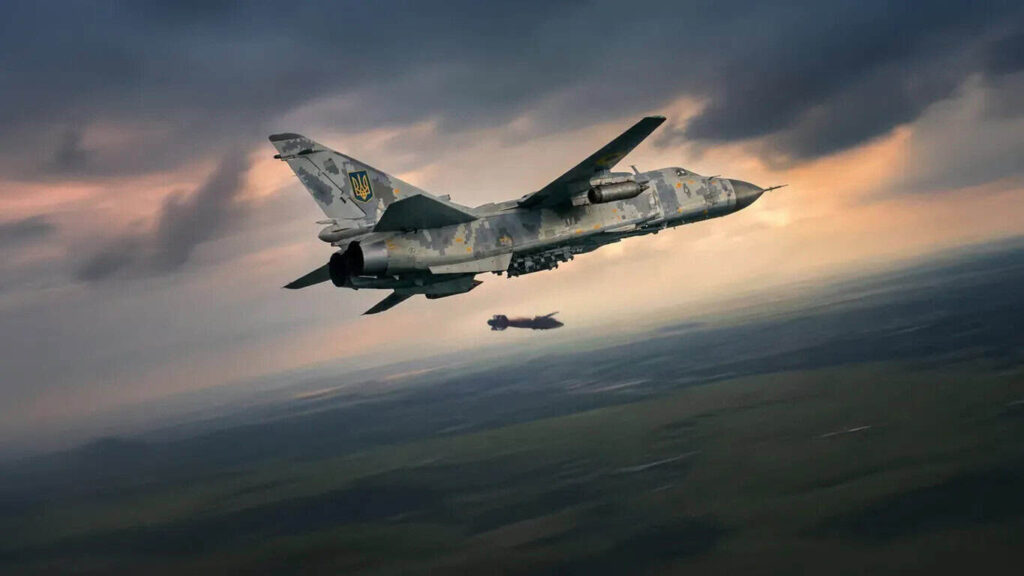
Ukrainian Vyrivniuvach (Equalizer) guided bomb and Su-24M.

Ukraine's domestically produced guided aerial bombs (KABs) have entered combat use, Defense Minister Mykhailo Fedorov announced at the Brave1 Advantage event, Militarnyi reported. Products from two of eight Ukrainian developers involved in the program have reached frontline units; the others remain at various stages of development and testing.

Russia has deployed glide bombs at a rate of thousands per month throughout the war, giving its air force a standoff strike capability that Ukraine has struggled to match with the limited Western-supplied equivalents it received. Ukraine has been scaling domestic precision-weapons production across multiple developers to reduce that dependence.

What Fedorov said

Fedorov described the path to maximum effectiveness under real combat conditions as long and complex, but said accuracy statistics and effectiveness during testing are "pleasantly impressive." Development follows a modular approach, with multiple teams building munitions across different weight categories, technical characteristics, and guidance principles. He did not specify which two developers have cleared the threshold for frontline delivery, nor did he provide figures on how many munitions have been used in combat.

A guaranteed budget slice

Fedorov tied the bombs' combat debut to a structural shift in how Ukraine allocates defense funding under its Brave1 innovation strategy. Under an "80/20" formula he described, 20% of the relevant budget goes specifically to innovative weapons systems, all of which pass through accelerated testing at specialized ranges before transfer to combat units.

The Brave1 platform, Ukraine's government-backed defense tech cluster, has registered more than 3,500 defense developments and channeled grants to developers, including for the guided bomb program.

What is already known about Ukraine's guided bombs

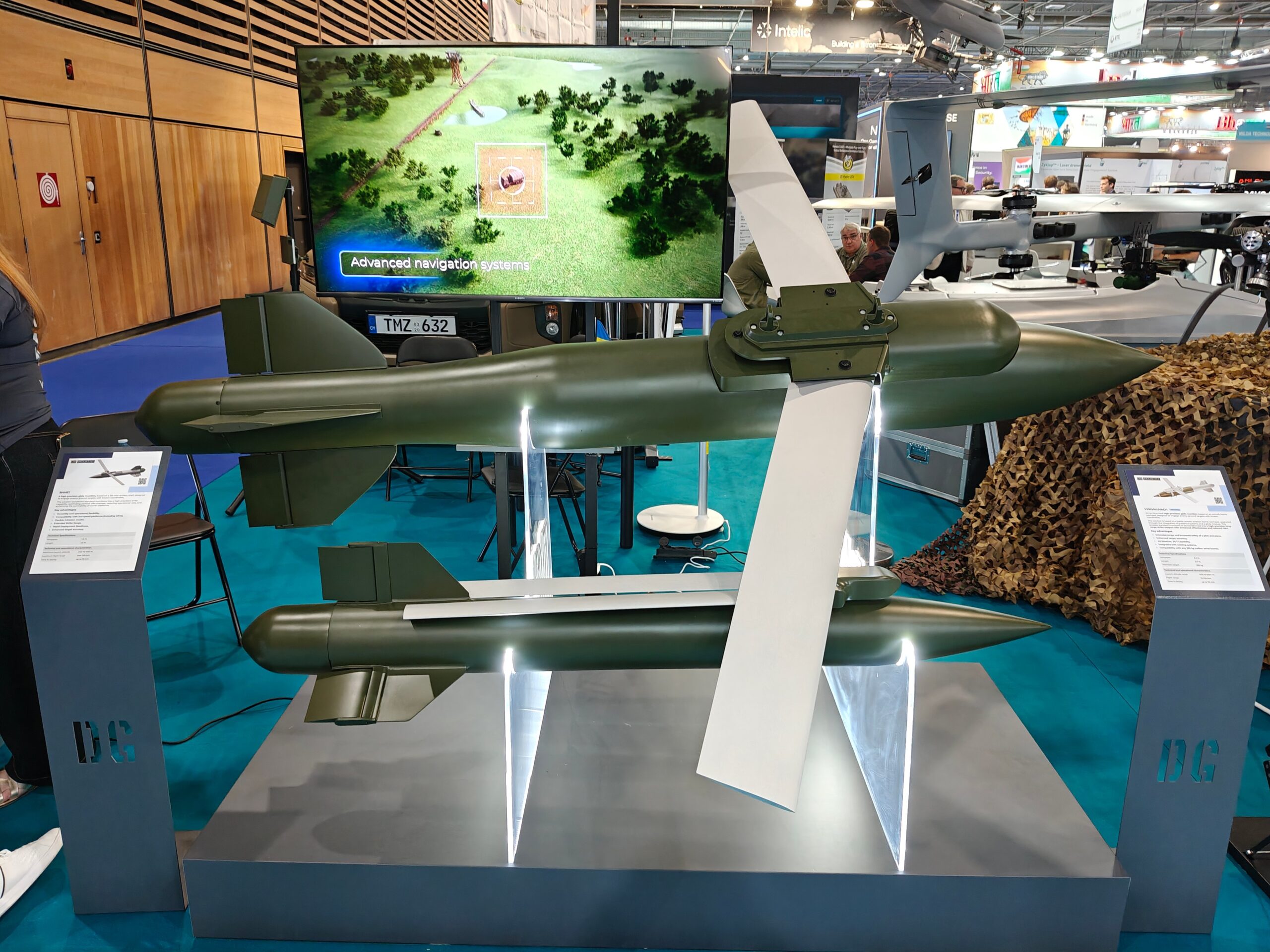
Ukraine's first domestically built guided aerial bomb, the Vyrivniuvach ("Equalizer"), was declared combat-ready on 18 May 2026 by DG Industry after 17 months of development through Brave1.

Ukraine's first domestic guided glide bomb, Vyrivniuvach, made its public debut at the Eurosatory-2026 defense exhibition in Paris. Source: X/Jeff21461

It carries a 250 kg warhead and targets fortifications, command posts, and other military objects. The weapon is purpose-built from the airframe up. Ukraine's Defense Ministry purchased an initial experimental batch, and the bomb made its international debut at the Eurosatory-2026 defense exhibition in Paris in June.

A second Ukrainian company, BlueBird Tech, announced a partnership with a Ukrainian scientific and design bureau to develop and serially produce its own guided aerial bombs. Domestically produced KABs carry no donor-use restrictions, meaning Ukraine can strike targets without seeking approval from supplying countries, unlike Western-supplied munitions. The Vyrivniuvach costs roughly a third of the American JDAM-ER kit Ukraine has relied on since 2023.


❌