Vue normale

Reçu — 17 juillet 2026 Euromaidan Press
  • ✇Euromaidan Press
  • Wall panels from WoodUpp fit straight onto plasterboard with adhesive
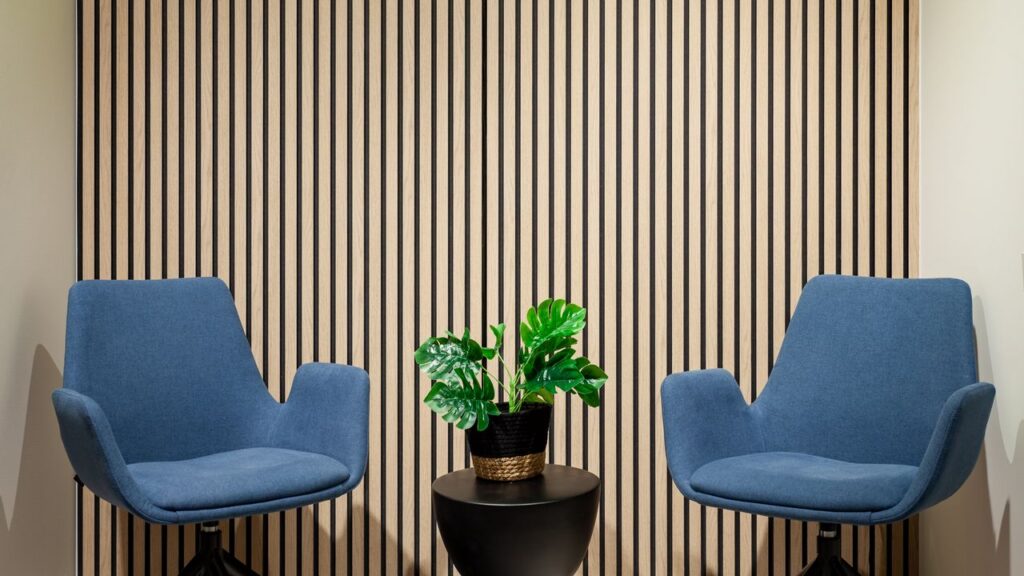
    Introducing contemporary design and improved acoustics into a home can be achieved with wall panels that mount directly onto plasterboard. WoodUpp offers a solution that combines visual appeal, craftsmanship, and practical installation. Their acoustic wood slat panels provide both aesthetic value and effective soaaund absorption, contributing to a calmer and more unified atmosphere. For those looking to update their interiors without extensive renovations, these panels present an a
     

Wall panels from WoodUpp fit straight onto plasterboard with adhesive

17 juillet 2026 à 05:14

Wall panels from WoodUpp fit straight onto plasterboard with adhesive


Introducing contemporary design and improved acoustics into a home can be achieved with wall panels that mount directly onto plasterboard. WoodUpp offers a solution that combines visual appeal, craftsmanship, and practical installation. Their acoustic wood slat panels provide both aesthetic value and effective soaaund absorption, contributing to a calmer and more unified atmosphere. For those looking to update their interiors without extensive renovations, these panels present an accessible way to enhance both style and comfort.

Why acoustic wall panels make a difference in your space

Wall panels can do more than just alter the look of a room—they also affect its acoustics and overall feel. Spaces with hard surfaces or open layouts often experience issues with echoes, making them sound louder or less comfortable. By installing acoustic wall panels, sound reflections are reduced, resulting in a quieter and more pleasant environment.

WoodUpp’s wall panels feature slim wooden slats mounted on an acoustic felt backing. This layered design reduces echoes in the mid-to-high frequency range—where everyday sounds, such as speech and music, commonly occur. The outcome is clearer sound, making conversations easier to follow while minimizing background noise.

A variety of finishes and colours makes it possible to tailor feature walls to individual preferences. This flexibility means spaces benefit not only from better acoustics but also from an upgraded appearance.

How to install WoodUpp wall panels on plasterboard

Installing WoodUpp wall panels onto plasterboard is designed to be straightforward for most homeowners. Start by ensuring the plasterboard surface is clean, dry, and level. Basic tools are required, including a saw for adjustments and an appropriate interior adhesive.

To fit the panels, apply the recommended adhesive to the back of each one before pressing it firmly against the plasterboard in the chosen location. Panels can be trimmed as needed to accommodate sockets or corners. For larger installations, align the panels so the slats continue seamlessly across the wall. The panels consist of wooden slats mounted on an acoustic felt backing, which absorbs sound across a wide frequency range while the slats provide a warm, natural aesthetic.

A wall coverage of 25 to 40 per cent is typically sufficient to achieve a noticeable reduction in reverberation, making them effective even in larger rooms without full wall coverage. Installation is straightforward: panels can be fixed directly to any flat wall surface using adhesive, or mounted on a batten framework where more flexibility is needed, for instance around cables or uneven surfaces. Available in multiple wood species and felt colours, the panels adapt to any interior style. Maintenance is minimal — the wooden slats can be wiped with a dry cloth, while the felt backing stays in good condition with occasional brushing.

The modular design allows you to begin with smaller areas—such as behind a sofa—or expand to cover larger sections over time. This approach limits disruption and enables gradual updates according to your preferences.

Where WoodUpp wall panels fit into modern living

WoodUpp wall panels offer versatility for subtle updates or more prominent design features throughout the home. They are frequently used in living rooms behind seating areas or entertainment units to help reduce echo and improve clarity during conversations. Home offices also benefit from improved focus and acoustics.

These panels suit various interior styles—from light woods inspired by Scandinavian design to bold colours or darker finishes found in contemporary spaces. Their slim structure means they add texture and warmth without taking up significant space.

For those planning updates in bedrooms or open-plan kitchens, WoodUpp’s panels deliver both visual appeal and noticeable acoustic improvements through a straightforward installation process. Their adaptable sizing and focus on design make them suitable for UK homes seeking added comfort and character.


Reçu — 12 juillet 2026 Euromaidan Press
  • ✇Euromaidan Press
  • Ukraine’s top missile designer: modern war is won by whoever experiments with weapons faster
    Modern war is won by whoever creates, tests, and refines new weapons faster — not by whoever spends years at the design stage, Fire Point co-founder and chief designer Denys Shtilerman said in an interview with Liga. The man behind Ukraine's most prolific deep-strike weapons contrasted his company's battlefield iteration with Russia's Soviet-era design school. He also revealed that the Iskander missile's navigation systems trace back to Ukrainian specialists. Four and a hal
     

Ukraine’s top missile designer: modern war is won by whoever experiments with weapons faster

12 juillet 2026 à 07:46

ukraine's top missile designer modern war won whoever experiments weapons faster · post fire point co-founder chief denys shtilerman during interview fp-1 drone behind liganet video денис штілерман фото скриншот

Modern war is won by whoever creates, tests, and refines new weapons faster — not by whoever spends years at the design stage, Fire Point co-founder and chief designer Denys Shtilerman said in an interview with Liga. The man behind Ukraine's most prolific deep-strike weapons contrasted his company's battlefield iteration with Russia's Soviet-era design school. He also revealed that the Iskander missile's navigation systems trace back to Ukrainian specialists.

Four and a half years of all-out war have turned Ukraine into the West's de facto weapons laboratory: its ground robots ran nearly 17,000 frontline missions in June alone, up to eight European countries want in on its $700,000-per-shot ballistic interceptor, and defense scholars already debate which of Kyiv's winning strike programs its factories should feed first.

"Whoever experiments faster wins"

Modern war rewards a different rhythm of weapons development, Shtilerman argued. 

"Now whoever experiments faster wins. You made it, you watched — does it fly or not — and then you start testing it on the battlefield, improving it, improving it. It's an endless process," he said.

Many European countries adopt weapons once development formally ends, he added. Only combat shows whether a weapon actually meets the demands of modern war. Fire Point's own record follows that logic: the company spent a year of combat trials before its Flamingo cruise missile started landing on target, and its FP-1 drones went through months of fuel-versus-warhead refinement.

Ukraine ballistic missile program moscow
Explore further

Russia says it downed Ukraine’s first ballistic missile—a weapon Kyiv has never announced

Soviet habits in Russia's weapons school

Russia's engineering school has largely preserved the Soviet approach to weapons design, Shtilerman said. He pointed to the construction of the S-300 and S-400 air-defense systems, where he found no solutions that would simplify production.

"The fourth compartment, where the control fins are mounted — such a complex part. Why did they make it like that? Very many questions," the designer said.

Russia
Explore further

Ukraine reportedly strikes Russian defense plant ‘Progress’ in Cheboksary with Flamingo missiles

The company testing its answer on Russian soil

Fire Point supplies over half of Ukraine's deep-strike weapons, according to Ukraine's General Staff. Its FP-1 drones — including the extended-range variant that reached the Omsk refinery 2,500 kilometers away in Siberia — and FP-2 mid-range drones carry much of the nightly campaign against Russian refineries, depots, and occupied-territory infrastructure. The company says it produces 300 such drones daily.

The next stage is ballistic. Ukraine's ballistic missile will begin live testing on targets inside Russia in autumn 2026, Shtilerman said, naming Moscow among the first targets. The company is also developing an interceptor meant to bring the cost of stopping a ballistic missile below $1 million.

❌