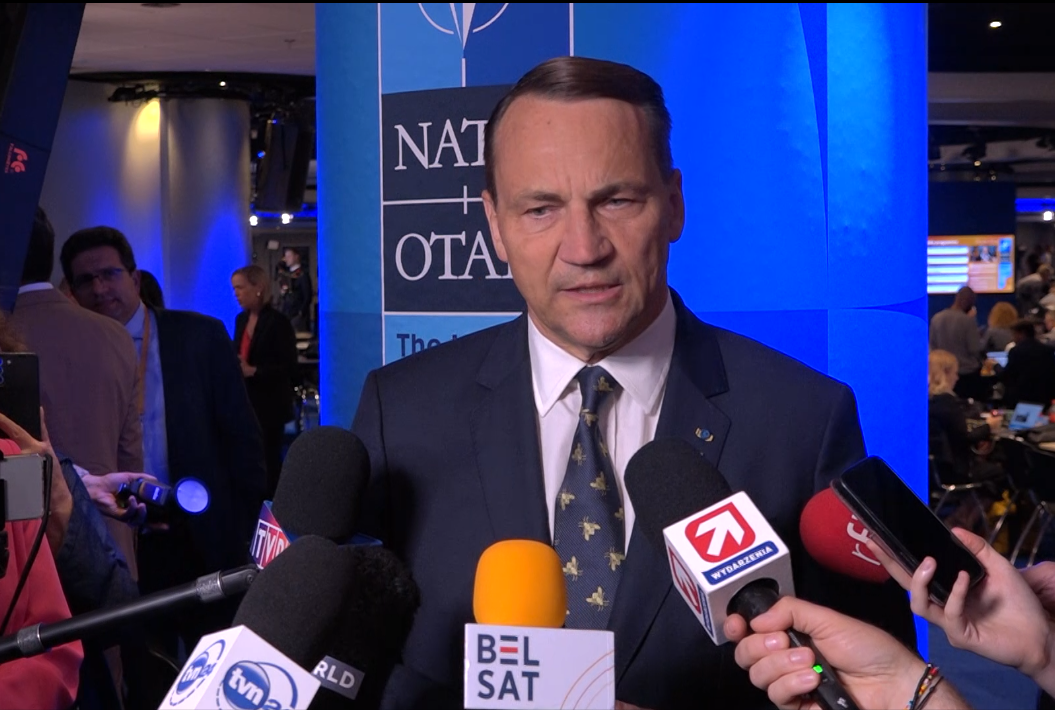
Poland holds credible information that Russia is again planning provocations, and it is publicizing that fact to stop Moscow from acting, Foreign Minister Radosław Sikorski said in Warsaw, Polish broadcaster RMF24 reported. Speaking alongside his French counterpart on 9 July, he set the intelligence against a long list of Russian covert operations across Europe. Sikorski framed exposure as a weapon that has worked against the Kremlin before.
Russia's full-scale invasion of
Poland holds credible information that Russia is again planning provocations, and it is publicizing that fact to stop Moscow from acting, Foreign Minister Radosław Sikorski said in Warsaw, Polish broadcaster RMF24 reported. Speaking alongside his French counterpart on 9 July, he set the intelligence against a long list of Russian covert operations across Europe. Sikorski framed exposure as a weapon that has worked against the Kremlin before.
Russia's full-scale invasion of Ukraine is in its fifth year, and the same Russian services fighting it run a documented campaign of arson and sabotage across NATO countries, which European intelligence agencies expect to intensify while Moscow probes for a chance to test the alliance before Europe finishes rearming. A provocation that slips past the warnings would land on states carrying Ukraine's lifeline — Poland is the indispensable overland route for Western aid — and each disclosure now doubles as a test of whether publicity alone can still make the Kremlin stand down.
"The Russians are again planning something"
Sikorski and French Foreign Minister Jean-Noël Barrot faced questions about recent media reports, including in the Washington Post, that Russia is actively considering attacks on NATO targets and that the US has warned allies. Sikorski declined to comment on what intelligence services say. Poland's deputy prime minister, he still left no doubt about the broader picture.
"But the fact that Russia is waging a hybrid and kinetic war against both France and Poland is no secret," he said.
Sikorski added:
"That the Russians attack our systems of party competition, our critical infrastructure, or use shadow-fleet ships to map critical infrastructure — all of this is known. But also arson, attacks on rail tracks, drone attacks, and sending death squads to kill Vladimir Putin's enemies — all of these are hostile activities. We do nothing of the sort in Russia."
Explore further
Polish FM warns Putin’s retaliatory rhetoric sounds like “an announcement of a provocation”
The 2022 precedent: exposure works
Sikorski recalled that before invading Ukraine, Russia intended to stage classic false-flag provocations to hand itself a pretext for the attack.
"Back then, the services of the United States warned about this, and that deterred Russia from carrying out those provocations," he said.
The same logic drives today's disclosure: "The aim of these warnings is to deter them from carrying out these provocations. And may it be so," Sikorski told a journalist.
He aired a similar caution in June, saying the Kremlin could stage a false-flag operation within the next two years.
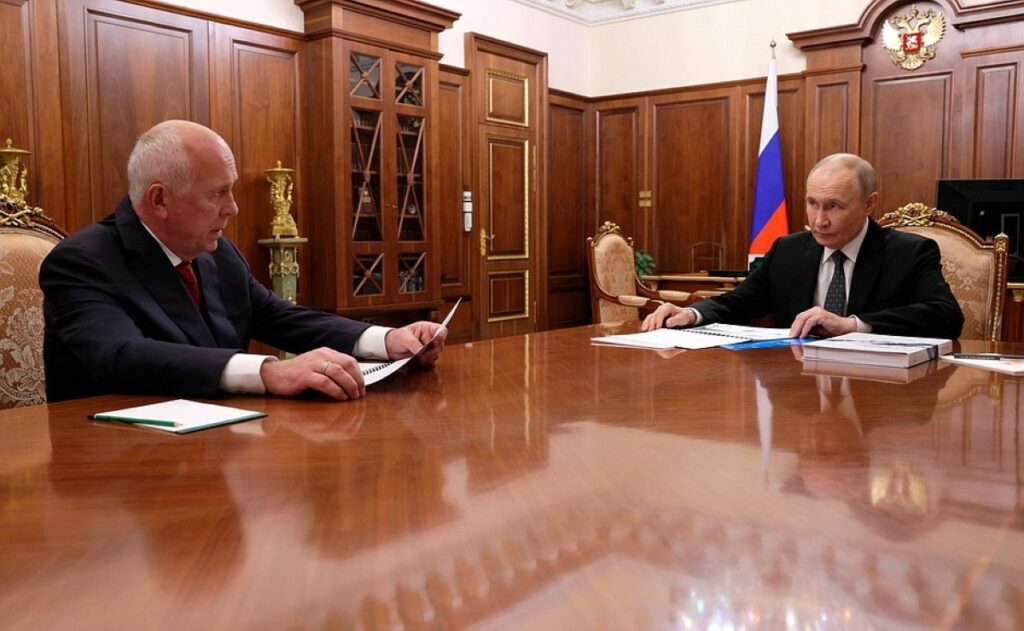
On 17 June 2025—a year ago—Rostec CEO Sergei Chemezov met Putin at the Kremlin and reported that the state arms corporation had more than doubled its net profit to roughly $1.4 billion. Then, in the same meeting, he said three waste incineration plants would have to be frozen “until better days, when money is cheaper.”Rostec produces 80% of the weapons Russia fires in Ukraine.
Rostec CEO Sergei Chemezov briefs Vladimir Putin at the Kremlin on 17 June 2025. In the same m
On 17 June 2025—a year ago—Rostec CEO Sergei Chemezov met Putin at the Kremlin and reported that the state arms corporation had more than doubled its net profit to roughly $1.4 billion. Then, in the same meeting, he said three waste incineration plants would have to be frozen “until better days, when money is cheaper.”
Rostec produces 80% of the weapons Russia fires in Ukraine.
Rostec CEO Sergei Chemezov briefs Vladimir Putin at the Kremlin on 17 June 2025. In the same meeting, Chemezov reported record arms profits—and said the company could not afford to finish its civilian projects. Photo: Kremlin.ru
Long-term investments have become unviable
In June 2026, a study found that Russia had suspended roughly $2.3 billion worth of data center construction—gutting the infrastructure its government says is essential for sovereign AI.
In May 2026, it emerged that the railway to Putin’s flagship Arctic coal port had been halted because Russian Railways could not pay the builders, leaving a terminal that opened to great fanfare shipping just 3% of its design capacity.
“The goal of restoring economic growth is incompatible with the war and accelerating nationalization.”
Russia’s war spending has pushed interest rates high enough to make decade-long investments mathematically unviable, emptied the federal budget, and left state companies choosing between the front and the future.
Boris Grozovsky, a Russian economic journalist and editor of the independent outlet Strana i Mir, told Radio Liberty that the government has no interest in restoring economic growth: “The goal of restoring economic growth is incompatible with the war and accelerating nationalization, and I don’t see anyone seriously pursuing it.”
The data centers Russia cannot build
Russia suspended 38 data center projects over the preceding three years, worth roughly $2.3 billion in total, according to a study by the consulting firm Tekhexpo and the research group PKR, reviewed by Forbes Russia.
“It remains unclear how the task of developing independent AI can be achieved.”
Russia is simultaneously drafting legislation to mandate a sovereign domestic artificial intelligence ecosystem—and watching the buildings that AI needs go unbuilt. “It remains unclear how the task of developing independent AI can be achieved, especially as legislation governing artificial intelligence is now being prepared for adoption,” Filipp Vratskikh, CEO of Tekhexpo, told Forbes.
Commercial data centers are built to pay back over roughly ten years. Stanislav Mirin, an analyst at iKS-Consulting, told Forbes that the Central Bank’s benchmark rate hit 21% in 2025 before falling to still above 14%: “At such rates, the business model often simply does not work.”
Those rates exist because war spending fuels inflation, and the Central Bank raises rates to contain it—a loop that makes any investment taking years to pay back impossible to finance.
Explore further
Russia’s top bankers break taboo, admit war is hurting the economy
Electricity is the second obstacle. About three-quarters of Russia’s commercial data center capacity is in the Moscow region, where obtaining approval for new power connections has become “virtually impossible” for new investors, according to the same study.
Rostelecom president Mikhail Oseyevsky has warned that spare electricity capacity in Russia’s largest cities is nearly exhausted.
Rostelecom president Mikhail Oseyevsky has warned that spare electricity capacity in Russia’s largest cities is nearly exhausted, already limiting new data center construction and blocking large-scale deployment of AI, The Moscow Times reported.
The Arctic port with no railway
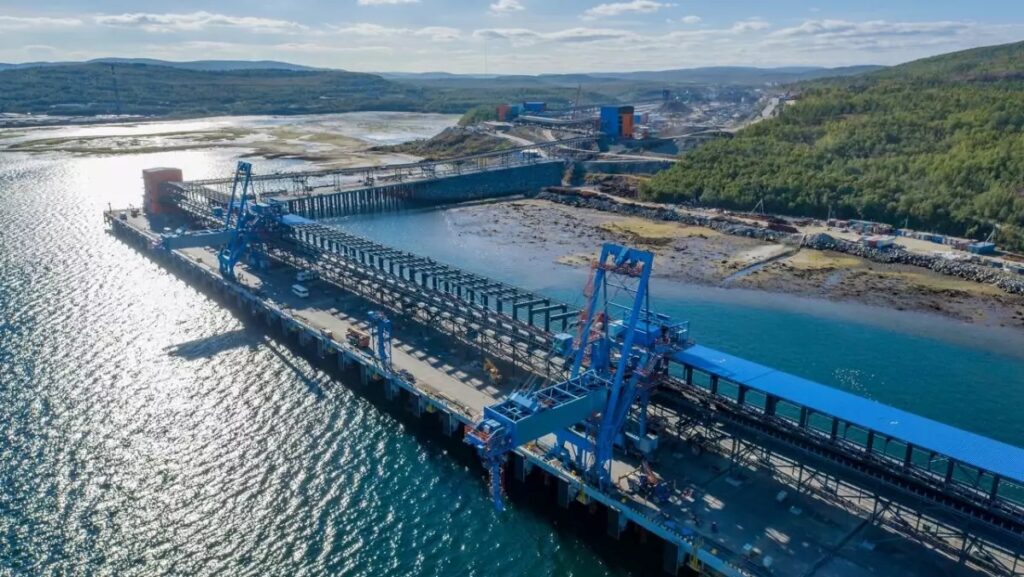
In March 2025, Russia opened the Lavna coal terminal in Murmansk—a deep-water port on the western shore of the Kola Bay that Putin personally inspected by helicopter in 2023, describing it as essential to Russia’s Northern Sea Route ambitions.
The project had been in development for more than a decade, with total investment in the wider Murmansk Transport Hub exceeding $1.7 billion. Design capacity: 18 million tons of coal per year.
The port is open. The train cannot reach it.
The Barents Observer reported in May 2026 that construction of the railway branch line connecting the terminal to Russia’s national network had been suspended because Russian Railways lacked the funds to pay its contractors.
The port is open. The train cannot reach it. In its first seven months of operation, the terminal shipped just 3% of its annual design capacity, according to The Coal Hub, an independent coal market platform.
Coal throughput at the older Murmansk Commercial Sea Port has been falling alongside the new terminal’s failure to ramp up, The Barents Observer found—down more than 40% year-on-year in January 2026 alone, and roughly 60% below its 2020 peak, according to The Barents Observer’s investigation published in May 2026.
Coal for Lavna comes mainly from Kuzbass—Russia’s main coal-mining region in southwestern Siberia, on the other side of the country.
The deeper problem is that even a completed railway might not save the project. Coal for Lavna comes mainly from Kuzbass—Russia’s main coal-mining region in southwestern Siberia, on the other side of the country—where production has been falling for years and dropped sharply again in early 2026.
“Even if the state manages to secure the funding to fully commission the Lavna port and the railway line leading to it,” The Barents Observer concluded, “there will be nothing to load.”
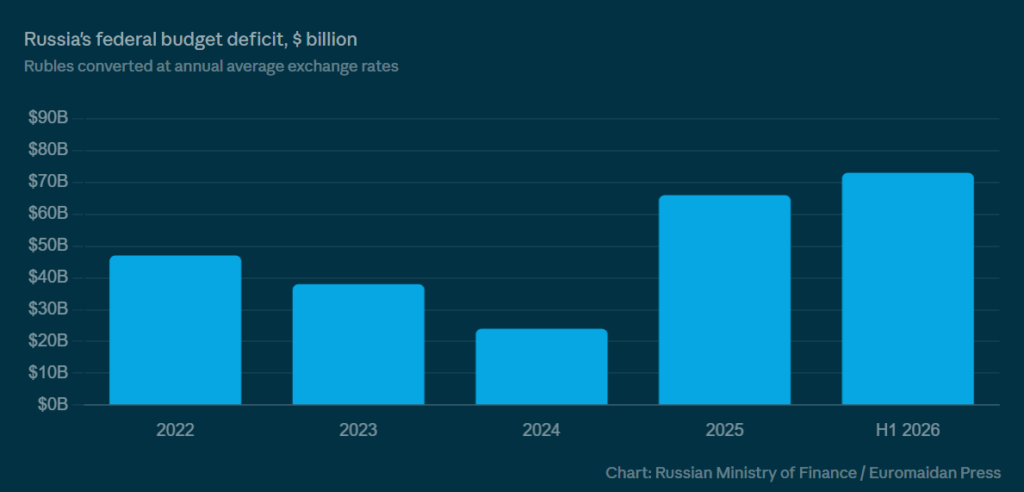
Russia’s federal budget deficit shrank in 2024 as oil revenues held up, then nearly tripled in 2025 as war spending accelerated. In the first half of 2026 alone, the deficit has already reached $73 billion—51% above the target set for the entire year. Chart: Russian Ministry of Finance / Euromaidan Press
The mechanism
The same forces drive both failures. Russia’s Finance Ministry data, relayed by Interfax, put the federal budget deficit at $77 billion for January–May 2026—already 51% above the full-year target.
The government’s priority is funding the military and defense industry.
The war share of spending keeps growing; everything else competes for what remains. Grozovsky told Radio Liberty that the government’s priority is funding the military and defense industry “in the volumes it needs,” while preventing mass wage arrears and social unrest.
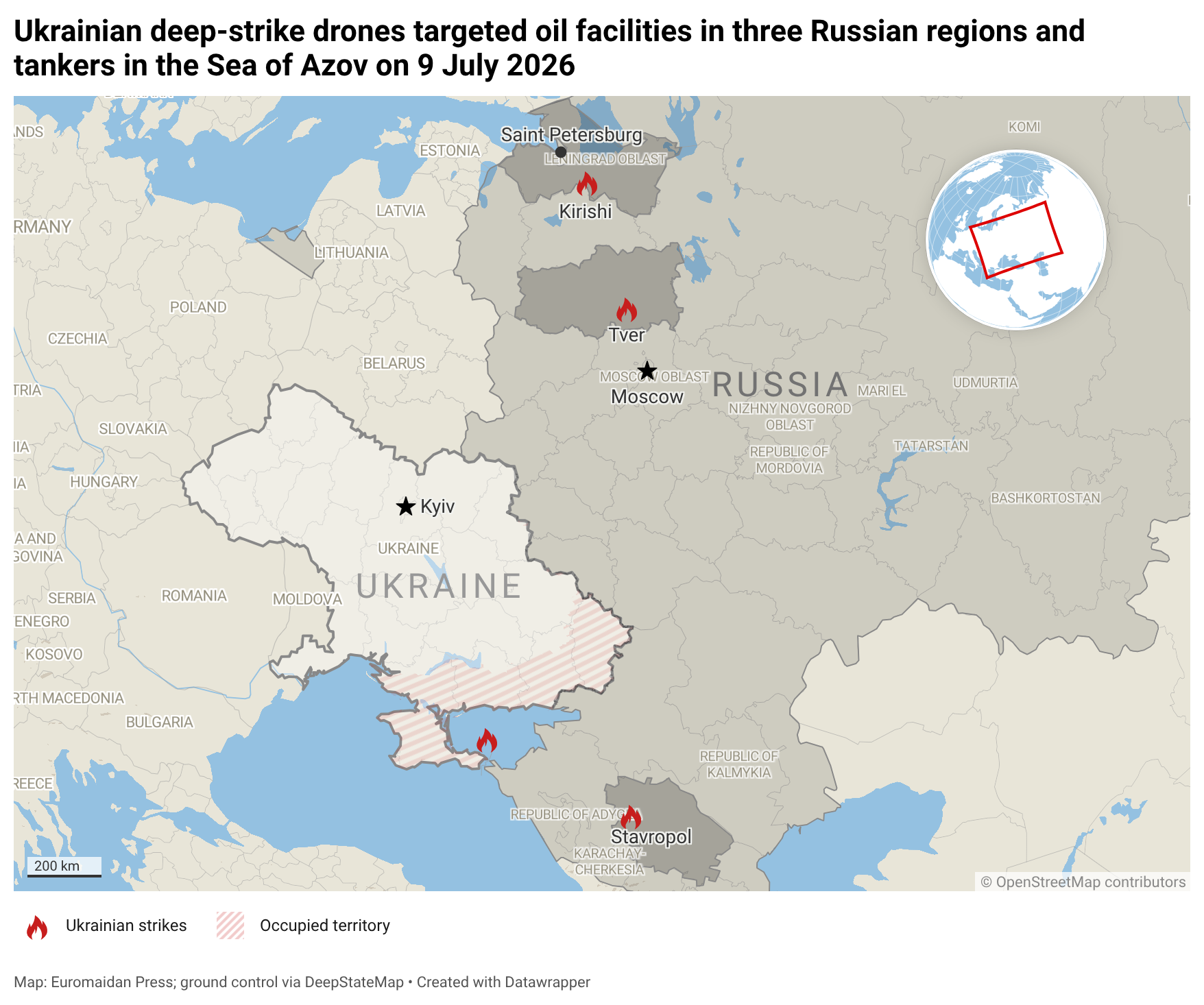
Ukrainian drones struck oil depots in Russia's Tver Oblast and Stavropol Krai overnight on 9 July, setting fuel tanks ablaze at both, regional officials and OSINT analysts reported. Ukraine's SBU security service confirmed the strikes, and monitors separately reported a hit on one of Russia's three largest refineries. Ukrainian President Volodymyr Zelenskyy called the attacks part of Ukraine's "long-range sanctions plan."
Ukraine's deep-strike campaign targets Russian fuel
Ukrainian drones struck oil depots in Russia's Tver Oblast and Stavropol Krai overnight on 9 July, setting fuel tanks ablaze at both, regional officials and OSINT analysts reported. Ukraine's SBU security service confirmed the strikes, and monitors separately reported a hit on one of Russia's three largest refineries. Ukrainian President Volodymyr Zelenskyy called the attacks part of Ukraine's "long-range sanctions plan."
Ukraine's deep-strike campaign targets Russian fuel to choke the army's logistics and the oil revenue funding the invasion. The General Staff said earlier that the campaign has knocked out 42% of Russia's refining and cost the industry $13.5 billion since August 2025, pushing fuel rationing into most Russian regions.
Tver depot burns despite anti-drone nets
Tver Oblast head Vitaly Korolyov confirmeda fire in one reservoir of the "Tver oil depot" after what he called the repelling of a drone attack. Astra analyzed eyewitness footage and identified the burning site as the main depot of Tverneftprodukt, a subsidiary of Surgutneftegaz. The company stores and dispenses gasoline and diesel, supplying its own network of 52 filling stations and wholesale buyers across Tver Oblast.
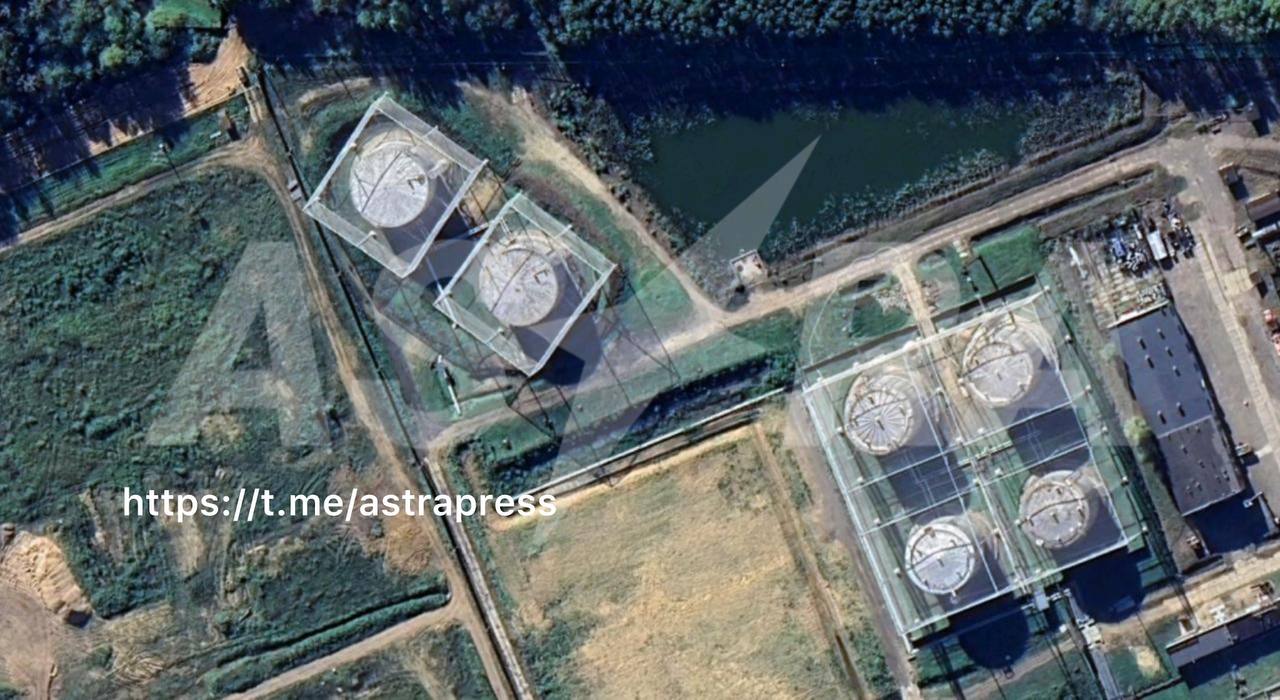
Pre-strike satellite image shows protective nets over the fuel reservoirs of the Tverneftprodukt oil depot in Tver, Russia. Photo: Astra
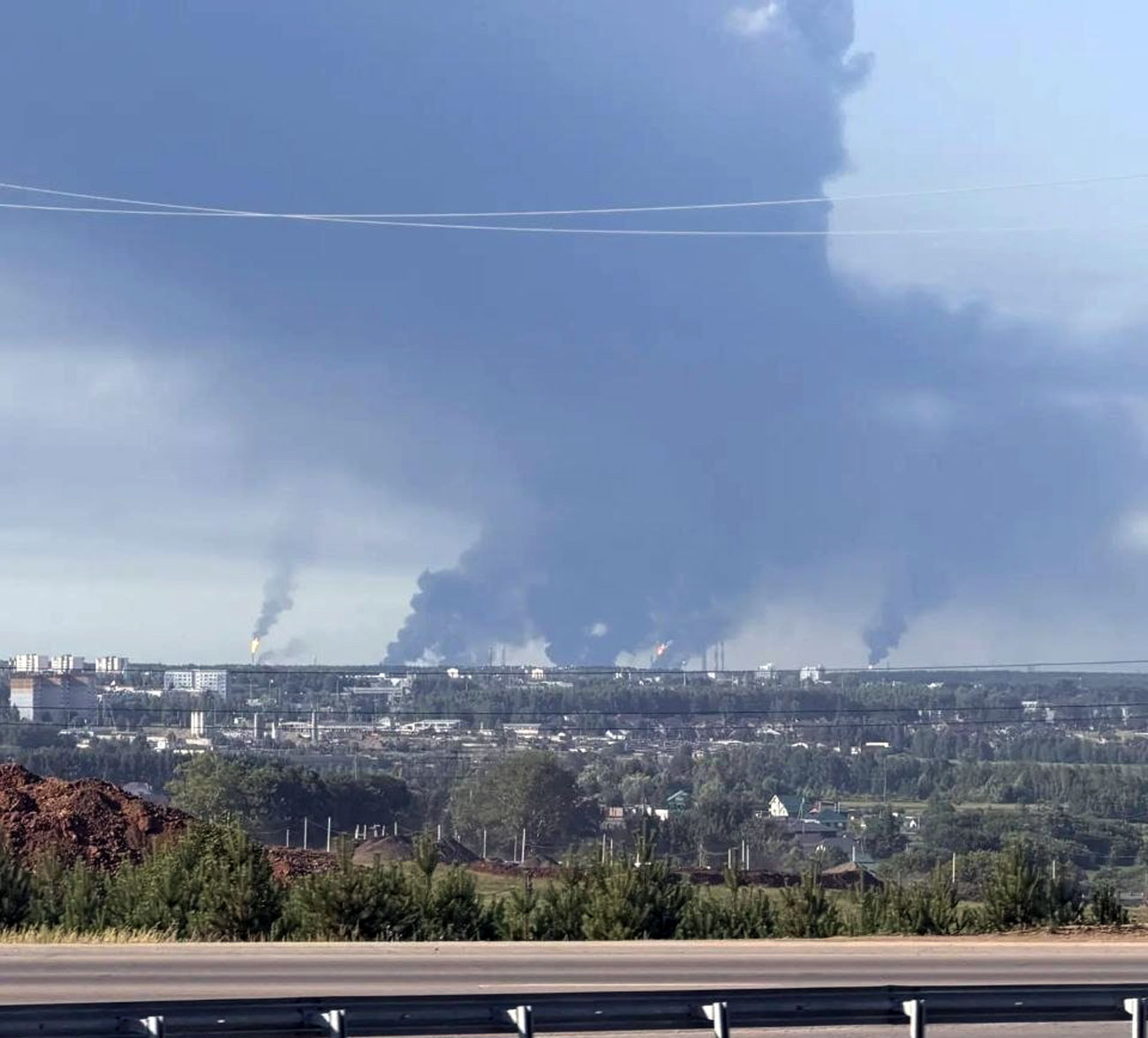
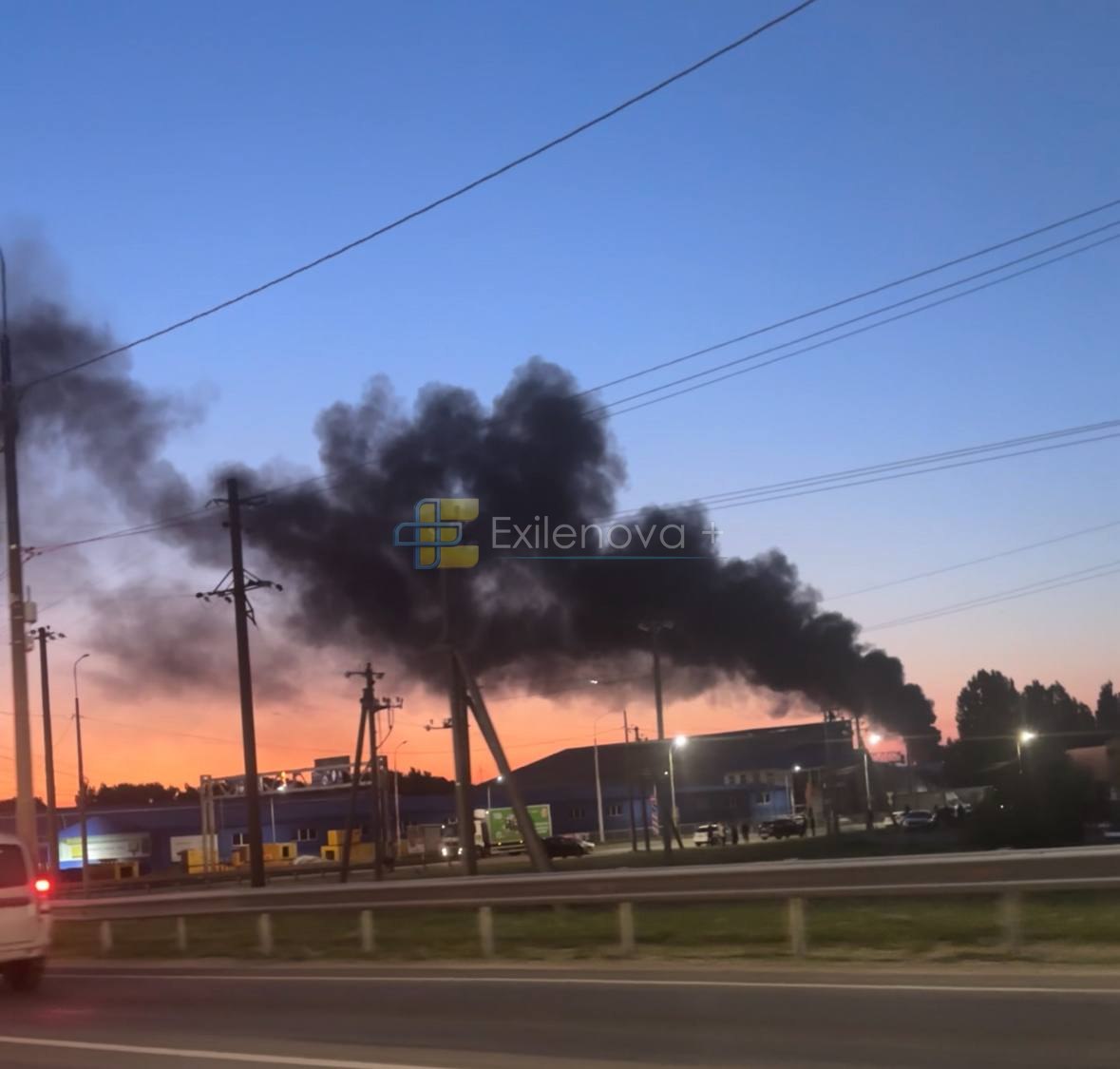
Satellite images taken before the attack show protective nets over part of the reservoirs, Astra noted. The netting did not save the depot: at least one tank burned in its southwestern section. Monitoring channel Supernova+ also tracked the fire, and Exilenova+ published footage of thick black smoke over both struck depots.
Stavropol fire reaches the fuel tanks
In Stavropol Krai, southern Russia, Astra's initial analysis pointed to the Lukoil-Yugnefteprodukt depot in Mikhaylovsk. The outlet then refined its conclusion: the burning site is a separate, larger depot in the hamlet of Vyazniki, 1.3 km away — a major rear hub for receiving, storing, and shipping diesel and gasoline, built around a tank farm with a loading rack.
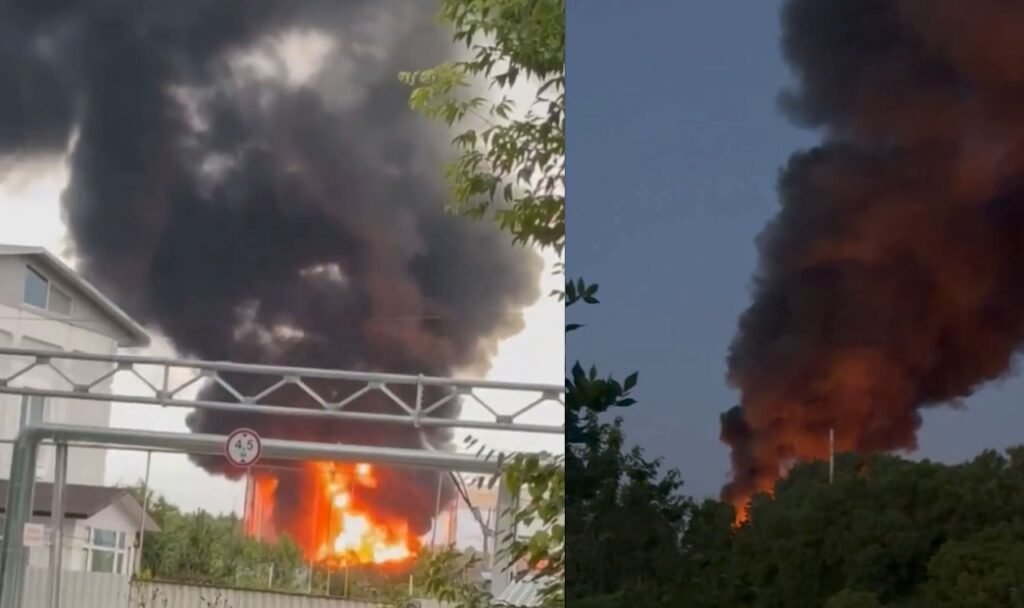
Governor Vladimir Vladimirov confirmed the strike on Vyazniki. The fire intensified by around seven in the morning and reached reservoirs holding flammable materials, he said, prompting the evacuation of residents from an adjacent street to temporary shelters.
Black smoke rises over the oil depot in Vyazniki, Stavropol Krai, Russia, after a Ukrainian drone strike, 9 July 2026. Photo: Exilenova+
Kirishi refinery reportedly hit
Supernova+ reporteda strike on the Kirishinefteorgsintez (KINEF) refinery in Kirishi, Leningrad Oblast, citing local accounts. KINEF ranks among Russia's three largest refineries, processing 20–21 million tons of oil a year — over 6% of the country's total refining. Governor Aleksandr Drozdenko claimed air defenses downed one drone and denied casualties or damage. Russia's defense ministry claimed to have intercepted 73 drones over 11 regions and occupied Crimea overnight.
Oil depot near Stavropol, southern Russia, is burning after a Ukrainian attack
Last night, Ukrainian forces struck several more fuel facilities across Russia.
— Euromaidan Press (@EuromaidanPress) July 9, 2026
SBU and Zelenskyy confirm the depot strikes
The SBU confirmed that it hit two Russian oil infrastructure sites: the Krasnaya Zarya depot in Tver Oblast, 520 km from Ukraine's border, and the Stavropolskaya depot in Stavropol Krai, over 500 km out. Both handle gasoline and diesel. The agency called the operation part of its systematic work against the Russian oil sector, a key source of war financing.
Explore further
Russia’s refinery in Saratov, two in Tatarstan, a pumping station in Bashkortostan — one night’s oil target list
"Our warriors are carrying out the long-range sanctions plan in response to Russia dragging out the war and continuing its attacks," he said.
Explore further
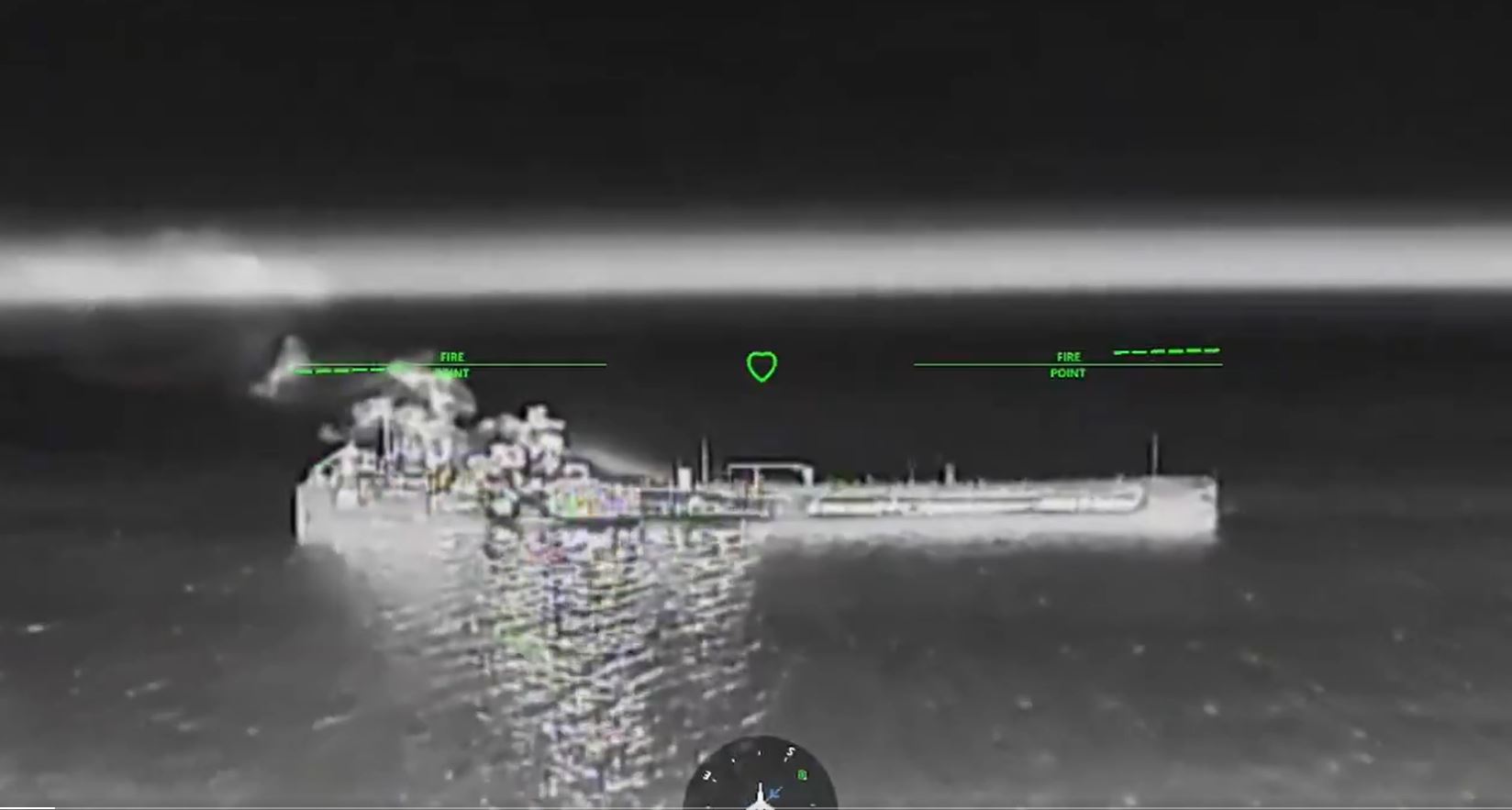
Three days, 21 ships: Russia’s Azov Sea fuel run to occupied Crimea is turning into a shooting gallery
He added that Ukraine's Defense Forces also hit a reserve fuel storage site about 800 km from the front, an oil loading terminal in Rostov Oblast, and the pumping station near Ufa struck a day earlier.
"We offered Russia a way to end this war long ago, and every day it chooses to prolong it should bring the reality of war back to where it began – to Russia," Zelenskyy said.

 Connexion


 Exilenova+