❌

Vue lecture

EU wants reforms before more money. Kyiv wants Europe to touch Russia’s frozen billions

Sergii Marchenko

Ukraine will require $52.6 billion in external financing for its 2027 budget, with expected sources of financing identified for around $20 billion, while $32.6 billion remains uncovered, Finance Minister Serhii Marchenko said at a Ukraine Donor Platform meeting in Brussels on 29 September, according to the Cabinet of Ministers.

Russia's war costs Ukraine far more than its economy can raise, so Kyiv has frozen nearly all spending except the army, pensions, and public wages. Foreign partners cover the rest, and much of that money comes tied to reforms Brussels wants in return.

Roughly $45 billion in 2027 defense spending has no partner guarantees. Adding that figure to the $32.6 billion financing gap puts the total at about $78 billion, according to Euronews.

"We're very happy with the €90 billion. But it's not sufficient," Marchenko said.

Euronews said Russian attacks had complicated tax collection. Marchenko said it was the first time since 2022 that Ukraine had realized its tax and customs administrations were underperforming. The Cabinet of Ministers reported separately that tax and customs revenues rose 14.5% year on year in January–August 2026.

Kyiv urges EU action on frozen Russian assets

Marchenko urged the EU to act on €210 billion in immobilized Russian central-bank assets, most of which are held at Euroclear in Belgium, and encouraged the bloc to consider a centralized, legally sound framework for the assets, according to Euronews.

Marchenko pressed the point at a European Policy Centre panel in Brussels on 28 September. "We need our friends, our European politicians, to be brave enough and to make some bold actions," he said.

"Unfortunately, the war is longer, the war is harder, and we need to provide some resolution of frozen Russian assets or provide other means for us to survive," he added.

The 28 September panel examined the idea of transferring the assets from Euroclear to an EU-owned custodian to mitigate risks for Belgium, according to Euronews. Sweden, the Netherlands, Spain, and Poland have also called for new options to use frozen Russian assets, Euronews reported.

EU's €90 billion loan

The EU agreed to the €90 billion loan after a proposal to use the Russian assets fell apart at a December 2025 summit, Euronews reported. The loan is based on joint EU borrowing and covers 2026 and 2027.

The package includes €30 billion in macroeconomic support and €60 billion for Ukraine's defense-industrial capacity and procurement, according to the EU Council.

Reforms slow EU support

European Commissioner for Enlargement Marta Kos said during the 29 September Ukraine Donor Platform meeting that Ukraine needed to deliver the agreed reforms for the EU to continue supporting it financially, Euronews reported.

EU officials are frustrated with Kyiv's requests for fresh money while reforms tied to existing support remain unfinished, and the European Commission has yet to validate the figures Ukraine shared, the outlet said.
  •  

Russian troops seize drone-dropped food in occupied Oleshky, accusing recipients of cooperating with Ukraine. Some people go missing, a local official says

local-resident-walks-to-a-box-still-attached-to-a-drone.jpg

Russian troops have taken food packages that Ukrainian forces dropped for Oleshky residents, accusing those who receive them of cooperating with Ukraine, Tetiana Hasanenko, head of the Oleshky City Military Administration, told Ukrinform on 30 September. She added that soldiers also question residents about where they got food not made in Russia.

The southeastern part of Kherson Oblast has remained under Russian occupation since 2022, with residents facing deteriorating security, shortages of food and medical care, and restrictions on their ability to leave. The UN Human Rights Monitoring Mission in Ukraine has documented the deterioration in Oleshky and neighboring Hola Prystan, where Russian forces have also taken residents away, including from the town's boarding institution.

Aid becomes a reason for questioning

Hasanenko said the latest delivery was the largest so far. Some residents received one or several packages, while others received nothing, she said.

"If it's food not made in Russia, [they ask]: 'Where did you get it?' And they say: if the Armed Forces drop food for you, it means you're cooperating with them," Hasanenko added.

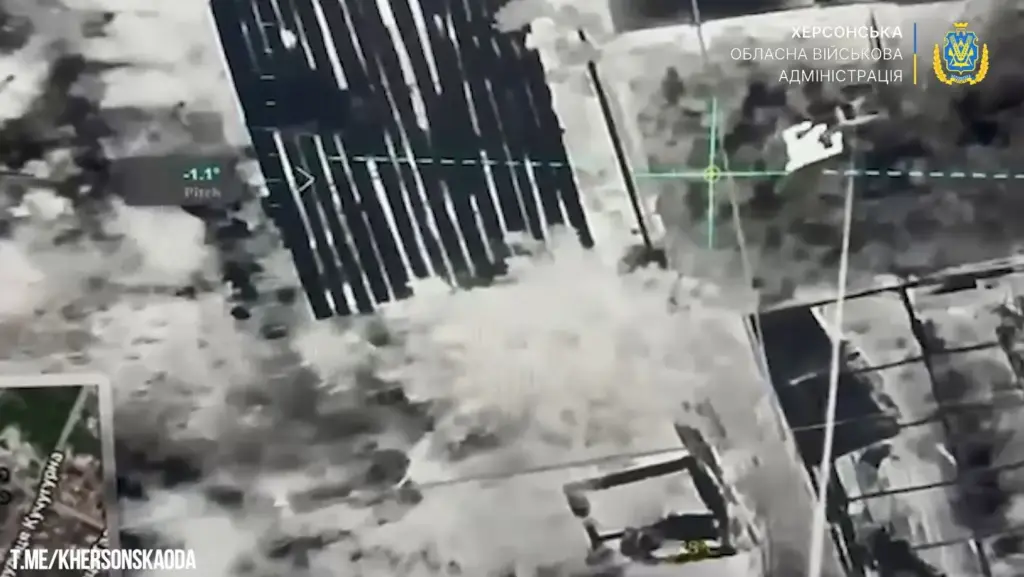
Russian forces shoot down drones carrying provisions and confiscate or resell the food, Oleksandr Prokudin, head of the Kherson Oblast Military Administration, said. He added that Russian forces detain Oleshky residents, take them "into the basement," and beat them for receiving humanitarian packages. In Ukrainian wartime usage, being taken "to the basement" means being thrown behind bars by Russian forces.

"People are being taken. One of our families disappeared without a trace. We don't know where they are—they were taken to a basement, and that's it. Whether they are alive or not is unknown," Hasanenko said.

russia holds 2000 people hostage oleshky without food water—ukraine flew 4000 kg locals across dnipro · post drones carry packages starving residents russian-occupied kherson oblast 2026 lifting boxes ukraine news
Explore further

Russia holds 2,000 people hostage in Oleshky without food or water—Ukraine flew 4,000 kg of food to locals across the Dnipro

Residents risk mined routes to escape

People who escaped Oleshky on foot through mined territory had lost 10–15 kg, Hasanenko said in a 29 September interview with Ukrinform. She said people leaving the city or searching for food must cross mined territory, and some did not return. She also described Russian soldiers entering residents' homes, moving in, and demanding food and alcohol.

In a 4 June interview with Ukrinform, Hasanenko said Russia had not organized an evacuation from Oleshky and that residents who left did so at their own risk. She said people understood that each attempt to leave could be "a one-way trip."

Residents rely on drone deliveries

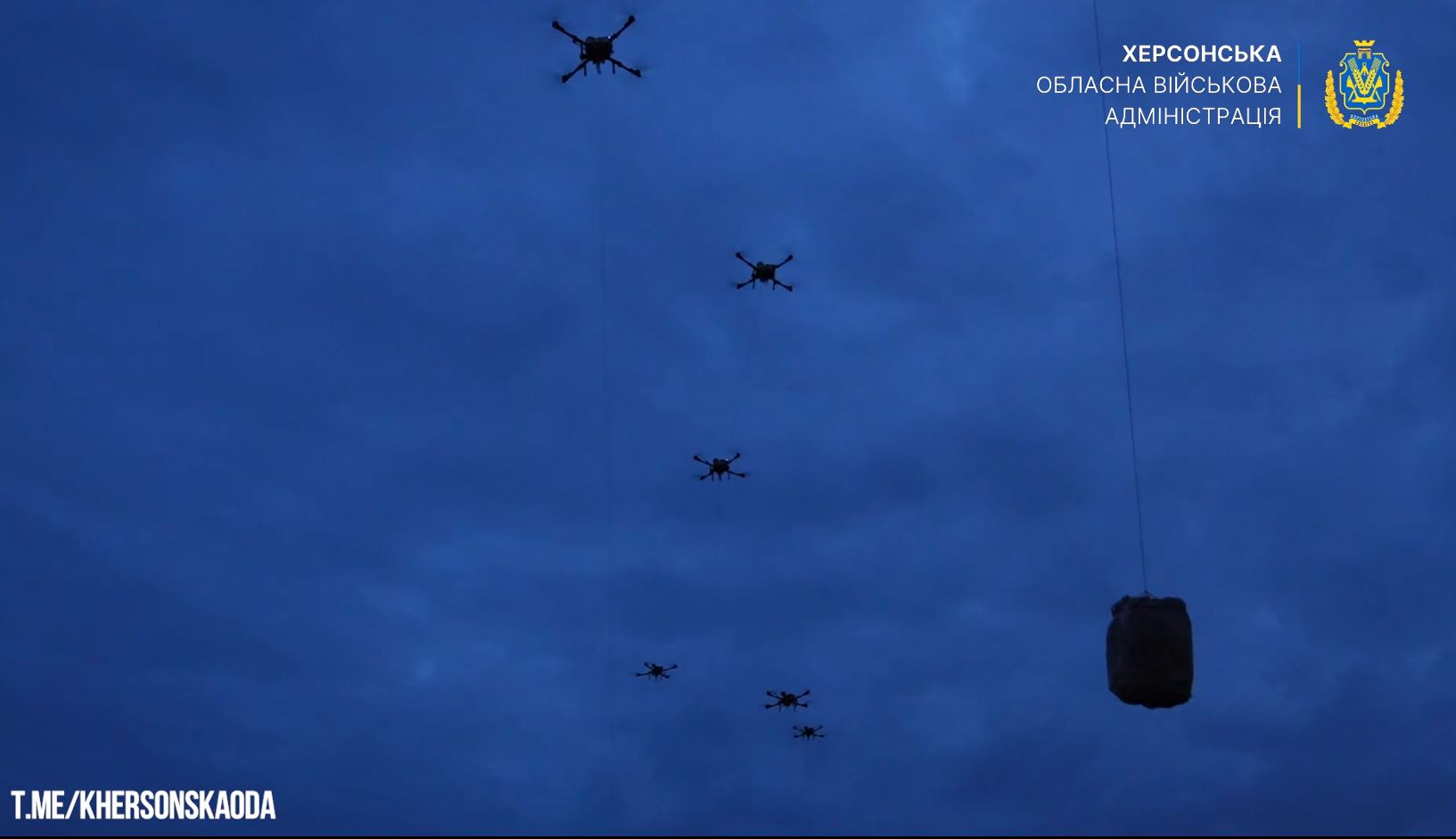
About 2,000 people, including nearly 50 children, remain in Oleshky, a city across the Dnipro from liberated Kherson, Prokudin said. He said they are surviving without food, electricity, or water and have been effectively prevented from leaving the city. Ukrainian forces have been using drones to deliver food to residents since March, he said. The deliveries are one of the few ways food reaches residents who remain cut off from the city's regular supply routes.

The UN mission reported on 25 June that no food had been delivered to Oleshky between 26 May and 24 June, after months of limited deliveries by private suppliers. Recently, Ukrainian forces delivered about four tonnes of food by drone to 100 locations across the city, Prokudin said.

  •  
❌