L’Agence spatiale européenne a choisi OVHcloud et CGI pour participer à la construction de Digital EO, sa future infrastructure numérique destinée à stocker, traiter et exploiter les données européennes d’observation de la Terre. Le contrat, d’une durée de 30 mois, représente plusieurs millions d’euros, sans que son montant précis ait été dévoilé. L’information, annoncée lundi […]
Moldova closed its airspace on the afternoon of 8 September and delayed the plane carrying Ukraine's President Volodymyr Zelenskyy to Norway after a Russian drone crossedinto the country, its government said in a statement to Reuters. The aircraft was cleared for takeoff once officials established that it had come down on Moldovan territory. Norway's prime minister described the episode as a near-miss, and neither government has said how close the drone came.
Russia runs three things at once along the EU's eastern frontier—mass drone attacks on Ukraine, drones crossing into Moldovan and Romanian airspace almost weekly, and strikes on the border checkpoints tying the three countries together—and states without interceptors can answer only by closing their skies.
What happened, and when
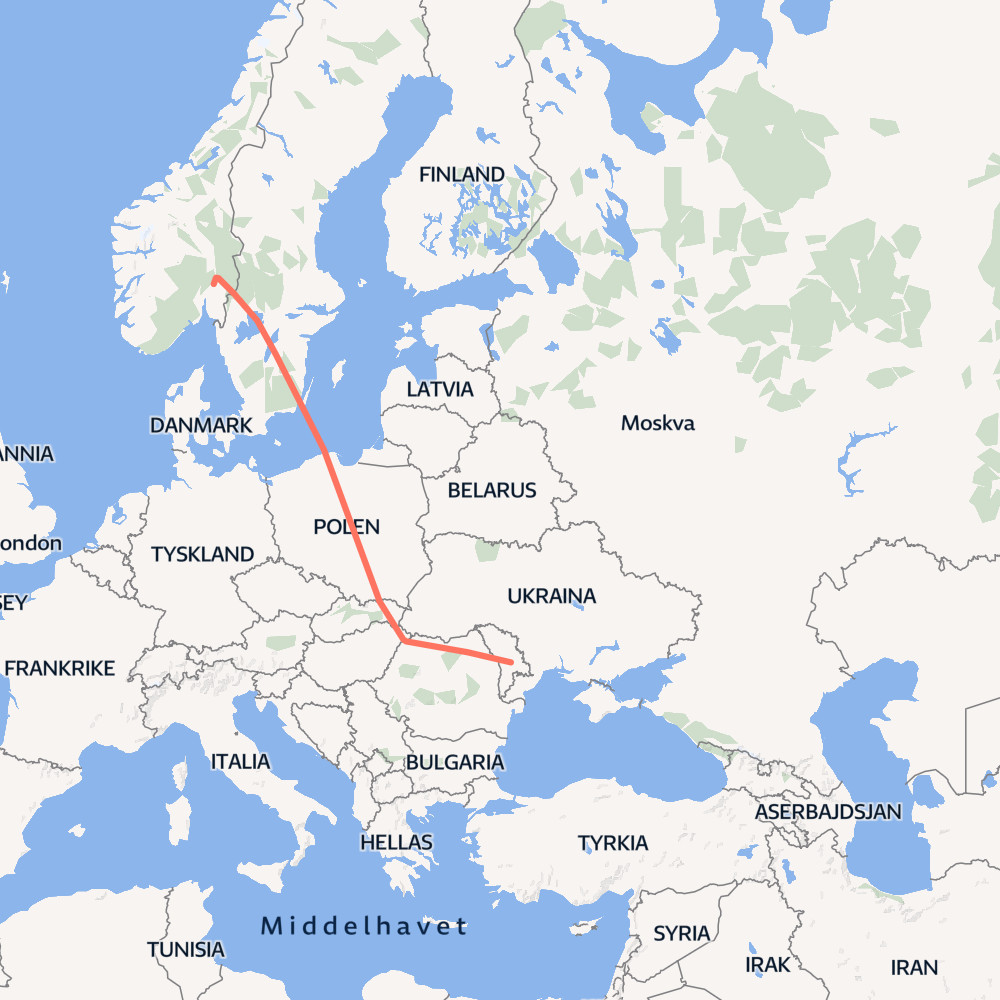
Moldova's National Army detected a Shahed-type drone entering from Ukraine at 16:20, the country's Defense Ministry reported. It flew toward Bender, a city in the Russian-backed breakaway region of Transnistria, then turned toward the capital, Chișinău, by 16:32. At 16:37, it left the country over western Moldova and headed into eastern Romania, across the Prut river border.
The route of Zelenskyy's flight from Moldova to Oslo, 8 September 2026. Map: NRK
Controllers restricted the airspace over central Moldova at 16:30. The same drone came back from the Romanian side, crossed the north of the country, and came down outside a village in the northwest, near the Romanian border, setting dry vegetation alight, according to the log. Nobody was hurt, and the airspace reopened at 17:39, more than an hour after it closed. The BBC's Ukrainian service placed the crash near a different northern village, without naming a source, so the exact spot is unsettled.
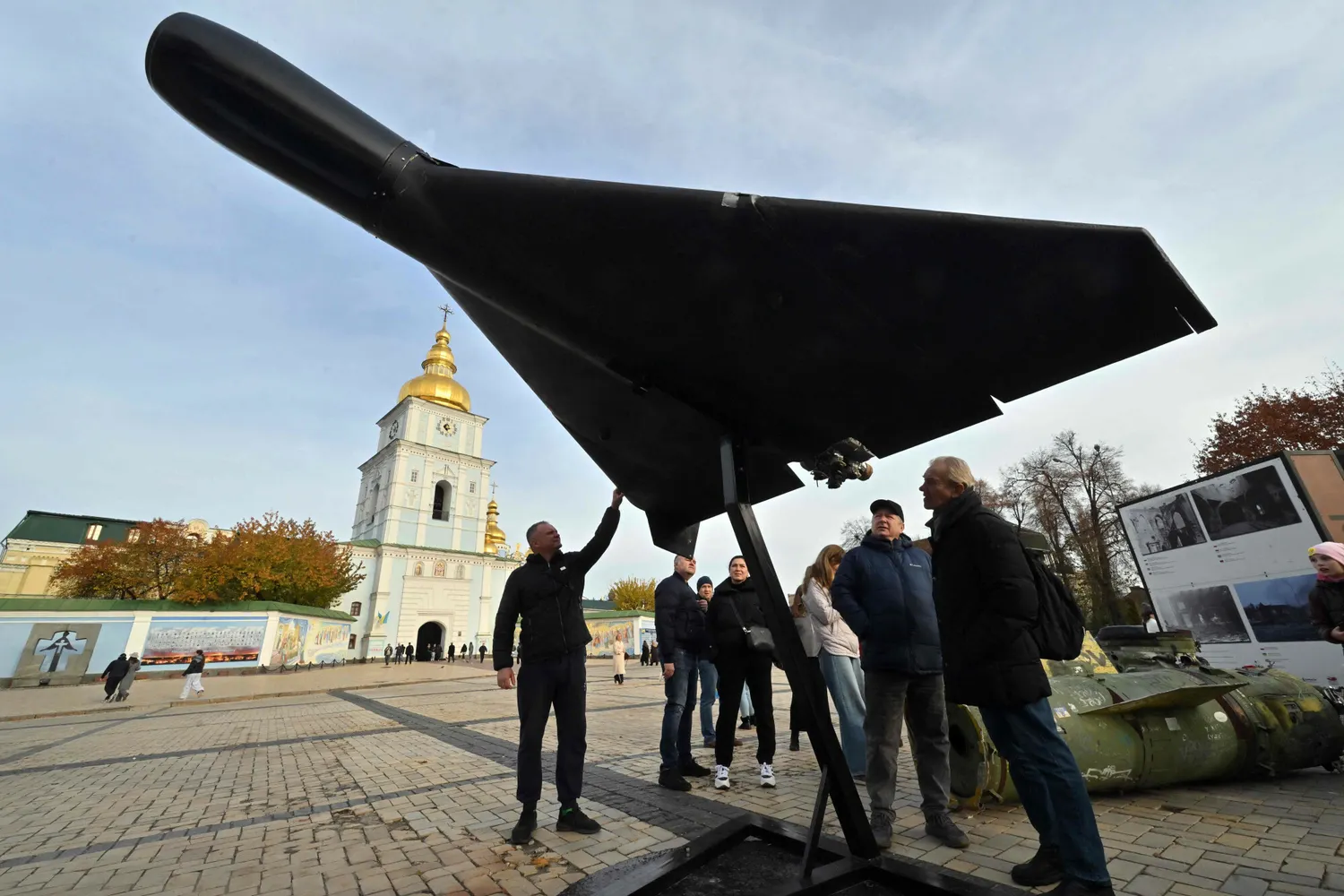
People look at an Iranian-designed Shahed 136, (Geranium-2) drone of Russian Army at an open-air exhibition of destroyed Russian equipment near Saint Michael's Golden-Domed Cathedral in Kyiv on November 2, 2025, amid the Russian invasion of Ukraine. Photo by Sergei SUPINSKY / AFP/Eastnews
The violation fell in the window when Zelenskyy's aircraft was preparing to take off, Militarnyi reported, citing the ministry. The civilian airport he was leaving from suspended operations and the border service closed the nearby crossings, the outlet added. Three departures and four arrivals were delayed in all, Reuters said.
Explore further
A drone nearly hit Zelenskyy’s plane taking off from Moldova on his way to a king’s funeral, Norway’s PM says
How the plane and the drone crossed paths
Zelenskyy flies an Airbus A319 corporate jet, and the threat to it probably came from a jet-powered Geran drone that crossed Romanian and then Moldovan airspace at around 17:00 that day, Militarnyi wrote, publishing the drone's track from the monitoring channel Oko Hora. That fits the return leg in the army's log, though no authority has tied a specific aircraft to the delay.
The route of a Russian jet-powered Geran drone across Romania and Moldova, 8 September 2026. Map: Oko Hora
Norwegian Prime Minister Jonas Gahr Støre told the broadcaster NRK the plane was almost hit as it prepared to leave, without naming his source. His office later described a danger recorded in Moldovan airspace that forced the delay. Norway's Finance Minister Jens Stoltenberg said Zelenskyy recounted the details himself at a closed meeting in Oslo.
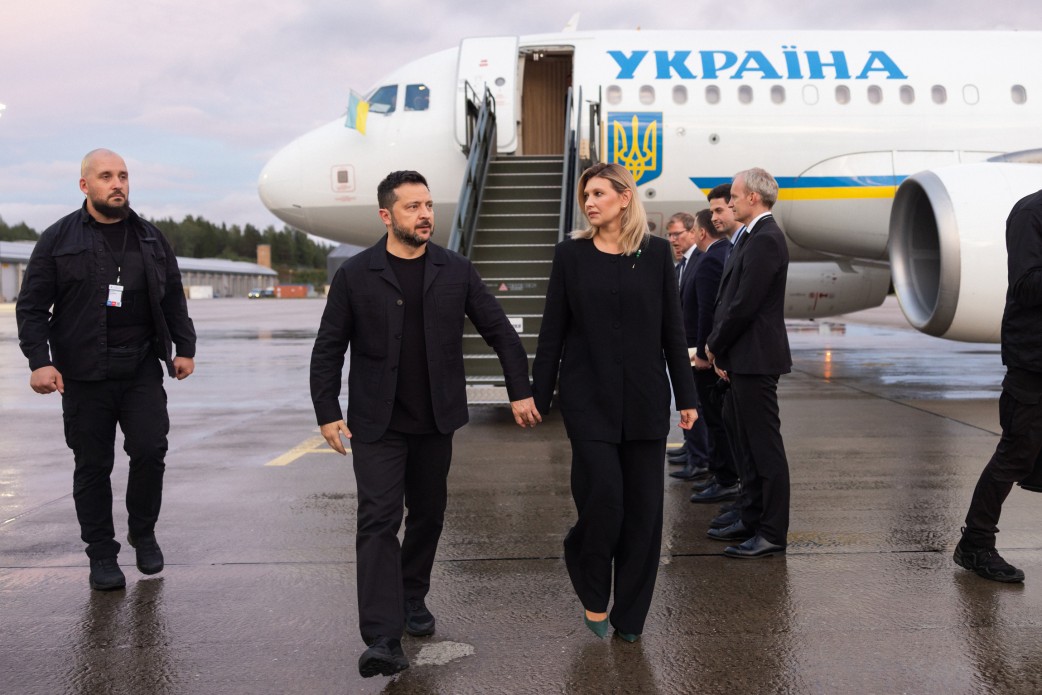
Zelenskyy and First Lady Olena Zelenska attended the farewell ceremony for King Harald V, who died on 28 August. Around it, the president worked on air defense, meeting Støre and then executives of defense companies from partner countries about the FREYJA anti-ballistic missile program, which Norway's government casts as a cheaper alternative to the Patriot.
The next night, the border crossing
Overnight on 9 September, Russian drones struck the Starokozache crossing on Ukraine's border with Moldova, killing two people and injuring three. The dead were Ukrainians, and a Moldovan citizen was among the injured, Moldova's Foreign Ministry told the broadcaster TV8. Border guards reopened the crossing that afternoon.
Russia claimed it had struck the crossing because it was used for military logistics. Moldova's Foreign Ministry rejected that outright, saying no weapons move through its territory, and that the people crossing there are families, children with their mothers, and the elderly. It is one of the working crossings on the Odesa Oblast stretch of the Ukrainian-Moldovan border, where the heaviest traffic runs through Palanca and Giurgiulești.
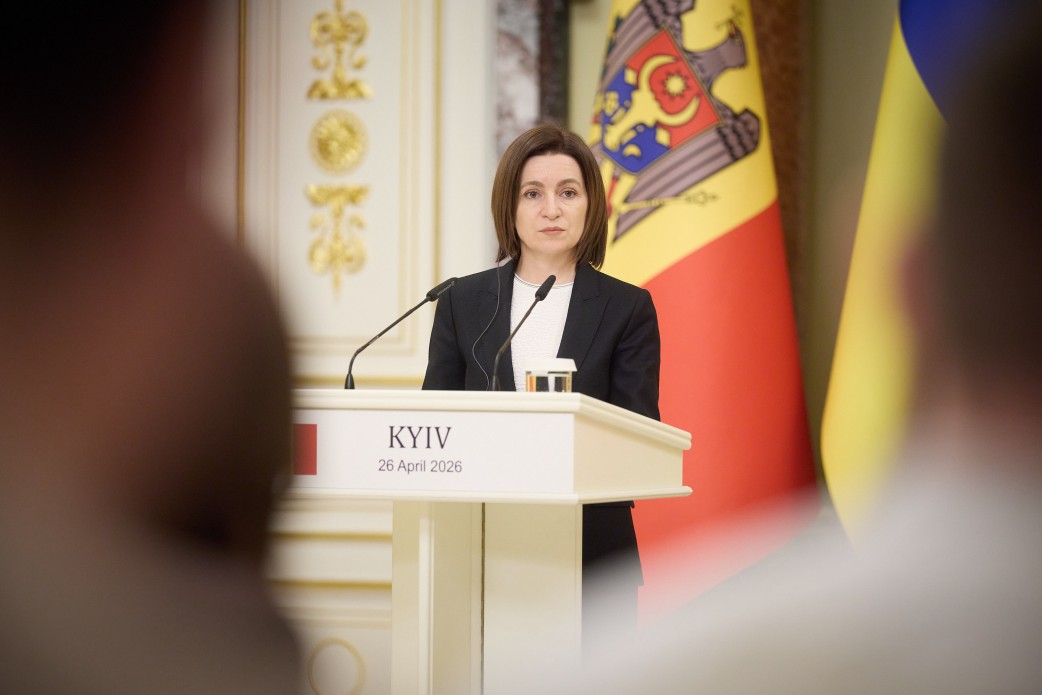
Moldova's President Maia Sandu condemned both the strike and the Geran-type drone that had forced her country to close its airspace the day before, and said the events show Ukraine needs more air defense.
Explore further
Moldova is investing in air defense against the Russian drones crossing from Ukraine—Romania shoots down the ones that reach it
The pattern, and Moldova's empty sky
Russia has hit at least five checkpoints on Ukraine's western borders since late August, four of them facing Moldova and one facing Romania, and the drone that struck the Kotlovyna crossing on 20 August flew in through Moldovan airspace. Euromaidan Press has covered part of that campaign, including burned food cargo near the Giurgiulești crossing in August. The State Border Guard Service has called such strikes an act of terrorism, because people are present at the crossings when they are hit.
In the air, Moldova can do little. It is still buying its first serious air defenses, so it restricts airspace and waits while Romania scrambles jets against the drones that reach its side. It logged three airspace breaches in nine days in August, and more than 100 drones were detected near Romania in four days that month.
Ukraine formally notified the International Civil Aviation Organization (ICAO) on 2 September that Russian airspace is unsafe for civilian flights because of increased military activity, Ukrainian Foreign Minister Andrii Sybiha said. The letter behind the notification asks the organization to urge its member states to stop civil flights over Russia altogether, ZN reported.
ICAO, the UN aviation agency, cannot close Russian airspace or order carriers to reroute. European and US airlines already avoid Russia's airspace, while carriers from China, Türkiye, and the Gulf states have kept flying through it. Those remaining airlines must assess the safety of flying amid drone and air defense operations. Drone alerts during reported Ukrainian attacks have repeatedly shut Russian airports and delayed hundreds of flights.
The notification follows a 1 September warning by Ukrainian President Volodymyr Zelenskyy, who told airlines, insurers, and other aviation stakeholders that Russian skies were becoming unsafe as Ukrainian drones reached deeper into the country.
Zelenskyy said Ukraine's Foreign Ministry would pass information about the risks to international organizations. The letter to ICAO came from another office—Mykola Kalashnyk, Ukraine's minister for recovery, infrastructure, and transport, whose portfolio covers aviation.
Russian President Vladimir Putin said Zelenskyy's statement amounted to "a bid for state terrorism" and that Moscow would find a way to respond if civilian "tragedies" followed.
Sybiha urged airlines to avoid Russian airspace and said the notice was meant to prevent unintended incidents, arguing that Moscow was failing to disclose the dangers its war had created. He invoked Ukraine’s inherent right to self-defense under Article 51 of the UN Charter, the provision that recognizes states’ right to defend themselves against an armed attack. The foreign minister further stated that the war was “returning home to Russia.”
In its separate statement, ICAO warned of rising threats to civil aviation worldwide. It did not mention Russia, endorse Ukraine’s assessment, or say Kyiv’s notification had prompted it.
The UN aviation body identified long-range weapons, drones, navigation-signal interference, and advanced air-defense systems as growing dangers to civilian aircraft. It reiterated that international aviation law prohibits the use of weapons against them.
ICAO urged member states to assess airspace under their control, share threat intelligence quickly, and improve military-civilian coordination.
Russian airports were already facing repeated closures
Russian airspace has not been legally or completely closed. The disruption has instead taken the form of temporary restrictions at individual airports.
From 5–7 May 2026, restrictions during reported Ukrainian attacks delayed more than 450 flights at Moscow airports, while limits at Vnukovo remained in place for nearly 18 hours.
On 6 July 2025, Moscow's Sheremetyevo airport canceled 171 flights, while airports in five other cities suspended operations. During an earlier wave on 22 May 2025, Domodedovo halted flights four times in one day and Sheremetyevo three times, while Vnukovo and Zhukovsky also restricted operations.
Airports in Kaluga, Nizhny Novgorod, Saratov, and Tambov were temporarily closed during a 27 May attack in which Moscow claimed 99 drones were intercepted. Two days later, another alert delayed 20 arrivals and 14 departures at Vnukovo, pro-Kremlin Telegram channels claimed.
Astronomy, our window into the rest of the universe, happens in the dark. Planets, stars and galaxies – all the mysteries of the cosmos – only reveal themselves at night. But the night sky may be getting much brighter, thanks to an American company with a plan to conquer darkness itself by sending 50,000 giant mirrors into space.
What you are reading first appeared as a cover story for The Atlas, our new global publication with The Continent. Sign up here to get the next edition delivered to your inbox on August 27.
Astronomers are panicking.
It is an “existential threat” to optical astronomy, says the European Southern Observatory. A “disastrous” idea that will “permanently scar” the night sky, according to the Royal Astronomical Society. The American Astronomical Society told Nature it “would probably mean the end of ground-based astronomy, or optical astronomy, at least.”
Sthabile Kolwa agrees. “It will take away a very crucial part of our civilization,” she tells The Atlas. Kolwa, a senior lecturer in astronomy at the University of South Africa, studies the life cycles of galaxies, but today her concerns are more immediate. “It might come to this, that we just have to find them in the parking lot and say, ‘Hey, what are you guys doing? You’re going to ruin science for us.’ ”
Like Uber, but for the sun
The parking lot in question is in Hawthorne, California, outside the headquarters of Reflect Orbital. They call themselves The Sunlight Company. The start-up is celebrating: Earlier this month, the United States Federal Communications Commission (FCC) approved the launch of Eärendil-1, likely in a few months time.
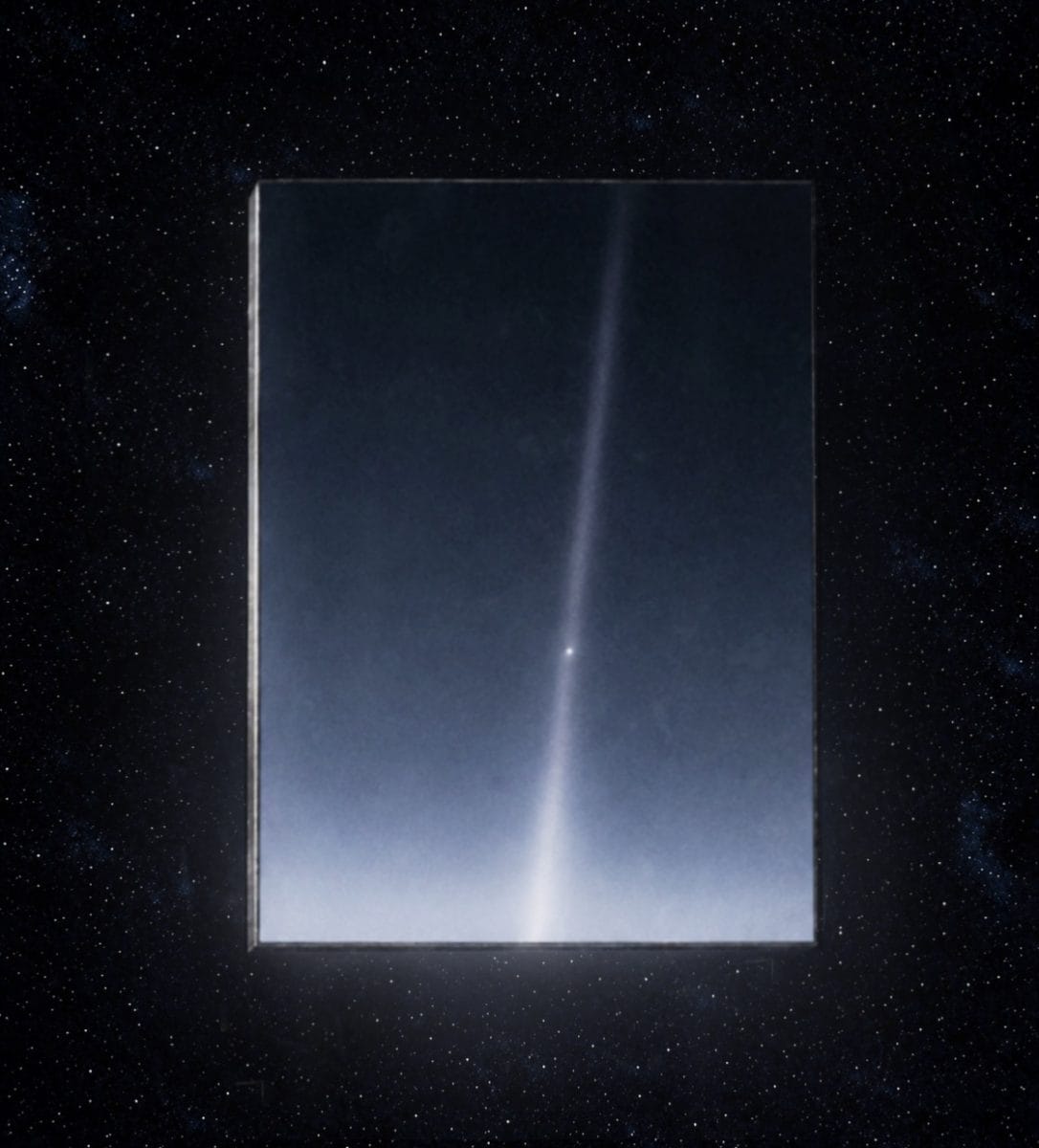
This satellite, named for a character in JRR Tolkien’s The Silmarillion, will unfurl an 18m x 18m mirror in low Earth orbit. It’s designed to reflect sunlight onto the dark side of the earth, lighting a 5km2 patch of land with the strength of four full moons.
It is a proof of concept.
By 2035, Reflect Orbital wants 50,000 of its mirrors in space, delivering illumination “comparable to daylight” on demand to paying customers (“sunlight is the new oil,” says chief executive Ben Nowack). The company says this will allow solar panels to generate clean energy overnight; provide “safer, evenly-lit streets” to cities that pay for it; and keep construction sites and farms working 24/7.
There will be an app, of course, offering “sunlight as a service” – lighting up the night will be as easy as ordering an Uber.
Clean, renewable energy is at the heart of the company’s vision, a spokesperson told The Atlas in a statement. Reflect Orbital declined to respond to specific queries and said it is in constant dialogue with astronomers, scientists and environmental researchers to mitigate the impact of the light pollution: “We are able to dim the brightness of the service and turn it off at any stage. We control where the light shines when serving an authorised customer. Most people and most places will never see this light. It is precise, targeted and customers will require permits to receive the service.”
Circadian arrhythmia
A new research paper, published in May, challenges Reflect Orbital’s position. Its author, the European Southern Observatory’s Oliver Hainault, concluded that the company’s 50,000 satellites would increase the background brightness of the sky by 300% – even when their mirrors are pointed somewhere else. This, coupled with a proposal from Elon Musk’s SpaceX to build vast data centres in space, would go “beyond the limit” of what astronomy can withstand.
What that means, in practice, is that the images from ground-based telescopes will be dramatically less useful, marred by streaks of light from passing satellites. The most distant light sources won’t be visible at all.
This will obscure evidence of other galaxies, hinder research into black holes and other cosmic phenomena, and potentially prevent early warnings of asteroid approaches. Cutting-edge astronomy will only be possible from space-based telescopes like the James Webb and the Hubble – access to which is already massively oversubscribed, and subject to political interference.
The night sky will look different to the naked eye, too. “The next time you’re away from urban light pollution, spend some time outdoors after dark and enjoy the view of the Milky Way and the constellations that have inspired awe since humankind woke to consciousness. Chances are those views are not here to stay forever,” wrote journalist Tereza Pultarova for Space.com.
Anna Jibladze
Running out of space
The night sky is already a lot brighter than it was 150 years ago, when light bulbs started to become commonplace. According to Dark Sky International, a US-based nonprofit that advocates against light pollution, 80% of Earth’s human population already lives under some form of sky glow, most of which is generated on land. This has forced astronomers to seek out “dark sky places,” like the Atacama Desert in Chile or the Upper Karoo in South Africa, for their telescopes.
Humans can adapt to less darkness. But it is much harder for animals and ecosystems that have evolved alongside predictable rhythms of day and night. Nocturnal predators lose the ability to hunt; sea turtle babies can’t find their way to the sea; migratory birds are thrown hopelessly off course; and moths expend all their energy helplessly chasing artificial light sources.
“It’s almost like we are on a mission to obliterate natural darkness from earth,” said Ruskin Hartley, Dark Sky’s chief executive. “And now rather than do it street by street and bulb by bulb, let’s do it from space.”
Space is, in theory, protected by the Outer Space Treaty, a 1967 agreement signed by 110 countries, including all the major space superpowers. It states that “space is the province of all mankind." But that’s not what’s actually happening, Hartley argues. “In the US, it’s the most wealthy, most powerful individuals who are gobbling up as much of that orbital space as they can before someone else can get that opportunity” – with China, Russia and Europe all scrambling too for a greater presence in low Earth orbit.
“Who gets to choose that we light up the night sky? Who gets to make that decision?” Ruskin asks. In the US, it is the FCC’s job to decide what satellites are allowed in space. But it has said that assessing the impact of light pollution or environmental damage is not within its remit. Instead, it wants to slash regulation so American companies can take advantage of the “space industrial revolution.”
And Reflect Orbital has rich and powerful backers. Earlier this year, it secured a $1.5-million contract from the US air force, hinting at possible military applications for its mirrors. Last year, it raised $20-million from three venture capital firms, including Sequoia Capital, one of the biggest investors in Silicon Valley. Sequoia also owns a multibillion-dollar stake in SpaceX, which has its own plans for low earth orbit.
There are already more than 10,000 Starlink satellites up there, giving Elon Musk unprecedented influence over global communications. The company wants to launch one million more satellites over the next few years to build a network of space-based data centres. In addition to the light pollution, astronomers worry the potential for collisions will increase dramatically, as will risks to the ozone layer.
A brighter future
On her blog Higher Dimensions, the astronomy professor Janna Levin contemplates our brighter future. “It is quite possible that the hot glow of the swarm of data satellites will saturate the night, washing out the stars from our perspective on Earth. We’ll look up into the sky and instead of Zeus transformed into a swan outlined in a constellation of a few stars, the machine gods will literally loom above us, glowing with radiant heat, making declarations, predicting the weather, forecasting then determining our fate.”
Kolwa, the South African astronomy lecturer, offers a different metaphor: that of empires “colonizing low Earth orbit.” This was an ambition of one of the most infamous imperialists of them all, Cecil John Rhodes, who said that he looked up at the stars and thought: “I would annex the planets if I could; I often think of that. It makes me sad to see them so clear and yet so far.”
But it hasn’t been colonized just yet.
“I’m still trying to figure out what we can do, what responsibility we have as scientists,” says Kolwa. “How could we engage our communities to stand up to these corporations and say no? We must keep our night skies dark, as dark as possible.”

 Connexion