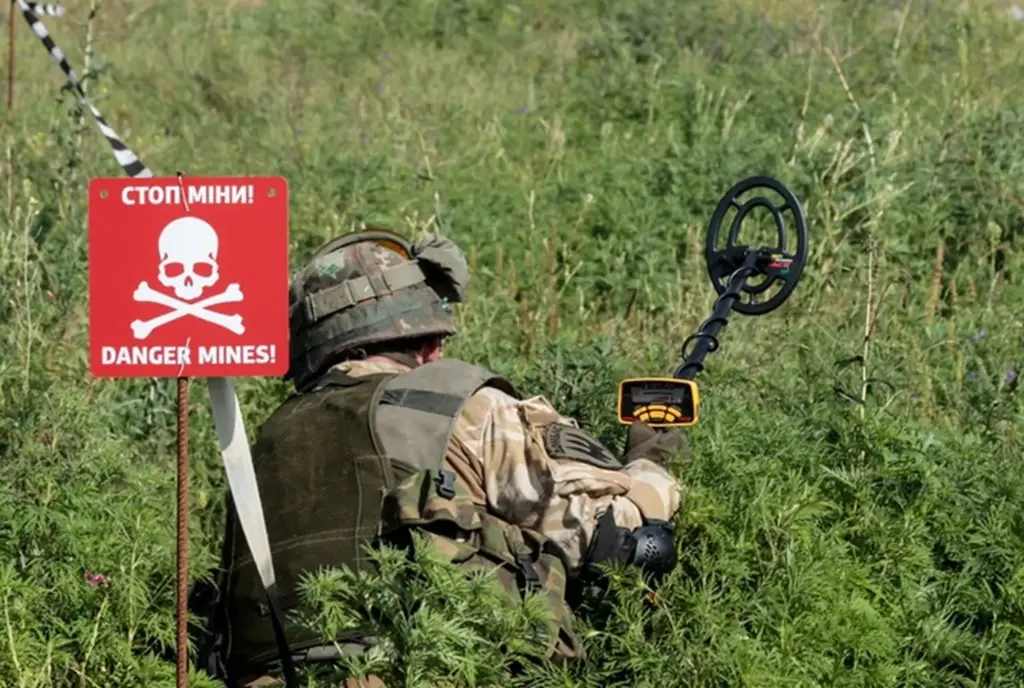
As of 1 September, Russian mines and unexploded ordnance (UXO) had harmed 1,688 civilians since the start of the full-scale invasion, Ukraine's Main Directorate of Mine Action, Civil Protection and Environmental Safety said. The figure breaks down into 1,515 adults and 173 children, with farmers the worst-hit occupational group at 296.
More than 20% of Ukraine's territory—139,000 km²—was suspected of contamination as of mid-2025, according to the UN Mine Action Service (UNMAS). The contamination poses a long-term civilian hazard because mines and unexploded ordnance can remain dangerous long after fighting has moved on. UNMAS has described Ukraine as the most heavily contaminated country since the end of the Second World War.
Ukrainian law enforcement opens criminal proceedings after each civilian detonation on a Russian mine as part of investigations into Russia's violations of the laws and customs of war, the directorate said. The data is collected under Protocols II and V of the Convention on Certain Conventional Weapons, Ukrinform reported.
Beyond farmers, the occupational groups most affected were the unemployed (238), pensioners (166), schoolchildren (165), critical infrastructure workers (164), and drivers (108), the directorate said.
UN human rights monitors recorded 51 civilian casualties from mines and explosive remnants of war in June, including seven killed and 44 injured.
The danger also extends to the people clearing contaminated areas: a Russian strike killed two Norwegian People's Aid deminers and wounded four in Kherson Oblast the same month. Russian forces had hit a clearance team before, killing two Danish Refugee Council workers near Chernihiv in September 2025.
The annual economic losses from contaminated land are estimated at around $11 billion, largely from lost exports and local tax revenue, according to the deputy minister coordinating Ukraine's demining.
Ukrainian investigators recovered an unencrypted American AI module from a Russian Molniya drone that killed three civilians near a Zaporizhzhia gas station on 6 July, and read the code that guided its targeting, the New York Times reported. No human operator made the final call.
Commercially sold AI boards have been turning up inside Russian strike weapons for more than a year, and autonomy is the direction both armies are moving in. What changed is the evidence rather than the technology. Until now, autonomy had to be inferred from what a wreck lacked—an antenna, a radio trace.
Tetiana Bubynets, a 19-year-old accounting student at Zaporizhzhia National University, was declared dead at a hospital, one of her professors said. Oleksii Svirin, 41, and Roman Karpii, 48, later died of their injuries. The drone had attempted to navigate around an apartment building toward the gas station's propane tanks but struck a wall and detonated near people sheltering there.
What investigators found in the wreckage
The wreckage contained an Nvidia Jetson Orin minicomputer, an off-the-shelf AI module that costs a few hundred dollars. The chip was not encrypted. Ukrainian officials said they could read the terrain imagery loaded for visual navigation and the object-detection code that defined what the drone was trained to target, NYT reported. The drone carried no radio antennas and was flying in a wave of approximately six, none of them transmitting. A missing antenna alone would not prove self-targeting—a drone flying a preprogrammed route needs no antenna either, but it would have no use for an Nvidia chip.
Human operators had programmed the drone to fly toward the gas station and set the general target area before launch. Once near the site, the onboard system identified and selected the specific object—most likely propane tanks it had been trained to recognize—on its own, drone experts and military officials said. Vadym Kushnikov, a drone expert at the Kharkiv Aviation Institute, described the drone as "a preprogrammed tool trained in virtual reality to track specific objects," NYT reported.
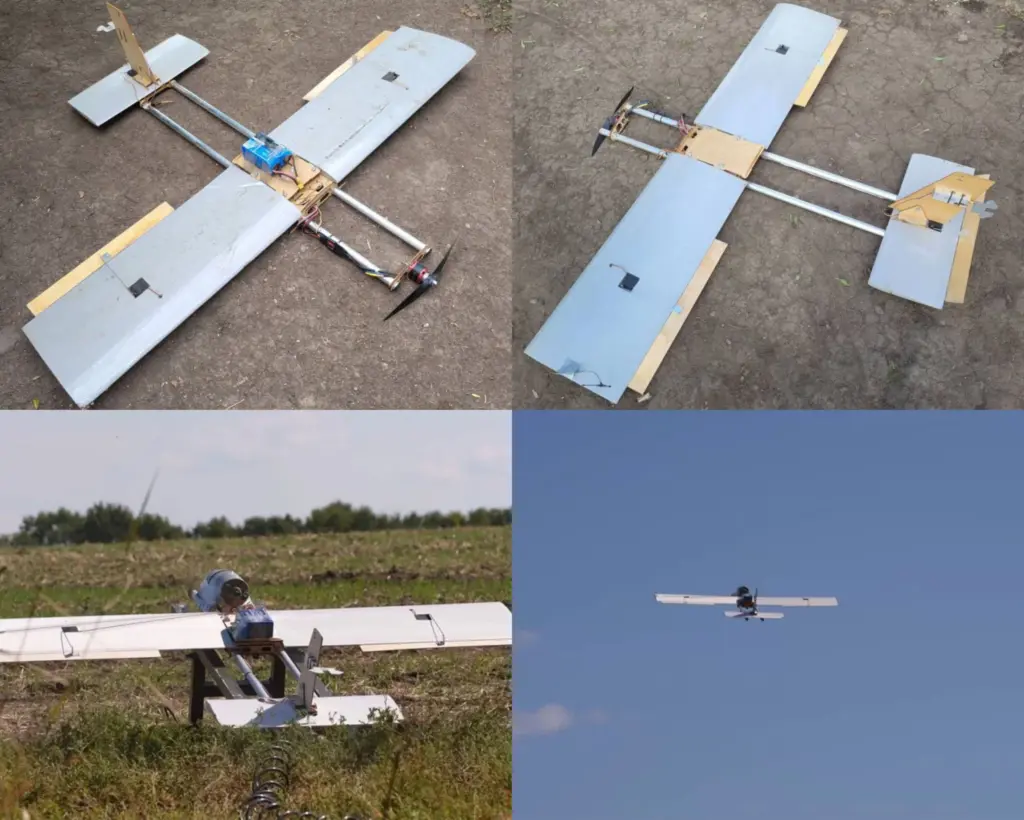
Russian Molniya kamikaze drones. Photos from Russian sources via Militarnyi
Where else the Nvidia module has turned up
Kateryna Bondar, a senior fellow at the Wadhwani AI Center at the Center for Strategic and International Studies in Washington, told NYT that no earlier Russian strike by a self-targeting drone has been documented killing civilians, which would make 6 July the first such case on record. She called the Nvidia module "the best proof" that Russia was experimenting with autonomous AI.
The Jetson Orin is not new to the battlefield. The module is made by the American chipmaker Nvidia. Ukraine's sanctions on Russia's AI drone supply networks, imposed in August 2025, hit Russian, Chinese, and Belarusian drone developers and component suppliers—not Nvidia.
Ukrainian intelligence first identified the module in the V2U autonomous strike drone in June 2025, mounted in a Chinese Leetop A203 minicomputer. It has since reported Jetson-based AI modules in Russia's Lancet and Klin drones—the Klin an older Jetson TX2—and, most recently, in the S-71 Monokhrom cruise missile.
In those cases, the finding was the hardware, and what Ukrainian intelligence inferred from it. This time, the code itself was legible.
Nvidia confirmed to NYT that the photographed board was a Jetson Orin. The company said the minicomputer is a consumer-grade product "sold to students, developers and start-ups for a wide range of beneficial applications," that it does not sell the computer in Russia, and that it is widely available through resellers.
Zaporizhzhia as testing ground
Russia began test flights of AI-guided Molniya drones in May, and had begun testing self-targeting systems in the V2U several months earlier, some of those for last-mile guidance only, Ukrainian air defense experts told NYT. Local air defense officials said Russia has been aiming at civilian objects—pumps and propane tanks at gas stations—along with military recruitment centers while trying out autonomous drones in Zaporizhzhia. Why those targets were chosen for the tests is not clear.
Gas stations have been under sustained attack independently of the AI trials. Russia has destroyed approximately 200 across Ukraine since spring, around 50 in June alone, by UNITED24 Media's count.
In Zaporizhzhia, gas stations now prop plastic sheeting at odd angles around propane tanks to confuse the drones' image recognition, and Ukraine has turned to shooting down drones that electronic warfare cannot jam.

 Connexion