The authors of a new Ukrainian war-crimes framework say the line between a Russian targeting error and a deliberate method may not matter in law: a repeated failure to spare civilians can itself be a violation, whoever the missile was meant for. That goes further than their own report, published last week.
“An isolated targeting error and a method of conducting attacks are not mutually exclusive alternatives, nor is an error necessarily exculpatory,” Volodymyr Hryshko, deputy head of the legal department at Truth Hounds, told Euromaidan Press.
Explore further
Precision missiles hit the coordinates. Investigators ask who was still standing there
International law obliges an attacker to verify a target and to break off if it changes or the civilian cost turns excessive. Skip that, over and over, and “a recurring failure to take such feasible precautions may itself constitute a violation, regardless of whether civilian harm was specifically intended.”
The report calls this a “moving target attack”: the weapon cannot be recalled, and the target can move, disperse, or be warned before it lands. Russia’s standard defense—that a precise hit proves a lawful target—does not, the authors argue, survive that gap.
“A recurring failure to take such feasible precautions may itself constitute a violation, regardless of whether civilian harm was specifically intended.”
Volodymyr Hryshko
Victoria Amelina. Credit: Victoria Amelina via Facebook.
Error and method are not the only options
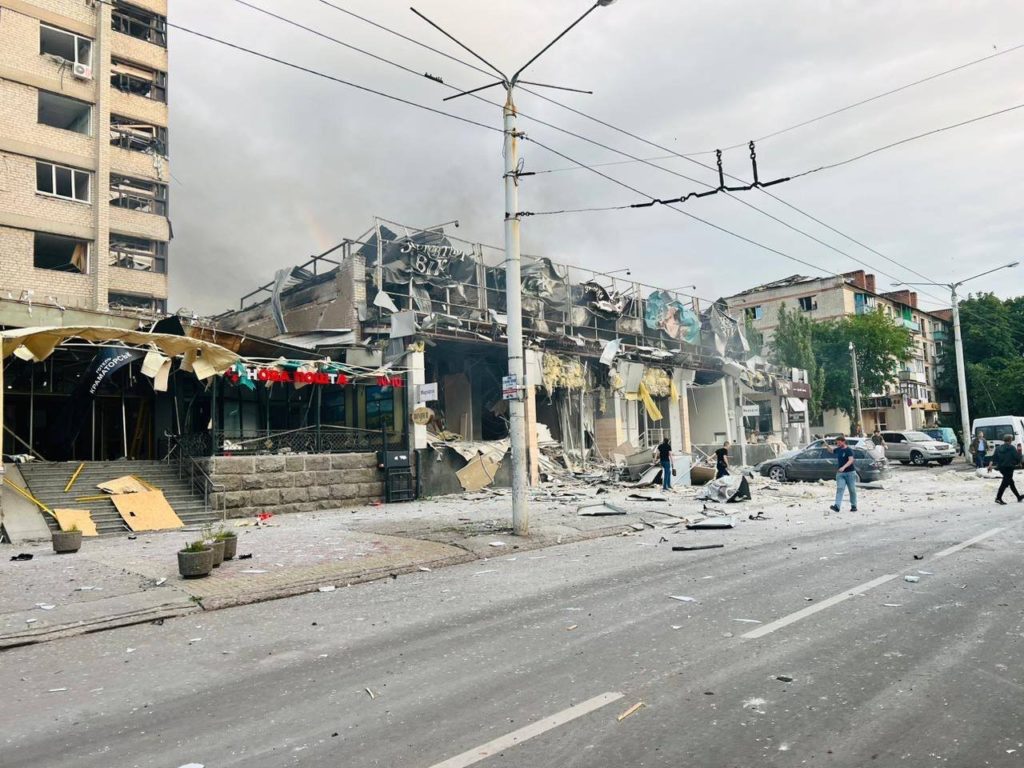
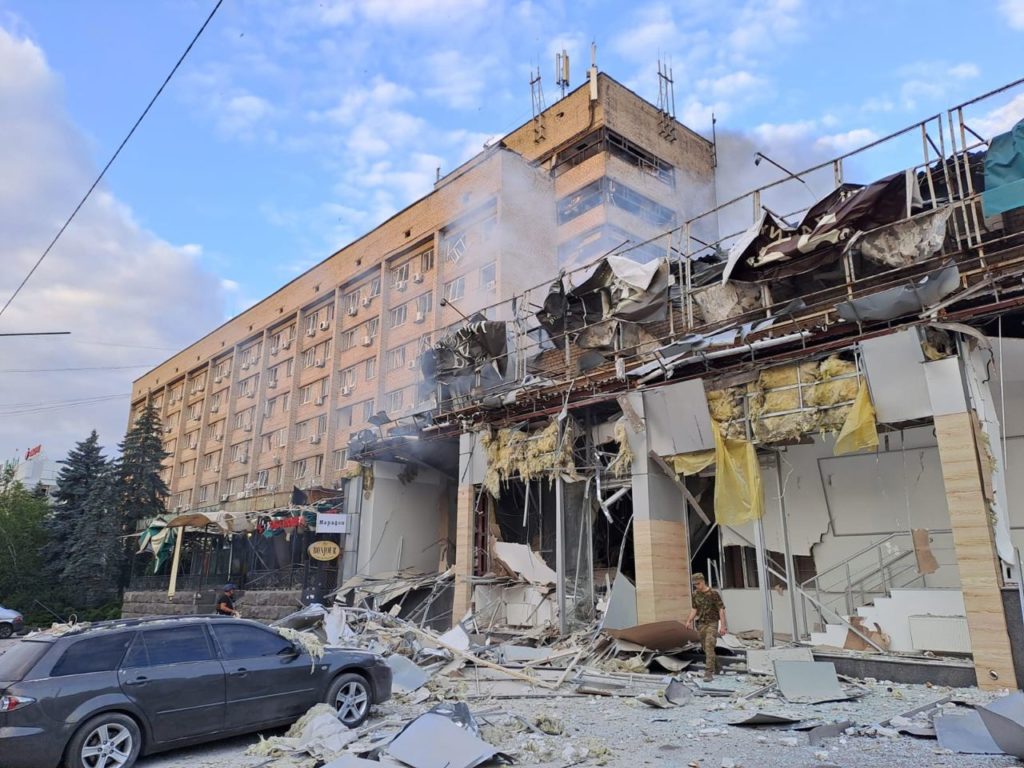
The report found a war crime in only one of its four cases—Kramatorsk, 27 June 2023, a Russian cruise missile into a pizzeria that killed 13 people, among them the novelist Victoria Amelina, who had left fiction to document Russian war crimes for Truth Hounds itself. The other three it left unresolved, and those are the ones Euromaidan Press asked about.
The four strikes are hard to read as simple accidents, said Maria Burnett, senior legal coordinator at Project Expedite Justice. Soldiers were present in each case—off duty, or at a scheduled meeting, or at an exhibition—but a temporary presence, the report argues, did not strip these places of protection.
Russian forces used precision weapons despite long gaps between the last intelligence and impact, she said, so “the risk that the target would move or disperse, while civilians remained exposed, was entirely foreseeable.” Doing it repeatedly “suggests a willingness to proceed without reliable control over whether the military objective would still be present when the missile arrived.”
The evidence that would settle it
Nothing in the open yet proves “an officially directed policy or deliberate method across the Russian armed forces,” Burnett said.
What would prove it is inside the targeting chain—the intelligence before each strike and when it was last checked, the choice of warhead, the launch order, the legal advice, the after-action report—and none of that is public. Orders or testimony from the people involved, she said, would show whether the strikes were “individual failures, a tolerated operational practice, or a formally approved policy.”
What the framework asks
The recommendations run to the International Criminal Court, the ICRC, the UN human rights office, and courts acting under universal jurisdiction: treat the interval between launch and impact as evidence, and stop reading precision as proof that a strike was lawful.
But the orders and targeting files that would prove method over error sit inside the Russian military, within reach only of investigators who can compel them. Truth Hounds is trying to build those cases on a shrinking budget—it lost the American money that had covered a third of it, and has laid off staff and shelved an archiving project.
Ukrainian investigators have published a framework that challenges Russia’s standard justification for missile strikes on civilian places: that a precision weapon hit a legitimate military target. Precision settles nothing, they argue, when the missile takes 10 minutes or more to arrive, and the target is a gathering of people who can leave, disperse, or be warned before it lands.
The report, titled “Out of Control” and published on 28 July by the documentation group Truth Hounds and Project Expedite Justice, builds the argument on four strikes and calls the pattern a “moving target attack.”
The report reaches a war crime conclusion for only one of the four—the 2023 strike on a Kramatorsk cafe. The other three are offered as variations on the same problem, not as verdicts. The framework itself is new: a test the authors want courts and investigators to apply to a kind of attack that existing law, they say, has addressed without enough rigor.
A missile can hit its programmed coordinates exactly and still land where no military objective remains.
The diagnostic case is the strike on the Ria Lounge cafe in central Kramatorsk on 27 June 2023, which killed 13 people and injured 60. A Russian informant last watched the site at around 17:00. The missile arrived at 19:29, after a flight of nine to 15 minutes. In the interval, no one on the Russian side could see who was inside, and once the missile was launched, no one could call it back.
Russia’s Defense Ministry said it had destroyed a temporary command post of the 56th Motorized Infantry Brigade, killing two generals, up to 50 officers, and up to 20 foreign mercenaries.
The evidence describes an ordinary pizza restaurant instead: 40 to 50 customers, around half civilians and half off-duty soldiers in mixed dress, unarmed, out with friends and family. A basement room had been booked a month ahead for an officer’s birthday. No one outside could tell the place was military.
The missile struck the public level. The basement that Russia said it was aiming at came through essentially intact. Of the 13 killed, two were serving soldiers. Among the dead was Victoria Amelina, a novelist who had retrained as a war crimes documenter and worked with Truth Hounds itself. The organization concluded in 2023 that the strike was a war crime in the form of an indiscriminate attack under the Rome Statute.
Explore further
Award-winning Ukrainian writer who uncovered Russian atrocities dies in missile attack
The gap the weapon leaves open
The framework turns that single case into a test. A moving target attack, as the authors define it, combines three features: a military rationale resting on a temporary presence of personnel, a location of civilian character where civilians are foreseeably present, and a weapon whose flight time is long enough that the situation on the ground can change before impact.
A missile can hit its programmed coordinates exactly and still land where no military objective remains.
The authors selected three further strikes that met the same criteria and examined them through open sources.
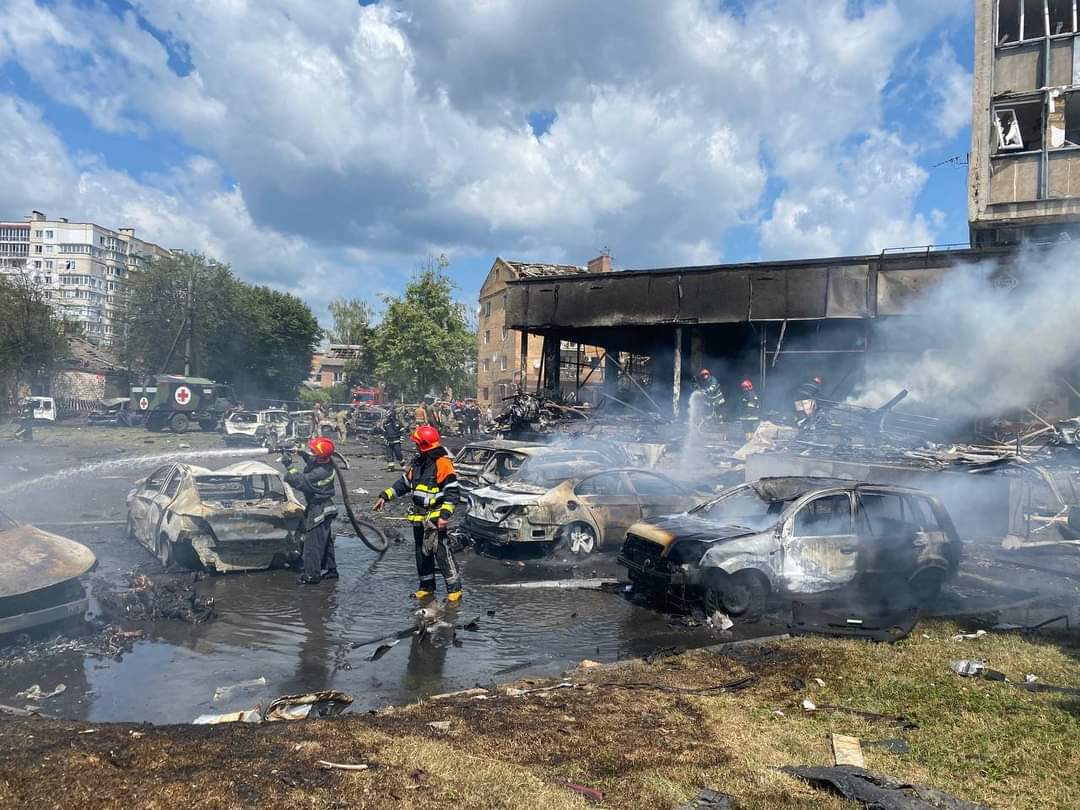
In Vinnytsia on 14 July 2022, the report finds, three Kalibr missiles killed 29 people, including three children and five servicemen, and wounded at least 154. Russia said the target was a scheduled Air Force command meeting. The air raid alert sounded at 10:12; the missiles hit at 10:41, about 40 to 50 minutes after launch.
Explore further
Ukraine calls to brand Russia a terrorist state after missile strike kills 21 in Vinnytsia
In Zlatopil on 4 July 2023, the report documents, a missile landed 800 meters from a serviceman’s funeral, in a residential area, wounding 42 civilians including 12 children. Organizers had asked mourners to shelter from the heat about 10 minutes earlier, leaving the square nearly empty.
In Chernihiv on 19 August 2023, a missile fitted with a proximity fuse detonated in the air above the Drama Theatre, where NGOs were running a defense-tech exhibition inside. All seven people killed were outside the building.
For these three, the report states that the evidence does not support conclusions equivalent to Kramatorsk.
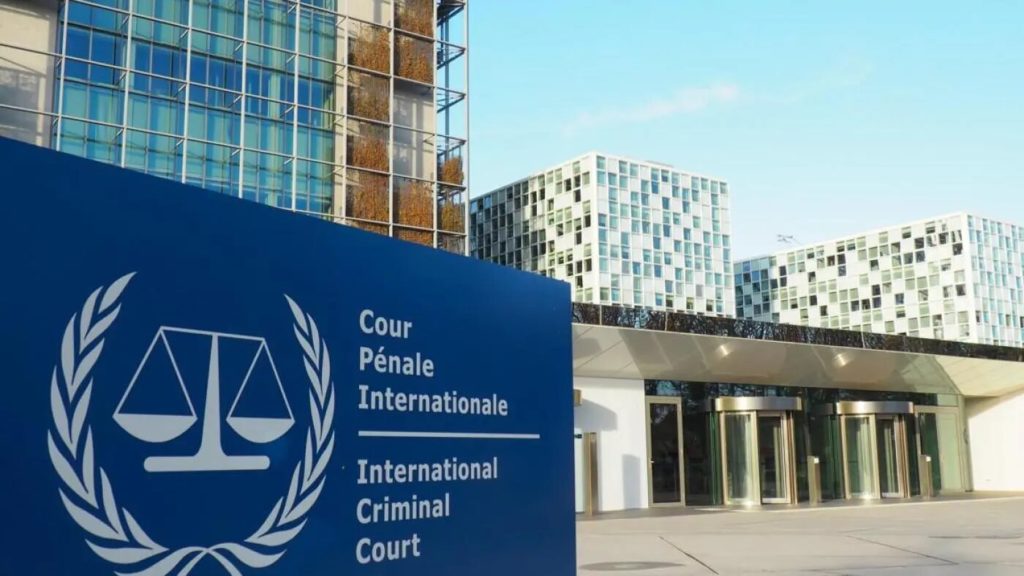
The International Criminal Court in The Hague, Credit: Marina Riera/Human Rights Watch
What the report asks investigators to do
The recommendations run to the International Criminal Court, the ICRC, the UN human rights office, and prosecutors working under universal jurisdiction.
They ask that the launch-to-impact interval be treated as a working indicator, that technical precision no longer be read as evidence that a strike was lawful, and that the presence of soldiers in a civilian place not be taken to strip it of protection.
One question the report raises and declines to settle is whether the four strikes are a run of targeting failures or a method. Answering it needs orders and targeting packages that only investigators with coercive powers can reach—at a moment when Truth Hounds is working on a budget cut by a third after the US withdrew funding, Reuters reported in May.

 Connexion