
 Connexion
Trump demanded Zelenskyy stop hitting Russian refineries—for the second time in a week
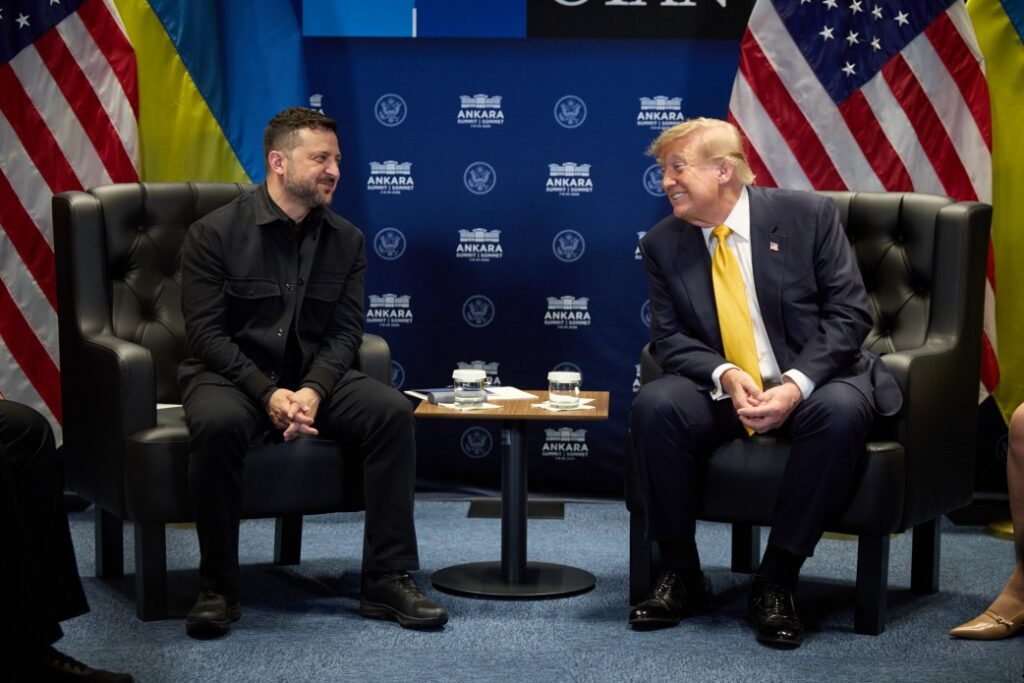
US President Donald Trump repeatedly asked Ukrainian President Volodymyr Zelenskyy to stop attacks on Russian oil refineries during a phone call on 20 September, Axios reported, citing a person familiar with the conversation. The two leaders are due to meet in New York today, 22 September, during the UN General Assembly.
For Ukraine, the strikes are a way to disrupt the fuel supply supporting Russia's military. Trump is now linking the attacks to global diesel prices. The International Energy Agency (IEA) said disruptions to Russia's refining system following intensified Ukrainian attacks have compounded diesel supply losses.
Trump backed the strikes two months ago
At a NATO summit on 8 July, speaking alongside Zelenskyy, Trump said Ukrainian strikes on Russian oil refineries could help end the war. "It's an escalation, but it's also an escalation that can help lead to an end," he said. Secretary of State Marco Rubio said Ukraine's ability to strike deep into Russian territory was one of the changes in the war in recent months and said the escalation could create space for negotiations.
On 13 September, Trump called on Zelenskyy to stop the attacks.
"Mr. Zelenskyy has to do one thing: he has to stop knocking out diesel fuel in Russia," Trump said. "There are plenty of other targets. Don't hit diesel fuel. That's hurting the world."
Trump added that the rise in prices was not caused by the Iran conflict. "This isn't done by the Middle East, this is done by what's happening with Russia and Ukraine," he said.
On 20 September, Trump raised the demand again in his call with Zelenskyy. "The word diesel came up many times" during the conversation, a person familiar with the call told Axios.
What is driving diesel prices
US diesel prices had reached $6.06 per gallon by 13 September, up from $3.71 a year earlier. The IEA said in June that global energy markets were contending with their largest supply disruption in history because of the near-closure of the Strait of Hormuz, though it also noted that a US-Iran agreement to reopen the strait had begun easing prices from their April peak. A Bipartisan Policy Center analysis attributed the diesel surge to the Iran conflict and did not address Ukrainian strikes.
Ukraine's refinery campaign has also disrupted Russian fuel production. The General Staff of the Armed Forces of Ukraine said on 4 July that attacks had disabled 42.7% of Russia's oil-refining capacity. Russia's gasoline production fell an estimated 25% year-on-year in the week of 15–21 June, while Moscow has extended its ban on diesel exports through at least September.
Zelenskyy confirms Tuesday meeting
After the call, Zelenskyy said it had been "an important conversation" and that today's meeting "could change a lot." He said there was "diplomatic momentum" and that Ukraine was ready "to take really serious steps." He also said the call covered ideas for de-escalation and fundamental security issues including energy and food security.
Rustem Umerov, head of Ukraine's Foreign Intelligence Service and Kyiv's chief negotiator, told Axios that US envoys Steve Witkoff and Jared Kushner had helped with the peace talks, where the number of stumbling blocks had fallen from "dozens to essentially one or two key issues." Umerov was rebutting a Kyiv Independent report that Kyiv was frustrated with Witkoff, which he called false.
Read also
-
300 Russian shadow fleet ships disabled in 11 weeks—the Azov Sea is at a standstill, Ukrainian drone force commander says
-
Danish defense startup guarding undersea cables runs on 15 Ukrainian suppliers. Ukrainian fund is putting in €2 million in it
-
Last September, Poland downed four of 19 Russian drones. This September, drone reached NATO’s missile shield in Redzikowo, and troops guarding it called 112
