❌

Vue lecture

Ukraine keeps hitting the fuel that Russia’s war runs on. Its latest target is the Slavyansk-EKO refinery, with an annual processing capacity of at least 3 million tonnes
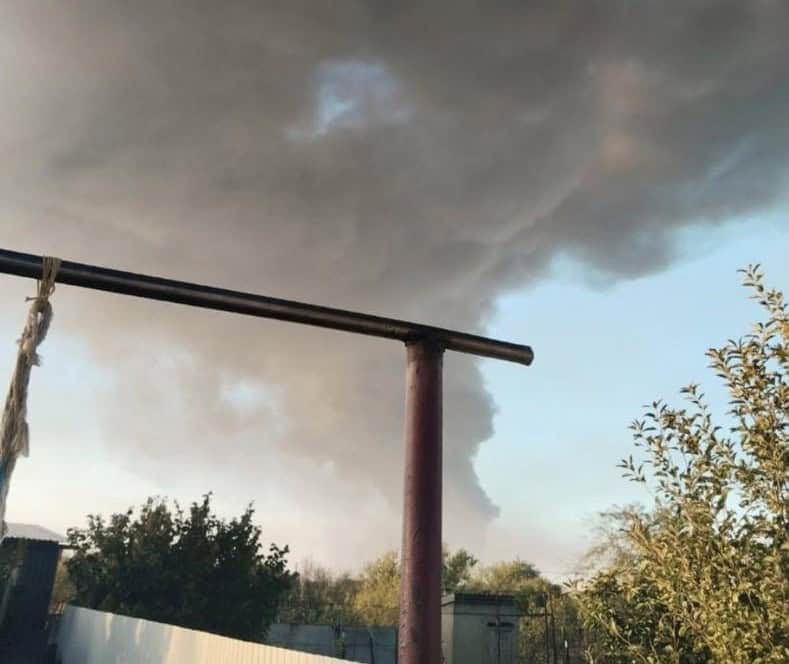
Smoke from a fire at the oil refinery in Slavyansk-on-Kuban. 13 September, 2026. Photo: Exilenova+

An oil refinery in Slavyansk-on-Kuban in southern Russia was attacked overnight on 13 September, Astra reported. By morning, residents began posting videos showing smoke over the refinery and nearby areas. That same morning, Ukraine’s Defense Intelligence (HUR) reported that Ukrainian drones had struck the Slavyansk-EKO refinery.

Ukrainian strikes on Russian oil refineries have become systematic, aimed in part at reducing the Russian military’s access to fuel, which is critical for waging the war. Ukrainian forces have been striking strategic facilities located hundreds of kilometers from the front line.

The design capacity of Slavyansk-EKO is approximately 5.2 million tonnes per year, though actual volumes are lower by about one to two million tonnes, Militarnyi reports.

Thick smoke visible for dozens of kilometers

The Ukrainian strike hit a key oil-processing unit and the facility’s oil storage tank farm, which “fuels the criminal war against Ukraine,” HUR reported.

Two oil storage tanks were destroyed in the strike, according to photos published by Dnipro Osint. Militarnyi noted that the photos also show damage to neighboring tanks.
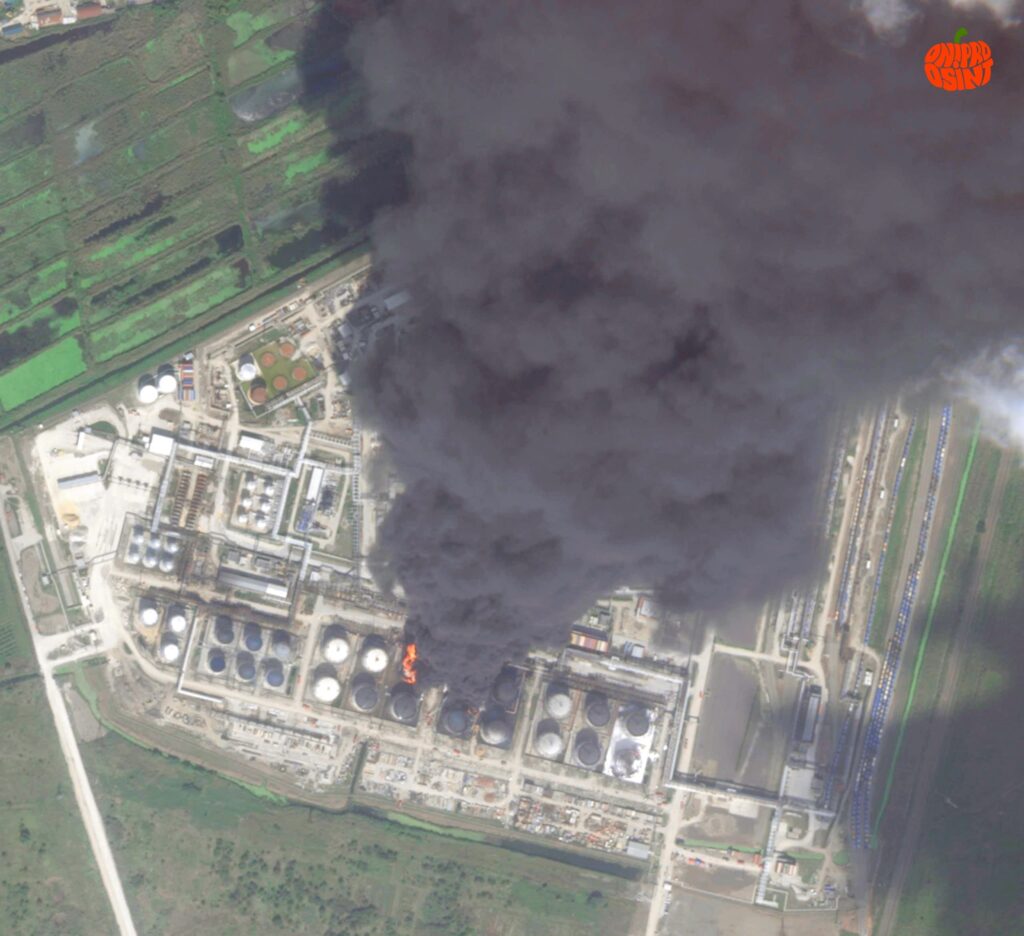
Satellite imagery of the Slavyansk oil refinery after a nighttime UAV attack on 13 September. Part of the refinery is obscured by thick smoke from a fire in the tank farm, Krasnodar Krai, Russia. Photo: Dnipro Osint


The strike reportedly hit the area containing the facility’s largest storage tanks. The refinery operates using purchased or tolling crude oil because it does not have its own crude oil production base.
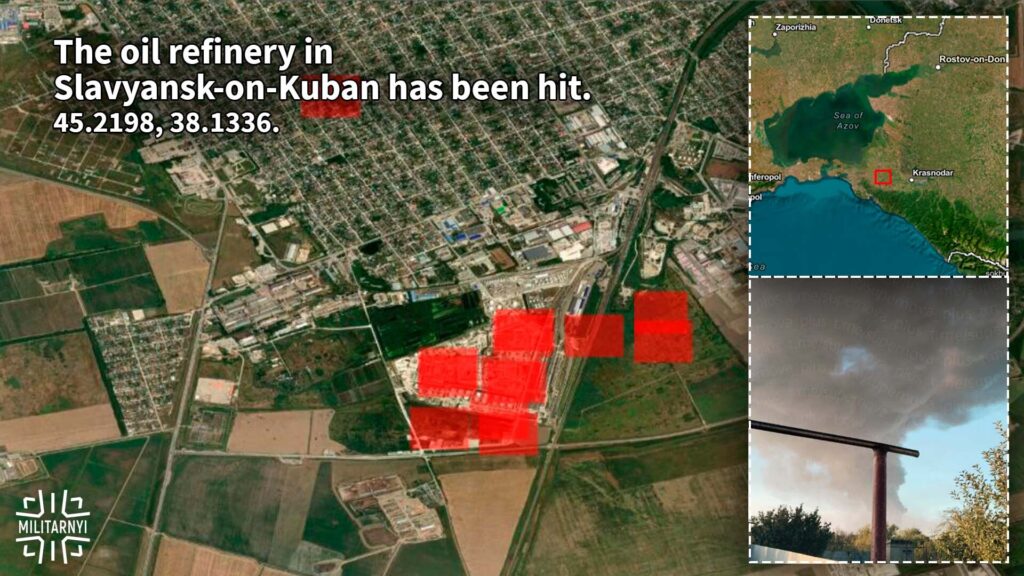
Fire broke out at the oil refinery in Slavyansk-on-Kuban following an attack by Ukrainian drones on September 13, 2026. Analysis by Militarnyi, with an Esri map and NASA FIRMS data

The refinery has been targeted before

Slavyansk-EKO is one of the largest independent oil refineries in southern Russia. The facility is located in Slavyansk-on-Kuban, about 69 kilometers northwest of Krasnodar.

Ukraine’s General Staff said that the refinery is “part of the energy rear of the Russian Federation and involved in supplying the armed forces of the aggressor.”

Before the 13 September strike, Ukrainian drones had struck the refinery at least four times, starting in 2024:

  • 27 April 2024 — a Ukrainian drone attack damaged the Slavyansk refinery, after which a fire broke out at the facility.
  • 19 May 2024 — SBU drones attacked the Slavyansk refinery, after which the facility suspended operations.
  • 26 January 2026 — Ukrainian Defense Forces struck infrastructure at the Slavyansk-EKO refinery. According to preliminary data, elements of the primary oil refining unit were damaged.
  • Five months later, on 28 June, Ukraine struck the Slavyansk refinery again, causing a large fire at the facility. EP noted that the refinery supplies fuel, including to occupied Crimea.
  •  

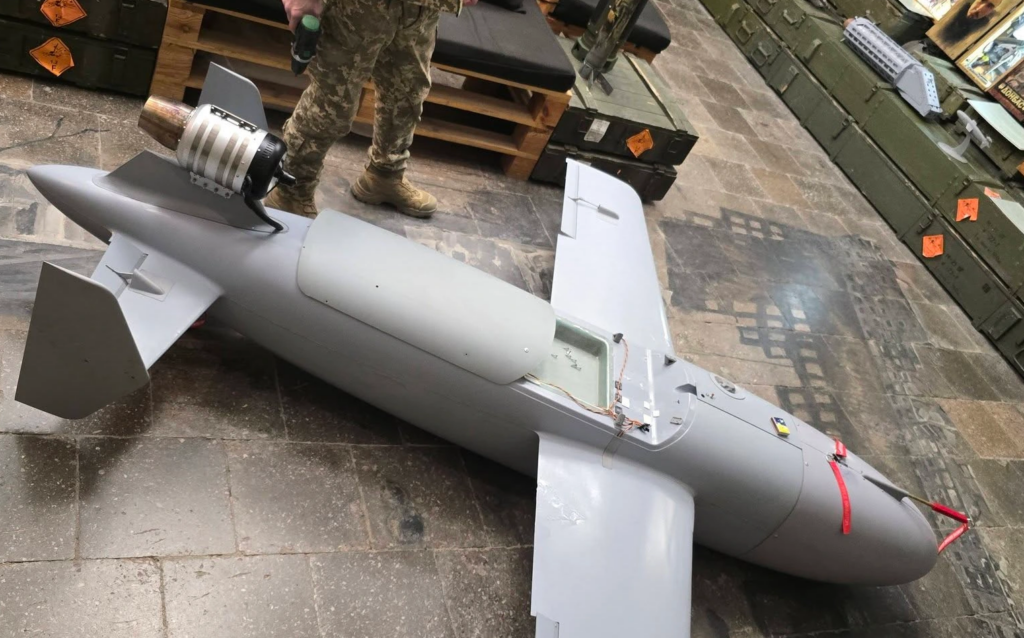
Ukrainian engine for Bars missile-drone passes final tests

“Bars” jet-powered drone. Photo: company press service

Ukraine has developed its own jet-powered drone, as the arms race is pushing Kyiv to produce answers to Russia's new fast Banderol and Geran-3 drones. Ukraine's “Bars” missile-drones currently consist of more than 74% Ukrainian-made components, but their turbojet engines are still imported, the developer of the “Bars” missile-drones said in an interview with RBC-Ukraine on 7 September.

The “Bars” jet-powered drone can carry out strikes at a range of up to 1,000 km, and the team plans to increase its range in the future, the developer said in the interview. To speed up and increase production of such drones for the Ukrainian army, the team is trying to make the jet-powered drone consist of as many domestically produced parts as possible. This will remove the limitation on how many such jet-powered drones Ukraine can produce and deploy in response to Russia’s use of similar drones against Ukrainian cities.

“Without exaggeration, we source them from all over the world,” the Bars developer said in the interview about the imported engines.

The UAV strikes the Russian army both in occupied territories and deep inside Russia

The developer calls Bars a missile-drone: it resembles a missile because it has a jet engine, and a drone because it can be controlled by a pilot.

The basic characteristics of Bars include a warhead weighing up to 60 kilograms, a range of up to 1,000 kilometers, and a speed of more than 700 kilometers per hour, the developer added. He also explained that the UAV’s system is a modular platform that allows the drone to be used “in different planes.”

“Our basic modularity allowed ‘Bars’ to receive three main categories of use: DeepStrike, ‘middle-strike,’ and ‘front-strike,’” the developer said in the interview.

He also said that there have been more than 40 “engineering officially” modifications and iterations of the UAV alone.

“Bars” jet-powered drone. Photo: Museum of the Russian-Ukrainian War

A Bars production facility is already in Europe and will begin operating in early September

The first batch of Bars drones is planned to be delivered as early as 10 October, according to the interview.

“As of today, the only limitation to scaling up the production of ‘Bars’ is the so-called ‘bottleneck,’ and it is not so much the volumes as the delivery times of turbojet engines,” the developer said.

It was previously reported that Ukraine and Germany had signed an agreement on the joint production of Bars drones. Ukrainian Foreign Minister Andrii Sybiha said this on 8 July 2026. He said that at the first stage of the project, Germany would finance the production, while all manufactured UAVs would be transferred to the Armed Forces of Ukraine.

  •  

Putin dismisses mobilization reports as Ukraine warns Russia could call up 600,000 to war

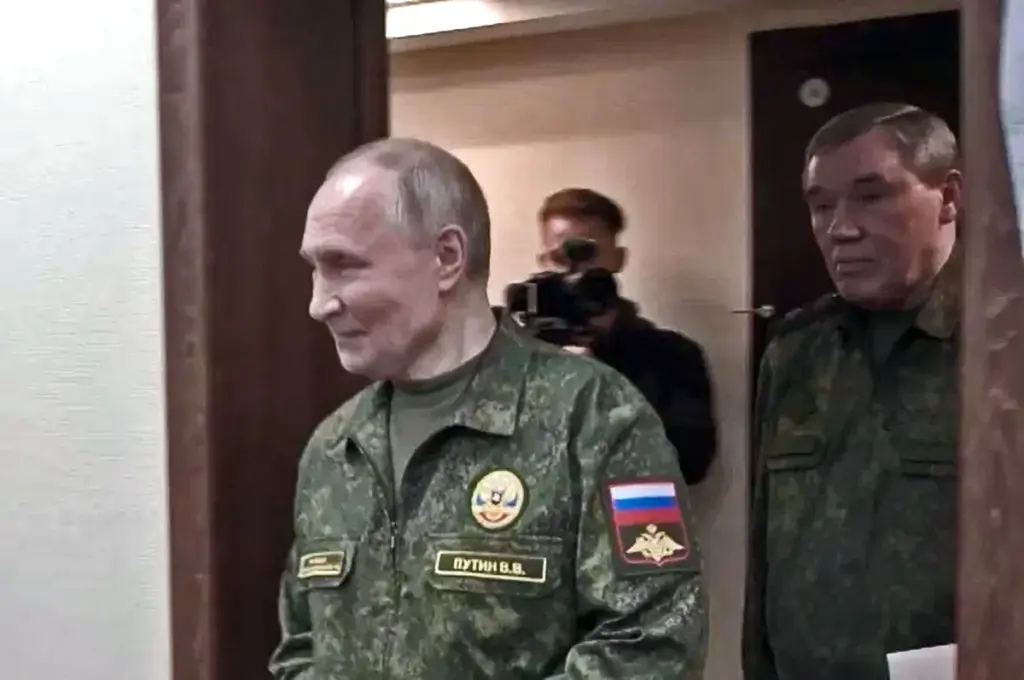
Vladimir Putin walks through a doorway in a military uniform, followed by Russian Chief of the General Staff Valery Gerasimov.

Asked about reports in Ukrainian and Western media that Russia could order a mass mobilization after September’s parliamentary elections, Vladimir Putin replied: “That’s complete nonsense. It’s an information attack on Russia,” RBC reported. He was speaking after the Shanghai Cooperation Organization summit in Bishkek.

Ukraine’s military and foreign intelligence services say Russia’s General Staff has prepared a scenario for mobilizing an additional 600,000 people during 2026 and 2027—300,000 each year. Their briefing described a contingency, not an issued call-up, and did not say mobilization had begun. If activated, the agencies said, the recruits would primarily reinforce units fighting Ukraine and newly formed military units.

Ukraine’s intelligence services linked the scenario to mounting battlefield losses and a slowdown in contract recruitment. They said Russia lost roughly 240,000 personnel from January through July, including at least 140,000 killed or permanently lost, while recruiting about 232,000 contract soldiers. The figures could not be independently verified.

Russia’s military also rehearsed procedures for mobilizing residents of Kaliningrad Oblast in July, Ukrainska Pravda reported, citing The Wall Street Journal.

Reports of a possible draft have generated concern inside Russia. More than 20,000 people crossed into Georgia through the Verkhny Lars checkpoint in a single day amid fears of mobilization, as EP previously reported.

Ukraine’s warnings and Russia’s denials

Ukrainian President Volodymyr Zelenskyy said in August that Moscow planned to mobilize several hundred thousand people after the elections and roughly the same number in 2027, citing military intelligence. HUR deputy chief Vadym Skibitskyi later assessed that a call-up could provide troops for a northern offensive by February 2027, while stressing that the agency saw no preparations underway at the time.

Dmitry Medvedev, Vasily Nebenzya, and the State Duma’s defense committee have all denied plans for another mass draft. Russian officials issued similar denials shortly before Putin announced the 2022 call-up. RBC notes that the decree authorizing that mobilization was never formally revoked. No new call-up has been publicly announced or reported as underway.

  •  
❌