
 Connexion

Ukraine turns old BTR into rolling bomb — then drove it straight into Russian lines, battalion commander says
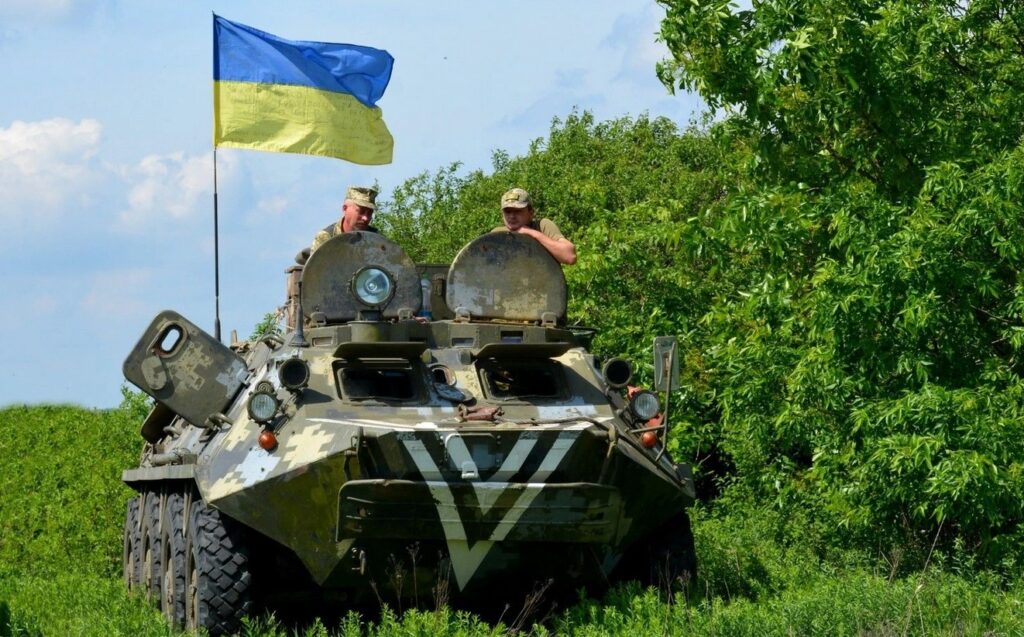
Ukrainian troops have turned a worn-out armored carrier into a crewless bomb on wheels. Engineers fitted an old BTR, a Soviet-type armored personnel carrier, with a remote-control system, packed it with explosives, and drove it into Russian positions, where it detonated, says Andrii Kupriianov, callsign Darwin, a Hero of Ukraine and battalion commander in the 125th Brigade, in an interview with Glavcom.
The improvised bomb-carrier is one corner of a fast-growing shift to ground robots, which Ukraine is pushing to the front for the jobs that get soldiers killed. Those machines now haul ammunition and food, carry out the wounded and even fight, in missions that have multiplied over the past year, sparing troops the deadliest trips across open ground.
An old carrier sent in without a crew
Kupriianov said his forces installed a remote-control system on the BTR so it could be driven with anyone inside.
“They packed it with explosives and sent it straight at Russian positions, where it blew up and caused great damage,” he shared with the journalists.
It is the kind of improvisation Ukrainian units have used elsewhere, converting Western armor the same way, including an M113 carrier turned into an unmanned machine for mine-clearing and logistics.
The jobs robots now do so soldiers don’t have to
Across the Defense Forces, ground robotic complexes are increasingly taking on tasks that once fell to people, Kupriyanov said, logistics above all: the robots carry ammunition and food to the line, so troops leave cover and cross open ground less often.
“Previously a soldier had to walk far for ammunition and carry it back. It took a lot of time, sometimes days. It was dangerous, because the soldier could be spotted from the sky and hit. No guaranteed result: sometimes you simply couldn’t get there. The robot simplifies this work,” Kupriianov explained.
The machines also pull out the wounded and the dead, he added: a casualty can be laid on the complex and carried to safety, where before it took several soldiers to evacuate one wounded man, baring their positions and risking more lives.
Read also
-
An online-retail hub in Russia and a Russian-run phone network in occupied Donetsk: two of one night’s targets
-
US Congress turns blue, Trump keeps the veto—and Ukraine’s balance sheet in Washington gets both wins and losses
-
One of largest Russian attacks yet on Ukraine’s energy system forces emergency blackouts across regions and leaves Kyiv without water

