Vue lecture

Join the LibreOffice team as a Marketing and Communication Professional (full-time, remote, m/f/d)
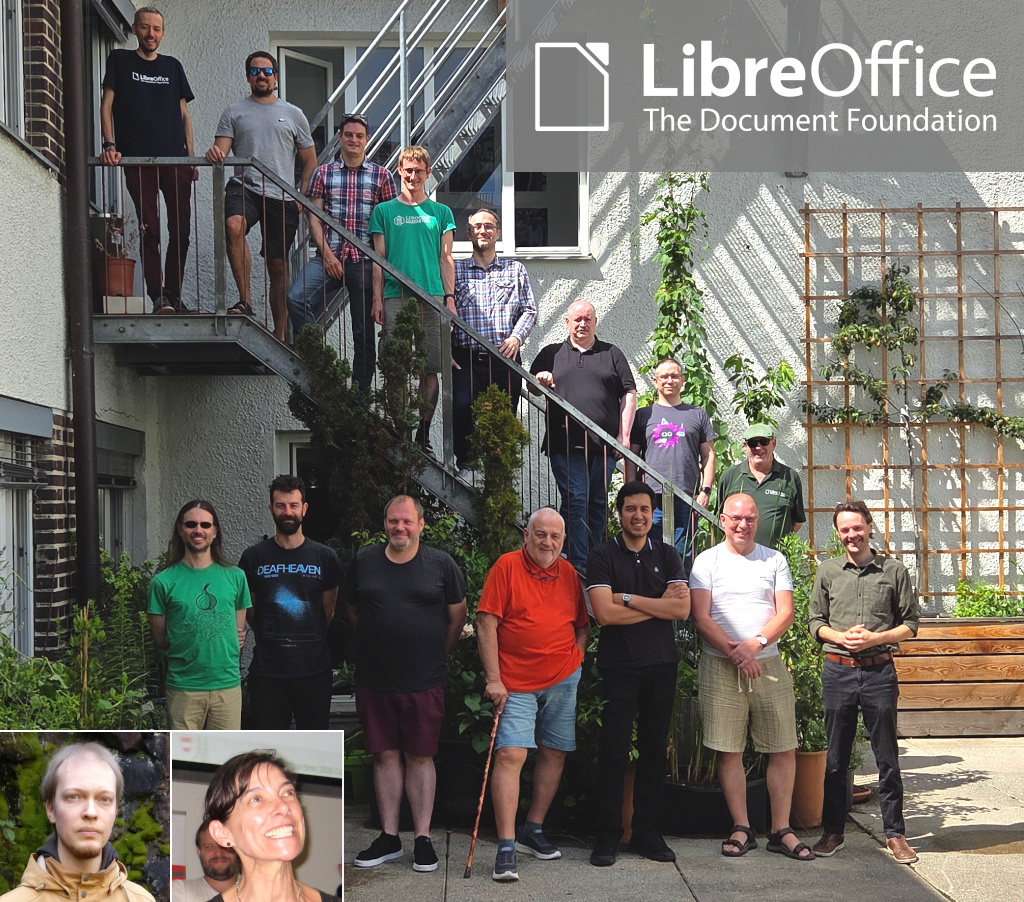
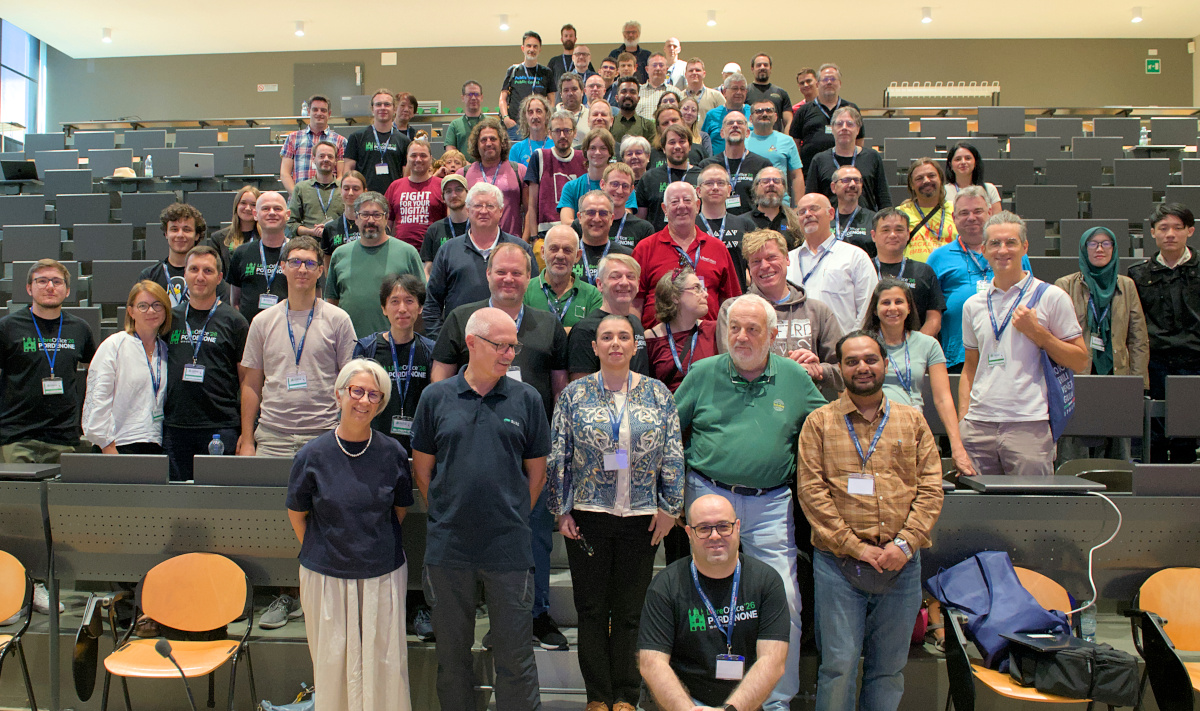
TDF team photo

Love LibreOffice? Got a passion for marketing, media, public relations and creating great campaigns? We are The Document Foundation (TDF), the non-profit entity behind LibreOffice. We’re passionate about free software, the open source culture, and bringing new people with fresh ideas into our project.
To help to raise awareness of LibreOffice and support the marketing community with its work, we are looking for a Marketing and Communication Professional, to start as soon as possible.

Here’s what you’ll do

  • Work with our graphics design agencies and create content showcasing new and updated features in LibreOffice (blog posts, social media posts, videos, website pages…)
  • Draft and edit press releases and cross-channel content
  • Work directly with the senior communications lead on the strategic side: media relations, campaigns, and texts that carry TDF’s positioning
  • Improve media relations with EU and policy press, along with the FOSS and technology press
  • Maintain the press-contact database and mailing lists
  • Media monitoring, coverage tracking, and basic reporting
  • Edit contributed and translated texts from our wider marketing community
  • Track the effects and results of marketing campaigns on downloads and donations
  • Logistical coordination of event communication

What we want from you

The role is built around a two-year trajectory: full operational ownership from the start, and a growing share of strategic work as the senior lead reduces involvement through 2028. The person we are looking for is reliable and largely self-directed on operational work; collaborative and open on the strategic side, where TDF’s positioning is developed jointly during the transition. Someone who genuinely wants to grow into a strategic communications role, and is content to build toward it steadily rather than assume it on arrival.

  • Excellent communication skills, especially in written English
  • Working fluency in at least one other major European language; more is a clear advantage
  • A journalistic or public-relations instinct: a feel for what makes news, an ear for what a reporter will actually use, and either an existing network of press contacts or the demonstrated ability to build one
  • The ability to adapt communications across different channels: the TDF blog, social media, Reddit etc. – while maintaining a consistent style and tone
  • Good team-playing abilities

Familiarity with free software, open standards, and the digital-sovereignty debate is welcome, but not essential. This can be learned in the role, and genuine curiosity about it matters more than prior expertise. Also beneficial is experience in a non-profit, foundation, or other mission-driven organisation.

As always, TDF will give some preference to individuals who have previously shown a commitment to TDF, including but not limited to members of TDF. Not being a member does not exclude any applicants from consideration.

Join us!

All jobs at The Document Foundation are remote jobs, where you can work from your home office or a co-working space. The work time during the day is flexible, apart from a few fixed meetings. The role is offered as full-time (ideally 40 hours per week). While we prefer full-time for the role, part-time applications, or proposals to grow the hours over time, will be considered. Candidates that are resident in Germany will be employed directly by TDF. Otherwise, external payroll services will be used if available in the candidate’s country of residence.

Are you interested? Get in touch!

TDF welcomes applications from all suitably qualified persons regardless of their race, sex, gender, disability, religion/belief, sexual orientation or age. Don’t be afraid to be different, and stay true to yourself. We like you that way! 😊

We’re looking forward to receiving your application, including information about you (your resume), when you are available for the job, and of course your financial expectations. Please provide details about your experience and send us an e-mail to marketingjob@documentfoundation.org no later than August 31, 2026 (end of day, Berlin time). If you haven’t received feedback by September 30, your application could not be considered.

Also note: we only accept applications from the applicant, and not from any intermediary. We do not accept agency resumes. Please do not forward resumes to any recruiting alias or employee.

  •  

Welcome to our new TDF members!

Welcome banner, with people celebrating

Members – more formally known as the “Board of Trustees” – are a crucial part of The Document Foundation, the non-profit entity behind LibreOffice. They are people from across the globe who contribute time, effort and skills, whether on a voluntary or paid basis. Members can vote for the Board of Directors (BoD) and the Membership Committee (MC), and also nominate themselves for a position in the BoD and the MC. Oh, and they get @libreoffice.org email addresses as well!

Let’s welcome our new members:

  • Aleksi Kallio
  • Brandon Evangelista
  • Damiano Perri
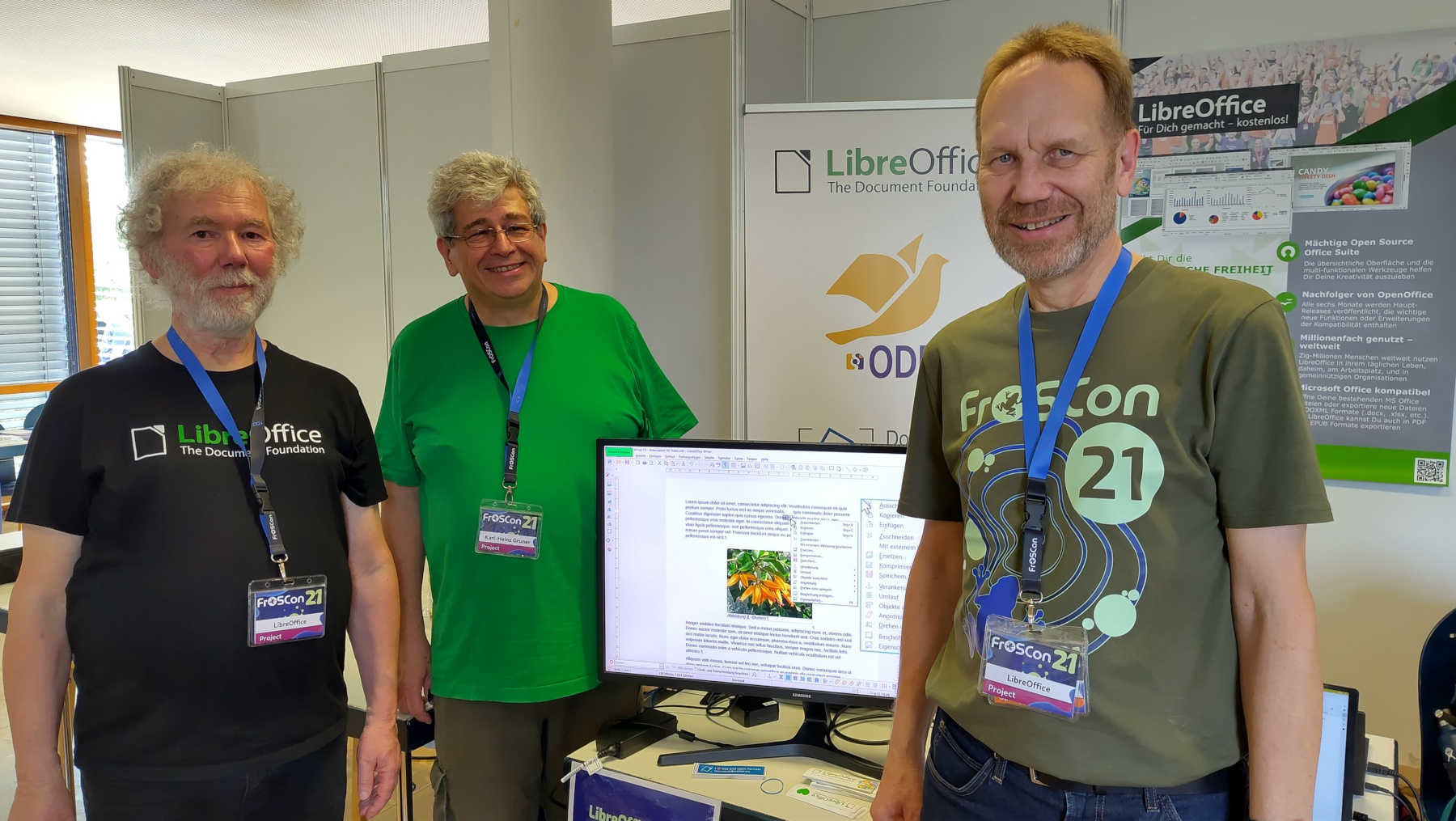
  • Karl-Heinz Gruner
  • Mihai Alexandru Vasiliu
  • Neil Roberts
  • Robert Pearson
  • Rohan Singh

Glad to have you on board, and thanks for being in the project 😊 Everyone who contributes in the LibreOffice and Document Liberation projects can apply to be a member too. Join us!

  •  

Financials and Budget – TDF Annual Report 2025

TDF Annual Report 2025 banner

This is part of the Annual Report 2025 from The Document Foundation, the non-profit that coordinates the LibreOffice project and community.

TDF exists because of a large, dynamic global community — volunteers, ecosystem companies and committed end users who support our work with donations of both time and money. The 2025 accounts tell a clear story: a foundation that grew significantly, while keeping its finances transparent and its spending tied to its mission.

A year of strong growth in income

Total income for 2025 reached € 2,175,997, a substantial increase on the € 1,387,589 recorded in 2024. The growth came from three distinct sources, and it is worth being precise about each.

The largest share, € 1,976,825, came from donations — overwhelmingly from individual users and small businesses, mostly in Europe. This was the fifth consecutive year in which donations exceeded one million euro, and the highest figure to date. Part of this increase was organic, reflecting the continued strength of LibreOffice downloads. A further part can be attributed to a concrete change: in mid-2025 we introduced a new in-product update notification on Windows, which periodically — after every major release and selected minor ones — informs users that an update is available, presents the new features, and invites them to support the project with a donation. The effect was immediately visible as a step-up in donations from the moment it was deployed, and it is keeping donations at a higher level into 2026. We mention this openly, because transparency about *why* the numbers move is as important as the numbers themselves.

The second source was income from the sale of LibreOffice through online stores, sponsoring and related commercial activity, which together generated € 168,975. The Apple App Store (€ 118,942) and the Microsoft Store (€ 35,393) accounted for most of this. The third source was € 30,197 in income from securities held under the foundation’s asset management.

How the money was spent

Total expenditure for 2025 was € 1,457,343. The breakdown by category shows where donor money goes.

  • Staff and operations remained by far the largest commitment, at € 1,091,032. This covers salaries (€ 406,736), statutory social security contributions (€ 93,244) and freelancers (€ 591,052) — the people who keep infrastructure, communication, administration and project coordination running, in order to share knowledge, support the community in its activities, and enable contributors to do their work.
  • Tenders. As in 2024, no development tenders were funded in 2025. Tenders related to LibreOffice development remain on hold, and will be resumed based on the development strategy currently under discussion according to the new Procurement Policy.
  • Events and community support amounted to roughly € 87,000, including the LibreOffice Conference (developer conference, € 51,184), community projects (€ 15,014) and student scholarships (€ 17,368), together with marketing initiatives. These funds support the events and local activities that hold the global community together, and help us to share knowledge around the world.
  • Infrastructure and hosting came to € 51,420, covering the hosting, virtual machines, services and domains that underpin the project’s technical independence — a foundational asset we continue to prioritise.
  • Legal and administrative expenses totalled roughly € 92,000, including accounting and the preparation of financial statements (€ 34,164), legal advice and counselling (€ 36,597 across project and general legal work), and insurances (€ 4,626).
  • Cost of fundraising. Receiving donations is not free. In 2025, payment-processing and banking fees came to roughly € 98,000 — Stripe fees of € 46,446 and bank transfer and money-transfer fees of € 51,190. These are simply the cost of doing business: they scale with the volume of donations we receive. It is worth adding that these figures do not capture the full picture, because PayPal’s currency-conversion costs are embedded in the transactions and not separately visible — though they are comparable in scale to the Stripe fees. We report this plainly so that no reader underestimates what it costs to collect the donations that fund our work.

Results and transparency

After expenses, the charitable entity closed the year with a result of € 554,476, asset management contributed € 21,263, and the commercial business operations returned a profit of € 142,916.

Transparency remains one of TDF’s defining characteristics — towards our donors, contributors, community and users. Our accounting is handled by a professional accountant, and our complete ledgers, listing all income and spending broken down by project, are published on our public wiki at https://wiki.documentfoundation.org/TDF/Ledgers, with only a few items obfuscated for privacy. As in previous years, and given the scale the foundation has reached, our books have been audited, and the Board continues to work with the authorities in Berlin to implement the improvements the audit recommended.

To everyone who contributed time, skills, resources and money in 2025: thank you. The foundation’s strength is your achievement.

Note: The expense categories above are indicative groupings drawn from the foundation’s accounts. They exclude VAT flows and certain material costs that the ledger handles separately, so the categories are not intended to reconcile arithmetically with the per-sphere annual results. The authoritative, fully itemised figures are published in the ledgers.

Like what we do? Support the LibreOffice project and The Document Foundation – make a donation, or get involved and help our volunteers. Thank you!

  •  

Policy and Digital Sovereignty – TDF Annual Report 2025

TDF Annual Report 2025 banner

This is part of the Annual Report 2025 from The Document Foundation, the non-profit that coordinates the LibreOffice project and community.

Across the reporting period, the public conversation about office software and document formats shifted decisively. The justification for moving away from proprietary suites is no longer framed primarily as cost saving. It is framed as the preservation of independence — the ability of a government to act without asking permission from a foreign supplier. Several of the year’s migrations were announced with that argument stated explicitly and the cost argument set aside; the Austrian Armed Forces went so far as to say the move was not about money at all.

This reframing matters for The Document Foundation, because it moves the debate onto ground where the Foundation has argued for two decades. Digital sovereignty is the ability of nations, organisations and individuals to control their own digital destiny: to control access to their own information without depending on third parties, to make technological choices based on their own needs rather than a vendor’s commercial strategy, and to preserve that self-determination as the market consolidates. When public bodies store their documents in proprietary formats controlled by a single company, they surrender part of that sovereignty.

A standard in name only

The year also clarified a distinction the foundation has long insisted on: sovereignty is not delivered by any single layer of the technology stack. It requires an open standard format at the base, an open source application above it, open source infrastructure for data location, and a legislative framework that defines the requirements. A law favouring open source, an open cloud, and an open suite together still leave sovereignty incomplete if the document format itself remains under one vendor’s control. The format is the foundation of the stack, and it is the layer most often overlooked.

The year’s central policy development was Germany’s formal commitment to ODF, a decision whose full weight became apparent only as it moved from principle toward binding implementation.

Germany’s IT Planning Council commits to ODF (April 2025)

In April 2025, Germany’s IT Planning Council — a seventeen-member body representing the federal government and the state governments — committed to moving public administration to the Open Document Format, with the stated aim of making ODF the standard for document exchange by 2027. The Council framed open formats and open interfaces as a necessary building block of public-sector transformation toward digital sovereignty, and commissioned its Standardization Board to implement the decision. The commitment set a clear trajectory: a federal-level decision, binding on the implementing board, with a 2027 target for ODF as the standard for document exchange. Its translation into concrete, enforceable infrastructure standards was expected to follow — and the early signs as the year closed pointed toward exactly that outcome.

ODF v1.4 approved as an OASIS Standard (December 2025)

ODF logo

On 3 December 2025, OASIS Open approved ODF v1.4 as an OASIS Standard — the organisation’s highest level of ratification — coinciding with the twentieth anniversary of ODF’s original adoption as an OASIS Standard. The new version maintains full backward compatibility while improving accessibility support (assistive technologies, decorative-object marking), professional formatting and visual design, and features for data analysis and technical documentation. It remains an XML-based, vendor-neutral, royalty-free format. Earlier ODF versions are published as ISO/IEC 26300; the four-part v1.4 specification is available in the OASIS library.

Twentieth anniversary of ODF standardisation

The year carried the twentieth-anniversary thread throughout: ODF’s adoption as an OASIS Standard in 2005, and its ISO/IEC standardisation on 3 May 2006. The ODF v1.4 ratification in December 2025 was deliberately timed to the OASIS anniversary. The anniversary is not merely commemorative: it underpins the argument that ODF is the only open standard for office documents with a twenty-year record governments can rely on for long-term archival access.

Open Document Format Campaign and Document Freedom Day

The Foundation ran a sustained ODF communications campaign through the year, built around a regular series of articles on the TDF blog. Rather than isolated announcements, the series formed a coherent body of work that moved from the fundamentals — what ODF is and why it matters — through technical and practical material on file types, compliance and interoperability, the differences between ODF and proprietary formats, migration guidance, and the new features of recent ODF versions, and on to the wider argument connecting open document standards to digital sovereignty. Taken together, the series gave the Foundation a standing reference resource and a consistent public voice on the format throughout the year.

Document Freedom Day was marked as a purely advocacy-driven occasion: blog posts, social media activity across the Foundation’s channels, and small local events organised by community members around the world. The emphasis was on awareness and outreach rather than on any single flagship event.

Please confirm that you want to play a YouTube video. By accepting, you will be accessing content from YouTube, a service provided by an external third party.

YouTube privacy policy

If you accept this notice, your choice will be saved and the page will refresh.

Public Administrations Migrating to LibreOffice/ODF During the Year

The following migrations were publicly reported and verifiably advanced during 2025. Status reflects what the cited primary or most reliable source actually supports. Long-standing legacy deployments are deliberately excluded; this list is reserved for movement during the year, and only entries with solid sourcing are included. Figures and completion claims should be confirmed against TDF records before publication.

Schleswig-Holstein (Germany) — confirmed, substantially advanced

Schleswig-Holstein logo

By early December 2025, the northern German state reported that close to 80% of administrative workstations outside the tax administration were running LibreOffice as the binding standard, with Microsoft Office and Outlook either already uninstalled or in the process of removal, and a new-licensing rate already well below 10%. The state reported licence-cost savings already exceeding €15 million, against a one-time 2026 migration investment of €9 million. The remaining ~20% of workstations depend on specialist applications with technical ties to Microsoft formats; migration paths for these, and for the tax administration, have been defined. In parallel, the state completed the migration of more than 40,000 mailboxes (over 100 million messages and calendar items) off Exchange/Outlook to Open-Xchange and Mozilla Thunderbird, with the cutover finishing 2 October 2025.

Austrian Armed Forces / Bundesheer — confirmed, completed in 2025

Bundesheer logo

The Austrian military migrated approximately 16,000 workstations across all branches from Microsoft Office to LibreOffice, with the project finalised in 2025 and Microsoft Office 2016 removed from all machines (Office 2024 LTSC retained only under special permission for legacy macro/Access cases). The Directorate 6 (ICT & Cyber) stated the primary driver was digital sovereignty and in-house data processing, explicitly not licence savings. The Bundesheer contributed more than five person-years of upstream development back to the LibreOffice project; the migration was presented at the LibreOffice Conference 2025 in Budapest.

Denmark — Ministry of Digital Affairs — confirmed, phased, in progress

The Danish Ministry of Digital Affairs committed to replacing Microsoft 365/Office with LibreOffice, beginning July 2025 with a phased rollout (roughly half of staff in the summer, the remainder by autumn). For accuracy: earlier reporting that Denmark would abandon Windows for Linux entirely was subsequently corrected — Windows remains in use on many devices; the confirmed change is the office-suite migration. Several municipalities, including Copenhagen and Aarhus, were reported to be pursuing similar moves.

Threats to ODF Adoption and Digital Sovereignty

The year’s gains were real, but they sit alongside structural threats. The central risk is that the open-source application migrations succeed while the open format battle is quietly lost — that lock-in survives the move by relocating from the application to the document.

Format sovereignty as the overlooked layer

An office suite that does not use ODF as its native format handles ODF files imperfectly, which re-creates interoperability problems and pushes users back toward the proprietary format “for convenience.” A government can therefore adopt an open suite and an open cloud and still fail to achieve sovereignty if its documents remain in a format controlled by a single vendor. The format is the base of the stack; without it, every layer above is compromised.

The “ISO standard format” sleight of hand

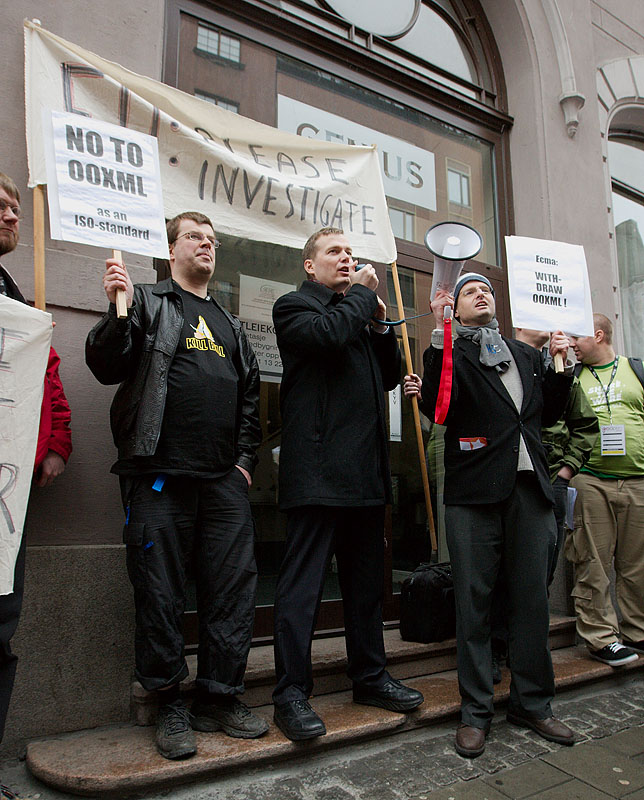
When a public administration is told its documents are stored in “an ISO standard format,” the reasonable assumption is genuine openness. OOXML Transitional does not deliver it: its stacked dependencies — format, rendering and fonts — re-encode failure at each layer. A format named as a standard while defined by its own specification as provisional is the principal rhetorical obstacle to ODF adoption, and the principal target of the Foundation’s three-strand evidence work.

Initiatives that default to OOXML under a sovereignty banner

A specific and growing risk is the European sovereignty initiative that adopts open source applications and open infrastructure while defaulting to OOXML rather than ODF as its native document format. Such an arrangement re-encodes the dependency at the format layer even as it presents independence at every other layer. This is the precise failure mode Section 4.5 describes, and it gives the Foundation’s insistence on a native open format its practical
urgency.

Political reversibility

Sovereignty gains are reversible without durable policy commitment. Munich’s LiMux reversal remains the cautionary precedent, and the year offered a live counter-signal: even as Schleswig-Holstein advanced, Bavaria was reported to be pursuing a major Microsoft 365 contract. This is why a binding federal commitment to ODF, of the kind Germany set in motion in 2025, matters: it raises the cost of reversal. But commitments depend on sustained political will to carry them into enforceable practice.

Like what we do? Support the LibreOffice project and The Document Foundation – make a donation, or get involved and help our volunteers. Thank you!

  •  

LibreOffice project and community recap: June 2026

Monthly recap banner

Here’s our summary of updates, events and activities in the LibreOffice project in the last four weeks – click the links to learn more…

LibreOffice 26.2 banner

Format Sovereignty banner

  • Our marketing and design communities worked on a new video: Join the LibreOffice Community! (This video is also available on PeerTube.)

Please confirm that you want to play a YouTube video. By accepting, you will be accessing content from YouTube, a service provided by an external third party.

YouTube privacy policy

If you accept this notice, your choice will be saved and the page will refresh.

Annual Report banner, with LibreOffice community group photo

Guidebook cover

Like what we do? Support LibreOffice with a donation – or join our community and help to make LibreOffice even better! Also keep in touch – follow us on Mastodon, Bluesky, Reddit and Facebook.

  •  

LibreOffice Marketing Activities in 2025 – TDF Annual Report

TDF Annual Report 2025 banner

This is part of the Annual Report 2025 from The Document Foundation, the non-profit that coordinates the LibreOffice project and community.

In 2025, The Document Foundation and the global LibreOffice community pursued a marketing and advocacy programme that combined the established work of community building and software promotion with a sharpened public argument about digital sovereignty and open document standards. The year was framed by two anchoring milestones — LibreOffice’s fifteenth anniversary and the passing of 400 million cumulative downloads — and by an increasingly explicit defence of the Open Document Format as the only open standard for office documents. What follows is a thematic overview of the major activities carried out in support of TDF and LibreOffice over the course of the year, grouped by area rather than reported month by month.

Anniversary and Adoption Milestones

Two milestones gave the year its public narrative.

In January, TDF announced that LibreOffice had surpassed 400 million cumulative downloads since 2011, with an average of 28.6 million downloads per year and an upward trend reaching over 35 million annual downloads. The announcement reaffirmed the project’s standing against the long-running narrative that the desktop office suite was destined to disappear into the cloud.

In September, the project celebrated the fifteenth anniversary of LibreOffice, launched on 28 September 2010 as a fork of OpenOffice. The anniversary was treated not merely as a software birthday but as a statement about the movement LibreOffice represents: a community of thousands of contributors and dozens of companies, localisation into more than 120 languages reaching billions of potential users, and a sustained argument for digital autonomy in an era of cloud lock-in and disappearing ownership. The communication tied the milestone directly to ODF as the guarantee of perpetual, transparent control over one’s own documents.

Montage of photos from LibreOffice events

Advocacy: Digital Sovereignty and Open Standards

The most distinctive development of 2025 was the consolidation of marketing into a coherent advocacy campaign around digital sovereignty and open document standards.

The end of Windows 10 support, scheduled for 14 October 2025, provided the central advocacy occasion. TDF backed the international @endof10 campaign and argued that the moment was a crossroads rather than a routine product transition, positioning Linux and LibreOffice as a privacy-respecting, future-proof alternative to a forced upgrade path toward Windows 11 and Microsoft 365, with their attendant subscription costs, cloud dependency, and hardware obsolescence.

Alongside this, the foundation built a body of technical and policy-oriented material making the case for ODF as the only open standard for office documents and exposing the structural problems of OOXML. This advocacy strand reframed the project’s communication from product promotion toward a public argument about format ownership, lock-in, and institutional control of documents — an argument that resonated strongly with public-sector and policy audiences.

ODF logo

Conferences and Major Events

International and regional conferences remained central to the foundation’s visibility.

The annual LibreOffice Conference 2025 was the flagship gathering of contributors — developers, designers, documentation writers, translators, and marketers — and was promoted across the project’s channels in the now-established pattern of agenda, speaker, and live-update coverage. Two major regional conferences extended the programme across the world’s communities: the LibreOffice Asia Conference 2025, hosted in Japan, and the VI Latin American LibreOffice Congress, held in Havana. Both brought together contributors and users from their respective regions, generated substantial follow-up content, and reinforced the project’s presence in two of its most active geographies.

The community calendar was also rich with smaller regional events that the marketing team supported and amplified, including the LibreItalia Conference 2025, LinuxDays 2025 in Prague, the OSS Conf 2025 in Luxembourg, an event in Nepal tied to Software Freedom Day, the Augsburger Linux-Infoday, the Prague Installfest, the Univention Summit, the Linux Arena in Pordenone (Italy), and FLISoL Brasília. The project also maintained a presence at FOSDEM 2025 in Brussels at the start of the year.

Brazilian LibreOffice Community at FLISOL Brasilia 2025

Community Building and Recognition

The recurring Month of LibreOffice campaigns ran again in May and November, recognising and rewarding contributors across development, documentation, QA, localisation, and marketing through digital badges, public acknowledgement, and sticker packs and merchandise shipped to participants. The campaign continued to serve both as a celebration of existing contributors and as an on-ramp for new ones.

A significant structural development was the launch of the LibreOffice US community in November. Recognising that the United States, despite a large user base, had never developed an organised local community, TDF created dedicated communication channels (Discord, bridged to Matrix, and a Mastodon account) with the goal of supporting US-specific merchandise, marketing and advocacy materials, and meetups.

LibreOffice US community banner

Documentation, Publications and Merchandise

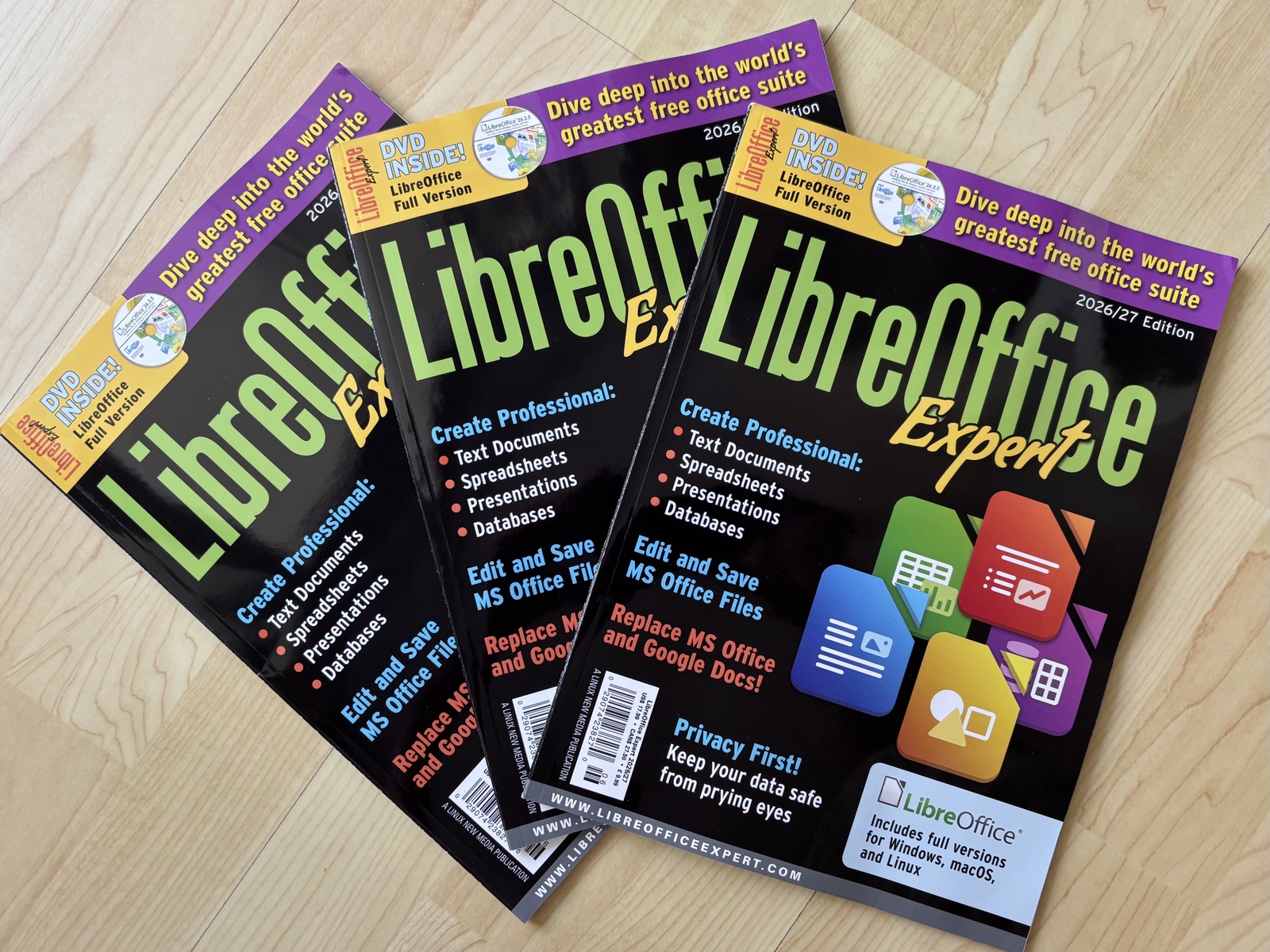
The community continued to expand its published resources as a marketing and onboarding asset. New user guides were released for the 25.2 line, alongside the Calc Guide 24.8 and Czech translations of the Getting Started Guide 24.8 and the Calc Guide 25.2, reflecting the contribution of native-language communities. New LibreOffice Expert magazines for 2025–2026 were made available for schools and local communities, and a new line of LibreOffice merchandise was introduced to support events, giveaways, and fundraising.

LibreOffice Calc Guide 24.8

Media, Press Relations and Social Media

TDF sustained its media relations work throughout the year, issuing press releases tied to releases, milestones, events, and public-sector adoption, and reinforcing LibreOffice’s position as a cost-effective, secure, and privacy-respecting alternative to proprietary office suites. The social media strategy continued across Mastodon, LinkedIn, and the project’s other channels, with particular emphasis on reaching decision-makers in public administration through case studies and adoption stories, and on carrying the digital-sovereignty argument to professional and policy audiences. Monthly project-and-community recaps provided a steady, aggregated record of activity across the year.

Public-Sector Adoption

Public-sector migration continued to be one of the most persuasive elements of the project’s external messaging, demonstrating LibreOffice’s viability at institutional scale and lending concrete weight to the digital-sovereignty argument that ran through the year’s advocacy. These migrations were amplified through press and social channels as evidence that open standards and open-source office software are a realistic foundation for public administration.

Conclusion

In 2025, TDF’s marketing and advocacy work matured from software promotion into a coherent public case for digital sovereignty built on open document standards. Anchored by the fifteenth anniversary and the 400-million-download milestone, sharpened by the end of Windows 10 and the defence of ODF, and sustained by conferences, community campaigns, publications, and steady media work, the year’s activities both amplified LibreOffice’s visibility and strengthened the wider argument that documents — and the institutions that depend on them — are better served by open standards and community-driven software.

Like what we do? Support the LibreOffice project and The Document Foundation – make a donation, or get involved and help our volunteers. Thank you!

  •  

LibreOffice Downloads and Donations in 2025 – TDF Annual Report

TDF Annual Report 2025 banner

This is part of the Annual Report 2025 from The Document Foundation, the non-profit that coordinates the LibreOffice project and community. More will be posted soon…

Donations

In 2025, The Document Foundation received 140,593 donation transactions, for a total of €1,807,780 net of payment processing and currency conversion charges. This represents a substantial increase over the two preceding years: donation transactions had numbered 98,361 in 2023 and 104,430 in 2024, while the corresponding amounts were €1,302,956 and €1,387,589. Transaction volume therefore grew by approximately 35% year on year, and the cleaned total rose by roughly 30%.

LibreOffice donations over the years, showing growth

A note on methodology is useful here. The charts in this section report the number of donation transactions rather than the amounts received. This is deliberate: the financial figure can be established only after each transaction has been cleaned by subtracting conversion charges and processing fees, whereas the transaction count is known directly. The charts therefore describe the shape of the trend, while the euro totals given above represent the financial reality behind it.

The quarterly distribution shows that the year’s growth was strongly concentrated in its final months. The first three quarters each built modestly on the last, and the fourth quarter rose well above them. This Q4 surge has a clear explanation. The announcement of LibreOffice 25.8 in August was followed by the introduction of a new update mechanism on Windows, which presents users with a dedicated new-features page and an invitation to support the project. This combination proved markedly effective in converting attention into contributions. The growing public interest in European digital sovereignty over the course of 2025 may have provided additional, favourable context, but the measurable drivers were the release and the new update mechanism.

Downloads

LibreOffice was downloaded 44,809,742 times in 2025 from the official download page, and the year recorded the highest annual figure in the project’s history. The per-year chart shows steady growth across more than a decade; the 2019 figure is shown but should be read with caution, as automated traffic distorted the counts that year. Rather than omit it, the Foundation has chosen to publish a credible corrected number and to state openly that it cannot be fully trusted.

LibreOffice downloads over the years, showing growth

These download figures should be understood as a floor rather than a ceiling. Several large channels fall outside the count entirely: most Linux users obtain LibreOffice through their distributions, installations from the Microsoft Store and the Mac App Store are not recorded, and the new Windows update mechanism means that a user may download the software once and subsequently update it without generating a further download. Actual usage is therefore considerably higher than the download total alone suggests.

Viewed month by month, downloads remained consistently strong throughout the year, with 2025 ahead of both 2023 and 2024 in most months. The pattern shows no single dominant spike but rather a sustained level of demand, consistent with LibreOffice’s established position rather than a one-off event.

The update page offers a complementary perspective. It recorded 581,615,673 visits during the year — a figure that, while not deduplicated, gives a sense of the scale of the active user community. On a conservative basis, the Foundation estimates the LibreOffice user base at around 100 million, with a substantial further number of occasional users. A higher reading is also defensible: at a ratio of roughly one user for every three to four update-page visits, the active community would fall between 140 and 180 million.

Like what we do? Support the LibreOffice project and The Document Foundation – make a donation, or get involved and help our volunteers. Thank you!

  •  

LibreOffice Conference and External Events – TDF Annual Report 2025

TDF Annual Report 2025 banner

This is part of the Annual Report 2025 from The Document Foundation, the non-profit that coordinates the LibreOffice project and community. More will be posted soon…

LibreOffice Conference

The LibreOffice Conference was the annual get-together of the worldwide LibreOffice community, bringing together developers, contributors, and users. The 2025 event was held in Budapest, Hungary, from September 3 to 5, and was preceded by a community session.

The main conference featured 53 sessions spread over three days. It kicked off with a welcome and housekeeping session, followed by an opening speech from Eliane Domingos from TDF’s Board of Directors, and a welcome speech from the university that hosted the event.

Please confirm that you want to play a YouTube video. By accepting, you will be accessing content from YouTube, a service provided by an external third party.

YouTube privacy policy

If you accept this notice, your choice will be saved and the page will refresh.

After that, the talks began across several different tracks, including the Open Document Format, advocacy and marketing, development and extensions, UX and design, and more. The full list of talks can be found on https://events.documentfoundation.org/libreoffice-conference-2025/schedule/. There was also a notable talk from the Austrian military (Bundesheer) about their migration to LibreOffice and the new features they funded.

The event finished on Friday with a lightning talks session, followed by the closing address and a celebration for the 15th anniversary of LibreOffice. But the conference was more than just talks: there was a community dinner as well.

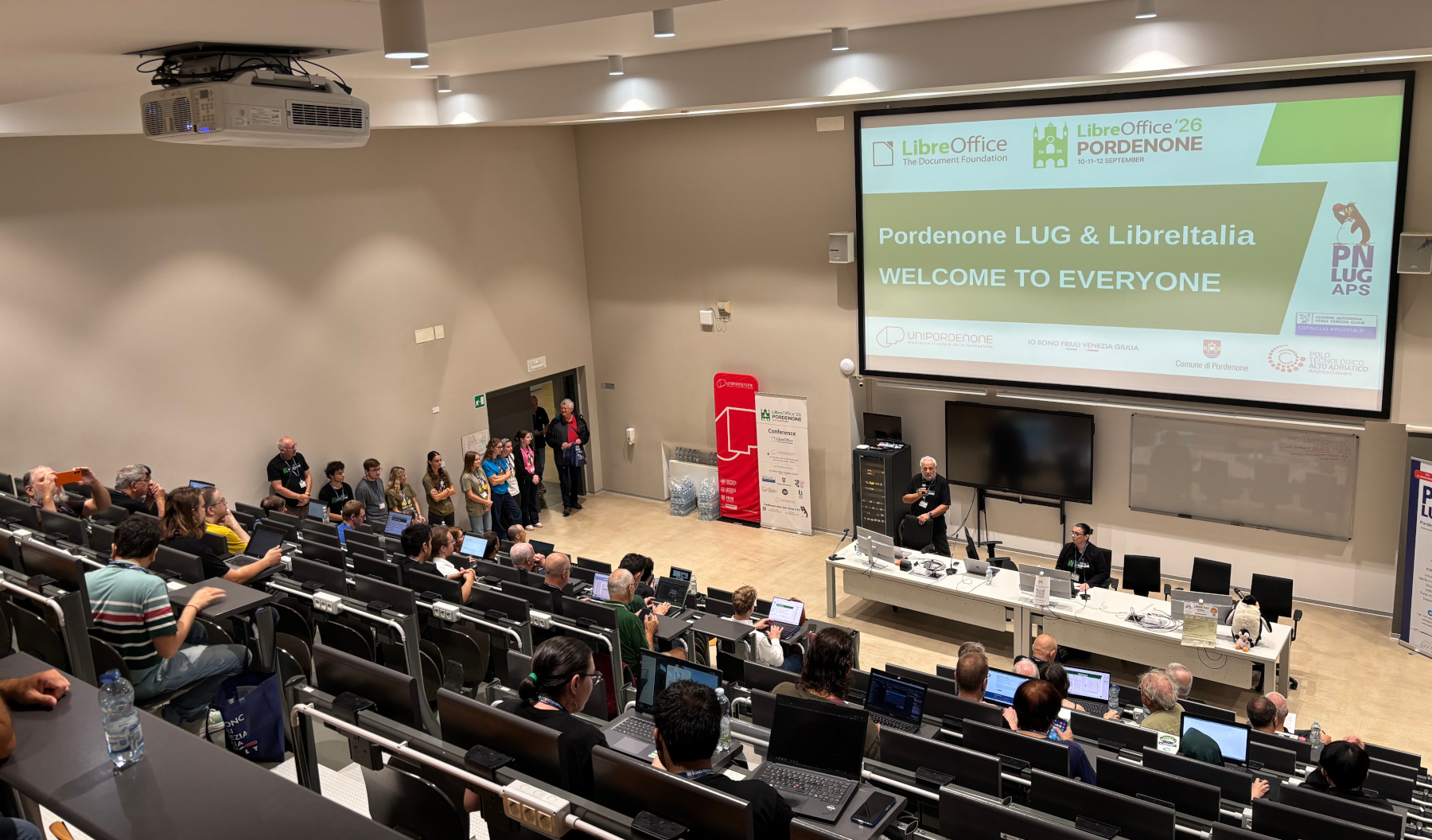
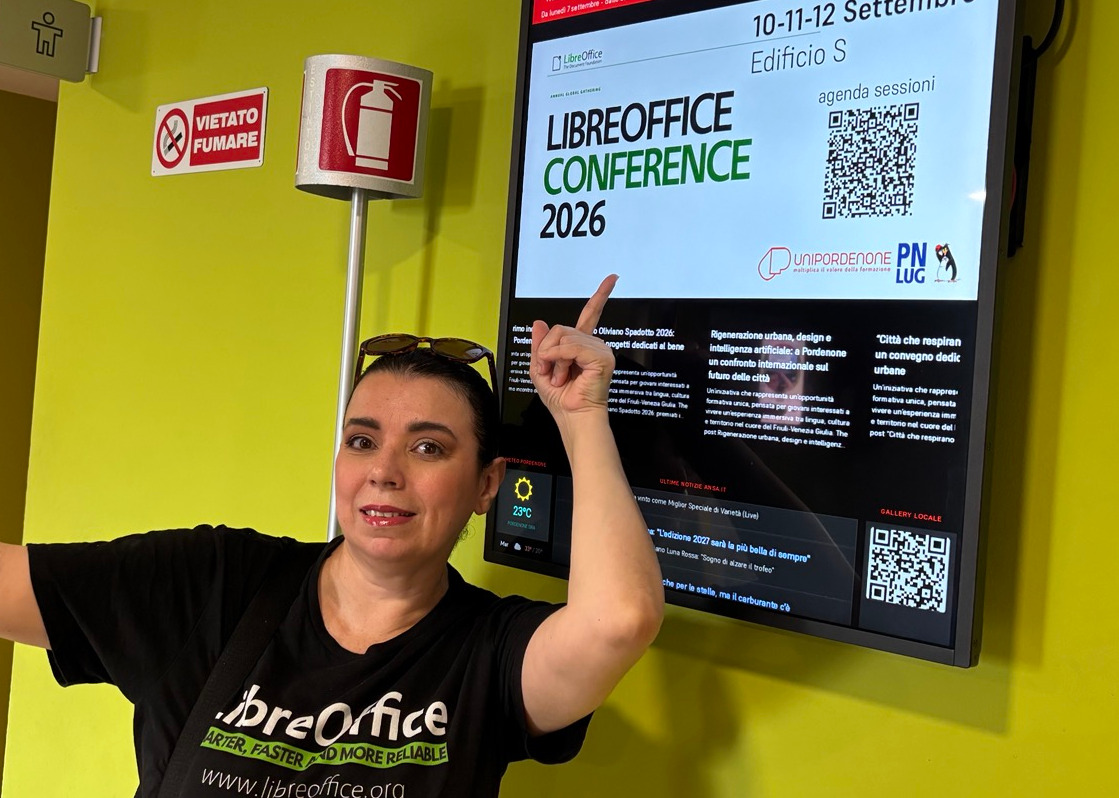
Now the community is looking forward to 2026’s LibreOffice Conference. The event will take place in Pordenone, northern Italy, from September 10 to 12, and the Call for Papers is currently open.

LibreOffice Conference 2025 group photo

In addition to the main LibreOffice Conference, there was the LibreOffice Asia Conference 2025, which took place in Tokyo, Japan, from December 13 – 14. Speakers and guests from around the world discussed topics specific to Asian communities, such as complex text layout (CTL) and CJK (Chinese, Japanese, Korean) language support, and marketing LibreOffice in specific countries.

LibreOffice Asia Conference 2025 logo

There was also the sixth edition of the Latin American LibreOffice Congress, held in Habana, Cuba, from October 6 to 9. LibreOffice project activities was concentrated on the opening day, October 6, and in the special session “LibreOffice Congress and Technological Sovereignty”, on the 8th. With the remaining days available, the organisers articulated a parallel agenda of activities, with visits and strategic meetings with managers and professionals from governmental and community areas.

LibreOffice Latin America Conference 2025 logo

TDF at External Events

Throughout 2025, members of The Document Foundation and the LibreOffice community attended many other events around the world. The first big event was FOSDEM, held in Brussels in early February – the biggest meetup of free and open source software developers in Europe. As usual, the LibreOffice community was present with a stand, merchandise, stickers, flyers, clothing and more. Attendees came by to talk about the project, report issues and make suggestions.

In late April, the Augsburger Linux-Infotag 2025 event took place in southern Germany, and LibreOffice was present with a stand and merchandise. Another German event was the Univention Summit 2025: it took place on January 23 and 24 in Bremen, and the LibreOffice project was present and met with the people overseeing the migration to LibreOffice in the northern German state of Schleswig-Holstein.

LibreOffice stand at the Augsburger Linux-Infotag

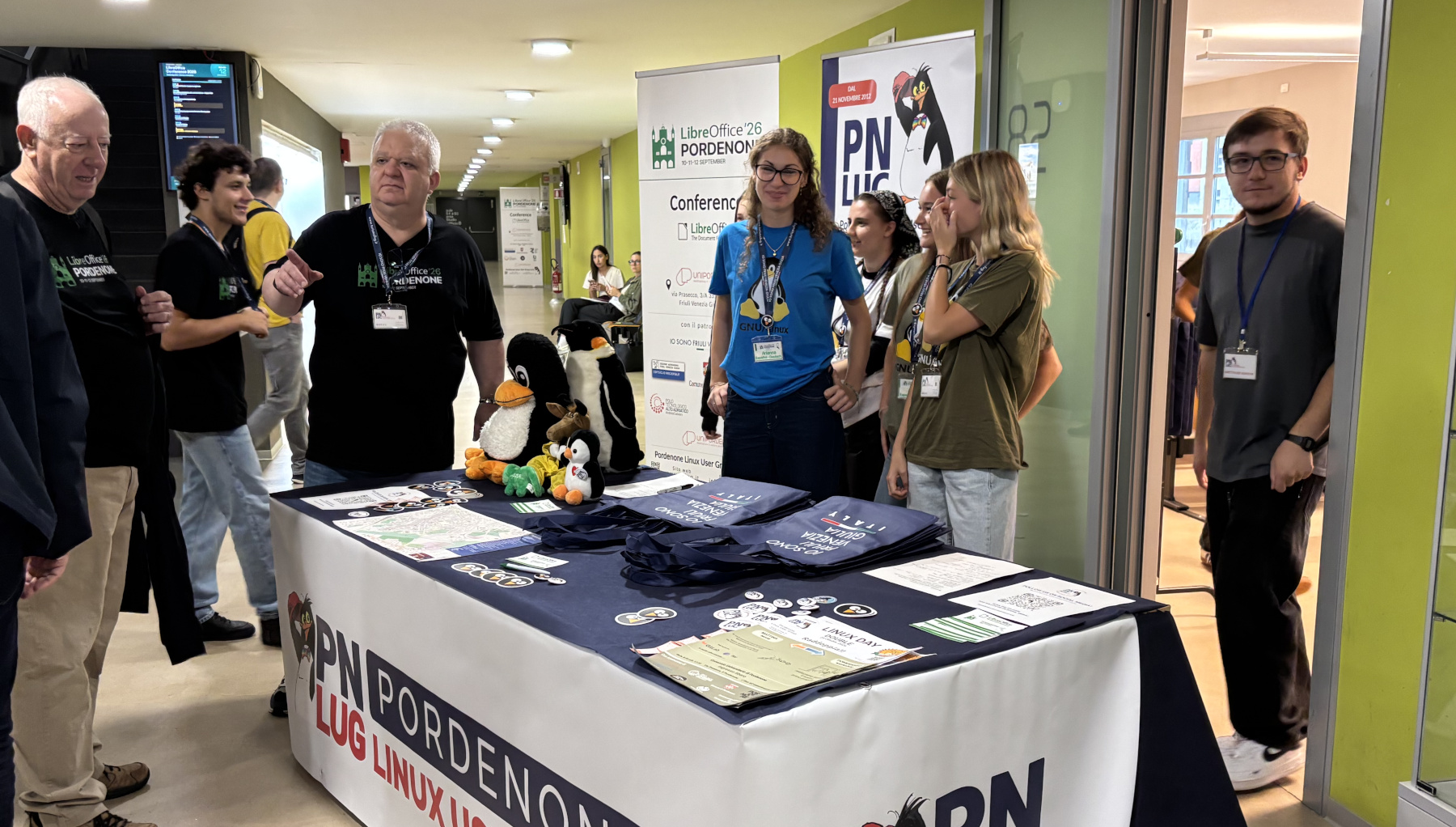
Italian community members attended the Linux Arena event from April 25 – 27 in Pordenone. They had a LibreOffice stand with a 32″ monitor, showing an Impress presentation about LibreOffice on a loop. At the stand they met different interested people – some of whom they already know since they visit the fair regularly, while others they saw for the first time. There was curiosity about LibreOffice, and this time the stand personal noticed an increasing demand about AI integration and related plugins. The LibreOffice coffee/beer mats were very much appreciated by visitors to the stand.

Later in the year, Community members in Nepal tuned in to an online call and turned Software Freedom Day 2025 into a success. Birendra Open Source Club – one of the student clubs and LibreOffice project contributors in Nepal, with support from Liaison Suraj Bhattarai and other key open source clubs, hopped onto Discord on 20 September.

Photo of Nepalese LibreOffice liaison Suraj Bhattarai

On October 4 and 5, the LinuxDays 2025 event took place at the Faculty of Information Technology (Czech Technical University) in Prague. It combined stands for free and open source software projects with workshops and talks, and the Czech-speaking LibreOffice community was there.

LibreOffice at LinuxDays in Prague

Members of the Indian LibreOffice community celebrated Document Freedom Day in Noida on 29 March. The event featured a few talks on free software such as OpenStreetMap, Prav and KDE, and also a lawyer told attendees how they manage all their clients’ data with free software and keeping their privacy in mind. LibreOffice merchandise was distributed at the sticker table.

LibreOffice at Document Freedom Day in Noida, India

Like what we do? Support the LibreOffice project and The Document Foundation – make a donation, or get involved and help our volunteers. Thank you!

  •  

LibreOffice releases, features, QA and accessibility – TDF Annual Report 2025

TDF Annual Report 2025 banner

This is part of the Annual Report 2025 from The Document Foundation, the non-profit that coordinates the LibreOffice project and community. More will be posted soon…

Releases of the Year

LibreOffice’s release plan works on a time-based release schedule, with major updates every six months (typically in February and August). So in other words, there are two new versions of LibreOffice per year. Many other FOSS projects adopt a similar time-based approach, and since 2024, LibreOffice has used a “year.month” versioning scheme – so LibreOffice 25.2, for instance, was released in the second month (February) of 2025. This versioning scheme helps users to see how old (or new) their currently installed version of LibreOffice is.

In addition to the major upgrades, there were monthly smaller “point” releases, mainly fixing bugs, compatibility issues and security vulnerabilities.

Major Feature Highlights

LibreOffice 25.2 was released on February 6. It introduced the ability to read and write ODF version 1.4, alongside numerous interoperability improvements with proprietary OOXML documents. It became possible to automatically sign documents after defining a default certificate. Additionally, Windows 7 and 8/8.1 were designated as deprecated platforms, with support scheduled to be removed in version 25.8, and extensions and features relying on Python ceased to work on Windows 7.

In LibreOffice Writer 25.2, improvements were made to Track Changes management to better handle a large number of changes in long documents. Comments were tracked in the Navigator when the focus was moved into them, while resizing the area containing comments showed a visual guide. Options were added to set a default zoom level for opening documents, which overrode the level stored within the documents themselves. It also became possible to delete all content of a specific content type, excluding headings, via the Navigator.

In LibreOffice Calc 25.2, a “Handle Duplicate Records” dialog was added to select or remove duplicate records. Both the Function Wizard dialog and the Functions Sidebar deck received improvements to searching and user experience. Solver models could be saved into spreadsheets, and the Solver became able to provide a sensitivity analysis report. New sheet protection options were also added relating to Pivot Tables, Pivot Charts, and AutoFilters.

Screenshot of Handle Duplicate Records dialog

Furthermore, many improvements were made to all Impress templates, which received visible elements, such as the font colour being set to black, in Master Notes and Handout. Objects could be centred on the Impress slide or Draw page in a single step, and the automatic repeating of slides could be activated in windowed mode. Finally, overflowing text in presenter notes was no longer cut off when printing.

Please confirm that you want to play a YouTube video. By accepting, you will be accessing content from YouTube, a service provided by an external third party.

YouTube privacy policy

If you accept this notice, your choice will be saved and the page will refresh.

Meanwhile, LibreOffice 25.8 was released on August 20. It brought new performance and features to the suite. In the User Interface, the Welcome/What’s New dialog began offering access to the user interface picker and appearance options, which allowed new users to leverage LibreOffice’s flexible UI and personalise the look and feel according to their preferences. The release also provided better interoperability with Microsoft Office files, offering more accurate handling of DOCX, XLSX, and PPTX files with fewer formatting issues, thanks to changes such as:

  • A complete overhaul of word hyphenation and spacing
  • Font management in Impress updated to be compatible with PowerPoint files
  • The addition of new functions in Calc: CHOOSECOLS, CHOOSEROWS, DROP, EXPAND, HSTACK, TAKE, TEXTAFTER, TEXTBEFORE, TEXTSPLIT, TOCOL, TOROW, VSTACK, WRAPCOLS, and WRAPROWS

There were, of course, other important new features, such as the ability to export to the PDF 2.0 format, and several new ScriptForge library services.

Please confirm that you want to play a YouTube video. By accepting, you will be accessing content from YouTube, a service provided by an external third party.

YouTube privacy policy

If you accept this notice, your choice will be saved and the page will refresh.

Performance

Throughout 2025, the LibreOffice community continued to work on improved performance in the suite. In LibreOffice 25.2, the speed of font previews in Calc was greatly improved. Additionally, the speed of saving from XLS to ODS was greatly improved after the impact of increasing the supported number of columns to 16k, and saving ODS files with large merged ranges became faster. Spreadsheets with lots of conditional formatting opened and saved much faster, while spreadsheets with lots of comments also saved much faster. Finally, the speed of loading XLS files was greatly improved after the impact of increasing the supported number of columns to 16k.

In LibreOffice 25.8, performance was upgraded so that everything ran faster, from startup to scrolling through large documents, with significant speed improvements delivered on less powerful machines. In benchmark tests, Writer and Calc opened files up to 30% faster. Optimised memory management allowed for smoother operation on virtual desktops and thin clients.

Quality Assurance

For every release, the LibreOffice Quality Assurance community produced Alpha, Beta and Release Candidate versions, giving users the chance to test the software (and report bugs) well in advance of the final release. Throughout the years, thousands of bugs were confirmed, triaged and resolved. The QA team wrote monthly reports about its activity on the QA blog.

Pie chart of fixed bugs

Accessibility

In LibreOffice 25.2, the Accessibility Sidebar featured improved warning and error levels, along with a new option to ignore specific warnings. Additionally, user interface elements were updated to report an accessible identifier that can be utilised by assistive technologies.

Platform-specific enhancements included on Windows, where accessibility was automatically enabled whenever a tool querids information on the accessibility level, and accessible relations were now correctly reported. Meanwhile, on Linux, the positions of UI elements, including those on Wayland, were accurately reported on the accessibility level.

LibreOffice 25.8 added an accessibility check for links and references in header/footer. Menus in the File ▸ Templates ▸ Manage Templates dialog became screen reader accessible on Windows. Support for the IAccessible2 “text-indent” attribute was added, which could be used by assistive technology like screen readers to report the indent of a paragraph’s first line. Additionally, the table design view in Base no longer became unresponsive when a screen reader was active on Windows. Finally, comboboxes and other controls inside toolbars were also represented in the accessibility tree of the application.

Like what we do? Support the LibreOffice project and The Document Foundation – make a donation, or get involved and help our volunteers. Thank you!

  •  

Video: Join the LibreOffice community!

LibreOffice is the free, private, open source office suite – and successor to OpenOffice. It’s made by a worldwide community, and you can be part of it! 😊 Boost your skillset, learn new people, and have fun – find out what you can do for LibreOffice.

(This video is also available on PeerTube.)

Please confirm that you want to play a YouTube video. By accepting, you will be accessing content from YouTube, a service provided by an external third party.

YouTube privacy policy

If you accept this notice, your choice will be saved and the page will refresh.

  •  

LibreOffice project and community recap: May 2026

Monthly recap banner

Here’s our summary of updates, events and activities in the LibreOffice project in the last four weeks – click the links to learn more…

  • We started May by announcing the new LibreOffice website. Our previous website was looking rather old and becoming difficult to maintain, so the team at TDF – with help of the wider LibreOffice community – has been working on a redesign, based on newer technology.

Announcing the new LibreOffice website

LibreOffice stand at the Augsburger Linux Info-Tag

ODF vs OOXML, an issue that should never have existed

GSoC logo

  • In the middle of the month, we announced LibreOffice 25.8.7, the final maintenance release of the LibreOffice 25.8 family. From here we will focus on maintaining the 26.2 branch, and are preparing for 26.8, our next major release (due in August).

LibreOffice 25.8 banner

  • The vast majority of income to The Document Foundation, the non-profit behind the LibreOffice project and community, is from donations from end users. We made a new video explaining how donations are used to support the community that makes the software.

Please confirm that you want to play a YouTube video. By accepting, you will be accessing content from YouTube, a service provided by an external third party.

YouTube privacy policy

If you accept this notice, your choice will be saved and the page will refresh.

  • Next, we started posting sections from TDF’s Annual Report 2025, starting with Native Language Projects. A huge thanks to the hundreds of people who make LibreOffice available is so many languages around the world! 😊

Annual Report banner with group photo from LibreOffice Conference

New Web and Mobile Strategy for LibreOffice

Like what we do? Support LibreOffice with a donation – or join our community and help to make LibreOffice even better! Also keep in touch – follow us on Mastodon, Bluesky, Reddit and Facebook.

  •  

Join the LibreOffice team as a paid system administrator, working on TDF’s infrastructure (full-time, remote, m/f/d)

Love LibreOffice? Got experience with infrastructure and system administration? We are The Document Foundation (TDF), the non-profit entity behind LibreOffice. We’re passionate about free software, the open source culture and about bringing new people with fresh ideas into our project.

To assist the LibreOffice community with its work, we are looking for a full-time (remote) Infrastructure and System Administrator, to start as soon as possible.

Here’s what you’ll do

  • System orchestration and OS management: Orchestrate, deploy, and maintain all internal and external systems, specifically standard and customised Linux operating systems, with the majority of machines running Debian GNU/Linux. We currently run SaltStack, but proposals for different ways to handle config management and deployment are welcome.
  • Virtualisation and storage infrastructure: Manage virtualisation platforms and hypervisors (KVM/QEMU). Experience with GlusterFS (for the backup system) is a plus, but not mandatory.
  • Database, cloud, and App Administration: Administer database servers such as MariaDB and PostgreSQL, cloud storage repositories (such as Nextcloud), web applications, email services, and developer tooling.
  • Network and hardware maintenance: Maintain core physical and cloud network infrastructure, including routers, switches, and NAS storage, amongst them devices from MikroTik.
  • Security and network access: Oversee firewalls, intrusion detection, antivirus, IP reputation, global mirror systems, and secure VPNs for users and machines.
  • Identity and access management: Deploy and manage single sign-on (SSO) solutions, directory services, domain names, DNS zones, and SSL certificates (PKI).
  • Ensure stable operations and monitoring: Together with teammates and volunteers, ensure stable infrastructure availability, manage log analysis, handle emergencies, and coordinate with external providers during outages.
  • Patch management: Execute timely deployments of security and software updates within scheduled maintenance windows.
  • Team coordination and documentation: Lead and coordinate the infrastructure team, volunteer contributors, and third-party vendors, while keeping technical documentation up to date.
  • Data protection and disaster recovery: Implement backup and point-in-time disaster recovery solutions, and manage infrastructure-related GDPR compliance in cooperation with privacy officers.

What we want from you

  • Very good sysadmin and infra maintenance skills on Linux
  • Good team-playing abilities
  • Speaking and writing English

As always, TDF will give some preference to individuals who have previously shown a commitment to TDF, including but not limited to members of TDF. Not being a member does not exclude any applicants from consideration.

Join us!

All jobs at The Document Foundation are remote jobs, where you can work from your home office or a co-working space. The work time during the day is flexible, apart from a few fixed meetings. The role is offered as full-time (ideally 40 hours per week). While we prefer full-time for the role, part-time applications, or proposals to grow the hours over time, will be considered. Candidates that are resident in Germany will be employed directly by TDF. Otherwise, external payroll services will be used if available in the candidate’s country of residence.

Are you interested? Get in touch!

TDF welcomes applications from all suitably qualified persons regardless of their race, sex, gender, disability, religion/belief, sexual orientation or age. Don’t be afraid to be different, and stay true to yourself. We like you that way! 😊

We’re looking forward to receiving your application, including information about you (your resume), when you are available for the job, and of course your financial expectations. Please provide details about your experience and send us an e-mail to sysadmin@documentfoundation.org no later than July 6, 2026 (end of day, Berlin time). If you haven’t received feedback by August 3, 2026, your application could not be considered.

Also note: we only accept applications from the applicant, and not from any intermediary. We do not accept agency resumes. Please do not forward resumes to any recruiting alias or employee.

  •  

Meet the team at The Document Foundation

LibreOffice is made by hundreds of people around the world, working on code, documentation, QA, translations, marketing, infrastructure and much more. Coordinating the project’s activities is the team at The Document Foundation, the non-profit behind LibreOffice. Let’s see what the team members do:

1. Christian Lohmaier, Release Engineer

Christian’s typical tasks include taking care of the continuous integration system (both the automation server and the build machines), managing the LibreOffice release process, handling app store updates with all the paperwork that entails, managing the technical side of language translations not only for LibreOffice, but for any translatable system we have and making sure our integration with payment platforms works smoothly. He has also been involved in creating and maintaining websites and web services.

Christian’s work is influencing the developer experience as well. In the past, LibreOffice’s Windows development setup was somewhat messy. After Christian introduced automation into the setup process with the help of WinGet scripts, there has been much less need for troubleshooting.

2. Dan Williams, Developer

Dan was involved in the Mac port back in the 2000s when LibreOffice was still called OpenOffice.org. For some months now he has been working for TDF on user interface and macOS tasks. He has done corrections to the handling of system UI themes, implemented support for special macOS keyboard shortcuts and macOS-specific menu items, fixed database links going missing from .ods files, and fixed an issue with printing notes from Impress presentations on macOS. His ongoing work includes experimenting with Qt UI on macOS and reworking the code for Notebookbar.

3. Florian Effenberger, Executive Director

Florian is one of the founders of TDF, and its Executive Director since 2014. He manages our worldwide team of 18 people, and deals with a variety of tasks in accounting, financials, taxes, budget, payroll, annual audit, banking, legal topics, employment and HR. He supports the board and the membership committee and onboards those new in office. He regularly gives presentations at events, is active in the German community and has written extensively about the tasks he is involved on our forum.

4. Guilhem Moulin, Infrastructure & Services

Guilhem is managing our servers and the approximately twenty web services needed every day by LibreOffice users and contributors. Major updates to the operating systems and the web applications require careful studying of what needs to be taken into account to ensure everything keeps operating smoothly. Often this goes into the level of studying individual code changes. Compatibility breakage has to be mitigated or at least communicated.

5. Heiko Tietze, UX Architect

Heiko is collaborating with user experience design volunteers in planning improvements to LibreOffice. Not being content with planning, he then goes and implements the proposals, either by himself or with help from others. Heiko always denies being a C++ developer yet inexplicably has over 700 LibreOffice code changes in his name. He has mentored in over a dozen Google Summer of Code (GSoC) and Outreachy projects, for example in the reworking of Table Styles and UI theming. Being an active mentor means that he is doing code reviews for new developers all year round as well as inventing new easy tasks.

A recent large-scale project of his is implementing vertical tabs in dialogs.

6. Hossein Nourikhah, Developer Community Architect

Over a hundred developers get their start in LibreOffice code every year. Facing seven million lines of code can be intimidating, so we have a tradition of providing a selection of tasks we call “easy hacks“. Hossein is tending to this catalogue of beginner tasks and reviewing the submitted code changes. Whenever a new developer has issues with setting up a development environment, he jumps in to help. He is also writing developer documentation on the TDF wiki and publishing blog posts about development.

He has mentored GSoC projects such as cross platform bindings for .NET and Python code auto-completion. His recent contributions include initial support for Qt 6 UI on Windows together with Michael Weghorn, based on earlier work by Jan-Marek Glogowski.

7. Ilmari Lauhakangas, Development Marketing

Ilmari is bringing in new contributors to quality assurance, design, C++ development and documentation. In a typical year he teaches nearly 200 people about getting involved in LibreOffice. He is also triaging (and sometimes fixing) bugs, doing web development, maintaining the wiki, doing code reviews and managing internship programs.

8. Italo Vignoli, Marketing & PR

Italo Vignoli is a founding member of The Document Foundation and the LibreOffice project, the Chairman Emeritus of Associazione LibreItalia, an Ambassador of Software Heritage, and a proud member of Free Software Foundation Europe (FSFE). He is a past board member of Open Source Initiative (OSI). Italo co-leads LibreOffice marketing, PR and media relations, co-chairs the LibreOffice Certification Program, and is a spokesman for the project. He also handles advocacy and marketing activities for the Open Document Format ISO standard.

9. Jonathan Clark, Developer

For the past two years Jonathan has been working on LibreOffice features in the categories of right-to-left scripts, complex text layout and Chinese-Japanese-Korean. In addition to numerous quality of life improvements, he has implemented support for Start/End paragraph alignment while making it the default instead of Left/Right, and made the CJK text grid compatible with Microsoft Word. On the mentoring side he is constantly reviewing code submissions from newcomers and was involved in the BASIC IDE object browser GSoC project.

Jonathan is currently looking into fundamental improvements in the LibreOffice user interface.

10. Juan José González, Web Technology Engineer

As mentioned earlier, TDF hosts a rather large number of web applications, some of them created from scratch. These custom web services include the Extensions and Templates site and the Crash Report site. Juan José has been heavily involved in redesigning and maintaining these two sites. He has also worked on sites for various LibreOffice conferences, improved our localisation tooling and created tools to combat spam in our forums.

11. Michael Weghorn, Developer

TDF wants LibreOffice to be easy to use for visually impaired people, and three years ago Michael was hired to make sure we always deliver accessible software. LibreOffice has lots of variety in its content types and user interface widgets. This means that we are sometimes testing the limits of accessibility APIs, which are also different per operating system. To ensure optimal results in LibreOffice accessibility, Michael is working with developers of toolkits such as GTK and Qt, and with developers of screen-reader applications such as Orca and NVDA.

At the moment Michael is working to bring LibreOffice’s Qt user interface support to the next level and seeing how it works on Windows.

12. Mike Saunders, Marketing and Community Coordinator

Mike is a long-time Linux and free software journalist, and joined the team in 2016 to work in the areas of marketing and community outreach. He helps to maintain the LibreOffice social media channels, interacting with users to encourage them to join the project and contribute. He also interviews community members, writes blog posts, works on videos and podcasts, and organises events.

13. Neil Roberts, Developer

Neil joined the team a couple of months ago to improve the scripting and API side of LibreOffice. He has implemented a new approach for Lua UNO API bindings, added QuickJS-based JavaScript bindings together with Stephan Bergmann and made it possible to create and edit Python macros via the Macro Organizer dialog.

Neil will also be collaborating with Michael Weghorn on user interface renovation projects.

14. Olivier Hallot, Documentation Coordinator

Olivier started contributing back in the OpenOffice.org days in 2001 as part of the Brazilian community and is one of the founding members of TDF. For ten years he has been leading the documentation effort for LibreOffice. The documentation team maintains several guide books, a huge collection of help articles, wiki pages and even tooltip texts seen within LibreOffice itself. Olivier has opinions on writing good release notes and is not shy to share them!

Olivier is also fixing UI issues and making sure everything works with regards to localisation.

15. Sophie Gautier, Foundation Coordinator

Sophie has been in the LibreOffice project since the beginning (and in OpenOffice.org before that), and helps with TDF administration tasks, such as organising meetings and managing the travel refund tool. In addition, she helps to organise the yearly LibreOffice Conference, and works with the localisation communities to make LibreOffice available in as many languages as possible.

16. Stephan, Administrative Assistant

Stephan helps with administrative tasks for the foundation, such as meeting minutes, accounting reports, donation queries, travel bookings, travel expense reimbursements, ordering equipment, issuing donation receipts, payment processing, and translations.

17. Vissarion Fysikopoulos, Developer

Having started about a month ago, Vissarion will focus on taking Base to the next level. The current development plan includes finishing the new Report Builder, polishing Firebird support and adding support for SQLite.

18. Xisco Faulí, QA Engineer

Xisco did a Google Summer of Code project for LibreOffice in 2011 and joined the TDF team in 2016 to work on QA (quality assurance). At first he was triaging bugs, but gradually moved to writing automated tests. By now he has added thousands of tests. He keeps LibreOffice’s hundred external dependencies up to date, fixes critical bugs, improves graphics support, helps with the release process, is involved in reviewing security reports and handles the crash report system alongside other automated systems related to guarding the quality of the software. He also mentors GSoC projects.

As mentioned, the team is just a small part of the overall LibreOffice community. Everyone is welcome to find out what you can do for LibreOffice – to learn new skills, meet new people, and be part of a project making software used by millions of people around the world!

  •  

New Web and Mobile Strategy for LibreOffice

New Web and Mobile Strategy for LibreOffice

LibreOffice is a desktop application, and we will continue making it. But we have constant requests for web and mobile versions, so here is our updated plan. These are minutes from the TDF Team and Board of Directors meetings on web and mobile strategy for LibreOffice:

Who was present

Team: Michael Weghorn, Jonathan Clark, Sophie Gautier, Neil Roberts, Mike Saunders, Guilhem Moulin, Heiko Tietze, Ilmari Lauhakangas, Dan Williams, Xisco Fauli, Christian Lohmaier, Vissarion Fysikopoulos, Juan José Gonzalez, Olivier Hallot, Florian Effenberger, Hossein Nourikah

Board: Eliane Domingos, Mike Saunders, Paolo Vecchi, Simon Phipps, Sophie Gautier

Summary

The meetings, which took place April 20, April 22 and May 19, focused on discussing LibreOffice and TDF strategies for the evolving development landscape and the future of LibreOffice across all platforms – desktop, mobile, and cloud. Team roles were reviewed, and new assignments were proposed.

Status of the current foundation team activities

Since 2020, the development of LibreOffice within the foundation focused almost uniquely on the desktop version of LibreOffice (and to a lesser extent, the Android viewer app) and that part will continue unchanged. Therefore the foundation will continue to deliver two major LibreOffice releases per year.

Engineering Steering Committee (ESC)

The current ESC members and activities remain unchanged, and weekly meetings continue with reports on activities, releases, topics and project management. The meeting, as always, is open to the development community.

Community support

No changes in vision for community support. Regional events and special projects remains as they are, and require proper and timely project submission and available budget. Google Summer of Code and Outreachy will continue as before. The LibreOffice Conference 2026 is planned and will take place in Pordenone, northern Italy.

Marketing and communications

Marketing and communications will adapt to the current situation of the foundation and LibreOffice . More communication of team activities and product development is needed, as well as improving the use of social networks for mass communication. Unification of the several different blogs is under consideration.

Challenges ahead

The foundation is challenged to address the following areas:

  • Develop an online and mobile version of the suite. The challenge is to select the technology that fulfill both end-user and server side management
  • Innovate in collaboration such as peer-to-peer document editing
  • Continue to produce two releases per year of the desktop and Android viewer versions
  • Improve the user interface and usability of LibreOffice
  • Keep the quality and security of the office suite
  • Develop new features and improve current features
  • Cherry-pick relevant features and improvements from other software producers
  • Full support of the Open Document Format (ODF)
  • Produce adequate documentation for development processes and the current and new products
  • Be an active participant of the major open source communities and government initiatives for FOSS and nations’ sovereignty
  • Preserve donation inflow and pursue corporate or government donations through development projects

New assignments of the team

It was suggested that the team be distributed in two parts, with proper interaction between the groups. Additional headcounts, as well as external contracts are considered to fulfil the mission. New community developers will be assigned to tasks upon demand.

Of critical importance, the suite security and CVE’s management were assigned to Christian Lohmaier (Release engineer) and Xisco Fauli (Quality Control). Coverity and OSS-Fuzz services are assigned to Xisco Fauli. These new missions require additional manpower, and provisions for hiring an additional QA specialist is needed.

The team will select valuable technology and code under FOSS licenses, and from companies using LibreOffice Technology.

Mobile, cloud and peer-to-peer development

Mobile and cloud development management is assigned to Jonathan Clark (leader), with support from Dan Williams, Michael Weghorn and Neil Roberts. The planning and priority goals established are based on Jonathan Clark’s “Web and Mobile Development Strategy Proposal” for the remainder of 2026, and include:

  • WebAssembly (WASM) Optimization: Enhancing and polishing our functional prototype based on Qt 6 and WebAssembly. This technological route will run the application robustly and natively directly inside the user’s browser, without overloading hosting servers.
  • Accelerating the mobile project: The goal for 2026 involves technical advancement in the graphical user interface (GUI) code and testing builds on Android and iOS emulators, with advisory support from Dan Williams for iOS-specific topics.
  • Smart collaborative editing: We will initiate practical collaborative editing tests using a stable client-server architecture (via direct TCP/IP connections), paving the way before advancing to peer-to-peer (P2P) network research.

Conclusion

The Document Foundation is challenged to evolve and expand LibreOffice to other computing platforms, and include collaboration editing. This requires changes in the current team activities, mission and organization. The Board and the team are fully committed to addressing these challenges and reporting to the public the development and achievements obtained. Freedom has never been so valuable for the LibreOffice community.

Discuss our plan and strategy on our forum here

  •  

LibreOffice Native Language Projects – TDF Annual Report 2025

TDF Annual Report 2025 banner

LibreOffice is available in over 120 languages, thanks to the work of localisation communities around the world. We asked them to summarise their work in 2025 – here’s what they had to say…

Czech

The Czech community maintained an active presence both online and in-person. Their localisation efforts remained strong, keeping the UI fully translated and the Help files at 95% completion. The team also stayed connected with their user base through the Czech Ask LibreOffice site along, with social media presence across X, Facebook, Instagram and Mastodon.

There was also outreach at events. The team hosted dedicated LibreOffice booths at InstallFest in April and LinuxDays in October, both held in Prague. Documentation also saw significant updates, with the publication of the Getting Started Guide (24.8), the Calc Guide (25.2), and the Draw Guide (25.8).

LibreOffice booth at LinuxDays 2025 in Prague

Danish

The Danish community focused on multimedia education and consistent localisation in 2025. There was the launch of the @libreofficeskolen (“LibreOffice School”) YouTube channel. This initiative provides the Danish-speaking public with a series of instructional videos designed to lower the barrier to entry for new users. Alongside this output, the community kept the UI and Help files fully translated at 100%, and ensured that LibreOffice promotional videos were accessible via localised subtitles.

Dutch

Beyond maintaining the local website and providing assistance via the Ask LibreOffice website and mailing lists, the Dutch-speaking community worked on many documentation updates.

Beginning in January with the Calc Guide for 24.8, the community then published a steady stream of translated manuals for version 25.2, including the Writer, Impress, Math, and Getting Started Guides. This effort then lead to the release of the updated 25.2 Calc Guide in July. On the localisation front, the Dutch team continued their work on Weblate, successfully maintaining 100% translation coverage for both the User Interface (UI) and the Help system, following upstream changes.

Finnish

The Finnish community focused on steady and ongoing translation efforts. The team prioritised localisation of the UI, with secondary work continuing on the Help system. To ensure the long-term sustainability of these efforts, the community has been proactive in outreach, utilising the vapaaehtoistyo.fi online platform to recruit new volunteers.

French

On the technical front, the French-speaking team maintained 100% translation coverage for both the UI and Help systems across all versions of LibreOffice. Their localisation work extended to the new Hugo-based website, release notes, and the Extensions wiki page. Significant progress was also made on the translation of Calc functions on the wiki and the subtitling of promotional videos.

Outreach was a major topic in 2025, with the community representing LibreOffice at events like Capitole du Libre in Toulouse, and Open Source Experience in Paris. The team also worked on academic ties, coordinating with UBO University to involve translation students in user guide writing. Beyond documentation and QA, the French team supported users through the Ask LibreOffice site and published various articles on LinuxFR. In addition, there were REGEX tutorials for civil servants and introductory presentations at public media libraries.

German

Throughout the year, the German-speaking community wrote blog posts (and translated others from the English-language blog), maintained its social media activity on Mastodon, and worked on user interface translations. Community members also attended local events on behalf of the LibreOffice project, such as the Augsburger Linux-Infotag 2025 and Digitaltag 2025 in Duisburg.

LibreOffice booth at the Augsburger Linux-Infotag 2025

Irish

The Irish-speaking community made significant steps in 2025 to bring the suite to native speakers. Currently, the UI and website translations are nearing 100%, with the LibreOffice 26.2 user interface already reaching a 96% completion rate. The team’s primary focus is now on finalising these remaining strings and resolving technical checks.

Italian

The Italian-speaking community maintained 100% translation status for the UI and Help files across all active versions of the suite. The team helped with localising the project’s new Hugo-based website and kept the Italian-speaking public informed by translating all release notes and press releases. Current efforts are focused on the ongoing translation of Calc functions on the wiki and a comprehensive revision of various wiki pages.

In 2025, the Associazione LibreItalia organised a full-day LibreItalia conference in Gradisca d’Isonzo, following the adoption of a regional law mandating the use of free open source software in Friuli Venezia Giulia, an eastern Italian region bordering Slovenia. The politician who signed the law provided an overview of the approval process.

The event was organised by Marco Marega, a long-standing member of LibreItalia who is active in the localisation team and other areas of the project. Several members of the Pordenone LUG attended the conference and initiated a discussion about organising the 2026 LibreOffice Conference in their city. This discussion then evolved into an official proposal.

Japanese

The Japanese community had a busy year in terms of events. There was the LibreOffice Asia Conference 2025 in Tokyo, a two-day event that brought together 70 attendees. Outreach extended internationally as Japanese members traveled to COSCUP 2025 in Taiwan to deliver three talks and strengthen ties with the Taiwanese community.

The community also organised:

  • Online Hackfests: Held 46 times via Jitsi and YouTube Live
  • Online Study Parties: Three sessions dedicated to user knowledge sharing
  • LibreOffice Days: Monthly offline meetups in Osaka, co-hosted with the Open Data Mokumoku-kai
  • Open Source Conferences (OSC): Booths and hackfests at seven locations across Japan, from Hokkaido to Fukuoka

On the documentation front, the team published the Writer Guide for LibreOffice 25.2 in Japanese. Localisation efforts currently stand at 91% for the UI and 46% for Help. The team also remained responsive to end users, answering nearly 50 new questions on Ask LibreOffice, publishing 20 blog articles, and maintaining a steady presence on X, Facebook and Bluesky.

LibreOffice Asia Conference 2025 logo

Kazakh

Starting in late 2025, the community launched a refresh of its translation efforts, achieving 100% UI completeness in time for the LibreOffice 26.2 release. This work extended to the localisation of the official website and the activation of the Help master branch, preparing for future documentation projects.

To improve consistency across other open source projects, the team is currently developing a unified Kazakh glossary derived from various localisation projects. Furthermore, the community has begun testing the use of AI-assisted translations, reporting high-quality results to improve their workflows in 2026.

Tagalog

The Tagalog community made steps forward in localisation, maintaining the user interface and Help files at a high completion rate of 98–99% across all versions. The team continued to integrate Deep Language Modeling to automate accuracy verification. While the community experiences a natural ebb and flow of contributors, there is growing interest in expanding support to regional dialects, such as Ilocano.

The team also wishes to extend a special note of gratitude to the dedicated group of US-based translation helpers whose contributions were vital to success in 2025.

TDF says: many thanks to all native-language projects for their work in 2025! Of course, this is just a selection of their activities, based on communities that reported their activities, but there are many more too.

Like what we do? Support the LibreOffice project and The Document Foundation – get involved and help our volunteers, or make a donation. Thank you!

  •  

How your donations help the LibreOffice project and community

LibreOffice is free thanks to your donations. Here’s how your support helps us to improve the software and grow the community that makes it 😊 (Note: this video is also available on PeerTube.)

Please confirm that you want to play a YouTube video. By accepting, you will be accessing content from YouTube, a service provided by an external third party.

YouTube privacy policy

If you accept this notice, your choice will be saved and the page will refresh.

  •  

The Document Foundation Releases LibreOffice 26.2.3

Berlin, 30 April 2026 – The Document Foundation today announces the release of LibreOffice 26.2.3, the third maintenance update to the LibreOffice 26.2 branch, which was released in early February. This update delivers targeted bug and compatibility fixes, along with stability improvements contributed by our global community. LibreOffice 26.2.3 is
  •  

LibreOffice Asia Conf 2025 – Panel: Lessons from Open Source Business, Part II

Jiajun Xu writes, following on from part 1: The annual community event LibreOffice Asia Conference was held on December 13–14, 2025 in Tokyo, Japan. One of the sessions was a panel discussion titled “Lessons from Open Source Business,” moderated by Franklin Weng, featuring three company leaders from different countries sharing
  •  

Using LibreOffice for writing screenplays

LibreOffice Writer is the suite’s word processor, and can be used for virtually any task involving… well, processing words, of course. But how about screenwriting (aka writing screenplays)? We saw a discussion on Ask LibreOffice where user Peter J. talked about his experiences in this field. Initially he described LibreOffice’s
  •  

LibreOffice Asia Conf 2025 – Panel: Lessons from Open Source Business, Part I

Jiajun Xu writes: The annual community event LibreOffice Asia Conference was held on December 13-14 2025 in Tokyo, Japan. One of the sessions was a panel discussion titled “Lessons from Open Source Business,” moderated by Franklin Weng, featuring three company leaders from different countries sharing how they run their businesses
  •  

Welcome Vissarion Fisikopoulos, new LibreOffice developer focusing on Base

LibreOffice Base is the database component of the suite, and hasn’t seen a lot of development activity in recent years. So The Document Foundation – the non-profit behind the software – wants to change that! Following Neil Roberts, we now have a second new developer, Vissarion Fisikopoulos, so let’s hear
  •  
❌