❌

Vue lecture

How Earth Lost a Billion Years of Its History

How Earth Lost a Billion Years of Its History

Welcome back to the Abstract! Here are the studies this week that drew a blank, felt the squeeze, played the queen, and made donkey-bull love.

First, scientists shed new light on how Earth ended up losing more than a billion years of its geological record, a puzzle that has resisted explanation for decades. Then: octopuses in tight spots, a topless spear-brandishing Celt, and a tale of unlikely tail.

As always, for more of my work, check out my book First Contact: The Story of Our Obsession with Aliens, or subscribe to my personal newsletter The BeX Files. 

“Blank Space” (Earth’s Version)

Dhungana, Santosh and Flament, Nicolas. “The deep Earth origin of the Great Unconformity. Nature.

Earth doesn’t trouble itself too much with keeping intact archives. With its tectonic activity and erosive forces, our planet is constantly wiping out huge chunks of its own memory, creating gaps in the geological record called unconformities. 

The Great Unconformity, the largest gap of this kind, reveals that Earth straight-up deleted more than a billion years of strata, for reasons that remain hotly debated and mysterious. Sandstone that dates back to the Cambrian period some 538 million years is often found directly on top of ancient “basement” rocks that date back anywhere from 1.2 billion to 1.8 billion years ago. This missing layer shows up around the world, hinting that it was erased by a global event.  

Now, scientists have placed the origins of the Great Unconformity deep inside Earth’s mantle, during the tectonic tumult of supercontinent breakup.

“The cause or causes of the Great Unconformity are unknown,” said authors Santosh Dhungana and Nicolas Flament of the University of Wollongong. “The proposed mechanisms include extensive glacial erosion during Snowball Earth (about 720–635 million years ago), rifting and plume activity, sea-level fall and mantle-driven dynamic topography.” 

“These processes have not been dynamically tested, with limited comparison between global models and global datasets to explain the spatial distribution of the Great Unconformity,” the team added. 

To fill the knowledge gap about the geological gap, the researchers ran models of the formation and breakup of ancient supercontinents during the eons preceding the Cambrian period, when complex life rapidly proliferated in Earth’s seas. Massive landmasses were pushed upward by motions in Earth’s mantle during this time. Exposed to erosive forces such as weather, glaciers, and eventually oceans, they became sanded down over time, creating the vast void. 

“Our models explain why the Great Unconformity is best preserved in North America and show that it is a first-order surface expression of deep geodynamic processes that transformed global landscapes and sediment fluxes,” the team concluded.

Scientists will no doubt continue to debate the cause of this planet-wide memory lapse, but there is consensus that the same mechanisms also set the stage for the emergence of complex life during the Cambrian. No matter what caused the Great Unconformity, we partly owe our existence to it today. 

In other news…

Putting the squeeze on octopuses   

Xin, Wenci et al. “Overcoming environmental constraints: octopus uses 3-step or 4-step strategies to squeeze through small holes.” Journal of Experimental Biology.

We’ll move now from massive gaps in Earth’s memory to tiny gaps that octopuses can somehow squeeze through. These tentacled escape artists can famously maneuver their way through passages that seem impossibly small relative to their bodies, an ability that has spawned a subgenre of viral videos.

Now, scientists have discovered the secrets of “octopus-squeezing behavior” by observing two species—the common octopus (Octopus vulgaris) and the Mayan octopus (Octopus maya)—navigating small holes in laboratory containers. 

“Our study demonstrates that octopuses employ two primary strategies, 3-step and 4-step, for squeezing through narrow spaces,” said researchers led by Wenci Xin of the National University of Singapore. “The key distinction between these strategies lies in whether the body is squeezed separately from the arms.” 

The first two steps were probing the aperture and then shifting a few arms through it. Navigating the tightest spaces required breaking up the final passage into two parts: Pulling the remaining arms to the other side, and then compressing the mantle behind the head so they could fit through last.

In addition to documenting these amazing feats of flexibility in nature, the study is the perfect excuse to revisit the classic X-Files episode “Squeeze.”

A queen hidden in plain sight?  

Russell, Miles. “Verica Rex: Searching for a ‘lost’ queen of the British Iron Age.” Current Archaeology.

When Rome invaded Britain 2,000 years ago, they had the help of an inside man—or was it an inside woman? In a new article, an archaeologist makes the case that the British king Verica, who aided the Roman invasion of their own homeland, was actually a queen that has been misgendered lo these many centuries. 

Miles Russell of Bournemouth University argues that Verica was a woman based in part on the leader’s Latin name, which ends in the suffix “a” which is common for women, as opposed to names ending in “-us” for men. 

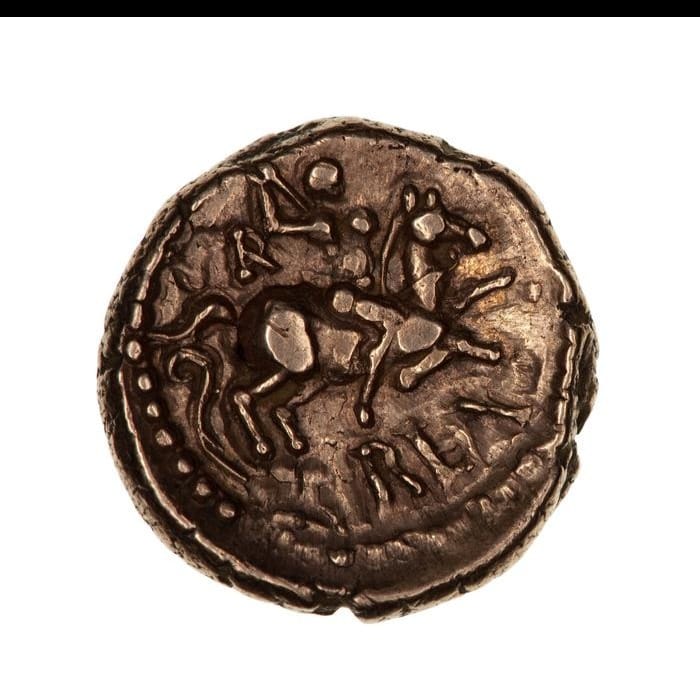
Coins also depict Verica using “slender, bare-breasted equestrian figures that appear irrefutably female in contrast to the overtly masculine warriors on the issues of Iron Age rulers like Tasciovanus and Caratacus,” according to Russell. 
How Earth Lost a Billion Years of Its History
Gold coin of Verica with a naked horse-riding warrior with a spear and VIR (for Verica) and REX. Image: Museums Victoria Collections CC BY 4.0 International Licence.

Many experts are not convinced that the evidence points to a secret ancient queen, and Verica’s gender is likely to inspire much more debate. Wikipedia, our great public arbiter, has not changed Verica’s male pronouns. 

Women leaders weren’t unheard of in Celtic Britain, as evidenced by the queens Cartimandua and Boudica, who lived in the same century as Verica. Regardless of whether Verica was among their ranks, this leader was a consequential figure in the Roman takeover of Britain. 

Achille and Patroclo: More than friends  

Da Cruz, André B et al. “A socio-sexual bond between a bull and a male donkey.” Current Biology.

Scientists who were conducting fieldwork on monkeys in Ethiopia serendipitously stumbled upon a very different discovery—a tender same-sex relationship between a bull and a donkey.

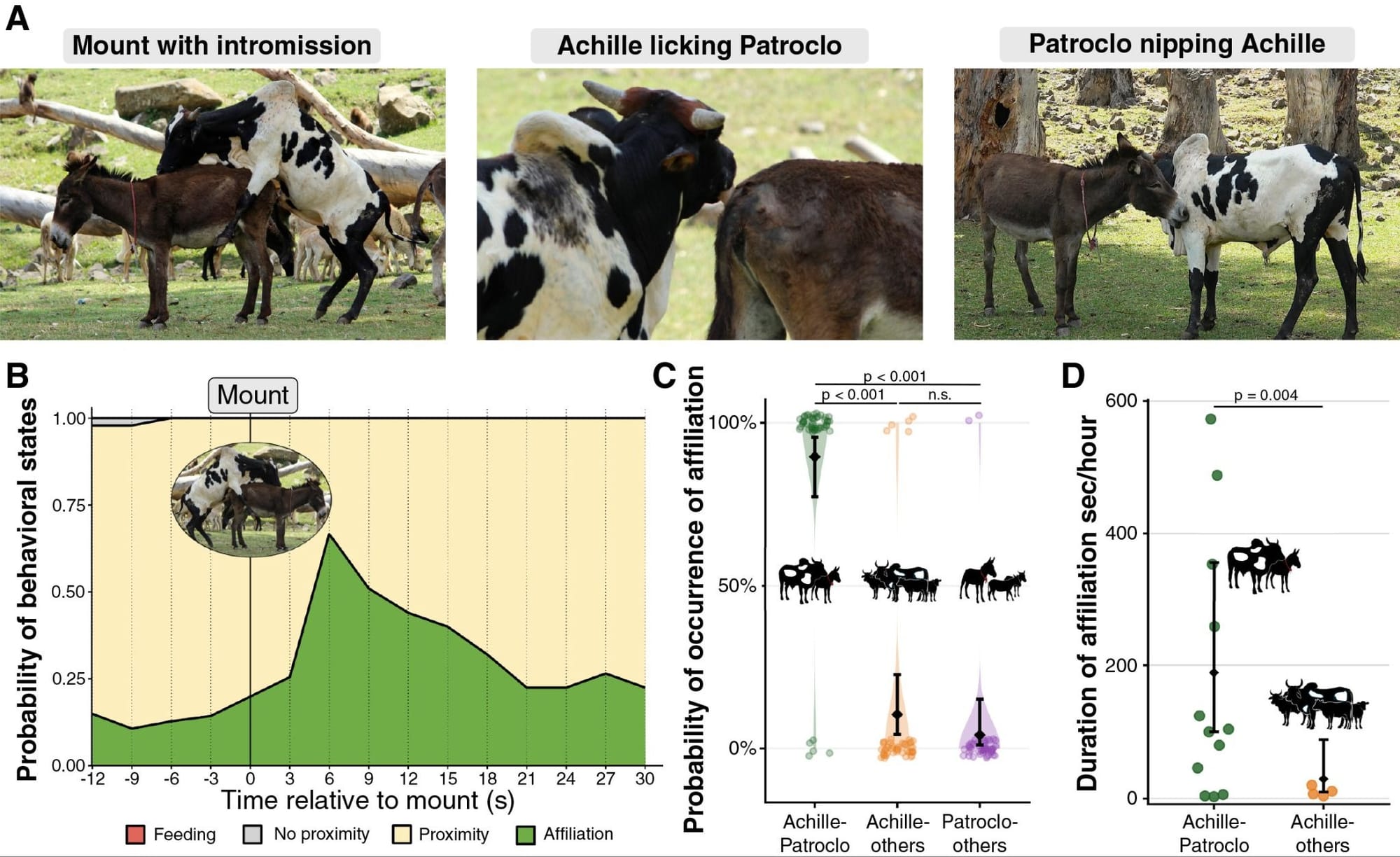
Achille, a bull, and Patroclo, a donkey, belong to different owners, but they graze together by day. Despite the availability of other males and females in their pasture, this pair has developed a strong socio-sexual bond that includes nuzzling, licking, and Achille sexually mounting Patroclo.

“Patroclo frequently presented his hindquarters toward Achille and nipped him,” said  researchers led by André Beirão da Cruz of the University of Pisa. “In the only two instances in which Achille approached and mounted another male donkey, this individual showed clear avoidance behaviours and displayed threatening facial expressions (e.g. ear flattening), which were never observed in Patroclo during the 51 mountings (34 with intromission) with Achille.”
How Earth Lost a Billion Years of Its History
The bond between Achille and Patroclo. Image: Da Cruz, André B et al.

Same-sex sexual behavior is extremely common in nature and has a wide variety of possible explanations, including social cohesion, mistaken identity, or lack of access to opposite-sex mates. But what Achille and Patroclo have is special. Despite being different species and having alternate mating options, the pair share a highly selective and reciprocal social and sexual bond. 

“Although interpreting this behaviour is challenging, the mounting attempts, taken together with the repeated and mutual affiliative interactions between the two animals, may signal the quality of their relationship” and “the strength of the animals’ social bond,” the team concluded.

In addition to this heartwarming tale, the study goes to show that you never know what you might find when you chase your goals. The researchers were there to watch geladas, but it turned out those primates weren’t the only animals monkeying around.

Thanks for reading! See you next week.
 

  •  

Oldest Evidence of Getting High on Cannabis Discovered In 2,800-Year-Old Tomb: ‘Absolutely Crazy’

Oldest Evidence of Getting High on Cannabis Discovered In 2,800-Year-Old Tomb: ‘Absolutely Crazy’

Archaeologists have discovered the oldest direct evidence of psychoactive cannabis use in a Siberian tomb that dates back 2,800 years and was the site of human and horse sacrifices, according to a study published on Thursday in Science. 

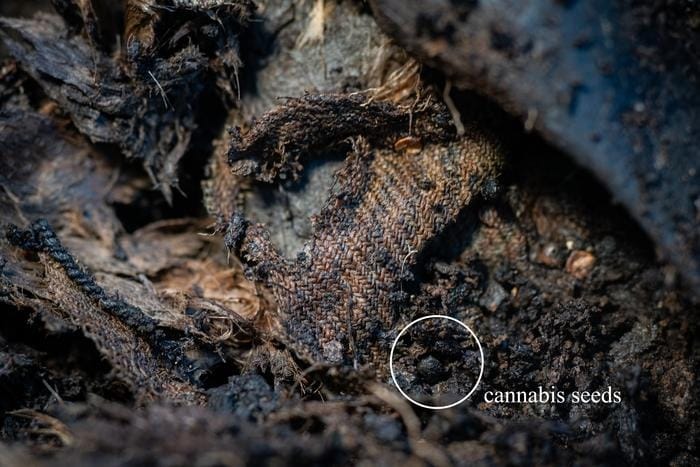
During excavations of the tomb, a team found more than 1,400 cannabis seeds scattered around the remains of several Iron Age individuals, and even identified cannabinoids—including the active compound tetrahydrocannabinol (THC)—in a person’s preserved hair. 

Though humans cultivated cannabis for many millennia before the Iron Age, this is by far the earliest clear-cut proof that the plant was consumed for its psychoactive effects, which have made it one of the most widely used drugs in the world today.

The discovery is “absolutely crazy,” said Gino Caspari, an archaeologist at the Max Planck Institute of Geoanthropology and the University of Bern who led the study, in a call with 404 Media. “People have been speculating a lot about psychoactive use of cannabis in the past, but to actually pin it down and prove it with soft tissue evidence of the humans involved—that is something very special.

“That is an absolutely unique and extremely rare combination of evidence,” he added. 

Oldest Evidence of Getting High on Cannabis Discovered In 2,800-Year-Old Tomb: ‘Absolutely Crazy’
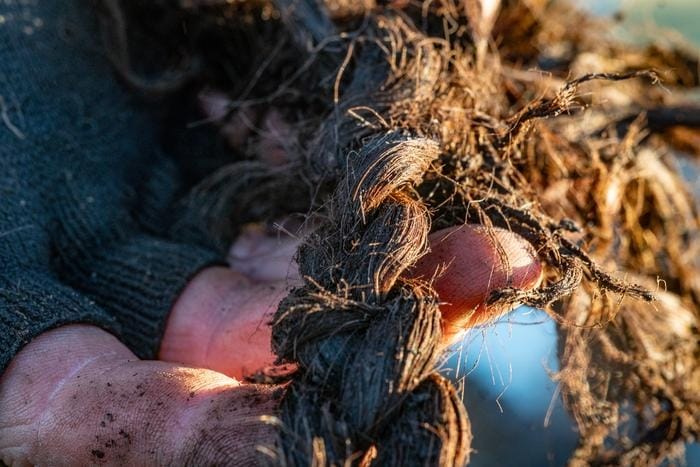
A preserved human hair braid. Image: Frozen Corpses Golden Treasures, T.Wallace & G. Caspari

Cannabis has a multifaceted history as a recreational drug and a pop cultural touchstone, as well as a traditional medicine that has been used for millennia by many cultures, including in China, Russia, and around the Mediterranean Basin. Humans began cultivating the plant as early as 10,000 years ago for its oil and fiber, but the origins of its specific consumption as a psychoactive substance is unclear. 

Cannabis was important to the Scythian culture, a horse-riding people that emerged on the Eurasian steppes in the 9th century BCE and became a major force in the subsequent centuries. The historian Herodotus described Scythian rituals that involved ceremonial burning of cannabis in enclosed spaces, and their cannabis residues and products have been found at Scythian archaeological sites.

🌘
Subscribe to 404 Media to get The Abstract, our newsletter about the most exciting and mind-boggling science news and studies of the week.

“Herodotus speaks about the Scythians being quite fond of cannabis in the first place, so this has always been in the back of our minds,” Caspari said. “But it is so incredibly rare to find well-preserved plant remains that this is not really something you can hope for or look for. This is ultimately complete luck and chance.”

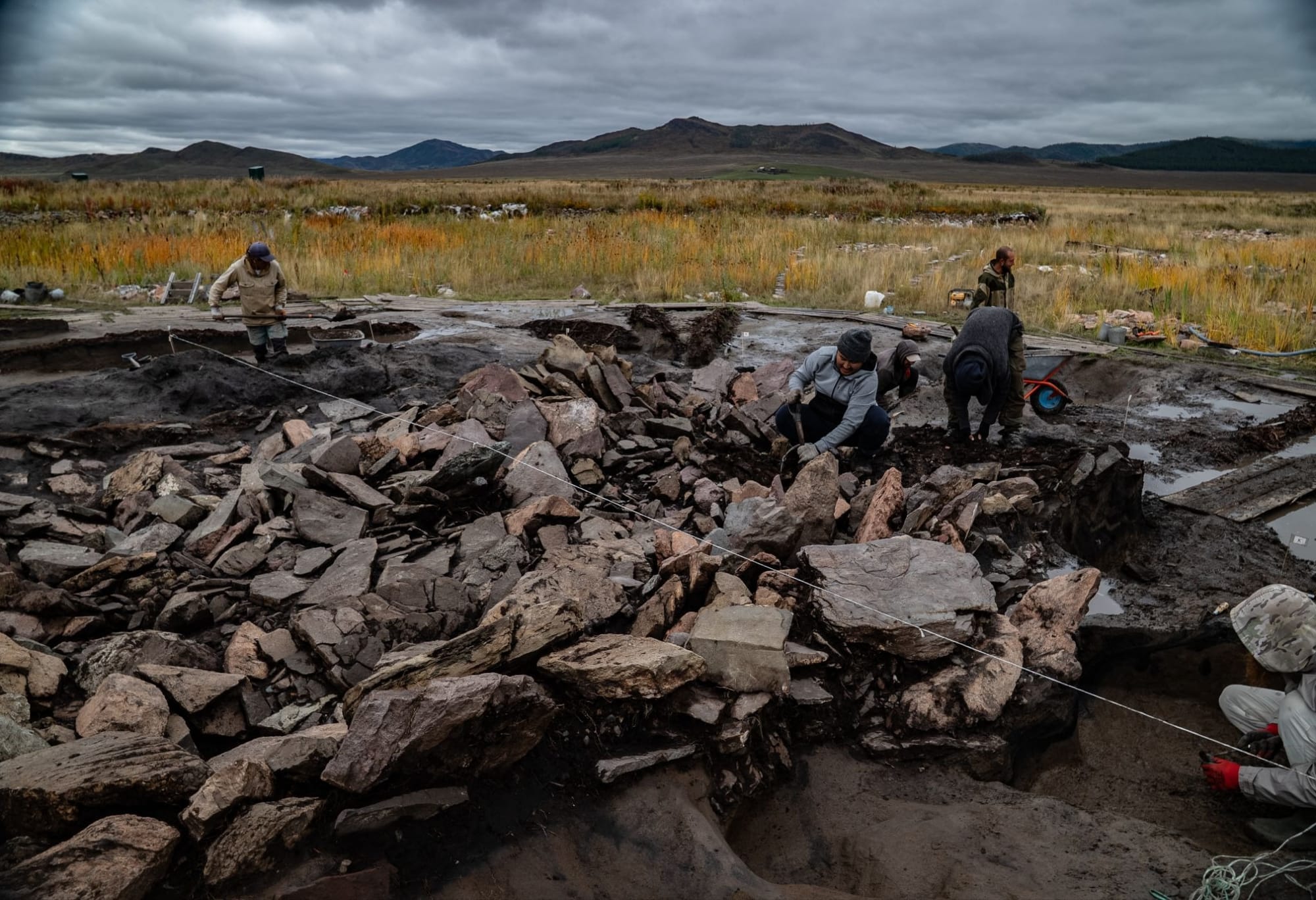
Now, Caspari and his colleagues have hit an archaeological jackpot at a tomb known as Tunnug 1, located in Siberia’s Uyuk River Valley. Six elite individuals are interred in the interior of the royal mound inside several tree-trunk coffins and wooden structures. They are mostly men, though one woman is also present. The mound is lined with remains of sacrificed humans, as well as dozens of sacrificed horses, close to the surface.

As the team carefully worked through the layers of the burial, they found hundreds of cannabis seeds distributed around the bodies that were dated to the 8th century BCE. However, the real smoking blunt was the detection of cannabinols in preserved hair samples, including traces of THC, the most important mind-altering compound in cannabis. 

Oldest Evidence of Getting High on Cannabis Discovered In 2,800-Year-Old Tomb: ‘Absolutely Crazy’
Cannabis seeds from the excavation. Image. T. Wallace

The results confirm contemporaneous accounts of Scythians as cannabis consumers who used the plant for purification and mortuary rituals. It’s possible that the people selected as human sacrifice consumed the drug to prepare them for their unenviable fate.

“It being in a burial context, of course, there's a ritual aspect to it,” Caspari explained. “It might be a little bit more sinister, but this is speculation. We do have a lot of horse sacrifices and also some human sacrifices on the surface of the mound. And if you imagine humans being sacrificed, they usually don't like that very much. It might be advantageous to have them dosed a little bit, at least, to make the procedure a bit more humane, if you will.” 

“Of course, that is speculation,” he cautioned. “We don't have any written sources about that particular area, but that's at least one way we could go with our interpretation.”

The researchers hope to learn more about the context and meaning of the cannabis use at Tunnug 1 through continued excavations and an analysis of more hair samples. What’s more, the team plans to conduct DNA analysis on the seeds, an approach that could yield new insights about the murky history of cannabis domestication and its early use as a psychoactive substance. This line of research could also shed light on modern cannabis strains, and may even be revived for new medicinal or recreational purposes.  

“We've already sequenced part of the seeds to unravel and disentangle the domestication history,” Caspari said. “Funnily enough, we don't even know what wild cannabis actually looks like because there has been so much intermixing and interbreeding since the 70s, when people started experimenting and trying to get more potent drug variants. Some of the initial landraces and the actual wild cannabis has been lost.”

“Now, having DNA that's almost 3,000 years old, we will be able to take that step back into the past and see what an unaltered cannabis would have looked like,” he said. “In the ideal case, we might even be able to work together with the medical industry and bring some of these very ancient genetics back into cannabis production to potentially help people with very interesting and distinctive cannabinoid combinations.” 

Put that in your pipe and smoke it. Regardless of where future research into this ancient plant leads, this long-sought evidence of cannabis use thousands of years ago confirms the rich cultural legacy of the plant across time and space.

“As an archeologist, I might be a bit biased here, but I think the history and cultural practices really do matter,” Caspari concluded. “I think our findings do indeed inform current discussions on legalization, on usage of medical cannabis—which is very much an ongoing discourse—and I think what we've been able to do with this study is provide an anchor, and show that there is this deep cultural history to the use of cannabis as a psychoactive drug.” 

  •  

People Used to Drink Wine Made From Ground-Up Mummies. Now, Scientists Are Studying It

People Used to Drink Wine Made From Ground-Up Mummies. Now, Scientists Are Studying It

Welcome back to the Abstract—and Happy Halloween! Here are the studies this week that smashed into Earth, put aliens on ice, drank mummy wine, and hugged it out.

First, a century-old theory that comets enriched Earth with the stuff of life is upended by new models of ancient impacts. Then: the case for life in extraterrestrial sea ice, a Halloween-coded medieval concoction, and a scientific embrace.

As always, for more of my work, check out my book First Contact: The Story of Our Obsession with Aliens, or subscribe to my personal newsletter The BeX Files. 

Did the seeds of life come from above or below?

Anslow, Richard J. et al. “Cometary impacts are an unlikely pathway towards the origins of life on Earth.” Scientific Reports. 

Carl Sagan eloquently said that we are all made of “star stuff,” but just how much of us is really comet vomit? This is a hotly debated question in science due to the popular theory that comets delivered essential ingredients for life to Earth during impacts more than four billion years ago, paving the way for the curious emergence of Earthlings.

But scientists have thrown cold primordial water on this idea in a new study that challenges “the long-held assumption that cometary impacts played an important role in the origins of life on Earth.” By running more than 100,000 advanced simulations of comet impacts, the team found that key prebiotic molecules found in comets, such as hydrogen cyanide, would be smashed to smithereens during impacts with Earth’s ancient surface in most cases. 

Moreover, while Earth was pummeled by these snowballs during its youth—relatable!—this bombardment doesn’t neatly line up with the timeline of abiogenesis, the term of the origin of life. For these reasons, it’s much more likely that life assembled from earthly molecules that leaked out from our planet’s interior, according to the study. 

“The most probable timing of successful cometary impact is in the early Hadean…more than 100 [million years] earlier than the estimated emergence of the last universal common ancestor (LUCA) at  4.2 [billion years ago],” said researchers led by Richard Anslow of the University of Cambridge.

“Taken together, the rapid decline in Earth’s cometary impact bombardment and the efficient destruction of fragile cometary organics indicate that the successful delivery of prebiotic feedstock molecules was an exceedingly rare event,” the team added. 

The researchers didn’t rule out the possibility altogether, but concluded that any impact that had a direct influence on abiogenesis would be an edge case. That said, comets might serve as prebiotic wellsprings on other planets, such as Mars, where key molecules might have faced better odds of survival upon impact due to the red planet's smaller mass and thin atmosphere.

“Mars would have been the more favourable target for the cometary delivery of prebiotic feedstock molecules” which “strengthens the possibility that life could have emerged on Mars,” the study concluded. 

In other news…

The tip of an alien iceberg

Barrier, Edouard et al “Sea Ice as an Origin of Life Location for Hycean and Ocean Worlds.” Monthly Notices of the Royal Astronomical Society.

While we’re on the topic of prebiotic feedstock molecules—a household conversation, no doubt—let’s speculate about their accumulation on weird exoplanets. In a new study, scientists suggest that these molecules might build up in sea ice on a variety of extraterrestrial ocean worlds, providing a pathway to the emergence of aliens. 

“Water worlds with potential deep oceans are at the forefront of currently observable exoplanetary habitability,” said researchers led by Edouard Barrier of the University of Cambridge. “Here we outline a location where nutrients could be concentrated in sufficiently high quantities to make abiogenesis possible—at the interface between the open ocean and the surface ice shelf.” 

People Used to Drink Wine Made From Ground-Up Mummies. Now, Scientists Are Studying It
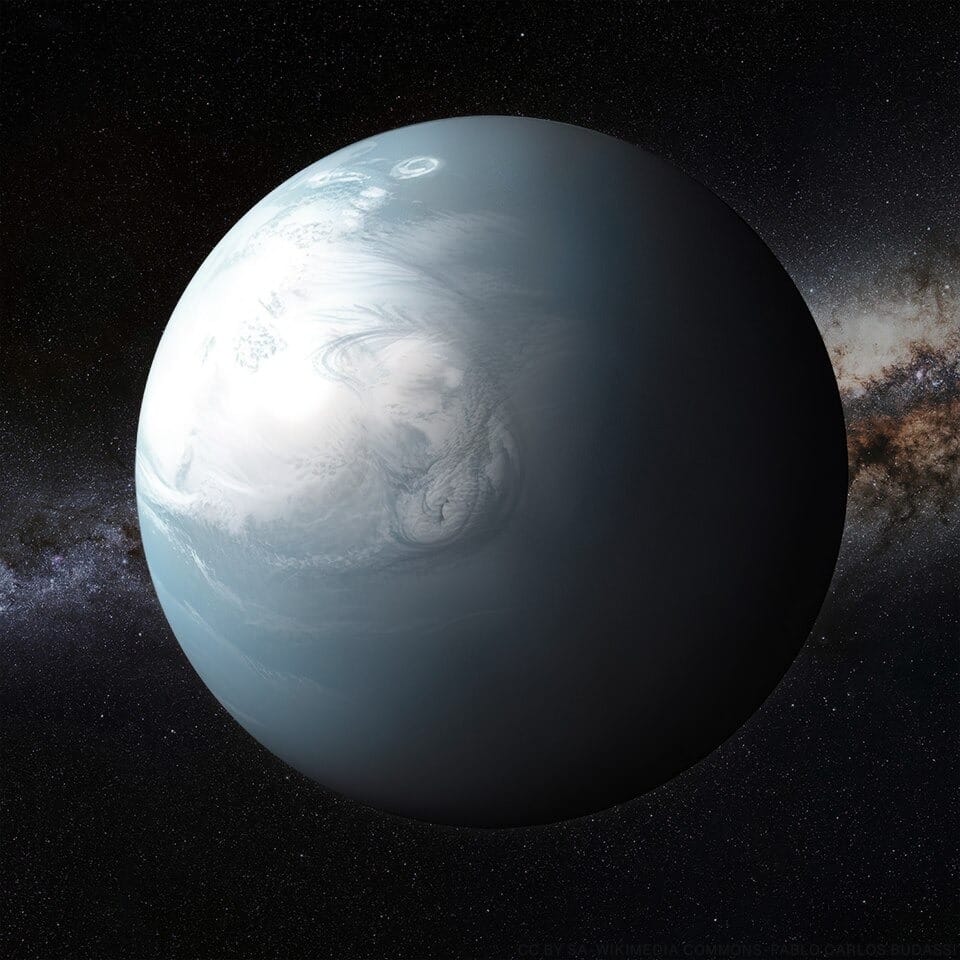
Concept art of a Hycean planet. Image: Pablo Carlos Budassi

The team studied the dynamics of sea ice on Earth, and modelled how similar features might form on a range of different exoplanets, including hypothetical “Hycean” planets. These are worlds more massive than Earth, but smaller than Neptune, making them part of the “sub-Neptune” class of exoplanets. 

The results revealed mechanisms that “may plausibly provide concentrated chemical feedstock for prebiotic chemistry” on many of these exoplanets, suggesting they could be a substrate for the emergence of alien life. This “rich avenue of research…has the potential to significantly advance our understanding of aquaplanet habitability, and particularly to improve the prospects of abiogenesis on sub-Neptunes,” the team concluded. 

What a week for the prebiotic feedstock beat! Taken together, these studies point to multiple onramps for life on worlds like Earth, Mars, exotic sub-Neptunes, and more, upping odds that life exists elsewhere in the universe—regardless of whether we ever find it. 

Drink the mummy wine

Berger, Tim, and Naimi, Amira et al.“New molecular and historical evidence on ancient Egyptian embalming.” Proceedings of the National Academy of Sciences.

To celebrate Halloween, here’s a trick and a treat all wrapped up in one delightfully grotesque story about mummies. Roughly 700 years ago, someone had the interesting idea of grinding up parts of Egyptian mummies, mixing the residue with wine or other liquids, and prescribing it as a medicinal elixir for people to drink.  

This resulting product, known as Mumia vera aegyptiaca, circulated in Arabic and European markets for centuries, but its exact composition and pharmacology remain unclear. You know what that means: It’s time to do science on the medieval mummy cocktails. 

People Used to Drink Wine Made From Ground-Up Mummies. Now, Scientists Are Studying It
Two historic apothecary vessels of Mumia vera from Hamburg Museum (left) and Deutsches Apothekenmuseum Heidelberg, Germany (right). Images: Christoph Braun and Bullenwächter

Researchers analyzed historical Mumia vera products, mummified body parts, embalming residues, bandages, and two mummified skulls. The team discovered a wide range of formulas for this medicine, including one powdered product that appears to have been derived from a mummified head. 

The results demonstrate that “an apparently uninformative powdered material can be chemically linked to a specific mummified head,” said researchers co-led by Tim Berger and Amira Naimi of Marburg University. “This study shows that linking historical texts, material culture, molecular composition, and bioactivity, can open new routes for decoding historical medicines and reconstructing the material biographies of human remains and museum objects.”

So if you are really committed to the spirit of this season, break out some Mumia vera aegyptiaca to pair with your Halloween candy and witches’ brew. Bottoms up—or more accurately: mummified-heads up. 

Advances in hug science 

Dueren, Anna Lena et al. “Why we hug: Individual differences predict emotional touch memories.” PLOS One.

What better way to close out this chilling spooky season than with the warm embrace of science? So come on, bring it in for a hug—or, in this case, roughly 15,000 of them. 

Hugging is an incredibly common form of affection among humans, and even some other animals, including Halloween favorites like vampire bats. But little is known about “how individual differences shape the remembrance of such experiences,” according to a new study.

To fill this cuddly gap, scientists analyzed survey responses from 15,049 adult participants in the United Kingdom who were recruited in a public broadcasting campaign that included the BBC. The volunteers reported that their most memorable hugs were “for comfort, support, and understanding” and there was a noticeable gender split, as men were more likely to remember hugs that were “arousing” than women.

“Regarding hugs, men have shown different lateralisation and arm crossing patterns when hugging other men compared to women,” said researchers led by Anna Lena Dueren of the University of Bristol. “Furthermore, women were found to experience a stress buffering effect of hugs that was absent in men.” 

And for anyone who considers themselves not a “hugger,” you are not alone. Plenty of participants expressed that they found hugs difficult or unpleasant. So whether you love bear hugs or cannot bear hugs, this study has something for you.

Thanks for reading! See you next week.
  •  

Scientists Analyzed Thousands of Psychedelic Trips. They Found Something Disturbing

Scientists Analyzed Thousands of Psychedelic Trips. They Found Something Disturbing

Researchers have amassed a trove of more than 25,000 calls to a support hotline for people during and after psychedelic trips, making it “the largest dataset of psychedelic support interactions ever assembled—exceeding the combined sample sizes of all published psychedelic clinical trials by an order of magnitude,” according to a study published on Friday in Science Advances.

Despite the popularity of psychedelics as recreational drugs, and increasing interest in them as medically-prescribed therapeutic treatments, there is very little research about the effects of these substances outside of clinical settings with carefully-selected patients. That, scientists say, is limiting what we can learn about the effects of these drugs, because the vast majority of psychedelics are consumed by all kinds of people in homes, festivals, ceremonial gatherings, or other uncontrolled environments.    

The Fireside Project, a nonprofit founded in 2020, has filled this knowledge gap with its Psychedelic Support Line, which connects callers who are on bad trips, or who are seeking more information about psychedelics, with trained volunteers who offer confidential peer support. 

🌘
Subscribe to 404 Media to get The Abstract, our newsletter about the most exciting and mind-boggling science news and studies of the week.

The team has now published a compendium of 25,419 anonymized interactions with 220 hotline volunteers that took place between April 2021 and February 2026. The database opens an unprecedented window into the experiences of people on psilocybin, ketamine, MDMA, LSD, ayahuasca, and even cannabis, which is not generally considered a psychedelic but can trigger similar effects, such as mild hallucinations. 

It’s a “treasure trove,” said Félix Schoeller, a senior research scientist at the Institute for Advanced Consciousness Studies, a California-based nonprofit, who led the study, in a call with 404 Media. “In general, we're really lacking any evidence and data beyond what exists in the underground world, if you will, for psychedelic therapy.” 

“There's different types of knowledge,” continued Schoeller, who is CEO of ReWire Neurotechnologies, a startup focused on novel experiential treatments for depression. “Some cultures and communities have been doing that for thousands of years. But there's a question about how to do this in a way that follows the principles of biomedical science.”  

The interactions included phone calls and text exchanges with hotline volunteers who provided support by talking through the experience or connecting callers with emergency services in the most urgent cases. About 40.2 percent of callers (10,208 interactions) were actively tripping, while 32.1 percent of callers reached out after they had tripped, a period known as “integration.”  

The rest of the calls fell into smaller categories, such as informational inquiries about certain substances, requests to prepare or buy drugs, or calls from “trip-sitters” assisting a person on psychedelics. 

Psilocybin was the most commonly reported substance (9,348 callers), followed by LSD (2,247callers), cannabis (2,004 callers), and ketamine (1,194 callers), and MDMA (682 callers), with ayahuasca and other drugs logging much smaller numbers.  

Surprisingly, callers who had used cannabis  reported the highest distress rate—47.2 percent had bad experiences with the drug. Though cannabis has a reputation as a low-stakes substance, the study confirms that it can induce real distress in some cases that warrant consideration for harm reduction. The distress rates for the rest of the commonly used psychedelics were only slightly lower than cannabis, ranging between 40 to 42 percent.

The study also revealed 43 rare but disturbing instances of “facilitator abuse,” including at remote retreats or ceremonial gatherings involving ayahuasca. In these cases, callers reported abuse from the people providing psychedelics, such as reports they had deliberately been given extra doses without consent. 

Those reports “provide the first quantitative documentation of this phenomenon in a community help-seeking sample,” according to the study. “The pattern of these reports—clustering in ceremonial settings involving plant medicines, presenting primarily as trauma-processing calls, and involving callers with elevated rates of prior PTSD diagnoses—suggests that even modest surveillance through existing peer support infrastructure can detect harm occurring in unregulated psychedelic settings.”

Some calls also came from people who said they suffered from schizophrenia, or had taken multiple psychedelics, offering a rare glimpse of situations that could not be observed in clinical settings. 

“This kind of data can inform us on these topics in the context of legalizing these drugs and making them accessible,” said Schoeller. “I'm glad that there's this data that exists that people can look into to support or contradict the claims that they make as to how these things should be done.” 

The study also outlines several limitations, including its sample bias of people who are inclined to call a hotline in the first place—which is not representative of psychedelic consumers at large—as well as self-reported accounts of doses, among other factors that are impossible to verify.

Despite the noisiness of the data, however, it contains helpful clues about avenues for future research. In Schoeller’s view, one of the most important revelations was that the success of a call was strongly linked to the perception that the hotline volunteer showed genuine care and empathy toward the caller. Using 2,777 postinteraction satisfaction surveys, the team found that the few negative experiences with the hotline tended to stem from feelings that the volunteer was dismissive, or didn’t seem to care about the caller. 

“My takeaway is that the number one thing that predicts whether a support call will not work” is “the volunteer being perceived as genuine,” Schoeller said. “That's something that, in many ways, poses a problem to the biomedical system of centralized hospitals. I'm not trying to be ideological in any way, but when you create a centralized institution where you throw everybody to a single place to get care”  then “clinicians become burned out.”

For this reason, Schoeller and his colleagues plan to follow up on the role of perceived care and empathy in treatment, and to emphasize this factor in guidance for community-based peer support for people in crisis due to psychedelics. It also reinforces the value of the Fireside Project’s hotline, which provides a safe and confidential service for people who might be reluctant to contact emergency services because of the criminalization of these substances or fear of incurring medical debt.

“For many people, they have experiences with psychedelics, and they may not be required to go to the ER, but they still need someone to help them navigate the difficult experience,” Schoeller concluded. “The hotline can truly be a lifeline for them.” 

  •  

An Ancient Virus Explains Why the Human Brain Is Special

An Ancient Virus Explains Why the Human Brain Is Special

Welcome back to the Abstract! Here are the studies this week that invaded our brains, thought fast, swapped coffins, and hit the art gallery.

First, an ancient viral pandemic that afflicted many of our primate relatives—but somehow missed humans—may help explain how we got so smart (relatively speaking). Then: mammal brains eat crow, an upcycled sarcophagus, and a trip to the starry Provençal summer of 1889.

As always, for more of my work, check out my book First Contact: The Story of Our Obsession with Aliens, or subscribe to my personal newsletter The BeX Files. 

Your brain on viral content 

Gerdes, Patricia; Karlsson, Ofelia; Garza, Raquel; Atacho, Diahann A. M. et al. “Retroviral insertions contributed to the divergence of human and chimpanzee brains.” Science Advances.

A virus that infected chimpanzees millions of years ago shaped the divergence of human and chimp brain development, shedding light on how our own species came to be more cognitively complex than our closest living relatives, according to a new study. 

Retroviruses are infectious agents that can invade the genomes of their hosts and insert copies of their own genetic material, producing long-term evolutionary effects. Researchers have now discovered a family of these endogenous retroviruses called PTERV1—which are abundant in chimpanzees, but absent in humans—that influence brain development.   

“Among primates, the human brain stands out as the largest and most complex due in part to an increase in cortical neurons and increase in synaptic connectivity,” said a team led by researchers from Lund University. “With a size roughly three times that of our closest living evolutionary relative, the chimpanzee, it has unique cognitive capabilities.”

An Ancient Virus Explains Why the Human Brain Is Special
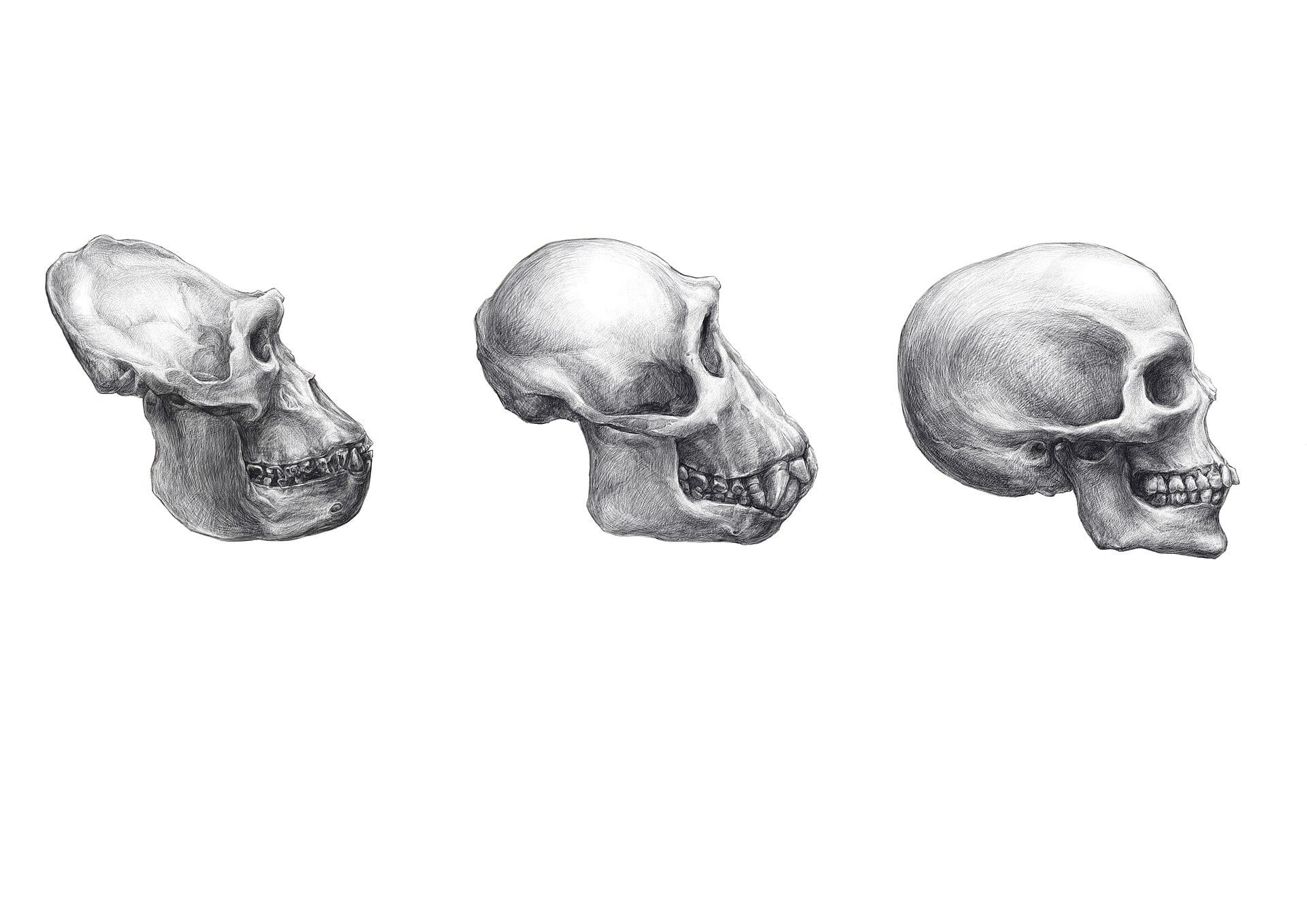
Sketches of gorilla, chimp, and human skulls. Image: kaiwei zhang

“The underlying genetic divergences responsible for these differences are still poorly understood,” the researchers continued, noting that their new findings “reveal a mechanism by which endogenous retroviral insertions contributed to human-chimpanzee brain divergence.”

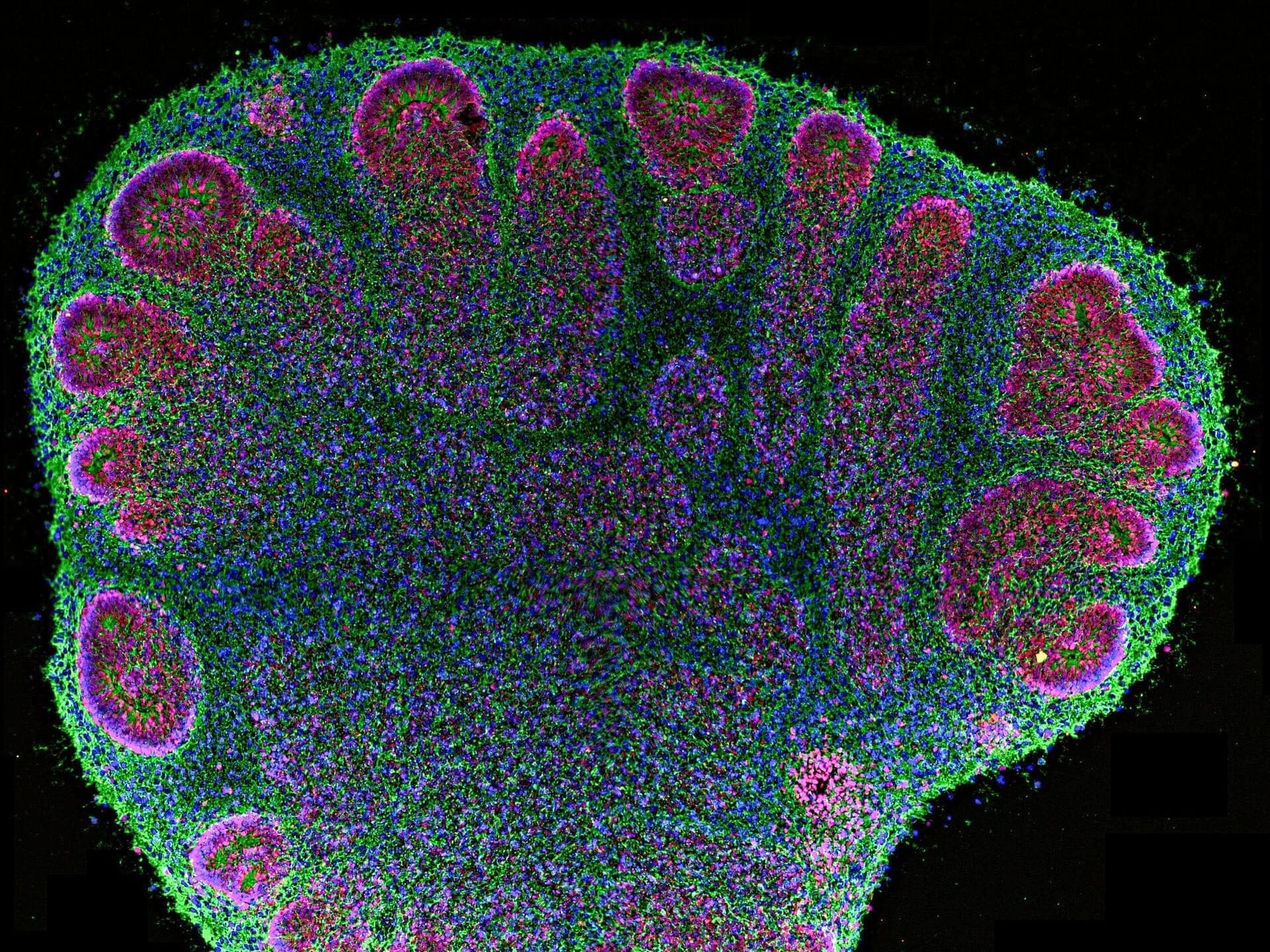
The team discovered the mechanism using human and chimpanzee brain organoids, which are miniature clusters of neurons grown from stem cells that can model some aspects of brain development. The results revealed chimpanzee-specific PTERV1 insertions on chromosome 19 that silences a gene called LINC00662. In contrast, this gene is active during human brain development, and affects neuronal maturation, development, and outgrowth.  

“These PTERV1 insertions are thought to have originated from infections that occurred in the ancestors of African apes about 5 to 7 million years ago,” said the team. “PTERV1 elements are found in chimpanzees, bonobos, and gorillas…Notably, the absence of PTERV1 insertions from the human genome suggests that either the human and chimpanzee lineages did not occupy the same habitat at the time or that germline-competent cells of the human ancestor were resistant to this infection.”

“In summary, this study describes how retroviral insertions contributed to the functional divergence of the human and chimpanzee brain, providing a mechanism by which retroviral infections influenced primate brain speciation,” they added.

In other words, early humans appear to have dodged consequential pandemics that widely infected our primate brethren simply because they had a random immunity to it, or roamed different ranges. While retroviruses are far from the only factor in our cognitive development, it’s still eerie to think that our human brain—that brilliant lump you are using to read these words—is shaped by dumb luck.

In other news…

Another brain to crow about

Schmidbauer, Philipp and Nieder, Andreas. “Ultrarapid decision-making in an avian brain.” Science.

Speaking of interspecies brain-offs, it seems the birds have got us beat—at least when it comes to snap decisions. Scientists have discovered that carrion crows (Corvus corone) can make ultrafast choices in “approximately 235 milliseconds on average, which is roughly twice as fast as has been observed in monkeys or humans and without sacrificing accuracy,” according to a new study.

An Ancient Virus Explains Why the Human Brain Is Special
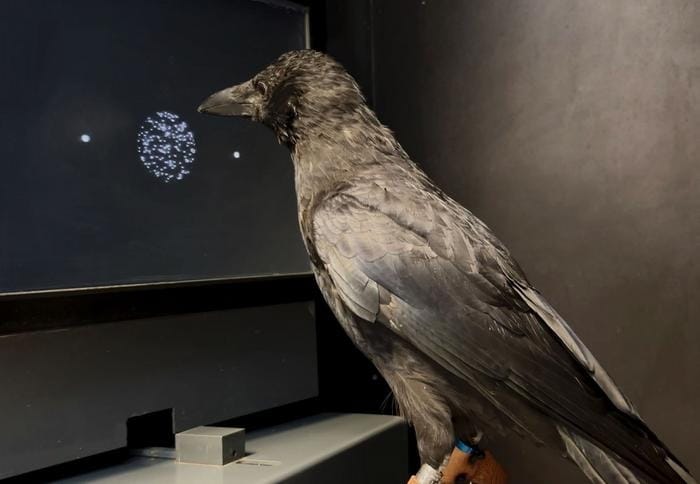
Crow acing the test. Image: Andreas Nieder

A pair of researchers observed two crows performing a common discrimination task in which dots on a screen move left, right, up, or down. The crows selected the predominant direction by pecking a target circle on a touchscreen, after which they were rewarded with promptly dispensed treats. The crows performed the task dozens of times at extremely high speeds, achieving an overall choice accuracy of 75 percent (crow 1) and 73 percent (crow 2).

“Having diverged from mammals more than 360 million years ago, birds evolved a distinct nuclear pallium”—a part of the vertebrate forebrain—”that lacks the layered neocortex yet retains key organizational and computational principles characteristic of mammalian brains,” said study authors Philipp Schmidbauer and Andreas Nieder of the University of Tübingen.   

“These findings highlight the extraordinary efficiency of avian decisionmaking circuitry, possibly shaped by evolutionary pressures for rapid visuomotor control,” the team added.

So if anyone ever calls you a birdbrain, the correct response is “thanks.” 

🌘
Subscribe to 404 Media to get The Abstract, our newsletter about the most exciting and mind-boggling science news and studies of the week.

Who is this sarcopha-guy?

Rodwell, Warwick. “Westminster Abbey’s Roman Sarcophagus and its Afterlife.” Journal of the British Archaeological Association.

Archaeologists may have finally discovered the mysterious identity of an ancient skeleton buried in a Roman-era sarcophagus that was first unearthed on the grounds of Westminster Abbey more than 200 years ago. 

Despite an inscription on the sarcophagus identifying the occupant as Valerius Amandinus—a wealthy Londoner who lived between 300 to 400 AD—the bones likely belong to a medieval monk named Ælfwig, born centuries later in the year 993. 

An Ancient Virus Explains Why the Human Brain Is Special
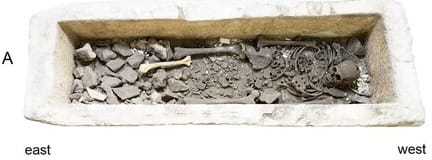
Interior of the sarcophagus, as found upon opening in 2016. Image: Rodwell, Warwick, 2026.

“The burial was of a male, probably in his late forties, and was radiocarbon dated to around the turn of the 11th century,” said study author Rodwell Warwick of Westminster Abbey. “The corpse had been laid in a timber coffin and covered with lime; it was then placed inside the sarcophagus. It is argued that this was the prestigious burial of Abbot Ælfwig.”

The sarcophagus was exhumed and moved to a northern courtyard during King Henry III’s reconstruction of the abbey in the mid-1200s, where it laid for about six centuries. On Easter Monday 1820, the coffin was “wantonly broke by workmen” according to a note from an unknown contemporary archivist. Any grave goods were likely plundered by this crew and the sarcophagus was hastily put back together and reburied with the bones all jumbled up inside. It was then re-discovered in 1869 with a note that the burial “‘had been subjected to violence by a previous examination.”

It turns out anything is recyclable—even sarcophagi. The discovery that this Roman coffin at some point took on another tenant now raises the new question of how the earthly remains of Valerius Amandinus got evicted and where they ultimately wound up. 

“The Starry Night”—of July 22, 1889?

Kim, Elijah Jeong-hyun et al. “The actual sky of Van Gogh’s Starry Night: a multidisciplinary reconstruction.” Scientific Reports.

With its vibrant colors and psychedelic swirls, Vincent Van Gogh’s “The Starry Night” is one of the most beloved and recognizable paintings in art history. For years, experts and admirers have debated whether the mesmerizing skyscape, which van Gogh painted during an asylum stay in Provence, was a fantastical portrayal or if the artist included realistic renderings of astronomical phenomena.

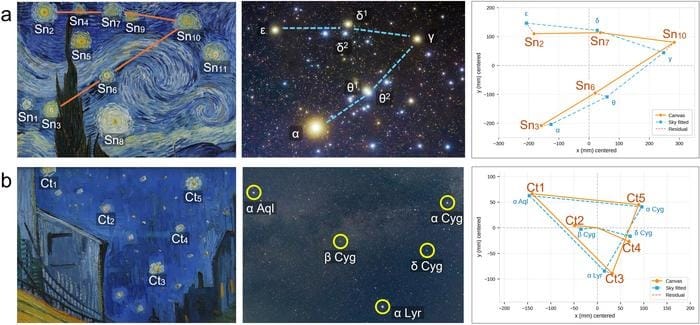
Now, a team has proposed that the celestial elements of the painting match with a specific night—July 22, 1889—when “the waning-crescent Moon, Venus, and the Hyades cluster gather within that narrow frame,” according to a new study. This date conflicts with the conventional timeline of van Gogh painting “The Starry Night” weeks earlier in June.

“The question dividing fantasy from observation remained a matter of qualitative interpretation and was never treated in a physically decidable form,” said researchers led by Elijah Jeong-hyun Kim of Kyung Hee University. “The approach of this study shifts the burden of proof: if the celestial arrangement on the canvas matches a specific dawn sky, that match itself becomes what the imaginative reading must explain.”

An Ancient Virus Explains Why the Human Brain Is Special
The Pepe Silvia meme meets “The Starry Night.” Image: Kim et al., Scientific Reports (2026)

The team’s findings “suggest that the night sky in ‘The Starry Night’ originated from observation of a specific celestial arrangement, and call for reconsidering the June dating,”  they continued. “This framework can extend to historical night paintings as a reproducible scientific art history.” 

I love a hyper-niche new subfield—let’s call this one “forensic astroartistry.” Regardless of the painting’s exact date of origin, it has inspired wonder and fascination for more than a century—including these new stellaria of long-lost summer nights.

Thanks for reading! See you next week.
  •  

Scientists Discover A Strange Particle Explains the Origin of Reality

Scientists Discover A Strange Particle Explains the Origin of Reality

Scientists have discovered that an exotic particle that existed at the birth of the universe might solve one of the biggest mysteries in cosmology and help explain reality as we know it, according to a new study in Physical Review Letters.

Our modern universe is dominated by matter, but it also contains fleeting amounts of antimatter, which is like a bizarro version of matter made of particles with the same mass, but opposite electrical charges. For instance, matter contains positively-charged protons and negatively-charged electrons, whereas antimatter is made up of the inverse: negatively-charged antiprotons and positively-charged positrons. 

As a result of these opposite features, matter and antimatter particles annihilate each other when they meet. This mutual destruction is the source of a major cosmic mystery, given that equal amounts of matter and antimatter are predicted to have formed in the split-seconds following the Big Bang. Yet somehow, matter emerged as the far more dominant substance in the cosmos, an asymmetry that has yet to be explained.

Now, a pair of scientists have pinpointed an overlooked particle, known as the heaviest decoupled right-handed neutrino (RHN), as a solution to this problem—plus, they predict that their hypothesis could be experimentally tested in the future. 

🌘
Subscribe to 404 Media to get The Abstract, our newsletter about the most exciting and mind-boggling science news and studies of the week.

“No one talks about this decoupled right-handed neutrino,” Rishav Roshan, a research fellow at the University of Southampton and a co-author of the study, told 404 Media. “We realized that this decoupled right-handed neutrino could alter the expansion of the universe and affect the matter-antimatter asymmetry of the universe.”

“This thing was present in the literature for a very long time, and for some reason people did not pay that much attention to this particular point,” he added.

Scientists Discover A Strange Particle Explains the Origin of Reality
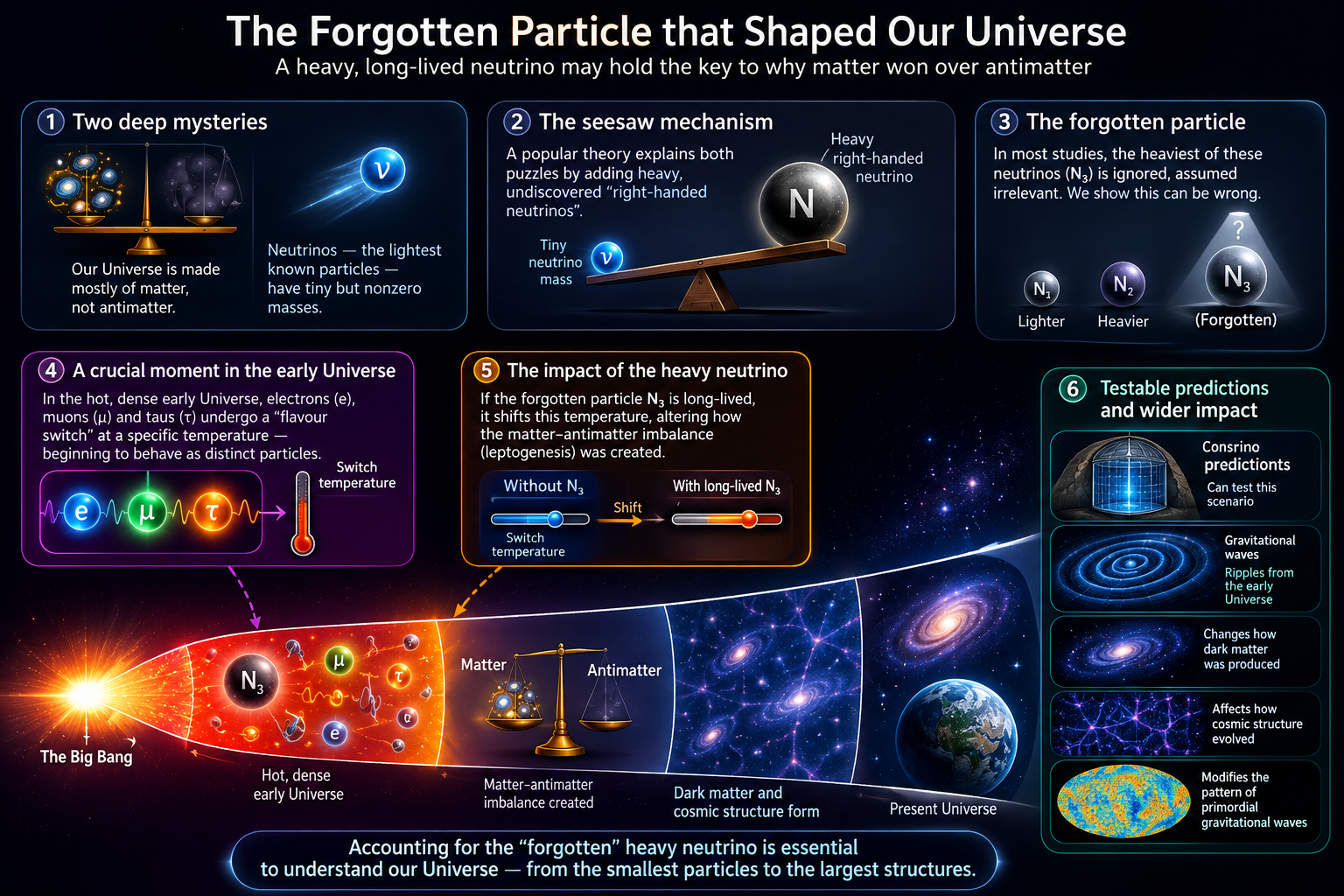
A graphic summary of the new study. 

This particle is the heaviest of a trio of hypothetical decoupled RHNs that existed briefly after the Big Bang, and are key to the “minimal seesaw model” that explains the origin of modern neutrinos, which are extremely lightweight particles that are abundant in the universe today.  

“The heaviest decoupled right-handed neutrino is a particle that exists in the minimal seesaw model but interacts very weakly with regular matter, making it nearly invisible to current experiments,” Roshan told 404 Media. For this reason, he noted that this particle has been “overlooked because many researchers focus on the lighter neutrinos” and view “the heavy states as irrelevant due to their minimal influence on observable physics.”

Roshan and co-author Sudipta Show, a postdoctoral researcher at the Indian Institute of Technology Kanpur, had a hunch that this exotic heavy particle could have played a role in the domination of matter in the early universe. In their new study, they included the particles in models of the primordial universe, which suggested that the particle could have slowly decayed, creating an imbalance in particles known as “leptons”—a class that includes different “flavors” such as electrons, muons, and neutrinos—that was then amplified into the larger matter-antimatter imbalance. 

“In the early universe, when this heavy neutrino was produced, the temperature of the universe was extremely high, much greater than the mass energy of this neutrino, and it behaved as radiation,” Roshan explained over email. “As the universe began to expand, its temperature slowly decreased.” 

“Once the temperature fell below the mass energy of the heavy neutrino, the particle became non-relativistic and started to behave like matter due to its extremely weak interactions, influencing the dynamics of the universe's expansion and affecting the creation of matter versus antimatter,” he continued.

Scientists have already pinpointed the process of uneven lepton and antilepton formation—known as leptogenesis—as a leading explanation for how matter dominated the universe. Roshan and Show now demonstrate that the heaviest decoupled RHN is key to this hypothesis and should be included in future models.

Moreover, the team noted that a new generation of observatories could potentially detect this process hidden in gravitational waves, which are ripples in spacetime. Current detectors, such as the Laser Interferometer Gravitational-Wave Observatory (LIGO) can pick up gravitational waves made by cataclysmic events, such as mergers between black holes. But a spate of advanced detectors, due to come online in the 2030s and 2040s, are designed to tune into “primordial” waves from the split-seconds after the Big Bang, which may contain spectral signs of the heaviest decoupled RHN. 

“Future detectors like SKA, LISA, DECIGO, and ET could potentially observe these signatures. These instruments are being developed to detect gravitational waves, with some expected to come online within the next few years. If successful, they could pick up signals related to the heavy neutrino’s effects on the early universe,” Roshan wrote over email.

“Solving the matter-antimatter asymmetry question could transform our understanding of cosmic evolution and the fundamental laws of physics,” he added. “It may challenge or refine the Standard Model and influence theories of the universe's formation and structure. A new understanding of this asymmetry could also lead to insights about dark matter and the early moments of the universe, potentially reshaping our view of cosmic history.”

  •  

This Might Be the Earliest Known Spear Murder In Earth’s History

This Might Be the Earliest Known Spear Murder In Earth’s History

Welcome back to the Abstract! Here are the studies this week that lived and died by the spear, drew unequal lots, paged Fox Mulder, and peered at an alien moon.

First, scientists discover a mortal spear wound in a Neanderthal who lived 75,000 years ago, possibly opening a window into the origins of hominid violence. Then: disparities from beyond the grave, an unexplained population of near-Earth objects, and the word from Jupiter’s moon Ganymede.

As always, for more of my work, check out my book First Contact: The Story of Our Obsession with Aliens, or subscribe to my personal newsletter The BeX Files. 

Lethal Weapon meets Ice Age 

Pomeroy, Emma et al.  “Evidence for funerary behaviour and lethal trauma in a new Neanderthal individual from Shanidar Cave.” Scientific Reports.

Some 75,000 years ago, an adult Neanderthal died from a brutal strike to the chest by a sharpened wooden spear, and was subsequently laid to rest by their kin. 

Eons later, in 2020, the remains of this individual were unearthed from deep in the floor of Shanidar Cave, an ancient Neanderthal hangout in what is now Iraqi Kurdistan. The bones of the deceased, named Shanidar A, preserve the spear puncture in the shoulder blade, suggesting that they were impaled with the weapon through the heart to their back. 

Shanidar A—whose sex is unknown—also sustained a brutal face injury that had partially healed at their time of death, suggesting that this individual had been cared for while they recovered from this non-fatal wound. The body appears to have been carefully interred in a small area of the cave that contained other Neanderthal remains, implying it was an intentional burial ground.

This Might Be the Earliest Known Spear Murder In Earth’s History
The entrance to Shanidar Cave. Image: Osama Shukir Muhammed Amin FRCP(Glasg) 

“Shanidar A’s shoulder injury appears to have been fatal, but the apparent placement of the body in a location that subsequently became part of a tight cluster of Neanderthal individuals, who were likely intentionally deposited within living memory of each other, strongly suggests a level of care during and immediately after death,” said researchers led by Emma Pomeroy of the University of Cambridge. 

Taken together, the discovery of Shanidar A adds to the evidence that Neanderthals nurtured each other in life and performed symbolic funerary rituals after death. These bones may also represent one of the earliest direct examples of interpersonal violence in any hominin, the term for humans and their close relatives, assuming that the Shanidar A was intentionally slain. 

However, it’s hard to distinguish whether the death blow was an attack from another Neanderthal—or perhaps a member of our own species Homo sapiens—or if it was an accidental injury sustained while hunting.

Shanidar Cave was occupied by Neanderthals for at least 50,000 years leading up to their mysterious extinction. While we will never know the complexity of their stories, our human cousins were clearly capable of compassion, care, and respect for the dead.

In other news… 

The truth is out there 

Bruehl, Stephen et al. “Use of machine learning to enhance detection of transient astronomical phenomena in historical observatory images.” Scientific Reports.

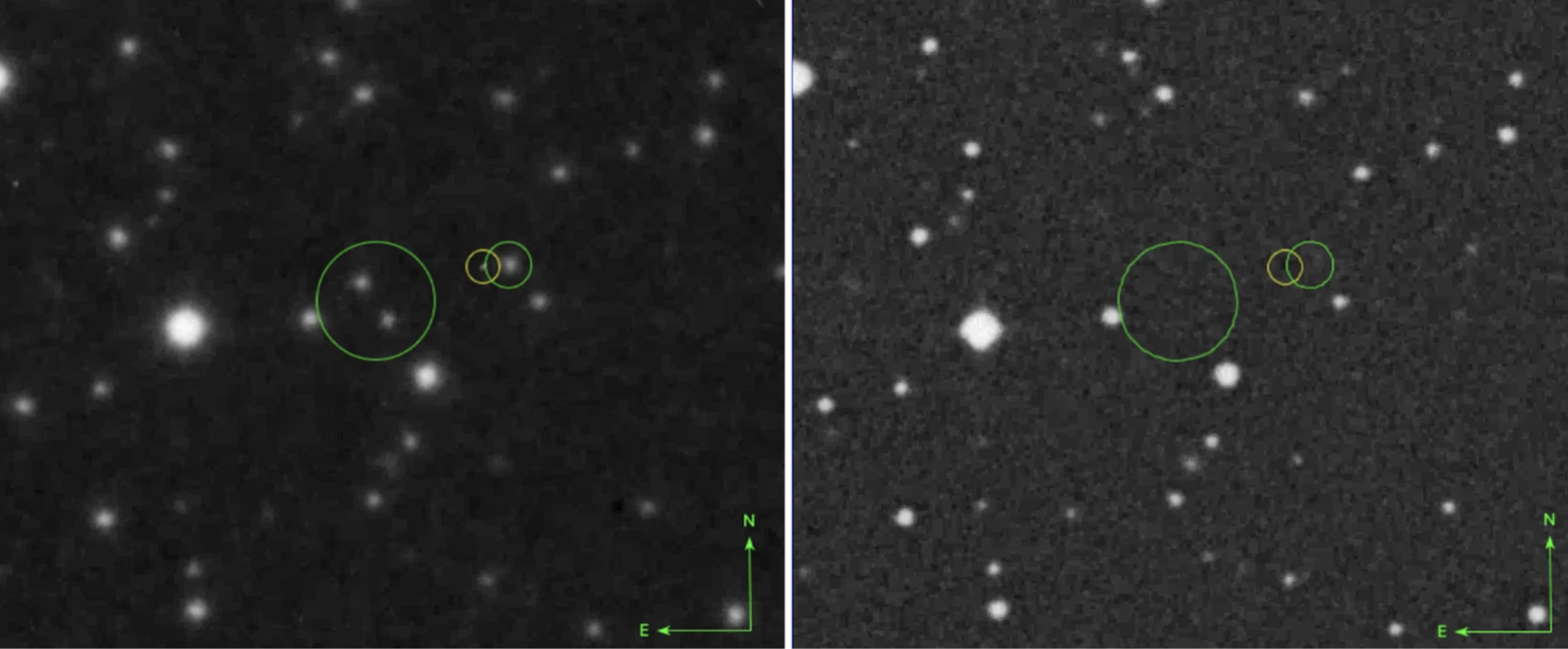
For the past several years, researchers led by astronomer Beatriz Villarroel have discovered strange “transients”—unexplained objects or phenomena in space—in historical photographic plates from before the launch of the first spacecraft, Sputnik, in 1957. The nature of these transients has become hotly debated among astronomers, with theories ranging from instrumentation defects to lurking alien spaceships.

In a recent study, the team re-analyzed the transients with machine learning, an effort reinforced previous findings that “transient numbers diminish significantly in Earth’s shadow”—hinting they are real objects that reflect less sunlight in our planet’s shade—and that they are more likely within one day of atmospheric nuclear tests during the mid-20th century.  

This Might Be the Earliest Known Spear Murder In Earth’s History
The left image presents examples of three transients (green circles) identified on the POSS-I red plate taken on August 11, 1953. The image at right is the same region in a POSS-II red image taken on September 3, 1989. The yellow circle indicates a plate defect on the left image. Bruehl, Stephen et al. 

“If one accepts that both key findings in this study represent real phenomena…we are left with a very small set of provocative hypotheses that would be considered highly implausible by most,” said researchers led by Stephen Bruehl of Vanderbilt University and co-authored by Villarroel. 

“For example, is it possible that unknown to the public there were multiple launches of artificial satellites long before Sputnik with some launches timed to coincide with U.S. nuclear tests? Or rather, do the current findings represent detection of a non-human technosignature? Finally, might our results represent detection of an entirely new yet unknown physical phenomenon?” 

“Additional research on this topic is clearly warranted,” the team concluded. 

Hard agree. When a mystery’s leading explanations include 1) secret satellites that upend spaceflight history, 2) ALIENS (!!!), and 3) exotic novel phenomena, it’s fair to keep digging for answers. My own preference is that it turns out to be some unholy combination of all three, but for now, we will have to just keep literally watching this space.

Inequality is in our bones

Li, Dongdong et al. “How inequality became durable before states: Evidence from 6000 years in the Central Plain of China.” Science Advances.

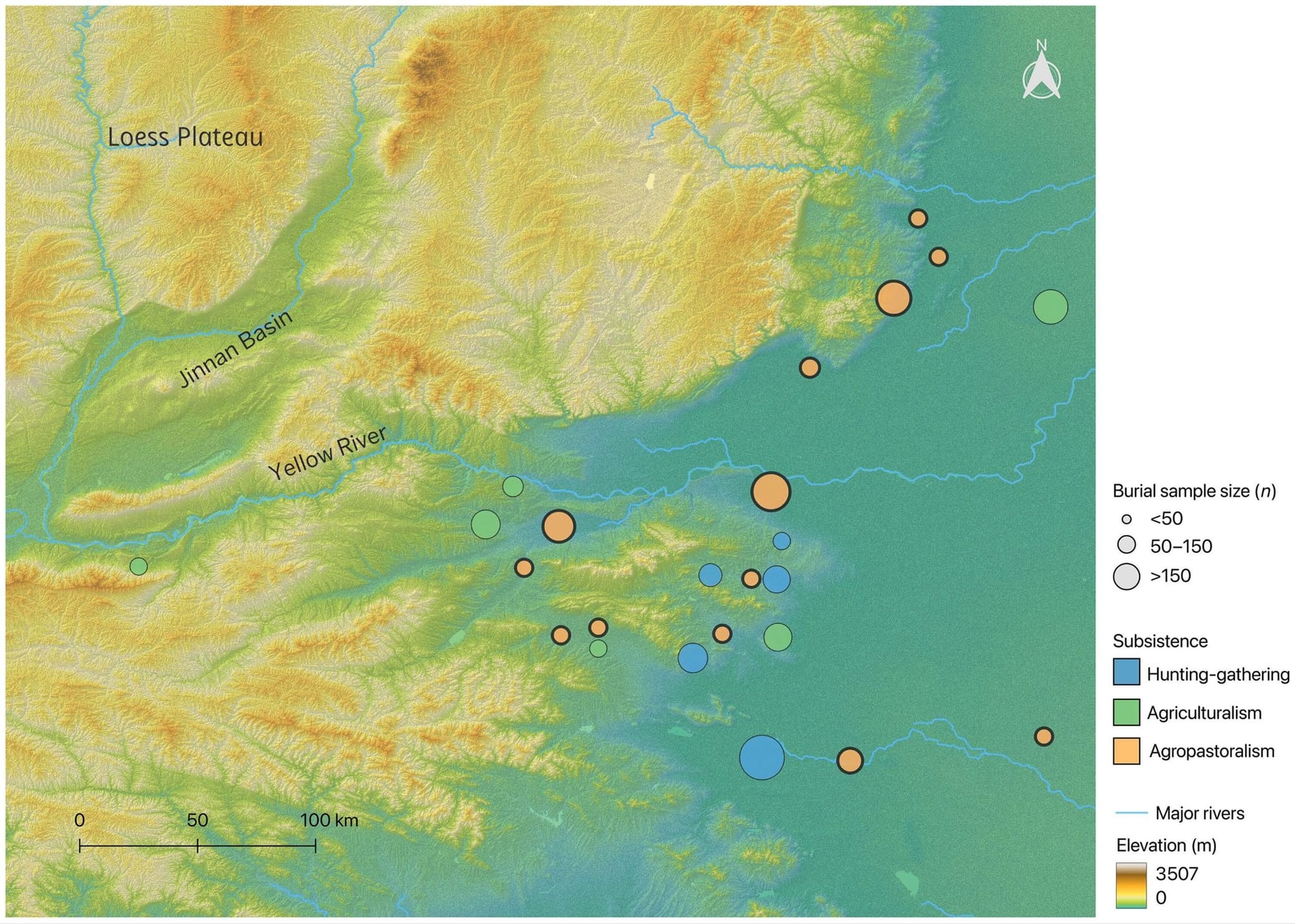
Let’s keep playing in haunted graveyards—it's spooky season, after all. This time, we’ll take a long walk through about 2,300 ancient burials in the Central Plain of China. In a new study, scientists probed the emergence of wealth inequalities in these ancient communities by studying this huge sample dating from 9,000 to 3,500 years ago. 

The team assessed the relative wealth of the deceased individuals with a number of proxies, including the value of grave goods buried with them, their physical health, and chemical clues about the quality of their diets, which can be preserved in bones. 

The results suggest that inequality was present in many of these communities long before the rise of an official state hierarchy, and that “no single pathway led to persistent inequality across early centers of social complexity,” according to the study. However, one clear correlation that emerged in the analysis was the association between violence and inequality, with the former exacerbating the latter.

This Might Be the Earliest Known Spear Murder In Earth’s History
Geographic setting and archaeological sites in the Central Plain. Archaeological site locations were compiled and mapped by the authors based on published excavation reports. Image: Li, Dongdong et al

“In the Central Plain…the emergence of violence signals a structural transformation” that suggests that “violence contributes to the amplification and structuring of inequality, although reverse or reciprocal dynamics cannot be excluded,” said researchers led by Dongdong Li of the Chinese Academy of Social Sciences.

While the rise of organized states and kingdoms can accelerate wealth stratification, this study proves that humans are capable of pioneering local homegrown inequalities in myriad ways.

The view from Ganymede

Royer, Clement et al. “Ganymede’s surface composition from 0.5 to 5.3 µm using combined VLT and JWST datasets and the resulting lessons learned.” Astronomy & Astrophysics.

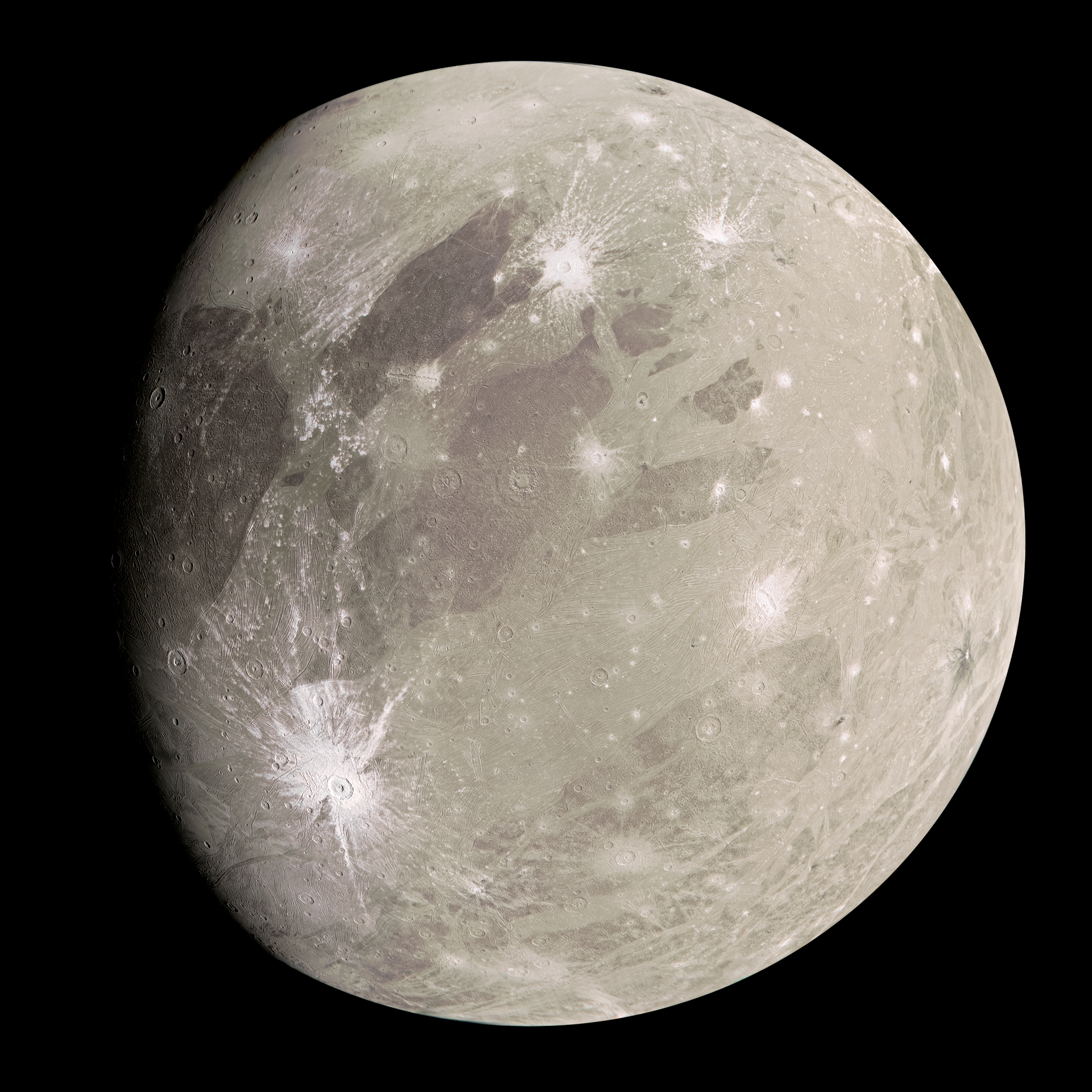
We’ll close with an update from Ganymede, the largest moon in the solar system, which orbits Jupiter. As the only moon with its own magnetic field and a candidate in the search for alien life due to its subsurface ocean, Ganymede has long fascinated scientists.  

Now, a team has compiled comprehensive observations of Ganymede’s surface terrain using observations from a range of advanced telescopes, including the Very Large Telescope in Chile and the James Webb Space Telescope. The aim of the study, in part, is to prepare for two spacecraft currently en route to Jupiter—the European JUICE mission, and NASA’s Europa Clipper—which will arrive in the early 2030s. 

This Might Be the Earliest Known Spear Murder In Earth’s History
Ganymede being Ganymede. Image: Juno Mission – NASA/JPL-Caltech/SwRI/MSSS/Kevin M. Gill

Ganymede “remains a cornerstone object of planetary science due to its geological complexity, internal magnetic field, and potential astrobiological interest based on the presence of a subsurface conducting ocean,” said researchers led by Clement Royer of Paris-Saclay University. “Its surface morphology…argues for a history of significant endogenic activity, possibly including plate-like tectonics and cryovolcanism.”

Indeed, one of Ganymede’s most interesting surface features is a mysterious “darkening agent" that extends over much of the moon’s equatorial regions. The composition of the darkening agent “remains unresolved,” according to the study, though likely guesses include carbon-rich graphite or iron-rich magnetite.

The team anticipates that the Jupiter-bound spacecraft “will provide an unprecedented view of the surfaces of the Jovian moons” that will reveal many of their secrets. At least that’s one thing we can look forward to from the 2030s.

Thanks for reading! See you next week.
  •  

Computers Made of Human Brain Tissue Identify Braille Letters In Breakthrough

Computers Made of Human Brain Tissue Identify Braille Letters In Breakthrough

Scientists have made a breakthrough toward the mind-bending goal of creating computers made of brains by demonstrating that human neural tissue can classify letters of the Braille alphabet, according to a study published on Friday in Frontiers in Artificial Intelligence.  

A team transmitted electrical signals corresponding to Braille letters to human brain organoids, which are living neural tissues derived from stem cells. The results revealed that a single organoid, consisting of about 10,000 neurons, could classify the letters with about 61 percent accuracy, while teams of three organoids reached 83 percent accuracy.  

“The human brain can perform incredibly complex information processing while consuming relatively little energy, and artificial neural networks were originally inspired by biological nervous systems,” said Tianyi Liu, a PhD candidate at Bristol University who led the new study, in an email to 404 Media.

“If we've been trying to imitate biological neural networks all along, why not try using real biological neural networks directly?” she continued. “What kind of information processing capabilities might these tiny neural organoids have? Could they show some form of learning or adaptation? These are all questions we're very interested in.”

The new study falls under the emerging field of organoid intelligence, which aims to use organoids as biological “wetware” for computing applications. Previous studies have established that organoids are capable of recognizing speech Japanese vowels or even playing the classic game Pong. 

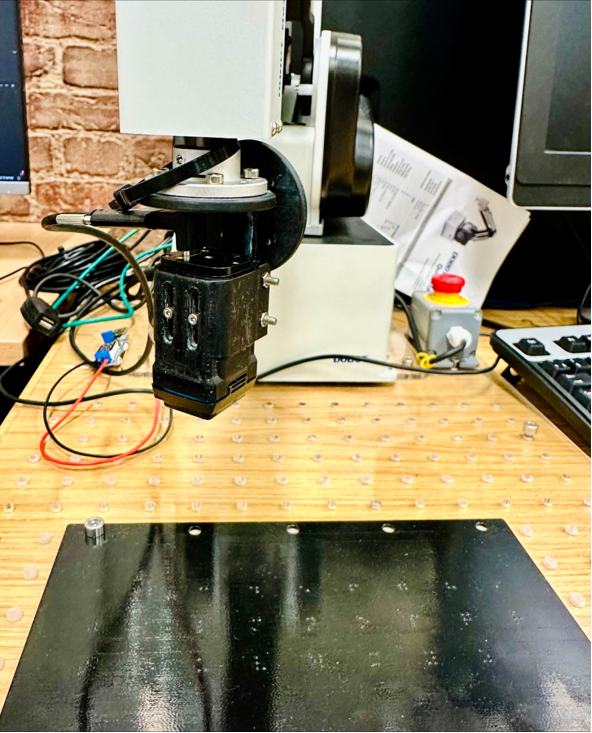
Since Liu and her team specialize in how robots sense and respond to touch, they homed in on Braille as a way to convert tactile information into electrical stimuli that an organoid could receive, process, and classify. 

In their experimental setup, the researchers used a tactile sensor to scan data from the 26 letters of the Braille alphabet, which is built from arrangements of raised dots. This data was converted into electrical stimulation patterns that were fed to the organoids, which are smaller than a millimeter in scale and positioned on arrays that keep them alive.  

“Our original goal wasn't to prove that organoids could read Braille like humans, or that they were already ‘intelligent’ enough to understand Braille,” she added. “Rather, we wanted to use this task to explore whether real biological neural networks could participate in processing information from robotic tactile sensors.”

Computers Made of Human Brain Tissue Identify Braille Letters In Breakthrough
The tactile sensor used to scan Braille letters. Image: Dr Benjamin Ward-Cherrier.

In other words, the researchers aimed to discover if these stimulated inputs could be decoded by the organoids and returned back in discernable responses corresponding to the Braille letters. The results revealed that a single organoid could accurately classify the letters nearly two thirds of the time, while an "ensemble" of three organoids performed even better, with an accuracy of 83 percent. 

“We still don't know the exact mechanism behind this improvement,” Liu said. “Our hypothesis is that different organoids respond to the same stimulation in similar, but not identical, ways.” 

She added that “you can think of it as three people looking at the same object. Although they're all looking at the same thing, each person might notice different details. Some features might not be obvious to one person but could be quite easy for another to spot. By combining their observations, you might be able to make a more accurate and reliable judgement.”

🌘
Subscribe to 404 Media to get The Abstract, our newsletter about the most exciting and mind-boggling science news and studies of the week.

The results are undeniably trippy, conjuring up the classic scifi trope of a hyperintelligent brain-in-a-vat. But Liu emphasized that this was an open-loop experiment, meaning that the organoids only received initial inputs without getting new feedback about their performance on the tasks. For this reason, the study does not prove that the organoids actually learned Braille, or were altered in any permanent way, just that they could classify Braille letters after receiving the electrical inputs. 

“In the future, if we can build closed-loop systems where neural activity from the organoids actually participates in a robot's perception, decision making, and control, while the results of the robot's interactions with its environment are fed back to the organoids, we could begin to investigate whether these biological neural networks can adapt to new tasks through ongoing interaction,” she said.

Liu also noted that while there are many potential advantages to organoid intelligence, there are plenty of limitations to biological computing systems. For example, organoids cannot be standardized, leading to natural variations that can complicate results, plus they have to be kept alive in cultures that are more difficult to maintain than electronic devices. 

“Compared with established computing chips, organoid systems still have a long way to go in terms of reliability, reproducibility, and scalability,” Liu said.

Even so, organoid intelligence “gives us the opportunity to explore a way of computing that's very different from traditional computers,” she concluded.

  •  

Scientists Detect Record-Breaking Radio Signal from the Ancient Universe

Scientists Detect Record-Breaking Radio Signal from the Ancient Universe

Welcome back to the Abstract! Here are the studies this week that spotted a blast from the past, opened a portal between realms, yakked it up, and rose from the ashes.  

First, scientists have spotted a mysterious radio signal from the primordial universe that could illuminate cosmic evolution (it’s not aliens… sorry). Then: a diamond in the quantum rough, the decline of a fine bovine line, and a second-generation planet.  

As always, for more of my work, check out my book First Contact: The Story of Our Obsession with Aliens, or subscribe to my personal newsletter The BeX Files. 

A long time ago in a galaxy far, far away 

Caleb, Manisha et al. “A fast radio burst at redshift 2, three billion years after the Big Bang.” Science.

Scientists have discovered the most distant fast radio burst (FRB), a type of mysterious radio flare from space. This burst erupted when the universe was only three billion years old and sent radio waves across 10 billion light years before they reached Earth on March 4, 2024. 

The distant signal, known as FRB 20240304B, hails from an ancient galaxy beyond “redshift 2,” which means it originated more than twice as far as the next-farthest known FRB. Redshift, represented by the variable “z,” measures how wavelengths of light get stretched out in their journeys across space, a phenomenon that shifts them to the red end of the spectrum. Generally speaking, the more distant the object from Earth, the higher the redshift.

“Approximately one hundred FRBs have identified host galaxies with measured redshifts, with the vast majority at redshifts z ≲ 0.5,” said researchers led by Manisha Caleb of the Sydney Institute for Astronomy. “Only a small number of FRB host galaxies have been identified at z ≳ 1. This observational bias is driven by the sensitivity limit of radio observations that are capable of detecting FRBs and localizing their coordinates.”

Caleb and her colleagues were able to capture the remote flash using South Africa’s MeerKAT radio telescope. Follow-up observations with the James Webb Space Telescope pinpointed “a low-mass, clumpy, starforming galaxy” at redshift 2.148 as the host of the burst.

FRBs produce incredibly energetic radio pulses, but the exact mechanisms that generate them remain unknown. Given the diverse features of these bursts—for instance, some repeat, and some are one-offs—they might come from many different sources. In the case of FRB 20240304B, the team speculated that the burst is a magnetar, the highly magnetized remains of a massive star that went supernova. 

“The low stellar mass, active star formation, and low metallicity of the host galaxy are consistent with a magnetar origin of the FRB,” the researchers concluded.

This milestone detection of such a distant and ancient FRB opens up the possibility of finding more bursts at high redshifts. In addition to pushing the limits of observation, future discoveries could allow scientists to extract clues about the evolution of the universe that become imprinted in these signals during their vast journeys. So bring on the bygone bursts!  

In other news...

Putting a quantum spin on things

Nayak, Anshuman et al. “Spin force from a nitrogen-vacancy ensemble drives a 100-mg levitated resonator.” Science Advances.

Time to shrink down from the largest cosmic scale to the tiny quantum realm. In a new study, scientists report that they successfully moved a centimeter-scale diamond with a force known as quantum spin, making it by far the largest object ever manipulated by a quantum effect. It represents a major breakthrough, as the diamond is the first object large enough to be subject to gravity to be moved in this way, further bridging the gap between the loopy quantum realm and regular, everyday physics.   

Scientists Detect Record-Breaking Radio Signal from the Ancient Universe

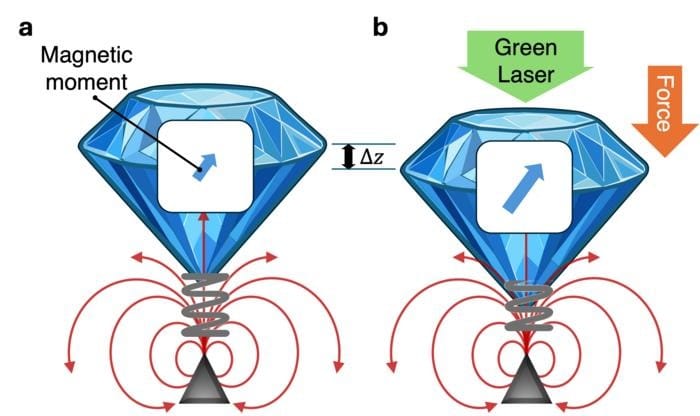
A graphical representation of the observed movements. a) When the laser is off, the diamond slab has a small magnetic moment (blue arrow) induced by the latent spin-state inside the nitrogen-vacancy centers of the diamond. b) When the green laser is on, the spin-state is polarized, causing the magnetic moment to fluctuate weakly, pushing the diamond down towards the magnetic field (red arrows). Image: Nayak et al., 2026

In the new work, scientists worked with a nitrogen-vacancy (NV) diamond containing electrons with “spin,” a form of angular momentum on the quantum scale. Then, they shot a laser at the diamond—as science often demands—which stimulated electrons to spin in a certain state that eerily moved the diamond.

“Experimentally observing this spin force for anything larger than atomic scales has proved challenging,” said researchers led by Anshuman Nayak of the Okinawa Institute of Science and Technology. “We have demonstrated the motional driving of a massive diamagnetically levitated mechanical oscillator by the force of NV spins in a gradient magnetic field.”

Congratulations, humanity: We just earned our license to quantum-motionally drive. Proceed responsibly.

New yak just dropped

Oppenheimer, Jonas and Gillardet, Alexandre et al. “Ancient genomes reveal an extinct bovine species from mid-latitude Asia.” Current Biology.

Domestic cows are overwhelmingly the most common bovine species on Earth today, but this family of swole ungulates once contained a diversity of wild lineages that included aurochs, steppe bison, and oxen. 

Now, scientists have discovered the remains of a distinct bovine species—named “yak X”—in Siberia’s Denisova Cave, which was also inhabited by many human species (hominins) during the Pleistocene era, which ended 12,000 years ago. 

Yak X (cool name!) began diverging from extant yaks about 400,000 years ago, and had formed its own unique yak pack by 250,000 years ago, reports a team that sequenced its ancient genomes. The youngest bones from this mysterious animal date back about 27,200 years, so it must have died out sometime after. 

“Yak X is a Pleistocene megafaunal species previously unknown to genomics,” said researchers co-led by Jonas Oppenheimer and Alexandre Gillardet of Stockholm University. “Yak X appears to have become genetically isolated from other bovines including bison and aurochs despite their apparent geographic proximity in Pleistocene mid-latitude Asia. This lack of gene flow is in notable contrast to hominins at Denisova Cave, which displayed complex patterns of admixture among multiple divergent lineages.”

In other words, hominins at this cave, including Neanderthals and Denisovans, appear to have interbred, while this yak didn’t cross with its fellow bovine relatives. This has been Yak News.

The birth and death of a phoenix planet

Williams, Jamie T. et al. “Discovery of a second-generation planet candidate accreting onto a white dwarf.” Nature Geoscience.

Planets are frequently obliterated by the explosive deaths of their stars, but they can also be born out of those same stellar ashes. Scientists have now directly observed the first evidence of one of these so-called “second-generation” planets that formed around a type of dead star called a white dwarf.

Located about 270 light years from Earth, the white dwarf—known as HS 0209+0832—was once a star similar to the Sun. About five million years ago, it shed its red giant shell and collapsed into its current husk state.

Scientists Detect Record-Breaking Radio Signal from the Ancient Universe
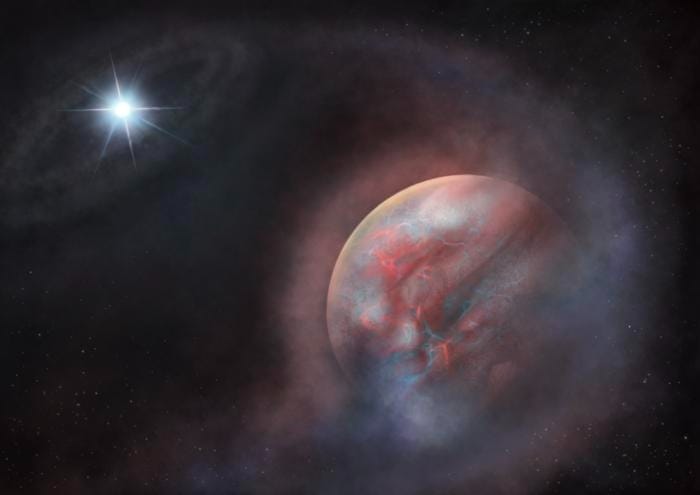
Concept art of the second-generation planet. Image: Dr Snehalata Sahu / University of Warwick

Since its transition to the afterlife, a new planet has coalesced out those ejected embers, though this world is destined for an early grave. Scientists spotted telltale signs of second-generation elements—including zinc, copper, and niobium—in the spectrum of the white dwarf, which are distinct from first-generation planetary ingredients, such as the silicon and iron that make up Earth. The discovery exposes a dead star feeding on its posthumous offspring that was birthed from its own ghostly gas.

“Here we report the discovery of a white dwarf accreting material that is unlike any Solar System object,” said researchers led by Jamie Williams of the University of Warwick. “The discovery of this second-generation planet that is chemically distinct from first-generation material demonstrates that close-in planets around white dwarfs can form…Establishing a sizable sample of such systems will open a window on second-generation planet formation.” 

Some stars are so prolific that even death won’t stop them from making new worlds—and then eating them. Respect.

Thanks for reading! See you next week.
  •  

‘Jonathan’ Is the Oldest Land Animal on Earth. He Could Hold the Secrets to Defying Death

‘Jonathan’ Is the Oldest Land Animal on Earth. He Could Hold the Secrets to Defying Death

Jonathan the tortoise, the world’s oldest living land animal, is still chugging along at the ripe age of roughly 194. Now, scientists have discovered some of the secrets to Jonathan’s longevity by sequencing his genome for the first time, according to a study published Wednesday in Science Advances.

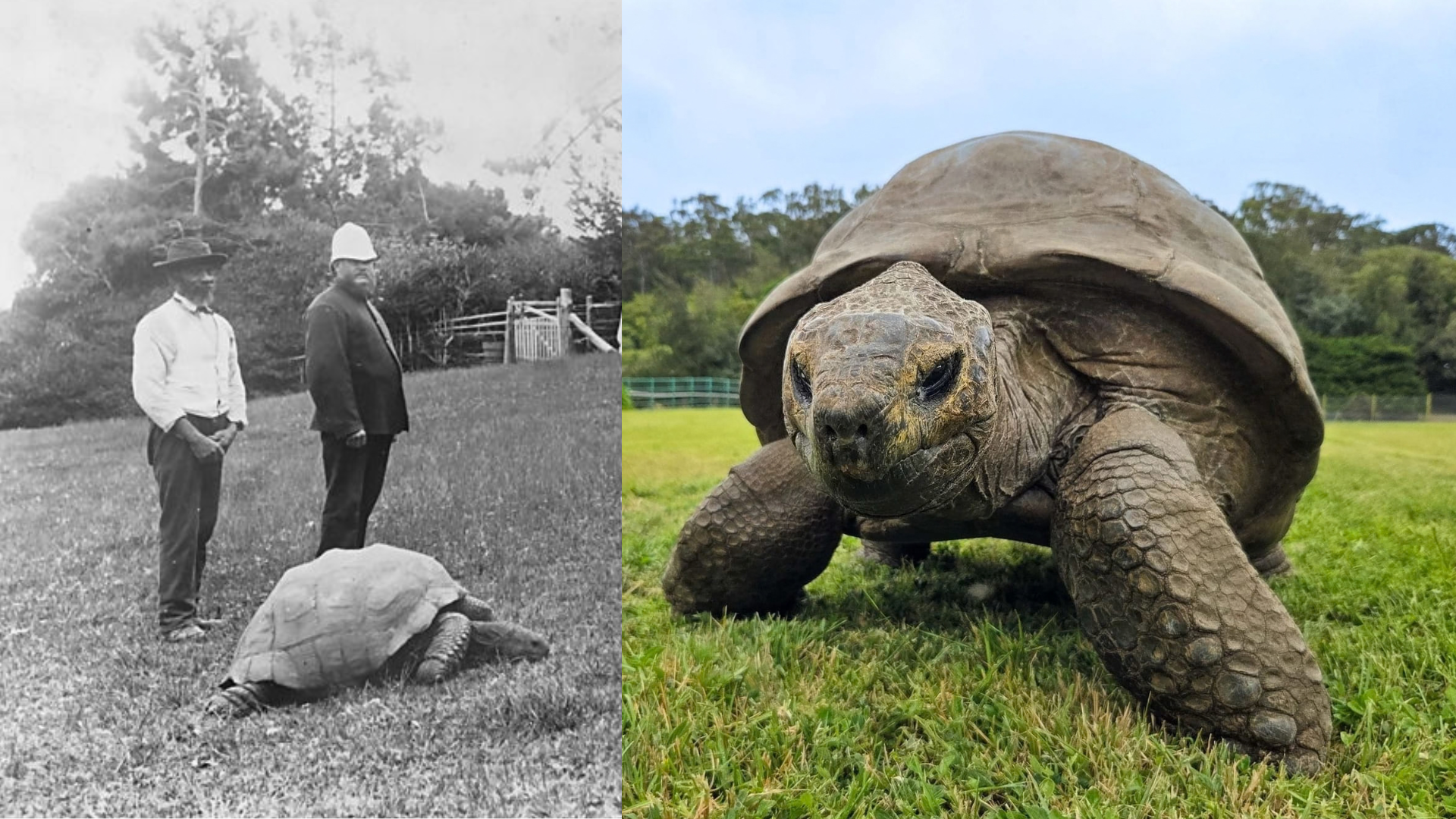
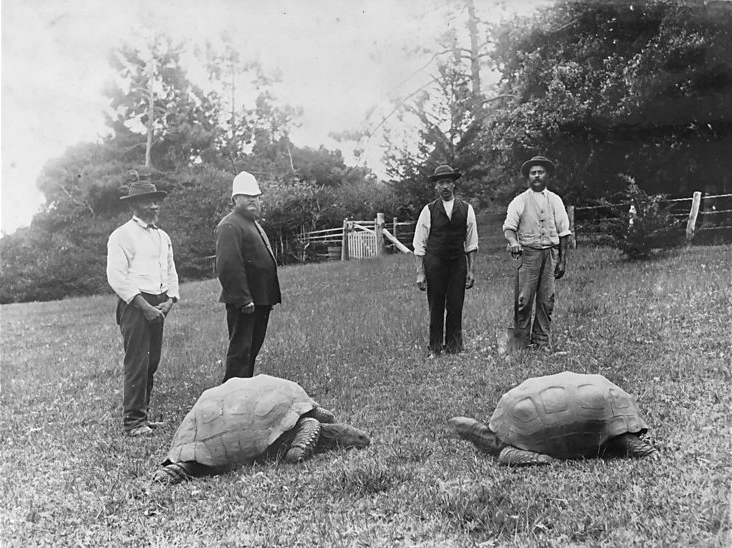
Jonathan, a Aldabra giant tortoise (Aldabrachelys gigantea), hatched around 1832 in the Seychelles archipelago, and he was already in his twenties when Charles Darwin published On the Origin of Species. In his fifties, Jonathan was brought to the remote island of Saint Helena, along with three other tortoises, as a gift to the British colonial governor in the 1880s. He has lived there ever since. 

‘Jonathan’ Is the Oldest Land Animal on Earth. He Could Hold the Secrets to Defying Death
Jonathan (left) in the 1880s. Image: Wikipedia

Aldabra giant tortoises often become centenarians, but Jonathan is a major outlier even for his species as he approaches nearly 200 years on this planet. To better understand his extreme lifespan, researchers evaluated Jonathan’s genome based on swabs of his cheeks and compared it with the genomes of several other tortoises, including a 36-year-old named Tank.  

The results revealed that Jonathan has “unique gene variants in most aging pathways” including DNA repair, insulin regulation, mitochondrial function, and “low entropy” methylation, reports the study. 

“Aging is very complicated, and there's all these different hallmarks,” said Stephen Clark, an aging researcher at the non-profit Kallel Foundation and an author of the study, in a call with 404 Media. “That's why this Jonathan study is so interesting. We're still just at the very beginning of trying to understand aging.”

The study was not an easy lift. Clark first reached out to Jonathan’s caretakers in 2017, but it took some negotiating to figure out the best way to obtain the tortoise’s genetic information. A blood draw was deemed too risky, so Jonathan was coaxed into opening his mouth for a swab. The results were delayed by incomplete early samples, the Covid pandemic, and new regulations governing access to Jonathan. 

🌘
Subscribe to 404 Media to get The Abstract, our newsletter about the most exciting and mind-boggling science news and studies of the week.

After years of back and forth, the samples were delivered from Saint Helena to Florida by the U.S. Space Force. The results showed that Jonathan had many gene variants the team expected to see, based on studies of other long-lived individuals and populations. These included variants associated with DNA repair, maintenance of aging-related sequences called telomeres, and the process of cellular recycling known as autophagy.

But the researchers found a surprise in Jonathan’s “methylome,” which is a set of methyl-based modifications involved in gene expression. The subset of Jonathan’s methylome related to mitochondrial processes was unusually pristine, or “low entropy.”  

‘Jonathan’ Is the Oldest Land Animal on Earth. He Could Hold the Secrets to Defying Death
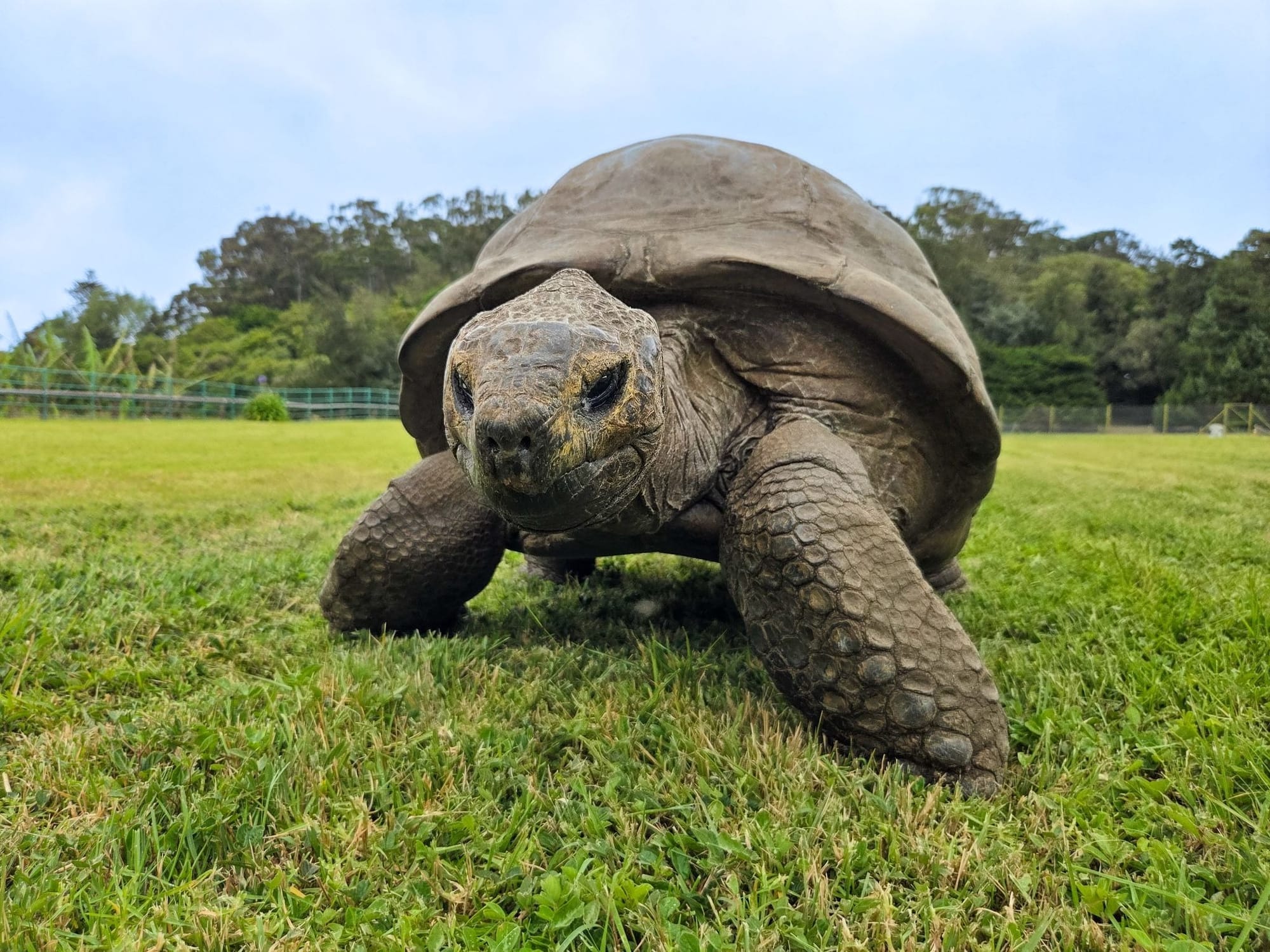
Photo: St. Helene Government, Communication Hub

“Jonathan's really the first of his kind to have this analysis, and we were also able to do the methylome for the younger tortoises,” Clark said. “We actually compared him to a five-year-old tortoise, so we had 189 years of difference between the methylomes. No one's ever done that, even in humans, because no humans live that long. That was one of the main things we were excited about: how does this methylome change with age?”

Whereas most of Jonathan’s genome showed signs of entropy commensurate with his age, his mitochondrial methylome seemed on par with that of the five-year-old tortoise, signaling that these pathways may play a special role in his advanced age. However, Clark said it would take more research to follow up on that lead, and to untangle the complicated web of genetic components that influence aging and lifespan. 

“We're interested in long-lived species like Jonathan because we can hopefully find other targets,” Clark said of his team’s work at Kallel Labs. “The ultimate goal of the company is to affect human healthspan and lifespan.”

As for Jonathan, he continues to live out his voluminous days at the governor’s residence, Plantation House, where he and his fellow tortoises have become one of the island’s tourist attractions. Saint Helena is also known for the exile of Napoleon Bonaparte, who died there a mere decade before Jonathan is thought to have been hatched. It’s amazing to think about just how much the world has changed in Jonathan’s lifetime. Long may he graze.  

  •  

Our Solar System Is Terminally Unstable and Will Be Completely Destroyed, Study Finds

Our Solar System Is Terminally Unstable and Will Be Completely Destroyed, Study Finds

Welcome back to the Abstract! These are the studies this week that searched for the ur-animals, wandered the poles, rained on Mars, and destroyed the solar system.

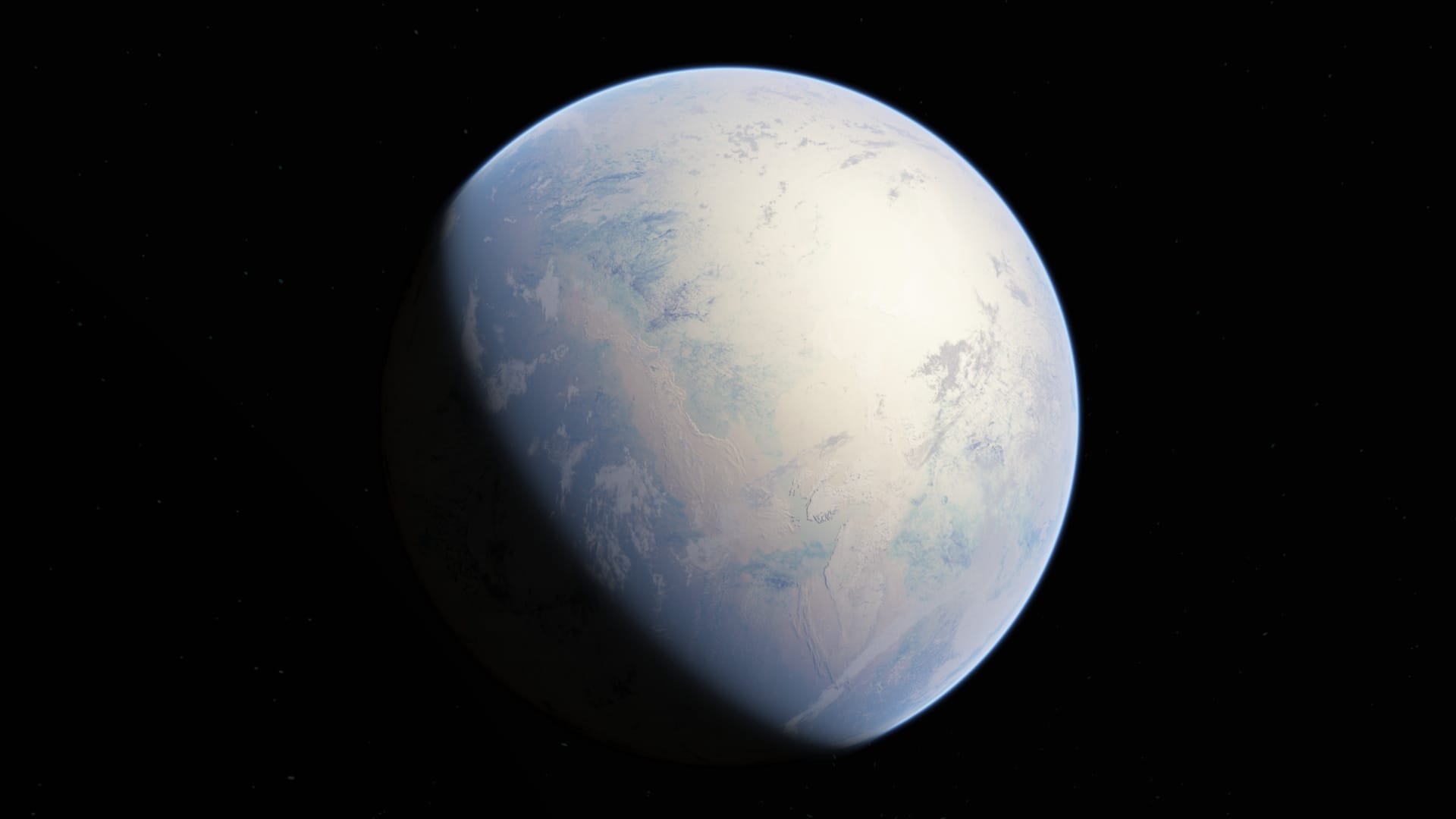
First, scientists present new evidence that the first animals appeared more than 800 million years ago, a truly ancient origin that suggests our metazoan ancestors survived a period known as Snowball Earth, when our planet is thought to have been nearly completely frozen. Then: Earth’s poles won’t sit still, the sepulchral stuff of life, and a dramatically shortened lifespan for our solar neighborhood.

As always, for more of my work, check out my book First Contact: The Story of Our Obsession with Aliens, or subscribe to my personal newsletter The BeX Files. 

I trace my ancestry to Snowball Earth

Durbin, Orin Lole et al. “Re-evaluating molecular clock maximum age calibrations revives pre-Ediacaran divergence estimates for animals.” Science Advances.

When did the first animals emerge on Earth? It’s a question that has provoked centuries of scholarly debate, and also inspired some wonderful answers in myth and legend (I’m partial to the Bible’s tidy solution: day six checklist).

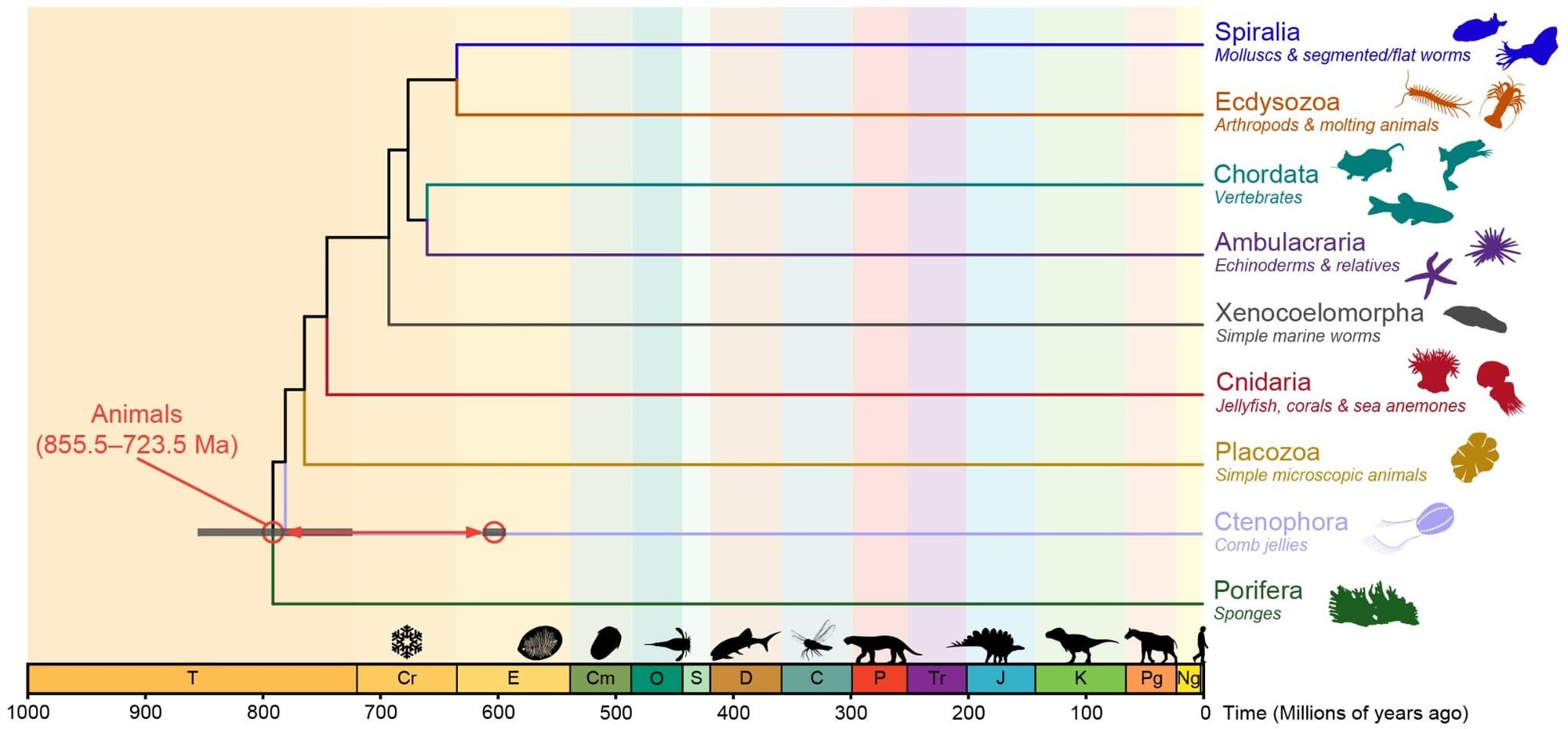
The earliest animals that are clearly preserved in the fossil record lived during the Ediacara period some 574 million years ago, but the origins of our diverse metazoan family are likely much older. Now, scientists suggest that animals may have appeared on Earth a whopping 800 million years ago, during the ancient Tonian era, according to a new estimate of the dawn of animals.

“The timing of the origin of animals on Earth has puzzled scientists for centuries,” said researchers led by Orin Lole Durbin who was at the University of Oxford during this research and is now at Virginia Tech. “Unambiguous animal body fossils within the Ediacara Macrobiota provide a hard minimum calibration of 574 [million years] for crown Metazoa. Animals must have evolved before this date. Determining a maximum calibration for animals (a date at which they had not yet evolved) is a more complex task.”

Our Solar System Is Terminally Unstable and Will Be Completely Destroyed, Study Finds

Estimated timeline for the origin of animals based on molecular clock analyses. The grey bar on the right of the image is the origin of animals based on an Ediacaran upper calibration. The grey bar to the left is the origin based on older deposits in the Tonian period, as suggested by the new study. Image: Orin Lole Durbin.

The team turned to molecular clock analysis, a technique that uses the rate of genetic mutations in lineages as a rough way to reconstruct evolutionary timelines. The researchers focused on two fossil deposits—China’s Weng'an Biota and Mongolia’s Kheseen Biota, which date back 590 and 550 million years respectively—to extend the possible timeline of animals back more than 200 million years earlier. 

If animals really did appear in the Tonian era, it means that our earliest metazoan ancestors survived episodes of so-called “Snowball Earth,” when our planet was almost fully covered in ice. These early critters were likely simple marine sponges and comb jellies that lived for hundreds of millions of years until their descendents exploded into the kaleidoscopic variety of animals that persist to this day.

“The possibility of a pre-Ediacaran origin and diversification of animals means we cannot discount hypotheses that link the timing of animal diversification to Cryogenian Snowball Earth glaciations,” according to the study. “The causes and trajectory of animal evolution will remain uncertain until paleontological and geochemical data provide sufficient confidence in maximum calibrations to ensure a reliable timescale.”

In short: Respect your sponge elders.  

In other news…

A pole-ing error

Domeier, Mathew et al. “Quadrupolar sea level fluctuations reveal episodes of rapid polar wander.” Science.

Earth is a roiling mess of shifting continents and squishy innards, a situation that constantly throws its spin axis off balance and prompts the geographic poles to drift. This phenomenon, known as true polar wander (TPW), is distinct from Earth’s wandering magnetic poles, which are shaped by interior core-mantle processes. 

Right now, TPW is clocked at a slow rate of 10 centimeters per year, but scientists have found evidence of “fast” episodes of TPW that pushed the poles off by thousands of miles over millions of years, which has knock-on effects for ocean and land distribution across the globe. 

A team has now pinpointed several of these fast episodes over the past 320 million years, “confirming that protracted rapid TPW has occurred on Earth and that couplings among Earth’s rotational dynamics, mantle processes, and surface environments can be strongly episodic,” according to their study.

“These findings refute the view of TPW as negligible or persistently slow and highlight the need to consider TPW as an episodic control on sea level change and likely other global environmental and biological dynamics,” said researchers led by Mathew Domeier of the University of Oslo. 

In addition to these long-term natural changes, recent human activity has slightly impacted TPW, especially the construction of dams and the glacial melt of anthropogenic climate change. So the next time you address a letter to Santa at the North Pole for your kid—or yourself, no judgement—make sure you have the most up-to-date coordinates.

It’s raining formaldehyde—formalallelujah! 

Koyama, Shungo et al “Global Distribution of Atmospheric Formaldehyde Deposition Correlated with Water Vapor on a Warm Early Mars.” The Planetary Science Journal.

Formaldehyde, the toxic chemical, has a bit of a morbid reputation—exposure to it can be fatal and it’s a common ingredient used to embalm corpses. But, paradoxically, formaldehyde (H2CO) also helped pave the way for the emergence of life on Earth as a precursor of bioessential elements such as sugars, amino acids, and nucleobases.

If life ever flourished on Mars, formaldehyde would likely also have been part of the story. To map out the possible distribution of the chemical on ancient Mars, scientists ran models of its atmosphere between 3.6 and 3.8 billion years ago, when the red planet was warmer and wetter. The results showed that formaldehyde was strongly associated with water vapor, suggesting that the chemical rained down from the ancient skies into Martian waterways.

“Significant atmospheric deposition of H2CO is observed over water bodies, including the northern ocean,” said researchers led by Shungo Koyama of Tohoku University. “We suggest that basins adjacent to persistently humid regions, which likely experienced H2CO accumulation and subsequent organic synthesis, could be potential landing sites for future missions to investigate ancient chemical evolution and whether it led to the origin of life.”

Hopefully, future missions to Mars will leave any signs of life with no place left to formalde-hide. 

Update the cosmic actuary tables

Batygin, Konstantin et al. “Terminal Instability of the Solar System Triggered by Stochastic Solar Mass Loss.” The Astrophysical Journal Letters.

I hate to be the bearer of bad news, but the solar system has been diagnosed with terminal instability and has been given a mere six billion years to live.  

That’s the upshot of a new study that modelled the solar system’s future as the Sun becomes a red giant star and, ultimately, collapses into a stellar husk called a white dwarf. 

Though the dying Sun will consume Mercury, Venus, and perhaps even Earth, scientists have previously assumed that the giant outer planets might be relatively unscathed by its death—perhaps surviving for up to 100 billion years after the main-sequence lights go out. But updated simulations suggest that these distant objects may be thrown into fatal chaos as early as the red giant phase, and that they are unlikely to survive more than a billion years after the Sun’s transition to a white dwarf.

Our Solar System Is Terminally Unstable and Will Be Completely Destroyed, Study Finds
The future of Earth is bright, literally. Image: Celestia

“[Isaac] Newton, contemplating the drifting orbits of Jupiter and Saturn, suspected that the planetary order was mortal, and three centuries of celestial mechanics…have progressively deferred that verdict, most recently to timescales far beyond the age of the Universe,” said researchers led by Konstantin Batygin of the California Institute of Technology. “Our results return the solar system’s dissolution to astrophysically familiar territory, and relocate its cause: not the slow seep of chaos, nor the chance encounter with a passing star, but the Sun itself, which in dying does not merely enlarge the planetary system it built—it shakes it, and more often than not, spills it.”

“Newton’s envisioned instability is real after all,” the team. “He was mistaken only about the perpetrator.”

What a great story to kick off this spooky season! Planetary order is mortal, but cosmic horror is eternal. 

Thanks for reading! See you next week.
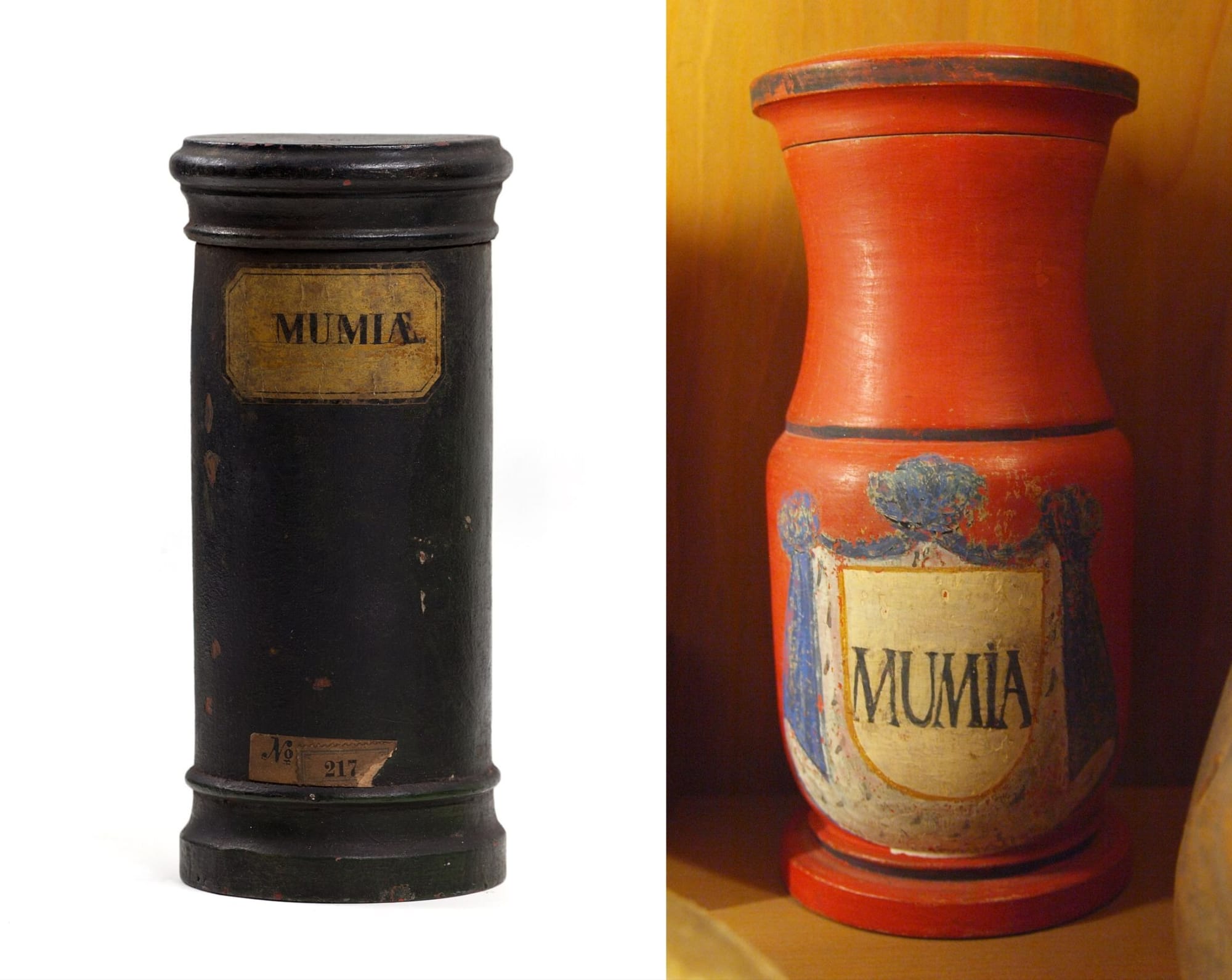
  •  
❌