Vue lecture

Intelligence: Russia’s civil aviation deteriorates under sanctions, forcing it to dismantle even new aircraft to obtain spare parts
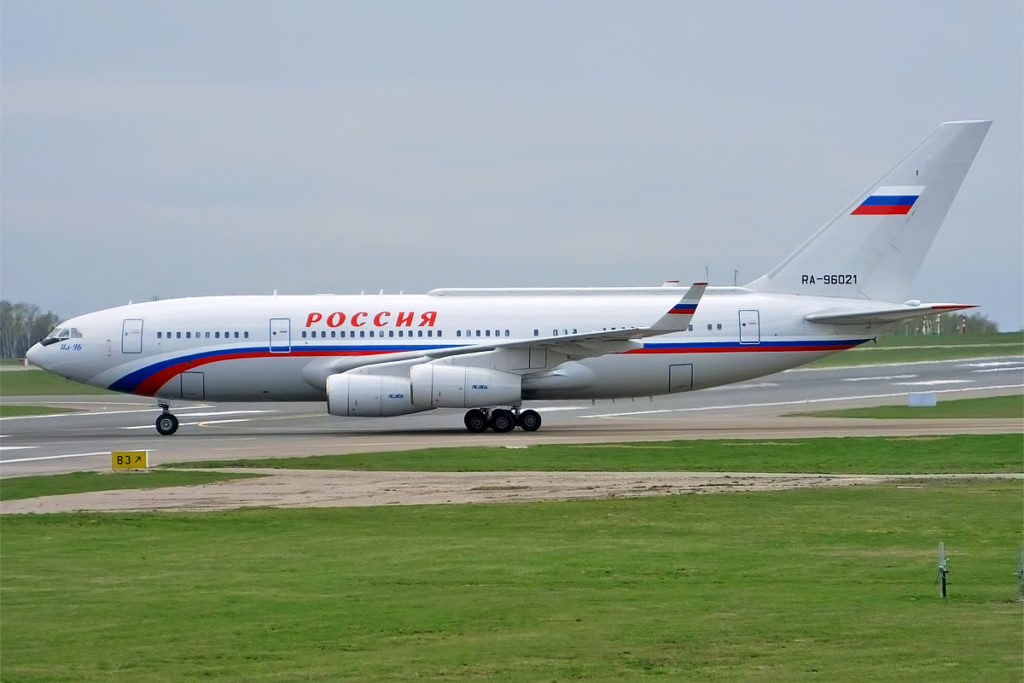
Russian plane IL-96-300

Russia is now tearing apart brand-new planes to keep older ones in the air. The country's civil aviation continues to deteriorate under international sanctions, forcing it to dismantle even new, fully equipped aircraft to obtain spare parts, Ukraine's Defense Intelligence (HUR) reports.

About 95% of all passenger traffic in Russia operates on Western-built aircraft, mostly Airbus and Boeing, according to HUR, a figure consistent with the roughly 90% EP has reported in earlier Ukrainian intelligence assessments.

Much of that fleet has flown past its guaranteed service life and would long since have been retired under international norms, but cut off from certified maintenance, Russia keeps flying it against the rules.

Repairs are carried out without proper certification, parts are often handmade from unsuitable materials, and what cannot be made is imported through third countries. 

The usable fleet is shrinking toward a hard floor

The risk of seizure abroad has boxed Russia's usable fleet into a narrow set of planes. Because of the danger of arrest in foreign jurisdictions, Russia can relatively safely operate only about 400 foreign aircraft and fewer than 150 Soviet and Russian-built machines, according to HUR.

The 400-aircraft figure tracks the roughly 400 Western jets Russia appropriated from foreign leasing companies after the 2022 full-scale war, planes it re-registered domestically and cannot fly to most of the world without risking impoundment. Ukraine's Foreign Intelligence Service reported in October 2025 that Russian carriers could shed hundreds of planes by 2030 as sanctions block imports of aircraft, parts, and maintenance, with more than a third of the civil fleet already cannibalized for parts. 

The homegrown replacement program is failing on the specifics

Russia's plan to replace Western aircraft with its own is ambitious on paper and stalling in practice. The state has a program running to 2030, worth about $12 billion, to build 994 civilian aircraft and 765 helicopters, according to HUR, but an industry cut off from Western technology cannot make components of adequate quality.

The failures are specific and checkable. The MC-21, meant to replace the Airbus A320 and Boeing 737, had to have its capacity cut from 210 to 163 seats because of problems with its domestic PD-14 engines. The Superjet has hit similar engine trouble, and Russia has abandoned new modifications of the Il-96 entirely.

Regional aviation is no better. The LMS-901 "Baikal," meant to replace the Ukrainian-designed An-2, cannot do what its predecessor could: take off and land on unprepared dirt strips. The Il-114-300, meant to replace the An-24 and An-26, can operate only from paved airfields, and the use of unsuitable propeller materials carries a risk that the propellers could fail.
  •  

Russia’s construction on Crimea’s only World Heritage site exposed 500,000 artifacts. UNESCO has just declared complex is in danger

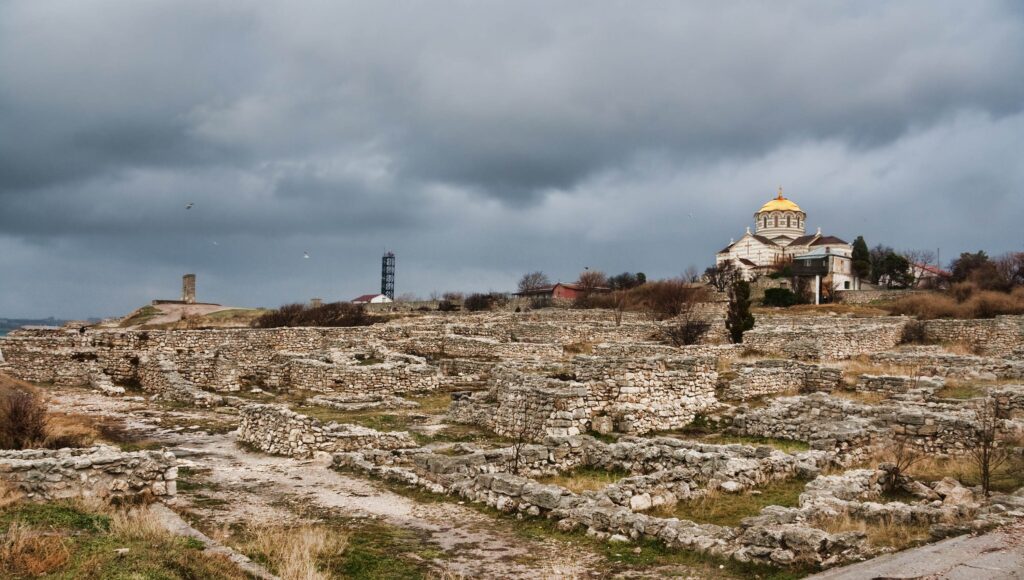
Crimea UNESCO site Khersones Chersonesus

UNESCO has officially recognized that Russia is destroying Crimea's only World Heritage site. The UN body added "the Ancient City of Tauric Chersonese and its Chora" to its List of World Heritage in Danger, Ukrainian Foreign Minister Andrii Sybiha announced on X. The decision was taken at the 48th session of the World Heritage Committee.

Chersonesus Taurica is an ancient Greek city founded by colonists in the 6th century BCE on the territory of modern Sevastopol, inscribed on the UNESCO World Heritage List in 2013, and the only site of world significance in Crimea, per Suspilne.

Since occupying Crimea in 2014, Russia has stripped the site of its contents. Ukraine's Defense Intelligence has documented Russia appropriating cultural artifacts from Chersonesus and other Crimean sites through unauthorized digs, with 178 items tracked in the "Stolen Heritage" section of the War & Sanctions portal by late 2025.

The frescoes, pottery, household objects, and icons taken from Chersonesus went to museums in Russia. Russian construction on the site, backed by illegal excavations, has unlocked access to up to 500,000 artifacts.

Site is target because of what it means

Chersonesus is where, by tradition, the medieval Kyivan prince Volodymyr was baptized in 988. This is the event Russian state ideology claims as the origin point of Russian Orthodoxy and, by extension, of a shared "all-Russian" history that absorbs Ukraine.

Russia has built its occupation narrative on that claim, making the Ukrainian site tell a Russian story, which is why Russian President Vladimir Putin personally backed turning it into the centerpiece of one of Russia's most ambitious propaganda projects.

That project is the "New Chersonesus" museum-and-park complex, opened in July 2024 on the grounds of the ancient site. Russian authorities built a sprawling development that includes museums, a Christian-themed park, an open-air theater, and reconstructed quarters, marketing it as a showcase of Orthodox and Russian civilization.

To raise it, Russian archaeologists and developers dug through the untouched layers of the ancient city, and the complex drew 700,000 visitors by October 2024, its foot traffic accelerating the destruction of the fragile archaeology beneath it. The result is a Russian-built theme park standing on, and made from the ruins of, a Ukrainian World Heritage site.

Russia built theater on necropolis

In 2024, Russian archaeologists and developers completely destroyed the authentic monument, building a new open-air theater on the site of the excavations, said Evelina Kravchenko, senior researcher at the Institute of Archaeology of Ukraine's National Academy of Sciences, per Ukrainska Pravda.

Russia substitutes new construction for original monuments, destroying their authenticity, Kravchenko said at the Crimea Platform expert network forum.

"Negative processes are now happening with the only monument of world significance that we managed to nominate and inscribe on the list of monuments in Crimea, with Chersonesus Taurica," she claimed.

What Russia presents as heritage preservation, Ukrainian experts describe as the erasure of the original under a replica.

Listing rests on documented violations

The basis for the UNESCO decision was Russia's documented conduct on the peninsula: illegal archaeological excavations, large-scale construction on the monument's territory and its protective zones, destruction of the archaeological context, and the illegal movement of cultural property, the President's Representative Office in Crimea explained.

The decision also called on the international community to strengthen cooperation to prevent the illegal circulation of cultural property originating from occupied Crimea. During the discussion, representatives of Poland, the Czech Republic, and Switzerland openly supported Ukraine.

One site in vast toll

Chersonesus is a single entry in a campaign against Ukrainian heritage that spans the whole war. Russia has damaged or destroyed nearly 2,000 Ukrainian cultural heritage sites since 2022, and looted over 7.8 million artifacts from museums in occupied territory since 2014, Ukraine's prosecutor general reported in June 2026.

  •  
❌