
 Connexion
He fought for Ukrainian independence until a Soviet chocolate-box bomb killed him. Now Ukraine plans to honor him permanently
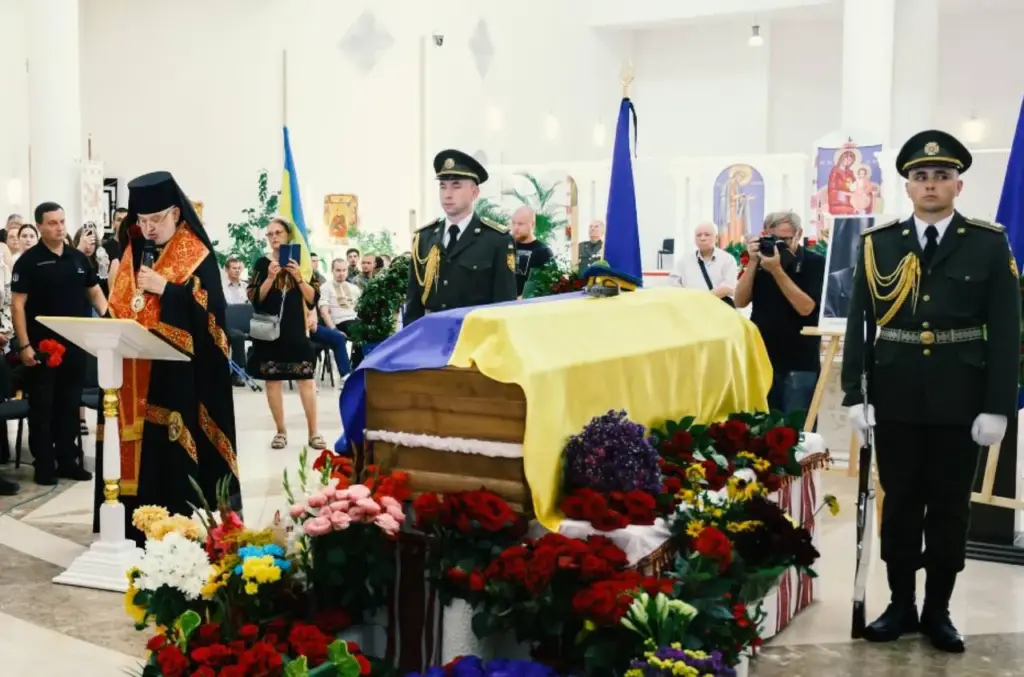
Ukraine plans to temporarily rebury Yevhen Konovalets, a leading Ukrainian nationalist between World Wars I and II, at its National Military Memorial Cemetery, President’s Office head Kyrylo Budanov wrote in a Telegram post.
His remains will later be transferred to the planned Ukrainian National Pantheon, Budanov said.
The National Pantheon is intended to honor political leaders, soldiers, and cultural figures who built or defended Ukraine. Responding to a citizen's petition, Zelenskyy described the memorial as a way to unite Ukrainians around defending their sovereignty and territorial integrity. Budanov cast Konovalets’ planned reburial as linking the current war against Russia with earlier struggles against foreign rule.
Budanov portrayed Konovalets as a threat to Ukraine’s enemies because he organized military and political resistance to Russian and Soviet rule. He said attempts had been made for decades to erase or distort Konovalets’ name and that returning his remains had long been considered “untimely.”
“The enemies of a free Ukraine feared the colonel during his lifetime—they still do,” Budanov wrote.
Konovalets’ remains were exhumed at Crooswijk Cemetery in Rotterdam, the Netherlands, on 11 August. They returned to Ukraine two days later, deputy head of the President’s Office Iryna Vereshchuk said.
A memorial service was held in Kyiv on 15 August. Officials have not announced when Konovalets will be temporarily reburied or when his remains will be transferred to the Pantheon.
Who was Yevhen Konovalets?
Born near Lviv in 1891, Konovalets commanded the Sich Riflemen, which defended the Ukrainian People’s Republic after the Russian Empire collapsed. The republic was proclaimed in 1917 and declared independence in 1918 before Bolshevik forces defeated it three years later.
Konovalets continued the struggle for independence from exile. He helped establish the Ukrainian Military Organization, an underground group preparing armed resistance to Polish and Soviet rule.
In 1929, Konovalets brought the organization together with other nationalist groups to found the Organization of Ukrainian Nationalists (OUN) in Vienna and became its first leader.
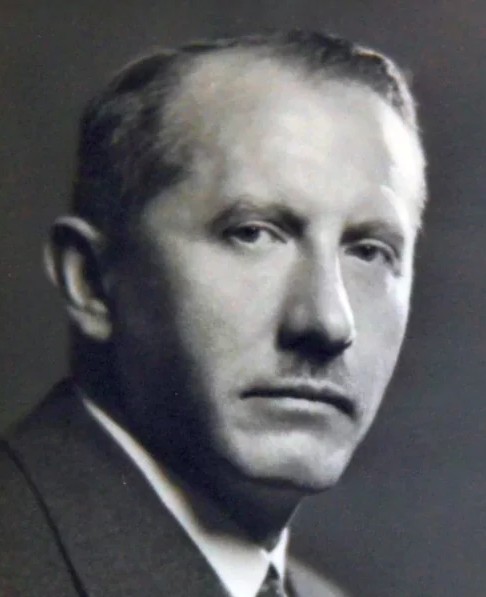
He prepared the OUN for armed struggle and sought European support for Ukrainian independence.
On 23 May 1938, Soviet secret police operative Pavel Sudoplatov killed Konovalets in Rotterdam with a bomb concealed in a box of chocolates. Two years after his death, the OUN split into rival factions.
What is the National Pantheon?
Ukraine plans the National Pantheon as a permanent burial and memorial site for major figures in its history, including those buried abroad.
Parliament approved President Volodymyr Zelenskyy’s bill on 1 July. The government selected part of the Kyiv-Pechersk Lavra, a historic Orthodox monastery in the capital, as its site.
The Pantheon plan has raised concern in Poland over whether it could honor members of the Ukrainian Insurgent Army (UPA).
The UPA fought for Ukrainian independence during and after World War II. Poland holds it responsible for killing up to 100,000 ethnic Poles in Volhynia and Eastern Galicia between 1943 and 1945. Poland's parliament has declared the killings a genocide.
Konovalets was assassinated in 1938, before World War II, the OUN’s split, and the UPA’s formation. The Volhynia killings and the OUN factions’ wartime collaboration with Nazi Germany, therefore, postdated his leadership.
Even so, Ukraine’s broader effort to honor nationalist leaders has drawn criticism over the wartime records of Konovalets’ successors. Its May 2026 state reburial of Andrii Melnyk, who succeeded Konovalets as OUN leader, drew objections from Israel’s Foreign Ministry and Yad Vashem over Melnyk’s collaboration with Nazi Germany.
Read also
-
Yevhen Konovalets, a leader who knew how to unite Ukrainians and was assassinated by NKVD
-
Ukraine’s National Pantheon plan to honor its independence heroes raises eyebrows in Poland amid EU accession perspective
-
Ukraine receives remains of Andrii Melnyk, OUN’s second head and Sachsenhausen prisoner. He will be reburied at pantheon of heroes
