Ukraine gave its heavy-bomber drones the ability to hit within a meter. Kyiv has codified FireFly, a domestic terminal-guidance module for heavy-strike drones, and it is already in use with Perun and Vampire bombers, as well as other platforms, Defender Media reports.
FireFly attaches to a munition slung under a bomber drone and steers it after release. Once the operator locks the target and drops the bomb, the module corrects the munition's flight path on its own down
Ukraine gave its heavy-bomber drones the ability to hit within a meter. Kyiv has codified FireFly, a domestic terminal-guidance module for heavy-strike drones, and it is already in use with Perun and Vampire bombers, as well as other platforms, Defender Media reports.
FireFly attaches to a munition slung under a bomber drone and steers it after release. Once the operator locks the target and drops the bomb, the module corrects the munition's flight path on its own down to the point of impact.
The developers say it works from release altitudes of 200 to 500 meters and, depending on the platform, altitude, and weather, puts the munition 0.5 to 2 meters from the operator's chosen point.
Heavy bombers do killing FPVs cannot
The module fits munitions weighing 1 to 9 kilograms, the company can build up to 10,000 modules a month, and the system will soon be orderable through the DOT-Chain Defense marketplace.
The module solves the precision half of a problem that Ukraine's heavy bombers already half-solved.
Ukraine's reusable heavy bombers have become the weapon of choice against dug-in Russian positions. Where an FPV carries 1.5 to 5 kilograms and explodes once, a bomber carries tens of kilograms and flies back for more.
A drone battalion officer put the math bluntly: against strong cover, ten FPV strikes may achieve nothing, while one bomber sortie does the job. "Storm a treeline? Better to just take it apart with a Vampire," he said.
The Vampire, built by Skyfall, is Ukraine's best-known heavy bomber, credited with having flown millions of combat missions and used to level positions that Ukraine would once have stormed with infantry.
Precision is front Ukraine keeps pushing on
FireFly fits a wider Ukrainian drive to make cheap munitions land exactly where intended, rather than relying on scarce Western precision weapons.
Ukraine has built the same principle into other systems this year. Its first domestic precision glide bomb, the Vyrivniuvach ("Equalizer"), entered serial production with a 250-kg warhead at roughly a third of the cost of a US JDAM-ER kit.
Four months after Euromaidan Press first documented the drone siege of occupied Oleshky and neighboring communities, the United Nations, Human Rights Watch, and the Institute for the Study of War have independently confirmed the humanitarian crisis, major international outlets covered it, and the Pope has been informed. Yet interviews with residents, volunteers, and local officials indicate that conditions continue to deteriorate, with thousands of civilians trapped withou
Four months after Euromaidan Press first documented the drone siege of occupied Oleshky and neighboring communities, the United Nations, Human Rights Watch, and the Institute for the Study of War have independently confirmed the humanitarian crisis, major international outlets covered it, and the Pope has been informed. Yet interviews with residents, volunteers, and local officials indicate that conditions continue to deteriorate, with thousands of civilians trapped without food, medical care, or a safe way to leave.
International reports confirm the humanitarian catastrophe
Reports published by the United Nations, Human Rights Watch, and the Institute for the Study of War in late June and July 2026 point to a worsening humanitarian crisis in Russian-occupied Oleshky, where civilians face starvation as they remain trapped by drone attacks, landmines, and restrictions on movement.
On 25 June, the UN Human Rights Monitoring Mission in Ukraine (HRMMU) called the situation in Oleshky and neighboring territories "desperate." Continuous first-person-view (FPV) drone attacks and extensive mine contamination have severely restricted the delivery of food, medical assistance and evacuations. Ukrainian authorities estimate that up to 6,000 civilians, including more than 180 children, remain in the occupied communities.
The mission documented at least 29 civilians killed and 54 injured in Oleshky and Hola Prystan in 2026 alone, most of them in attacks involving short-range drones.
"Frequent attacks by short-range drones and the presence of landmines are having devastating consequences for thousands of people in these communities," said Danielle Bell, Head of HRMMU. "People can't get out, food can't get in, and sick and injured are not getting the medical assistance they need."
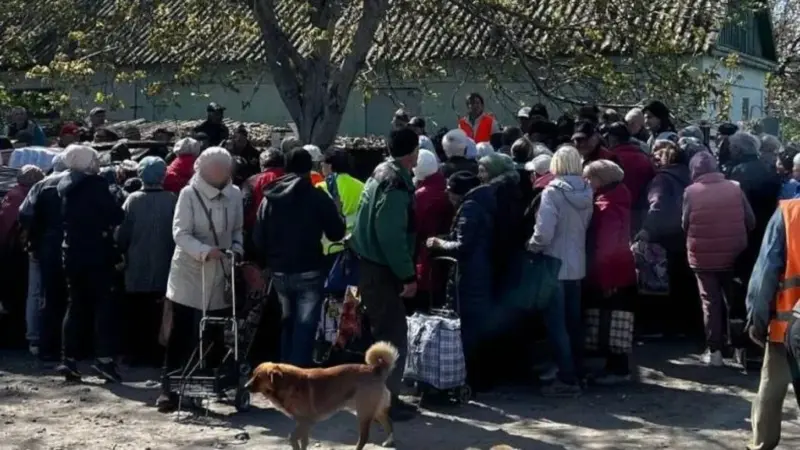
People in Oleshky wait for food supplies. Photo: BBC
HRMMU called for a local ceasefire to allow evacuations and the delivery of humanitarian aid.
Human Rights Watch reached similar conclusions. The organization documented severe shortages of food and medical care, the collapse of basic services, and constant danger from drones and landmines. Former residents said there was no organized evacuation route and that those leaving the occupied town had to pass through Russian military checkpoints before traveling through Russia and Belarus to reach Ukrainian-controlled territory.
Men who want to escape face a further trap: leaving in practice requires Russian travel documents, and applying for them, HRW found, funnels men straight to a military enlistment office. Compelling civilians in occupied territory to serve in the occupying power's forces is a war crime, the organization noted.
Human Rights Watch could not determine responsibility for individual drone strikes or the emplacement of specific mines in the area. The organization noted that Oleshky sits on the front line and has been subjected to sustained attacks by Ukrainian forces as well, and that it found credible indications Ukrainian forces may have used drones and mines on roads around the town. It said civilians wishing to leave are entitled to safe passage under international humanitarian law.
According to HRW, Russia, as the occupying power, is responsible for ensuring access to food, medical care, and humanitarian assistance.
The Institute for the Study of War (ISW) concluded that Russia is effectively blockading occupied Oleshky while failing to meet its obligations under international humanitarian law as an occupying power. The report mentioned that "the Russian military command deployed a detachment of penal recruits to Oleshky in early July, resulting in widespread abuses against the civilian population, including sexual assaults committed against women and minors."
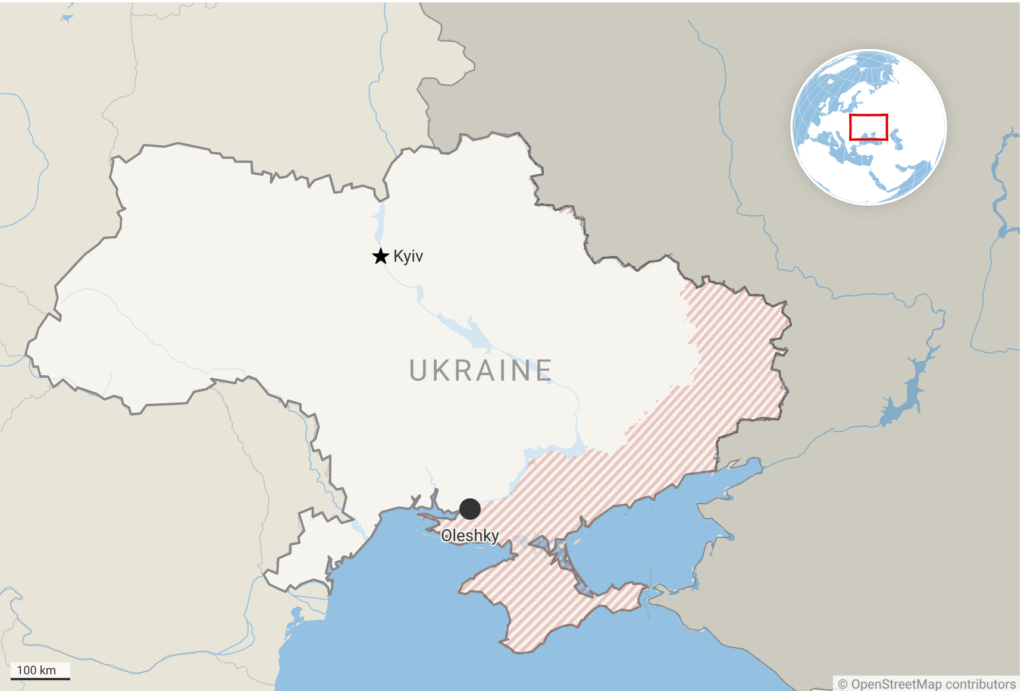
Location of Oleshky, Kherson Oblast
On 15 July, the Organization for Security and Co-operation in Europe (OSCE) and its Office for Democratic Institutions and Human Rights (ODIHR) reported that conditions "remain especially dire in the Russian-occupied frontline areas of Kherson region."
As of May 2026, around 6,000 residents, including approximately 200 children, remained in and around Oleshky and Hola Prystan, where witnesses described towns transformed into a combat zone. ODIHR also received accounts that Russian forces prevented residents from leaving Oleshky and used civilians to shield military positions.
The crisis in Oleshky and the surrounding areas has received growing attention in international media. The Washington Post described Oleshky as a town being slowly strangled under occupation, citing accounts from recently evacuated residents, and called the situation "unbelievably awful." Le Monde published a detailed report on the suffering of the civilians. The Times' dispatch is calledFour years of horror in Ukraine's 'forgotten Bucha.'
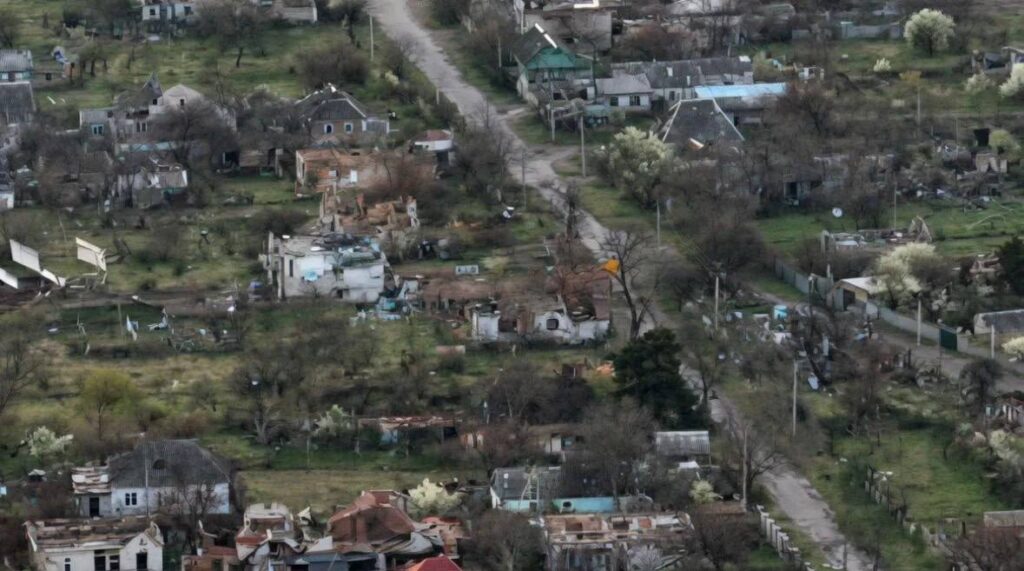
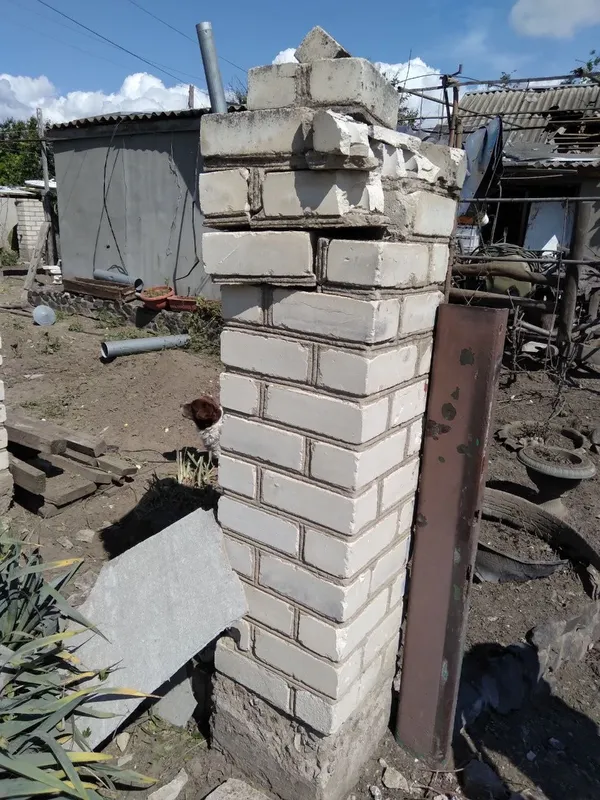
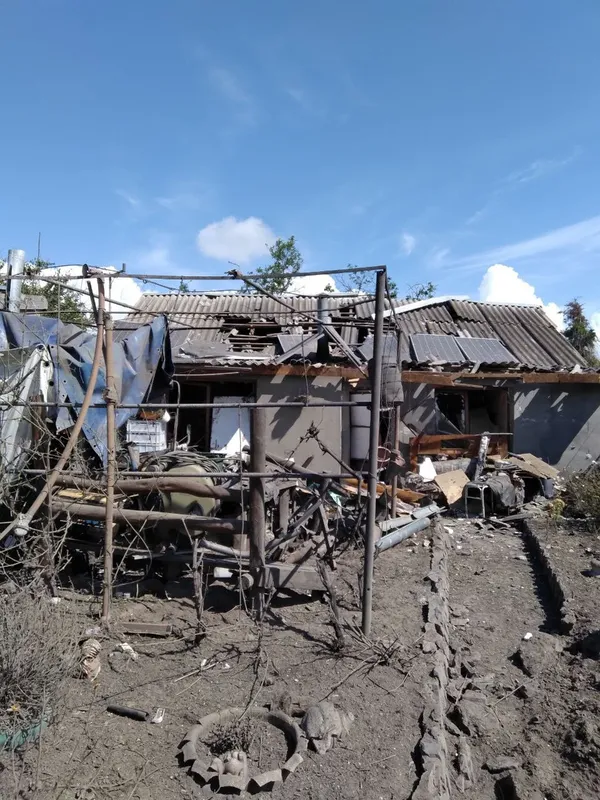
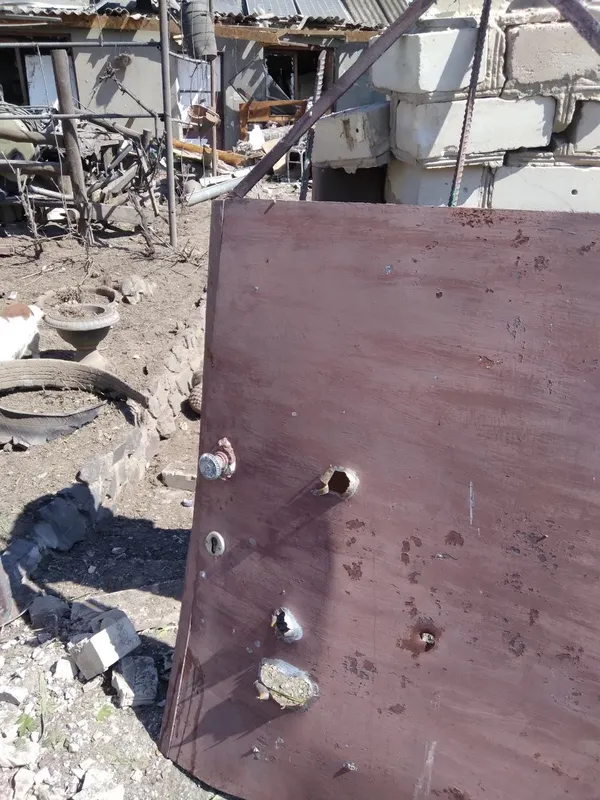
Houses damaged by drones and artillery, Oleshky. July 2026. Photos provided by Ksenia Arkhipova.
Houses damaged by drones and artillery, Oleshky. July 2026. Photos provided by Ksenia Arkhipova.
Houses damaged by drones and artillery, Oleshky. July 2026. Photos provided by Ksenia Arkhipova.
On 16 July, Ukrainian Foreign Minister Andrii Sybiha raised the humanitarian situation in Oleshky and Hola Prystan during a meeting in Kyiv with the Vatican representative, Cardinal Matteo Zuppi, stressing the urgent need for a humanitarian corridor to evacuate thousands of civilians. The same day, at a Vatican meeting of Nobel laureates, Nobel Peace Prize laureate Oleksandra Matviichuk spoke about Russia's drone attacks on civilians in the Kherson region.
While the information blockade is broken, the siege continues.
Explore further
Mined in, starved out, hunted from above—life in the towns Russia demands at the peace table
Reports from the ground
"Only one ambulance was able to leave Oleshky and come back since May 26," said Ksenia Arkhipova, the volunteer from Oleshky who helps to organize evacuation and speaks to the locals despite the problems with communication. "That's it. There is no food."
Newly arrived Russian military personnel are former convicts who loot and rob residents of the last food.
Residents tell Euromaidan Press
Arkhipova spoke to Euromaidan Press over the phone from her home in Ukrainian-controlled territory. According to her contacts in the occupied territories, the situation in the nearby villages has deteriorated dramatically. Civilians are reportedly killed while attempting to leave to buy food or bottled gas. Residents describe drones overhead that make leaving basements next to impossible.
These reports are confirmed by Oleshky Military Administration head Tetyana Hasanenko, also living in exile. She said that roads leading from villages farther from the Dnipro River, including Radensk, Chelburda, and Kostohryzove, have also become increasingly dangerous.
In Oleshky, the terror campaign is ongoing.
Three former residents speaking to their relatives have confirmed to Euromaidan Press that the newly arrived Russian military personnel are former convicts who loot and rob residents of the last food.
V., who recently escaped Oleshky and spoke to Euromaidan Press on the conditions of anonymity, said one man who lived alone was tortured to death in his basement; his neighbors found the body and managed to bury it. Others were beaten, and there are accounts of sexual violence, according to V.
The accounts were confirmed by Kherson's popular Telegram channel Kherson: Non Fake.
Posts appearing in the Oleshky community groups mentioned the robbery by former convicts. One post sought help for a dog "dying of hunger." The dog owner, who shared all the food with the pet, pleaded for evacuation.
"Now there is nothing left for people to eat," the post read.
According to Hasanenko, residents are on the brink of starvation. She described conditions in Oleshky as "hell on earth." She said the town's morgue had long been destroyed, around 100 bodies remained in the basement of the hospital for months because they could not be buried, and occupying authorities were preventing families from recovering the dead.
The reports point to the same conclusion: an urgent need for a humanitarian corridor to allow civilians to evacuate safely and humanitarian aid to reach those who remain.
Explore further
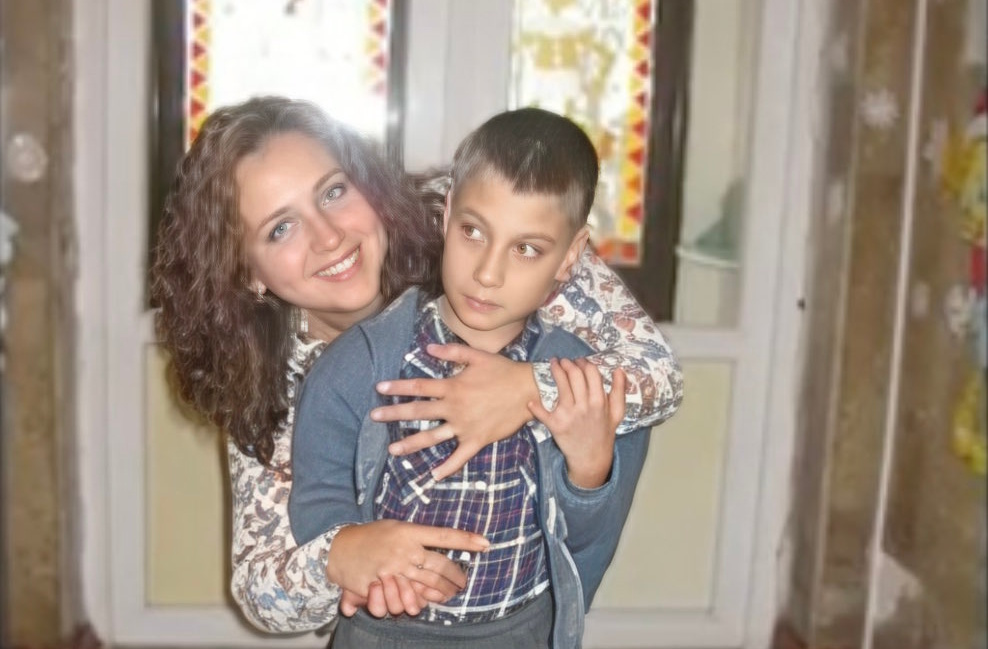
“Just give me some proof that my son is alive”: Mother from Kherson spends five years searching for her son, taken away by Russians from Oleshky boarding school

 Connexion